Introduction
Language learning apps are digital platforms designed to help users acquire new languages efficiently, using interactive lessons, exercises, and real-time feedback. They cater to both casual learners and professionals seeking fluency for career, travel, or education purposes. With the rise of remote work, global collaboration, and international mobility, language skills are becoming a critical asset in 2026 and beyond.
These apps are not just for individual learners—they are increasingly adopted by educational institutions, corporate teams, and online learning platforms to provide scalable language training. Key real-world use cases include: preparing for international assignments, enhancing cross-border communication, learning new languages for academic purposes, upskilling employees for global projects, and improving language proficiency for travel or cultural immersion.
Best for: Individuals, students, corporate teams, educators, and enterprises seeking scalable, engaging, and personalized language learning solutions. Particularly useful for companies with global operations or teams collaborating across geographies.
Not ideal for: Users looking for casual language exposure without structured learning, or those preferring traditional classroom-based language courses. May not meet needs for highly specialized technical language or niche dialect training.
Key Trends in Language Learning Apps
- AI-driven personalized learning paths adapting content to user proficiency and learning speed.
- Gamification and reward-based systems to enhance engagement and retention.
- Integration with video conferencing and collaborative tools for live practice sessions.
- Microlearning and bite-sized lessons compatible with mobile-first users.
- Multi-platform availability across iOS, Android, and web for seamless learning.
- Offline access and downloadable content to support learning in low-connectivity regions.
- Voice recognition and speech analysis for real-time pronunciation feedback.
- Data-driven insights for educators and corporate training managers to track progress.
- Subscription-based and freemium pricing models with scalable enterprise licensing.
- Compliance with privacy regulations and secure data handling for corporate users.
How We Selected These Tools (Methodology)
- Evaluated market adoption and mindshare among learners and enterprises.
- Reviewed feature completeness including AI personalization, content depth, and interactive exercises.
- Analyzed reliability, platform performance, and cross-device support.
- Considered security posture and compliance with data protection regulations.
- Assessed integrations with productivity, educational, and corporate systems.
- Gauged customer fit across individual learners, SMBs, and enterprise organizations.
- Examined user feedback and community support for ongoing engagement.
- Checked scalability and adaptability for multiple languages and proficiency levels.
- Prioritized tools offering measurable learning outcomes and progress tracking.
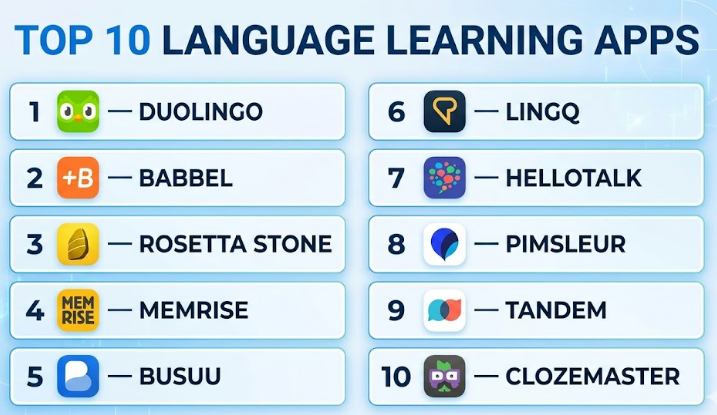
Top 10 Language Learning Apps
#1 — Duolingo
Short description : Duolingo is a gamified language learning app designed for individuals and educational institutions. It offers lessons in over 40 languages with interactive exercises, quizzes, and rewards to motivate learners.
Key Features
- AI-powered personalized lesson paths.
- Gamification with points, streaks, and badges.
- Short, engaging exercises for microlearning.
- Voice recognition for pronunciation feedback.
- Progress tracking with detailed metrics.
- Multi-device access (web, iOS, Android).
Pros
- Highly engaging and fun interface.
- Free tier available with substantial content.
Cons
- Limited advanced-level content for fluency.
- Ads in free version can be distracting.
Platforms / Deployment
- Web / iOS / Android
- Cloud
Security & Compliance
- Not publicly stated
Integrations & Ecosystem
Supports integration with classroom management tools and can be used alongside other educational apps.
- API support: Varies / N/A
- Syncs across devices
- Works with Duolingo for Schools
Support & Community
- Extensive help center and forums
- Community forums active for learner discussions
#2 — Babbel
Short description : Babbel is designed for adults and professionals aiming for practical language skills. It offers structured lessons focused on conversation and grammar for everyday and professional scenarios.
Key Features
- Focused conversational modules.
- Grammar and vocabulary reinforcement exercises.
- Speech recognition for pronunciation improvement.
- Lesson review with spaced repetition.
- Cross-device progress synchronization.
Pros
- Practical language application for real-world use.
- Structured courses with clear progression.
Cons
- Subscription required for full access.
- Fewer languages than some competitors.
Platforms / Deployment
- Web / iOS / Android
- Cloud
Security & Compliance
- Not publicly stated
Integrations & Ecosystem
Integrates with productivity apps and mobile notifications for lesson reminders.
- Supports mobile reminders
- Compatible with calendar notifications
Support & Community
- Responsive customer support
- Community discussions for learning tips
#3 — Rosetta Stone
Short description : Rosetta Stone provides immersive language learning using visual and audio cues. It’s popular among corporate clients and academic institutions seeking structured programs.
Key Features
- Immersive, context-based learning approach.
- Live tutoring sessions available.
- Speech recognition for pronunciation practice.
- Offline access for lessons.
- Extensive language library with rare languages.
Pros
- Trusted brand with decades of experience.
- Effective for building listening and speaking skills.
Cons
- Higher subscription costs.
- Interface less gamified and modern.
Platforms / Deployment
- Web / iOS / Android
- Cloud
Security & Compliance
- Not publicly stated
Integrations & Ecosystem
- Integration with classroom learning platforms
- APIs for corporate onboarding programs
Support & Community
- 24/7 support for enterprise users
- User community available for tips
#4 — Memrise
Short description : Memrise combines gamification with real-life video content to enhance vocabulary and conversational skills. It is suitable for casual learners and students looking to expand practical usage.
Key Features
- Real-life video clips of native speakers.
- AI-powered spaced repetition for vocabulary retention.
- Interactive quizzes and games.
- Offline learning capabilities.
Pros
- Engaging real-world content.
- Strong focus on vocabulary retention.
Cons
- Limited grammar instruction.
- Premium subscription needed for full access.
Platforms / Deployment
- Web / iOS / Android
- Cloud
Security & Compliance
- Not publicly stated
Integrations & Ecosystem
- Supports integration with educational tools
- Works with classroom progress tracking
Support & Community
- Community forums active for shared learning tips
#5 — Busuu
Short description : Busuu provides structured language learning with emphasis on writing, speaking, and interaction with native speakers. Suitable for professionals and students.
Key Features
- Writing exercises corrected by native speakers.
- Speech recognition for speaking skills.
- Offline mode for lessons.
- Personalized learning paths.
- Progress tracking and goal setting.
Pros
- Strong focus on interaction with native speakers.
- Comprehensive learning structure.
Cons
- Limited free content.
- Some languages have fewer native speakers for corrections.
Platforms / Deployment
- Web / iOS / Android
- Cloud
Security & Compliance
- Not publicly stated
Integrations & Ecosystem
- Integrates with calendars for practice reminders
- Supports classroom and corporate deployment
Support & Community
- Email support and help center
- Community of learners for peer corrections
#6 — LingQ
Short description : LingQ is a platform for immersive language learning, focusing on reading and listening. Suitable for independent learners and self-directed students.
Key Features
- Immersive content with real-world texts.
- Vocabulary tracking and spaced repetition.
- Audio and video lessons from native speakers.
- Import own content for learning.
Pros
- Highly customizable learning experience.
- Strong reading and listening focus.
Cons
- Less structured than traditional courses.
- Subscription needed for full features.
Platforms / Deployment
- Web / iOS / Android
- Cloud
Security & Compliance
- Not publicly stated
Integrations & Ecosystem
- API for importing content
- Integrates with note-taking apps
Support & Community
- Varies / Not publicly stated
#7 — HelloTalk
Short description : HelloTalk is a social language learning app connecting users with native speakers globally. It emphasizes peer-to-peer communication and cultural exchange.
Key Features
- Chat with native speakers via text, voice, and video.
- Correction tools for language learning.
- Community groups by language and topic.
- Social feed for practice and engagement.
Pros
- Real-life conversational practice.
- Global community engagement.
Cons
- Less structured lesson path.
- Requires self-discipline to progress.
Platforms / Deployment
- iOS / Android
- Cloud
Security & Compliance
- Not publicly stated
Integrations & Ecosystem
- Integrates with translation tools
- Works with mobile notifications for engagement
Support & Community
- Active global community
- Help center and FAQs
#8 — Pimsleur
Short description : Pimsleur is an audio-focused language learning platform emphasizing speaking and listening skills. Suitable for commuters and audio learners.
Key Features
- Audio-based lessons for listening and speaking.
- Focus on conversational fluency.
- Progressive lesson structure.
- Offline listening capabilities.
Pros
- Excellent for auditory learners.
- Mobile-friendly for on-the-go learning.
Cons
- Limited visual and written content.
- Subscription required for access.
Platforms / Deployment
- iOS / Android / Web
- Cloud
Security & Compliance
- Not publicly stated
Integrations & Ecosystem
- Syncs across devices
- Works with personal audio players
Support & Community
- Email support
- Limited online community
#9 — Tandem
Short description : Tandem connects language learners with native speakers for real-time conversation practice. Ideal for professionals and students seeking practical fluency.
Key Features
- Text, voice, and video chat with native speakers.
- Language exchange corrections.
- Community-driven practice groups.
- Topic-based conversation prompts.
Pros
- Real-world conversational exposure.
- Flexible practice with global users.
Cons
- Less structured curriculum.
- Quality depends on partner engagement.
Platforms / Deployment
- iOS / Android
- Cloud
Security & Compliance
- Not publicly stated
Integrations & Ecosystem
- Works with mobile notifications
- Supports scheduling and reminders
Support & Community
- Active community support
- Help center articles
#10 — Clozemaster
Short description : Clozemaster is a gamified platform focused on sentence-level learning and vocabulary retention. Suitable for learners with basic knowledge aiming for fluency reinforcement.
Key Features
- Sentence-based multiple-choice exercises.
- Gamified scoring and streaks.
- Supports over 100 languages.
- Integration with spaced repetition for retention.
Pros
- Strong focus on vocabulary in context.
- Effective reinforcement for advanced learners.
Cons
- Limited grammar instruction.
- Interface less modern than competitors.
Platforms / Deployment
- Web / iOS / Android
- Cloud
Security & Compliance
- Not publicly stated
Integrations & Ecosystem
- Syncs with spaced repetition tools
- Supports mobile reminders
Support & Community
- Varies / Not publicly stated
Comparison Table (Top 10)
| Tool Name | Best For | Platform(s) Supported | Deployment | Standout Feature | Public Rating |
|---|---|---|---|---|---|
| Duolingo | Beginners, casual learners | Web, iOS, Android | Cloud | Gamified microlearning | N/A |
| Babbel | Adults, professionals | Web, iOS, Android | Cloud | Structured conversation modules | N/A |
| Rosetta Stone | Institutions, corporate teams | Web, iOS, Android | Cloud | Immersive learning | N/A |
| Memrise | Students, casual learners | Web, iOS, Android | Cloud | Real-life video clips | N/A |
| Busuu | Professionals, students | Web, iOS, Android | Cloud | Native speaker corrections | N/A |
| LingQ | Independent learners | Web, iOS, Android | Cloud | Immersive reading/listening | N/A |
| HelloTalk | Social learners | iOS, Android | Cloud | Peer-to-peer language exchange | N/A |
| Pimsleur | Audio learners, commuters | Web, iOS, Android | Cloud | Audio-based conversational lessons | N/A |
| Tandem | Practical fluency seekers | iOS, Android | Cloud | Real-time conversation with natives | N/A |
| Clozemaster | Advanced learners | Web, iOS, Android | Cloud | Sentence-based vocabulary reinforcement | N/A |
Evaluation & Language Learning Apps
| Tool Name | Core (25%) | Ease (15%) | Integrations (15%) | Security (10%) | Performance (10%) | Support (10%) | Value (15%) | Weighted Total (0–10) |
|---|---|---|---|---|---|---|---|---|
| Duolingo | 8 | 9 | 7 | 6 | 8 | 7 | 9 | 8.0 |
| Babbel | 7 | 8 | 6 | 6 | 8 | 7 | 8 | 7.4 |
| Rosetta Stone | 9 | 7 | 7 | 7 | 8 | 8 | 7 | 7.8 |
| Memrise | 7 | 8 | 6 | 6 | 7 | 7 | 8 | 7.1 |
| Busuu | 8 | 7 | 6 | 6 | 7 | 7 | 8 | 7.3 |
| LingQ | 7 | 6 | 7 | 6 | 7 | 6 | 7 | 6.8 |
| HelloTalk | 6 | 8 | 6 | 6 | 7 | 7 | 7 | 6.8 |
| Pimsleur | 7 | 8 | 5 | 6 | 7 | 6 | 7 | 6.9 |
| Tandem | 6 | 7 | 6 | 6 | 7 | 6 | 7 | 6.7 |
| Clozemaster | 6 | 7 | 5 | 6 | 6 | 6 | 7 | 6.5 |
Interpretation: Scores are comparative across the 10 tools. Weighted totals reflect balance of core functionality, usability, integrations, security, performance, support, and value. Higher scores indicate stronger overall capability and usability.
Which Language Learning Apps
Solo / Freelancer
Choose Duolingo, Memrise, or Babbel for self-paced learning with engaging, structured lessons.
SMB
Busuu and Rosetta Stone are ideal for small teams seeking structured and collaborative learning options.
Mid-Market
LingQ and Babbel provide scalable learning with analytics and flexible content for mid-sized organizations.
Enterprise
Rosetta Stone and Busuu offer enterprise licensing, analytics, and integration with corporate training programs.
Budget vs Premium
Duolingo and HelloTalk provide free or low-cost options; Rosetta Stone, Babbel, and Busuu offer premium content suitable for long-term investment.
Feature Depth vs Ease of Use
Rosetta Stone and LingQ provide depth and immersion; Duolingo and Memrise emphasize ease of use and engagement.
Integrations & Scalability
Busuu, LingQ, and Rosetta Stone integrate with corporate and educational systems, offering scalable learning paths.
Security & Compliance Needs
Enterprise users should prioritize tools like Rosetta Stone or Busuu, which provide organizational control and secure data handling, though explicit compliance certifications may vary.
Frequently Asked Questions (FAQs)
1. What is the typical cost of language learning apps?
Costs range from free tiers (Duolingo, HelloTalk) to premium subscriptions ($10–$20/month), with enterprise pricing varying based on user count.
2. How do AI features enhance learning?
AI customizes lesson paths, adapts difficulty, provides real-time feedback, and improves retention through spaced repetition.
3. Can these apps be used offline?
Many apps like Rosetta Stone, Memrise, and Pimsleur offer offline content for uninterrupted learning.
4. Are the lessons suitable for corporate teams?
Yes, enterprise plans for Busuu, Rosetta Stone, and Babbel provide team management, analytics, and progress tracking.
5. How long does it take to become fluent?
Fluency depends on commitment, app usage, and prior experience. Daily practice and interactive exercises accelerate learning.
6. Can I integrate these apps with other systems?
Some apps offer APIs or support integrations with LMS, calendars, and productivity tools; integration varies by platform.
7. Are pronunciation features effective?
Apps with speech recognition like Duolingo, Babbel, and Pimsleur provide feedback, improving pronunciation and speaking confidence.
8. How do these apps support advanced learners?
Clozemaster, LingQ, and Memrise offer advanced content focusing on vocabulary retention and immersive reading/listening exercises.
9. What languages are commonly offered?
Most tools provide 20–40 major languages; some platforms like Clozemaster support over 100 languages, including rare ones.
10. Is peer interaction important for learning?
Yes, tools like HelloTalk and Tandem allow learners to interact with native speakers, enhancing practical fluency and cultural understanding.
Conclusion
Selecting the right language learning app depends on your learning goals, team size, and preferred learning style. For self-paced individual learners, Duolingo and Memrise offer engaging, structured options. Professionals and teams benefit from Busuu and Rosetta Stone’s enterprise features and structured lessons. Advanced learners may prefer LingQ or Clozemaster for immersive content and vocabulary reinforcement.
