Introduction
Music streaming apps help users listen to songs, albums, playlists, podcasts, live sessions, radio-style stations, and personalized recommendations across devices. Instead of downloading and managing large music files manually, users can access huge music libraries through mobile apps, desktop apps, smart speakers, web players, cars, TVs, and wearable devices.
Music streaming apps matter because listening habits have shifted from ownership to access. Users now expect personalized playlists, offline listening, high-quality audio, lyrics, social sharing, podcast access, artist discovery, and smooth playback across devices. For individuals, they support entertainment, focus, workouts, travel, and relaxation. For businesses, creators, gyms, cafes, educators, and content teams, music platforms can support playlists, discovery, audio research, and audience understanding.
Common use cases include:
- Listening to songs, albums, and playlists
- Discovering new artists and genres
- Downloading music for offline listening
- Creating workout, study, travel, or focus playlists
- Listening to podcasts and audio shows
- Streaming music across phones, laptops, TVs, cars, and speakers
- Following artists and new releases
- Sharing playlists with friends, teams, or communities
Buyers should evaluate:
- Music catalog depth
- Audio quality options
- Personalized recommendations
- Offline listening support
- Playlist creation and sharing
- Podcast and audiobook availability
- Device compatibility
- Family and student plans
- Lyrics and discovery features
- Privacy and account controls
Best for: Music listeners, students, professionals, families, creators, fitness users, travelers, podcast listeners, audiophiles, and anyone who wants flexible access to music across devices.
Not ideal for: Users who prefer owning local music files, need commercial public-performance licensing, or want complete control over a private offline music library.
Key Trends in Music Streaming Apps
- Personalized discovery: Streaming apps are investing heavily in recommendation engines, daily mixes, mood playlists, and personalized radio.
- High-resolution audio demand: More listeners are comparing lossless, spatial, and high-fidelity audio options.
- Podcast and audiobook expansion: Music apps are becoming broader audio platforms, not just song libraries.
- Short-form discovery influence: Viral music discovery from short video platforms continues to affect playlist trends and listening behavior.
- Smart speaker and car integration: Users expect seamless playback across home speakers, cars, TVs, watches, and voice assistants.
- AI-powered playlists: Automated playlist creation based on mood, activity, listening history, and context is becoming more common.
- Artist-fan engagement: Platforms increasingly focus on artist profiles, release notifications, merch, events, and fan discovery.
- Family and shared plans: Households want multiple profiles, parental controls, and affordable shared subscriptions.
- Offline and travel-friendly listening: Reliable downloads remain important for commuters, travelers, and users with unstable internet.
- Privacy and data control: Users are more aware of how listening history influences recommendations, ads, and personalization.
How We Selected These Tools
The music streaming apps below were selected based on broad recognition, catalog strength, listening experience, device support, discovery features, audio quality, playlist tools, and fit across different users.
The evaluation considered:
- Music catalog size and variety
- Playlist and discovery quality
- Audio quality and playback performance
- Offline listening and download support
- Cross-device availability
- Podcast, radio, or audiobook support
- Family, student, and individual plan flexibility
- Interface quality and ease of use
- Privacy and account control expectations
- Fit for casual users, audiophiles, families, creators, and businesses
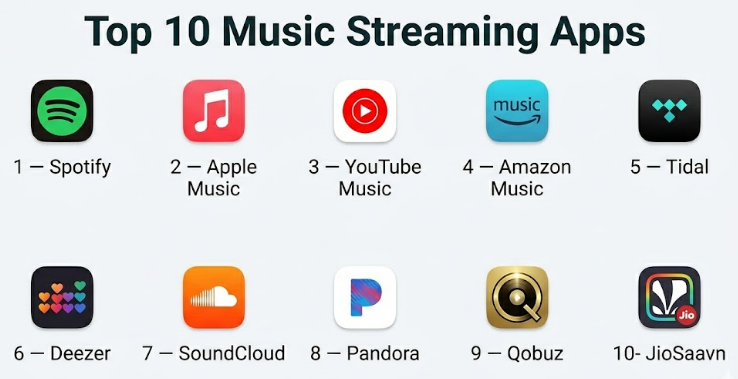
Top 10 Music Streaming Apps
#1 — Spotify
Short description :
Spotify is one of the most widely used music streaming apps, known for personalized playlists, strong discovery features, podcasts, social sharing, and broad device compatibility. It is suitable for casual listeners, students, professionals, families, podcast fans, and creators who want a flexible audio platform. Spotify’s strength is its recommendation engine and playlist ecosystem, making it easy to discover new music based on mood, activity, genre, and listening behavior.
Key Features
- Personalized playlists and daily mixes
- Large music and podcast catalog
- Offline listening with paid plans
- Playlist creation and sharing
- Cross-device playback
- Lyrics and artist profiles
- Social listening and collaborative playlists
Pros
- Excellent music discovery experience
- Strong playlist ecosystem
- Works across many devices and platforms
Cons
- Highest audio quality may not satisfy all audiophiles
- Free plan includes ads and restrictions
- Recommendations can become repetitive if listening habits are narrow
Platforms / Deployment
- Web / Windows / macOS / Linux / iOS / Android / Smart TVs / Smart speakers / Cars / Wearables
- Cloud
Security & Compliance
Standard account security features are available. Specific enterprise compliance certifications for consumer streaming use are Not publicly stated.
Integrations & Ecosystem
Spotify has one of the broadest consumer audio ecosystems, making it easy to use across devices and daily routines.
- Smart speakers
- Car systems
- Gaming consoles
- Wearables
- Social sharing
- Podcast and creator ecosystem
Support & Community
Spotify provides help resources and account support. It also has a large user community, playlist culture, and strong public mindshare.
#2 — Apple Music
Short description :
Apple Music is a premium music streaming service built strongly around the Apple ecosystem while also supporting other platforms. It is suitable for users who value high-quality audio, curated playlists, lyrics, library syncing, and deep integration with Apple devices. Apple Music is especially strong for iPhone, iPad, Mac, Apple Watch, and HomePod users who want a polished music experience.
Key Features
- Large music catalog
- Lossless and spatial audio support where available
- Curated playlists and radio-style shows
- Offline listening
- Lyrics support
- Library syncing
- Strong Apple device integration
Pros
- Excellent for Apple ecosystem users
- Strong audio quality options
- Good album and library-style listening experience
Cons
- Social sharing is less dominant than Spotify
- Interface may feel less discovery-first for some users
- Best experience is inside Apple’s ecosystem
Platforms / Deployment
- iOS / iPadOS / macOS / Windows / Android / Web / Smart speakers / Cars
- Cloud
Security & Compliance
Security depends on Apple ID and account settings. Specific compliance details for music streaming use are Not publicly stated.
Integrations & Ecosystem
Apple Music is deeply connected with Apple hardware and services.
- iPhone and iPad
- Mac and Apple Watch
- Siri and HomePod
- Car playback
- Library syncing
- Family sharing workflows
Support & Community
Apple provides product support resources. Apple Music also benefits from the broader Apple user community and device ecosystem.
#3 — YouTube Music
Short description :
YouTube Music is a music streaming app that combines official songs, albums, live performances, remixes, covers, and music videos. It is useful for users who already spend time on YouTube and want music discovery connected with video content. YouTube Music is especially strong for finding unofficial versions, live sessions, regional music, and creator-uploaded audio that may not appear on traditional music platforms.
Key Features
- Official songs and albums
- Music videos and live performances
- Personalized mixes
- Offline listening with paid plans
- Lyrics and video switching where available
- YouTube ecosystem integration
- Strong search for rare and regional content
Pros
- Excellent for music videos and live versions
- Strong discovery through YouTube ecosystem
- Useful for regional, remix, and cover discovery
Cons
- Interface may feel less library-focused than some competitors
- Free experience has restrictions
- Audio quality expectations may vary by user preference
Platforms / Deployment
- Web / iOS / Android / Smart TVs / Smart speakers / Cars
- Cloud
Security & Compliance
Security depends on Google account settings. Specific compliance details for music streaming use are Not publicly stated.
Integrations & Ecosystem
YouTube Music works naturally with YouTube and Google-based environments.
- YouTube video ecosystem
- Google account sync
- Smart speakers
- Android devices
- TV apps
- Search-driven discovery
Support & Community
Google provides help resources and account support. YouTube Music has broad user adoption because of the larger YouTube ecosystem.
#4 — Amazon Music
Short description :
Amazon Music is a streaming service designed for users who want music access within the Amazon ecosystem. It supports playlists, stations, offline listening, voice control, and high-quality audio options depending on plan availability. It is especially useful for users who already use Amazon devices, Alexa-enabled speakers, and Amazon subscriptions. Amazon Music is a practical choice for households and casual listeners.
Key Features
- Music streaming and playlists
- Offline listening with eligible plans
- Voice control with Alexa
- Stations and personalized recommendations
- High-quality audio options depending on plan
- Smart speaker support
- Family and individual plan options
Pros
- Good fit for Amazon and Alexa users
- Useful for home speaker listening
- Offers strong value for some existing Amazon users
Cons
- Interface may not feel as social as Spotify
- Catalog and features depend on plan
- Discovery experience may feel less distinctive for some users
Platforms / Deployment
- Web / Windows / macOS / iOS / Android / Smart TVs / Smart speakers / Cars
- Cloud
Security & Compliance
Security depends on Amazon account settings. Specific compliance details for music streaming use are Not publicly stated.
Integrations & Ecosystem
Amazon Music fits well into Amazon-powered homes and devices.
- Alexa speakers
- Fire TV devices
- Mobile apps
- Car playback
- Household listening
- Amazon account ecosystem
Support & Community
Amazon provides account and product support resources. User community strength is broad due to Amazon’s large ecosystem.
#5 — Tidal
Short description :
Tidal is a music streaming app known for high-fidelity audio, artist-focused positioning, music videos, curated playlists, and premium listening experiences. It is suitable for audiophiles, music enthusiasts, and users who care more about sound quality than casual algorithmic discovery. Tidal is also a strong choice for listeners who prefer album-based listening and deeper music appreciation.
Key Features
- High-fidelity audio options
- Large music catalog
- Music videos
- Curated playlists
- Offline listening
- Artist discovery features
- Editorial music content
Pros
- Strong audio quality positioning
- Good for serious music listeners
- Useful for album-focused listening
Cons
- May be more expensive than basic streaming options
- Social and playlist culture may be smaller than Spotify
- Casual users may not need premium audio features
Platforms / Deployment
- Web / Windows / macOS / iOS / Android / Smart TVs / Smart speakers / Cars
- Cloud
Security & Compliance
Standard account protections apply. Specific compliance certifications for consumer music streaming are Not publicly stated.
Integrations & Ecosystem
Tidal is especially relevant for users with high-quality audio hardware.
- Hi-fi audio systems
- Mobile and desktop playback
- Smart speakers
- Car playback
- Music video playback
- Audiophile listening workflows
Support & Community
Tidal provides help resources and support. Its community is strongest among audio-quality-focused listeners and music enthusiasts.
#6 — Deezer
Short description :
Deezer is a music streaming app offering songs, playlists, podcasts, radio-style listening, lyrics, and personalized recommendations. It is suitable for users who want a balanced streaming app with music discovery, cross-platform access, and strong international appeal. Deezer works well for casual listeners, families, students, and users who want a practical alternative to the biggest streaming platforms.
Key Features
- Music streaming and playlists
- Personalized Flow-style listening
- Offline listening with paid plans
- Lyrics support
- Podcasts and radio-style content
- Cross-platform playback
- Family and individual plan options
Pros
- Balanced music streaming experience
- Good personalization features
- Useful international catalog coverage
Cons
- Smaller mindshare in some regions
- Integrations may vary by device ecosystem
- Some users may prefer stronger playlist communities elsewhere
Platforms / Deployment
- Web / Windows / macOS / iOS / Android / Smart TVs / Smart speakers / Cars
- Cloud
Security & Compliance
Standard account security applies. Specific compliance certifications for consumer streaming use are Not publicly stated.
Integrations & Ecosystem
Deezer supports common listening environments.
- Mobile and desktop apps
- Smart speakers
- Car playback
- Lyrics workflows
- Podcast listening
- Playlist sharing
Support & Community
Deezer provides help resources and customer support. It has a global user base and is known as a capable alternative to larger platforms.
#7 — SoundCloud
Short description :
SoundCloud is a music streaming platform known for independent artists, remixes, demos, DJ sets, underground music, and creator-uploaded tracks. It is especially useful for listeners who want to discover emerging artists, niche genres, and tracks that may not be available on mainstream platforms. SoundCloud is also important for creators who want to publish and share music directly with audiences.
Key Features
- Independent artist uploads
- Music discovery by creators and genres
- Playlists and likes
- Comments and community features
- Creator profiles
- Offline listening with eligible plans
- Remix, demo, and underground catalog discovery
Pros
- Excellent for emerging and independent music
- Strong creator community
- Useful for niche and experimental genres
Cons
- Catalog quality can vary
- Mainstream catalog may not be as polished as major platforms
- Listening experience depends on upload quality
Platforms / Deployment
- Web / iOS / Android
- Cloud
Security & Compliance
Standard account protections apply. Specific enterprise compliance certifications for streaming use are Not publicly stated.
Integrations & Ecosystem
SoundCloud is creator and community-focused.
- Artist uploads
- Embedded players
- Playlist sharing
- Community comments
- Creator discovery
- Social music workflows
Support & Community
SoundCloud has support resources and a strong creator community. It is especially popular among independent musicians, DJs, producers, and niche music fans.
#8 — Pandora
Short description :
Pandora is a music streaming app known for radio-style listening and personalized stations. It is useful for listeners who prefer lean-back music discovery rather than manually building playlists. Pandora works well for users who want simple mood-based or artist-based stations. It is particularly recognized in markets where personalized internet radio remains popular.
Key Features
- Personalized radio stations
- Artist and song-based stations
- Music discovery
- Thumbs up and thumbs down feedback
- Offline listening with eligible plans
- Podcasts in supported experiences
- Simple listening interface
Pros
- Easy for radio-style listening
- Good for passive discovery
- Simple feedback-based personalization
Cons
- Availability may vary by region
- Less playlist-focused than Spotify or Apple Music
- Not ideal for users who want full global flexibility
Platforms / Deployment
- Web / iOS / Android / Smart speakers / Cars
- Cloud
Security & Compliance
Standard account security applies. Specific compliance certifications for consumer streaming use are Not publicly stated.
Integrations & Ecosystem
Pandora fits simple radio-style music listening.
- Artist stations
- Smart speakers
- Car playback
- Mobile listening
- Personalized radio workflows
- Podcast access where available
Support & Community
Pandora provides help resources and account support. Its community is strongest among users who prefer station-based music discovery.
#9 — Qobuz
Short description :
Qobuz is a music streaming app focused on high-resolution audio, album listening, editorial content, and music quality. It is especially useful for audiophiles, hi-fi listeners, collectors, and users who care about detailed sound. Qobuz is less focused on mainstream social playlist culture and more focused on sound quality, album presentation, and serious music appreciation.
Key Features
- High-resolution audio streaming
- Album-focused music experience
- Editorial content and music context
- Offline listening with eligible plans
- Curated playlists
- Music purchase options in some regions
- Desktop and mobile playback
Pros
- Strong high-resolution audio positioning
- Good for audiophiles and album listeners
- Editorial depth supports music discovery
Cons
- Not ideal for casual free listening
- Catalog and availability may vary by region
- Smaller social ecosystem than mainstream platforms
Platforms / Deployment
- Web / Windows / macOS / iOS / Android / Hi-fi systems depending on compatibility
- Cloud
Security & Compliance
Standard account protections apply. Specific enterprise compliance certifications for streaming use are Not publicly stated.
Integrations & Ecosystem
Qobuz is strongest for hi-fi and serious listening workflows.
- Desktop playback
- Mobile apps
- Hi-fi system compatibility
- High-resolution audio listening
- Album discovery
- Editorial music exploration
Support & Community
Qobuz provides support resources. Its community is strongest among audiophiles and users who care about high-quality audio playback.
#10 — JioSaavn
Short description :
JioSaavn is a music streaming app with strong appeal for Indian music listeners and users who enjoy Bollywood, regional Indian music, podcasts, playlists, and international tracks. It is especially useful for listeners in India and South Asian music fans globally. JioSaavn supports mainstream songs, regional discovery, playlists, and mobile-first streaming. It is a practical option for users who prioritize Indian music catalogs and local listening habits.
Key Features
- Bollywood and regional music catalog
- International music access
- Playlists and radio-style listening
- Podcasts and audio shows
- Offline listening with eligible plans
- Lyrics and recommendations
- Mobile-first experience
Pros
- Strong for Indian and regional music
- Good mobile listening experience
- Useful for Bollywood and local language discovery
Cons
- Less suitable for users focused only on Western high-resolution audio
- Feature depth may vary by plan
- Some users may prefer broader global discovery elsewhere
Platforms / Deployment
- Web / iOS / Android
- Cloud
Security & Compliance
Standard account protections apply. Specific compliance certifications for streaming use are Not publicly stated.
Integrations & Ecosystem
JioSaavn fits Indian music and mobile-first listening workflows.
- Bollywood playlists
- Regional language music
- Mobile streaming
- Podcast listening
- Radio-style discovery
- Offline listening with eligible plans
Support & Community
JioSaavn provides user support resources. Its community is strongest among Indian music listeners and regional music audiences.
Comparison Table
| Tool Name | Best For | Platform(s) Supported | Deployment | Standout Feature | Public Rating |
|---|---|---|---|---|---|
| Spotify | Discovery and playlists | Web, Windows, macOS, Linux, iOS, Android, TVs, speakers, cars | Cloud | Personalized playlists and social listening | N/A |
| Apple Music | Apple ecosystem and high-quality audio | iOS, iPadOS, macOS, Windows, Android, Web | Cloud | Lossless, spatial audio, and Apple integration | N/A |
| YouTube Music | Videos, live versions, and rare tracks | Web, iOS, Android, TVs, speakers, cars | Cloud | YouTube-powered music discovery | N/A |
| Amazon Music | Amazon and Alexa users | Web, Windows, macOS, iOS, Android, TVs, speakers, cars | Cloud | Alexa and Amazon ecosystem support | N/A |
| Tidal | Audiophiles and music enthusiasts | Web, Windows, macOS, iOS, Android, TVs, speakers, cars | Cloud | High-fidelity music streaming | N/A |
| Deezer | Balanced global music streaming | Web, Windows, macOS, iOS, Android, TVs, speakers, cars | Cloud | Personalized Flow-style listening | N/A |
| SoundCloud | Independent and emerging artists | Web, iOS, Android | Cloud | Creator-uploaded and underground music | N/A |
| Pandora | Radio-style listening | Web, iOS, Android, speakers, cars | Cloud | Personalized stations | N/A |
| Qobuz | High-resolution album listening | Web, Windows, macOS, iOS, Android, hi-fi systems | Cloud | Hi-res audio and editorial music depth | N/A |
| JioSaavn | Indian and regional music listeners | Web, iOS, Android | Cloud | Bollywood and regional music catalog | N/A |
Evaluation & Music Streaming Apps
| Tool Name | Core (25%) | Ease (15%) | Integrations (15%) | Security (10%) | Performance (10%) | Support (10%) | Value (15%) | Weighted Total (0–10) |
|---|---|---|---|---|---|---|---|---|
| Spotify | 9 | 9 | 10 | 8 | 9 | 8 | 9 | 8.95 |
| Apple Music | 9 | 8 | 9 | 9 | 9 | 8 | 8 | 8.60 |
| YouTube Music | 8 | 8 | 9 | 8 | 8 | 8 | 8 | 8.15 |
| Amazon Music | 8 | 8 | 8 | 8 | 8 | 8 | 8 | 8.00 |
| Tidal | 9 | 7 | 8 | 8 | 9 | 8 | 7 | 8.15 |
| Deezer | 8 | 8 | 8 | 8 | 8 | 7 | 8 | 7.90 |
| SoundCloud | 8 | 8 | 7 | 7 | 8 | 7 | 8 | 7.65 |
| Pandora | 7 | 9 | 7 | 8 | 8 | 7 | 8 | 7.70 |
| Qobuz | 9 | 7 | 7 | 8 | 9 | 8 | 7 | 7.95 |
| JioSaavn | 8 | 8 | 7 | 7 | 8 | 7 | 8 | 7.60 |
The scoring is comparative and should be used as a shortlist guide, not as a universal ranking. Spotify scores strongly for discovery and ecosystem reach, while Apple Music is excellent for Apple users and high-quality audio. Tidal and Qobuz are stronger for audiophiles, YouTube Music is powerful for video-driven discovery, and JioSaavn is especially relevant for Indian and regional music listeners.
Which Music Streaming App Is Right for You?
Solo / Freelancer
Solo users should choose based on listening style. Spotify is a strong all-round option for playlists, discovery, and device support. Apple Music is better for users who live in the Apple ecosystem and care about audio quality. YouTube Music is useful for users who like live versions, covers, remixes, and video-based discovery.
Freelancers who use music for focus, deep work, or creative inspiration should prioritize offline listening, playlist quality, device switching, and recommendation accuracy.
SMB
Small businesses may use music streaming apps for personal listening, employee focus, internal creative work, or content research. However, businesses must be careful about public playback rules because consumer music subscriptions may not cover commercial public use.
For business users, Spotify, Apple Music, Amazon Music, and YouTube Music are practical for individual employee listening. For public spaces, businesses should evaluate properly licensed commercial music solutions instead of regular consumer streaming plans.
Mid-Market
Mid-market companies may not need a company-wide music streaming app unless there is a specific use case such as creative research, marketing, audio branding, or employee wellness. Teams that work with music trends may use Spotify, YouTube Music, SoundCloud, or TikTok-adjacent discovery workflows for research.
Marketing and creative teams should choose platforms based on audience behavior, music discovery depth, playlist culture, and regional relevance.
Enterprise
Enterprises should separate personal listening from commercial music use. Consumer apps may be suitable for employees as individual subscriptions, but they are not automatically appropriate for public spaces, events, retail, hospitality, or branded environments.
Enterprise buyers should evaluate licensing, user management, billing, access controls, privacy, and approved use cases before recommending or standardizing any music streaming platform.
Budget vs Premium
Free plans may work for casual users who do not mind ads, limited skips, or feature restrictions. Spotify, YouTube Music, SoundCloud, and other platforms may offer free or limited experiences depending on region and plan availability.
Premium plans are worth considering when users want offline listening, ad-free playback, higher audio quality, better control, background play, family sharing, or uninterrupted listening.
Feature Depth vs Ease of Use
For ease of use, Spotify, Apple Music, YouTube Music, Amazon Music, and Deezer are strong mainstream options. They are easy to set up and work well for most daily listening needs.
For feature depth, Tidal and Qobuz are stronger for audio quality, SoundCloud is stronger for independent discovery, and Pandora is stronger for passive radio-style listening.
Integrations & Scalability
Spotify, Apple Music, YouTube Music, and Amazon Music have strong device ecosystems. They work across phones, desktops, speakers, TVs, car systems, and wearables.
Scalability for families depends on multi-profile support, parental controls, family plans, and device compatibility. For businesses, scalability depends more on licensing and policy suitability than app features alone.
Security & Compliance Needs
For personal use, account security, payment safety, and privacy settings are usually the main concerns. Users should use strong passwords, review connected devices, and manage account sharing carefully.
For organizations, compliance is less about the app’s playlist features and more about licensing, user access, billing, privacy, and whether the app is approved for business or public playback use.
Frequently Asked Questions
1. What is a music streaming app?
A music streaming app lets users listen to songs, albums, playlists, podcasts, radio-style stations, and other audio content through the internet. Many apps also support offline downloads for paid users.
2. Which music streaming app is best overall?
Spotify is a strong all-round choice for many users because of playlists, discovery, social sharing, and broad device support. However, Apple Music, YouTube Music, Amazon Music, Tidal, and others may be better depending on the user’s needs.
3. Which app is best for high-quality audio?
Apple Music, Tidal, and Qobuz are strong choices for users who care about high-quality audio. The best option depends on device support, audio hardware, catalog preference, and whether the user values lossless or high-resolution playback.
4. Which app is best for Indian music?
JioSaavn is a strong option for Indian and regional music listeners. YouTube Music, Spotify, Apple Music, and Amazon Music also offer Indian music catalogs, but the best choice depends on language, playlist quality, and regional preferences.
5. Which app is best for discovering new artists?
Spotify is strong for personalized discovery, SoundCloud is excellent for independent and emerging artists, and YouTube Music is useful for live versions, covers, remixes, and creator-driven music discovery.
6. Can I listen offline?
Most major music streaming apps support offline downloads with eligible paid plans. Offline listening is useful for travel, commuting, workouts, and areas with weak internet connectivity.
7. Are free music streaming plans enough?
Free plans can be enough for casual listening, but they often include ads, limited skips, lower control, or playback restrictions. Premium plans are better for offline listening, uninterrupted playback, and stronger control.
8. Can businesses use regular music streaming apps in public spaces?
Businesses should be careful. Consumer streaming plans may not include rights for public or commercial playback. Cafes, gyms, salons, stores, and events should evaluate properly licensed business music solutions.
9. Which app is best for podcasts?
Spotify, Apple Music-adjacent Apple audio services, YouTube Music, Amazon Music, and Deezer may support podcasts depending on region and app experience. Users should choose based on podcast catalog, playback controls, and device compatibility.
10. What is the biggest mistake users make when choosing a music app?
The biggest mistake is choosing only by popularity. Users should also consider audio quality, device ecosystem, music catalog, family plans, offline listening, playlist discovery, regional content, and privacy settings.
Conclusion
Music streaming apps have become everyday audio platforms for entertainment, focus, discovery, podcasts, travel, fitness, and personal expression. The best app depends on your listening style, device ecosystem, audio quality needs, regional catalog preferences, and budget. Spotify is a strong all-round choice for discovery and playlists, Apple Music is excellent for Apple users and high-quality audio, YouTube Music is valuable for videos and rare versions, Amazon Music fits Alexa-centered households, and Tidal or Qobuz are better for audiophiles. SoundCloud is ideal for independent discovery, Pandora works well for radio-style listening, and JioSaavn is especially relevant for Indian music audiences.
