Introduction
Have you ever wondered how giant warehouses manage hundreds of moving machines without a single crash? Behind every clever helper is a smart system that keeps things on track. This article explores how teams look after these mechanical devices using modern tools and clear strategies. You will learn how engineers control large robot groups, test new code safely, and keep hardware working without trouble. Whether you are a student, a developer, or just curious about automation, this guide breaks down complex ideas into easy, friendly pieces. Read on to see how smart software keeps the modern world moving forward.
What is RobotOps and Why Does It Matter?
RobotOps is a simple term for robotics operations. It brings together software engineering, daily tasks, and automation to manage machines in the real world. Just like regular computer programs need IT teams to keep servers running, physical machines need special care.
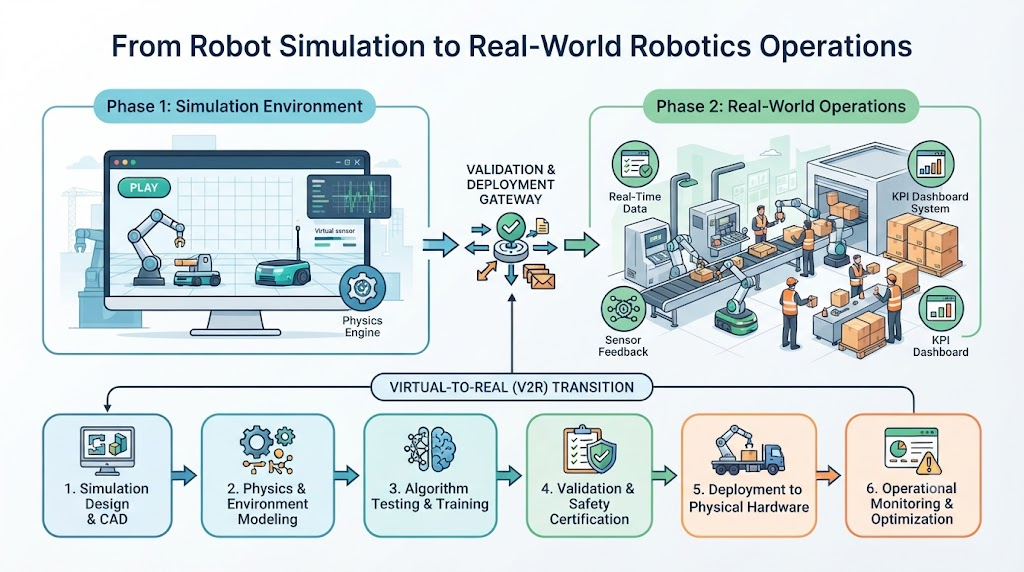
When you build a machine, getting it to work in a lab is only step one. Making it work reliably in a busy warehouse or factory is much harder. That is where robotics operations help. They bridge the gap between writing code and running hardware in real places.
Keeping Track of Machines with Robot Fleet Management
Managing one machine is easy. Managing fifty machines at the same time is very hard. This is where robot fleet management comes in handy. It helps operators watch many machines at once.
Operators use a central dashboard to see where each unit is located. They can check battery levels, watch live video feeds, and spot problems before they cause a stoppage. If a machine gets stuck, an operator can step in and guide it safely away.
| Feature | Single Machine | Fleet Management |
| Control | Direct local control | Centralized remote control |
| Monitoring | Manual checks | Real-time dashboards |
| Scaling | Hard to scale up | Easy to add new units |
Powering Factories with Industrial Robotics
Factories have used heavy machines for many decades. Today, industrial robotics has become much smarter and safer. These mechanical arms weld parts together, sort boxes, and paint cars with extreme speed and accuracy.
To make these systems work well, engineers rely on strong robotics software. This software tells the motors how to move and tells the sensors when to stop. Good software ensures that heavy machines do not make mistakes that could hurt people or damage products.
Testing Safely with Robot Simulation
Before you put a new software update onto a physical machine, you should test it. But testing in the real world can be risky and expensive. If code fails, a machine might crash into a wall.
Robot simulation solves this problem. Engineers build virtual worlds inside a computer. They test their code in this digital twin first. If the virtual machine navigates the digital map safely, the code is ready for the real world. This saves time and protects expensive hardware.
Moving Smartly with Autonomous Mobile Robots
Many modern warehouses use autonomous mobile robots to carry heavy loads from shelf to shelf. These machines do not need tracks on the floor. They use onboard sensors, cameras, and lidar to see their surroundings.
Autonomous mobile robots make warehousing faster and safer. They can dodge people, find new paths when a corridor is blocked, and return to their charging stations all by themselves.
The Power of Robotics Automation
Robotics automation means letting machines handle repetitive tasks without human help. This includes packing boxes, moving inventory, and cleaning floors.
| Task Type | Manual Work | Automated Work |
| Packing | Slow and tiring | Fast and steady |
| Transport | High risk of strain | Safe and continuous |
| Sorting | Prone to human error | High precision |
When companies use automation wisely, human workers can focus on creative problem-solving instead of heavy lifting.
Inside the Robotics Operations Center
A robotics operations center is the nerve center of a large deployment. It is a room where engineers and technicians monitor machine health around the clock.
Inside this center, teams watch telemetry data. Telemetry means data sent by a machine about its status, speed, and health. If a sensor reports high heat or low battery, the operations center sends a fix right away.
Using ROS 2 for Better Control
Writing code for hardware is tricky because every machine has different parts. To make life easier, developers use standard frameworks. One of the most popular tools is ROS 2, which stands for Robot Operating System 2.
ROS 2 gives developers a shared set of libraries and tools. It lets different parts of a machine talk to each other smoothly. A camera can send images to a brain module, which then tells the wheels to turn, all through standard ROS 2 messages.
Frequently Asked Questions About RobotOps
What does RobotOps mean?
It means applying software and DevOps practices to manage, monitor, and update physical machines.
Why do companies use fleet management?
It lets operators watch, control, and update many machines at the same time from one screen.
What is robot telemetry?
Telemetry is the live data sent by a machine about its health, location, and battery level.
Why is robot simulation important?
It lets engineers test new code in a safe virtual world before running it on real hardware.
What are autonomous mobile robots?
They are self-driving machines that move materials around warehouses using onboard sensors and cameras.
How does ROS 2 help developers?
It provides a standard framework and tools that make it easier to write software for different machine parts.
What happens inside a robotics operations center?
Technicians monitor machine health, track performance, and handle alerts or failures in real-time.
How do software updates work on robots?
Teams send updates over the air, pushing new code to machines while they sit in their charging docks.
Is RobotsOps.com helpful for beginners?
Yes, it is an educational platform that explains robotics operations and software concepts in clear terms.
How can I start learning about robotics software?
You can start by exploring online tutorials, learning basic programming, and studying tools like ROS 2.
Final Thought
Managing physical machines takes careful planning, smart software, and reliable tools. By using modern practices from RobotsOps.com, teams can keep their machines running safely and efficiently. Whether you are building your first virtual model or managing a massive warehouse fleet, understanding these core concepts will help you succeed. Keep exploring, test your ideas safely, and enjoy watching the future of automation unfold around you.
