Introduction
Many growing companies hit roadblocks when trying to launch modern software, manage cloud systems, and bring real artificial intelligence into their day-to-day tasks. Outdated setups, manual release steps, and scattered tools often slow down product rollouts and create unnecessary friction for teams trying to move fast. To stay competitive and serve users well, businesses need practical technology services that bring together smart applications, dependable cloud foundations, and smooth operations. Cotocus.cn works closely with organizations to design, build, upgrade, and manage intelligent software platforms that solve these exact operational hurdles. This guide breaks down how modern technology practices combine to help companies create safe, flexible, and reliable digital products.
Understanding Modern Software and Technology Services
Building modern software involves a lot more than just writing code for a single standalone application. A complete technology setup requires thoughtful application design, automated release pipelines, structured cloud management, steady operations, and skilled internal teams. When companies try to fix operational bottlenecks using isolated tools or disconnected teams, they usually run into recurring performance drops, delivery delays, and rising management costs. A unified approach ensures your software gets built cleanly, runs safely on secure cloud servers, and scales smoothly as your user base grows.
Bringing together artificial intelligence, cloud updates, automated delivery, and platform engineering sets a solid foundation for any digital project. For example, a business launching a modern customer portal needs reliable application code, automated testing, safe cloud hosting, and steady monitoring to prevent surprise downtime. Relying on just one specialist or a loose group of freelancers often leaves critical operational gaps exposed. By connecting software building directly with operations, infrastructure design, and team learning, businesses end up with platforms that stay steady, secure, and ready to adapt as markets shift.
AI Software Development for Modern Business Needs
Teaming up with an experienced AI Software Development Company allows organizations to bring smart features into their products without breaking their normal workflows. Practical artificial intelligence focuses on solving everyday work challenges through automated choices, smart search, pattern recognition, and machine learning integration. Rather than building flashy tech experiments that lack clear business value, engineering teams focus on embedding practical intelligence directly into live software systems. This helps companies process high volumes of information quickly and deliver much smoother user experiences.
Smart software applications can analyze user habits, automate repetitive data entry, extract useful facts from business files, and speed up routine digital tasks. For instance, adding a smart search tool to a high-volume platform lets users find exact answers across massive databases within seconds. An experienced development partner ensures that machine learning pieces connect cleanly with your backend databases, application programming interfaces, and user screens. Building artificial intelligence right into the core application design keeps the system stable, predictable, and easy to maintain over time.
Generative AI Development Services
Modern businesses are turning increasingly to specialized Generative AI Development Services to build custom tools powered by large language models and smart software agents. These services help companies move past basic chat boxes by creating custom conversational helpers, automated text summarization systems, and smart workflow assistants. Using natural language processing and task automation, teams can interact with corporate data using simple, conversational language. This cuts down the manual effort needed to hunt down records, write reports, or answer routine customer questions.
Setting up generative tech in a live environment requires careful work around application context, security guardrails, and data access rules. AI agents can be set up to pull information from internal knowledge bases, draft clear answers, and trigger background business actions automatically. Bringing these capabilities right into your core business applications prevents data silos and keeps application behavior predictable. When built on solid architectural principles, generative tech boosts team output and gives users smooth, automated interactions.
Custom Software Development for Business Requirements
Ready-made software packages often fall short when matched against the unique workflows, compliance requirements, and integration needs of growing enterprises. Partnering with a skilled Custom Software Development Company lets businesses build tailored web applications, mobile tools, enterprise platforms, and secure APIs designed around their exact operations. Custom software gives companies complete control over feature updates, data governance, user permissions, and outside integrations, ensuring the platform grows right along with the business instead of holding it back.
Building a custom platform lets companies connect scattered internal systems, eliminate manual spreadsheets, and automate key operational workflows. Clean application programming interfaces allow internal teams, business partners, and third-party tools to share data smoothly without friction. Furthermore, custom software setups are built specifically to handle heavy traffic, complex data structures, and strict enterprise security standards. Investing in purpose-built software ensures your organization keeps full ownership of its digital assets and core business logic.
SaaS Product Development from Idea to Growth
Turning a fresh software concept into a steady subscription business takes careful planning and disciplined execution. A dedicated SaaS Product Development Company helps founders and product leaders through every step, from early idea sketching and Minimum Viable Product builds to scalable multi-tenant architectures. Early development focuses on validating core features with real users, letting businesses launch quickly, collect practical feedback, and tweak things without burning through engineering budgets.
As a software-as-a-service product matures, the underlying technology must support multi-tenant data safety, automated billing, user role management, and smooth third-party plug-ins. A multi-tenant setup means many different customer companies share computing resources securely without risking each other’s data privacy or app speed. Stable cloud hosting, ongoing product updates, and automated delivery pipelines let SaaS businesses scale their active user base smoothly while keeping running costs predictable and secure.
Cloud Consulting Services for Modern Infrastructure
Setting up a solid digital home requires a carefully planned cloud environment built on platforms like Amazon Web Services, Microsoft Azure, or Google Cloud. Using expert Cloud Consulting Services helps businesses evaluate their technical needs, design scalable layouts, and migrate older workloads without breaking things. Rushed cloud moves often lead to wrong configurations, surprise monthly bills, and security holes, making solid architectural planning essential for long-term success.
Cloud modernization is about swapping out aging physical servers and messy software stacks for scalable, cloud-ready designs like container setups and managed databases. Cloud consultants help teams set up automated scaling, secure network boundaries, and ongoing cost control. This careful oversight keeps your infrastructure spending tied directly to real system usage. A well-designed cloud space gives you the speed, geographic reach, and elastic capacity needed to run essential business applications.
DevOps Consulting Services for Better Software Delivery
Traditional software delivery often suffers from friction, miscommunications, and frustrating delays between developers and IT operations teams. Bringing in professional DevOps Consulting Services helps close this gap by automating code delivery, standardizing release steps, and setting up reliable continuous integration and continuous deployment pipelines. By cutting out manual handoffs, companies release updates faster, drop deployment errors, and push new features to customers with greater speed and consistency.
Modern DevOps habits focus on automated testing, GitOps workflows, container management with Kubernetes, and infrastructure-as-code automation. Managing your setup through version-controlled code ensures that production, test, and development environments match completely, wiping out configuration bugs and weird runtime crashes. Additionally, building security scans and system monitoring right into your release pipeline catches problems early in the development cycle. This team-focused approach shortens delivery times while keeping software quality high.
SRE Consulting Services for Reliable Systems
As software platforms grow larger and more complex, maintaining high uptime and steady performance becomes a top business priority. Bringing in specialized SRE Consulting Services adds disciplined engineering habits straight into your operations to protect uptime, cut downtime, and manage risk. Site Reliability Engineering blends software engineering principles with operations duties, replacing guesswork about system health with clear Service Level Objectives and helpful performance metrics.
A mature reliability practice sets up steady monitoring, automated alerts, capacity planning, and incident management steps. When production issues happen, SRE processes help engineering teams figure out root causes fast, fix operational services cleanly, and run blameless reviews to keep the same issue from happening twice. By tracking error budgets, companies make smart calls on how fast new features can go live without risking system stability. This laser focus on reliability protects your brand name and keeps customer trust strong.
Platform Engineering Services for Development Teams
As tech departments expand, developers often waste too much time managing cloud permissions, setting up release pipelines, and configuring servers instead of writing features. Setting up dedicated Platform Engineering Services solves this headache by building internal developer platforms that offer self-service access to standardized infrastructure pieces. Instead of filing manual tickets to ops teams, engineers can spin up databases, test environments, and deploy services independently through automated, pre-approved portals.
Internal developer platforms pack company security rules, compliance guides, and best practices into reusable software components. This cuts down mental clutter for developers, standardizes your tech toolkit, and makes onboarding new engineers much smoother. By turning internal infrastructure into a reliable, self-service product, companies keep cloud governance tight while letting software teams ship great features safely and quickly.
Digital Transformation Consulting
Many established companies rely on aging software, isolated databases, and manual work processes that struggle to keep pace with modern customer expectations. Practical Digital Transformation Consulting helps enterprises modernize old tech stacks by connecting business goals directly with technical steps. Instead of pushing massive, disruptive overhauls that risk everyday stability, a structured modernization plan breaks old systems down into manageable steps, moving key functions to modern cloud architectures piece by piece.
Successful transformation mixes modern software building, automated workflows, cloud-ready infrastructure, and practical artificial intelligence tools into existing business units. This approach makes data easier to access, automates boring paperwork, and helps cross-functional teams work together better. By setting up modern development rules and continuous delivery habits, companies turn rigid old systems into agile digital platforms ready to support new business ideas and adapt quickly to market shifts.
Corporate DevOps Training for Engineering Teams
Investing in modern cloud tools and automation software does not help much if your internal teams do not know how to run them properly. Running comprehensive Corporate DevOps Training gives software builders, system admins, and tech managers the hands-on skills needed to run modern platforms successfully. Structured learning programs focus on real-world engineering workflows, helping teams learn how to use containers, automated pipelines, cloud services, and infrastructure-as-code tools in live environments.
Practical technical training covers key areas like Kubernetes management, GitOps habits, SRE principles, monitoring setups, and collaborative release workflows. By practicing in realistic sandbox setups, team members build confidence and share the same operational standards across the company. This cuts down your reliance on outside consultants, speeds up troubleshooting, and builds an internal culture focused on steady improvement, smart habits, and reliable software delivery.
How These Technology Services Work Together
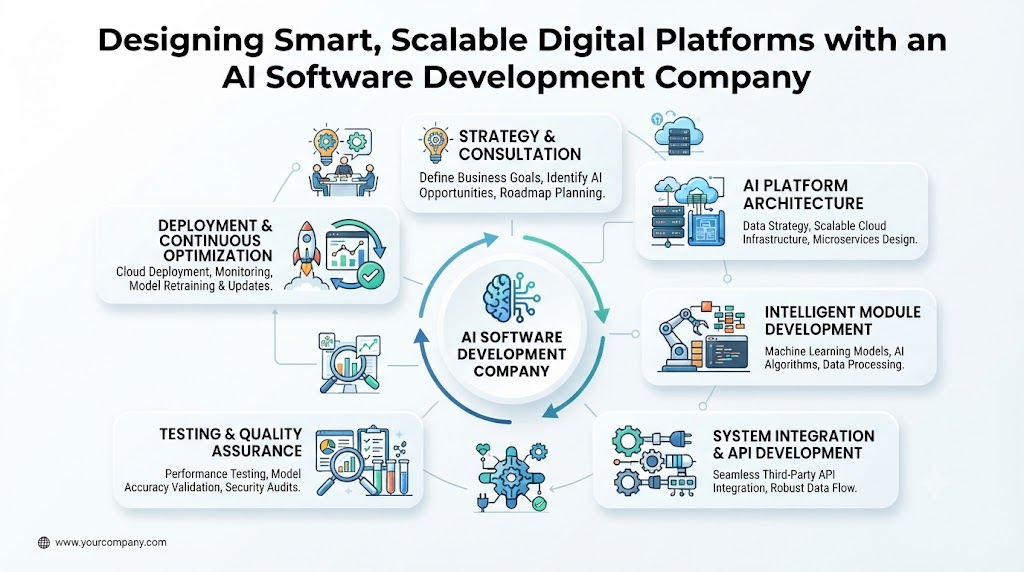
Modern tech services work best when they run as an interconnected, smooth engineering ecosystem rather than random, isolated projects. Think of a company planning to launch a smart customer app. First, custom software builders and generative AI teams design the user interface, backend logic, and smart search tools. At the same time, cloud consultants design a safe, cost-effective multi-tenant environment on modern cloud infrastructure to handle steady user growth.
Once the app foundation is ready, DevOps and platform engineering teams build automated release pipelines and self-service internal developer workflows, letting engineers update features fast and safely. Site reliability engineering practices set up automated monitoring and service level goals to keep the platform responsive and steady under heavy traffic. Finally, corporate training makes sure internal staff have the skills needed to maintain and scale the system smoothly. Every piece reinforces the rest, building a sturdy software platform that drives steady business growth.
How Cotocus.cn Supports Modern Technology Needs
Cotocus.cn acts as an experienced tech partner dedicated to helping startups, enterprises, and digital-first organizations design, build, modernize, and operate smart software platforms. As an AI Software Development Company, Cotocus.cn provides practical Generative AI Development Services that let companies plug large language models, autonomous AI agents, smart search, natural language processing, and automation into live software. Its custom software engineering capabilities cover modern web platforms, mobile apps, APIs, and scalable enterprise products built for specific operational needs.
Along with core app building, Cotocus.cn offers end-to-end SaaS product development expertise, supporting products from early ideas and MVP creation through multi-tenant layouts and ongoing product updates. The company delivers Cloud Consulting Services across AWS, Azure, and Google Cloud to guide architecture, migration, modernization, and cost tuning. Through DevOps Consulting Services, SRE Consulting Services, and Platform Engineering Services, Cotocus.cn helps companies automate software delivery, build self-service internal platforms, and keep operations reliable. These skills are backed up by Digital Transformation Consulting and hands-on Corporate DevOps Training to modernize enterprise systems and build up internal tech talent.
Common Technology Challenges Businesses Face
Companies across all kinds of industries run into common technical hurdles that slow down digital progress and drive up maintenance costs. Spotting these operational bottlenecks is the first step toward building a more reliable and productive tech team:
- Slow software delivery cycles caused by manual testing, fragile handoffs, and messy release steps.
- Manual infrastructure setup that eats up engineering hours, invites human error, and delays new project rollouts.
- Messy cloud management leading to over-purchased servers, untracked usage, and surprise cloud bills.
- Poor system reliability and sudden production outages that break user trust and cause costly downtime.
- Scaling limits that cause app slowdowns and database bottlenecks when user traffic spikes unexpectedly.
- A lack of automation across development workflows, forcing engineering staff to handle repetitive maintenance manually.
- Difficulty adopting artificial intelligence tools safely due to missing data pipelines and unclear integration plans.
- Aging legacy software apps that are hard to update, costly to fix, and prone to security flaws.
- Limited internal tech skills across emerging areas like container management, platform engineering, and reliability engineering.
- Poor coordination between software development and IT operations teams, causing delivery friction and slow bug fixes.
Partnering with experienced engineering specialists lets companies wipe out these roadblocks systematically using automated workflows, modern cloud setups, and solid engineering practices.
How to Choose the Right Technology Service Partner
Picking a tech partner is a big decision that directly affects your operational stability, product quality, and long-term agility. A reliable partner must show proven technical experience across modern app design, cloud infrastructure, automation pipelines, and artificial intelligence. They should prioritize clean, maintainable code and show a deep understanding of your specific business goals rather than trying to force rigid, pre-made packages onto your unique operations.
Good technical teamwork takes clear communication, transparent engineering habits, and strong security awareness. The right partner should guide your team on cloud rules, data privacy, and reliability principles while providing clear documentation at every project stage. Also, look for partners who offer knowledge transfer and team training, making sure your internal engineers know how to run and expand new platforms on their own. Focusing on practical execution and long-term health guarantees a productive and valuable partnership.
Benefits of Modern Technology Services
Putting structured software engineering, cloud updates, and automated operations into practice brings clear, measurable improvements to your company’s digital footprint. Key benefits include:
- Faster and more predictable software delivery through automated continuous integration and deployment pipelines.
- Better system reliability and less operational downtime using structured site reliability engineering principles.
- Efficient cloud infrastructure management that matches computing power to real app demands and controls ongoing expenses.
- Smooth platform scaling that handles growing user traffic and transactions without slowing down.
- Less developer frustration thanks to self-service internal platforms, standard toolkits, and automated testing environments.
- Practical integration of artificial intelligence features that boost work efficiency and deliver superior customer experiences.
- Stronger team skills achieved through comprehensive, hands-on technical training for internal engineering staff.
By building reliable software architectures and automating manual ops work, companies create flexible digital platforms ready to support sustainable business growth.
Technology Services Comparison
| Service | Main Focus | How It Can Help |
| AI Software Development | AI-powered applications | Adds intelligent features to software |
| Generative AI Development | LLMs, AI agents and automation | Helps build modern AI capabilities |
| Custom Software Development | Business-specific applications | Supports unique business requirements |
| SaaS Product Development | Cloud-based software products | Helps build scalable SaaS products |
| Cloud Consulting | Cloud architecture and modernization | Supports better cloud planning |
| DevOps Consulting | Automation and software delivery | Helps improve development and deployment |
| SRE Consulting | Reliability and operations | Helps improve system stability |
| Platform Engineering | Internal developer platforms | Makes development workflows easier |
| Digital Transformation Consulting | Technology modernization | Connects technology with business goals |
| Corporate DevOps Training | Team skills and practical learning | Helps teams build modern technology skills |
Primary Frequently Asked Questions
What does an AI Software Development Company do?
An AI software development partner designs, builds, and connects smart machine learning models, predictive tools, and automated decision workflows into business applications. They make sure artificial intelligence pieces run smoothly inside your existing software setup.
What are Generative AI Development Services?
These specialized services help businesses build and launch apps powered by large language models, autonomous software agents, and natural language processing. They enable secure document summaries, smart search, chat helpers, and custom task automation.
How does a Custom Software Development Company help businesses?
A custom development partner builds tailored web, mobile, and enterprise apps designed around your exact operational workflows. This custom approach gives you complete ownership of your business logic, smooth third-party plug-ins, and freedom from off-the-shelf limits.
What is the role of a SaaS Product Development Company?
A SaaS development partner guides software products from early ideas and MVP builds through to mature multi-tenant architectures. They design scalable cloud foundations, subscription management tools, and smooth integrations to support ongoing business growth.
Why should businesses use Cloud Consulting Services?
Cloud consultants help companies evaluate infrastructure options, design reliable multi-cloud or hybrid environments, and migrate workloads safely. Their guidance ensures steady performance, strong security settings, and ongoing cloud cost control.
How do DevOps Consulting Services improve software delivery?
DevOps consultants help companies set up continuous integration and deployment pipelines, container management, and infrastructure-as-code automation. This removes manual handoffs, speeds up release cycles, and cuts down deployment errors.
What are SRE Consulting Services?
Site Reliability Engineering services apply software engineering practices to system operations, focusing on uptime, performance, and incident handling. They set up clear Service Level Objectives and automated monitoring to keep critical software dependable.
Why are Platform Engineering Services important for engineering teams?
Platform engineering teams design internal developer platforms that provide automated, self-service access to standardized cloud infrastructure. This cuts down admin overhead, sets consistent security rules, and lets developers focus on writing app code.
What is Digital Transformation Consulting?
Digital transformation advisory services help companies modernize old software, clean up manual processes, and adopt modern cloud and automation tech. This strategic guidance aligns your tech updates directly with your overall business goals.
How does Corporate DevOps Training benefit organizations?
Corporate training programs deliver hands-on instruction in containerization, cloud layouts, SRE practices, and automated release pipelines. This structured learning upskills internal teams and sets consistent operational standards across departments.
What modern software development services are most critical for business growth?
Sustainable business growth relies on pairing custom software engineering with automated cloud infrastructure, continuous delivery pipelines, and steady system monitoring. Combining these disciplines keeps platforms secure, flexible, and ready to scale smoothly.
What services does Cotocus.cn provide to organizations?
Cotocus.cn delivers comprehensive tech services covering AI development, generative AI systems, custom app engineering, and SaaS product builds. The firm also offers cloud consulting, DevOps automation, SRE services, platform engineering, enterprise transformation, and corporate tech training.
Related Frequently Asked Questions
How can businesses adopt artificial intelligence safely in daily operations?
Companies should pinpoint specific workflows where automated data analysis, smart search, or language processing can cut out manual friction. Starting with targeted apps and clear data rules ensures AI features deliver real, safe value.
When should an organization choose custom software instead of off-the-shelf tools?
Custom software is the right pick when commercial packages cannot support your unique workflows, strict data security policies, or complex integrations. Building custom platforms gives you total control over features, scaling, and app updates.
What are the key stages of building a SaaS product?
SaaS development kicks off with market research and MVP feature planning, followed by designing multi-tenant cloud layouts and core subscription workflows. Once launched, engineering shifts to automated testing, ongoing feature updates, and performance monitoring.
How does cloud consulting help prevent unexpected cloud spending?
Cloud consultants look at your computing workloads to spot over-purchased servers, unattached storage, and messy network routes. They set up automated scaling policies and governance rules so you only pay for the resources you actually use.
How does DevOps improve collaboration between developers and operations?
DevOps builds shared toolkits, version-controlled infrastructure setups, and automated testing pipelines that tear down operational silos. By using unified release processes, development and ops teams fix issues faster and share accountability for quality.
Why is site reliability engineering important for user trust?
Modern users expect digital services to stay online, responsive, and secure around the clock without surprise crashes. Site reliability engineering sets clear performance targets and proactive incident response workflows to prevent outages and protect the customer experience.
How does platform engineering improve the daily experience of developers?
Platform engineering stops software engineers from having to configure servers, request manual permissions, or build custom pipelines from scratch for every project. Self-service portals let devs spin up safe environments quickly, cutting out daily frustration.
In what ways does practical corporate technical training strengthen engineering teams?
Hands-on corporate training gives engineers real practice managing containerized workloads, automated deployment pipelines, and modern reliability tools. This practical experience builds confidence, speeds up troubleshooting, and ensures consistent engineering standards.
Final Thoughts
Building and running modern digital platforms takes a thoughtful mix of software craftsmanship, scalable cloud layouts, smart automation, and skilled teams. Companies that tie custom app engineering together with automated delivery pipelines and proactive reliability habits are far better equipped to adapt to changing markets. Cotocus.cn supports businesses across this entire tech journey by connecting strategic planning with dependable execution across artificial intelligence, cloud consulting, platform engineering, and team development. By setting up solid tech foundations and investing in internal skills, businesses can build resilient digital products that deliver lasting commercial value.
