Introduction
Embarking on a path toward building a family through assisted reproduction is a deeply personal experience. For many individuals and couples, stepping into the world of fertility care can feel overwhelming. Sifting through complex medical jargon, figuring out fluctuating pricing structures, reviewing clinic credentials, and evaluating treatment success rates demands clarity and dependable guidance. Educational platforms like IVFHospitalsNow are designed to help bridge this gap. By offering clear insights into fertility treatments, clinic options, and financial planning, these resources empower patients to navigate their reproductive health journey with a clearer sense of direction, realistic expectations, and confidence.
What Is In-Vitro Fertilization?
In-vitro fertilization, widely recognized as IVF, is a sophisticated medical process utilized to address fertility challenges or prevent genetic conditions. At its core, the procedure involves collecting mature eggs from the ovaries and combining them with sperm in a specialized laboratory environment. Once fertilization takes place, the resulting embryos are closely monitored for a few days before one or more are transferred into the uterus with the goal of establishing a pregnancy. While IVF is one of the most common forms of assisted reproduction, it is by no means a one-size-fits-all solution. Every treatment plan is tailored to a patient’s unique medical history, age, diagnosis, and the professional advice of a reproductive specialist.
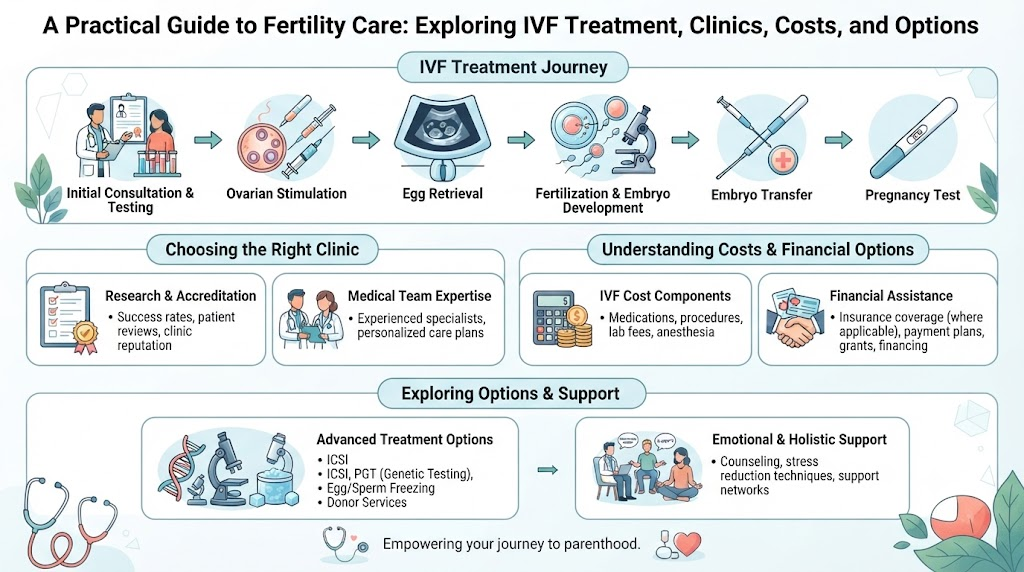
Initial Fertility Assessments
Before any cycle begins, specialists perform thorough diagnostic tests. This usually involves reviewing medical histories, running hormone blood panels, conducting pelvic imaging, and analyzing sperm quality to identify the underlying causes of fertility hurdles.
Ovarian Stimulation
To help the body produce multiple mature eggs in a single cycle rather than just one, patients are prescribed specific fertility medications. Regular ultrasounds and blood tests are scheduled throughout this window to track follicle growth safely.
Egg Retrieval
When the follicles reach the right maturity, a minor outpatient procedure called egg retrieval is performed, typically under light sedation. A specialized, ultrasound-guided needle is used to collect the mature eggs from the ovaries.
Fertilization and Embryo Growth
The retrieved eggs are taken to the lab and combined with sperm. This can happen through standard insemination or via more advanced methods like ICSI treatment. Embryologists observe the growth and division of the embryos over the next several days.
Embryo Transfer
A thin, flexible catheter is used to place a selected embryo gently into the uterus. This procedure is generally quick and does not require anesthesia. Any remaining healthy embryos can often be frozen for potential future use.
The Two-Week Wait and Testing
Roughly two weeks after the transfer, a blood test is conducted to check hormone levels and determine whether the procedure resulted in a successful pregnancy. Follow-up conversations with the care team help map out the next steps.
Breaking Down IVF Treatment Costs
Money is naturally one of the first things on a patient’s mind. When looking at IVF treatment cost, it helps to understand that a headline figure rarely tells the whole story.
A standard estimate generally accounts for:
- Initial doctor consultations and diagnostic testing
- Fertility medications prescribed during the stimulation phase
- Ongoing clinical monitoring (bloodwork and ultrasounds)
- The egg retrieval surgery itself
- Laboratory fees for culture and fertilization
- The embryo transfer procedure
- Follow-up care
Because medication requirements and responses to stimulation vary from person to person, total expenses can shift significantly.
What Drives Variations in IVF Expenses?
No two fertility journeys are identical, and several factors can influence the final bill:
- Age and Biological Profile: Older patients or specific medical backgrounds may need higher medication doses or specialized protocols.
- Cycle Quantity: While some succeed on the first try, others require multiple rounds to achieve a successful outcome.
- Advanced Lab Add-ons: Procedures like genetic testing or specialized sperm injection techniques increase baseline lab fees.
- Geographical Factors: Operational overhead and regional pricing standards differ greatly from one clinic or country to another.
- Cryopreservation Storage: Freezing extra embryos or eggs involves initial freezing fees and ongoing yearly storage maintenance.
Knowing these variables ahead of time helps patients plan their finances without unexpected stress.
Making Sense of IVF Success Rates
Reviewing IVF success rates is a standard part of clinic research, but these numbers need to be read with context. Success can mean different things depending on how a clinic reports it—such as a positive pregnancy test, an ultrasound-confirmed clinical pregnancy, or a live birth per cycle.
Outcomes are shaped by many moving parts, including:
- Maternal age and ovarian health
- The primary fertility diagnosis
- Egg, sperm, and embryo quality
- The technical skill and air quality of the laboratory
- Prior treatment history
Because personal health factors dictate individual odds, generalized percentages should be treated as broad benchmarks rather than promises. Always ask clinics how they calculate their specific data.
How to Evaluate and Compare Fertility Clinics
When patients sit down to compare fertility clinics, looking at a well-rounded picture matters more than focusing on a single marketing claim. A smart evaluation includes checking:
- Specialist Backgrounds: The training, board certifications, and experience of the reproductive endocrinologists.
- Lab Infrastructure: The technology, air purification systems, and overall standards of the embryology laboratory.
- Financial Honesty: Clear, straightforward itemization of fees, package inclusions, and success-reporting transparency.
- Patient Communication: How easy it is to reach the care team, the responsiveness of nurses, and the availability of emotional support.
- Convenience: Travel times, appointment flexibility, and how easily follow-up care can be managed.
Taking time with this review helps align a clinic’s strengths with personal comfort levels.
Key Features to Look for in IVF Clinics
Narrowing down choices among various IVF clinics involves looking closely at day-to-day operations and safety standards:
- Accreditation Status: Ensuring the facility meets recognized medical and health authority guidelines.
- Holistic Care Teams: Having access to nutritionists, mental health professionals, and patient navigators who understand the emotional weight of treatment.
- Customized Protocols: Steering clear of rigid, one-size-fits-all treatment plans in favor of customized medical care.
- Clear Financial Policies: Having transparency regarding what is covered under package pricing versus separate out-of-pocket expenses.
Exploring IVF Abroad: What to Keep in Mind
For reasons ranging from domestic pricing to the local availability of specialized care, some individuals look into IVF abroad. While international travel can open up alternative pathways, it brings unique logistical puzzles that require careful thought.
Important factors to weigh include:
- Continuity of Care: Coordinating initial diagnostics and post-transfer monitoring between doctors abroad and at home.
- Travel Logistics: Planning for extended stays, lodging, ground transit, and paperwork requirements.
- Communication Flow: Ensuring that language differences never get in the way of critical clinical instructions.
- Regulatory Laws: Understanding local rules governing donor tissue, anonymity, and embryo disposal or storage rights.
- Total Financial Footprint: Factoring in flights, hotels, international medication purchases, and potential follow-up care back home.
Balancing these elements ensures that traveling for care makes sense both medically and financially.
Understanding Global Differences in IVF Cost by Country
Investigating IVF cost by country shows massive global disparities driven by local healthcare economies, government subsidies, insurance rules, and exchange rates. While a country abroad might advertise an appealingly low base price, patients must look at the total picture—including travel, extended lodging, medication shipping or local purchase, and remote monitoring fees. True financial savings should always be weighed against safety standards and the ease of long-term follow-up care.
Egg Freezing and Fertility Preservation
For those looking to safeguard their family-planning timeline for the future, egg freezing (oocyte cryopreservation) has become a widely embraced option. The process mirrors the first half of an IVF cycle: ovarian stimulation, egg retrieval, and ultra-fast freezing (vitrification) of mature eggs. People choose preservation for medical reasons, such as impending medical treatments, or for personal, social timelines. Success depends heavily on the age at the time of freezing and the total volume of eggs successfully preserved. Ongoing storage fees are also a factor to plan for.
Understanding ICSI Treatment
Intracytoplasmic sperm injection, or ICSI treatment, is a specialized laboratory technique often used alongside conventional IVF. During ICSI, an embryologist selects a single, healthy sperm and injects it directly into the center of a mature egg to encourage fertilization. Specialists often suggest ICSI when dealing with severe male-factor infertility, past fertilization setbacks with standard IVF, or when using surgically retrieved sperm. While ICSI helps overcome specific fertilization hurdles, it does not guarantee pregnancy on its own and typically adds an extra fee to laboratory costs.
Exploring Alternative Fertility Treatment Options
Assisted reproductive technology spans a wide spectrum of medical solutions. Reviewing different fertility treatment options helps patients understand that IVF is just one tool among many.
| Fertility Treatment Option | General Purpose | Important Consideration |
| Fertility Medications | Stimulates ovulation or balances reproductive hormones | Requires close ultrasound and blood test monitoring. |
| Intrauterine Insemination (IUI) | Places washed sperm directly into the uterus during ovulation | A less invasive, lower-cost step often tried before IVF. |
| In-Vitro Fertilization (IVF) | Combines eggs and sperm in a lab before transferring an embryo | Involves multiple structured phases from stimulation to transfer. |
| ICSI Treatment | Microinjects a single sperm into an egg to support fertilization | Frequently used for male-factor fertility challenges. |
| Egg Freezing | Cryopreserves unfertilized oocytes for future family planning | Success rates are tied closely to age at the time of freezing. |
| Embryo Freezing | Stores extra viable embryos safely for later transfer attempts | Avoids the need for repeat stimulation cycles down the road. |
| Donor-Assisted Care | Uses donor eggs, sperm, or embryos to achieve pregnancy | Involves distinct legal, emotional, and ethical steps. |
Preparing for Your First Fertility Consultation
Walking into an initial meeting with a reproductive specialist goes much smoother with a bit of prep work. Patients benefit greatly from gathering:
- Comprehensive medical and gynecological health files
- Past lab test results, hormone levels, and semen analyses
- Records of any prior fertility treatments or medication logs
- A written list of questions concerning proposed timelines, potential risks, and cost estimates
- Inquiries about laboratory quality control and success-tracking metrics
Organizing these documents ahead of time helps spark an open, productive conversation with the medical team.
Essential Questions to Ask Before Choosing a Care Provider
Asking direct questions helps clear up uncertainty before committing to a clinic:
- What specific test results led to this particular treatment recommendation?
- What is the full estimated financial commitment, including meds and lab add-ons?
- How do your success rates break down for patients in my specific age bracket?
- What kind of air filtration and technology standards does your embryology lab maintain?
- Who on the medical team will perform key procedures like egg retrieval and transfer?
- How does the clinic handle urgent questions or emergencies after normal office hours?
- What are your policies, fees, and legal guidelines regarding frozen embryo storage?
- What kind of in-house emotional counseling or nutritional support is available to patients?
Common Missteps to Avoid When Navigating Fertility Care
To keep the journey as smooth as possible, patients should try to avoid these common pitfalls:
- Choosing Solely on Price: Picking a clinic based purely on a cheap advertised fee often leads to surprise bills later.
- Misinterpreting Success Stats: Looking at broad clinic success averages without checking age group breakdowns.
- Ignoring Lab Standards: Overlooking the vital role that laboratory quality and embryologist expertise play in success.
- Underestimating Logistics: Failing to factor in the physical exhaustion of frequent monitoring appointments or travel.
- Rushing Decisions: Making hurried choices under emotional pressure without pausing for a second opinion when needed.
Who Benefits Most From Reliable Fertility Information?
Couples Exploring IVF
Couples taking their first steps can use structured educational guides to grasp medical steps, clear up misconceptions, and prep for clinic visits.
People Comparing Clinics
Individuals looking for objective criteria can review structured evaluation frameworks to identify what matters most in a care provider.
Patients Researching Costs
Those needing financial transparency can explore itemized breakdowns and medication estimates to build realistic care budgets.
People Considering Treatment Abroad
Individuals looking into cross-border care can access comparative guides addressing travel logistics and care continuity.
People Exploring Preservation
Readers researching egg or sperm freezing can look over procedural expectations, age factors, and storage realities.
People Learning About Options
Anyone wanting a broad educational foundation can explore various reproductive technologies before sitting down with a specialist.
A Step-by-Step Approach to Researching Fertility Care
Step 1: Understand Your Baseline Health
Start by reviewing general health markers and scheduling foundational diagnostic tests with a trusted doctor.
Step 2: Learn the Treatment Spectrum
Familiarize yourself with assisted reproductive options, from basic ovulation tracking to advanced IVF and ICSI.
Step 3: Identify Potential Clinics
Shortlist centers based on specialist credentials, lab quality, patient support, and location convenience.
Step 4: Compare Financial Estimates
Request itemized cost breakdowns that separate doctor fees, medication expenses, and laboratory charges.
Step 5: Review Contextual Success Data
Examine success metrics with a focus on data that matches your age group and diagnosis.
Step 6: Verify Lab Credentials
Check facility accreditations, technology standards, and the background of the embryology team.
Step 7: Ask Targeted Questions
Bring a structured list of medical and financial questions to your initial consultation.
Step 8: Decide With Professional Guidance
Partner closely with your chosen fertility specialist to craft a safe, personalized treatment path.
Common Hurdles in Fertility Research
Researching this field often comes with a few predictable frustrations:
- Information Overload: Sifting through endless internet articles, forums, and conflicting opinions.
- Hidden Pricing: Deciphering complex billing schedules and unexpected add-on costs.
- Vague Statistics: Encountering success rates that lack necessary demographic context.
- Emotional Fatigue: Balancing the stress of fertility challenges with the mental load of research.
Patients can ease these bumps by sticking to reputable educational sources, keeping organized notes, and discussing uncertainties directly with medical staff.
Best Practices for Clinic Research
- Seek Second Opinions: Where possible, consult more than one clinic to compare treatment recommendations and bedside manners.
- Demand Financial Clarity: Look for providers who offer upfront pricing disclosures and clear care pathways.
- Assess Emotional Support: Verify whether the clinic offers counseling resources to help manage the emotional weight of treatment.
- Cross-Check Credentials: Independently verify doctor board certifications and facility accreditations through official medical boards.
Evaluating Online Health Content Responsibly
Reading about medicine online requires a critical eye:
- Verify the Source: Stick to established medical organizations, government health bodies, and trusted educational platforms.
- Check the Date: Ensure that statistics and cost overviews reflect current medical practices.
- Be Wary of Guarantees: Approach any platform claiming a 100% success rate or guaranteed pregnancy with extreme skepticism.
- Consult Professionals: Treat online articles as educational preparation tools, always relying on a qualified reproductive specialist for actual medical decisions.
Frequently Asked Questions
1. What variables influence the overall cost of IVF?
Total expenses depend on medication dosages, diagnostic testing, how many cycles are required, laboratory fees, and regional location.
2. How should patients interpret clinic success rates?
Success figures should always be viewed through the lens of patient age, specific diagnoses, and clinic reporting methods rather than personal guarantees.
3. What core features matter most when selecting a clinic?
Important elements include doctor expertise, lab technology standards, cost transparency, communication responsiveness, and institutional accreditation.
4. How can a patient effectively compare different clinics?
Comparisons should balance clinical outcomes, staff credentials, facility infrastructure, and patient-centered support services.
5. What logistics need attention before pursuing IVF abroad?
Key concerns include coordinating care back home, travel arrangements, language hurdles, local regulatory laws, and all-inclusive budgeting.
6. Why do IVF expenses fluctuate so much between countries?
Global price differences are driven by local healthcare economies, medication pricing, government subsidies, and currency exchange rates.
7. What does egg freezing involve?
Egg freezing is a preservation method where mature oocytes are harvested and vitrified (rapidly frozen) for potential future use.
8. What is the purpose of ICSI treatment?
ICSI involves injecting a single sperm directly into an egg in the laboratory to help achieve fertilization during an IVF cycle.
9. What treatment choices are typically available?
Options range from lifestyle guidance and fertility drugs to IUI, standard IVF, ICSI, and donor-assisted care.
10. What questions are most important before starting treatment?
Patients should ask about personalized success odds, itemized cost estimates, drug protocols, embryo storage policies, and emergency support availability.
Conclusion
Navigating the world of assisted reproduction takes patience, thorough research, and trusted guidance. Understanding the stages of IVF, reviewing transparent cost breakdowns, interpreting contextual success metrics, and comparing clinics carefully empower patients to take an active role in their care. Platforms like IVFHospitalsNow act as helpful informational guides to streamline research and prepare individuals for meaningful talks with medical professionals. Because every reproductive journey is entirely unique, all medical choices, potential risks, and treatment expectations should be discussed thoroughly with a qualified fertility specialist to ensure a safe and supportive path forward.
