Introduction
Starting your journey to become a pilot often begins with a simple question: which flight school should I choose? With so many options available around the world, finding the right training environment can feel overwhelming for aspiring aviation students. Comparing different programs helps you understand what to expect from ground school, flight hours, and overall training costs. Platforms like BestPilotsSchool make this research easier by helping students explore and compare options based on location and personal goals. Read on to discover how you can make an informed choice for your future in the skies.
Why Choosing the Right Pilot School Matters
When you decide to learn how to fly, the school you choose shapes your entire learning experience. Training quality plays a big role in how well you understand aviation rules and safety practices. Experienced instructors guide you through challenging moments and help you build safe flying habits from day one.
Looking at the best pilot schools means checking their aircraft fleet, training facilities, and safety records. A structured flight training schedule helps you stay on track, whether you are studying ground school subjects or logging flight hours. Because every student has unique career goals, taking the time to research your options ensures you find a program that matches your personal needs.
How to Compare the Best Flight Schools
Comparing training centers requires looking closely at what each program offers. Start by evaluating the training curriculum, instructor experience, and the condition of the aircraft fleet. Practical flight hours and ground training must balance well together to give you a complete education.
When researching the best flight schools, look at maintenance standards, campus facilities, and local weather patterns, as these factors affect how often you can fly. Reliable student reviews can also offer helpful insights into daily student life. Always check the licensing requirements of your local aviation authority to ensure the school prepares you for official exams.
What to Look for in the Best Commercial Pilot Training Schools
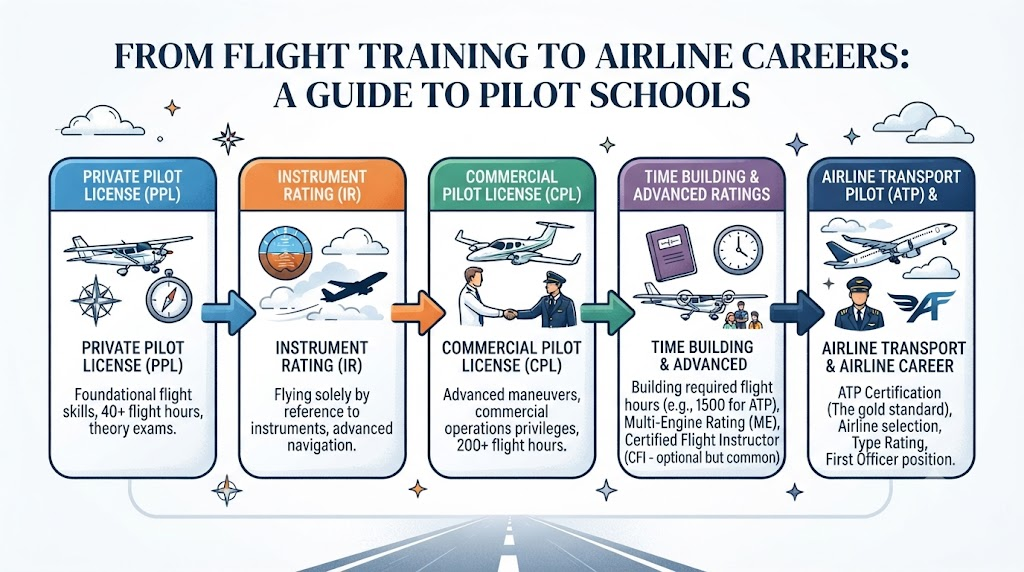
Transitioning from a hobby pilot to a professional requires a more intensive training format. The best commercial pilot training schools offer structured programs that cover advanced navigation, meteorology, aircraft operations, and strict aviation regulations.
Students should check the level of instructor support available during complex flight phases. A solid commercial program helps you build the required flight hours steadily while preparing you for written and practical exams. Keep in mind that professional training requires dedication, focus, and careful financial planning.
Understanding Commercial Pilot Training
Commercial pilot training is the step that allows you to fly for compensation or hire. This training combines ground-based learning with practical flight experience in single-engine and multi-engine aircraft.
During ground school, you study airspace rules, flight planning, and aircraft systems. In the air, you practice precise maneuvers, cross-country navigation, and emergency procedures. Exact requirements and hour minimums can vary by country and aviation authority, so it is important to check the rules specific to where you plan to work.
How a Pilot Training Academy Supports Structured Learning
A dedicated pilot training academy often provides a clear, step-by-step path from your very first flight to your final commercial checkride. Structured learning environments help students organize their time between classroom studies and practical flight lessons.
Academies typically offer regular progress tracking, mock exams, and direct guidance from senior instructors. Having access to well-maintained aircraft and modern training rooms makes a big difference in how smoothly you move through your syllabus.
Finding the Best Flying Schools for Practical Training
Practical flight experience forms the backbone of any pilot’s education. The best flying schools offer reliable aircraft availability and flexible flight schedules so you can build consistency in your flying skills.
The local training environment and weather conditions also matter. Flying in diverse weather conditions helps you gain confidence, while strong maintenance support ensures that training aircraft are always safe and ready to fly. Regular flight practice keeps your skills sharp and helps you progress steadily toward your license.
Airline Pilot Training Academy and Career Preparation
Many aspiring aviators aim for a career flying commercial airliners. An airline pilot training academy often focuses on professional airline standards, crew resource management, and advanced flight deck procedures.
While these programs prepare you thoroughly for the aviation industry, it is important to remember that completing a training program does not automatically guarantee an airline job. Airline hiring depends on market demand, individual performance, and meeting specific company qualifications.
How to Choose the Best Aviation Academy for Pilot Training
Selecting the best aviation academy for pilot training depends on balancing your budget, lifestyle, and career ambitions. Consider factors such as geographical location, living expenses, training duration, and total program costs.
Make sure to look at the school’s aircraft selection and instructor-to-student ratio. A lower ratio often means you get more personal attention during flight debriefings. Always verify whether the academy holds proper recognition or approval from relevant aviation authorities.
Commercial Pilot License Training: What Students Should Know
Commercial pilot license training requires focus, discipline, and a strong grasp of technical subjects. Students spend many hours mastering aircraft handling, night flying, and instrument navigation.
Exams test both your theoretical knowledge and your practical flying ability. Because licensing rules differ across various global regions, always review the specific guidelines issued by the aviation regulator in your target country before starting your training.
Comparing the Best Pilot Schools in the World
Students who are open to studying abroad often look at the best pilot schools in the world to find unique training environments, year-round flying weather, or specialized career programs.
When comparing international options, factor in visa requirements, living costs, and whether your license can be easily converted back home. Ensuring that your qualifications are recognized by your home country’s aviation authority is a crucial step for international students.
How Location, Budget, Training, and Career Goals Affect Your Choice
No single flight school is the right fit for every student. Your choice will naturally depend on your budget, where you live, and whether you want to fly for regional carriers, cargo companies, or general aviation.
A program located near busy airspaces offers great radio communication experience, while a school in a quieter region might provide fewer delays during flight scheduling. Weighing these personal factors helps you pick a school that truly fits your lifestyle.
Questions to Ask Before Joining a Pilot School
Before signing any enrollment papers or paying tuition, visit the school and ask direct questions. Here is a helpful checklist:
- What is the total estimated cost of the entire training program?
- Are ground school materials and exam fees included in the tuition?
- How many aircraft and active instructors does the school have?
- What is the typical turnaround time for aircraft maintenance?
- What happens if I need extra flight hours to pass a checkride?
- Can I view the cancellation policy for weather-related flight delays?
Always verify important contract and safety details directly with the school administration.
How BestPilotsSchool Helps Students Research Training Options
BestPilotsSchool is designed to simplify your search for aviation education. Whether you are looking for flight schools, professional academies, or commercial programs, the platform helps you compare options side by side.
By organizing information on training facilities, locations, and program types, BestPilotsSchool helps aspiring aviators take their first steps with confidence. It serves as a helpful starting point for anyone planning a professional pilot career.
Pilot Training Comparison Table
| Training Area | Things to Check |
| Ground School | Subjects, instructors, study support |
| Flight Training | Aircraft, flight hours, instructor support |
| Commercial Pilot Training | Program structure, licensing pathway, required training |
| Airline Pilot Training | Advanced training, career preparation, qualifications |
| Pilot Academy | Facilities, training plan, aircraft, student support |
Frequently Asked Questions — Primary FAQs
1. What are the best pilot schools for beginners with zero experience?
Beginner-friendly schools offer structured introductory programs, patient instructors, and ground school support designed to take you from your very first lesson up to your private pilot certificate.
2. How do I find the best flight schools in my region?
You can research local options, read student feedback, visit campuses in person, and use comparison platforms like BestPilotsSchool to review training availability near you.
3. What should I look for in the best commercial pilot training schools?
Look for structured syllabi, modern aircraft fleets, experienced commercial instructors, and a clear training path that leads smoothly from private to commercial licensing.
4. Can I study at the best pilot schools in the world as an international student?
Yes, many international flight academies welcome students from around the globe, provided you meet student visa rules and language proficiency requirements.
5. What does commercial pilot training actually include?
It includes advanced ground studies, meteorology, cross-country flight planning, night flying, instrument ratings, and building the required flight hours.
6. What is the benefit of attending a professional pilot training academy?
An academy provides an organized, immersive environment with set schedules, dedicated instructors, and resources tailored to keep your training on a steady timeline.
7. How do I choose among the best flying schools for practical experience?
Prioritize schools with well-maintained aircraft, good aircraft-to-student ratios, and reliable weather conditions that allow for consistent weekly flying.
8. Do airline pilot training academy programs guarantee me a job?
No training program can guarantee employment. While academies prepare you thoroughly for airline interviews, hiring decisions always rest with the airline companies.
9. What makes the best aviation academy for pilot training stand out?
Top academies stand out through transparent pricing, high safety standards, modern simulators, supportive instructors, and positive student feedback.
10. What is involved in commercial pilot license training?
This training focuses on precision flying, advanced aircraft systems, navigation rules, and passing both written regulatory exams and practical flight tests.
11. Is comparing flight schools necessary before enrollment?
Yes, comparing schools helps you avoid hidden costs, ensures you get quality instruction, and matches your training style with the right facility.
12. How does BestPilotsSchool help me choose a pilot training school?
BestPilotsSchool helps you discover, filter, and compare various flight schools and aviation academies based on location, training goals, and program features.
Frequently Asked Questions — Related FAQs
1. How can I compare flight school costs accurately?
Always ask for a complete breakdown that includes aircraft rental rates, instructor hourly fees, landing charges, gear, and exam costs to avoid unexpected expenses.
2. How long does it usually take to complete commercial pilot training?
Depending on whether you train full-time or part-time, completing commercial training typically takes anywhere from 12 to 24 months.
3. Why are aircraft maintenance standards important at a flight school?
Well-maintained aircraft ensure safety, reduce unexpected training delays, and give you confidence during your cross-country and solo flights.
4. Do instructor experience levels matter when learning to fly?
Yes, experienced instructors can explain complex aerodynamics simply, spot bad habits early, and share valuable real-world aviation wisdom.
5. Are licensing requirements the same in every country?
No, licensing rules, required flight hours, and medical standards vary depending on the national aviation authority governing that region.
6. What should I prepare before visiting a flight school in person?
Prepare a list of questions about costs, aircraft availability, student completion rates, and schedule flexibility to make the most of your visit.
7. Can I work while completing my flight training?
Many students train part-time while working, though it requires careful time management to balance ground school studies and practical flying lessons.
8. Why is checking aviation authority regulations crucial for students?
Checking regulations ensures that the training you receive meets all legal standards required to earn your official pilot license.
Final Thoughts
Choosing the right flight school is one of the most important decisions you will make on your journey to becoming a professional pilot. Taking the time to carefully compare training programs, instructor backgrounds, aircraft fleets, and licensing requirements sets you up for long-term success. Every student’s learning pace and career goals are unique, meaning the best choice varies from person to person. Platforms like BestPilotsSchool offer a helpful way to research and compare your options in one place. Always remember to verify your training plans and licensing details directly with your chosen school and local aviation authority.
