Introduction
Insurance Claims Management Systems are software platforms designed to manage the end-to-end claims lifecycle—from first notice of loss (FNOL) to investigation, adjudication, settlement, and closure. In simple terms, they help insurers process claims faster, reduce fraud, improve customer satisfaction, and maintain regulatory compliance.
In today’s environment, claims processing is becoming more complex due to rising customer expectations, digital-first interactions, fraud risks, and regulatory scrutiny. Modern claims systems now include AI-driven automation, real-time analytics, and digital communication tools to streamline workflows and improve decision-making.
Real-world use cases
- Automating claims intake and FNOL processes
- Managing property, health, and auto insurance claims
- Detecting fraud using AI and analytics
- Coordinating with third-party vendors (repair, medical, legal)
- Providing real-time updates to customers via digital portals
What buyers should evaluate
- Claims workflow automation capabilities
- AI/ML features for fraud detection and triaging
- Integration with policy and billing systems
- User experience for claims adjusters
- Scalability across claim volumes
- Reporting and analytics capabilities
- Compliance and audit tracking
- Deployment model (cloud vs on-premise)
- Vendor support and ecosystem
Best for: Insurance carriers, TPAs, MGAs, and insurtech firms handling high volumes of claims across multiple lines.
Not ideal for: Very small agencies with low claims volume or those using manual or spreadsheet-based processes.
Key Trends in Insurance Claims Management Systems
- AI-powered claims automation: Automated triaging and decision-making
- Digital FNOL experiences: Mobile-first claims submission
- Fraud detection using analytics: Pattern recognition and anomaly detection
- Cloud-native claims platforms: Faster deployment and scalability
- Low-code workflow customization: Rapid process changes without coding
- Integration with IoT/telematics: Real-time claims data from devices
- Self-service portals: Customers track and manage claims independently
- Predictive analytics: Forecast claim costs and outcomes
- Microservices-based systems: Modular and flexible architecture
- Straight-through processing (STP): Minimal human intervention
How We Selected These Tools (Methodology)
- High market adoption across insurance segments
- Strong claims lifecycle functionality
- Proven performance and scalability indicators
- Availability of automation and AI features
- Mature integration ecosystem and APIs
- Demonstrated security and compliance posture
- Suitability across enterprise and mid-market insurers
- Vendor innovation and modernization track record
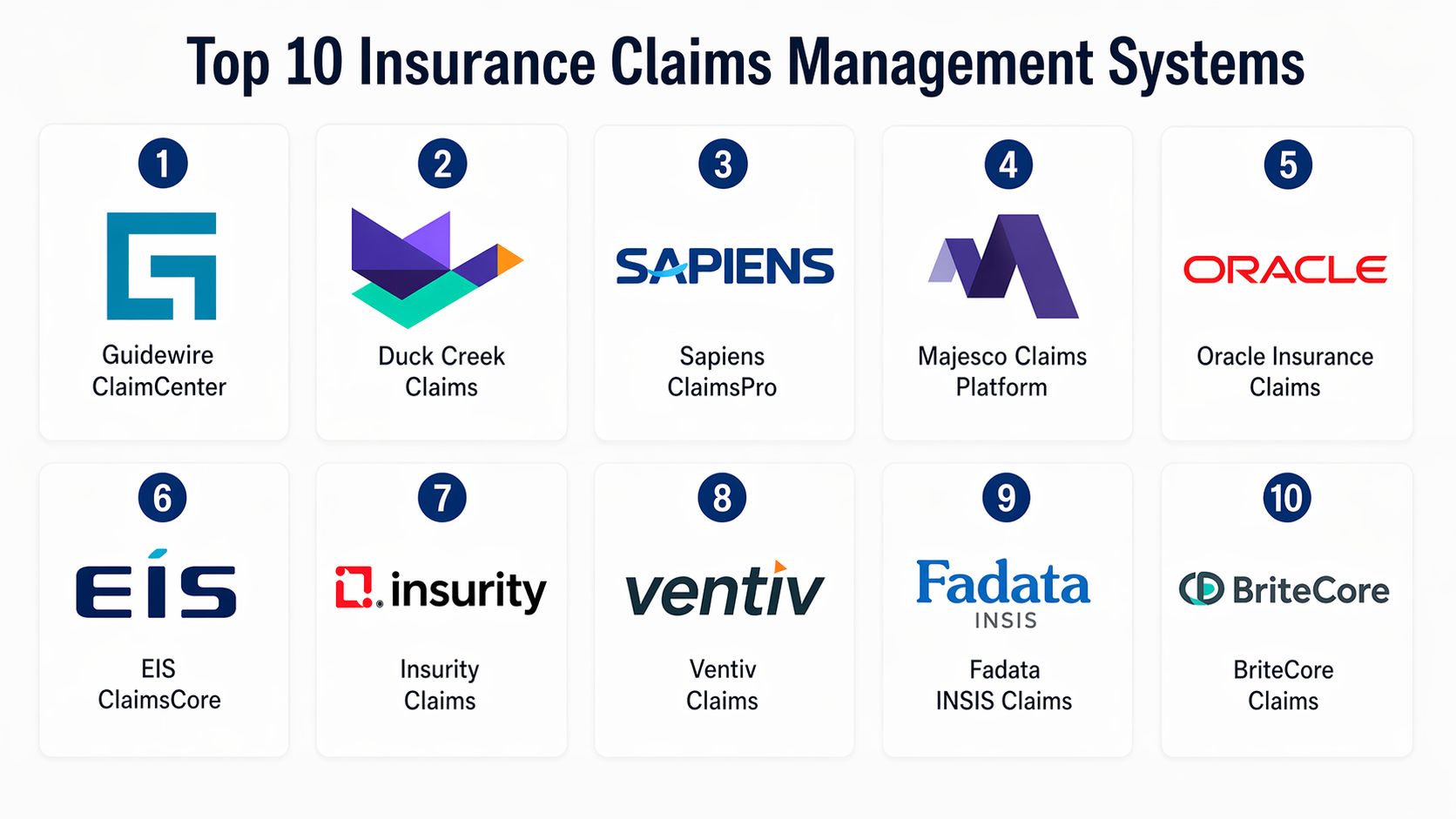
Top 10 Insurance Claims Management Systems
#1 — Guidewire ClaimCenter
Short description: A leading enterprise claims management platform for property and casualty insurers, offering deep functionality and scalability for large organizations.
Key Features
- End-to-end claims lifecycle management
- Advanced workflow automation
- Fraud detection capabilities
- Real-time analytics and reporting
- Multi-line claims support
- Vendor and partner management
Pros
- Highly scalable for enterprise needs
- Strong ecosystem and integrations
Cons
- Complex implementation
- Higher cost
Platforms / Deployment
Cloud / Self-hosted / Hybrid
Security & Compliance
RBAC, audit logs, encryption (details not publicly stated)
Integrations & Ecosystem
Strong integration with policy, billing, and third-party systems.
- REST APIs
- Data warehouse connectors
- Partner ecosystem
Support & Community
Strong enterprise support and partner network.
#2 — Duck Creek Claims
Short description: A cloud-based claims management solution that offers flexibility and digital capabilities for insurers seeking modernization.
Key Features
- SaaS-based claims processing
- Configurable workflows
- Digital engagement tools
- Integration with Duck Creek suite
- Reporting and analytics
Pros
- Flexible cloud deployment
- Faster implementation compared to legacy systems
Cons
- Requires configuration expertise
- Cost may increase with scale
Platforms / Deployment
Cloud
Security & Compliance
SSO, encryption (details not publicly stated)
Integrations & Ecosystem
- API-first integration model
- CRM and analytics tools
- Insurtech ecosystem
Support & Community
Enterprise-grade support and onboarding.
#3 — Sapiens ClaimsPro
Short description: A comprehensive claims platform supporting multiple insurance lines with strong automation and analytics capabilities.
Key Features
- Claims lifecycle management
- Workflow automation
- Fraud detection tools
- Customer communication features
- Reporting dashboards
Pros
- Multi-line support
- Strong automation capabilities
Cons
- UI may feel outdated
- Implementation complexity
Platforms / Deployment
Cloud / Hybrid
Security & Compliance
Not publicly stated
Integrations & Ecosystem
- APIs for integrations
- External analytics tools
- Data platforms
Support & Community
Global enterprise support.
#4 — Majesco Claims Platform
Short description: A modern digital claims platform designed for insurers focusing on customer experience and automation.
Key Features
- AI-driven claims automation
- Digital claims portals
- Workflow management
- Real-time analytics
- Omnichannel communication
Pros
- Strong digital capabilities
- Good customer experience features
Cons
- Learning curve
- Requires transformation effort
Platforms / Deployment
Cloud
Security & Compliance
Not publicly stated
Integrations & Ecosystem
- API integrations
- CRM and digital platforms
- Analytics tools
Support & Community
Good enterprise support.
#5 — Oracle Insurance Claims
Short description: An enterprise-grade claims solution designed for large insurers requiring scalability and compliance.
Key Features
- Claims lifecycle management
- Integration with Oracle ecosystem
- Reporting and analytics
- Compliance tracking
- Workflow automation
Pros
- Strong enterprise capabilities
- Reliable performance
Cons
- Complex setup
- High cost
Platforms / Deployment
Cloud / Hybrid
Security & Compliance
RBAC, encryption (details not publicly stated)
Integrations & Ecosystem
- Oracle ecosystem integrations
- APIs for external tools
- Data management systems
Support & Community
Enterprise-level support.
#6 — EIS ClaimsCore
Short description: A digital-first claims management platform with microservices architecture and real-time capabilities.
Key Features
- Real-time claims processing
- API-first design
- AI and analytics integration
- Digital customer experiences
- Workflow automation
Pros
- Modern architecture
- Highly flexible
Cons
- Requires technical expertise
- Implementation effort
Platforms / Deployment
Cloud
Security & Compliance
Not publicly stated
Integrations & Ecosystem
- Open APIs
- Digital ecosystem integrations
- Partner platforms
Support & Community
Strong enterprise support.
#7 — Insurity Claims
Short description: A cloud-based claims platform tailored for property and casualty insurers with strong analytics capabilities.
Key Features
- Claims lifecycle management
- Workflow automation
- Analytics dashboards
- Digital claims intake
- Reporting tools
Pros
- Strong analytics
- Cloud-native design
Cons
- Limited customization in some areas
- Integration planning required
Platforms / Deployment
Cloud
Security & Compliance
Not publicly stated
Integrations & Ecosystem
- APIs for integrations
- Data platforms
- Third-party systems
Support & Community
Enterprise support.
#8 — Ventiv Claims
Short description: A claims management platform focused on risk management and insurance operations for enterprises.
Key Features
- Claims and risk management
- Workflow automation
- Reporting and analytics
- Compliance tracking
- Vendor management
Pros
- Strong risk management features
- Good reporting capabilities
Cons
- Limited UI flexibility
- Requires training
Platforms / Deployment
Cloud / Hybrid
Security & Compliance
Not publicly stated
Integrations & Ecosystem
- API integrations
- ERP and CRM systems
- Reporting tools
Support & Community
Moderate enterprise support.
#9 — Fadata INSIS Claims
Short description: A modular claims management system supporting multi-line insurers with global deployment capabilities.
Key Features
- Modular architecture
- Multi-line claims support
- Workflow automation
- Digital integration
- Reporting tools
Pros
- Flexible modular design
- Global deployment support
Cons
- Customization required
- Implementation time
Platforms / Deployment
Cloud / Hybrid
Security & Compliance
Not publicly stated
Integrations & Ecosystem
- API-based integrations
- CRM and ERP systems
- Analytics tools
Support & Community
Good global support.
#10 — BriteCore Claims
Short description: A cloud-based claims platform designed for smaller insurers with a focus on simplicity and usability.
Key Features
- Claims lifecycle management
- Workflow automation
- Data analytics
- User-friendly interface
- Reporting tools
Pros
- Easy to use
- Fast deployment
Cons
- Limited enterprise features
- Less customization
Platforms / Deployment
Cloud
Security & Compliance
Not publicly stated
Integrations & Ecosystem
- API integrations
- Third-party tools
- Data platforms
Support & Community
Good SMB-focused support.
Comparison Table (Top 10)
| Tool Name | Best For | Platform(s) Supported | Deployment | Standout Feature | Public Rating |
|---|---|---|---|---|---|
| Guidewire ClaimCenter | Enterprise insurers | Web | Hybrid | Deep claims workflows | N/A |
| Duck Creek Claims | Digital insurers | Web | Cloud | SaaS flexibility | N/A |
| Sapiens ClaimsPro | Multi-line insurers | Web | Hybrid | Broad coverage | N/A |
| Majesco Claims | Customer-centric insurers | Web | Cloud | Digital experience | N/A |
| Oracle Insurance Claims | Large enterprises | Web | Hybrid | Enterprise scalability | N/A |
| EIS ClaimsCore | Digital-first insurers | Web | Cloud | Microservices architecture | N/A |
| Insurity Claims | P&C insurers | Web | Cloud | Analytics capabilities | N/A |
| Ventiv Claims | Risk-focused enterprises | Web | Hybrid | Risk management integration | N/A |
| Fadata INSIS Claims | Global insurers | Web | Hybrid | Modular design | N/A |
| BriteCore Claims | Small insurers | Web | Cloud | Ease of use | N/A |
Evaluation & Insurance Claims Management Systems
| Tool Name | Core (25%) | Ease (15%) | Integrations (15%) | Security (10%) | Performance (10%) | Support (10%) | Value (15%) | Weighted Total |
|---|---|---|---|---|---|---|---|---|
| Guidewire ClaimCenter | 9 | 6 | 9 | 8 | 9 | 8 | 6 | 8.0 |
| Duck Creek Claims | 8 | 7 | 8 | 7 | 8 | 8 | 7 | 7.7 |
| Sapiens ClaimsPro | 8 | 6 | 7 | 7 | 7 | 7 | 7 | 7.3 |
| Majesco Claims | 8 | 7 | 8 | 7 | 8 | 7 | 7 | 7.6 |
| Oracle Insurance Claims | 9 | 6 | 8 | 8 | 9 | 8 | 6 | 8.0 |
| EIS ClaimsCore | 8 | 7 | 9 | 7 | 8 | 7 | 7 | 7.8 |
| Insurity Claims | 8 | 7 | 7 | 7 | 8 | 7 | 7 | 7.5 |
| Ventiv Claims | 7 | 6 | 7 | 7 | 7 | 6 | 7 | 7.0 |
| Fadata INSIS Claims | 8 | 6 | 8 | 7 | 7 | 7 | 7 | 7.4 |
| BriteCore Claims | 7 | 8 | 6 | 6 | 7 | 7 | 8 | 7.2 |
How to interpret scores:
- Scores are relative comparisons across tools
- Core features represent functional depth
- Ease reflects usability and onboarding
- Weighted totals help shortlist options
- Always validate through demos and pilots
Which Insurance Claims Management Systems
Solo / Freelancer
Not required; simpler tools or manual tracking may suffice.
SMB
- Best: BriteCore, Insurity
- Focus on usability and cost
Mid-Market
- Best: Duck Creek, Majesco, EIS
- Balance between flexibility and scalability
Enterprise
- Best: Guidewire, Oracle, Sapiens
- Strong compliance and performance
Budget vs Premium
- Budget: BriteCore
- Premium: Guidewire, Oracle
Feature Depth vs Ease of Use
- Feature-heavy: Guidewire, Oracle
- Easier tools: BriteCore, Insurity
Integrations & Scalability
- Strong: Guidewire, EIS, Duck Creek
- Moderate: SMB tools
Security & Compliance Needs
- High compliance: Enterprise tools
- Moderate: SMB solutions
Frequently Asked Questions (FAQs)
1. What is a claims management system?
It is software that manages the full lifecycle of insurance claims from reporting to settlement.
2. How much does a claims system cost?
Costs vary widely depending on scale and deployment; enterprise tools are significantly more expensive.
3. How long does implementation take?
Implementation can range from months to over a year depending on complexity.
4. Can claims systems integrate with policy systems?
Yes, most modern systems offer APIs for integration.
5. Are cloud-based claims systems secure?
Most offer strong security features, but certifications vary by vendor.
6. What industries use claims systems?
Insurance companies, TPAs, and risk management firms.
7. What are common mistakes when selecting a system?
Ignoring integration needs and underestimating implementation complexity.
8. Can small insurers use these systems?
Yes, especially cloud-based solutions designed for SMBs.
9. How scalable are claims systems?
Enterprise tools are highly scalable; SMB tools have limitations.
10. What alternatives exist?
Manual workflows, spreadsheets, or custom-built systems.
Conclusion
Insurance Claims Management Systems play a critical role in delivering efficient, accurate, and customer-friendly claims processing. While enterprise platforms provide deep functionality and scalability, smaller insurers may benefit from simpler, cloud-based solutions. The best system depends on your organization’s size, complexity, and digital maturity. A practical approach is to shortlist a few platforms that align with your needs, evaluate them through demos, and run pilot implementations to ensure they meet your integration, performance, and compliance requirements before making a final decision.