Introduction
Sales & Operations Planning (S&OP) software helps companies balance supply and demand by aligning sales forecasts, production plans, inventory levels, and financial goals into one unified plan. In simple terms, it connects what a business plans to sell with what it can actually produce and deliver.
In today’s fast-moving business environment, especially with global supply chain disruptions, AI-driven demand shifts, and real-time customer expectations, S&OP software has become critical. Organizations are moving from static spreadsheets to intelligent platforms that use predictive analytics, automation, and real-time data.
Real-world use cases include:
- Forecasting product demand across regions and channels
- Aligning production capacity with sales targets
- Managing inventory to avoid overstock or stockouts
- Running scenario planning during supply disruptions
- Coordinating cross-functional planning between sales, finance, and operations
Key evaluation criteria buyers should consider:
- Forecast accuracy and AI capabilities
- Scenario planning and simulation features
- Integration with ERP, CRM, and supply chain systems
- Scalability for global operations
- Ease of use for cross-functional teams
- Data visualization and reporting capabilities
- Security and compliance standards
- Implementation complexity and time
- Cost and ROI
Best for: Large enterprises, supply chain managers, operations leaders, demand planners, and manufacturing organizations that need structured planning across departments.
Not ideal for: Small businesses with simple operations, startups without complex supply chains, or teams that can manage planning using lightweight tools like spreadsheets or basic inventory systems.
Key Trends in Sales & Operations Planning (S&OP) Software
- AI-driven forecasting: Machine learning models are improving demand accuracy and reducing human bias
- Real-time planning: Shift from monthly cycles to continuous planning with live data updates
- Digital twins & scenario simulation: Companies simulate supply chain disruptions and test decisions before execution
- Cloud-first platforms: SaaS-based deployment is becoming the standard for scalability and collaboration
- Integrated business planning (IBP): Expansion beyond S&OP to include financial and strategic planning
- Automation of workflows: Reduced manual intervention in data aggregation and reporting
- Advanced analytics & dashboards: Improved decision-making through visual insights
- API-first integration: Seamless connectivity with ERP, CRM, and external data sources
- Focus on resilience: Tools now emphasize risk management and contingency planning
- User-centric design: Improved UI/UX for cross-functional adoption
How We Selected These Tools (Methodology)
- Evaluated market adoption and industry recognition
- Assessed feature completeness, including forecasting, planning, and analytics
- Reviewed performance and scalability signals for enterprise use
- Considered security posture and compliance capabilities
- Analyzed integration ecosystems with ERP, CRM, and supply chain systems
- Looked at customer fit across SMB, mid-market, and enterprise segments
- Examined innovation in AI and automation capabilities
- Compared usability and cross-functional collaboration features
- Considered deployment flexibility (cloud vs hybrid)
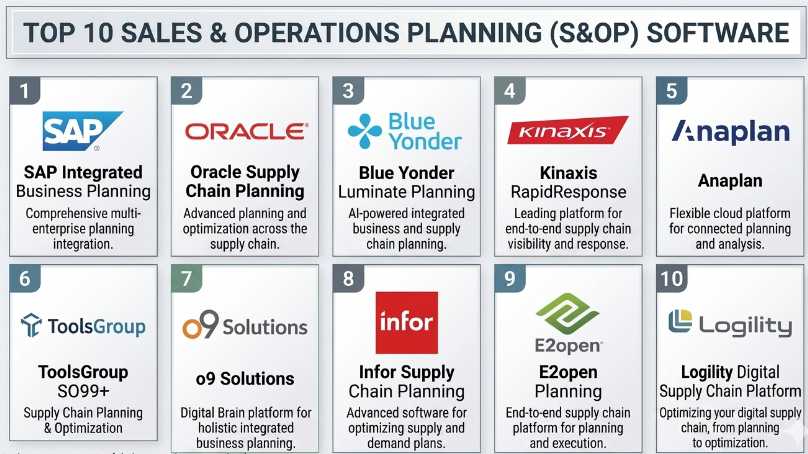
Top 10 Sales & Operations Planning (S&OP) Software
#1 — SAP Integrated Business Planning
Short description:
A comprehensive cloud-based S&OP platform designed for large enterprises. It integrates demand planning, supply planning, and financial forecasting in one system. Ideal for organizations already using SAP ERP systems. It supports real-time analytics and advanced scenario planning. Strong focus on scalability and global operations.
Key Features
- Demand forecasting with machine learning
- Supply and inventory optimization
- Scenario planning and simulations
- Real-time analytics dashboards
- Integration with SAP ERP ecosystem
Pros
- Deep integration with SAP systems
- Strong enterprise-grade scalability
Cons
- Complex implementation
- Requires experienced users
Platforms / Deployment
- Web
- Cloud
Security & Compliance
- SSO, RBAC, encryption
- GDPR support
Integrations & Ecosystem
Integrates deeply with SAP ERP, CRM, and supply chain modules.
- SAP S/4HANA
- SAP Analytics Cloud
- External APIs
Support & Community
Strong enterprise support with extensive documentation and partner ecosystem.
#2 — Oracle Supply Chain Planning
Short description:
Oracle’s cloud-based S&OP solution offers advanced planning capabilities with AI-driven insights. It helps align supply chain execution with strategic goals. Suitable for enterprises with complex logistics networks.
Key Features
- AI-powered demand planning
- Supply chain orchestration
- Scenario analysis
- Financial integration
- Real-time collaboration
Pros
- Strong analytics capabilities
- Scalable for large enterprises
Cons
- High cost
- Steep learning curve
Platforms / Deployment
- Web
- Cloud
Security & Compliance
- MFA, encryption, RBAC
- SOC 2 (commonly associated, specifics vary)
Integrations & Ecosystem
- Oracle ERP
- Oracle SCM
- Third-party APIs
Support & Community
Enterprise-level support with strong partner network.
#3 — Blue Yonder Luminate Planning
Short description:
A leading AI-driven planning platform focused on supply chain optimization. It offers predictive and autonomous planning capabilities. Ideal for retail, manufacturing, and logistics industries.
Key Features
- AI/ML demand forecasting
- Inventory optimization
- Autonomous planning
- Scenario simulations
- Real-time insights
Pros
- Strong AI capabilities
- Industry-specific solutions
Cons
- Complex setup
- Premium pricing
Platforms / Deployment
- Web
- Cloud
Security & Compliance
- Not publicly stated
Integrations & Ecosystem
- ERP systems
- Retail platforms
- API integrations
Support & Community
Good enterprise support; varies by region.
#4 — Kinaxis RapidResponse
Short description:
A real-time supply chain planning platform known for fast scenario analysis. It enables concurrent planning across multiple departments. Popular in manufacturing and high-tech industries.
Key Features
- Concurrent planning
- Real-time data updates
- Scenario simulation
- Demand and supply planning
- Collaboration tools
Pros
- Fast scenario analysis
- Highly responsive system
Cons
- Limited customization
- Learning curve
Platforms / Deployment
- Web
- Cloud
Security & Compliance
- Not publicly stated
Integrations & Ecosystem
- ERP systems
- Data integration tools
- APIs
Support & Community
Strong support; active user base.
#5 — Anaplan
Short description:
A flexible planning platform that supports S&OP along with financial planning. It uses a connected planning approach across departments. Suitable for mid-market to enterprise organizations.
Key Features
- Connected planning framework
- Scenario modeling
- Real-time collaboration
- Financial integration
- Custom dashboards
Pros
- Flexible and customizable
- Strong cross-functional planning
Cons
- Requires modeling expertise
- Cost can scale quickly
Platforms / Deployment
- Web
- Cloud
Security & Compliance
- SSO, RBAC, encryption
Integrations & Ecosystem
- CRM systems
- ERP platforms
- APIs
Support & Community
Active community and strong documentation.
#6 — ToolsGroup SO99+
Short description:
A demand planning and inventory optimization platform focused on improving service levels. It is known for probabilistic forecasting methods.
Key Features
- Demand forecasting
- Inventory optimization
- Service level optimization
- Scenario analysis
- Analytics dashboards
Pros
- High forecast accuracy
- Strong inventory management
Cons
- Niche focus
- Limited UI flexibility
Platforms / Deployment
- Web
- Cloud
Security & Compliance
- Not publicly stated
Integrations & Ecosystem
- ERP systems
- Data connectors
- APIs
Support & Community
Moderate support; niche user base.
#7 — o9 Solutions
Short description:
A modern AI-powered planning platform offering integrated business planning. It provides real-time analytics and advanced scenario planning.
Key Features
- AI-driven forecasting
- Digital twin modeling
- Real-time analytics
- Scenario planning
- Integrated planning
Pros
- Modern architecture
- Strong AI capabilities
Cons
- Implementation complexity
- Requires skilled users
Platforms / Deployment
- Web
- Cloud
Security & Compliance
- Not publicly stated
Integrations & Ecosystem
- ERP systems
- Cloud platforms
- APIs
Support & Community
Growing ecosystem with enterprise support.
#8 — Infor Supply Chain Planning
Short description:
Infor’s planning solution focuses on industry-specific needs. It provides tools for demand planning, supply planning, and inventory management.
Key Features
- Demand forecasting
- Supply planning
- Inventory optimization
- Industry-specific templates
- Analytics dashboards
Pros
- Industry-focused solutions
- Good ERP integration
Cons
- Limited flexibility
- UI can feel outdated
Platforms / Deployment
- Web
- Cloud
Security & Compliance
- Not publicly stated
Integrations & Ecosystem
- Infor ERP
- Data integration tools
- APIs
Support & Community
Reliable support with enterprise focus.
#9 — E2open Planning
Short description:
A cloud-based supply chain planning platform offering end-to-end visibility. It focuses on collaboration across supply chain partners.
Key Features
- Multi-tier supply chain visibility
- Demand and supply planning
- Collaboration tools
- Scenario planning
- Analytics
Pros
- Strong collaboration features
- End-to-end visibility
Cons
- Complex setup
- Integration challenges
Platforms / Deployment
- Web
- Cloud
Security & Compliance
- Not publicly stated
Integrations & Ecosystem
- ERP systems
- Supply chain networks
- APIs
Support & Community
Enterprise support; varies by deployment.
#10 — Logility Digital Supply Chain Platform
Short description:
A supply chain planning platform focused on forecasting and optimization. Suitable for mid-market to large enterprises.
Key Features
- Demand planning
- Inventory optimization
- Scenario analysis
- Analytics dashboards
- Supply chain optimization
Pros
- Strong forecasting capabilities
- Good mid-market fit
Cons
- Limited advanced AI
- UI improvements needed
Platforms / Deployment
- Web
- Cloud
Security & Compliance
- Not publicly stated
Integrations & Ecosystem
- ERP systems
- Data connectors
- APIs
Support & Community
Moderate support; established vendor presence.
Comparison Table (Top 10)
| Tool Name | Best For | Platform(s) Supported | Deployment | Standout Feature | Public Rating |
|---|---|---|---|---|---|
| SAP Integrated Business Planning | Enterprise | Web | Cloud | Deep SAP integration | N/A |
| Oracle Supply Chain Planning | Enterprise | Web | Cloud | AI-driven planning | N/A |
| Blue Yonder Luminate Planning | Retail/Manufacturing | Web | Cloud | Autonomous planning | N/A |
| Kinaxis RapidResponse | Manufacturing | Web | Cloud | Real-time planning | N/A |
| Anaplan | Cross-functional planning | Web | Cloud | Connected planning | N/A |
| ToolsGroup SO99+ | Inventory optimization | Web | Cloud | Probabilistic forecasting | N/A |
| o9 Solutions | AI-driven planning | Web | Cloud | Digital twin modeling | N/A |
| Infor Supply Chain Planning | Industry-specific | Web | Cloud | Industry templates | N/A |
| E2open Planning | Supply chain collaboration | Web | Cloud | Multi-tier visibility | N/A |
| Logility Digital Supply Chain Platform | Mid-market | Web | Cloud | Forecasting accuracy | N/A |
Evaluation & Scoring of Sales & Operations Planning (S&OP) Software
| Tool Name | Core | Ease | Integrations | Security | Performance | Support | Value | Weighted Total |
|---|---|---|---|---|---|---|---|---|
| SAP IBP | 9 | 7 | 9 | 8 | 9 | 8 | 7 | 8.4 |
| Oracle SCP | 9 | 7 | 9 | 8 | 9 | 8 | 7 | 8.4 |
| Blue Yonder | 9 | 7 | 8 | 7 | 9 | 7 | 7 | 8.0 |
| Kinaxis | 8 | 8 | 8 | 7 | 9 | 8 | 7 | 8.1 |
| Anaplan | 8 | 8 | 8 | 8 | 8 | 8 | 7 | 8.0 |
| ToolsGroup | 7 | 7 | 7 | 6 | 8 | 7 | 7 | 7.2 |
| o9 Solutions | 9 | 7 | 8 | 7 | 9 | 7 | 7 | 8.0 |
| Infor | 7 | 7 | 7 | 6 | 8 | 7 | 7 | 7.2 |
| E2open | 8 | 7 | 8 | 7 | 8 | 7 | 7 | 7.8 |
| Logility | 7 | 7 | 7 | 6 | 7 | 7 | 7 | 7.1 |
How to interpret scores:
These scores are comparative across the listed tools, not absolute ratings. A higher score indicates stronger performance in that category relative to peers. Enterprises should prioritize core features and integrations, while SMBs may value ease of use and cost more heavily.
Which Sales & Operations Planning (S&OP) Software
Solo / Freelancer
Most S&OP tools are overkill. Use lightweight forecasting or spreadsheet-based planning.
SMB
Consider Logility or Anaplan for flexibility and cost balance.
Mid-Market
Anaplan, Kinaxis, and Infor offer strong balance between capability and usability.
Enterprise
SAP IBP, Oracle SCP, and o9 Solutions are best suited for large-scale operations.
Budget vs Premium
- Budget: Logility, ToolsGroup
- Premium: SAP, Oracle, Blue Yonder
Feature Depth vs Ease of Use
- Deep features: SAP, Oracle
- Easier adoption: Anaplan, Kinaxis
Integrations & Scalability
Choose SAP or Oracle if already using their ecosystems.
Security & Compliance Needs
Enterprise tools provide stronger governance and compliance features.
Frequently Asked Questions (FAQs)
1. What is S&OP software used for?
It helps align demand, supply, and financial planning into one process for better decision-making.
2. How much does S&OP software cost?
Pricing varies widely based on features and scale. Enterprise tools are typically premium.
3. How long does implementation take?
Implementation can take weeks to months depending on complexity and data integration needs.
4. Can small businesses use S&OP tools?
Yes, but many enterprise tools may be too complex. Simpler alternatives may be better.
5. What integrations are required?
Common integrations include ERP, CRM, inventory systems, and data platforms.
6. Is AI important in S&OP software?
Yes, AI improves forecasting accuracy and automates planning processes.
7. What are common mistakes?
Poor data quality, lack of cross-team collaboration, and over-customization.
8. Can S&OP tools scale globally?
Yes, most enterprise platforms are designed for global operations.
9. How secure are these platforms?
Security varies, but most enterprise tools include encryption, access controls, and compliance features.
10. Can you switch tools easily?
Switching is complex due to data migration and process changes; careful planning is required.
Conclusion
Sales & Operations Planning software has evolved into a critical backbone for modern supply chain and business planning. From AI-driven forecasting to real-time scenario simulation, these platforms enable organizations to make faster, smarter, and more aligned decisions. However, there is no single “best” tool for everyone. The right choice depends on your organization’s size, complexity, existing systems, and planning maturity.