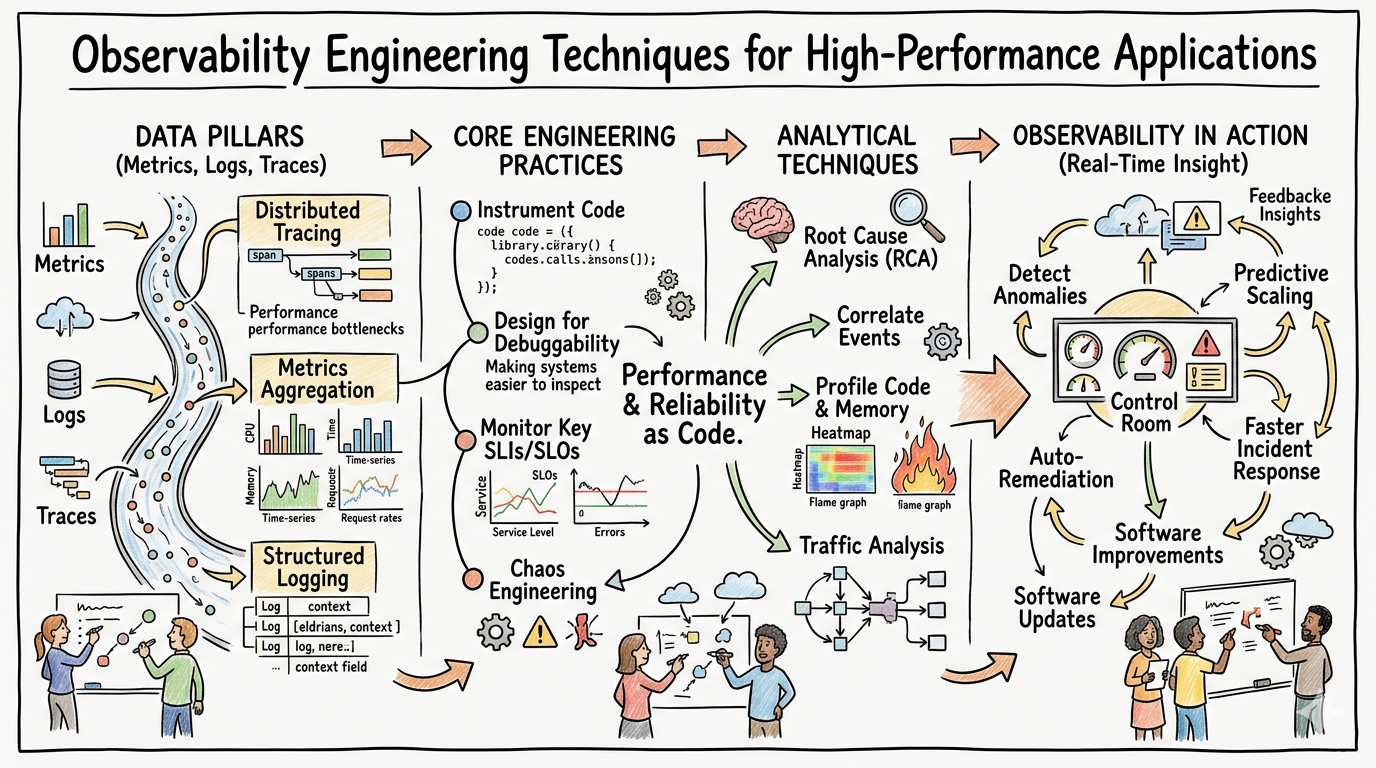
In the modern landscape of distributed systems, visibility into complex environments is no longer optional. This Master in Observability Engineering (MOE) guide is designed for professionals looking to transition from reactive troubleshooting to proactive system health management. Whether you are a DevOps engineer, an SRE, or a platform architect, understanding the telemetry of your infrastructure is critical for operational excellence. We will explore how this certification program hosted on devopsschool helps you navigate the technical nuances of modern monitoring, tracing, and logging. For those interested in broader automation and intelligent operations, exploring resources like aiopsschool can further complement your journey toward becoming a well-rounded system expert.
What is the Master in Observability Engineering (MOE)?
The Master in Observability Engineering (MOE) represents a comprehensive framework for understanding how complex software systems behave in production. It moves beyond traditional monitoring, which simply alerts you that something is broken, toward an observability model that helps you understand why it is broken. This program focuses on high-cardinality data, distributed tracing, and the correlation of logs, metrics, and events. It is built for professionals who prioritize real-world, production-focused outcomes over theoretical abstractions. By aligning with enterprise-grade practices, it ensures engineers can handle the scale and complexity of cloud-native environments effectively.
Who Should Pursue Master in Observability Engineering (MOE)?
This certification is intended for a wide array of technical professionals, including software engineers, Site Reliability Engineers (SREs), and cloud infrastructure architects. It is equally valuable for security professionals looking to correlate anomalies and data engineers who need to monitor pipeline performance. For engineering managers, it provides the technical literacy required to guide teams toward better architectural decisions. Whether you are a beginner looking to build a foundation or an experienced practitioner aiming to formalize your expertise, the program offers pathways relevant to both the Indian and global tech markets. It serves as a benchmark for anyone responsible for the uptime and performance of critical business services.
Why Master in Observability Engineering (MOE)
In an era where system outages cost millions, the ability to observe and remediate issues rapidly is a top-tier skill. As infrastructure becomes more abstracted through microservices and serverless architectures, traditional monitoring tools often fall short, making specialized observability skills highly sought after. This certification helps professionals stay relevant by focusing on vendor-agnostic principles that survive tool changes and industry shifts. Investing time in this knowledge provides a high return on investment, as it directly impacts your ability to resolve complex production incidents, thereby increasing your value to any organization. It is a long-term career asset that builds resilience against technical obsolescence.
Master in Observability Engineering (MOE) Certification Overview
The Master in Observability Engineering (MOE) program is delivered via the official training portal and is hosted on devopsschool. The certification is designed to be rigorous, focusing on a mix of assessment-based learning and hands-on project execution. It covers the full lifecycle of observability, from instrumentation to advanced analytics and alerting strategies. The program is owned and curated by industry veterans, ensuring that the curriculum remains aligned with current enterprise requirements. Students are expected to demonstrate practical competency, ensuring they can apply what they learn in live, high-traffic production environments.
Master in Observability Engineering (MOE) Certification Tracks & Levels
The program is structured across foundation, professional, and advanced levels, allowing for a structured career progression. The foundation level focuses on core concepts like telemetry collection and basic visualization, while the professional level dives into high-cardinality data, sampling strategies, and distributed tracing. The advanced level addresses complex topics such as observability-driven development, custom instrumentation, and automated remediation. Specialization tracks are available to tailor the learning journey to specific domains like SRE, DevOps, or Data operations. This multi-tiered approach ensures that regardless of your starting point, there is a clear path to mastery.
Complete Master in Observability Engineering (MOE) Certification Table
| Track | Level | Who it’s for | Prerequisites | Skills Covered | Recommended Order |
| Core | Foundation | Beginners | Basic Cloud/Linux | Metrics, Logging, Dashboards | 1 |
| Advanced | Professional | Engineers/SREs | Core Observability | Distributed Tracing, SLOs | 2 |
| Specialist | Expert | Architects | Professional MOE | AIOps, Custom Instrumentation | 3 |
Detailed Guide for Each Master in Observability Engineering (MOE) Certification
Master in Observability Engineering (MOE) – Foundation Level
What it is
This certification validates a foundational understanding of telemetry, including metrics, logs, and basic event monitoring.
Who should take it
Software engineers, junior SREs, and cloud administrators looking to enter the observability domain.
Skills you’ll gain
- Setting up monitoring agents and collectors.
- Building meaningful dashboards for infrastructure health.
- Configuring basic alerting thresholds for common failure modes.
Real-world projects you should be able to do
- Implement a monitoring stack for a containerized microservice.
- Create a dashboard that visualizes resource utilization (CPU/Memory).
- Configure alerting rules for latency and error rates.
Preparation plan
- 7–14 days: Focus on understanding the three pillars of observability.
- 30 days: Practice hands-on installation of agents and metric collection.
- 60 days: Review lab scenarios and troubleshoot common configuration errors.
Common mistakes
Over-alerting on non-critical metrics and ignoring the importance of structured logging.
Best next certification after this
- Same-track: MOE Professional.
- Cross-track: Certified DevOps Professional.
- Leadership: IT Service Management Essentials.
Choose Your Learning Path
DevOps Path
The DevOps path focuses on integrating observability into the CI/CD pipeline, ensuring that every deployment is measured for performance regressions. It emphasizes the importance of feedback loops to maintain system stability.
DevSecOps Path
The DevSecOps path incorporates security telemetry, allowing engineers to detect and respond to malicious activities in real-time. It bridges the gap between performance monitoring and security auditing.
SRE Path
The SRE path is heavily focused on reliability, error budgets, and SLO-based alerting. It teaches engineers how to manage uptime and capacity planning in large-scale, complex distributed environments.
AIOps Path
The AIOps path leverages machine learning and data analytics to automate the detection and remediation of incidents. It is essential for managing systems that produce too much data for manual analysis.
MLOps Path
The MLOps path focuses on monitoring the health and accuracy of machine learning models in production. It covers feature drift, prediction latency, and model performance tracking.
DataOps Path
The DataOps path emphasizes the observability of data pipelines, ensuring that data is accurate, timely, and accessible. It focuses on monitoring the quality and lineage of data flows.
FinOps Path
The FinOps path centers on observability as a means to control and optimize cloud costs. It links infrastructure usage metrics directly to financial reporting and resource efficiency.
Role → Recommended Master in Observability Engineering (MOE) Certifications
| Role | Recommended Certifications |
| DevOps Engineer | Foundation + Professional MOE |
| SRE | Professional + Advanced MOE |
| Platform Engineer | Foundation + Advanced MOE |
| Cloud Engineer | Foundation MOE |
| Security Engineer | DevSecOps Specialization MOE |
| Data Engineer | DataOps Specialization MOE |
| FinOps Practitioner | FinOps Specialization MOE |
| Engineering Manager | Foundation MOE + Strategy |
Next Certifications to Take After Master in Observability Engineering (MOE)
Same Track Progression
Once you have mastered the basics, delve into advanced instrumentation, performance tuning, and capacity planning. This involves deep-diving into specific observability platforms and mastering query languages for complex data analysis.
Cross-Track Expansion
Expand your expertise by pursuing certifications in cloud architecture, security, or data engineering. Understanding how observability integrates with these domains makes you a versatile and highly efficient lead engineer.
Leadership & Management Track
For those transitioning to management, focus on certifications that emphasize service management, incident response strategy, and engineering team leadership. This helps in bridging the gap between technical operations and business objectives.
Training & Certification Support Providers for Master in Observability Engineering (MOE)
DevOpsSchool
This provider is the primary hub for the curriculum, offering deep-dive sessions, hands-on lab environments, and expert mentorship. They specialize in enterprise-grade training that focuses on real-world adoption rather than just passing an exam.
Cotocus
Cotocus provides highly specialized technical workshops, focusing on the implementation of advanced observability tools. They are known for their project-based approach which is vital for engineers dealing with complex production workloads.
Scmgalaxy
Scmgalaxy offers comprehensive training resources that cover the intersection of automation and observability. Their focus is on ensuring that engineers can maintain consistent standards across diverse technical environments and large-scale deployments.
BestDevOps
BestDevOps focuses on the practical application of observability within a standard DevOps framework. They provide structured paths that help engineers transition from basic monitoring to advanced observability in enterprise environments.
devsecopsschool
This school provides critical training on integrating security into observability flows. Their curriculum is essential for professionals aiming to monitor the security posture of their applications alongside performance and availability.
sreschool
SREschool is dedicated to the core principles of reliability, offering advanced modules on error budgets, SLOs, and incident management. Their training is highly recommended for those pursuing a career in Site Reliability Engineering.
aiopsschool
AIOpsschool focuses on the automation of operations through data intelligence. They teach students how to leverage machine learning to make sense of massive volumes of logs and metrics in modern distributed systems.
dataopsschool
Dataopsschool provides specialized training for data engineers to monitor the health and quality of data pipelines. They emphasize observability as a key component of data reliability and pipeline performance management.
finopsschool
Finopsschool bridges the gap between technical observability and financial accountability. They teach engineers how to track resource usage and link it to cloud spend, which is critical for cost-efficient infrastructure management.
Frequently Asked Questions (General)
- What is the difficulty level of this certification?The certification is designed for professionals; while it requires dedicated study and practice, it is structured to be achievable for any engineer with foundational experience.
- How much time is required for preparation?Depending on your existing experience, most candidates find that 4 to 8 weeks of consistent study and lab practice is sufficient to prepare for the assessments.
- Are there any formal prerequisites?A background in Linux, basic cloud concepts, and an understanding of general software development workflows are highly recommended before starting.
- What is the return on investment for this certification?The ROI is significant because it provides tangible skills that allow for faster incident resolution, improved system uptime, and better overall architectural design capabilities.
- Is this certification recognized globally?Yes, the certification is based on industry-standard practices, making the skills and the credential relevant to engineering teams and companies worldwide.
- Does this certification expire?Certifications typically require periodic updates or renewal to ensure your skills remain relevant with evolving technology and industry practices.
- How does this certification differ from tool-specific training?It focuses on the core principles and architecture of observability, which are vendor-agnostic and remain applicable even when specific tool stacks change over time.
- Can I pursue this while working full-time?Absolutely; the program is structured with flexible learning paths, making it suitable for working professionals balancing their careers and professional development.
- What kind of projects are involved?Projects involve building end-to-end monitoring stacks, configuring distributed tracing for microservices, and setting up automated alerts based on complex metric correlation.
- How is the exam/assessment conducted?The assessment is practical-heavy, often involving lab-based challenges that test your ability to solve real-world observability problems in a controlled environment.
- Will this help with career advancement?It validates your expertise in a high-demand skill, directly making you a stronger candidate for roles like Senior SRE, Platform Architect, or Lead Engineer.
- Is there a community or support available during training?Yes, learners typically have access to mentorship, peer communities, and instructor support to help them through the more challenging technical concepts.
FAQs on Master in Observability Engineering (MOE)
- What makes MOE different from traditional monitoring?Monitoring tells you it is broken; observability helps you understand why it is broken through deep data correlation.
- Is programming knowledge necessary?Basic scripting or programming skills are highly beneficial for custom instrumentation and automation tasks.
- Does it cover open-source tools?Yes, the curriculum emphasizes open-source standards and tools that are widely used across the industry.
- Is it suitable for legacy system engineers?It provides strategies to bring observability into legacy environments, making them more manageable and resilient.
- How does it help in incident response?It drastically reduces Mean Time to Detection and Resolution by providing actionable insights into system failures.
- Are SLOs covered in the program?Yes, Service Level Objectives are a cornerstone of the professional and advanced certification levels.
- Does it cover cloud-native environments?It is specifically designed for containerized and cloud-native architectures which are inherently complex to observe.
- Can it help me get a job in SRE?It provides the exact technical and theoretical foundation required to excel in SRE roles.
Final Thoughts: Is Master in Observability Engineering (MOE) Worth It?
If you are serious about advancing your career in the cloud-native era, this certification is a logical and highly rewarding step. It provides more than just a certificate; it gives you the methodology to handle the inevitable complexity of modern distributed systems. As a mentor, I advise against chasing trendy tools; instead, focus on mastering the underlying principles of observability. This program offers exactly that—a pathway to becoming an engineer who can observe, understand, and fix complex systems with confidence. Take the time to invest in your craft, and the career benefits will follow naturally.
