Introduction
SOAR Playbook Builders are the automation design engines inside Security Orchestration, Automation, and Response (SOAR) platforms that allow security teams to visually or programmatically create incident response workflows. These playbooks define how security alerts are enriched, investigated, triaged, contained, and documented—without requiring manual intervention for every step.
In SOAR playbook builders have become a central part of modern Security Operations Centers (SOCs) because attack volumes, alert fatigue, and multi-stage cyberattacks have grown faster than human analyst capacity. Instead of manually switching between SIEM, EDR, and ticketing tools, SOC teams now build automated “if-this-then-that” workflows that respond to threats in real time.
Real-world use cases include phishing email triage, ransomware containment, compromised account lockout, malware investigation, vulnerability response automation, and compliance-driven incident reporting. These playbooks help standardize response actions and reduce mean time to respond (MTTR).
When evaluating SOAR playbook builders, organizations typically assess:
- Visual workflow design vs code-based flexibility
- Integration depth with SIEM, EDR, and cloud tools
- Support for conditional logic and branching workflows
- Ease of use for SOC analysts vs engineers
- Automation coverage (enrichment, containment, remediation)
- Case management and audit logging capabilities
- Scalability across high alert volumes
- Reusability of sub-playbooks and templates
- API extensibility and custom scripting support
- Governance, approval workflows, and compliance tracking
Best for: SOC teams, MSSPs, cybersecurity engineers, incident response teams, and large enterprises with repetitive security incidents and multi-tool security stacks.
Not ideal for: Small teams without a SIEM/EDR foundation, organizations with low alert volume, or teams that rely only on manual incident handling.
Key Trends in SOAR Playbook Builders
- Shift from drag-and-drop builders to AI-assisted playbook generation
- Natural language “build my playbook” automation is emerging
- Increased use of low-code/no-code SOC automation environments
- Greater integration with XDR and security data lakes
- Modular playbooks with reusable sub-workflows becoming standard
- Cloud-native SOAR replacing on-prem-heavy deployments
- Git-style version control for playbooks is gaining adoption
- Automated testing/simulation of playbooks before deployment
- Strong alignment with MITRE ATT&CK-based response flows
- Expansion of SOAR into IT operations and DevSecOps workflows
How We Selected These Tools (Methodology)
The selection of SOAR playbook builders is based on practical SOC usage and automation maturity.
Evaluation criteria included:
- Depth and flexibility of playbook design
- Visual builder usability and learning curve
- Integration ecosystem size and reliability
- Support for conditional logic, loops, and branching
- Incident response and case management support
- Scalability in enterprise environments
- Automation execution speed and reliability
- Security governance and auditability
- Extensibility via APIs or scripting
- Adoption in real-world SOC environments
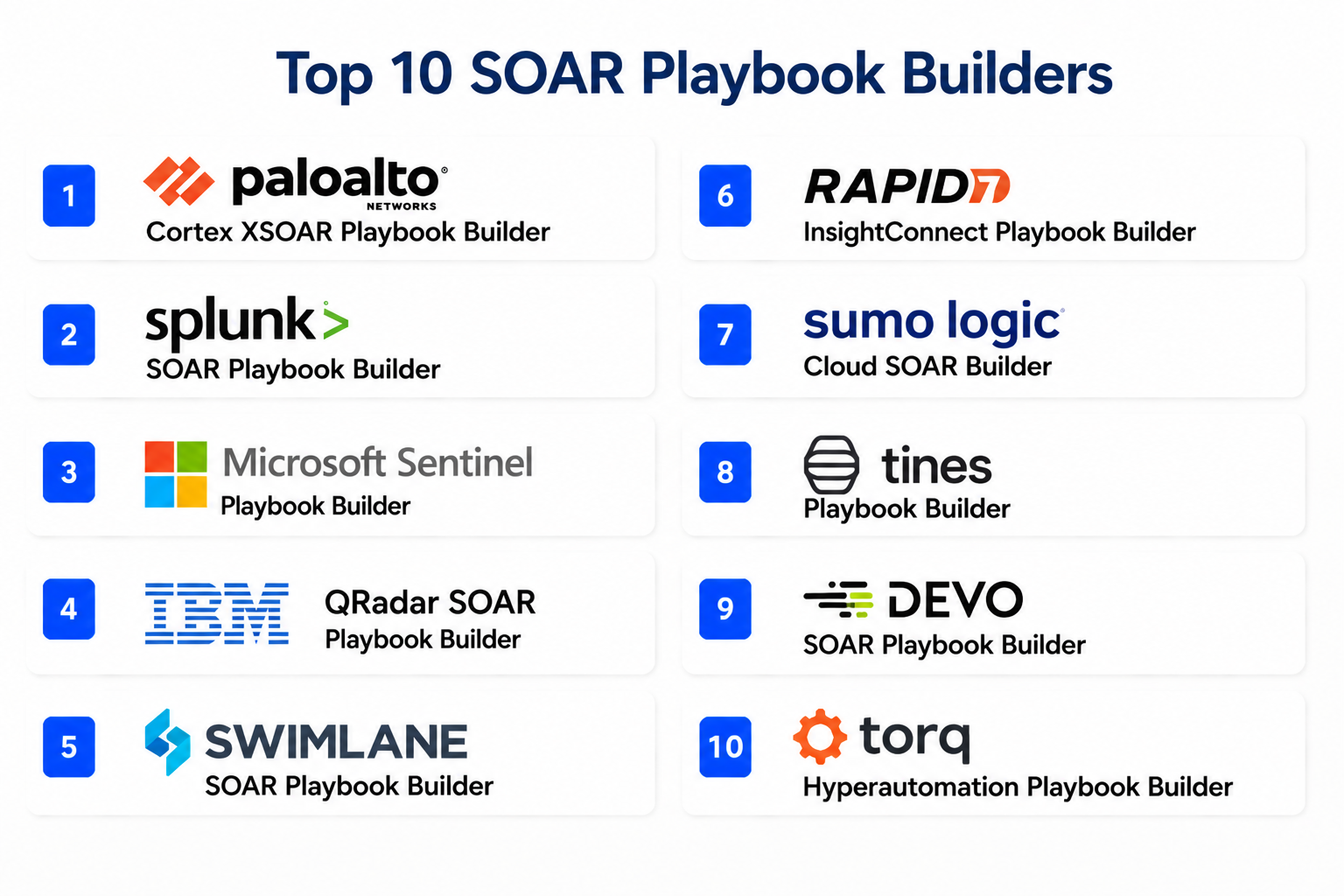
Top 10 SOAR Playbook Builders
#1 — Palo Alto Networks Cortex XSOAR Playbook Builder
Short description :
Cortex XSOAR offers one of the most advanced SOAR playbook builders in the cybersecurity industry. It provides a powerful visual canvas where analysts can design complex incident response workflows using conditional logic, loops, sub-playbooks, and integrations with hundreds of security tools. It is widely used in enterprise SOCs for large-scale automated incident response and threat intelligence-driven workflows.
Key Features
- Visual drag-and-drop playbook editor
- Advanced conditional logic and branching
- Sub-playbook reuse and modular automation
- Massive integration marketplace
- War room collaborative investigation interface
- AI-assisted automation suggestions
- Built-in case management
Pros
- Extremely powerful automation engine
- Highly scalable for enterprise SOCs
- Deep integration ecosystem
Cons
- Steep learning curve for beginners
- Complex configuration and maintenance
- High cost for smaller teams
Platforms / Deployment
- Web
- Cloud / Hybrid
Security & Compliance
- RBAC, MFA
- Audit logging
- SSO/SAML
- Encryption in transit and at rest
Integrations & Ecosystem
- SIEM platforms
- XDR and EDR tools
- Threat intelligence feeds
- Cloud security tools
- Ticketing systems
- Identity platforms
Support & Community
Strong enterprise support, training programs, and large SOC adoption globally.
#2 — Splunk SOAR Playbook Builder
Short description :
Splunk SOAR provides a flexible playbook builder designed for deep security automation across diverse environments. It allows analysts to create visual workflows that integrate tightly with Splunk data and external security tools. It is especially powerful in environments already using Splunk SIEM for log analytics and detection.
Key Features
- Visual workflow builder
- Python-based automation support
- Extensive integration “apps” library
- Case management and incident tracking
- Conditional logic and task chaining
- Threat intelligence enrichment
- Automated reporting workflows
Pros
- Extremely flexible automation design
- Strong integration with Splunk ecosystem
- Powerful for complex SOC workflows
Cons
- Requires technical expertise for advanced use
- Performance tuning needed at scale
- Licensing complexity in large deployments
Platforms / Deployment
- Web
- Cloud / Hybrid / On-prem
Security & Compliance
- RBAC
- Audit logs
- SSO integration
- Encryption support
Integrations & Ecosystem
- Splunk Enterprise Security
- Cloud providers
- EDR/SIEM tools
- Threat intelligence platforms
- Ticketing systems
Support & Community
Large enterprise support network and active SOC engineering community.
#3 — Microsoft Sentinel Playbook Builder (Logic Apps)
Short description :
Microsoft Sentinel uses Azure Logic Apps as its SOAR playbook builder, allowing SOC teams to create automated workflows directly within the Azure ecosystem. It enables cross-service automation across Microsoft 365, Azure, identity systems, and third-party security tools. It is highly effective for organizations standardized on Microsoft cloud services.
Key Features
- Low-code Logic Apps playbook designer
- Native Azure integration
- Automated incident response workflows
- Identity-based automation
- Threat intelligence enrichment
- Cross-cloud automation support
- Built-in connectors for Microsoft security stack
Pros
- Seamless Microsoft ecosystem integration
- Easy adoption for Azure-native teams
- Scalable cloud-native automation
Cons
- Best suited for Microsoft-heavy environments
- Limited flexibility outside Azure ecosystem
- Complex pricing structure
Platforms / Deployment
- Web
- Cloud
Security & Compliance
- RBAC
- MFA
- Audit logging
- Compliance dashboards
Integrations & Ecosystem
- Microsoft Defender XDR
- Microsoft 365 security tools
- Azure services
- Third-party SIEM tools
- Identity providers
Support & Community
Strong Microsoft documentation and enterprise support ecosystem.
#4 — IBM QRadar SOAR Playbook Builder
Short description :
IBM QRadar SOAR provides a structured playbook builder focused on enterprise-grade incident response automation. It emphasizes compliance-driven workflows, auditability, and security operations consistency across large organizations.
Key Features
- Visual playbook design interface
- Case-based workflow orchestration
- Automated response actions
- Compliance-driven templates
- Threat intelligence integration
- Workflow versioning
- Incident tracking dashboards
Pros
- Strong compliance and governance features
- Mature enterprise SOC support
- Deep SIEM integration
Cons
- Complex setup and configuration
- Requires training for SOC teams
- Less intuitive UI compared to modern tools
Platforms / Deployment
- Web
- Cloud / Hybrid / On-prem
Security & Compliance
- RBAC
- MFA
- Audit trails
- Encryption support
Integrations & Ecosystem
- IBM QRadar SIEM
- Threat intelligence platforms
- EDR tools
- Cloud environments
- Ticketing systems
Support & Community
Enterprise-level support and SOC training programs.
#5 — Swimlane SOAR Playbook Builder
Short description :
Swimlane provides a low-code SOAR playbook builder designed for flexibility and rapid automation development. It enables security teams to build workflows quickly using drag-and-drop logic while still supporting complex integrations.
Key Features
- Low-code visual builder
- Prebuilt automation templates
- Integration marketplace
- Case management workflows
- API-based extensibility
- Real-time orchestration
- Custom dashboards
Pros
- Easy to build and modify playbooks
- Strong flexibility for mid-market teams
- Fast deployment cycles
Cons
- Less deep than enterprise-heavy SOAR tools
- Advanced features require tuning
- Smaller ecosystem than market leaders
Platforms / Deployment
- Web
- Cloud / Hybrid
Security & Compliance
- RBAC
- MFA
- Audit logging
- Encryption support
Integrations & Ecosystem
- SIEM tools
- Cloud platforms
- Identity systems
- Ticketing tools
- Threat intelligence feeds
Support & Community
Good documentation and mid-market enterprise support.
#6 — Rapid7 InsightConnect Playbook Builder
Short description :
Rapid7 InsightConnect offers a simple and effective SOAR playbook builder focused on ease of use and fast automation deployment. It is widely used by mid-sized SOC teams for phishing response and alert triage automation.
Key Features
- Drag-and-drop workflow builder
- Prebuilt automation plugins
- Incident response templates
- API integration support
- Cloud-based execution engine
- Alert enrichment workflows
- Case tracking tools
Pros
- Easy onboarding for SOC teams
- Fast deployment
- Good automation templates
Cons
- Limited advanced customization
- Less suited for very large enterprises
- Smaller integration depth than competitors
Platforms / Deployment
- Web
- Cloud
Security & Compliance
- RBAC
- MFA
- Audit logs
- Encryption support
Integrations & Ecosystem
- SIEM platforms
- EDR tools
- Cloud services
- Ticketing systems
Support & Community
Strong mid-market support and documentation.
#7 — Sumo Logic Cloud SOAR Builder
Short description :
Sumo Logic Cloud SOAR provides a fully cloud-native playbook builder designed for scalable security automation. It integrates deeply with log analytics and real-time monitoring environments.
Key Features
- Cloud-native playbook design
- Real-time incident automation
- Log-driven workflows
- Threat intelligence enrichment
- Case management integration
- Multi-step orchestration
- Alert correlation
Pros
- Strong cloud scalability
- Good integration with log analytics
- Fast automation execution
Cons
- Requires Sumo ecosystem dependency
- Less flexible than open platforms
- Advanced workflows require tuning
Platforms / Deployment
- Web
- Cloud
Security & Compliance
- RBAC
- MFA
- Audit logging
- Encryption support
Integrations & Ecosystem
- Cloud platforms
- SIEM systems
- Security tools
- DevOps pipelines
- Identity providers
Support & Community
Enterprise support with cloud-native SOC focus.
#8 — Tines Playbook Builder
Short description :
Tines provides a modern no-code automation platform widely used for security workflows and SOAR-style playbooks. It focuses on simplicity, scalability, and rapid workflow development.
Key Features
- No-code workflow builder
- Event-driven automation
- API-first integrations
- Story-based playbooks
- Real-time orchestration
- Prebuilt templates
- Collaboration workflows
Pros
- Very easy to use
- Fast automation development
- Strong API flexibility
Cons
- Less traditional SOAR structure
- Advanced SOC features may be limited
- Requires strong API understanding
Platforms / Deployment
- Web
- Cloud
Security & Compliance
- RBAC
- MFA
- Audit logs
- Encryption support
Integrations & Ecosystem
- Security tools
- Cloud services
- DevOps tools
- Identity platforms
- Ticketing systems
Support & Community
Strong product support and growing automation community.
#9 — Devo SOAR Playbook Builder
Short description :
Devo SOAR offers a cloud-native playbook builder integrated with real-time security analytics and log management capabilities. It is designed for high-scale SOC environments requiring fast data processing.
Key Features
- Real-time workflow automation
- Log-driven playbook execution
- Security analytics integration
- Incident response automation
- Threat intelligence enrichment
- Case management tools
- Scalable orchestration engine
Pros
- Strong real-time analytics integration
- Scalable architecture
- Good SOC visibility
Cons
- Smaller ecosystem than top competitors
- Requires technical expertise
- UI learning curve
Platforms / Deployment
- Web
- Cloud
Security & Compliance
- RBAC
- MFA
- Audit logging
- Encryption support
Integrations & Ecosystem
- SIEM platforms
- Cloud systems
- Security tools
- Threat intelligence feeds
Support & Community
Enterprise support with SOC-focused onboarding.
#10 — Torq Hyperautomation Playbook Builder
Short description :
Torq is a modern hyperautomation platform designed for security teams to build highly scalable, low-code SOAR playbooks. It focuses on speed, automation depth, and integration flexibility.
Key Features
- Low-code automation builder
- Event-driven workflows
- API-first architecture
- Prebuilt security automation templates
- Scalable orchestration engine
- Cloud-native deployment
- Workflow version control
Pros
- Very fast automation development
- Strong scalability
- Modern architecture
Cons
- Smaller market maturity
- Limited legacy SOC compatibility
- Requires API-driven mindset
Platforms / Deployment
- Web
- Cloud
Security & Compliance
- RBAC
- MFA
- Audit logging
- Encryption support
Integrations & Ecosystem
- Cloud security platforms
- SIEM tools
- DevSecOps pipelines
- Identity systems
- Ticketing platforms
Support & Community
Growing enterprise adoption with responsive vendor support.
Comparison Table (Top 10)
| Tool Name | Best For | Platform(s) Supported | Deployment | Standout Feature | Public Rating |
|---|---|---|---|---|---|
| Cortex XSOAR | Enterprise SOC automation | Multi-platform | Cloud/Hybrid | Advanced playbook engine | N/A |
| Splunk SOAR | Deep SOC analytics | Multi-platform | Hybrid | SPL + automation | N/A |
| Microsoft Sentinel | Azure-native SOCs | Multi-platform | Cloud | Logic Apps automation | N/A |
| IBM QRadar SOAR | Compliance-heavy orgs | Multi-platform | Hybrid | Case-driven workflows | N/A |
| Swimlane | Mid-market automation | Web | Cloud/Hybrid | Low-code builder | N/A |
| Rapid7 InsightConnect | Fast deployment SOCs | Web | Cloud | Easy playbook setup | N/A |
| Sumo Logic SOAR | Cloud SOC teams | Web | Cloud | Log-driven automation | N/A |
| Tines | API-driven automation | Web | Cloud | No-code “story” builder | N/A |
| Devo SOAR | Real-time SOCs | Web | Cloud | Analytics-driven SOAR | N/A |
| Torq | Hyperautomation SOCs | Web | Cloud | Modern API-first playbooks | N/A |
Evaluation & SOAR Playbook Builders
| Tool Name | Core (25%) | Ease (15%) | Integrations (15%) | Security (10%) | Performance (10%) | Support (10%) | Value (15%) | Weighted Total (0–10) |
|---|---|---|---|---|---|---|---|---|
| Cortex XSOAR | 10 | 7 | 10 | 9 | 9 | 9 | 6 | 8.6 |
| Splunk SOAR | 9 | 7 | 10 | 9 | 9 | 8 | 6 | 8.3 |
| Microsoft Sentinel | 9 | 8 | 9 | 9 | 9 | 8 | 8 | 8.5 |
| IBM QRadar SOAR | 9 | 6 | 9 | 9 | 9 | 8 | 6 | 7.9 |
| Swimlane | 8 | 8 | 8 | 8 | 8 | 8 | 7 | 8.0 |
| Rapid7 InsightConnect | 7 | 9 | 8 | 8 | 8 | 8 | 8 | 8.0 |
| Sumo Logic SOAR | 8 | 7 | 8 | 8 | 8 | 8 | 7 | 7.9 |
| Tines | 8 | 9 | 9 | 8 | 8 | 8 | 7 | 8.2 |
| Devo SOAR | 8 | 7 | 8 | 8 | 8 | 8 | 7 | 7.8 |
| Torq | 8 | 8 | 8 | 8 | 9 | 8 | 7 | 8.1 |
Which SOAR Playbook Builder Should You Choose?
Solo / Freelancer
Tines or Rapid7 InsightConnect for simple, fast automation without heavy SOC overhead.
SMB
Swimlane, Microsoft Sentinel, or Rapid7 provide balanced automation and ease of deployment.
Mid-Market
Splunk SOAR, Swimlane, and Sumo Logic offer strong scalability and integration depth.
Enterprise
Cortex XSOAR, IBM QRadar SOAR, and Microsoft Sentinel are strongest for large SOC environments.
Budget vs Premium
Open or low-code platforms (Tines, Swimlane) reduce cost, while enterprise tools justify investment with deep automation and governance.
Feature Depth vs Ease of Use
Splunk and XSOAR offer maximum depth; Rapid7 and Tines prioritize usability.
Integrations & Scalability
API-first platforms scale best in modern cloud-native SOC environments.
Security & Compliance Needs
Regulated industries should prioritize audit logging, RBAC, MFA, and compliance reporting automation.
Frequently Asked Questions (FAQs)
1. What is a SOAR playbook builder?
It is a tool that allows security teams to design automated incident response workflows using visual or code-based logic.
2. Why are SOAR playbooks important?
They reduce manual workload, improve response speed, and standardize incident handling across SOC teams.
3. Do I need coding skills to build playbooks?
Not always. Many platforms offer no-code or low-code builders, though advanced workflows may require scripting.
4. What is a sub-playbook?
A reusable automation module that can be embedded inside larger workflows to reduce duplication.
5. Can SOAR replace SOC analysts?
No. It automates repetitive tasks but human analysts are still required for decision-making and investigation.
6. What is the difference between SOAR and SIEM?
SIEM collects and alerts on security data, while SOAR automates response actions using playbooks.
7. Are SOAR playbooks customizable?
Yes. Most platforms support full customization through visual builders or APIs.
8. What industries use SOAR platforms?
Finance, healthcare, government, IT services, telecom, and large enterprises commonly use SOAR.
9. What are common playbook examples?
Phishing response, malware containment, account lockout, and vulnerability remediation workflows.
10. What is the biggest challenge in SOAR adoption?
Complex setup, integration effort, and maintaining playbooks as environments evolve.
Conclusion
SOAR Playbook Builders are the automation backbone of modern cybersecurity operations, enabling organizations to transform manual incident response processes into scalable, repeatable, and intelligent workflows. As attack volumes increase and SOC teams face growing complexity, playbooks help bridge the gap between detection and response through structured automation. The right SOAR playbook builder depends heavily on organizational maturity, infrastructure complexity, and security goals.
