Introduction
Compliance Automation Platforms are software solutions that help organizations continuously manage, monitor, and prove compliance with regulatory frameworks such as SOC 2, ISO 27001, GDPR, HIPAA, PCI-DSS, and internal security policies. Instead of relying on manual audits, spreadsheets, and periodic assessments, these platforms automate evidence collection, control mapping, risk tracking, and audit readiness.
In compliance automation has become critical because regulatory pressure has increased alongside cloud adoption, SaaS sprawl, and AI-driven data processing. Organizations now face continuous audit expectations rather than annual point-in-time reviews, especially in enterprise SaaS, fintech, healthcare, and cloud-native companies.
These platforms bridge the gap between security operations and governance by integrating directly with cloud infrastructure, identity providers, DevOps pipelines, and security tools to automatically collect compliance evidence.
Common use cases include:
- Continuous SOC 2 / ISO 27001 readiness tracking
- Automated evidence collection for audits
- Policy and control mapping across frameworks
- Vendor risk and third-party compliance tracking
- Cloud security posture compliance monitoring
- GDPR and privacy regulation adherence
- Internal security governance enforcement
When evaluating Compliance Automation Platforms, buyers should consider:
- Framework coverage (SOC 2, ISO, HIPAA, etc.)
- Automated evidence collection capabilities
- Integration depth with cloud and SaaS tools
- Continuous control monitoring features
- Audit workflow and collaboration tools
- Risk management and remediation tracking
- Policy management and enforcement capabilities
- Scalability across multiple business units
- Ease of auditor collaboration and reporting
- Security posture and configuration tracking
Best for: SaaS companies, fintech firms, healthcare organizations, enterprise IT teams, and security/compliance teams managing multiple regulatory frameworks.
Not ideal for: Small businesses with minimal compliance requirements or organizations without cloud/SaaS infrastructure complexity.
Key Trends in Compliance Automation Platforms
- Shift from point-in-time audits to continuous compliance monitoring
- AI-driven control mapping and gap detection
- Automated evidence collection from cloud and SaaS APIs
- Integration with DevSecOps pipelines for compliance-as-code
- Real-time compliance dashboards replacing static audit reports
- Increased focus on vendor risk and third-party compliance automation
- Unified GRC (Governance, Risk, Compliance) convergence
- Policy-as-code frameworks becoming mainstream
- Stronger alignment with zero trust security models
- Continuous audit readiness becoming default expectation
How We Selected These Tools (Methodology)
The platforms listed below were selected based on enterprise adoption and compliance automation maturity.
Evaluation criteria included:
- Breadth of compliance framework support
- Automation depth for evidence collection
- Integration ecosystem (cloud, SaaS, DevOps tools)
- Continuous monitoring capabilities
- Audit readiness and reporting features
- Policy and control mapping flexibility
- Risk and vendor management capabilities
- Usability for compliance and security teams
- Scalability across enterprise environments
- Market adoption and real-world deployment maturity
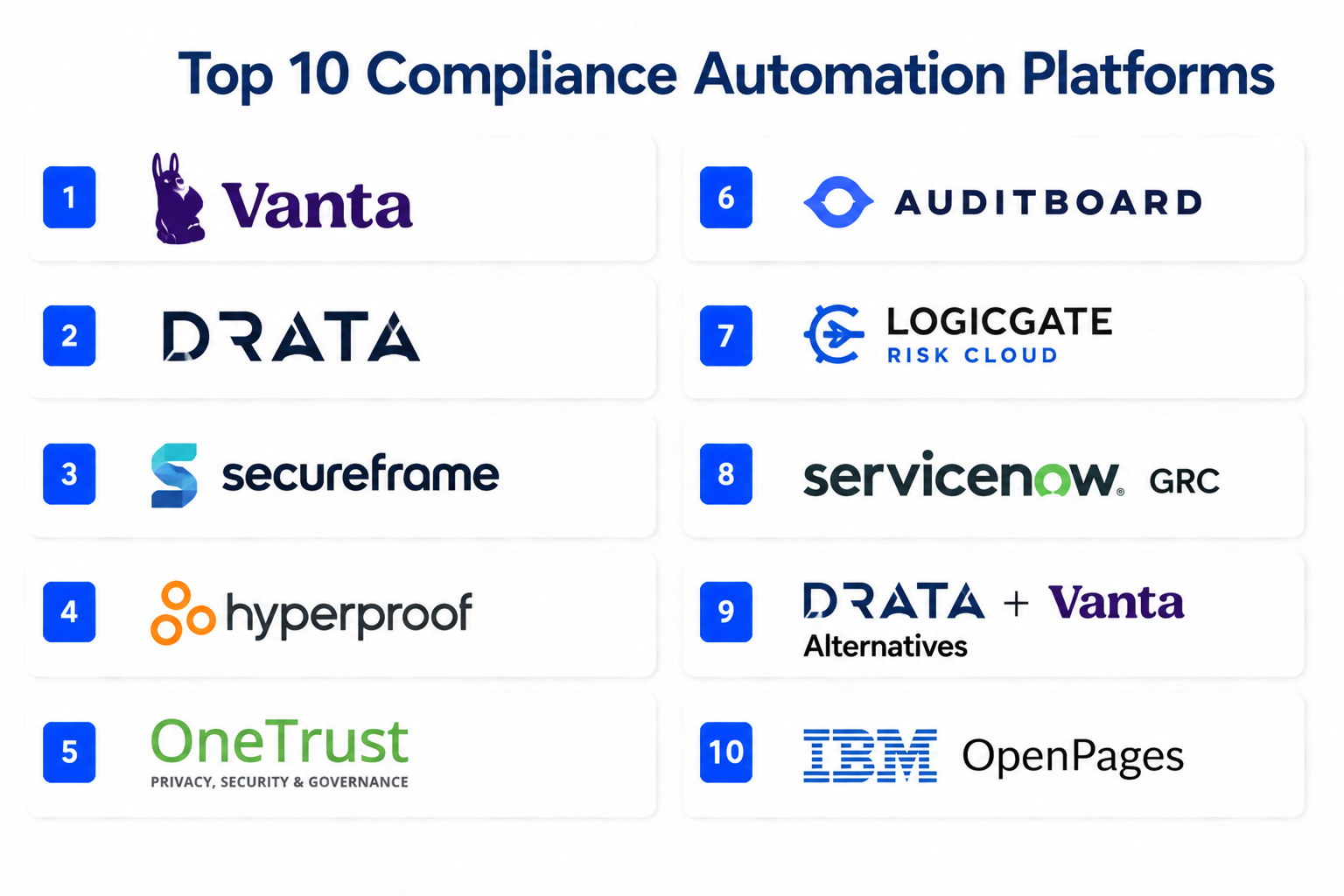
Top 10 Compliance Automation Platforms
#1 — Vanta
Short description :
Vanta is a widely used compliance automation platform that helps organizations achieve and maintain SOC 2, ISO 27001, and other security certifications through continuous monitoring and automated evidence collection. It integrates with cloud services, identity providers, and SaaS tools to streamline audit preparation and ongoing compliance tracking.
Key Features
- Automated SOC 2 and ISO 27001 readiness tracking
- Continuous control monitoring
- Automated evidence collection from SaaS tools
- Vendor and risk management workflows
- Policy management templates
- Security questionnaire automation
- Real-time compliance dashboards
Pros
- Fast onboarding for startups and SMBs
- Strong automation for audit readiness
- Wide integration coverage
Cons
- Limited customization for complex enterprises
- Higher cost at scale
- Framework depth varies by region/use case
Platforms / Deployment
- Web
- Cloud
Security & Compliance
- RBAC
- MFA
- Audit logs
- Encryption at rest and in transit
Integrations & Ecosystem
- Cloud providers
- Identity platforms
- SaaS applications
- DevOps tools
- Ticketing systems
Support & Community
Strong onboarding support and compliance-focused customer success programs.
#2 — Drata
Short description :
Drata is a compliance automation platform designed to continuously monitor security controls and automate audit preparation across multiple frameworks. It provides deep integration with cloud environments and security tools to ensure real-time compliance visibility.
Key Features
- Continuous compliance monitoring
- Automated evidence collection
- Control mapping across frameworks
- Vendor risk management
- Policy management system
- Audit-ready reporting dashboards
- Security questionnaire automation
Pros
- Strong automation and monitoring depth
- Easy integration with cloud ecosystems
- Good scalability for growing companies
Cons
- Can become expensive at enterprise scale
- Learning curve for advanced workflows
- Limited offline customization
Platforms / Deployment
- Web
- Cloud
Security & Compliance
- RBAC
- MFA
- Encryption support
- Audit logging
Integrations & Ecosystem
- Cloud platforms
- Identity providers
- Security tools
- DevOps pipelines
- SaaS applications
Support & Community
Strong enterprise support with compliance advisory resources.
#3 — Secureframe
Short description :
Secureframe provides an end-to-end compliance automation platform that simplifies SOC 2, ISO 27001, HIPAA, and other certifications through automated workflows, control tracking, and audit management tools.
Key Features
- Automated compliance framework mapping
- Continuous monitoring of controls
- Evidence collection automation
- Policy management tools
- Risk assessment workflows
- Vendor compliance tracking
- Audit management dashboards
Pros
- Easy for startups and SMBs
- Strong audit preparation capabilities
- Good integration coverage
Cons
- Limited deep enterprise customization
- Pricing scales with usage
- Less flexibility for complex compliance programs
Platforms / Deployment
- Web
- Cloud
Security & Compliance
- RBAC
- MFA
- Audit logs
- Encryption support
Integrations & Ecosystem
- Cloud providers
- SaaS tools
- Identity systems
- DevOps tools
- Ticketing systems
Support & Community
Strong onboarding support and compliance documentation.
#4 — Hyperproof
Short description :
Hyperproof is a governance, risk, and compliance (GRC) automation platform that helps organizations manage multiple compliance frameworks, risks, and audit workflows in a centralized system. It is designed for mid-market and enterprise compliance teams.
Key Features
- Multi-framework compliance management
- Risk tracking and assessment workflows
- Control mapping and monitoring
- Automated evidence collection
- Audit management tools
- Policy lifecycle management
- Vendor risk tracking
Pros
- Strong GRC capabilities
- Flexible compliance framework mapping
- Good for mid-to-large organizations
Cons
- More complex than startup-focused tools
- Requires configuration effort
- UI learning curve
Platforms / Deployment
- Web
- Cloud
Security & Compliance
- RBAC
- MFA
- Audit logging
- Encryption support
Integrations & Ecosystem
- Cloud services
- Security tools
- Identity providers
- Ticketing systems
- DevOps platforms
Support & Community
Enterprise-grade support with compliance consulting options.
#5 — OneTrust
Short description :
OneTrust is a large-scale privacy, security, and compliance management platform widely used for GDPR, data governance, and enterprise risk management. It offers extensive automation across privacy and compliance workflows.
Key Features
- Privacy compliance automation (GDPR, CCPA)
- Risk and compliance management
- Vendor risk tracking
- Data mapping and classification
- Policy management workflows
- Consent management tools
- Audit readiness dashboards
Pros
- Very strong enterprise compliance coverage
- Excellent privacy governance capabilities
- Highly scalable platform
Cons
- Complex implementation
- High cost for smaller organizations
- Requires dedicated compliance teams
Platforms / Deployment
- Web
- Cloud
Security & Compliance
- RBAC
- MFA
- Audit logs
- Encryption support
Integrations & Ecosystem
- Enterprise SaaS tools
- Cloud providers
- Security platforms
- Identity systems
- Data governance tools
Support & Community
Strong enterprise support and global compliance advisory ecosystem.
#6 — AuditBoard
Short description :
AuditBoard is a compliance and audit management platform designed for enterprise audit teams to streamline risk management, compliance workflows, and internal audit processes.
Key Features
- Audit management workflows
- Risk assessment tracking
- Compliance framework mapping
- Automated evidence collection
- Control testing workflows
- Issue tracking and remediation
- Reporting dashboards
Pros
- Strong audit-focused capabilities
- Good enterprise scalability
- Easy collaboration for audit teams
Cons
- Less automation than modern compliance tools
- UI can feel traditional
- Requires onboarding effort
Platforms / Deployment
- Web
- Cloud
Security & Compliance
- RBAC
- MFA
- Audit logging
- Encryption support
Integrations & Ecosystem
- ERP systems
- Cloud platforms
- Security tools
- Ticketing systems
- Identity providers
Support & Community
Strong enterprise audit support and training resources.
#7 — LogicGate Risk Cloud
Short description :
LogicGate Risk Cloud is a flexible GRC platform that allows organizations to build customized compliance, risk, and governance workflows with a no-code interface.
Key Features
- No-code workflow builder
- Risk and compliance automation
- Control mapping tools
- Audit management dashboards
- Vendor risk management
- Policy lifecycle tracking
- Custom reporting tools
Pros
- Highly flexible workflow customization
- Strong GRC capabilities
- Suitable for enterprise compliance programs
Cons
- Requires setup and configuration effort
- Learning curve for new users
- Less plug-and-play than SMB tools
Platforms / Deployment
- Web
- Cloud
Security & Compliance
- RBAC
- MFA
- Audit logs
- Encryption support
Integrations & Ecosystem
- Cloud platforms
- Security tools
- Identity systems
- DevOps tools
- Enterprise applications
Support & Community
Strong enterprise support and compliance consulting services.
#8 — ServiceNow GRC
Short description :
ServiceNow GRC provides a powerful compliance automation and governance platform built on top of the ServiceNow ecosystem, enabling large enterprises to manage risk, compliance, and audit workflows at scale.
Key Features
- Enterprise GRC automation
- Risk management workflows
- Compliance tracking dashboards
- Audit lifecycle management
- Policy management tools
- Control testing automation
- Workflow orchestration engine
Pros
- Extremely powerful enterprise platform
- Strong workflow automation capabilities
- Deep integration with ITSM ecosystem
Cons
- Complex and expensive
- Requires significant implementation effort
- Overkill for small organizations
Platforms / Deployment
- Web
- Cloud / Hybrid
Security & Compliance
- RBAC
- MFA
- Audit logging
- Encryption support
Integrations & Ecosystem
- ITSM systems
- Cloud providers
- Security tools
- Enterprise applications
- Identity platforms
Support & Community
Strong enterprise support and global implementation ecosystem.
#9 — Drata + Vanta Alternatives (Sprinto)
Short description :
Sprinto is a compliance automation platform focused on simplifying SOC 2, ISO 27001, and GDPR readiness for fast-growing SaaS companies through automation and continuous monitoring.
Key Features
- Continuous compliance monitoring
- Automated evidence collection
- Security control tracking
- Risk assessment workflows
- Policy management tools
- Audit preparation dashboards
- Integration with cloud tools
Pros
- Simple onboarding for SaaS companies
- Strong automation features
- Good affordability for startups
Cons
- Less enterprise depth
- Limited advanced customization
- Smaller ecosystem compared to leaders
Platforms / Deployment
- Cloud
Security & Compliance
- RBAC
- MFA
- Audit logs
- Encryption support
Integrations & Ecosystem
- SaaS tools
- Cloud providers
- Identity systems
- DevOps tools
- Ticketing systems
Support & Community
Strong startup-focused support and onboarding.
#10 — IBM OpenPages
Short description :
IBM OpenPages is a governance, risk, and compliance platform designed for large enterprises requiring advanced risk modeling, compliance tracking, and audit automation capabilities.
Key Features
- Enterprise risk management
- Compliance automation workflows
- Audit management tools
- Control tracking systems
- Regulatory compliance mapping
- AI-driven insights for risk
- Reporting dashboards
Pros
- Strong enterprise-grade governance
- Highly scalable risk management
- Good AI-assisted compliance insights
Cons
- Complex deployment
- High cost
- Requires specialized expertise
Platforms / Deployment
- Web
- Cloud / On-prem / Hybrid
Security & Compliance
- RBAC
- MFA
- Audit logs
- Encryption support
Integrations & Ecosystem
- Enterprise IT systems
- Cloud platforms
- Security tools
- Identity providers
- Data governance platforms
Support & Community
Strong enterprise support and consulting ecosystem.
Comparison Table (Top 10)
| Tool Name | Best For | Platform(s) Supported | Deployment | Standout Feature | Public Rating |
|---|---|---|---|---|---|
| Vanta | Startup compliance automation | Multi-platform | Cloud | Fast SOC 2 readiness | N/A |
| Drata | Continuous compliance | Multi-platform | Cloud | Real-time monitoring | N/A |
| Secureframe | SMB compliance workflows | Multi-platform | Cloud | Audit automation | N/A |
| Hyperproof | Mid-market GRC | Multi-platform | Cloud | Risk + compliance mapping | N/A |
| OneTrust | Enterprise privacy compliance | Multi-platform | Cloud | GDPR automation | N/A |
| AuditBoard | Audit management | Multi-platform | Cloud | Internal audit workflows | N/A |
| LogicGate | Custom GRC workflows | Multi-platform | Cloud | No-code compliance builder | N/A |
| ServiceNow GRC | Enterprise governance | Multi-platform | Hybrid | Full IT + GRC integration | N/A |
| Sprinto | SaaS compliance automation | Multi-platform | Cloud | Startup-friendly automation | N/A |
| IBM OpenPages | Enterprise risk & compliance | Multi-platform | Hybrid | AI-driven risk insights | N/A |
Evaluation & Compliance Automation Platforms
| Tool Name | Core (25%) | Ease (15%) | Integrations (15%) | Security (10%) | Performance (10%) | Support (10%) | Value (15%) | Weighted Total (0–10) |
|---|---|---|---|---|---|---|---|---|
| Vanta | 9 | 9 | 9 | 9 | 9 | 9 | 8 | 8.8 |
| Drata | 9 | 8 | 9 | 9 | 9 | 9 | 8 | 8.6 |
| Secureframe | 8 | 9 | 8 | 9 | 8 | 9 | 9 | 8.5 |
| Hyperproof | 9 | 7 | 9 | 9 | 8 | 8 | 8 | 8.3 |
| OneTrust | 10 | 7 | 9 | 10 | 9 | 9 | 6 | 8.5 |
| AuditBoard | 8 | 7 | 8 | 9 | 8 | 8 | 8 | 8.0 |
| LogicGate | 8 | 7 | 8 | 9 | 8 | 8 | 8 | 8.0 |
| ServiceNow GRC | 10 | 6 | 10 | 10 | 9 | 9 | 6 | 8.4 |
| Sprinto | 8 | 9 | 8 | 8 | 8 | 8 | 9 | 8.4 |
| IBM OpenPages | 9 | 6 | 9 | 10 | 9 | 9 | 6 | 8.3 |
Which Compliance Automation Platform Should You Choose?
Solo / Freelancer
Sprinto or Secureframe for lightweight compliance tracking and startup-friendly workflows.
SMB
Vanta, Drata, and Secureframe for fast SOC 2 readiness and automated evidence collection.
Mid-Market
Hyperproof, LogicGate, and AuditBoard for scalable GRC and compliance workflows.
Enterprise
ServiceNow GRC, OneTrust, and IBM OpenPages for large-scale governance and multi-framework compliance.
Budget vs Premium
Startup tools prioritize speed and simplicity, while enterprise tools focus on governance depth and customization.
Feature Depth vs Ease of Use
Vanta and Drata prioritize usability; ServiceNow and IBM OpenPages prioritize depth and control.
Integrations & Scalability
Modern platforms should integrate deeply with cloud, SaaS, identity, and DevOps ecosystems.
Security & Compliance Needs
Highly regulated industries should prioritize audit trails, RBAC, MFA, encryption, and multi-framework support.
Frequently Asked Questions (FAQs)
1. What is a compliance automation platform?
It is software that automates compliance management tasks such as evidence collection, control tracking, and audit preparation.
2. What frameworks do these tools support?
Common frameworks include SOC 2, ISO 27001, HIPAA, GDPR, PCI-DSS, and internal security policies.
3. Do these platforms replace auditors?
No, they automate preparation but auditors still perform final verification and certification.
4. Are compliance tools only for large companies?
No, many tools are designed specifically for startups and SMBs.
5. What is continuous compliance?
It is real-time monitoring of controls instead of periodic audit checks.
6. Do these tools integrate with cloud platforms?
Yes, most integrate with AWS, Azure, Google Cloud, and SaaS tools.
7. How long does SOC 2 compliance take?
With automation tools, it can be significantly faster, but timelines vary by readiness.
8. What is evidence collection?
It is the automated gathering of logs, screenshots, and system data required for audits.
9. Are these platforms secure?
Yes, they typically use encryption, RBAC, MFA, and audit logging.
10. What is the biggest challenge?
Maintaining continuous accuracy of controls across fast-changing cloud environments.
Conclusion
Compliance Automation Platforms are transforming how organizations approach governance, risk, and regulatory compliance by replacing manual, fragmented processes with continuous, automated systems. As regulatory requirements expand and cloud environments become more complex, these platforms ensure organizations remain audit-ready at all times. The right solution depends on company size, compliance maturity, and regulatory complexity. Startups often benefit from Vanta, Drata, or Sprinto for fast SOC 2 readiness.
