Introduction
Security Analytics Platforms are advanced cybersecurity solutions designed to collect, normalize, correlate, and analyze security data from multiple sources such as endpoints, networks, cloud services, identity systems, and applications. Their primary goal is to help security teams detect threats faster, investigate incidents deeply, and respond with higher accuracy using behavioral insights and real-time analytics.
In security analytics platforms have become essential because modern attack surfaces are highly distributed across hybrid cloud, SaaS applications, and remote endpoints. Traditional monitoring tools are no longer enough to detect sophisticated attacks like fileless malware, identity-based intrusions, and multi-stage ransomware campaigns.
These platforms combine capabilities from SIEM, UEBA (User and Entity Behavior Analytics), threat intelligence, and sometimes SOAR to provide a unified view of security posture and attacker activity.
Common use cases include:
- Detecting anomalous user and system behavior
- Real-time threat detection and alert correlation
- Insider threat identification
- Cloud security monitoring and analytics
- Incident investigation and forensic analysis
- Compliance monitoring and reporting
When evaluating Security Analytics Platforms, buyers should consider:
- Data ingestion speed and scalability
- Correlation and detection accuracy
- Behavioral analytics (UEBA) capabilities
- AI/ML-driven anomaly detection
- Integration with SIEM, SOAR, and EDR tools
- Real-time vs batch processing capabilities
- Query flexibility and investigation tools
- Cloud-native vs on-prem architecture
- Alert noise reduction effectiveness
- Compliance and audit readiness
Best for: SOC teams, cybersecurity analysts, enterprise IT security teams, MSSPs, and organizations with complex hybrid or multi-cloud environments.
Not ideal for: Very small businesses with minimal security telemetry or teams relying only on basic antivirus/firewall tools.
Key Trends in Security Analytics Platforms
- Strong shift toward AI-driven behavioral analytics (UEBA + ML detection)
- Convergence of SIEM + XDR + SOAR into unified analytics platforms
- Cloud-native analytics replacing legacy on-prem SIEM systems
- Real-time streaming analytics for faster threat detection
- Increased use of security graph models for correlation
- Identity-centric analytics (ITDR integration) becoming standard
- Natural language querying for SOC analysts
- Automated investigation and alert prioritization
- Data lake integration for long-term security analytics
- Open telemetry standards improving interoperability
How We Selected These Tools (Methodology)
The platforms below were selected based on real-world adoption and technical capability in security analytics environments.
Evaluation criteria included:
- Depth of security analytics and correlation engine
- Behavioral analytics and anomaly detection strength
- Scalability across large datasets and environments
- Integration ecosystem maturity (SIEM, SOAR, XDR, cloud tools)
- Query flexibility and investigation capabilities
- AI/ML-driven detection features
- SOC usability and workflow efficiency
- Deployment flexibility (cloud, hybrid, on-prem)
- Threat intelligence integration capabilities
- Enterprise adoption and operational maturity
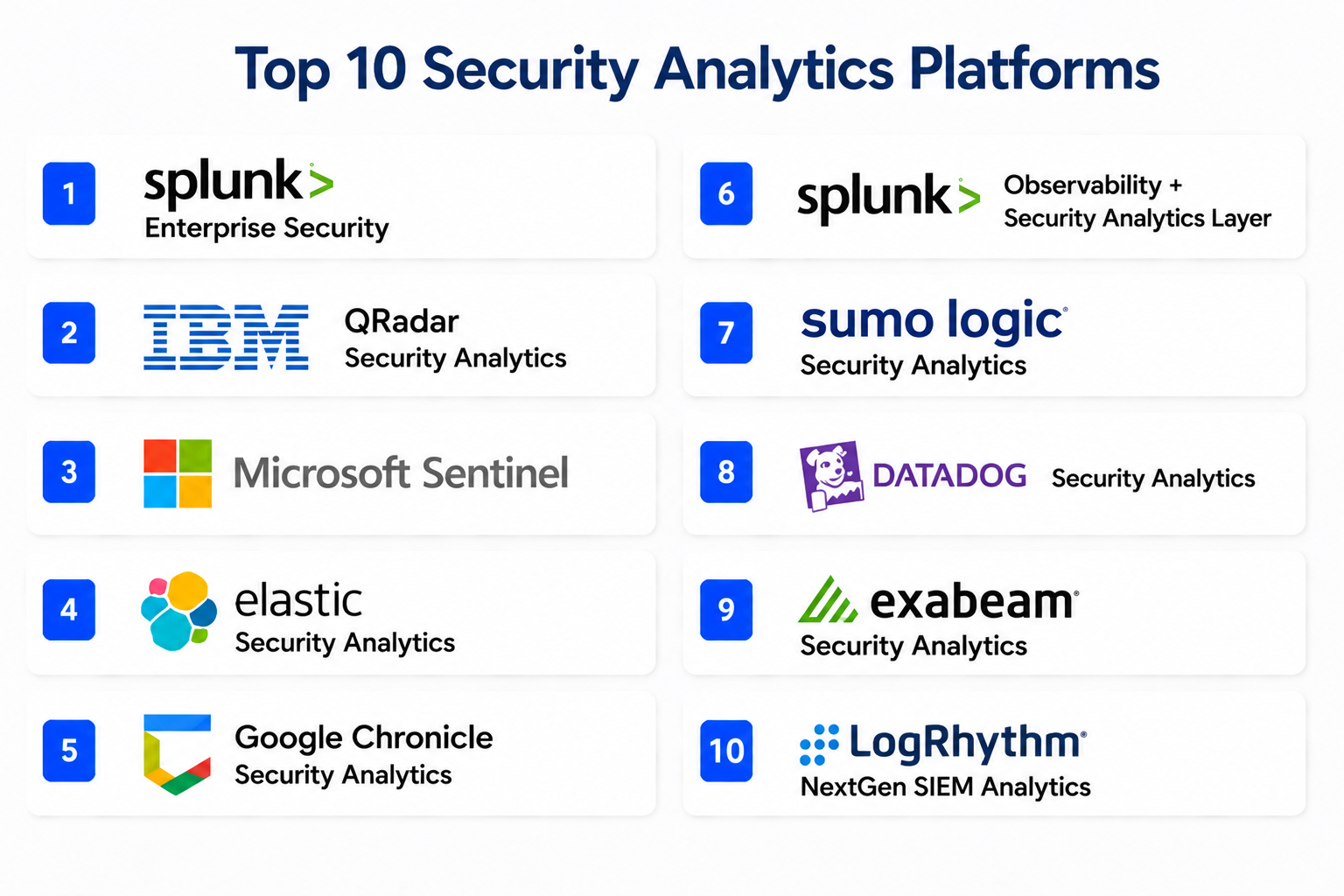
Top 10 Security Analytics Platforms
#1 — Splunk Enterprise Security
Short description :
Splunk Enterprise Security is one of the most widely adopted security analytics platforms for enterprise SOC environments. It provides powerful search-based analytics across machine-generated data, enabling deep threat detection, correlation, and investigation. It is highly customizable and supports large-scale data ingestion across hybrid environments.
Key Features
- Advanced correlation search engine
- Real-time security analytics dashboards
- Custom detection rule creation
- Threat intelligence integration
- Risk-based alerting system
- Behavioral anomaly detection
- Incident investigation workflows
Pros
- Extremely powerful and flexible analytics engine
- Strong ecosystem and SOC adoption
- Highly customizable detection logic
Cons
- High cost at scale
- Requires skilled analysts
- Complex deployment and tuning
Platforms / Deployment
- Web
- Linux / Windows
- Cloud / Hybrid / On-prem
Security & Compliance
- RBAC and MFA
- Audit logging
- Encryption in transit and at rest
- Compliance reporting support
Integrations & Ecosystem
- SOAR platforms
- SIEM and XDR tools
- Cloud providers
- Threat intelligence feeds
- Endpoint security systems
Support & Community
Strong enterprise support and large global SOC community.
#2 — IBM QRadar Security Analytics
Short description :
IBM QRadar is a mature security analytics platform that provides deep log correlation, network visibility, and behavioral analytics for enterprise security operations. It is widely used for compliance-heavy environments and large SOC deployments.
Key Features
- Advanced log correlation engine
- Network flow analytics
- Offense-based incident grouping
- Threat intelligence integration
- Behavioral anomaly detection
- SIEM and analytics dashboards
- Forensic investigation tools
Pros
- Strong enterprise-grade correlation capabilities
- Excellent network visibility
- Mature compliance features
Cons
- Complex deployment and configuration
- Steep learning curve
- Resource-intensive
Platforms / Deployment
- Web
- Windows / Linux
- Cloud / Hybrid / On-prem
Security & Compliance
- RBAC
- MFA
- Audit logs
- Compliance reporting tools
Integrations & Ecosystem
- SIEM/SOAR systems
- Cloud security tools
- EDR platforms
- Identity providers
- Threat intelligence feeds
Support & Community
Enterprise support with strong SOC training ecosystem.
#3 — Microsoft Sentinel
Short description :
Microsoft Sentinel is a cloud-native security analytics platform built on Azure that enables intelligent security monitoring, threat detection, and investigation using advanced query language and AI-driven insights. It is tightly integrated with Microsoft’s security ecosystem.
Key Features
- Cloud-native SIEM and analytics engine
- KQL-based threat hunting
- AI-driven alert correlation
- Identity and endpoint analytics
- Automated investigation workflows
- Threat intelligence integration
- Multi-cloud data ingestion
Pros
- Strong Microsoft ecosystem integration
- Scalable cloud-native architecture
- Powerful query language (KQL)
Cons
- Best suited for Azure environments
- Pricing complexity
- Requires expertise for advanced use
Platforms / Deployment
- Cloud
Security & Compliance
- RBAC and MFA
- Encryption at rest/in transit
- Audit logging
- Compliance dashboards
Integrations & Ecosystem
- Microsoft Defender XDR
- Azure services
- Third-party SIEM tools
- Identity providers
- Cloud platforms
Support & Community
Strong enterprise support and wide SOC adoption.
#4 — Elastic Security Analytics
Short description :
Elastic Security provides a scalable security analytics platform built on Elasticsearch, enabling real-time search, detection, and investigation across large datasets. It is widely used for SIEM and threat hunting workloads.
Key Features
- Real-time search and analytics engine
- Machine learning anomaly detection
- Custom detection rules
- Security dashboards and visualization
- Threat hunting workflows
- Scalable log ingestion
- MITRE ATT&CK mapping
Pros
- Highly flexible and scalable
- Strong real-time search capabilities
- Cost-effective at large scale
Cons
- Requires technical expertise
- Infrastructure tuning needed
- Complexity at enterprise scale
Platforms / Deployment
- Cloud / Self-hosted / Hybrid
Security & Compliance
- RBAC
- Encryption support
- Audit logging
- Compliance dashboards
Integrations & Ecosystem
- SIEM tools
- Cloud platforms
- DevSecOps pipelines
- Threat intelligence feeds
Support & Community
Strong open-source community and enterprise support options.
#5 — Google Chronicle Security Analytics
Short description :
Google Chronicle is a cloud-native security analytics platform designed for ultra-fast search and large-scale security data processing. It enables organizations to analyze petabyte-scale telemetry with high-speed query performance.
Key Features
- Massive-scale data ingestion
- Ultra-fast search engine
- Built-in threat intelligence correlation
- Behavioral analytics capabilities
- Long-term data retention
- Normalized security data model
- Cloud-native architecture
Pros
- Extremely fast query performance
- Designed for large-scale security data
- Strong threat intelligence integration
Cons
- Limited customization outside Google ecosystem
- Enterprise-focused pricing
- Requires SOC maturity
Platforms / Deployment
- Cloud
Security & Compliance
- IAM-based access control
- Encryption support
- Audit logging
- Compliance features
Integrations & Ecosystem
- Google Cloud security tools
- SIEM/SOAR platforms
- Threat intelligence systems
- Enterprise security tools
Support & Community
Enterprise-grade support and strong cloud-native ecosystem.
#6 — Splunk Observability + Security Analytics Layer
Short description :
Splunk’s broader analytics ecosystem combines observability and security analytics to provide unified visibility across infrastructure, applications, and security events. It is widely used in enterprise SOC environments for deep correlation.
Key Features
- Unified observability and security analytics
- Real-time event correlation
- Machine data analysis
- Custom dashboards
- Threat detection rules
- AI-assisted insights
- Scalable ingestion pipelines
Pros
- Unified analytics across domains
- Strong correlation capabilities
- Highly flexible platform
Cons
- High cost of ownership
- Requires optimization expertise
- Complex architecture
Platforms / Deployment
- Cloud / Hybrid / On-prem
Security & Compliance
- RBAC
- MFA
- Audit logging
- Encryption support
Integrations & Ecosystem
- Cloud platforms
- SIEM/SOAR tools
- DevOps systems
- Threat intelligence feeds
Support & Community
Strong enterprise SOC ecosystem.
#7 — Sumo Logic Security Analytics
Short description :
Sumo Logic is a cloud-native security analytics platform that provides real-time log analysis, threat detection, and monitoring across hybrid environments. It is widely used for SaaS-based security analytics.
Key Features
- Cloud-native log analytics
- Real-time detection rules
- Behavioral analytics
- Compliance reporting
- Security dashboards
- Threat intelligence integration
- Scalable ingestion engine
Pros
- Easy cloud deployment
- Strong SaaS monitoring capabilities
- Good real-time analytics
Cons
- Less customizable than open platforms
- Pricing scales with data volume
- Limited deep SOC customization
Platforms / Deployment
- Cloud
Security & Compliance
- RBAC
- MFA
- Encryption support
- Audit logging
Integrations & Ecosystem
- Cloud services
- SIEM tools
- Security platforms
- DevOps tools
Support & Community
Strong enterprise SaaS support ecosystem.
#8 — Datadog Security Analytics
Short description :
Datadog provides security analytics capabilities integrated with its observability platform, enabling real-time detection of threats across infrastructure, applications, and cloud environments.
Key Features
- Cloud-native security monitoring
- Real-time anomaly detection
- Log and metric correlation
- Threat detection rules
- Cloud workload security analytics
- Dashboards and visualization
- API-based integrations
Pros
- Strong observability + security integration
- Easy cloud adoption
- Real-time monitoring capabilities
Cons
- Not a dedicated SOC platform
- Limited deep forensic tools
- Cost increases with scale
Platforms / Deployment
- Cloud
Security & Compliance
- RBAC
- MFA
- Audit logs
- Encryption support
Integrations & Ecosystem
- Cloud platforms
- DevOps tools
- Security monitoring systems
- CI/CD pipelines
Support & Community
Strong SaaS support with large DevOps adoption.
#9 — Exabeam Security Analytics
Short description :
Exabeam is a behavioral security analytics platform focused on UEBA (User and Entity Behavior Analytics) and automated threat detection. It helps SOC teams detect insider threats and abnormal user activity.
Key Features
- Behavioral analytics engine (UEBA)
- Automated threat detection
- Security timeline reconstruction
- Anomaly detection models
- Incident investigation workflows
- Risk scoring system
- Threat intelligence integration
Pros
- Strong user behavior analytics
- Good for insider threat detection
- Automated investigation timelines
Cons
- Limited flexibility compared to SIEM-heavy tools
- Requires tuning for accuracy
- Premium pricing
Platforms / Deployment
- Cloud / Hybrid
Security & Compliance
- RBAC
- MFA
- Audit logging
- Compliance reporting
Integrations & Ecosystem
- SIEM platforms
- Identity systems
- Endpoint security tools
- Cloud providers
Support & Community
Strong enterprise SOC support.
#10 — LogRhythm NextGen SIEM Analytics
Short description :
LogRhythm provides a mature security analytics platform combining SIEM and behavioral analytics for threat detection, investigation, and response.
Key Features
- Log correlation engine
- Behavioral analytics
- Threat detection rules
- Incident response workflows
- Security dashboards
- UEBA capabilities
- Compliance reporting
Pros
- Strong compliance and governance features
- Mature SIEM + analytics combination
- Good SOC usability
Cons
- Less modern UI compared to cloud-native tools
- Requires infrastructure management
- Scaling limitations in large environments
Platforms / Deployment
- Cloud / Hybrid / On-prem
Security & Compliance
- RBAC
- MFA
- Audit logs
- Encryption support
Integrations & Ecosystem
- SIEM/SOAR tools
- Cloud platforms
- Identity systems
- Threat intelligence feeds
Support & Community
Established enterprise support and SOC adoption.
Comparison Table (Top 10)
| Tool Name | Best For | Platform(s) Supported | Deployment | Standout Feature | Public Rating |
|---|---|---|---|---|---|
| Splunk ES | Enterprise analytics | Multi-platform | Hybrid | Advanced correlation engine | N/A |
| IBM QRadar | Compliance SOCs | Multi-platform | Hybrid | Offense-based analytics | N/A |
| Microsoft Sentinel | Cloud SOCs | Multi-platform | Cloud | KQL analytics | N/A |
| Elastic Security | Flexible SOC analytics | Multi-platform | Hybrid | Real-time search engine | N/A |
| Google Chronicle | Large-scale analytics | Multi-platform | Cloud | Ultra-fast search | N/A |
| Splunk Observability Layer | Unified analytics | Multi-platform | Hybrid | Cross-domain correlation | N/A |
| Sumo Logic | Cloud SOC teams | Multi-platform | Cloud | Real-time log analytics | N/A |
| Datadog | DevSecOps teams | Multi-platform | Cloud | Observability + security | N/A |
| Exabeam | Behavioral analytics | Multi-platform | Cloud/Hybrid | UEBA-driven detection | N/A |
| LogRhythm | Traditional SOCs | Multi-platform | Hybrid | SIEM + analytics hybrid | N/A |
Evaluation & Security Analytics Platforms
| Tool Name | Core (25%) | Ease (15%) | Integrations (15%) | Security (10%) | Performance (10%) | Support (10%) | Value (15%) | Weighted Total (0–10) |
|---|---|---|---|---|---|---|---|---|
| Splunk ES | 10 | 7 | 10 | 9 | 9 | 9 | 6 | 8.5 |
| IBM QRadar | 9 | 6 | 9 | 9 | 9 | 8 | 6 | 8.0 |
| Microsoft Sentinel | 9 | 8 | 9 | 9 | 9 | 8 | 8 | 8.5 |
| Elastic Security | 8 | 7 | 9 | 8 | 8 | 8 | 9 | 8.1 |
| Google Chronicle | 10 | 8 | 9 | 9 | 10 | 9 | 7 | 8.8 |
| Splunk Observability | 9 | 7 | 10 | 9 | 9 | 9 | 6 | 8.4 |
| Sumo Logic | 8 | 8 | 8 | 8 | 8 | 8 | 7 | 7.9 |
| Datadog | 8 | 9 | 8 | 8 | 8 | 8 | 7 | 7.9 |
| Exabeam | 8 | 7 | 8 | 9 | 8 | 8 | 7 | 7.9 |
| LogRhythm | 8 | 6 | 8 | 8 | 8 | 8 | 7 | 7.6 |
Which Security Analytics Platform Should You Choose?
Solo / Freelancer
Elastic Security or Sumo Logic for learning, experimentation, and small-scale analytics.
SMB
Sumo Logic, Datadog, or Microsoft Sentinel for easy cloud-based deployment.
Mid-Market
Elastic Security, Exabeam, or LogRhythm for balanced analytics and behavior detection.
Enterprise
Splunk, IBM QRadar, Google Chronicle, and Microsoft Sentinel for full-scale SOC operations.
Budget vs Premium
Open and cloud-native tools offer cost efficiency, while enterprise platforms provide deep analytics and correlation power.
Feature Depth vs Ease of Use
Splunk and Chronicle offer deep capabilities; Datadog and Sumo Logic prioritize usability.
Integrations & Scalability
API-first and cloud-native architectures scale best for modern SOC environments.
Security & Compliance Needs
Highly regulated industries should prioritize audit logging, RBAC, encryption, and compliance reporting features.
Frequently Asked Questions (FAQs)
1. What is a security analytics platform?
It is a system that collects and analyzes security data to detect threats, investigate incidents, and improve cybersecurity visibility.
2. How is it different from SIEM?
SIEM focuses on log management and alerts, while security analytics emphasizes behavioral detection and advanced correlation.
3. What data does it analyze?
Logs, endpoint telemetry, network traffic, cloud events, identity activity, and application data.
4. Do security analytics platforms use AI?
Yes, many platforms use AI/ML for anomaly detection, behavioral analytics, and threat prediction.
5. Are these platforms real-time?
Most modern platforms support real-time or near real-time analytics.
6. What industries use them?
Finance, healthcare, government, telecom, and large enterprises.
7. Are they cloud-based?
Many modern platforms are cloud-native, though hybrid and on-prem options still exist.
8. Do they replace SIEM?
Not fully. They often complement or evolve SIEM capabilities.
9. What is UEBA?
User and Entity Behavior Analytics, used to detect abnormal behavior patterns.
10. What is the biggest challenge?
Handling large data volumes while maintaining detection accuracy and low false positives.
Conclusion
Security Analytics Platforms are a critical foundation of modern cybersecurity operations, enabling organizations to detect, investigate, and respond to threats across increasingly complex digital environments. As attack surfaces expand across cloud, identity, and SaaS ecosystems, these platforms provide the visibility and intelligence needed to stay ahead of modern attackers. The best platform depends on organizational maturity, scale, and ecosystem alignment. Splunk, IBM QRadar, and Microsoft Sentinel remain dominant in enterprise SOC environments, while Google Chronicle leads in large-scale cloud analytics.
