Introduction
Supplier Portal Platforms are software systems that help businesses manage communication, transactions, and relationships with their suppliers in one centralized place. Think of them as a digital gateway where vendors can onboard, submit invoices, track orders, update compliance documents, and collaborate with buyers.
In today’s fast-moving supply chain environment, these platforms are no longer optional. With increasing global sourcing, regulatory pressure, and demand for real-time visibility, organizations need structured and automated supplier interactions. Modern supplier portals also include AI-driven insights, automation, and analytics that help reduce delays, improve compliance, and optimize procurement processes.
Real-world use cases:
- Vendor onboarding and document management
- Purchase order tracking and updates
- Invoice submission and payment status tracking
- Supplier performance monitoring and scorecards
- Compliance tracking (tax, ESG, certifications)
What buyers should evaluate:
- Ease of supplier onboarding
- Workflow automation capabilities
- Integration with ERP/procurement systems
- Security and compliance features
- Reporting and analytics depth
- Customization and scalability
- Vendor self-service capabilities
- Multi-language and global support
- Total cost of ownership
Best for: Procurement teams, supply chain managers, finance teams, and enterprises managing large vendor networks across industries like manufacturing, retail, logistics, and IT services.
Not ideal for: Very small businesses with only a handful of suppliers or organizations that rely entirely on manual vendor communication methods where complexity is minimal.
Key Trends in Supplier Portal Platforms
- AI-powered supplier risk scoring and predictive insights
- Automation of vendor onboarding and compliance verification
- Integration with end-to-end supply chain platforms
- Increased focus on ESG and sustainability tracking
- Self-service supplier dashboards for real-time visibility
- API-first architecture for easier integrations
- Cloud-first deployment with scalable infrastructure
- Role-based access control and enhanced security models
- Embedded analytics and performance benchmarking
- Subscription-based pricing replacing legacy licensing
How We Selected These Tools (Methodology)
- Strong market adoption and enterprise usage
- Feature completeness across procurement and supplier lifecycle
- Proven reliability and scalability signals
- Security capabilities and compliance readiness
- Integration ecosystem with ERP, finance, and SCM tools
- Support for both SMB and enterprise use cases
- Ease of use for suppliers and internal teams
- Innovation in automation, AI, and analytics
- Vendor reputation and long-term product roadmap
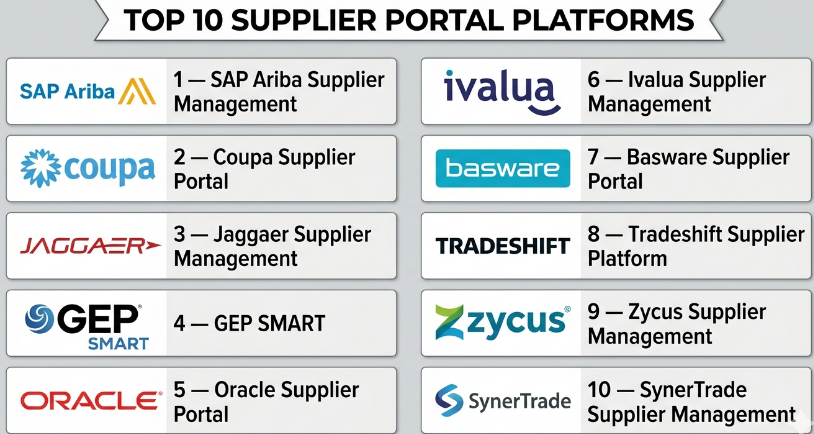
Top 10 Supplier Portal Platforms
#1 — SAP Ariba Supplier Management
Short description:
SAP Ariba is a leading enterprise supplier management platform designed for large organizations. It provides a global supplier network that enables seamless onboarding, sourcing, and collaboration. The platform is widely used by enterprises that require deep integration with procurement systems. It supports complex workflows and compliance requirements. Ideal for global supply chains with thousands of vendors.
Key Features
- Global supplier network access
- Automated onboarding workflows
- Supplier risk and performance management
- Contract and sourcing management
- Invoice and payment tracking
- Compliance and certification tracking
Pros
- Strong enterprise-grade capabilities
- Extensive supplier network
Cons
- Complex implementation
- High cost for smaller businesses
Platforms / Deployment
Cloud
Security & Compliance
SSO, RBAC, audit logs; compliance certifications not publicly stated
Integrations & Ecosystem
Integrates deeply with SAP ecosystem and enterprise tools
- SAP ERP
- SAP S/4HANA
- Finance systems
- APIs available
Support & Community
Strong enterprise support, extensive documentation, large global user base
#2 — Coupa Supplier Portal
Short description:
Coupa offers a modern supplier portal with a focus on spend management and collaboration. It enables suppliers to interact directly with buyers through a clean interface. The platform supports invoicing, purchase orders, and compliance tracking. It is suitable for mid-market to enterprise organizations. Known for usability and automation features.
Key Features
- Supplier self-service portal
- Invoice and PO management
- Spend visibility tools
- Compliance tracking
- AI-driven insights
- Supplier collaboration tools
Pros
- Easy-to-use interface
- Strong automation features
Cons
- Limited customization in some areas
- Pricing varies
Platforms / Deployment
Cloud
Security & Compliance
SSO, MFA, encryption, RBAC
Integrations & Ecosystem
Integrates with ERP and finance systems
- Oracle
- SAP
- APIs and connectors
Support & Community
Good support and onboarding; growing community
#3 — Jaggaer Supplier Management
Short description:
Jaggaer provides a comprehensive procurement and supplier management solution. It is designed for industries like manufacturing, healthcare, and higher education. The platform supports sourcing, supplier onboarding, and performance management. It offers flexibility across different procurement workflows. Suitable for mid to large enterprises.
Key Features
- Supplier onboarding automation
- Risk and compliance tracking
- Performance management
- Sourcing tools
- Spend analytics
- Workflow automation
Pros
- Strong industry-specific features
- Flexible workflows
Cons
- UI can feel outdated
- Requires training
Platforms / Deployment
Cloud / Hybrid
Security & Compliance
SSO, RBAC, audit logs
Integrations & Ecosystem
Supports ERP integrations
- SAP
- Oracle
- APIs
Support & Community
Enterprise-level support; moderate community presence
#4 — GEP SMART
Short description:
GEP SMART is a unified procurement platform with built-in supplier management capabilities. It combines sourcing, procurement, and analytics in one system. The platform is known for its AI-powered insights and user-friendly interface. It is suitable for enterprises seeking a modern cloud solution. Focuses on end-to-end procurement transformation.
Key Features
- Unified procurement platform
- Supplier onboarding and collaboration
- AI-driven analytics
- Contract management
- Spend analysis
- Workflow automation
Pros
- Modern UI
- Strong analytics capabilities
Cons
- Implementation complexity
- Requires configuration effort
Platforms / Deployment
Cloud
Security & Compliance
SSO, encryption, RBAC
Integrations & Ecosystem
Integrates with major ERP systems
- SAP
- Oracle
- APIs
Support & Community
Strong vendor support; growing ecosystem
#5 — Oracle Supplier Portal (Oracle Procurement Cloud)
Short description:
Oracle’s supplier portal is part of its procurement cloud suite. It enables suppliers to manage transactions, submit invoices, and collaborate with buyers. The platform is designed for organizations already using Oracle ERP. It offers strong integration and scalability. Ideal for large enterprises.
Key Features
- Supplier self-service portal
- Invoice and payment tracking
- Procurement workflows
- Supplier onboarding
- Analytics and reporting
- Compliance tracking
Pros
- Deep ERP integration
- Scalable architecture
Cons
- Complex setup
- Higher cost
Platforms / Deployment
Cloud
Security & Compliance
SSO, MFA, RBAC
Integrations & Ecosystem
Strong Oracle ecosystem integration
- Oracle ERP
- Financial systems
- APIs
Support & Community
Enterprise-grade support; large user base
#6 — Ivalua Supplier Management
Short description:
Ivalua offers a flexible supplier management platform that supports full procurement lifecycle. It is known for its configurability and strong analytics capabilities. The platform is suitable for organizations needing customization. It supports complex procurement workflows. Widely used in enterprise environments.
Key Features
- Supplier onboarding and risk management
- Contract lifecycle management
- Spend analytics
- Workflow automation
- Custom dashboards
- Compliance tracking
Pros
- Highly configurable
- Strong analytics
Cons
- Learning curve
- Implementation effort
Platforms / Deployment
Cloud / Hybrid
Security & Compliance
SSO, RBAC, audit logs
Integrations & Ecosystem
Supports multiple ERP integrations
- SAP
- Oracle
- APIs
Support & Community
Strong enterprise support; smaller community
#7 — Basware Supplier Portal
Short description:
Basware focuses on financial processes and invoice automation within supplier management. It provides tools for invoice processing, compliance, and supplier collaboration. The platform is ideal for finance-driven procurement teams. It emphasizes automation and accuracy.
Key Features
- Invoice automation
- Supplier onboarding
- Payment tracking
- Compliance management
- Financial analytics
- Workflow automation
Pros
- Strong invoice processing
- Finance-focused features
Cons
- Limited procurement features
- UI could be improved
Platforms / Deployment
Cloud
Security & Compliance
Encryption, RBAC
Integrations & Ecosystem
Integrates with finance and ERP systems
- SAP
- Oracle
- APIs
Support & Community
Reliable support; moderate ecosystem
#8 — Tradeshift Supplier Platform
Short description:
Tradeshift provides a collaborative supplier platform focused on digital supply chains. It combines supplier management with marketplace capabilities. The platform supports invoicing, payments, and collaboration. It is suitable for global supply chain networks.
Key Features
- Digital supplier network
- Invoice and payment processing
- Collaboration tools
- Marketplace features
- Workflow automation
- Analytics
Pros
- Strong collaboration tools
- Scalable network
Cons
- Pricing complexity
- Customization limitations
Platforms / Deployment
Cloud
Security & Compliance
SSO, encryption
Integrations & Ecosystem
Supports ERP integrations and APIs
- SAP
- Oracle
- Third-party tools
Support & Community
Good support; active ecosystem
#9 — Zycus Supplier Management
Short description:
Zycus offers AI-powered procurement and supplier management solutions. It focuses on automation and analytics. The platform supports supplier onboarding, risk management, and performance tracking. Suitable for mid to large enterprises.
Key Features
- AI-driven supplier insights
- Risk management
- Supplier onboarding
- Performance tracking
- Spend analytics
- Workflow automation
Pros
- Strong AI capabilities
- Comprehensive features
Cons
- Implementation complexity
- Requires training
Platforms / Deployment
Cloud
Security & Compliance
SSO, RBAC
Integrations & Ecosystem
Integrates with ERP systems
- SAP
- Oracle
- APIs
Support & Community
Strong vendor support; growing community
#10 — SynerTrade Supplier Management
Short description:
SynerTrade provides procurement and supplier management tools with strong European market presence. It supports sourcing, supplier onboarding, and performance management. The platform is suitable for organizations seeking compliance-focused solutions.
Key Features
- Supplier onboarding
- Risk and compliance tracking
- Sourcing tools
- Performance management
- Workflow automation
- Analytics
Pros
- Strong compliance features
- Flexible workflows
Cons
- Limited global adoption
- UI improvements needed
Platforms / Deployment
Cloud
Security & Compliance
RBAC, audit logs
Integrations & Ecosystem
Supports ERP integrations
- SAP
- APIs
Support & Community
Moderate support; smaller community
Comparison Table (Top 10)
| Tool Name | Best For | Platform(s) Supported | Deployment | Standout Feature | Public Rating |
|---|---|---|---|---|---|
| SAP Ariba | Large enterprises | Web | Cloud | Global supplier network | N/A |
| Coupa | Mid-large businesses | Web | Cloud | Spend management integration | N/A |
| Jaggaer | Industry-specific use | Web | Cloud/Hybrid | Flexible workflows | N/A |
| GEP SMART | Modern procurement | Web | Cloud | AI analytics | N/A |
| Oracle Supplier Portal | Oracle users | Web | Cloud | ERP integration | N/A |
| Ivalua | Custom workflows | Web | Cloud/Hybrid | High configurability | N/A |
| Basware | Finance teams | Web | Cloud | Invoice automation | N/A |
| Tradeshift | Digital supply chains | Web | Cloud | Supplier network | N/A |
| Zycus | AI-driven procurement | Web | Cloud | AI insights | N/A |
| SynerTrade | Compliance-focused | Web | Cloud | Risk management | N/A |
Evaluation & Supplier Portal Platforms
| Tool Name | Core (25%) | Ease (15%) | Integrations (15%) | Security (10%) | Performance (10%) | Support (10%) | Value (15%) | Weighted Total |
|---|---|---|---|---|---|---|---|---|
| SAP Ariba | 9 | 7 | 9 | 8 | 9 | 9 | 7 | 8.4 |
| Coupa | 8 | 9 | 8 | 8 | 8 | 8 | 8 | 8.2 |
| Jaggaer | 8 | 7 | 8 | 8 | 8 | 7 | 7 | 7.7 |
| GEP SMART | 9 | 8 | 8 | 8 | 8 | 8 | 8 | 8.3 |
| Oracle | 9 | 7 | 9 | 9 | 9 | 9 | 7 | 8.5 |
| Ivalua | 9 | 7 | 8 | 8 | 8 | 8 | 7 | 8.0 |
| Basware | 7 | 8 | 7 | 8 | 8 | 7 | 8 | 7.6 |
| Tradeshift | 8 | 8 | 8 | 8 | 8 | 8 | 7 | 7.9 |
| Zycus | 8 | 7 | 8 | 8 | 8 | 8 | 8 | 7.9 |
| SynerTrade | 7 | 7 | 7 | 8 | 7 | 7 | 7 | 7.2 |
How to interpret scores:
These scores are comparative and based on relative strengths across the category. A higher score indicates better balance across features, usability, and value. Enterprise tools may score high in features but lower in ease or value. SMB-friendly tools may score higher in usability but slightly lower in depth. Always validate based on your specific needs rather than relying solely on rankings.
Which Supplier Portal Platforms
Solo / Freelancer
Not typically needed. Use basic tools like spreadsheets or invoicing software.
SMB
Coupa, Basware, and Tradeshift offer good balance between usability and functionality.
Mid-Market
Zycus, Jaggaer, and Ivalua provide scalable features without full enterprise complexity.
Enterprise
SAP Ariba, Oracle, and GEP SMART are best suited for large-scale operations.
Budget vs Premium
- Budget: Basware, Tradeshift
- Premium: SAP Ariba, Oracle
Feature Depth vs Ease of Use
- Feature depth: SAP Ariba, Ivalua
- Ease of use: Coupa, Tradeshift
Integrations & Scalability
- Strong integrations: Oracle, SAP Ariba
- Scalable: GEP SMART, Coupa
Security & Compliance Needs
- High compliance: SAP Ariba, SynerTrade
- Moderate: Coupa, Zycus
Frequently Asked Questions (FAQs)
1. What is a supplier portal platform?
A supplier portal platform is a digital system that enables businesses to manage supplier interactions, transactions, and compliance in one place.
2. How much do these platforms cost?
Pricing varies widely based on features, scale, and deployment. Most use subscription-based models.
3. How long does implementation take?
Implementation can take weeks to months depending on complexity and integrations.
4. Are these platforms secure?
Most platforms include encryption, RBAC, and compliance features, but specifics vary by vendor.
5. Can small businesses use supplier portals?
Yes, but simpler tools may be more suitable depending on scale.
6. What integrations are important?
ERP, finance systems, and procurement tools are key integrations.
7. How do suppliers benefit?
Suppliers get better visibility, faster payments, and streamlined communication.
8. Can I switch platforms easily?
Switching requires data migration and planning; not always simple.
9. What are common mistakes?
Choosing overly complex tools or ignoring integration requirements.
10. Do these platforms support AI?
Yes, many modern platforms include AI for analytics, risk scoring, and automation.
Conclusion
Supplier Portal Platforms play a critical role in modern procurement and supply chain management. They help organizations streamline vendor interactions, improve transparency, and ensure compliance in an increasingly complex global environment. While enterprise platforms like SAP Ariba and Oracle offer deep capabilities, tools like Coupa and Tradeshift provide a more user-friendly approach for growing businesses. The right choice depends on your organization’s size, integration needs, and budget. Instead of searching for a single “best” tool, shortlist 2–3 platforms, run a pilot, and validate how well they integrate with your existing systems and workflows before making a final decision.