Introduction
Logistics Visibility Platforms are software solutions that provide real-time tracking, monitoring, and insights across supply chain operations. In simple terms, they help businesses see where shipments are, predict delays, and manage logistics proactively instead of reacting to problems.
In today’s global supply chain environment, disruptions, rising customer expectations, and complex multi-modal logistics have made visibility a necessity. Modern platforms combine GPS, IoT, APIs, and AI to deliver end-to-end visibility across shipments, carriers, warehouses, and ports.
Real-world use cases:
- Tracking shipments across multiple carriers and regions
- Predicting delivery delays and mitigating risks
- Monitoring cold chain logistics conditions
- Improving customer communication with real-time updates
- Optimizing route performance and cost efficiency
What buyers should evaluate:
- Real-time tracking capabilities
- Carrier and system integrations
- Predictive analytics and AI features
- Data accuracy and coverage
- User interface and dashboards
- Scalability for global operations
- Security and compliance
- Alerts and exception management
- Reporting and analytics
- Deployment flexibility
Best for: Logistics companies, supply chain teams, manufacturers, retailers, and enterprises managing global shipments.
Not ideal for: Small businesses with limited logistics complexity or those relying on single-carrier systems.
Key Trends in Logistics Visibility Platforms
- AI-based predictive ETA and disruption management
- Integration with IoT devices for real-time tracking
- Multi-modal visibility across road, rail, air, and sea
- Cloud-native platforms for scalability
- Real-time collaboration between shippers and carriers
- Increasing demand for sustainability and carbon tracking
- API-first ecosystems for seamless integrations
- Automation of alerts and exception handling
- Blockchain-based tracking (emerging in some solutions)
- Subscription-based SaaS pricing models
How We Selected These Tools (Methodology)
- Considered global adoption and industry recognition
- Evaluated real-time visibility capabilities
- Assessed integration ecosystem and APIs
- Reviewed scalability for enterprise use
- Considered innovation in AI and predictive analytics
- Evaluated usability and interface design
- Checked flexibility for different logistics models
- Analyzed vendor reputation and support
- Included tools for various organization sizes
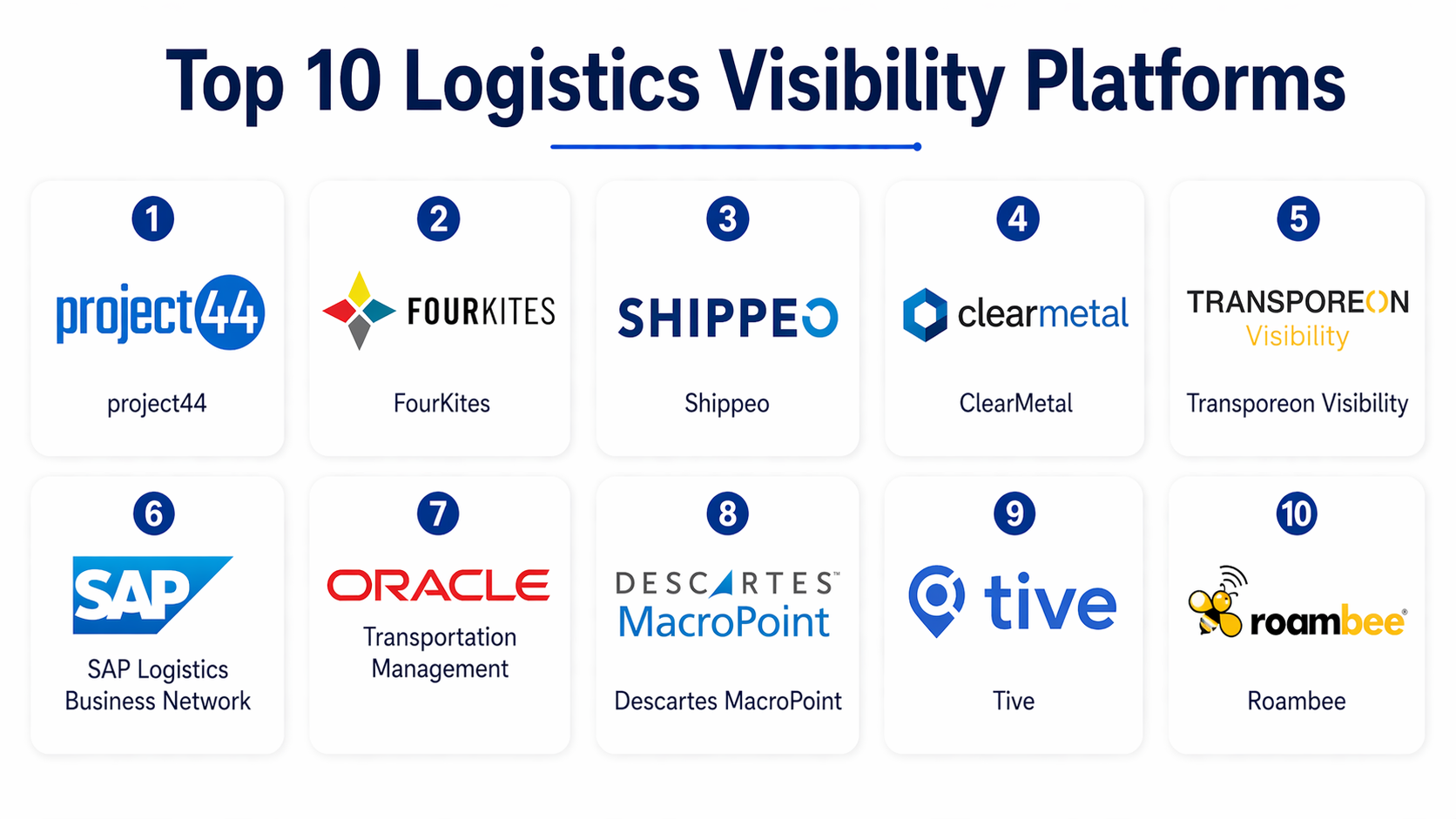
Top 10 Logistics Visibility Platforms
#1 — project44
Short description:
A leading logistics visibility platform offering real-time tracking across multiple transport modes. Known for its large carrier network and predictive analytics. Suitable for enterprises managing global supply chains. Focuses on data accuracy and automation.
Key Features
- Real-time shipment tracking
- Predictive ETA
- Multi-modal visibility
- Exception management
- Analytics dashboard
Pros
- Extensive carrier network
- Strong predictive capabilities
Cons
- Complex onboarding
- Premium pricing
Platforms / Deployment
- Web
- Cloud
Security & Compliance
- Not publicly stated
Integrations & Ecosystem
Strong API ecosystem and integrations with logistics systems.
- ERP integrations
- Carrier integrations
- API access
Support & Community
Enterprise-level support with onboarding assistance.
#2 — FourKites
Short description:
A widely used visibility platform offering end-to-end tracking and analytics. Known for real-time data accuracy and collaboration features. Ideal for large supply chain operations.
Key Features
- Real-time tracking
- Predictive analytics
- Collaboration tools
- Exception alerts
- Reporting
Pros
- High data accuracy
- Strong analytics
Cons
- Pricing not transparent
- Requires integration effort
Platforms / Deployment
- Web
- Cloud
Security & Compliance
- Not publicly stated
Integrations & Ecosystem
Integrates with enterprise systems and carriers.
- APIs
- ERP integrations
- Fleet systems
Support & Community
Strong enterprise support.
#3 — Shippeo
Short description:
A real-time transportation visibility platform focusing on predictive insights. Offers strong tracking capabilities and user-friendly dashboards.
Key Features
- Real-time visibility
- Predictive ETA
- Delay alerts
- Analytics tools
- Carrier connectivity
Pros
- Easy to use
- Accurate tracking
Cons
- Limited customization
- Coverage varies by region
Platforms / Deployment
- Web
- Cloud
Security & Compliance
- Not publicly stated
Integrations & Ecosystem
Supports integration with logistics systems.
- APIs
- ERP systems
- Data tools
Support & Community
Good support with onboarding guidance.
#4 — ClearMetal
Short description:
An AI-driven logistics platform focused on predictive supply chain insights. Helps businesses anticipate disruptions and optimize logistics operations.
Key Features
- AI-based predictions
- Shipment tracking
- Data normalization
- Analytics dashboards
- Exception management
Pros
- Strong AI capabilities
- Data-driven insights
Cons
- Less focus on real-time tracking
- Requires data integration
Platforms / Deployment
- Web
- Cloud
Security & Compliance
- Not publicly stated
Integrations & Ecosystem
Integrates with data and logistics systems.
- APIs
- Data integration tools
Support & Community
Varies depending on deployment.
#5 — Transporeon Visibility
Short description:
A European-focused logistics platform providing real-time tracking and collaboration. Known for strong carrier network and integration capabilities.
Key Features
- Real-time tracking
- Carrier connectivity
- Collaboration tools
- Analytics
- Alerts
Pros
- Strong in Europe
- Good integration options
Cons
- Regional limitations
- Complex setup
Platforms / Deployment
- Web
- Cloud
Security & Compliance
- Not publicly stated
Integrations & Ecosystem
Supports multiple integrations.
- APIs
- ERP systems
- Carrier systems
Support & Community
Enterprise support with regional focus.
#6 — SAP Logistics Business Network
Short description:
An enterprise-grade logistics platform integrated with SAP ecosystem. Offers visibility across supply chains and logistics networks.
Key Features
- End-to-end visibility
- Network collaboration
- Analytics tools
- Integration with SAP systems
- Real-time tracking
Pros
- Strong enterprise integration
- Scalable
Cons
- Requires SAP ecosystem
- High cost
Platforms / Deployment
- Web
- Cloud
Security & Compliance
- Not publicly stated
Integrations & Ecosystem
Deep SAP integration plus external systems.
- APIs
- ERP integration
- Data exchange
Support & Community
Strong enterprise support.
#7 — Oracle Transportation Management (Visibility)
Short description:
A comprehensive logistics platform offering visibility and transportation management. Designed for large enterprises.
Key Features
- Shipment tracking
- Analytics
- Planning tools
- Reporting
- Integration with Oracle ecosystem
Pros
- Comprehensive solution
- Scalable
Cons
- Complex implementation
- Requires Oracle ecosystem
Platforms / Deployment
- Web
- Cloud
Security & Compliance
- Not publicly stated
Integrations & Ecosystem
Integrates with Oracle and external systems.
- APIs
- ERP integration
Support & Community
Enterprise-grade support.
#8 — Descartes MacroPoint
Short description:
A real-time freight visibility solution focused on tracking shipments and improving communication between shippers and carriers.
Key Features
- Real-time tracking
- Carrier communication
- Alerts
- Analytics
- Mobile tracking
Pros
- Strong tracking capabilities
- Easy to implement
Cons
- Limited advanced analytics
- Customization may be limited
Platforms / Deployment
- Web / Mobile
- Cloud
Security & Compliance
- Not publicly stated
Integrations & Ecosystem
Supports integration with logistics systems.
- APIs
- Fleet integrations
Support & Community
Reliable support for enterprise users.
#9 — Tive
Short description:
A logistics visibility platform focused on shipment tracking with IoT devices. Ideal for monitoring high-value and sensitive shipments.
Key Features
- Real-time tracking
- IoT sensors
- Condition monitoring
- Alerts
- Analytics
Pros
- Strong IoT capabilities
- Real-time monitoring
Cons
- Hardware dependency
- Higher cost
Platforms / Deployment
- Web / Mobile
- Cloud
Security & Compliance
- Not publicly stated
Integrations & Ecosystem
Integrates with logistics systems.
- APIs
- Device integrations
Support & Community
Good support for IoT deployments.
#10 — Roambee
Short description:
An IoT-based logistics visibility platform offering real-time tracking and condition monitoring. Focuses on supply chain intelligence.
Key Features
- Real-time tracking
- IoT sensors
- Analytics
- Alerts
- Data insights
Pros
- Strong data insights
- Good IoT integration
Cons
- Requires hardware
- Implementation effort
Platforms / Deployment
- Web / Mobile
- Cloud
Security & Compliance
- Not publicly stated
Integrations & Ecosystem
Supports integrations with enterprise systems.
- APIs
- Data integrations
Support & Community
Varies depending on deployment.
Comparison Table (Top 10)
| Tool Name | Best For | Platform(s) Supported | Deployment | Standout Feature | Public Rating |
|---|---|---|---|---|---|
| project44 | Global logistics visibility | Web | Cloud | Large carrier network | N/A |
| FourKites | Enterprise tracking | Web | Cloud | Predictive analytics | N/A |
| Shippeo | Real-time tracking | Web | Cloud | Accurate ETA | N/A |
| ClearMetal | AI insights | Web | Cloud | Predictive analytics | N/A |
| Transporeon | European logistics | Web | Cloud | Carrier network | N/A |
| SAP Logistics Business Network | SAP ecosystem | Web | Cloud | Enterprise integration | N/A |
| Oracle Transportation Management | Enterprise logistics | Web | Cloud | Comprehensive suite | N/A |
| Descartes MacroPoint | Freight tracking | Web/Mobile | Cloud | Carrier communication | N/A |
| Tive | IoT tracking | Web/Mobile | Cloud | Sensor-based tracking | N/A |
| Roambee | IoT visibility | Web/Mobile | Cloud | Condition monitoring | N/A |
Evaluation & Scoring of Logistics Visibility Platforms
| Tool Name | Core | Ease | Integrations | Security | Performance | Support | Value | Weighted Total |
|---|---|---|---|---|---|---|---|---|
| project44 | 9 | 7 | 9 | 7 | 9 | 8 | 7 | 8.2 |
| FourKites | 9 | 7 | 9 | 7 | 9 | 8 | 7 | 8.2 |
| Shippeo | 8 | 8 | 8 | 6 | 8 | 7 | 7 | 7.7 |
| ClearMetal | 8 | 7 | 7 | 6 | 8 | 7 | 7 | 7.4 |
| Transporeon | 8 | 6 | 8 | 6 | 8 | 7 | 7 | 7.5 |
| SAP LBN | 9 | 6 | 9 | 7 | 9 | 8 | 6 | 8.0 |
| Oracle TM | 9 | 6 | 9 | 7 | 9 | 8 | 6 | 8.0 |
| MacroPoint | 8 | 7 | 8 | 6 | 8 | 7 | 7 | 7.6 |
| Tive | 8 | 7 | 7 | 6 | 8 | 7 | 6 | 7.3 |
| Roambee | 8 | 7 | 7 | 6 | 8 | 7 | 6 | 7.3 |
Interpretation:
These scores compare tools within the logistics visibility category. Enterprise platforms score high in core features and integrations, while IoT-based solutions excel in specialized use cases. Ease of use varies significantly depending on complexity. Choose based on your operational needs rather than just the score.
Which Logistics Visibility Platforms
Solo / Freelancer
Not typically required; basic tracking tools are sufficient.
SMB
Shippeo or MacroPoint offer ease of use and scalability.
Mid-Market
Transporeon and Optibus-style platforms offer balance.
Enterprise
project44, FourKites, SAP, and Oracle are best suited.
Budget vs Premium
- Budget: Shippeo, MacroPoint
- Premium: project44, FourKites, SAP
Feature Depth vs Ease of Use
- Deep features: SAP, Oracle
- Easy to use: Shippeo, MacroPoint
Integrations & Scalability
- Best: project44, SAP, Oracle
- Moderate: Shippeo, Transporeon
Security & Compliance Needs
- Enterprise tools provide better controls
- IoT platforms require additional validation
Frequently Asked Questions (FAQs)
1. What is a logistics visibility platform?
It is software that provides real-time tracking and insights into shipments and supply chain operations.
2. How do these platforms work?
They collect data from carriers, GPS devices, and systems to provide real-time updates and analytics.
3. Are these platforms cloud-based?
Most modern solutions are cloud-based for scalability and accessibility.
4. How much do they cost?
Pricing varies based on features, scale, and deployment model.
5. Can they integrate with ERP systems?
Yes, most platforms offer APIs and integrations with ERP systems.
6. Do they support real-time tracking?
Yes, real-time tracking is a core feature of these platforms.
7. Are they secure?
Security varies by vendor; enterprise solutions usually offer stronger controls.
8. What industries use these tools?
Logistics, retail, manufacturing, and e-commerce industries commonly use them.
9. Can small businesses use them?
Yes, but they should choose simpler and cost-effective solutions.
10. How do you choose the right platform?
Evaluate based on your scale, integration needs, and operational complexity.
Conclusion
Logistics Visibility Platforms have become a critical component of modern supply chains, helping organizations move from reactive to proactive operations. Whether you are managing global shipments or optimizing regional logistics, the right platform can significantly improve efficiency, reduce costs, and enhance customer experience. However, the “best” solution depends on your specific use case, scale, and integration requirements. Enterprise platforms offer depth and scalability, while newer cloud-based tools provide flexibility and ease of use. The smartest approach is to shortlist two or three platforms, test them in a real-world scenario, and validate how well they integrate with your existing systems before making a final decision.