Introduction
Insurance Policy Administration Systems (PAS) are software platforms used by insurers to manage the full lifecycle of insurance policies—from underwriting and quoting to issuance, billing, endorsements, and renewals. In simple terms, they act as the backbone of an insurance company’s operations, ensuring policies are handled accurately, efficiently, and in compliance with regulations.
In the current landscape, these systems are becoming more critical due to digital transformation, customer expectations for instant service, and increasing regulatory pressure. Modern PAS platforms now incorporate automation, AI-driven underwriting, and real-time analytics to help insurers stay competitive.
Real-world use cases
- Managing policy issuance and renewals for life, health, or property insurance
- Automating underwriting workflows and approvals
- Supporting digital insurance portals and customer self-service
- Ensuring compliance with regional insurance regulations
- Integrating claims and billing systems for seamless operations
What buyers should evaluate
- Product flexibility and configurability
- Scalability across insurance lines (life, health, P&C)
- Integration capabilities (CRM, claims, billing)
- Automation and AI capabilities
- Regulatory compliance support
- Deployment model (cloud vs on-premise)
- User experience and training requirements
- Security features and auditability
Best for: Insurance carriers, brokers, MGAs, and insurtech startups needing end-to-end policy lifecycle management.
Not ideal for: Very small agencies or individual brokers who only need lightweight CRM or quoting tools.
Key Trends in Insurance Policy Administration Systems
- AI-driven underwriting: Automated risk assessment and pricing models
- Cloud-native platforms: Shift from legacy on-premise systems to SaaS
- Low-code customization: Faster product configuration without heavy coding
- API-first architecture: Easier integration with digital ecosystems
- Embedded analytics: Real-time dashboards for underwriting and performance
- Regulatory automation: Built-in compliance workflows for multiple regions
- Customer self-service portals: Policy changes, renewals, and claims access
- Usage-based insurance models: IoT and telematics integration
- Microservices architecture: Flexible, modular system design
How We Selected These Tools (Methodology)
- Strong market presence and adoption across insurers globally
- Proven feature depth across policy lifecycle functions
- Reliable performance and scalability signals
- Observable security and compliance capabilities
- Rich integration ecosystem and API support
- Fit across enterprise, mid-market, and emerging insurtech segments
- Vendor innovation track record (AI, automation, cloud)
- Feedback from industry use cases and deployment scenarios
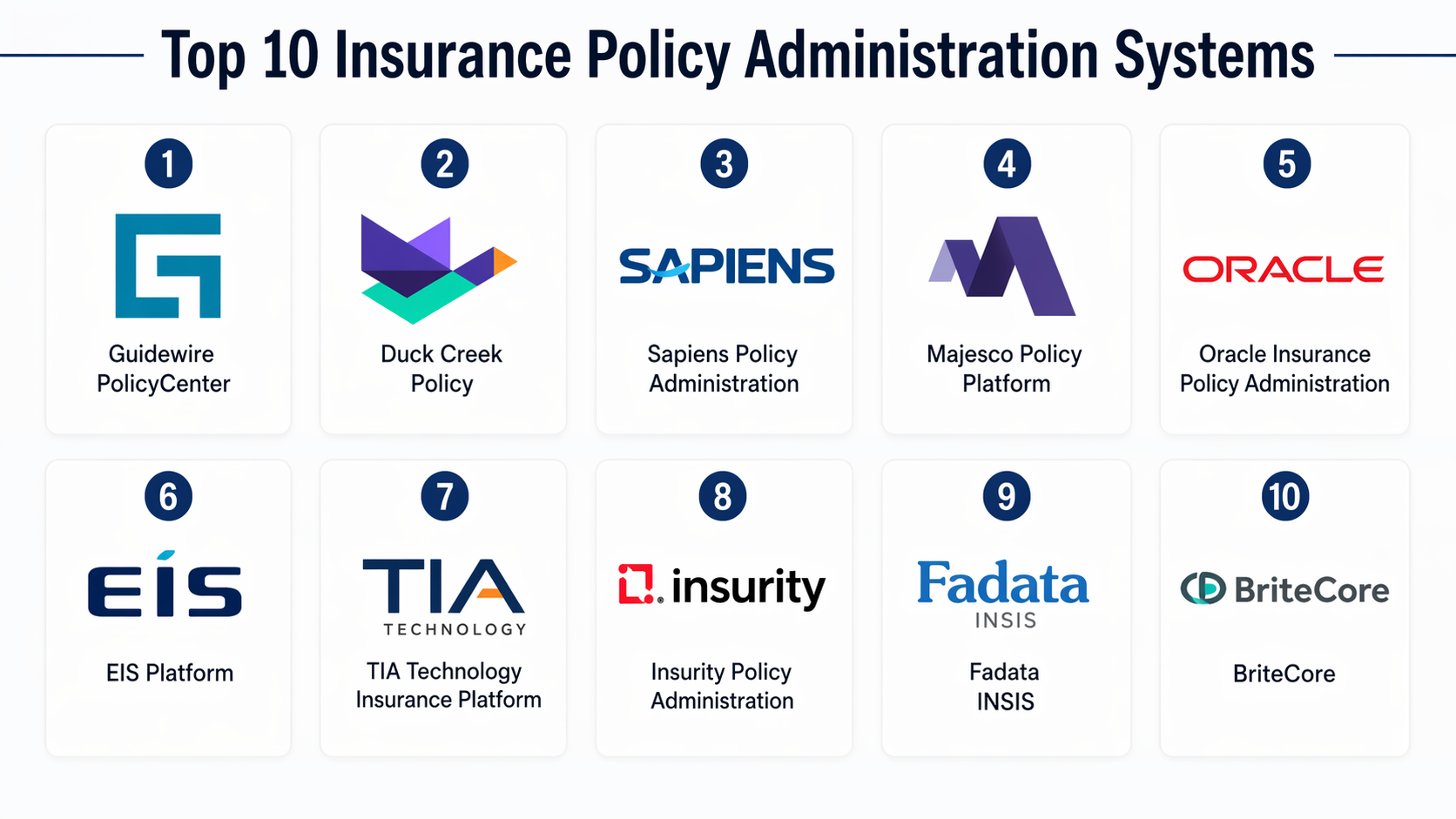
Top 10 Insurance Policy Administration Systems
#1 — Guidewire PolicyCenter
Short description: A leading enterprise PAS platform focused on property and casualty insurers. Known for scalability and deep functionality, it supports complex underwriting and policy lifecycle operations for large insurers.
Key Features
- End-to-end policy lifecycle management
- Advanced underwriting workflows
- Product configuration tools
- Strong analytics and reporting
- Integration-ready architecture
- Multi-line support
Pros
- Highly scalable for large insurers
- Strong ecosystem and partner support
Cons
- Complex implementation
- Higher cost compared to smaller solutions
Platforms / Deployment
Cloud / Self-hosted / Hybrid
Security & Compliance
RBAC, audit logs, encryption (specific certifications not publicly stated)
Integrations & Ecosystem
Extensive integration ecosystem with claims, billing, CRM, and analytics tools.
- REST APIs
- Third-party insurtech integrations
- Data warehouse connectors
Support & Community
Strong enterprise support, partner ecosystem, and extensive documentation.
#2 — Duck Creek Policy
Short description: A cloud-based PAS designed for insurers seeking agility and faster product launches. Offers modular components for policy, billing, and claims.
Key Features
- SaaS-based architecture
- Configurable workflows
- Digital engagement tools
- Product lifecycle management
- API-first design
Pros
- Flexible and scalable
- Faster deployment than legacy systems
Cons
- Requires skilled configuration
- Licensing costs can scale quickly
Platforms / Deployment
Cloud
Security & Compliance
SSO, encryption (certifications not publicly stated)
Integrations & Ecosystem
- APIs for ecosystem integration
- CRM and analytics integrations
- Insurtech partner marketplace
Support & Community
Enterprise-grade support and onboarding assistance.
#3 — Sapiens Policy Administration
Short description: A comprehensive PAS solution supporting life, P&C, and reinsurance sectors with strong automation capabilities.
Key Features
- Multi-line insurance support
- Automation of underwriting
- Claims and billing integration
- Regulatory compliance tools
- Customer engagement modules
Pros
- Broad coverage across insurance types
- Strong automation features
Cons
- Interface may feel dated
- Implementation complexity
Platforms / Deployment
Cloud / Hybrid
Security & Compliance
Not publicly stated
Integrations & Ecosystem
- APIs and connectors
- Data integration capabilities
- External analytics tools
Support & Community
Enterprise support with global presence.
#4 — Majesco Policy Platform
Short description: A modern cloud-native PAS focusing on digital transformation and customer experience for insurers.
Key Features
- Cloud-native architecture
- Digital front-end integration
- AI-driven insights
- Product configuration tools
- Omnichannel support
Pros
- Strong digital capabilities
- Good for innovation-focused insurers
Cons
- Requires investment in transformation
- Learning curve for teams
Platforms / Deployment
Cloud
Security & Compliance
Not publicly stated
Integrations & Ecosystem
- API-driven integrations
- Partner ecosystem
- Data analytics platforms
Support & Community
Good enterprise support and onboarding.
#5 — Oracle Insurance Policy Administration
Short description: Enterprise-grade PAS platform built for large insurers, offering deep configuration and scalability.
Key Features
- Highly configurable platform
- Policy lifecycle management
- Integration with Oracle ecosystem
- Strong reporting capabilities
- Compliance management
Pros
- Strong enterprise capabilities
- Reliable performance
Cons
- Complex setup
- Higher cost
Platforms / Deployment
Cloud / Hybrid
Security & Compliance
Encryption, RBAC (details not publicly stated)
Integrations & Ecosystem
- Oracle ecosystem integration
- APIs for external tools
- Data management systems
Support & Community
Enterprise-level support and documentation.
#6 — EIS Platform (PolicyCore)
Short description: A digital-first PAS platform focusing on customer-centric insurance operations.
Key Features
- Microservices architecture
- Real-time data processing
- Digital experience tools
- API-first design
- AI and analytics integration
Pros
- Modern architecture
- Highly flexible
Cons
- Requires technical expertise
- Implementation effort
Platforms / Deployment
Cloud
Security & Compliance
Not publicly stated
Integrations & Ecosystem
- Open APIs
- Partner ecosystem
- Digital platform integrations
Support & Community
Good documentation and enterprise support.
#7 — TIA Technology Insurance Platform
Short description: A flexible PAS designed for small to mid-sized insurers with strong automation capabilities.
Key Features
- Policy and claims management
- Workflow automation
- Digital channels support
- Multi-language support
- Reporting tools
Pros
- Good for mid-market insurers
- Flexible configuration
Cons
- Limited enterprise scalability
- Fewer advanced analytics
Platforms / Deployment
Cloud / Hybrid
Security & Compliance
Not publicly stated
Integrations & Ecosystem
- API integrations
- CRM and billing systems
- External reporting tools
Support & Community
Moderate support and documentation.
#8 — Insurity Policy Administration
Short description: A cloud-based PAS solution tailored for property and casualty insurers with strong analytics.
Key Features
- Policy lifecycle management
- Advanced analytics
- Cloud deployment
- Product configuration
- Workflow automation
Pros
- Strong analytics capabilities
- Cloud-native design
Cons
- Limited customization in some areas
- Requires integration planning
Platforms / Deployment
Cloud
Security & Compliance
Not publicly stated
Integrations & Ecosystem
- APIs and integrations
- Data platforms
- Claims and billing systems
Support & Community
Enterprise-level support.
#9 — Fadata INSIS
Short description: A modular PAS platform supporting life, health, and general insurance with strong international capabilities.
Key Features
- Modular architecture
- Multi-line insurance support
- Product configuration
- Digital channels integration
- Workflow automation
Pros
- Flexible modular design
- Global deployment capabilities
Cons
- Requires customization
- Implementation time
Platforms / Deployment
Cloud / Hybrid
Security & Compliance
Not publicly stated
Integrations & Ecosystem
- API-based integrations
- CRM and ERP connections
- Data analytics tools
Support & Community
Good global support network.
#10 — BriteCore
Short description: A cloud-native PAS platform designed for smaller insurers and mutual companies.
Key Features
- SaaS-based platform
- Policy and billing management
- Data analytics
- Workflow automation
- User-friendly interface
Pros
- Easy to use
- Faster deployment
Cons
- Limited enterprise features
- Less customization
Platforms / Deployment
Cloud
Security & Compliance
Not publicly stated
Integrations & Ecosystem
- API integrations
- Third-party tools
- Data platforms
Support & Community
Good support for SMB-focused customers.
Comparison Table (Top 10)
| Tool Name | Best For | Platform(s) Supported | Deployment | Standout Feature | Public Rating |
|---|---|---|---|---|---|
| Guidewire PolicyCenter | Enterprise insurers | Web | Hybrid | Deep underwriting workflows | N/A |
| Duck Creek Policy | Digital-first insurers | Web | Cloud | SaaS flexibility | N/A |
| Sapiens Policy | Multi-line insurers | Web | Hybrid | Broad insurance coverage | N/A |
| Majesco Policy | Innovation-driven insurers | Web | Cloud | Digital transformation focus | N/A |
| Oracle Insurance PAS | Large enterprises | Web | Hybrid | Enterprise scalability | N/A |
| EIS PolicyCore | Digital-first insurers | Web | Cloud | Microservices architecture | N/A |
| TIA Platform | Mid-market insurers | Web | Hybrid | Workflow automation | N/A |
| Insurity PAS | P&C insurers | Web | Cloud | Analytics capabilities | N/A |
| Fadata INSIS | Global insurers | Web | Hybrid | Modular design | N/A |
| BriteCore | Small insurers | Web | Cloud | Ease of use | N/A |
Evaluation & Insurance Policy Administration Systems
| Tool Name | Core (25%) | Ease (15%) | Integrations (15%) | Security (10%) | Performance (10%) | Support (10%) | Value (15%) | Weighted Total |
|---|---|---|---|---|---|---|---|---|
| Guidewire PolicyCenter | 9 | 6 | 9 | 8 | 9 | 8 | 6 | 8.0 |
| Duck Creek Policy | 8 | 7 | 8 | 7 | 8 | 8 | 7 | 7.7 |
| Sapiens Policy | 8 | 6 | 7 | 7 | 7 | 7 | 7 | 7.3 |
| Majesco Policy | 8 | 7 | 8 | 7 | 8 | 7 | 7 | 7.6 |
| Oracle PAS | 9 | 6 | 8 | 8 | 9 | 8 | 6 | 8.0 |
| EIS PolicyCore | 8 | 7 | 9 | 7 | 8 | 7 | 7 | 7.8 |
| TIA Platform | 7 | 7 | 7 | 6 | 7 | 6 | 8 | 7.1 |
| Insurity PAS | 8 | 7 | 7 | 7 | 8 | 7 | 7 | 7.5 |
| Fadata INSIS | 8 | 6 | 8 | 7 | 7 | 7 | 7 | 7.4 |
| BriteCore | 7 | 8 | 6 | 6 | 7 | 7 | 8 | 7.2 |
How to interpret scores:
- Scores are comparative, not absolute.
- Higher core scores indicate deeper functionality.
- Ease reflects onboarding and usability.
- Weighted totals help shortlist tools but should not replace real evaluation.
- Always validate through demos and pilot implementations.
Which Insurance Policy Administration Systems
Solo / Freelancer
Not typically needed. Lightweight CRM or quoting tools are better.
SMB
- Best choices: BriteCore, TIA Platform
- Focus on ease of use and cost efficiency
Mid-Market
- Best choices: Insurity, Majesco, Duck Creek
- Balance between flexibility and scalability
Enterprise
- Best choices: Guidewire, Oracle, Sapiens
- Strong compliance, scalability, and integration depth
Budget vs Premium
- Budget: BriteCore, TIA
- Premium: Guidewire, Oracle
Feature Depth vs Ease of Use
- Feature-heavy: Guidewire, Oracle
- Easier to use: BriteCore, Insurity
Integrations & Scalability
- Strong integrations: Guidewire, EIS, Duck Creek
- Moderate: TIA, BriteCore
Security & Compliance Needs
- High compliance: Guidewire, Oracle
- Moderate: SMB-focused tools
Frequently Asked Questions (FAQs)
1. What is an Insurance Policy Administration System?
It is software that manages the lifecycle of insurance policies including underwriting, issuance, billing, and renewals.
2. How much do these systems cost?
Pricing varies widely based on size and deployment; typically enterprise solutions are high-cost, while SMB tools are more affordable.
3. How long does implementation take?
Implementation can take from a few months to over a year depending on complexity and customization.
4. Can these systems integrate with existing tools?
Yes, most modern PAS platforms offer APIs and integration capabilities.
5. Are cloud-based PAS systems secure?
Most offer strong security measures, but compliance certifications vary by vendor.
6. What industries use PAS systems?
Insurance carriers, brokers, MGAs, and insurtech companies.
7. What are common mistakes when selecting a PAS?
Ignoring integration needs, underestimating implementation time, and not involving stakeholders early.
8. Can small insurers use PAS systems?
Yes, but they should choose lightweight or SaaS-based solutions.
9. How scalable are these systems?
Enterprise solutions are highly scalable; SMB tools have limitations.
10. What alternatives exist?
CRM systems, underwriting tools, or custom-built platforms.
Conclusion
Insurance Policy Administration Systems are no longer just operational tools—they are strategic platforms that enable insurers to compete in a digital-first world. The right PAS can improve efficiency, enhance customer experience, and ensure regulatory compliance. However, the “best” system depends heavily on your organization’s size, complexity, and goals. Enterprise insurers may prioritize scalability and deep functionality, while smaller players may focus on ease of use and cost.
