Introduction
Shift Marketplace Platforms are digital platforms that help businesses fill open shifts by connecting them with available workers, freelancers, contractors, gig professionals, or pre-qualified hourly staff. In simple words, these platforms work like a flexible labor marketplace where companies can post shifts and workers can accept suitable jobs based on skills, location, pay, and availability.
These platforms matter because companies are dealing with changing labor demand, last-minute absences, seasonal peaks, healthcare staffing gaps, hospitality shortages, warehouse demand, and event-based work. Instead of depending only on permanent hiring or traditional staffing agencies, businesses can use shift marketplace platforms to access flexible workers faster.
Real-world use cases include:
- Filling hospitality, restaurant, and event shifts
- Managing warehouse, logistics, and light industrial labor
- Covering healthcare shifts for nurses, CNAs, and allied professionals
- Handling retail, customer support, and field operations demand
- Managing last-minute call-offs and seasonal workforce spikes
Buyers should evaluate:
- Worker availability and coverage area
- Industry specialization
- Vetting and background check process
- Shift posting and matching speed
- Worker quality and reliability controls
- Compliance and classification support
- Payment and invoicing workflows
- Mobile app experience
- Reporting and workforce visibility
- Support quality for businesses and workers
Best for: hospitality businesses, warehouses, healthcare facilities, retail teams, event companies, staffing teams, operations managers, HR teams, and businesses with fluctuating hourly workforce needs.
Not ideal for: companies that need only full-time employees, businesses with highly confidential roles, teams that require long internal training before a worker can start, or organizations where every role needs deep company-specific knowledge. In such cases, traditional hiring, staffing agencies, or internal workforce scheduling tools may be better.
Key Trends in Shift Marketplace Platforms
- AI-based shift matching: Platforms are using automation and AI-style matching to connect open shifts with suitable workers based on availability, skills, ratings, location, and past performance.
- Industry-specific marketplaces: Healthcare, hospitality, logistics, warehousing, and events increasingly have specialized platforms instead of one generic labor marketplace.
- Faster shift fulfillment: Businesses want open shifts filled quickly, especially for call-offs, peak days, seasonal demand, and event staffing.
- Worker flexibility: Many workers prefer choosing when, where, and how often they work instead of following fixed schedules.
- Compliance and credential tracking: Healthcare and regulated industries require license checks, credential management, background screening, and documentation.
- Mobile-first operations: Most shift marketplace workflows now depend heavily on mobile apps for shift discovery, acceptance, check-in, communication, and payment updates.
- Blended workforce models: Companies are combining permanent staff, part-time workers, gig workers, contractors, and agency workers in one operational model.
- Direct access to local labor pools: Businesses want to reduce dependency on slow manual staffing by building access to nearby workers who can accept shifts quickly.
- Performance-based worker selection: Ratings, attendance history, reliability scores, and repeat-worker preferences are becoming important for quality control.
- Better cost control: Businesses are comparing platform fees, hourly rates, cancellation rules, and payment workflows before choosing a platform.
How We Selected These Tools Methodology
The tools below were selected based on their relevance to shift-based workforce needs, market visibility, industry specialization, and practical business use.
- Market recognition: Platforms with strong visibility in on-demand staffing, flexible work, healthcare staffing, hospitality, logistics, or gig shift marketplaces were prioritized.
- Category fit: Each platform supports shift-based hiring, flexible staffing, hourly labor, contractor shifts, or industry-specific open-shift coverage.
- Feature completeness: We considered shift posting, worker matching, onboarding, payment, compliance, ratings, reporting, and mobile access.
- Industry coverage: The list includes general staffing platforms as well as specialized healthcare and hospitality platforms.
- Business usability: Platforms were evaluated for how useful they are to employers, operations teams, HR teams, staffing teams, and workforce planners.
- Worker experience: Mobile access, schedule flexibility, payment flow, and worker choice were considered important.
- Scalability: Tools that can support repeat usage, multiple locations, or larger shift volumes were rated higher.
- Compliance posture: Platforms with credentialing, worker verification, or structured compliance workflows were considered stronger for regulated industries.
- Integration potential: Tools with better fit into HR, payroll, scheduling, finance, or workforce operations ecosystems were favored.
- Practical fit: The goal is not to find one universal winner, but to compare tools based on real business scenarios.
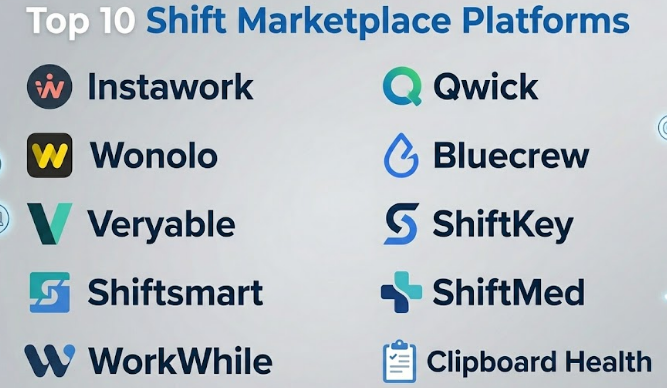
Top 10 Shift Marketplace Platforms
#1 — Instawork
Short description :
Instawork is an on-demand staffing platform that connects businesses with available workers for hourly roles, temporary jobs, and shift-based work. It is commonly used by hospitality, events, warehousing, retail, and light industrial teams that need fast staffing support. The platform focuses on matching businesses with reliable workers through a marketplace-style model. It is useful for companies that face last-minute staffing gaps, seasonal demand, or flexible labor needs. Instawork is a strong option for businesses that want access to a broader local worker pool without relying only on traditional staffing methods. Its positioning includes AI-powered matching and vetted worker access.
Key Features
- Shift posting for hourly and temporary work
- Worker marketplace with local talent access
- AI-assisted matching approach
- Support for hospitality, logistics, events, and related roles
- Worker profiles and reliability indicators
- Business dashboard for staffing management
- Mobile-friendly worker and business workflows
Pros
- Strong fit for businesses needing quick shift coverage
- Useful across multiple hourly labor categories
- Good option for companies with fluctuating labor demand
Cons
- Availability may vary by city or region
- Not ideal for highly specialized long-term roles
- Businesses still need clear shift instructions and quality checks
Platforms / Deployment
Web / iOS / Android
Cloud deployment
Security & Compliance
Role-based business workflows and worker verification processes may be available depending on use case. Exact certifications such as SOC 2, ISO 27001, or HIPAA are not publicly stated here.
Integrations & Ecosystem
Instawork is useful as part of a broader hourly workforce strategy. It can support operations teams that already use scheduling, payroll, HR, or finance systems, though integration depth should be validated before purchase.
- Scheduling workflows
- HR operations
- Payroll and payment workflows
- Finance and invoicing processes
- Location-based workforce planning
- Reporting dashboards
Support & Community
Instawork provides business and worker support through platform channels. Onboarding quality may depend on location, shift volume, and business requirements. Community strength is mainly marketplace-driven.
#2 — Wonolo
Short description :
Wonolo is an on-demand staffing platform designed to help businesses fill flexible, temporary, ongoing, and temp-to-perm workforce needs. It is useful for companies in warehousing, fulfillment, retail, events, administrative support, and general hourly labor categories. Businesses can post work opportunities and connect with available workers. Wonolo is strong for organizations that need fast access to flexible labor without building a large internal part-time workforce. It can help reduce manual staffing work and improve coverage during demand spikes. The platform emphasizes real-time availability and flexible staffing support.
Key Features
- On-demand shift and job posting
- Worker availability visibility
- Temporary and ongoing staffing support
- Temp-to-perm workforce options
- Business dashboard for work management
- Worker matching and acceptance workflows
- Support for multiple hourly labor categories
Pros
- Practical for fast-changing staffing needs
- Supports both short-term and ongoing work
- Useful for warehouse, retail, and operations teams
Cons
- Worker availability may vary by market
- Less suitable for highly regulated professional roles
- Businesses must manage role clarity and performance expectations
Platforms / Deployment
Web / iOS / Android
Cloud deployment
Security & Compliance
Worker verification and platform controls may be available. Specific security certifications such as SOC 2, ISO 27001, GDPR, or HIPAA are not publicly stated here.
Integrations & Ecosystem
Wonolo can support companies using existing workforce, scheduling, and finance tools. Buyers should check whether required integrations are native, API-based, or manual.
- Workforce scheduling processes
- Payment and invoicing workflows
- HR operations
- Location-based staffing workflows
- Operations dashboards
- Reporting exports
Support & Community
Wonolo provides platform support for businesses and workers. Support quality may vary based on customer size, location, and contract model.
#3 — Veryable
Short description :
Veryable is an on-demand labor platform focused strongly on manufacturing, logistics, warehousing, and operational work. It helps businesses access flexible labor for daily operations, production peaks, fulfillment demand, and variable work volumes. The platform is especially useful for companies that need operational agility without overstaffing permanent teams. Veryable’s model supports businesses looking to build flexible labor pools for repeat operational needs. It is a strong fit for companies with demand fluctuations across shifts, facilities, or production schedules. It is often discussed as a top on-demand staffing option for operational labor.
Key Features
- On-demand labor marketplace
- Focus on operations, logistics, and manufacturing
- Flexible shift and work opportunity posting
- Worker pool building for recurring needs
- Mobile-based worker engagement
- Support for variable labor planning
- Business visibility into labor usage
Pros
- Strong fit for industrial and operations-heavy businesses
- Useful for managing unpredictable labor demand
- Helps reduce dependency on fixed staffing levels
Cons
- Less suitable for office-based professional roles
- Market coverage may vary by region
- Requires strong shift planning and operational instructions
Platforms / Deployment
Web / iOS / Android
Cloud deployment
Security & Compliance
Worker verification, operational workflows, and platform controls may be available. Specific certifications such as SOC 2, ISO 27001, or HIPAA are not publicly stated here.
Integrations & Ecosystem
Veryable works best when aligned with workforce planning, warehouse operations, and production scheduling processes.
- Workforce planning workflows
- Warehouse operations
- Production planning
- Shift scheduling
- Finance and payment workflows
- Operational reporting
Support & Community
Support is usually business- and worker-focused. For larger operational teams, onboarding and success support should be clarified during evaluation.
#4 — Shiftsmart
Short description :
Shiftsmart is a flexible labor platform that connects workers with available shifts across multiple categories. It is designed for businesses that need scalable access to workers for field operations, customer support, retail, merchandising, audits, and other shift-based tasks. The platform supports flexible work programs and helps companies manage distributed labor needs. It is useful when businesses need workers across many locations or recurring operational tasks. Shiftsmart can be a good option for companies that want a broader shift marketplace rather than a single-industry staffing tool. It is commonly included among on-demand staffing platforms.
Key Features
- Flexible shift marketplace
- Distributed workforce support
- Task and shift-based work models
- Worker matching and scheduling workflows
- Mobile-first worker access
- Support for multi-location operations
- Reporting and operational visibility
Pros
- Useful for distributed and location-based work
- Good fit for businesses needing scalable flexible labor
- Supports different task-based workforce models
Cons
- Industry fit should be validated carefully
- Not always ideal for deep professional staffing needs
- Platform value depends on worker density in target areas
Platforms / Deployment
Web / iOS / Android
Cloud deployment
Security & Compliance
Platform controls may include worker management and operational tracking. Specific certifications such as SOC 2, ISO 27001, GDPR, or HIPAA are not publicly stated here.
Integrations & Ecosystem
Shiftsmart can support operations teams that manage field work, shifts, and distributed labor programs.
- Field operations workflows
- Scheduling systems
- Workforce operations
- Business reporting
- Payment workflows
- Location-based task management
Support & Community
Support availability may depend on business size, use case, and contract structure. Community strength is mainly driven by the worker marketplace.
#5 — WorkWhile
Short description :
WorkWhile is an on-demand staffing platform that helps businesses connect with hourly workers for flexible shifts. It is often used for warehousing, delivery, events, hospitality, and general labor needs. The platform focuses on matching workers to shifts while improving reliability and reducing staffing friction. WorkWhile can be useful for businesses that need flexible labor but also want more structure around worker quality and attendance. It fits companies looking for faster shift fulfillment and access to local workers. WorkWhile is listed among recognized on-demand staffing platforms.
Key Features
- Shift-based worker marketplace
- Hourly labor matching
- Support for logistics, hospitality, and general operations
- Worker profiles and availability
- Mobile-first worker experience
- Business dashboard for shift management
- Flexible staffing workflows
Pros
- Good fit for hourly workforce gaps
- Useful for companies needing faster staffing than traditional methods
- Can support repeat shift coverage needs
Cons
- Market availability may vary
- Not designed for every professional role type
- Buyers should validate vetting and compliance details
Platforms / Deployment
Web / iOS / Android
Cloud deployment
Security & Compliance
Worker verification and platform-based controls may be available. Specific certifications such as SOC 2, ISO 27001, GDPR, or HIPAA are not publicly stated here.
Integrations & Ecosystem
WorkWhile can support existing workforce and scheduling operations, especially for shift-heavy businesses.
- Scheduling workflows
- Workforce operations
- Payroll and payment processes
- Reporting dashboards
- Location-based staffing
- Operations management tools
Support & Community
Support is likely available through business and worker channels. Buyers should confirm onboarding support, service-level expectations, and escalation processes.
#6 — Qwick
Short description :
Qwick is a hospitality-focused staffing and gig platform that connects businesses with professionals for open shifts in restaurants, catering, hotels, events, and food and beverage operations. It is designed for businesses that need flexible hospitality workers quickly. Workers can use the platform to find shifts that match their experience and availability. Qwick is especially useful for event-heavy, restaurant, and hospitality operators that deal with fluctuating demand. It is more specialized than general labor marketplaces, which can be helpful for quality and role fit. The platform positions itself around faster and more flexible hospitality staffing.
Key Features
- Hospitality-focused shift marketplace
- Open shift posting for businesses
- Worker shift discovery and acceptance
- Support for restaurants, hotels, catering, and events
- Mobile app access
- Flexible staffing workflows
- Industry-specific talent pool
Pros
- Strong fit for hospitality and food service businesses
- More specialized than general labor platforms
- Useful for event and seasonal staffing needs
Cons
- Less suitable outside hospitality and food service
- Regional coverage may vary
- Businesses still need clear role expectations and shift instructions
Platforms / Deployment
Web / iOS / Android
Cloud deployment
Security & Compliance
Business and worker account controls are expected. Specific certifications such as SOC 2, ISO 27001, GDPR, or HIPAA are not publicly stated here.
Integrations & Ecosystem
Qwick works best with hospitality operations, event scheduling, restaurant staffing, and workforce planning processes.
- Restaurant operations
- Event staffing workflows
- Hospitality scheduling
- Payment and invoicing processes
- Worker communication
- Business staffing dashboards
Support & Community
Qwick has a marketplace community of hospitality businesses and workers. Support availability may depend on location, account type, and business usage.
#7 — Bluecrew
Short description :
Bluecrew is a flexible staffing platform focused on hourly workers for roles in warehousing, logistics, events, hospitality, and related operations. It helps companies fill shifts and manage temporary workforce needs through a digital platform. Bluecrew can support businesses that want more structured labor coverage than informal gig hiring. It is useful for companies that need workers for operational, physical, or service-based shifts. The platform fits businesses looking for a flexible staffing model without fully relying on traditional agencies. Its practical value depends on market coverage and role availability.
Key Features
- Flexible hourly staffing
- Shift and job assignment workflows
- Support for logistics, warehouse, hospitality, and events
- Worker marketplace access
- Business staffing dashboard
- Mobile worker experience
- Workforce visibility and tracking
Pros
- Practical for hourly operational staffing
- Useful for recurring shift coverage
- Good fit for businesses with variable labor needs
Cons
- Availability may depend strongly on geography
- Less suitable for specialized professional roles
- Integration details should be validated before adoption
Platforms / Deployment
Web / iOS / Android
Cloud deployment
Security & Compliance
Worker verification and business workflow controls may be available. Specific certifications such as SOC 2, ISO 27001, GDPR, or HIPAA are not publicly stated here.
Integrations & Ecosystem
Bluecrew can support companies that need to connect staffing with operations and workforce planning.
- Shift scheduling
- Warehouse operations
- Events staffing
- Finance and payment processes
- Workforce reporting
- Business operations workflows
Support & Community
Support is available through platform channels. Buyers should review onboarding, business support, and worker issue resolution before scaling usage.
#8 — ShiftKey
Short description :
ShiftKey is a healthcare-focused shift marketplace that connects licensed and certified professionals with healthcare facilities that need shift coverage. It is especially relevant for nurses, CNAs, therapists, dental professionals, and other healthcare workers seeking flexible opportunities. Facilities can use the platform to access professionals for open shifts and improve staffing visibility. ShiftKey is designed for healthcare environments where credentials, scheduling, and availability matter. It is not a general staffing marketplace; its strength is healthcare-specific flexible work. ShiftKey describes itself as connecting licensed professionals and facilities through a PRN platform.
Key Features
- Healthcare shift marketplace
- Support for licensed and certified professionals
- Open shift discovery and acceptance
- Credential management features
- Facility staffing visibility
- Mobile app access for professionals
- PRN and flexible healthcare work support
Pros
- Strong fit for healthcare staffing gaps
- Useful for professionals seeking flexible shift control
- Industry-specific focus improves relevance
Cons
- Not suitable for non-healthcare staffing
- Credential and compliance requirements may vary by role and location
- Facilities should validate onboarding and compliance workflows
Platforms / Deployment
Web / iOS / Android
Cloud deployment
Security & Compliance
Credential management and healthcare worker verification are category-relevant features. Specific certifications such as SOC 2, ISO 27001, or HIPAA are not publicly stated here.
Integrations & Ecosystem
ShiftKey is useful for healthcare staffing operations and facility workforce planning.
- Healthcare staffing workflows
- Credential management
- Facility scheduling
- Professional availability tracking
- Compliance documentation
- Workforce reporting
Support & Community
Support is focused on healthcare facilities and professionals. Community strength is mainly driven by healthcare worker participation and facility adoption.
#9 — ShiftMed
Short description :
ShiftMed is a healthcare workforce platform focused on helping healthcare organizations manage workforce needs and connect with local nurses and clinical professionals. It supports flexible staffing models and can help reduce reliance on expensive travel contracts. ShiftMed is useful for hospitals, long-term care facilities, and healthcare organizations looking for more control over flexible staffing. The platform highlights access to local W-2 nurses and workforce strategy support. It is strongest for healthcare organizations that need structured labor management, not generic gig work. ShiftMed positions itself around intelligent healthcare workforce management.
Key Features
- Healthcare workforce management
- Access to local clinical workers
- Flexible shift staffing support
- Workforce strategy tools
- Direct hiring and float pool support
- Healthcare labor cost management
- Facility workforce visibility
Pros
- Strong focus on healthcare labor needs
- Useful for reducing travel staffing dependency
- Supports more structured workforce strategy
Cons
- Not suitable for general business staffing
- Best fit depends on healthcare facility needs and geography
- Pricing and implementation details should be validated directly
Platforms / Deployment
Web / iOS / Android
Cloud deployment
Security & Compliance
Healthcare workforce platforms commonly require credential, workforce, and data controls. Exact certifications such as SOC 2, ISO 27001, or HIPAA are not publicly stated here.
Integrations & Ecosystem
ShiftMed works best as part of a healthcare workforce strategy.
- Healthcare scheduling workflows
- Credential and onboarding processes
- Workforce planning
- Facility operations
- Labor cost reporting
- Clinical staffing workflows
Support & Community
Support is focused on healthcare organizations and workers. Buyers should confirm account support, onboarding structure, and compliance assistance before rollout.
#10 — Clipboard Health
Short description :
Clipboard Health is a healthcare staffing marketplace that connects healthcare facilities with professionals for open shifts. It supports flexible work for healthcare professionals and helps facilities fill staffing gaps. The platform is relevant for long-term care, nursing facilities, and healthcare organizations that need shift coverage. Clipboard Health focuses on making it easier for facilities to access professionals and for professionals to choose flexible work. It is healthcare-specific and not intended for general hospitality, warehouse, or retail staffing. Clipboard Health states that it connects facilities with healthcare professionals and supports open-shift fulfillment.
Key Features
- Healthcare shift marketplace
- Facility-to-professional matching
- Open shift posting and acceptance
- Flexible work support for healthcare professionals
- Mobile-friendly shift workflows
- Facility staffing visibility
- Healthcare-focused marketplace model
Pros
- Strong fit for healthcare shift coverage
- Useful for facilities with frequent staffing gaps
- Gives professionals flexible work choice
Cons
- Not relevant for non-healthcare industries
- Facility experience may vary by local worker availability
- Compliance and credential processes should be reviewed carefully
Platforms / Deployment
Web / iOS / Android
Cloud deployment
Security & Compliance
Clipboard Health states healthcare staffing marketplace functionality. Healthcare credentialing and compliance should be validated directly by buyers. Joint Commission certification is publicly stated on its site. Other certifications such as SOC 2, ISO 27001, or HIPAA are not publicly stated here.
Integrations & Ecosystem
Clipboard Health supports healthcare staffing workflows where facilities need professionals for open shifts.
- Facility shift management
- Healthcare professional availability
- Credential-related workflows
- Workforce operations
- Payment and billing workflows
- Staffing performance reporting
Support & Community
Support is focused on healthcare facilities and professionals. Community strength depends on local healthcare worker participation and facility usage.
Comparison Table Top 10
| Tool Name | Best For | Platform(s) Supported | Deployment | Standout Feature | Public Rating |
|---|---|---|---|---|---|
| Instawork | Hospitality, events, warehousing, retail, and flexible hourly staffing | Web, iOS, Android | Cloud | AI-powered matching and broad hourly labor marketplace | N/A |
| Wonolo | Flexible, ongoing, temporary, and temp-to-perm hourly staffing | Web, iOS, Android | Cloud | Real-time flexible workforce availability | N/A |
| Veryable | Manufacturing, logistics, warehousing, and operational labor | Web, iOS, Android | Cloud | On-demand operational labor marketplace | N/A |
| Shiftsmart | Distributed field, retail, and task-based shift work | Web, iOS, Android | Cloud | Scalable multi-location flexible labor model | N/A |
| WorkWhile | Hourly staffing for logistics, hospitality, events, and operations | Web, iOS, Android | Cloud | Flexible worker matching for shift-based work | N/A |
| Qwick | Hospitality, restaurants, catering, hotels, and events | Web, iOS, Android | Cloud | Hospitality-specific shift marketplace | N/A |
| Bluecrew | Hourly operational staffing and recurring shift coverage | Web, iOS, Android | Cloud | Flexible staffing for operational roles | N/A |
| ShiftKey | Healthcare PRN shifts for licensed and certified professionals | Web, iOS, Android | Cloud | Healthcare shift marketplace with credential focus | N/A |
| ShiftMed | Healthcare workforce management and local clinical staffing | Web, iOS, Android | Cloud | Local W-2 healthcare workforce model | N/A |
| Clipboard Health | Healthcare facilities needing open-shift coverage | Web, iOS, Android | Cloud | Healthcare facility-to-professional shift marketplace | N/A |
Evaluation & Shift Marketplace Platforms
| Tool Name | Core 25% | Ease 15% | Integrations 15% | Security 10% | Performance 10% | Support 10% | Value 15% | Weighted Total 0–10 |
|---|---|---|---|---|---|---|---|---|
| Instawork | 9.0 | 8.5 | 7.5 | 7.5 | 8.5 | 8.0 | 8.5 | 8.31 |
| Wonolo | 8.5 | 8.5 | 7.2 | 7.3 | 8.3 | 8.0 | 8.4 | 8.04 |
| Veryable | 8.5 | 8.0 | 7.2 | 7.3 | 8.2 | 7.8 | 8.3 | 7.92 |
| Shiftsmart | 8.2 | 8.0 | 7.0 | 7.2 | 8.0 | 7.8 | 8.0 | 7.75 |
| WorkWhile | 8.0 | 8.2 | 7.0 | 7.2 | 8.0 | 7.8 | 8.0 | 7.74 |
| Qwick | 8.3 | 8.5 | 7.0 | 7.2 | 8.2 | 8.0 | 8.2 | 7.94 |
| Bluecrew | 7.8 | 8.0 | 7.0 | 7.2 | 7.8 | 7.5 | 7.8 | 7.59 |
| ShiftKey | 8.5 | 8.3 | 7.2 | 8.0 | 8.3 | 8.0 | 8.2 | 8.11 |
| ShiftMed | 8.5 | 8.0 | 7.3 | 8.0 | 8.4 | 8.0 | 8.0 | 8.05 |
| Clipboard Health | 8.3 | 8.2 | 7.0 | 8.0 | 8.2 | 7.8 | 8.0 | 7.96 |
These scores are comparative, not absolute. A hospitality company may rate Qwick higher than a general platform because of its industry focus. A healthcare facility may rate ShiftKey, ShiftMed, or Clipboard Health higher because credentialing and healthcare shift coverage matter more than general labor depth. Buyers should use the scores as a starting point and validate each platform through demos, pilot shifts, worker availability checks, security review, and cost comparison.
Which Shift Marketplace Platforms
Solo / Freelancer
Solo workers should choose platforms based on industry, location, payment experience, and shift availability. Hospitality workers may prefer Qwick or Instawork. Healthcare professionals may consider ShiftKey, ShiftMed, or Clipboard Health. General hourly workers may explore Instawork, Wonolo, WorkWhile, Shiftsmart, or Bluecrew.
The best platform for a worker is usually the one with strong local demand, clear pay details, simple mobile experience, and reliable shift availability.
SMB
Small and medium businesses should focus on fast adoption, worker availability, and simple shift posting. Restaurants, catering companies, and event businesses may start with Qwick or Instawork. Warehouses, retail teams, and local operations may consider Wonolo, WorkWhile, Veryable, or Bluecrew.
SMBs should avoid complex platforms if they only need occasional shift coverage. They should test one or two platforms first and track show rates, worker quality, cost, and manager satisfaction.
Mid-Market
Mid-market companies often need repeatable staffing workflows across multiple locations. They should evaluate Instawork, Wonolo, Veryable, Shiftsmart, and WorkWhile depending on their industry. Healthcare mid-market buyers should compare ShiftKey, ShiftMed, and Clipboard Health.
At this level, reporting, account support, repeat-worker access, and operational consistency become more important than simple shift posting.
Enterprise
Enterprise buyers should evaluate platforms based on scalability, compliance, integration readiness, worker quality, geographic coverage, and program governance. Instawork, Wonolo, Veryable, Shiftsmart, ShiftMed, ShiftKey, and Clipboard Health may be considered depending on the labor category.
Enterprises should run structured pilots in multiple locations before broad adoption. Security, finance, HR, legal, operations, and procurement should all be involved in evaluation.
Budget vs Premium
Budget-focused buyers should compare total shift cost, platform fees, cancellation rules, worker quality, and administrative savings. The cheapest option is not always the best if workers do not show up or managers spend too much time fixing issues.
Premium platforms may be worth it when reliability, credentialing, account support, and faster fulfillment reduce operational risk.
Feature Depth vs Ease of Use
General marketplaces may be easier to start with, while specialized platforms may offer better fit for certain industries. For example, Qwick may be easier for hospitality-specific needs, while ShiftKey or Clipboard Health may be more relevant for healthcare-specific shifts.
The best choice depends on whether the buyer values speed, specialization, compliance, or operational depth.
Integrations & Scalability-
Shift marketplace platforms should fit with scheduling, payroll, finance, HR, and operations workflows. Small businesses may manage manually at first, but larger companies should check reporting exports, API availability, invoicing workflows, and user permissions.
Scalability also depends on worker supply. A platform with strong features but weak local worker availability may not solve the real problem.
Security & Compliance Needs
Security and compliance are especially important in healthcare, manufacturing, logistics, and large enterprise environments. Buyers should check worker verification, background checks, credential tracking, insurance terms, data access, role permissions, audit history, and payment compliance.
For healthcare platforms, credential validation and facility requirements should be reviewed carefully before using the platform at scale.
Frequently Asked Questions FAQs
1. What is a Shift Marketplace Platform?
A Shift Marketplace Platform connects businesses with workers who are available for open shifts. Companies post shift needs, and workers accept jobs based on availability, location, skills, and pay. These platforms are common in hospitality, healthcare, logistics, warehousing, events, and retail.
2. How is a shift marketplace different from a staffing agency?
A staffing agency usually manages workers manually through recruiters and coordinators. A shift marketplace uses a digital platform where businesses can post shifts and workers can accept them more directly. Some platforms still include support teams, but the workflow is usually faster and more technology-driven.
3. What pricing models are common in shift marketplace platforms?
Pricing varies by platform. Some charge business service fees, markups on hourly rates, subscription-style plans, transaction fees, or custom enterprise pricing. Public pricing is often not fully disclosed, so buyers should request a clear cost breakdown before committing.
4. How fast can shifts be filled?
Shift fulfillment depends on location, worker supply, industry, pay rate, shift timing, and required skills. Some shifts may be filled quickly, while specialized or last-minute roles may take longer. Businesses should test real shifts before relying on any platform fully.
5. Are workers vetted on these platforms?
Many platforms have some form of worker verification, profiles, ratings, attendance history, or credential checks. However, vetting depth varies widely. Healthcare platforms usually require more credential checks than general hospitality or warehouse platforms.
6. What are the biggest mistakes businesses make?
Common mistakes include choosing a platform without checking local worker availability, posting unclear shift instructions, ignoring compliance needs, focusing only on cost, and failing to train managers on how to use the platform properly.
7. Are shift marketplace platforms safe for healthcare staffing?
Healthcare shift platforms can be useful, but facilities must carefully validate credentialing, licensing, compliance workflows, insurance terms, and data protection. Platforms like ShiftKey, ShiftMed, and Clipboard Health are more healthcare-focused than general gig platforms.
8. Can shift marketplace platforms integrate with scheduling and payroll tools?
Some platforms may support integrations, exports, APIs, or finance workflows, but capabilities vary. Buyers should ask about native integrations, API access, reporting exports, invoice formats, payroll compatibility, and user permission controls.
9. Can these platforms scale across multiple locations?
Yes, many platforms can support multi-location operations, but success depends on worker availability in each region. A platform may work very well in one city and less effectively in another, so multi-location pilots are important.
10. What alternatives exist to shift marketplace platforms?
Alternatives include traditional staffing agencies, internal float pools, part-time hiring, employee scheduling tools, workforce management systems, temp agencies, job boards, and direct hiring. The right alternative depends on speed, cost, compliance, and workforce reliability needs.
Conclusion
Shift Marketplace Platforms are becoming an important part of modern workforce planning because businesses need more flexibility, faster staffing, and better ways to manage hourly labor demand. However, the best platform depends heavily on industry, location, shift type, compliance needs, and worker availability. Instawork, Wonolo, Veryable, Shiftsmart, WorkWhile, and Bluecrew are useful for general hourly and operational staffing needs. Qwick is stronger for hospitality-focused shift coverage. ShiftKey, ShiftMed, and Clipboard Health are more relevant for healthcare facilities and licensed professionals.
