Introduction
Tenant Experience Platforms help property owners, landlords, asset managers, property managers, and real estate operators improve how tenants interact with buildings, services, amenities, communication, maintenance, events, access, payments, and community programs. In simple words, these platforms give tenants a digital app or portal where they can request services, receive updates, book amenities, join events, report issues, access building information, and communicate with property teams.
Tenant experience matters because real estate is no longer only about space. Tenants expect convenience, fast communication, reliable maintenance, flexible services, workplace comfort, digital access, and a better overall building experience. In commercial buildings, tenant experience can support retention, lease renewals, employee satisfaction, workplace engagement, and building reputation. In residential properties, it can improve resident satisfaction, community engagement, service request handling, and property loyalty.
Common use cases include tenant communication, mobile building apps, maintenance requests, amenity booking, visitor management, access control, package updates, event promotion, surveys, digital directories, service marketplace, building announcements, community engagement, tenant feedback, and leaseholder communication.
Buyers should evaluate mobile app quality, tenant portal features, communication tools, maintenance workflows, amenity booking, access control integration, visitor management, analytics, branding, integrations, user permissions, data privacy, scalability, support, and ease of tenant adoption.
Best for: commercial landlords, office property owners, residential communities, multifamily operators, mixed-use developments, coworking spaces, corporate real estate teams, property managers, asset managers, and real estate companies that want to improve tenant engagement and service delivery.
Not ideal for: very small landlords with only a few tenants, properties with limited amenities or communication needs, or teams that only need basic rent collection and maintenance tracking without tenant engagement features.
Key Trends in Tenant Experience Platforms
- Mobile-first tenant engagement is becoming standard, as tenants expect building communication, service requests, amenities, and access features from their phones.
- Hybrid workplace needs are shaping commercial tenant experience, especially for office buildings where tenants want flexible access, room booking, visitor handling, and workplace services.
- Amenity booking is becoming more important, especially in premium office, multifamily, coworking, and mixed-use properties.
- Tenant communication is moving away from email-only updates, with property teams using push notifications, in-app announcements, emergency alerts, and segmented messages.
- Access control and visitor management integrations are becoming expected, helping tenants manage guests, building entry, digital passes, and workplace security more easily.
- Community engagement is becoming a competitive advantage, with events, polls, surveys, local services, rewards, and digital communities helping properties stand out.
- Building data and tenant analytics are becoming more useful, helping owners understand engagement, service quality, amenity usage, satisfaction trends, and retention risk.
- Service marketplaces are growing, allowing tenants to access food, cleaning, wellness, transportation, concierge, local vendors, and building services from one platform.
- Residential and commercial platforms are becoming more specialized, because apartment residents and office tenants have different daily needs and engagement patterns.
- Security and privacy expectations are increasing, because tenant apps may store personal data, access permissions, visitor details, service requests, location-related information, and communication history.
How We Selected These Tools
The tools below were selected using practical real estate and tenant engagement evaluation logic.
- Market recognition: Platforms known in commercial tenant experience, multifamily resident engagement, workplace experience, building apps, and property communication were prioritized.
- Feature completeness: Tenant communication, mobile apps, amenity booking, service requests, visitor management, access integrations, surveys, and analytics were reviewed.
- Tenant adoption: Tools should provide a simple, useful, and mobile-friendly experience that tenants actually want to use.
- Property team fit: Platforms that help property managers reduce manual communication and service coordination were considered important.
- Commercial and residential coverage: The list includes tools for office buildings, multifamily communities, mixed-use properties, coworking spaces, and enterprise real estate.
- Integration ecosystem: Property management systems, access control, visitor management, maintenance systems, payments, directories, building systems, and analytics integrations were considered.
- Branding and customization: Tenant experience platforms should allow real estate teams to present a branded digital experience.
- Security and governance: Role-based access, tenant permissions, privacy controls, building-level access, and administrative tools were reviewed.
- Scalability: Tools suitable for single buildings, portfolios, enterprise owners, and multi-location real estate operators were included.
Top 10 Tenant Experience Platforms
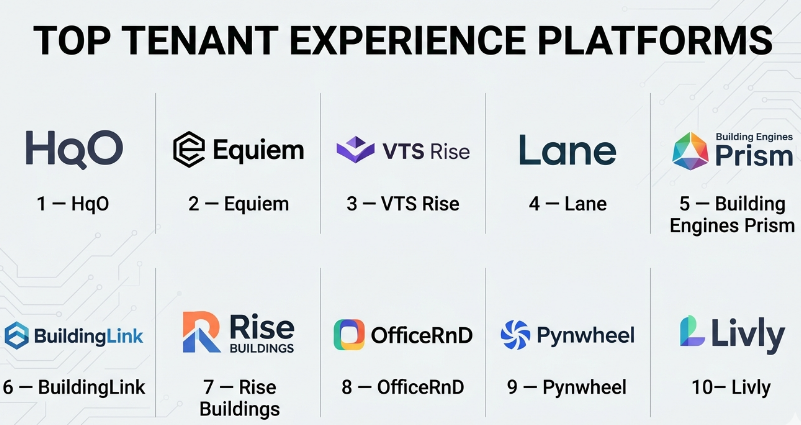
#1 — HqO
Short description :
HqO is a tenant experience platform designed mainly for commercial real estate owners, operators, and property teams. It helps buildings deliver mobile tenant apps, workplace services, communication, amenity booking, access integrations, events, tenant engagement, and analytics. HqO is useful for office buildings, mixed-use properties, landlords, and asset managers that want to improve tenant satisfaction and building engagement. It helps property teams create a branded digital building experience. It is best for commercial real estate teams that want a mature tenant experience platform for office portfolios.
Key Features
- Branded tenant mobile app.
- Building announcements and communication.
- Amenity booking.
- Event promotion and engagement.
- Service request workflows.
- Access control and building system integrations may vary.
- Tenant analytics and engagement reporting.
Pros
- Strong focus on commercial tenant experience.
- Useful for large office buildings and portfolios.
- Good for engagement analytics and branded building apps.
Cons
- May be more than small buildings need.
- Implementation depends on integrations and tenant adoption.
- Best value depends on active property team engagement.
Platforms / Deployment
Web / iOS / Android
Cloud
Security & Compliance
Supports user access controls, tenant-level permissions, administrative management, and data privacy controls depending on plan. Specific compliance details should be validated directly with the vendor.
Integrations & Ecosystem
HqO connects tenant experience with commercial building operations.
- Access control systems.
- Visitor management tools.
- Amenity booking workflows.
- Building communication systems.
- Service request workflows.
- Tenant engagement analytics.
Support & Community
HqO provides onboarding, customer success resources, documentation, and implementation guidance. It is suitable for commercial real estate operators focused on tenant engagement.
#2 — Equiem
Short description :
Equiem is a tenant experience and property technology platform for commercial real estate owners and operators. It supports building apps, tenant communication, amenity booking, events, workplace services, community engagement, and property insights. Equiem is useful for office towers, commercial portfolios, mixed-use properties, and landlords that want to build stronger tenant relationships. It helps property teams deliver digital services and improve tenant satisfaction. It is best for commercial buildings that want tenant engagement, communication, and building services in one platform.
Key Features
- Tenant engagement app.
- Building news and announcements.
- Amenity and facility booking.
- Events and community programs.
- Service marketplace features may vary.
- Tenant surveys and feedback.
- Building-level analytics.
Pros
- Strong commercial real estate tenant engagement focus.
- Useful for events, services, and communication.
- Good for improving tenant connection with the property.
Cons
- May require active content and community management.
- Integration needs should be reviewed before rollout.
- Smaller properties may not use all features.
Platforms / Deployment
Web / iOS / Android
Cloud
Security & Compliance
Supports tenant access controls, administrative permissions, communication management, and privacy-related controls depending on configuration. Specific compliance details should be validated directly with the vendor.
Integrations & Ecosystem
Equiem connects digital tenant experience with property services.
- Building communication.
- Amenity booking.
- Events and community engagement.
- Service marketplaces.
- Tenant feedback.
- Property analytics.
Support & Community
Equiem provides onboarding, customer success, tenant engagement guidance, and support resources for property teams.
#3 — VTS Rise
Short description :
VTS Rise is a tenant experience platform used by commercial real estate owners and operators to deliver branded building apps, tenant communication, amenity booking, access features, visitor workflows, and engagement analytics. It is useful for office buildings, commercial portfolios, and mixed-use properties that need digital tenant services. VTS Rise helps tenants access building information, request services, book amenities, and stay connected with property teams. It is best for commercial real estate teams that want tenant experience connected with broader leasing and asset intelligence workflows.
Key Features
- Branded tenant app.
- Building communication.
- Amenity booking.
- Visitor and access workflows may vary.
- Service request support.
- Tenant engagement analytics.
- Property team administration tools.
Pros
- Strong fit for commercial real estate operators.
- Useful for tenant engagement and building services.
- Can align tenant experience with broader asset strategy.
Cons
- Best suited for commercial portfolios rather than small properties.
- Implementation depends on integrations and building operations.
- Tenant adoption requires communication and onboarding.
Platforms / Deployment
Web / iOS / Android
Cloud
Security & Compliance
Supports tenant permissions, user access controls, administrative settings, and property-level data controls depending on plan. Specific compliance details should be validated directly with the vendor.
Integrations & Ecosystem
VTS Rise connects tenant experience with commercial property operations.
- Building apps.
- Tenant communication.
- Amenity workflows.
- Visitor and access systems.
- Service requests.
- Portfolio analytics.
Support & Community
VTS provides onboarding, customer support, documentation, and commercial real estate workflow guidance. It is useful for owners looking to improve tenant engagement.
#4 — Lane
Short description :
Lane is a workplace and tenant experience platform designed to help commercial property teams create digital building experiences. It supports tenant communication, workplace services, amenity booking, events, access integrations, surveys, and building information. Lane is useful for office landlords, property managers, corporate real estate teams, and mixed-use developments. It helps tenants interact with building services and property teams through a digital app experience. It is best for commercial real estate teams that want a flexible building app and tenant engagement platform.
Key Features
- Building app experience.
- Tenant announcements.
- Amenity booking.
- Service request workflows.
- Events and engagement tools.
- Access and workplace integrations may vary.
- Tenant feedback and reporting.
Pros
- Good for workplace and tenant engagement.
- Useful for modern office building experiences.
- Helps centralize tenant services and communication.
Cons
- May require customization and integration planning.
- Best value depends on active tenant engagement.
- Smaller properties may not need the full platform.
Platforms / Deployment
Web / iOS / Android
Cloud
Security & Compliance
Supports user permissions, tenant access controls, administrative settings, and data management features depending on plan. Specific compliance details should be validated directly with the vendor.
Integrations & Ecosystem
Lane connects tenant experience with workplace and building services.
- Access control.
- Visitor workflows.
- Amenity booking.
- Building communication.
- Service requests.
- Engagement analytics.
Support & Community
Lane provides onboarding, implementation guidance, support resources, and tenant engagement assistance for property teams.
#5 — Building Engines Prism
Short description :
Building Engines Prism is a property operations platform that supports commercial property management, tenant service requests, inspections, preventive maintenance, communication, work orders, vendor management, and property operations. While it is broader than tenant experience alone, it is relevant because tenant service and communication are core parts of the experience. It is useful for commercial property managers and building operators who want to improve tenant service response, operational visibility, and maintenance workflows. It is best for commercial property teams that need tenant service experience connected with building operations.
Key Features
- Tenant service request management.
- Work order tracking.
- Preventive maintenance.
- Property inspections.
- Building communication support.
- Vendor management.
- Operational reporting.
Pros
- Strong for commercial building operations.
- Useful for service requests and tenant support.
- Helps connect tenant needs with maintenance workflows.
Cons
- Less focused on community engagement than pure tenant experience apps.
- May need separate tools for events or lifestyle services.
- Best value depends on operational workflow needs.
Platforms / Deployment
Web / iOS / Android
Cloud
Security & Compliance
Supports user permissions, tenant access controls, work order records, administrative tools, and property operation data controls depending on plan. Specific compliance details should be validated directly with the vendor.
Integrations & Ecosystem
Building Engines Prism connects tenant service with property operations.
- Work order systems.
- Preventive maintenance.
- Tenant service portals.
- Vendor workflows.
- Inspections.
- Building reporting.
Support & Community
Building Engines provides documentation, onboarding, customer support, and commercial property operations guidance.
#6 — BuildingLink
Short description :
BuildingLink is a property communication and resident experience platform commonly used in residential buildings, condos, co-ops, multifamily communities, and managed residential properties. It helps residents and property teams manage announcements, service requests, package tracking, amenity reservations, visitor instructions, staff communication, and building documents. BuildingLink is especially useful for residential communities that need better communication and daily service coordination. It is best for residential buildings that want a resident portal and building communication platform.
Key Features
- Resident portal.
- Building announcements.
- Maintenance and service requests.
- Package tracking.
- Amenity reservations.
- Visitor instructions.
- Building documents and communication.
Pros
- Strong for residential building communication.
- Useful for package, amenity, and service workflows.
- Good fit for condos, co-ops, and multifamily communities.
Cons
- Not mainly designed for commercial office tenant engagement.
- Advanced marketing-style engagement may be limited.
- Best value depends on resident adoption and staff usage.
Platforms / Deployment
Web / iOS / Android
Cloud
Security & Compliance
Supports resident access controls, staff permissions, building-level administration, communication records, and property data controls depending on plan.
Integrations & Ecosystem
BuildingLink connects resident experience with building operations.
- Resident communication.
- Package management.
- Amenity booking.
- Service requests.
- Visitor management workflows.
- Building documents.
Support & Community
BuildingLink provides documentation, support, training resources, and residential building operations guidance.
#7 — Rise Buildings
Short description :
Rise Buildings is a tenant and resident experience platform that supports mobile apps, access control integrations, amenity booking, visitor management, work orders, communication, and property services. It is used across commercial, residential, and mixed-use buildings depending on the property model. Rise Buildings helps property teams deliver a branded digital experience while connecting tenants or residents with building services. It is best for properties that want access, amenities, communication, and service requests inside a single tenant or resident app.
Key Features
- Branded building mobile app.
- Access control integrations may vary.
- Amenity booking.
- Visitor management.
- Work order and service requests.
- Building communication.
- Engagement analytics.
Pros
- Useful for commercial, residential, and mixed-use properties.
- Strong focus on mobile building experience.
- Good fit for access and amenity-driven properties.
Cons
- Integration setup should be tested carefully.
- Tenant adoption depends on building communication.
- Smaller properties may not need all features.
Platforms / Deployment
Web / iOS / Android
Cloud
Security & Compliance
Supports user permissions, property-level access controls, tenant or resident data management, and administrative settings depending on plan. Specific compliance details should be validated directly with the vendor.
Integrations & Ecosystem
Rise Buildings connects tenant or resident experience with building technology.
- Access control systems.
- Visitor management.
- Amenity booking.
- Work orders.
- Building announcements.
- Property services.
Support & Community
Rise Buildings provides onboarding, support resources, and implementation guidance for property teams.
#8 — OfficeRnD
Short description :
OfficeRnD is a flexible workspace and coworking management platform that supports member experience, billing, bookings, meeting rooms, access integrations, community management, and workspace operations. While it is more focused on coworking and flexible offices than traditional tenant experience, it is highly relevant for operators managing tenants or members in shared workspaces. OfficeRnD helps teams manage workspace usage, communication, memberships, invoices, and room bookings. It is best for coworking operators, flexible workspace providers, and shared office teams that need member and tenant experience tools.
Key Features
- Member and tenant portal.
- Meeting room booking.
- Membership management.
- Billing and invoicing workflows.
- Access control integrations may vary.
- Community management.
- Workspace analytics.
Pros
- Strong for coworking and flexible workspace operators.
- Good booking and membership workflows.
- Useful for tenant or member self-service.
Cons
- Not designed for traditional residential property management.
- May not fit standard commercial landlord workflows.
- Best value depends on flexible workspace operations.
Platforms / Deployment
Web / iOS / Android
Cloud
Security & Compliance
Supports user permissions, member data management, billing workflows, and administrative controls depending on plan. Specific compliance details should be validated directly with the vendor.
Integrations & Ecosystem
OfficeRnD connects tenant and member experience with flexible workspace operations.
- Access control.
- Billing systems.
- Meeting room booking.
- Community engagement.
- Workspace management.
- Reporting dashboards.
Support & Community
OfficeRnD provides onboarding, documentation, customer support, and flexible workspace operations resources.
#9 — Pynwheel
Short description :
Pynwheel is a leasing and resident experience technology platform used mainly by multifamily property teams. It supports interactive leasing, digital tours, property maps, prospect engagement, and resident-facing digital experiences depending on configuration. It is useful for multifamily operators that want to improve the leasing and resident journey with visual and interactive tools. While it is not a broad tenant operations platform like some others, it helps improve the digital experience around apartment search, leasing, and community presentation. It is best for multifamily teams focused on leasing experience and resident engagement.
Key Features
- Interactive property maps.
- Digital leasing experience support.
- Prospect engagement workflows.
- Apartment and community presentation tools.
- Resident experience features may vary.
- Visual property navigation.
- Lead and leasing support workflows.
Pros
- Strong for multifamily leasing experience.
- Useful for visual property presentation.
- Helps improve prospect engagement.
Cons
- Less focused on commercial tenant operations.
- Not a full property management system.
- Best used alongside leasing or property management tools.
Platforms / Deployment
Web / Mobile-friendly experiences may vary
Cloud
Security & Compliance
Supports user access controls and property data management depending on configuration. Specific security details should be validated directly with the vendor.
Integrations & Ecosystem
Pynwheel connects digital leasing and resident experience workflows.
- Apartment availability displays.
- Property maps.
- Leasing workflows.
- Prospect engagement.
- Multifamily marketing.
- Community presentation.
Support & Community
Pynwheel provides support resources, onboarding, and multifamily leasing technology guidance.
#10 — Livly
Short description :
Livly is a resident experience platform designed for multifamily communities, helping property teams manage resident engagement, communication, payments, maintenance requests, package updates, amenity reservations, and community services. It gives residents a mobile app experience for interacting with the property and daily living services. Livly is useful for apartment communities and multifamily operators that want to improve resident satisfaction and digital convenience. It is best for multifamily properties that need a resident-focused app for communication, service requests, and community engagement.
Key Features
- Resident mobile app.
- Property announcements.
- Maintenance request workflows.
- Amenity reservations.
- Package and service updates may vary.
- Resident engagement tools.
- Community communication features.
Pros
- Strong for multifamily resident experience.
- Helps centralize resident communication and services.
- Useful for modern apartment communities.
Cons
- Not designed for commercial office tenant experience.
- Best value depends on resident adoption.
- May need integration with property management systems.
Platforms / Deployment
Web / iOS / Android
Cloud
Security & Compliance
Supports resident access controls, administrative settings, property communication management, and resident data controls depending on plan. Specific compliance details should be validated directly with the vendor.
Integrations & Ecosystem
Livly connects resident experience with multifamily operations.
- Property communication.
- Maintenance workflows.
- Amenity booking.
- Resident services.
- Package-related workflows.
- Community engagement.
Support & Community
Livly provides onboarding, support resources, and resident experience guidance for multifamily property teams.
Comparison Table
| Tool Name | Best For | Platform(s) Supported | Deployment | Standout Feature | Public Rating |
|---|---|---|---|---|---|
| HqO | Commercial office tenant experience | Web / iOS / Android | Cloud | Branded tenant app and engagement analytics | N/A |
| Equiem | Commercial property engagement | Web / iOS / Android | Cloud | Events, services, communication, and tenant community | N/A |
| VTS Rise | Commercial building apps | Web / iOS / Android | Cloud | Tenant experience connected with commercial asset strategy | N/A |
| Lane | Workplace and building experience | Web / iOS / Android | Cloud | Flexible tenant and workplace engagement app | N/A |
| Building Engines Prism | Commercial tenant service operations | Web / iOS / Android | Cloud | Tenant service requests connected with building operations | N/A |
| BuildingLink | Residential building communication | Web / iOS / Android | Cloud | Resident portal, packages, amenities, and service requests | N/A |
| Rise Buildings | Mixed-use building experience | Web / iOS / Android | Cloud | Access, amenities, visitors, and work orders in one app | N/A |
| OfficeRnD | Coworking and flexible workspace experience | Web / iOS / Android | Cloud | Member portal, bookings, billing, and workspace operations | N/A |
| Pynwheel | Multifamily leasing and visual experience | Web / Mobile-friendly varies | Cloud | Interactive property maps and digital leasing experience | N/A |
| Livly | Multifamily resident experience | Web / iOS / Android | Cloud | Resident app for communication, services, and amenities | N/A |
Evaluation & Tenant Experience Platforms
| Tool Name | Core (25%) | Ease (15%) | Integrations (15%) | Security (10%) | Performance (10%) | Support (10%) | Value (15%) | Weighted Total (0–10) |
|---|---|---|---|---|---|---|---|---|
| HqO | 9 | 8 | 9 | 9 | 8 | 9 | 7 | 8.45 |
| Equiem | 9 | 8 | 8 | 8 | 8 | 8 | 7 | 8.10 |
| VTS Rise | 9 | 8 | 9 | 9 | 8 | 8 | 7 | 8.35 |
| Lane | 8 | 8 | 8 | 8 | 8 | 8 | 7 | 7.85 |
| Building Engines Prism | 8 | 8 | 8 | 9 | 8 | 8 | 8 | 8.10 |
| BuildingLink | 8 | 9 | 8 | 8 | 8 | 8 | 8 | 8.20 |
| Rise Buildings | 8 | 8 | 9 | 8 | 8 | 8 | 7 | 8.00 |
| OfficeRnD | 8 | 8 | 9 | 8 | 8 | 8 | 8 | 8.15 |
| Pynwheel | 7 | 8 | 7 | 8 | 8 | 8 | 8 | 7.60 |
| Livly | 8 | 9 | 8 | 8 | 8 | 8 | 8 | 8.20 |
These scores are comparative and should be used as a practical guide, not a fixed ranking. HqO, Equiem, VTS Rise, and Lane are stronger for commercial office tenant experience. BuildingLink and Livly are better for residential and multifamily resident experience. Building Engines Prism is strong when tenant experience is mainly service request and building operations focused. OfficeRnD is best for coworking and flexible workspace operators. Rise Buildings works well for mixed-use properties where access, amenities, visitors, and services need to come together.
Which Tenant Experience Platforms
Solo / Freelancer
Solo landlords or small property consultants usually do not need a full tenant experience platform. A simple property management tool, tenant portal, or communication platform may be enough.
If a small property has only a few tenants, the focus should be clear communication, maintenance request tracking, document sharing, and fast response times. A full branded app may be unnecessary unless the property has premium amenities or a strong community model.
SMB
Small and mid-sized property teams should focus on tenant communication, service requests, amenity booking, and easy onboarding. BuildingLink, Livly, Rise Buildings, and Building Engines Prism can be practical depending on property type.
Residential communities may prefer BuildingLink or Livly. Commercial buildings may prefer Building Engines Prism or Rise Buildings if service workflows and building access are important.
Mid-Market
Mid-market real estate teams usually need stronger engagement, analytics, branded apps, communication segmentation, amenity usage tracking, and integration with property systems. HqO, Equiem, VTS Rise, Lane, and Rise Buildings are strong candidates for commercial properties.
For multifamily or residential portfolios, Livly, BuildingLink, and specialized resident experience tools may be more appropriate.
Enterprise
Enterprise owners and operators should prioritize scalability, portfolio analytics, access control integrations, visitor management, branded experience, security, tenant segmentation, admin controls, and reporting. HqO, VTS Rise, Equiem, Lane, and Building Engines Prism are strong options for commercial portfolios.
Large organizations should involve asset management, property operations, leasing, IT, security, tenant services, workplace experience, and marketing teams before standardizing a platform.
Budget vs Premium
Budget-conscious teams may prefer simpler resident portals, property management tools, or communication platforms before investing in a full tenant experience app.
Premium platforms such as HqO, VTS Rise, Equiem, Lane, and Rise Buildings are better when buildings need branded mobile apps, access integrations, amenity booking, tenant analytics, service marketplaces, and portfolio-level engagement insights.
Feature Depth vs Ease of Use
If ease of use matters most, BuildingLink, Livly, Building Engines Prism, and OfficeRnD are practical for focused use cases such as residential communication, resident services, building operations, or coworking management.
If feature depth matters more, HqO, VTS Rise, Equiem, Lane, and Rise Buildings provide stronger support for branded tenant apps, engagement analytics, access integrations, tenant services, and commercial portfolio experience.
Integrations & Scalability
Tenant experience platforms should integrate with property management systems, access control, visitor management, work order systems, communication tools, amenity booking, payment workflows, directory systems, Wi-Fi or workplace tools, and analytics platforms.
Commercial portfolios should review HqO, VTS Rise, Equiem, Lane, and Building Engines Prism. Residential communities should review BuildingLink and Livly. Coworking operators should review OfficeRnD. Mixed-use properties should review Rise Buildings.
Security & Compliance Needs
Tenant experience platforms may store tenant names, contact details, visitor records, building access data, service requests, amenity bookings, event participation, resident messages, and engagement analytics.
Buyers should validate role-based access, tenant permissions, access control integration security, data encryption, visitor data handling, audit logs, privacy policies, resident data retention, and admin governance before rollout.
Frequently Asked Questions
1. What is a Tenant Experience Platform?
A Tenant Experience Platform is software that helps property teams improve tenant or resident interactions with a building. It usually includes communication, service requests, amenity booking, visitor management, access workflows, events, surveys, and tenant engagement tools.
2. How is a tenant experience platform different from property management software?
Property management software focuses on leases, rent, accounting, maintenance, and operations. Tenant experience platforms focus more on tenant engagement, communication, digital building services, amenities, access, events, and satisfaction.
3. What pricing models are common for Tenant Experience Platforms?
Pricing may depend on buildings, square footage, units, tenants, users, modules, integrations, branding, support level, or enterprise contracts. Many platforms use custom pricing because property size and feature needs vary widely.
4. What are common mistakes when choosing a tenant experience platform?
Common mistakes include choosing a platform without a tenant adoption plan, ignoring integration needs, not defining who will manage content, and assuming tenants will use the app without clear value. Another mistake is buying a feature-rich platform when the building only needs basic communication.
5. Which platform is best for commercial office buildings?
HqO, Equiem, VTS Rise, Lane, and Rise Buildings are strong options for commercial office tenant experience. The best choice depends on building size, access control needs, amenity strategy, communication workflows, and portfolio reporting.
6. Which platform is best for multifamily resident experience?
BuildingLink, Livly, Rise Buildings, and some property management platforms with resident portals can be practical for multifamily resident experience. Buyers should evaluate maintenance requests, amenities, packages, announcements, and resident communication.
7. Can tenant experience platforms support amenity booking?
Yes, many tenant experience platforms support amenity booking for conference rooms, lounges, gyms, event spaces, parking, shared workspaces, and community areas. Booking rules and approval options vary by platform.
8. Can these platforms integrate with access control systems?
Many tenant experience platforms can integrate with access control systems, but integration depth varies. Buyers should test mobile access, visitor passes, credential sync, security controls, and property-specific requirements before rollout.
9. Do tenant experience platforms support visitor management?
Some platforms support visitor registration, guest passes, arrival notifications, and access workflows directly or through integrations. This is especially important for office buildings, coworking spaces, mixed-use properties, and premium residential communities.
10. Are Tenant Experience Platforms secure?
They can be secure when configured properly. Buyers should review role-based access, visitor data handling, access control integration, encryption, admin permissions, data retention, audit logs, and privacy policies.
Conclusion
Tenant Experience Platforms help real estate teams create a more connected, convenient, and service-focused building experience. The best platform depends on property type, tenant needs, building amenities, and operational goals. HqO, Equiem, VTS Rise, and Lane are strong for commercial office tenant engagement and branded building apps. Building Engines Prism is useful when the main priority is tenant service requests and commercial building operations. BuildingLink and Livly are better for residential and multifamily resident experience.
