Introduction
Corporate Card Management Tools are platforms that help businesses issue, control, and monitor company cards used by employees for business expenses. In simple terms, they replace traditional corporate credit card programs with software-driven control, automation, and visibility.
In the modern financial environment, organizations need tighter control over spending, especially with distributed teams, remote work, and global operations. These tools now combine card issuance, expense tracking, budgeting, and compliance into a single platform. Many solutions also use automation and AI to categorize transactions, flag anomalies, and generate insights.
Real-world use cases include:
- Issuing virtual and physical cards to employees with spending limits
- Tracking company expenses in real time
- Automating expense categorization and approvals
- Preventing fraud and enforcing spending policies
- Integrating with accounting systems for financial reporting
What buyers should evaluate:
- Card controls (limits, merchant restrictions, approvals)
- Real-time visibility and reporting
- Integration with accounting and ERP tools
- Automation and AI capabilities
- Global support and multi-currency handling
- Security features (MFA, encryption, compliance)
- Ease of use and onboarding
- Pricing structure and hidden fees
- Customer support and reliability
Best for: Finance teams, startups, SMBs, and enterprises that want better control over employee spending and corporate cards.
Not ideal for: Individuals or very small businesses with minimal expense activity that can be managed manually.
Key Trends in Corporate Card Management Tools
- Embedded finance platforms: Cards integrated directly with expense and accounting workflows
- Virtual card adoption: Increasing use of one-time or vendor-specific cards for security
- AI-driven insights: Automated categorization and spend analysis
- Real-time controls: Instant card freezing, limits, and policy enforcement
- Decentralized finance operations: Empowering teams while maintaining central control
- API-first architecture: Easy integration with finance and HR systems
- Global expansion: Multi-currency and international card support
- Subscription pricing models: Flexible SaaS pricing replacing legacy banking models
- Fraud prevention: Real-time anomaly detection and alerts
- Spend optimization: Tools recommending cost-saving opportunities
How We Selected These Tools (Methodology)
- Evaluated market presence and adoption across startups to enterprises
- Assessed card management capabilities and spend control features
- Reviewed automation, reporting, and real-time visibility
- Considered security and compliance readiness
- Analyzed integration ecosystem with accounting and ERP tools
- Included tools supporting different business sizes and geographies
- Evaluated ease of use and onboarding experience
- Considered performance reliability and scalability
- Balanced innovation with proven stability
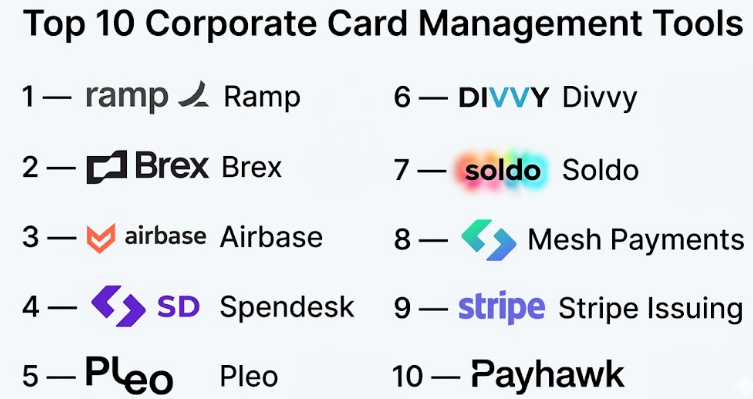
Top 10 Corporate Card Management Tools
#1 — Ramp
Short description (2–3 lines): A modern corporate card and spend management platform focused on cost control and automation, widely used by startups and growing companies.
Key Features
- Corporate cards with customizable limits
- Real-time spend tracking
- Automated expense categorization
- Vendor management
- Cost-saving insights
- Approval workflows
Pros
- Strong automation and cost optimization
- Easy onboarding and setup
Cons
- Limited global support
- Focused primarily on card-based expenses
Platforms / Deployment
Web / iOS — Cloud
Security & Compliance
Encryption, MFA (others not publicly stated)
Integrations & Ecosystem
Integrates with finance and productivity tools
- QuickBooks
- NetSuite
- Slack
Support & Community
Strong support and fast-growing community, especially among startups.
#2 — Brex
Short description (2–3 lines): Corporate card platform with built-in financial tools, designed for startups and high-growth companies.
Key Features
- Corporate cards with dynamic limits
- Expense tracking and categorization
- Budget controls
- Rewards system
- Multi-entity management
- Real-time analytics
Pros
- Strong financial ecosystem
- Good rewards and incentives
Cons
- Limited availability outside certain regions
- Complex pricing structure
Platforms / Deployment
Web / iOS — Cloud
Security & Compliance
Not publicly stated
Integrations & Ecosystem
- Accounting tools
- HR platforms
- APIs
Support & Community
Good support with strong adoption in startup ecosystems.
#3 — Airbase
Short description (2–3 lines): Unified spend management platform combining corporate cards, expense management, and accounts payable.
Key Features
- Corporate cards and spend control
- Invoice and bill payments
- Approval workflows
- Real-time reporting
- Audit trails
- Vendor management
Pros
- All-in-one finance platform
- Strong automation
Cons
- Pricing not transparent
- Best suited for mid-sized companies
Platforms / Deployment
Web / iOS — Cloud
Security & Compliance
Not publicly stated
Integrations & Ecosystem
- NetSuite
- QuickBooks
- HR systems
Support & Community
Strong onboarding and enterprise-level support.
#4 — Spendesk
Short description (2–3 lines): European-focused spend management platform offering corporate cards and budget control.
Key Features
- Virtual and physical cards
- Budget tracking
- Approval workflows
- Expense automation
- Invoice management
- Real-time visibility
Pros
- Strong budgeting features
- Unified platform
Cons
- Pricing can be high
- Limited customization
Platforms / Deployment
Web / iOS / Android — Cloud
Security & Compliance
MFA, encryption (others not publicly stated)
Integrations & Ecosystem
- Accounting tools
- HR systems
- APIs
Support & Community
Good support with growing adoption in Europe.
#5 — Pleo
Short description (2–3 lines): Smart company card platform popular in Europe, focusing on ease of use and automation.
Key Features
- Company cards with spend limits
- Receipt capture
- Expense categorization
- Budget tracking
- Notifications and alerts
- Approval workflows
Pros
- Easy to use
- Fast onboarding
Cons
- Limited global reach
- Fewer advanced features
Platforms / Deployment
Web / iOS / Android — Cloud
Security & Compliance
Not publicly stated
Integrations & Ecosystem
- Accounting platforms
- APIs
Support & Community
Reliable support and strong regional presence.
#6 — Divvy
Short description (2–3 lines): Corporate card and expense management tool focused on budgeting and spend visibility.
Key Features
- Corporate cards with budgets
- Real-time spend tracking
- Automated expense reporting
- Approval workflows
- Reporting dashboards
- Spend controls
Pros
- Strong budgeting capabilities
- No upfront software cost
Cons
- Limited advanced analytics
- Regional availability constraints
Platforms / Deployment
Web / iOS / Android — Cloud
Security & Compliance
Not publicly stated
Integrations & Ecosystem
- Accounting tools
- APIs
Support & Community
Good support with growing SMB user base.
#7 — Soldo
Short description (2–3 lines): Spend management platform offering prepaid company cards with strong control features.
Key Features
- Prepaid corporate cards
- Spend limits and controls
- Expense tracking
- Real-time reporting
- Approval workflows
- Multi-user management
Pros
- Strong control over spending
- Good for distributed teams
Cons
- Limited advanced analytics
- Integration depth varies
Platforms / Deployment
Web / iOS / Android — Cloud
Security & Compliance
Not publicly stated
Integrations & Ecosystem
- Accounting tools
- APIs
Support & Community
Moderate support; strong European focus.
#8 — Mesh Payments
Short description (2–3 lines): Corporate card and spend platform with focus on subscription and SaaS expense management.
Key Features
- Virtual cards for SaaS spending
- Subscription tracking
- Spend analytics
- Budget controls
- Approval workflows
- Expense automation
Pros
- Excellent for SaaS spend control
- Strong analytics
Cons
- Niche use case
- Limited global reach
Platforms / Deployment
Web — Cloud
Security & Compliance
Not publicly stated
Integrations & Ecosystem
- Accounting tools
- SaaS platforms
Support & Community
Focused support; niche adoption.
#9 — Stripe Issuing
Short description (2–3 lines): Developer-focused platform to create and manage custom card programs.
Key Features
- Custom card issuance
- API-driven controls
- Real-time transaction monitoring
- Fraud detection tools
- Global payment support
- Virtual and physical cards
Pros
- Highly customizable
- Strong developer ecosystem
Cons
- Requires technical expertise
- Not plug-and-play
Platforms / Deployment
Web / API — Cloud
Security & Compliance
Encryption, PCI compliance (others not publicly stated)
Integrations & Ecosystem
- Stripe ecosystem
- APIs
Support & Community
Strong developer documentation and support.
#10 — Payhawk
Short description (2–3 lines): Enterprise-grade spend management and corporate card platform with strong compliance capabilities.
Key Features
- Corporate cards
- Expense management
- Budget controls
- Real-time reporting
- Multi-entity support
- Approval workflows
Pros
- Enterprise-ready features
- Strong compliance controls
Cons
- Higher pricing
- Complexity for small teams
Platforms / Deployment
Web / iOS / Android — Cloud
Security & Compliance
Not publicly stated
Integrations & Ecosystem
- ERP systems
- Accounting tools
Support & Community
Enterprise-level support and onboarding.
Comparison Table (Top 10)
| Tool Name | Best For | Platform(s) Supported | Deployment | Standout Feature | Public Rating |
|---|---|---|---|---|---|
| Ramp | Startups | Web, Mobile | Cloud | Cost optimization | N/A |
| Brex | Startups | Web, Mobile | Cloud | Financial ecosystem | N/A |
| Airbase | Mid-market | Web, Mobile | Cloud | Unified spend platform | N/A |
| Spendesk | SMBs EU | Web, Mobile | Cloud | Budget control | N/A |
| Pleo | SMBs EU | Web, Mobile | Cloud | Ease of use | N/A |
| Divvy | SMBs | Web, Mobile | Cloud | Budget-based cards | N/A |
| Soldo | SMBs EU | Web, Mobile | Cloud | Prepaid cards | N/A |
| Mesh Payments | SaaS spend | Web | Cloud | Subscription tracking | N/A |
| Stripe Issuing | Developers | Web/API | Cloud | Custom card programs | N/A |
| Payhawk | Enterprise | Web, Mobile | Cloud | Compliance focus | N/A |
Evaluation & Scoring of Corporate Card Management Tools
| Tool Name | Core (25%) | Ease (15%) | Integrations (15%) | Security (10%) | Performance (10%) | Support (10%) | Value (15%) | Weighted Total |
|---|---|---|---|---|---|---|---|---|
| Ramp | 9 | 9 | 8 | 7 | 8 | 8 | 9 | 8.6 |
| Brex | 9 | 8 | 8 | 7 | 8 | 8 | 8 | 8.3 |
| Airbase | 9 | 7 | 9 | 7 | 8 | 8 | 7 | 8.2 |
| Spendesk | 8 | 8 | 7 | 7 | 8 | 8 | 7 | 7.7 |
| Pleo | 7 | 9 | 6 | 6 | 7 | 7 | 8 | 7.5 |
| Divvy | 8 | 8 | 7 | 6 | 7 | 7 | 8 | 7.6 |
| Soldo | 7 | 8 | 6 | 6 | 7 | 7 | 7 | 7.1 |
| Mesh Payments | 8 | 7 | 7 | 6 | 7 | 7 | 7 | 7.3 |
| Stripe Issuing | 9 | 6 | 9 | 8 | 9 | 8 | 7 | 8.4 |
| Payhawk | 9 | 7 | 8 | 8 | 8 | 8 | 7 | 8.2 |
How to interpret scores:
- Scores are relative comparisons across tools
- Higher scores indicate broader capability and better balance
- Developer tools may score high on flexibility but lower on ease
- SMB tools often score higher on usability and value
- Always align scores with your business needs
Which Corporate Card Management Tools
Solo / Freelancer
Not typically required; basic expense tools are sufficient.
SMB
Ramp, Divvy, or Pleo offer good balance of usability and cost.
Mid-Market
Airbase or Spendesk provide better integration and control.
Enterprise
Payhawk or Stripe Issuing for advanced customization and compliance.
Budget vs Premium
- Budget: Divvy, Pleo
- Premium: Airbase, Payhawk
Feature Depth vs Ease of Use
- Easy: Ramp, Pleo
- Advanced: Stripe Issuing, Airbase
Integrations & Scalability
- Strong: Airbase, Stripe Issing
- Moderate: Divvy, Pleo
Security & Compliance Needs
- High: Payhawk, Stripe Issuing
- Moderate: Ramp, Brex
Frequently Asked Questions (FAQs)
1. What are corporate card management tools?
They are platforms that help businesses issue and control company cards while tracking and managing expenses in real time.
2. How do these tools differ from traditional corporate cards?
They provide software-based controls, automation, and analytics, unlike traditional cards that lack visibility and control.
3. Are these tools secure?
Most tools offer encryption and security controls, but compliance certifications vary.
4. Can I set spending limits?
Yes, most tools allow setting limits per user, team, or vendor.
5. Do these tools integrate with accounting software?
Yes, integration with accounting tools is a core feature.
6. Are virtual cards supported?
Yes, many tools offer virtual cards for better security.
7. How scalable are these platforms?
They scale from small teams to large enterprises depending on the tool.
8. What industries use these tools?
Technology, finance, startups, enterprises, and remote teams.
9. Can I track expenses in real time?
Yes, real-time tracking is a standard feature.
10. What is the biggest benefit?
Improved control, visibility, and automation of company spending.
Conclusion
Corporate card management tools have transformed how businesses handle spending by combining financial control with automation and real-time visibility. Instead of relying on traditional banking systems, companies now have flexible, software-driven solutions that provide better oversight, faster processes, and improved compliance. However, the right choice depends on your organization’s size, geographic needs, and level of financial complexity. Startups may prioritize ease of use and quick deployment, while enterprises require advanced controls and integration capabilities. The best approach is to shortlist two or three tools, test them in real scenarios, and evaluate how well they integrate with your financial systems before making a long-term decision.
