Introduction
Music Distribution Platforms help artists, labels, producers, managers, and music businesses release songs to streaming platforms, download stores, social media music libraries, and digital music services. In simple words, these platforms act as the bridge between a music creator and places where listeners discover and stream music.
For independent artists, digital distribution is one of the most important parts of releasing music professionally. Without a distributor, most artists cannot directly upload songs to major streaming platforms. A good music distribution platform helps deliver releases, collect royalties, manage metadata, track analytics, handle splits, support publishing or sync opportunities, and sometimes offer marketing tools.
Real-world use cases include:
- Releasing singles, EPs, and albums to streaming platforms
- Distributing music videos or lyric videos
- Collecting streaming and download royalties
- Managing royalty splits between collaborators
- Tracking performance across stores and countries
- Releasing music under an artist, label, or collective account
- Supporting pre-saves, smart links, and promotional campaigns
Buyers should evaluate:
- Supported streaming platforms and stores
- Pricing model and royalty share
- Release speed and approval workflow
- Royalty payment frequency
- Split payment support
- YouTube Content ID or social monetization
- Publishing administration options
- Analytics and reporting depth
- Label account support
- Customer support quality
- Takedown, correction, and metadata edit process
- Extra tools such as pre-saves, smart links, mastering, promotion, and sync pitching
Best for: independent artists, bands, music producers, record labels, managers, DJs, composers, beatmakers, podcast music creators, and music businesses that want to release music professionally across digital platforms.
Not ideal for: artists who are not ready with final masters, correct metadata, ownership details, artwork, ISRCs, collaborator agreements, or release planning. A distributor can deliver music, but it cannot replace a clear release strategy, good music quality, and proper rights management.
Key Trends in Music Distribution Platforms
- Independent artist growth: More artists are releasing music without traditional labels, so distribution platforms are becoming essential for direct-to-market music careers.
- Unlimited release plans are common: Many platforms now offer subscription-based models where artists can release unlimited songs for an annual or monthly fee.
- Royalty splits are becoming standard: Artists increasingly collaborate remotely, so automated splits help producers, featured artists, writers, and labels get paid more transparently.
- Marketing tools are becoming part of distribution: Pre-save pages, smart links, playlist pitching support, short-form video tools, and promotional dashboards are now important.
- YouTube and social monetization matter: Artists want revenue from YouTube, TikTok, Instagram, Facebook, and other user-generated content platforms.
- Publishing and neighboring rights are gaining attention: Distribution alone only covers master recording revenue. Artists are becoming more aware of publishing, performance royalties, and neighboring rights.
- Data and analytics are more important: Artists need clear dashboards showing streams, revenue, countries, stores, tracks, playlists, and listener patterns.
- Label services are expanding: Some distributors now offer label tools, catalog management, royalty accounting, campaign support, and artist services.
- Quality control is stricter: Platforms increasingly reject poor metadata, copyrighted samples, misleading artist names, low-quality artwork, and duplicate releases.
- Artist ownership remains a key decision point: Artists want to keep rights while still accessing strong distribution, payments, support, and promotional opportunities.
How We Selected These Tools Methodology
The tools below were selected based on their relevance to independent music distribution, artist adoption, feature depth, pricing model clarity, royalty workflows, platform reach, and practical usefulness for different types of artists and labels.
- Market recognition: Platforms widely known among independent artists, labels, and music professionals were prioritized.
- Distribution coverage: Store reach, streaming platform support, social platform delivery, and global availability were considered.
- Pricing and royalty model: Subscription fees, per-release fees, commission models, and royalty retention were compared.
- Artist workflow: Upload process, release review, metadata edits, takedowns, and account management were considered.
- Royalty reporting: Payment schedule, dashboard clarity, analytics, and split support were evaluated.
- Extra services: Publishing administration, mastering, promotion, sync licensing, video distribution, and Content ID were considered.
- Label suitability: Multi-artist support, catalog management, and team workflows were reviewed.
- Support quality: Customer support reputation, documentation, and issue resolution were considered.
- Scalability: Platforms for beginners, growing artists, labels, and professional music businesses were included.
- Practical buyer fit: The goal is not one universal winner, but a useful comparison based on artist needs and release strategy.
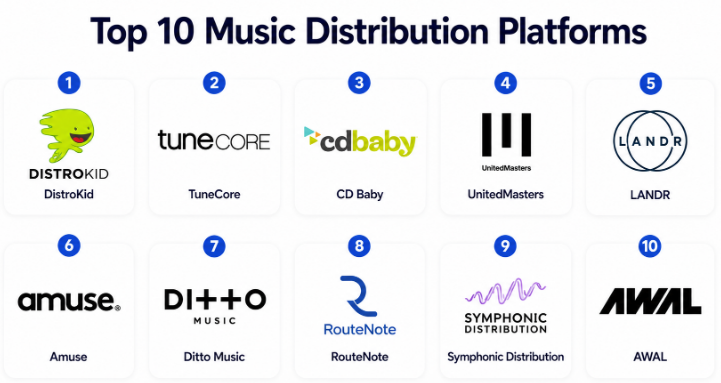
Top 10 Music Distribution Platforms
#1 — DistroKid
Short description :
DistroKid is a popular music distribution platform known for fast uploads, simple pricing, and unlimited music releases under subscription plans. It is widely used by independent artists who want to release songs frequently without paying per release. The platform delivers music to major streaming services and digital stores while also offering features such as royalty splits, hyperfollow-style promo pages, lyrics support, and optional add-ons. DistroKid is especially useful for artists who release often and want a straightforward distribution experience. It is a strong choice for independent musicians focused on speed, simplicity, and ownership.
Key Features
- Unlimited music distribution under subscription plans
- Delivery to major streaming platforms and stores
- Royalty split support
- Promotional landing pages
- Lyrics and credits support
- Optional YouTube and social monetization services
- Fast release and metadata workflow
Pros
- Good for artists who release music frequently
- Simple and beginner-friendly upload process
- Strong independent artist adoption
Cons
- Some useful services may require paid add-ons
- Annual subscription is required to keep releases active under standard plans
- Customer support experience can vary by issue complexity
Platforms / Deployment
Web
Cloud deployment
Security & Compliance
Account security, royalty payments, tax information, and artist data handling are important. Specific certifications such as SOC 2, ISO 27001, GDPR, or payment compliance details should be verified directly.
Not publicly stated.
Integrations & Ecosystem
DistroKid works best for artists who need a simple digital release workflow with basic promotional and royalty tools.
- Streaming platform delivery
- Social platform music delivery
- Royalty split workflows
- Artist profile tools
- Promotional landing pages
- Optional monetization add-ons
Support & Community
DistroKid has a large independent artist user base and broad online community awareness. Support is mainly platform-based, and artists should prepare clean metadata before submission.
#2 — TuneCore
Short description :
TuneCore is a long-standing digital music distribution platform used by independent artists, labels, and music creators who want global distribution and royalty collection. It offers plans for releasing music to streaming platforms and digital stores, along with artist services such as publishing administration, social monetization, and promotional tools depending on plan and market. TuneCore is useful for artists who want distribution plus more business-oriented music services. It is especially relevant for musicians who care about royalty collection, publishing awareness, and professional release management. TuneCore is a strong option for artists who want a mature distributor with broad service coverage.
Key Features
- Digital music distribution to major platforms
- Unlimited release plans depending on subscription
- Royalty collection and reporting
- Publishing administration options
- Social platform monetization support
- Artist promotion tools
- Label and professional account options
Pros
- Mature and widely recognized distributor
- Good for artists wanting distribution plus publishing services
- Useful for professional independent release workflows
Cons
- Pricing structure should be reviewed carefully by release volume
- Some services may depend on plan or add-ons
- Beginners may need time to understand all royalty-related options
Platforms / Deployment
Web
Cloud deployment
Security & Compliance
Music distribution platforms handle artist data, tax information, royalties, and payment details. Specific certifications and compliance details should be verified directly.
Not publicly stated.
Integrations & Ecosystem
TuneCore fits artists and labels that need distribution plus broader music business services.
- Streaming and download store delivery
- Publishing administration workflows
- Social monetization
- Royalty reporting
- Artist promotion tools
- Label services
Support & Community
TuneCore provides artist support resources and educational materials. It is useful for independent artists who want a more established distribution and royalty support ecosystem.
#3 — CD Baby
Short description :
CD Baby is one of the most recognized music distribution platforms for independent artists, known for per-release distribution and artist services. It helps artists distribute music to major streaming and download platforms while collecting royalties and offering additional services such as publishing administration and sync licensing opportunities depending on eligibility. CD Baby is useful for artists who prefer paying per release instead of maintaining an unlimited annual release subscription. It is especially relevant for artists with fewer releases or long-term catalog planning. CD Baby is a strong option for musicians who want a traditional independent distribution partner with catalog-focused services.
Key Features
- Digital music distribution
- Per-release pricing model
- Royalty collection and reporting
- Publishing administration options
- Sync licensing opportunity support
- YouTube and social monetization options
- Artist service ecosystem
Pros
- Good for artists with fewer releases
- Long-standing reputation in independent music distribution
- Useful publishing and licensing-related services
Cons
- Per-release pricing may not suit artists releasing very frequently
- Release updates and add-ons may have additional conditions
- Physical distribution is not the main modern focus
Platforms / Deployment
Web
Cloud deployment
Security & Compliance
CD Baby handles artist account data, tax forms, royalties, and catalog information. Specific certifications and compliance details should be verified directly.
Not publicly stated.
Integrations & Ecosystem
CD Baby supports independent music distribution and related royalty workflows.
- Digital store distribution
- Streaming platform delivery
- Publishing administration
- Sync licensing workflows
- YouTube monetization
- Royalty reporting
Support & Community
CD Baby has strong recognition among independent musicians and offers artist education resources. It is useful for artists who want distribution and long-term catalog support.
#4 — UnitedMasters
Short description :
UnitedMasters is a music distribution platform and artist services company focused on independent artists, brand opportunities, and career growth. It offers distribution to major streaming services and may provide promotional, partnership, and artist development opportunities depending on eligibility and plan. UnitedMasters is especially attractive to artists who want distribution combined with brand partnership potential and modern artist tools. It can support both free and paid distribution models depending on offering and region. UnitedMasters is a good choice for artists who want a distributor with a strong culture, brand, and independent artist positioning.
Key Features
- Music distribution to major streaming platforms
- Artist dashboard and analytics
- Brand partnership opportunity support
- Royalty collection
- Optional paid and free plan structures depending on availability
- Marketing and artist tools
- Mobile-friendly artist experience
Pros
- Strong independent artist branding
- Useful for artists interested in brand opportunities
- Good modern artist dashboard experience
Cons
- Free or lower-cost models may involve revenue share
- Brand opportunities are not guaranteed
- Artists should review plan terms carefully before release
Platforms / Deployment
Web / mobile app availability
Cloud deployment
Security & Compliance
The platform handles artist royalties, account information, tax details, and release data. Specific certifications and compliance practices should be verified directly.
Not publicly stated.
Integrations & Ecosystem
UnitedMasters fits artists who want distribution plus modern artist services.
- Streaming platform delivery
- Artist analytics
- Brand opportunity workflows
- Royalty reporting
- Promotional tools
- Mobile artist management
Support & Community
UnitedMasters has strong visibility among independent artists and urban music communities. Support and opportunities may vary by plan, market, and artist activity.
#5 — LANDR
Short description :
LANDR is a music platform that combines distribution with mastering, collaboration, samples, plugins, promotion, and artist tools. It is especially useful for artists who want more than distribution and prefer a broader creative workflow platform. LANDR can help musicians prepare masters, release music, manage distribution, and access creative resources from one ecosystem. It is a good fit for producers, bedroom artists, and independent musicians who want both production tools and distribution. LANDR is strongest when the artist values integrated music creation and release support.
Key Features
- Digital music distribution
- AI-powered mastering tools
- Samples and creative tools
- Plugin and production resources
- Promotion and smart link tools
- Royalty reporting
- Collaboration features
Pros
- Useful all-in-one music creator ecosystem
- Good for artists who need mastering and distribution together
- Helpful for producers and independent musicians
Cons
- Artists who only need distribution may not use all features
- Plan value depends on how much of the ecosystem is used
- Advanced label workflows may require another solution
Platforms / Deployment
Web / desktop creative tools may vary
Cloud deployment
Security & Compliance
LANDR handles music files, account information, payment data, and royalty-related records. Specific certifications and compliance details should be verified directly.
Not publicly stated.
Integrations & Ecosystem
LANDR fits artists who want music creation, mastering, and distribution together.
- Distribution workflows
- Mastering tools
- Sample libraries
- Plugins and creative tools
- Promotional links
- Royalty reporting
Support & Community
LANDR provides creator support resources and educational materials. It is useful for artists who want a broader creative platform rather than distribution alone.
#6 — Amuse
Short description :
Amuse is a music distribution platform designed for independent artists who want simple digital distribution and mobile-friendly music release management. It has been known for accessible distribution options and artist-focused tools. Amuse supports music delivery to major streaming platforms and offers paid plans with additional features depending on current packaging. It is useful for new and emerging artists who want a relatively simple entry point into music distribution. Amuse is a practical option for artists who want a clean mobile-first experience and straightforward release workflow.
Key Features
- Digital music distribution
- Mobile-friendly artist workflow
- Royalty reporting
- Release management
- Artist profile support
- Paid plans with additional tools depending on availability
- Independent artist-focused dashboard
Pros
- Simple experience for new artists
- Mobile-friendly workflow
- Good for independent musicians starting out
Cons
- Advanced label features may be limited
- Free or entry-level options may have limitations
- Support and release timing should be reviewed before important launches
Platforms / Deployment
Web / iOS / Android
Cloud deployment
Security & Compliance
Music distribution platforms process artist data, royalties, payment information, and release files. Specific certifications and compliance details should be verified directly.
Not publicly stated.
Integrations & Ecosystem
Amuse fits simple independent music distribution workflows.
- Streaming platform delivery
- Mobile release management
- Royalty reporting
- Artist dashboard
- Release tracking
- Basic promotional workflows
Support & Community
Amuse provides artist support resources through its platform. It is best for independent artists who prefer a simple and mobile-friendly release process.
#7 — Ditto Music
Short description :
Ditto Music is a music distribution platform used by independent artists and labels to release music globally. It offers distribution to streaming and digital platforms, royalty collection, promotional tools, and artist services depending on plan. Ditto is especially relevant for artists who want subscription-style distribution and label service options. It can support solo artists, managers, and small labels needing regular releases. Ditto Music is a strong option for artists looking for a distribution platform with broader artist career support features.
Key Features
- Global digital music distribution
- Subscription-based release plans
- Royalty collection and analytics
- Label services options
- Promotional tools
- Chart and campaign support depending on availability
- Artist and label account management
Pros
- Useful for artists and small labels
- Subscription model can work well for regular releases
- Offers broader artist service options
Cons
- Artists should review support reputation and service terms
- Some advanced services may require specific plans
- Plan value depends on release frequency
Platforms / Deployment
Web
Cloud deployment
Security & Compliance
The platform handles royalties, account data, tax details, and release assets. Specific certifications and compliance practices should be verified directly.
Not publicly stated.
Integrations & Ecosystem
Ditto Music supports independent artist and label distribution workflows.
- Streaming platform delivery
- Royalty analytics
- Promotional tools
- Label services
- Release management
- Artist campaign workflows
Support & Community
Ditto Music provides artist support resources and has visibility among independent musicians and small labels. Buyers should test support responsiveness before major release campaigns.
#8 — RouteNote
Short description :
RouteNote is a music distribution platform known for offering both free revenue-share distribution and paid options depending on artist preference. It helps artists release music to major streaming platforms and stores while giving flexibility between upfront cost and royalty share. RouteNote is useful for artists who want to start distribution without paying immediately. It can also suit artists who want to test releases before committing to a paid plan. RouteNote is a practical option for budget-conscious musicians and emerging artists.
Key Features
- Free revenue-share distribution option
- Paid distribution option
- Delivery to major streaming platforms
- Royalty reporting
- Artist dashboard
- Catalog management
- Support for independent artists and labels
Pros
- Good entry point for budget-conscious artists
- Flexible free and paid models
- Useful for testing releases before upgrading
Cons
- Free model involves revenue share
- Review and release timelines should be checked
- Advanced promotional tools may be limited
Platforms / Deployment
Web
Cloud deployment
Security & Compliance
RouteNote handles artist accounts, royalties, release files, and payment data. Specific security and compliance details should be verified directly.
Not publicly stated.
Integrations & Ecosystem
RouteNote fits independent artists who need flexible distribution pricing.
- Streaming platform delivery
- Free and paid royalty workflows
- Artist dashboard
- Catalog management
- Royalty reporting
- Release review workflows
Support & Community
RouteNote has a user base among independent and budget-conscious artists. Support experience may vary by account type and issue complexity.
#9 — Symphonic Distribution
Short description :
Symphonic Distribution is a music distribution and label services platform designed for independent labels, established artists, managers, and music businesses. It offers digital distribution, royalty accounting, marketing support, playlist pitching, sync licensing, neighboring rights, and label services depending on eligibility. Symphonic is especially useful for artists and labels that need more professional support than basic DIY distribution. It may not be as open as fully self-service distributors in every case, but it can offer stronger services for approved clients. Symphonic is a strong fit for serious independent labels and growing artists.
Key Features
- Digital music distribution
- Label services and catalog support
- Royalty accounting and analytics
- Marketing and promotional support
- Sync licensing options
- Neighboring rights support depending on availability
- Professional artist and label workflows
Pros
- Strong fit for labels and serious independent artists
- Broader services beyond basic distribution
- Useful royalty and catalog management support
Cons
- May require approval or suitability review
- Not always ideal for absolute beginners
- Service availability may depend on artist or label profile
Platforms / Deployment
Web
Cloud deployment
Security & Compliance
Professional distribution and label services involve royalties, contracts, catalog data, and payment records. Specific certifications and compliance details should be verified directly.
Not publicly stated.
Integrations & Ecosystem
Symphonic fits professional music business workflows.
- Streaming platform distribution
- Royalty accounting
- Label services
- Marketing campaigns
- Sync licensing workflows
- Catalog management
Support & Community
Symphonic provides professional support and resources for artists and labels. It is best for users who need stronger music business services and are ready for a more professional distribution relationship.
#10 — AWAL
Short description :
AWAL is a music distribution and artist services platform focused on independent artists and labels with growth potential. Unlike fully open self-service distributors, AWAL has historically been more selective and service-oriented. It can support distribution, marketing, analytics, playlist strategy, funding support, and label-style services depending on artist eligibility. AWAL is useful for artists who want to stay independent while accessing more professional support. It is a strong option for growing artists who have traction and need more than basic distribution.
Key Features
- Digital music distribution
- Artist services and campaign support
- Advanced analytics
- Marketing and playlist strategy support
- Royalty reporting
- Label-style services depending on eligibility
- Independent artist growth support
Pros
- Strong fit for artists with traction
- More service-oriented than basic DIY distribution
- Useful for independent artists seeking professional support
Cons
- Selective access may not fit all artists
- Not the easiest choice for beginners needing instant distribution
- Terms and service scope should be reviewed carefully
Platforms / Deployment
Web
Cloud deployment
Security & Compliance
AWAL handles artist data, royalties, contracts, and release information. Specific certifications and compliance details should be verified directly.
Not publicly stated.
Integrations & Ecosystem
AWAL fits artists who want distribution plus higher-touch artist services.
- Streaming platform distribution
- Artist analytics
- Marketing support
- Playlist and campaign workflows
- Royalty reporting
- Label services
Support & Community
AWAL is best suited for artists and labels that meet its service model. Support and opportunities depend on eligibility, artist profile, and business relationship.
Comparison Table Top 10
| Tool Name | Best For | Platform(s) Supported | Deployment | Standout Feature | Public Rating |
|---|---|---|---|---|---|
| DistroKid | Frequent independent releases | Web | Cloud | Unlimited releases with simple workflow | N/A |
| TuneCore | Artists needing distribution plus publishing options | Web | Cloud | Mature distribution and music business services | N/A |
| CD Baby | Artists preferring per-release catalog distribution | Web | Cloud | Per-release distribution with artist services | N/A |
| UnitedMasters | Independent artists seeking brand opportunities | Web, mobile app availability | Cloud | Distribution plus brand partnership positioning | N/A |
| LANDR | Producers needing mastering and distribution together | Web, creative tools vary | Cloud | Mastering, creative tools, and distribution ecosystem | N/A |
| Amuse | New artists needing mobile-friendly distribution | Web, iOS, Android | Cloud | Simple mobile-first release workflow | N/A |
| Ditto Music | Artists and labels releasing regularly | Web | Cloud | Subscription-style distribution and label services | N/A |
| RouteNote | Budget-conscious artists | Web | Cloud | Free revenue-share and paid distribution options | N/A |
| Symphonic Distribution | Labels and serious independent artists | Web | Cloud | Professional label services and catalog support | N/A |
| AWAL | Growing independent artists with traction | Web | Cloud | Selective distribution with artist services | N/A |
Evaluation & Music Distribution Platforms
| Tool Name | Core 25% | Ease 15% | Integrations 15% | Security 10% | Performance 10% | Support 10% | Value 15% | Weighted Total 0–10 |
|---|---|---|---|---|---|---|---|---|
| DistroKid | 8.8 | 9.0 | 8.2 | 8.0 | 8.5 | 7.8 | 8.7 | 8.48 |
| TuneCore | 8.8 | 8.2 | 8.5 | 8.0 | 8.5 | 8.2 | 8.2 | 8.42 |
| CD Baby | 8.5 | 8.0 | 8.2 | 8.0 | 8.3 | 8.2 | 8.0 | 8.23 |
| UnitedMasters | 8.3 | 8.5 | 8.0 | 8.0 | 8.3 | 8.0 | 8.0 | 8.18 |
| LANDR | 8.2 | 8.4 | 8.0 | 8.0 | 8.3 | 8.0 | 8.3 | 8.19 |
| Amuse | 7.8 | 8.7 | 7.5 | 7.8 | 8.0 | 7.8 | 8.2 | 7.97 |
| Ditto Music | 8.3 | 8.2 | 8.0 | 7.8 | 8.3 | 7.8 | 8.2 | 8.13 |
| RouteNote | 7.8 | 8.0 | 7.5 | 7.8 | 8.0 | 7.5 | 8.6 | 7.90 |
| Symphonic Distribution | 9.0 | 7.5 | 8.7 | 8.3 | 8.7 | 8.5 | 7.8 | 8.42 |
| AWAL | 8.8 | 7.4 | 8.7 | 8.3 | 8.7 | 8.5 | 7.6 | 8.32 |
These scores are comparative and should be used as a starting point. A beginner may rate DistroKid, Amuse, RouteNote, or CD Baby higher because ease and cost matter. A serious label may prefer Symphonic Distribution, AWAL, TuneCore, or Ditto because services, analytics, and catalog support matter more. A producer may value LANDR because mastering and creative tools are included in the broader ecosystem.
Which Music Distribution Platform Should You Choose?
Solo / Beginner Artist
A beginner artist should focus on ease of use, simple pricing, platform reach, and clean release workflow. DistroKid, Amuse, RouteNote, CD Baby, and LANDR are practical options to compare.
If the artist releases many songs, a subscription model may be better. If the artist releases rarely, a per-release model may make more sense.
Independent Artist Releasing Regularly
Artists who release music every month or every few months should compare DistroKid, TuneCore, Ditto Music, LANDR, and UnitedMasters. These platforms are useful for regular release schedules.
The artist should check not only distribution price but also royalty splits, add-on costs, release timing, support quality, and how easy it is to fix metadata mistakes.
Producer / Beatmaker
Producers and beatmakers often need royalty splits, collaboration credits, social platform distribution, YouTube monetization, and fast releases. DistroKid, LANDR, TuneCore, and UnitedMasters can be useful.
If the producer also needs mastering, samples, or production tools, LANDR may be especially relevant. If collaboration splits matter most, split workflow quality should be tested carefully.
Small Label
Small labels need multi-artist management, catalog organization, royalty reporting, team access, and analytics. TuneCore, Ditto Music, Symphonic Distribution, CD Baby, and DistroKid label plans are good options to compare.
Labels should avoid choosing only by price. Catalog management, royalty reporting, metadata control, and support quality become more important as the number of artists grows.
Established Independent Artist
Established artists need more than upload access. They may need marketing support, playlist strategy, sync opportunities, better analytics, campaign planning, and professional services. AWAL, Symphonic Distribution, UnitedMasters, TuneCore, and LANDR may be suitable depending on eligibility and goals.
Artists with traction should compare terms carefully, including royalty share, rights ownership, service commitments, funding, and contract flexibility.
Budget vs Premium
Budget-focused artists may start with RouteNote, Amuse, or lower-cost plans from common distributors. This can be useful when the artist is testing releases and learning the process.
Premium or higher-service options are worth considering when music revenue, catalog size, campaign goals, or label operations justify better support and deeper services.
Feature Depth vs Ease of Use
DistroKid is strong for simplicity and frequent releases. CD Baby is practical for catalog-style per-release distribution. TuneCore offers a mature distribution and publishing ecosystem. LANDR is strong for creator tools. Symphonic and AWAL are stronger for professional artist and label services.
The best distributor depends on release frequency, budget, support needs, royalty splits, and long-term music business goals.
Integrations & Scalability
Music distribution platforms may need to connect with royalty accounting, publishing administration, YouTube Content ID, social monetization, smart links, marketing tools, analytics dashboards, and label management workflows.
Scalability matters when an artist becomes a label, manages collaborations, releases frequently, handles multiple territories, or needs detailed royalty reporting.
Security & Compliance Needs
Music distributors handle audio masters, artwork, tax forms, royalty data, payment information, artist identities, and rights-related metadata. Artists should protect accounts with strong passwords and authentication where available.
Before uploading music, artists should confirm ownership, sample clearance, featured artist approvals, artwork rights, producer agreements, and split percentages.
Frequently Asked Questions FAQs
1. What is a Music Distribution Platform?
A Music Distribution Platform helps artists and labels deliver songs to streaming services, download stores, social music libraries, and digital platforms. It also helps collect royalties and provide performance reports.
2. Can I upload directly to streaming platforms without a distributor?
Most independent artists need a distributor to deliver music to major streaming platforms. Distributors handle delivery, metadata, reporting, and royalty collection between artists and digital stores.
3. What features should I look for first?
Start with store coverage, pricing, royalty share, release speed, support quality, royalty splits, analytics, YouTube monetization, publishing options, and the ability to edit metadata after release.
4. Which platform is best for beginners?
Beginners often compare DistroKid, Amuse, RouteNote, CD Baby, LANDR, and TuneCore. The best choice depends on budget, release frequency, and whether the artist wants simple distribution or extra services.
5. Which platform is best for artists who release often?
Artists who release often may prefer subscription-based unlimited release platforms such as DistroKid, TuneCore, Ditto Music, or LANDR depending on pricing, features, and add-ons.
6. Which platform is best for fewer releases?
Artists who release rarely may prefer a per-release model such as CD Baby, depending on their long-term catalog strategy and whether they want to avoid ongoing annual distribution subscriptions.
7. Do distributors collect all music royalties?
No. Distributors usually collect master recording royalties from streaming and download platforms. Publishing royalties, performance royalties, mechanical royalties, and neighboring rights may require separate collection services.
8. What are royalty splits?
Royalty splits allow artists to divide earnings between collaborators such as producers, featured artists, band members, labels, or managers. Good split tools reduce payment confusion and manual accounting.
9. What are common mistakes when choosing a distributor?
Common mistakes include ignoring add-on fees, not reading royalty terms, uploading uncleared samples, using wrong metadata, releasing too late, not checking support quality, and assuming distribution alone will create streams.
10. Can I switch distributors later?
Yes, but switching requires careful planning. Artists must avoid duplicate releases, preserve stream counts where possible, keep ISRCs consistent, and coordinate takedowns and reuploads properly.
Conclusion
Music Distribution Platforms help artists and labels release music professionally, collect royalties, track performance, and reach listeners across digital platforms. The best platform depends on the artist’s stage, release frequency, budget, support needs, and long-term business goals. DistroKid is strong for frequent independent releases. TuneCore is useful for artists who want broader music business services. CD Baby is practical for per-release catalog distribution. UnitedMasters is attractive for artists interested in brand opportunities. LANDR is helpful for creators who want mastering and distribution together. Amuse and RouteNote are useful for newer or budget-conscious artists. Symphonic Distribution and AWAL are stronger for labels and established independent artists.
