Introduction
Device Fingerprinting Tools are cybersecurity and fraud prevention platforms that identify and track devices based on unique hardware, software, and behavioral characteristics. Instead of relying on cookies or login credentials, these tools create a “digital fingerprint” of a device using signals such as browser configuration, operating system, IP address patterns, timezone, fonts, screen resolution, installed plugins, and hardware-level attributes.
In device fingerprinting has become a foundational layer in identity security, fraud detection, and risk-based authentication systems. As privacy regulations tighten and cookies become less reliable, organizations are shifting toward fingerprint-based identity signals to detect bots, prevent account takeover, and stop fraudulent transactions.
Modern device fingerprinting tools are widely used in:
- Account takeover (ATO) prevention
- Credential stuffing detection
- Fraud scoring in fintech and banking
- Bot detection and mitigation
- E-commerce checkout protection
- Risk-based authentication systems
- API abuse prevention
- Multi-accounting detection (gaming, fintech, marketplaces)
When evaluating Device Fingerprinting Tools, organizations should consider:
- Accuracy of device uniqueness detection
- Resistance to spoofing and evasion techniques
- Real-time scoring speed (latency)
- Cross-browser and cross-device consistency
- Integration with IAM, fraud, and security systems
- Scalability for high-traffic environments
- False positive rates
- Privacy compliance and data handling practices
- API and SDK flexibility
- Support for mobile and web environments
Best for: Fintech companies, banks, e-commerce platforms, SaaS providers, gaming platforms, and any business exposed to fraud or multi-account abuse.
Not ideal for: Simple static websites or systems without authentication, transactions, or user accounts.
Key Trends in Device Fingerprinting Tools
- Shift from cookie-based tracking to probabilistic fingerprinting
- AI-driven device identity graphs replacing static identifiers
- Increased use of real-time fraud intelligence networks
- Browser privacy changes forcing adaptive fingerprinting techniques
- Growth of mobile device fingerprinting and app-level signals
- Integration with behavioral biometrics and risk engines
- Use of device reputation scoring in authentication flows
- Cloud-native fingerprinting APIs replacing on-prem solutions
- Stronger anti-spoofing and anti-emulation detection
- Adoption in zero trust security architectures
How We Selected These Tools (Methodology)
The tools in this list were selected based on fraud detection accuracy, device recognition sophistication, enterprise adoption, scalability, integration flexibility, and security maturity.
Selection criteria included:
- Device uniqueness accuracy and stability
- Anti-spoofing and bot resistance capability
- Real-time fraud scoring performance
- Integration with authentication and IAM systems
- Machine learning and risk analytics capability
- API and SDK maturity
- Enterprise scalability and reliability
- Privacy compliance readiness
- Market adoption across fintech, SaaS, and e-commerce
- Ability to support multi-device ecosystems
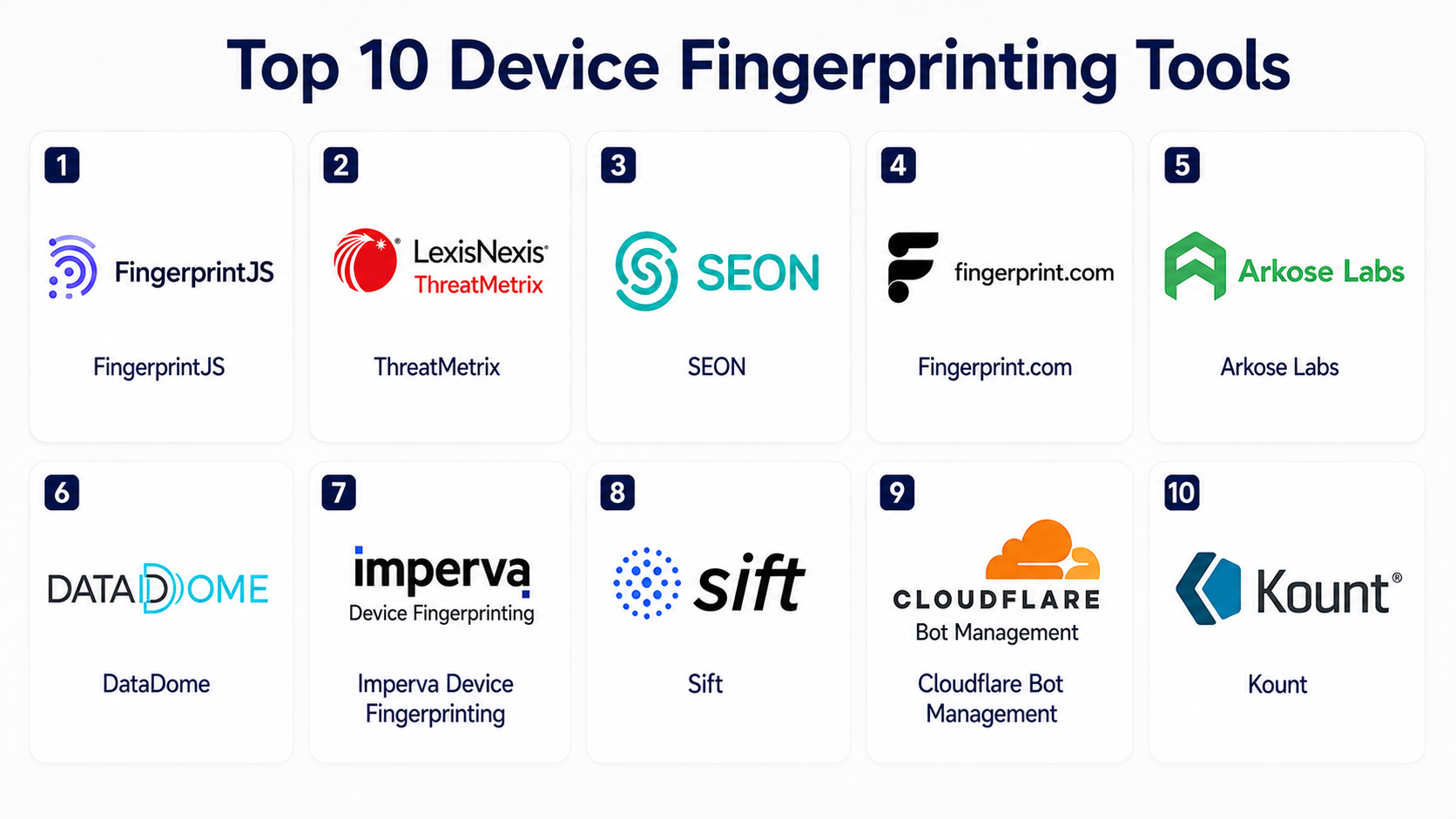
Device Fingerprinting Tools
#1 — FingerprintJS
Short description :
FingerprintJS is a widely used device fingerprinting solution that generates stable and unique device identifiers using browser and system-level signals to detect fraud, bots, and multi-account abuse in real time.
Key Features
- Browser-based device fingerprinting
- Cross-session device recognition
- Bot detection signals
- IP and network analysis
- Canvas and WebGL fingerprinting
- Real-time risk scoring
- API-based integration
Pros
- Very accurate browser fingerprinting
- Easy developer integration
- Strong open-source ecosystem
Cons
- Browser-level limitations due to privacy changes
- Requires tuning for enterprise fraud use cases
- Less depth in behavioral analytics
Platforms / Deployment
- Cloud / API-based
- Web / Mobile SDKs
Security & Compliance
- Encryption
- Privacy-preserving identifiers
- Audit logs (varies by setup)
- Fraud detection controls
- Compliance support (varies)
Integrations & Ecosystem
- SaaS applications
- E-commerce platforms
- Authentication systems
- Fraud detection engines
- APIs and SDKs
Support & Community
Strong developer community and documentation support.
#2 — ThreatMetrix (LexisNexis Risk)
Short description :
ThreatMetrix combines device fingerprinting, behavioral analytics, and global identity intelligence to detect fraud, account takeover, and suspicious device activity in real time.
Key Features
- Advanced device fingerprinting engine
- Global device identity network
- Behavioral analytics integration
- Fraud scoring system
- Account takeover detection
- Session monitoring
- Risk-based authentication signals
Pros
- Extremely strong fraud intelligence network
- Highly accurate device recognition
- Enterprise-grade scalability
Cons
- Complex implementation
- Less transparent scoring logic
- Enterprise-focused pricing
Platforms / Deployment
- Cloud
Security & Compliance
- Encryption
- Fraud monitoring controls
- Audit logs
- Identity protection systems
- Compliance-ready architecture
Integrations & Ecosystem
- Banking systems
- Payment platforms
- E-commerce systems
- IAM solutions
- Security APIs
Support & Community
Strong enterprise fraud intelligence support.
#3 — SEON
Short description :
SEON provides device fingerprinting combined with digital footprint analysis and fraud scoring to help businesses detect suspicious users and prevent fraud in real time.
Key Features
- Device fingerprinting engine
- Email and phone intelligence
- IP risk scoring
- Fraud rule engine
- Digital footprint analysis
- Real-time API scoring
- Identity verification signals
Pros
- Fast integration and deployment
- Strong digital footprint enrichment
- Flexible rule-based system
Cons
- Less advanced than enterprise fraud networks
- Requires tuning for optimal accuracy
- Smaller global intelligence dataset
Platforms / Deployment
- Cloud / API-based
Security & Compliance
- Encryption
- Audit logs
- Fraud detection controls
- Identity monitoring
- Compliance support
Integrations & Ecosystem
- SaaS platforms
- E-commerce systems
- Payment providers
- APIs
- Fraud prevention tools
Support & Community
Good developer support and onboarding experience.
#4 — Fingerprint.com (Enterprise Fingerprinting Platform)
Short description :
Fingerprint.com provides highly accurate device identification technology designed to detect fraud, multi-accounting, and suspicious device behavior using advanced browser and system-level signals.
Key Features
- High-precision device fingerprinting
- Cross-session tracking
- Bot detection signals
- Fraud prevention APIs
- Device reputation scoring
- Real-time risk analysis
- Multi-device correlation
Pros
- High accuracy fingerprint stability
- Strong anti-fraud capabilities
- Scales well for enterprise use cases
Cons
- Requires tuning for edge cases
- Limited behavioral intelligence
- Browser privacy changes impact consistency
Platforms / Deployment
- Cloud / API-based
Security & Compliance
- Encryption
- Fraud detection policies
- Audit logs
- Privacy controls
- Compliance support (varies)
Integrations & Ecosystem
- SaaS platforms
- Fintech systems
- Gaming platforms
- APIs
- Identity systems
Support & Community
Strong enterprise and developer support.
#5 — Arkose Labs
Short description :
Arkose Labs uses device fingerprinting combined with adaptive challenges and bot mitigation to prevent account takeover and automated fraud attacks.
Key Features
- Device fingerprinting system
- Bot detection engine
- Adaptive challenge-response flows
- Credential stuffing protection
- Fraud risk scoring
- Behavioral signal integration
- Real-time mitigation
Pros
- Excellent bot and automation defense
- Strong fraud prevention accuracy
- Reduces ATO attacks significantly
Cons
- May introduce user friction
- Requires tuning for UX balance
- Enterprise pricing model
Platforms / Deployment
- Cloud / API-based
Security & Compliance
- Encryption
- Fraud detection controls
- Audit logs
- Identity protection systems
- Compliance support
Integrations & Ecosystem
- E-commerce platforms
- SaaS applications
- Banking systems
- APIs
- Identity providers
Support & Community
Strong enterprise onboarding and support.
#6 — DataDome
Short description :
DataDome provides real-time device fingerprinting and bot protection to stop fraud, credential stuffing, and automated abuse across web and mobile applications.
Key Features
- Device fingerprinting engine
- Bot detection system
- Credential stuffing prevention
- Real-time traffic analysis
- API protection layer
- Fraud scoring engine
- Behavioral signal integration
Pros
- Very fast real-time detection
- Strong bot mitigation capability
- Easy API integration
Cons
- Limited deep identity intelligence
- Requires tuning for complex fraud cases
- Pricing scales with traffic
Platforms / Deployment
- Cloud
Security & Compliance
- Encryption
- Audit logs
- Fraud monitoring
- Access control systems
- Compliance support
Integrations & Ecosystem
- SaaS platforms
- E-commerce systems
- APIs
- Security stacks
- Web applications
Support & Community
Strong enterprise support and documentation.
#7 — Imperva Device Fingerprinting
Short description :
Imperva provides device fingerprinting as part of its application security suite to detect bots, fraud, and suspicious user behavior in real time.
Key Features
- Advanced device fingerprinting
- Bot detection engine
- Application layer security
- API protection
- Fraud scoring system
- Behavioral analytics
- Real-time threat detection
Pros
- Strong web application security integration
- Scales well for enterprise traffic
- Comprehensive attack coverage
Cons
- Complex setup process
- Enterprise-focused pricing
- Requires security expertise
Platforms / Deployment
- Cloud / Hybrid
Security & Compliance
- Encryption
- WAF integration
- Audit logs
- Access control
- Compliance support
Integrations & Ecosystem
- Web applications
- APIs
- Security platforms
- Enterprise systems
- Cloud environments
Support & Community
Enterprise-grade support and consulting.
#8 — Sift
Short description :
Sift uses device fingerprinting combined with machine learning to detect fraud, prevent account takeover, and score user trust in real time.
Key Features
- Device fingerprinting engine
- Fraud risk scoring
- Account takeover detection
- Machine learning models
- Identity trust scoring
- Behavioral analytics
- Real-time decisioning API
Pros
- Strong fraud + identity intelligence
- Good enterprise scalability
- Effective in e-commerce ecosystems
Cons
- Requires tuning for accuracy
- Pricing scales with usage
- Complex setup for advanced workflows
Platforms / Deployment
- Cloud
Security & Compliance
- Encryption
- Audit logs
- Fraud monitoring systems
- Identity verification support
- Compliance controls
Integrations & Ecosystem
- E-commerce platforms
- SaaS systems
- Payment providers
- APIs
- Identity systems
Support & Community
Strong enterprise fraud prevention support.
#9 — Cloudflare Bot Management
Short description :
Cloudflare Bot Management uses device fingerprinting, edge intelligence, and behavioral analysis to detect bots and prevent fraudulent device activity at scale.
Key Features
- Edge-based device fingerprinting
- Bot detection engine
- Traffic anomaly analysis
- Credential stuffing protection
- API protection
- Global threat intelligence
- Real-time mitigation
Pros
- Extremely fast edge-level processing
- Massive global intelligence network
- Highly scalable infrastructure
Cons
- Less granular identity-level insights
- Requires Cloudflare ecosystem usage
- Advanced tuning needed
Platforms / Deployment
- Cloud (edge-based)
Security & Compliance
- Encryption
- DDoS protection
- Audit logs
- Bot mitigation policies
- Compliance support
Integrations & Ecosystem
- Web applications
- APIs
- SaaS platforms
- Security stacks
- CDN infrastructure
Support & Community
Strong global documentation and enterprise support.
#10 — Kount (Equifax)
Short description :
Kount provides device fingerprinting and identity trust scoring to prevent fraud, account takeover, and abuse in digital transactions.
Key Features
- Device fingerprinting system
- Identity trust scoring
- Fraud detection engine
- Real-time decisioning
- Behavioral risk signals
- Transaction monitoring
- Machine learning models
Pros
- Strong identity fraud focus
- Good enterprise fraud coverage
- Reliable risk scoring system
Cons
- Complex enterprise integration
- Less transparent scoring logic
- Requires tuning for accuracy
Platforms / Deployment
- Cloud
Security & Compliance
- Encryption
- Fraud monitoring controls
- Audit logs
- Identity protection systems
- Compliance support
Integrations & Ecosystem
- Payment systems
- E-commerce platforms
- Banking systems
- APIs
- Fraud tools
Support & Community
Enterprise-grade support and onboarding.
Comparison Table (Top 10)
| Tool Name | Best For | Platform(s) Supported | Deployment | Standout Feature | Public Rating |
|---|---|---|---|---|---|
| FingerprintJS | Developer fingerprinting | Web / API | Cloud | Browser-level ID accuracy | N/A |
| ThreatMetrix | Enterprise fraud defense | Cloud | Cloud | Global identity network | N/A |
| SEON | Digital footprint fraud scoring | Cloud | Cloud | Fast fraud scoring APIs | N/A |
| Fingerprint.com | High-precision device ID | Web / API | Cloud | Stable device identity | N/A |
| Arkose Labs | Bot + fraud prevention | Cloud | Cloud | Adaptive challenge system | N/A |
| DataDome | Bot protection + fingerprinting | Cloud | Cloud | Real-time bot blocking | N/A |
| Imperva | Web application security | Cloud / Hybrid | Hybrid | WAF-integrated fingerprinting | N/A |
| Sift | Fraud + trust scoring | Cloud | Cloud | ML-driven fraud detection | N/A |
| Cloudflare Bot Management | Edge security | Cloud | Cloud | Global bot intelligence | N/A |
| Kount | Identity fraud prevention | Cloud | Cloud | Identity trust scoring | N/A |
Evaluation & Device Fingerprinting Tools
| Tool Name | Core (25%) | Ease (15%) | Integrations (15%) | Security (10%) | Performance (10%) | Support (10%) | Value (15%) | Weighted Total |
|---|---|---|---|---|---|---|---|---|
| FingerprintJS | 9 | 9 | 9 | 8 | 9 | 8 | 9 | 8.8 |
| ThreatMetrix | 10 | 7 | 9 | 10 | 9 | 9 | 7 | 8.7 |
| SEON | 8 | 9 | 8 | 8 | 8 | 8 | 9 | 8.3 |
| Fingerprint.com | 9 | 8 | 9 | 9 | 9 | 8 | 8 | 8.6 |
| Arkose Labs | 9 | 8 | 9 | 9 | 9 | 8 | 7 | 8.6 |
| DataDome | 9 | 9 | 9 | 9 | 10 | 8 | 8 | 8.9 |
| Imperva | 9 | 7 | 9 | 9 | 9 | 8 | 7 | 8.5 |
| Sift | 9 | 8 | 9 | 9 | 9 | 8 | 7 | 8.5 |
| Cloudflare | 9 | 9 | 9 | 9 | 10 | 9 | 9 | 9.1 |
| Kount | 9 | 7 | 8 | 9 | 9 | 8 | 7 | 8.4 |
Which Device Fingerprinting Tools
Solo / Freelancer
- FingerprintJS
- SEON
- Cloudflare
SMB
- SEON
- DataDome
- FingerprintJS
Mid-Market
- Sift
- Imperva
- Kount
Enterprise
- ThreatMetrix
- Cloudflare
- Arkose Labs
Budget vs Premium
- Budget-friendly: SEON
- Balanced: FingerprintJS, DataDome
- Premium enterprise: ThreatMetrix, Kount, Imperva
Feature Depth vs Ease of Use
- Easiest to use: FingerprintJS
- Deepest fraud intelligence: ThreatMetrix
- Best edge performance: Cloudflare
Integrations & Scalability
- Best scalability: Cloudflare
- Best fraud ecosystem: ThreatMetrix
- Best developer experience: FingerprintJS
Security & Compliance Needs
Highly regulated industries should prioritize:
- ThreatMetrix
- Kount
- Imperva
- Cloudflare
Frequently Asked Questions (FAQs)
1. What is device fingerprinting?
It is a method of identifying devices based on unique hardware and software signals instead of cookies.
2. How does device fingerprinting work?
It collects browser and system attributes to create a unique device identifier.
3. Is device fingerprinting legal?
Yes, but it must comply with privacy laws like GDPR and user consent rules.
4. Can device fingerprints be spoofed?
Yes, but advanced tools use anti-spoofing techniques to reduce risk.
5. What is it used for?
It is used for fraud detection, bot protection, and account security.
6. Does it track users across devices?
It tracks device identity, not personal identity directly.
7. Is it better than cookies?
Yes, because it is more persistent and harder to delete.
8. Do mobile apps use fingerprinting?
Yes, many use SDK-based device fingerprinting.
9. Does it affect performance?
Modern systems are optimized for low latency and minimal impact.
10. What is the future of device fingerprinting?
It is moving toward AI-driven identity graphs and privacy-preserving fingerprinting methods.
Conclusion
Device Fingerprinting Tools have become essential for modern cybersecurity, fraud prevention, and identity verification systems. As digital ecosystems grow more complex and attackers become more sophisticated, relying solely on passwords or cookies is no longer sufficient. Cloudflare, ThreatMetrix, and DataDome lead in large-scale, real-time fraud and bot protection, while FingerprintJS and Fingerprint.com offer strong developer-friendly fingerprinting solutions.
