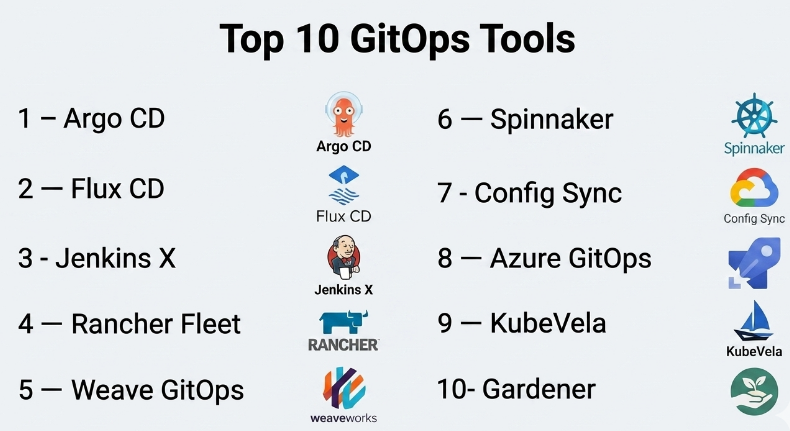
Introduction
GitOps Tools are platforms that enable organizations to manage infrastructure and application deployments using Git as the single source of truth. In a GitOps model, every change to infrastructure or application state is made through Git commits, and automated systems ensure the live environment continuously matches the desired state defined in Git.
In GitOps has become a core practice in cloud-native and Kubernetes-driven environments. It extends Infrastructure as Code (IaC) by adding continuous reconciliation, automation, and auditability. Instead of manually deploying changes or running scripts, GitOps tools automatically detect changes in Git repositories and apply them to production systems.
Typical use cases include:
- Kubernetes cluster deployments and management
- Continuous delivery (CD) pipelines for microservices
- Infrastructure state synchronization across environments
- Multi-cluster and multi-cloud application deployments
- Automated rollback and version control of deployments
- Policy-driven infrastructure enforcement
- Standardizing DevOps workflows across teams
- Secure and auditable release management
When evaluating GitOps tools, organizations should consider:
- Kubernetes-native support
- Continuous reconciliation capabilities
- Multi-cluster and multi-environment support
- CI/CD integration flexibility
- Security and RBAC controls
- Drift detection and auto-healing behavior
- Scalability for enterprise workloads
- Observability and deployment tracking
- Ease of Git workflow integration
- Policy enforcement and compliance readiness
Best for: DevOps teams, platform engineering teams, Kubernetes administrators, and enterprises managing containerized workloads at scale.
Not ideal for: Small static applications with no CI/CD pipelines or teams not using Git-based workflows.
Key Trends in GitOps Tools
- Kubernetes-native GitOps becoming industry standard
- Continuous reconciliation replacing manual deployments
- Rise of multi-cluster and multi-cloud GitOps control planes
- Policy-as-code integration with GitOps pipelines
- AI-assisted deployment monitoring and anomaly detection
- Increased adoption of progressive delivery (canary, blue-green)
- Tight integration with service mesh and observability tools
- GitOps expansion beyond Kubernetes into VMs and edge systems
- Stronger enterprise-grade RBAC and audit requirements
- Self-healing infrastructure powered by Git-driven state
How We Selected These Tools (Methodology)
The tools listed below were selected based on adoption in Kubernetes ecosystems, reliability, scalability, Git workflow integration, and production-grade usage.
Selection criteria included:
- Kubernetes-native architecture
- Continuous deployment and reconciliation capabilities
- Multi-cluster and multi-environment support
- Integration with CI/CD pipelines
- Security and RBAC features
- Enterprise scalability and stability
- Observability and rollback features
- Ecosystem maturity and community adoption
- Policy and compliance support
- Real-world production usage maturity
GitOps Tools
#1 — Argo CD
Short description :
Argo CD is one of the most widely adopted Kubernetes-native GitOps tools that continuously monitors Git repositories and ensures that Kubernetes cluster state matches the desired configuration defined in Git.
Key Features
- Kubernetes-native continuous deployment
- Declarative Git-based configuration
- Automated synchronization and drift detection
- Multi-cluster management
- Role-based access control (RBAC)
- Web UI and CLI management
- Rollback and version tracking
Pros
- Strong Kubernetes integration
- Excellent visibility through UI
- Highly reliable continuous reconciliation
Cons
- Kubernetes-only focus
- Requires Kubernetes expertise
- Can become complex at scale
Platforms / Deployment
- Cloud / Kubernetes / Self-hosted
Security & Compliance
- RBAC support
- Audit logs
- SSO integration (via extensions)
- Namespace-level isolation
- Policy enforcement support
Integrations & Ecosystem
- Kubernetes
- Helm
- Kustomize
- CI/CD tools
- Service meshes
Support & Community
Very strong open-source community and enterprise adoption.
#2 — Flux CD
Short description :
Flux CD is a lightweight and flexible GitOps tool for Kubernetes that provides automated synchronization between Git repositories and cluster states using a modular controller-based architecture.
Key Features
- Git-based Kubernetes reconciliation
- Multi-tenancy support
- Helm and Kustomize integration
- Automated image updates
- Drift detection and correction
- Modular controller architecture
- Multi-cluster management
Pros
- Lightweight and flexible
- Strong Kubernetes-native design
- Excellent for advanced GitOps setups
Cons
- Steeper learning curve
- Requires Kubernetes expertise
- Less UI-centric than Argo CD
Platforms / Deployment
- Cloud / Kubernetes / Self-hosted
Security & Compliance
- RBAC integration
- Audit logging
- SOPS secret encryption support
- Policy enforcement capabilities
- Namespace isolation
Integrations & Ecosystem
- Kubernetes
- Helm
- Git providers
- CI/CD pipelines
- Secrets managers
Support & Community
Strong CNCF-backed open-source community.
#3 — Jenkins X
Short description :
Jenkins X is a cloud-native CI/CD and GitOps tool designed for Kubernetes that automates build, test, and deployment pipelines using Git-based workflows.
Key Features
- Automated CI/CD pipelines
- GitOps-based environment promotion
- Preview environments for pull requests
- Kubernetes-native architecture
- Helm-based deployments
- Automated versioning
- Built-in Git integration
Pros
- Strong CI/CD + GitOps combination
- Automated environment promotion
- Good developer experience
Cons
- Complex setup and configuration
- Heavy dependency on Kubernetes
- Smaller adoption compared to Argo/Flux
Platforms / Deployment
- Cloud / Kubernetes
Security & Compliance
- RBAC support
- Secrets management integration
- Audit logs
- Secure pipeline execution
- Policy enforcement options
Integrations & Ecosystem
- Kubernetes
- GitHub / GitLab / Bitbucket
- Helm
- CI/CD pipelines
- Cloud providers
Support & Community
Moderate but active open-source community.
#4 — Rancher Fleet
Short description :
Fleet is a GitOps at scale tool from Rancher that manages thousands of clusters using a centralized Git-based deployment system.
Key Features
- Multi-cluster GitOps management
- Scalable deployment engine
- Cluster grouping and targeting
- Continuous reconciliation
- Fleet bundles for deployments
- Policy-based rollout control
- Kubernetes-native architecture
Pros
- Excellent for large-scale environments
- Strong multi-cluster management
- Simple Git-based workflows
Cons
- Requires Rancher ecosystem familiarity
- Less flexible outside Kubernetes clusters
- Limited standalone usage
Platforms / Deployment
- Cloud / Kubernetes / Hybrid
Security & Compliance
- RBAC integration
- Audit logs
- Cluster-level isolation
- Policy enforcement
- Secure Git synchronization
Integrations & Ecosystem
- Kubernetes
- Rancher platform
- CI/CD tools
- Helm
- Git providers
Support & Community
Strong enterprise Rancher support.
#5 — Weave GitOps
Short description :
Weave GitOps is a Kubernetes-native GitOps platform built on Flux CD that provides enhanced visibility, policy control, and enterprise-grade GitOps workflows.
Key Features
- Built on Flux CD core
- Git-based continuous deployment
- Policy enforcement engine
- Multi-cluster management
- Web UI dashboards
- Drift detection
- Progressive delivery support
Pros
- Strong enterprise UX
- Built on proven Flux engine
- Good observability features
Cons
- Dependent on Flux ecosystem
- Some features require enterprise tier
- Less flexible than raw Flux
Platforms / Deployment
- Cloud / Kubernetes
Security & Compliance
- RBAC support
- Audit logging
- Policy enforcement
- Secrets integration
- Multi-tenant isolation
Integrations & Ecosystem
- Kubernetes
- Flux CD
- Helm
- CI/CD pipelines
- Git providers
Support & Community
Strong enterprise support model.
#6 — Spinnaker
Short description :
Spinnaker is a multi-cloud continuous delivery platform that supports GitOps-like workflows with advanced deployment strategies such as canary and blue-green deployments.
Key Features
- Multi-cloud deployment support
- Advanced deployment strategies
- Pipeline-based delivery automation
- Kubernetes integration
- Canary analysis
- Rollback automation
- Artifact management
Pros
- Powerful enterprise deployment engine
- Strong multi-cloud capabilities
- Advanced release strategies
Cons
- Complex setup and maintenance
- Heavy infrastructure requirements
- Steep learning curve
Platforms / Deployment
- Cloud / Hybrid
Security & Compliance
- RBAC support
- Audit logging
- Secure deployment pipelines
- Policy enforcement
- Identity integration
Integrations & Ecosystem
- Kubernetes
- AWS, Azure, GCP
- CI/CD tools
- Monitoring systems
- Artifact repositories
Support & Community
Enterprise-focused support ecosystem.
#7 — Config Sync (Anthos / GKE GitOps)
Short description :
Config Sync is a Google Cloud GitOps tool that synchronizes Kubernetes configurations from Git repositories into GKE clusters.
Key Features
- Git-based Kubernetes config sync
- Multi-cluster configuration management
- Policy enforcement integration
- Declarative infrastructure management
- Drift detection
- Native GCP integration
- Secure configuration rollout
Pros
- Deep GCP integration
- Strong enterprise reliability
- Simple Kubernetes config management
Cons
- GCP-centric
- Limited portability outside Google ecosystem
- Requires GKE environment
Platforms / Deployment
- Cloud (GCP / Kubernetes)
Security & Compliance
- IAM integration
- Audit logs
- Policy enforcement
- Namespace isolation
- Secure sync mechanisms
Integrations & Ecosystem
- Google Kubernetes Engine
- CI/CD pipelines
- Git providers
- Policy frameworks
- Observability tools
Support & Community
Strong Google Cloud enterprise support.
#8 — Azure GitOps (Flux Extension in Azure Arc)
Short description :
Azure GitOps enables Git-based Kubernetes configuration management using Flux integrated with Azure Arc for hybrid and multi-cloud environments.
Key Features
- Flux-based GitOps engine
- Azure Arc integration
- Multi-cluster management
- Policy-based deployment control
- Git repository synchronization
- Kubernetes configuration management
- Hybrid cloud support
Pros
- Strong Azure integration
- Good hybrid cloud capabilities
- Enterprise-grade governance
Cons
- Azure ecosystem dependency
- Requires Arc setup complexity
- Limited flexibility outside Azure
Platforms / Deployment
- Cloud / Hybrid / Kubernetes
Security & Compliance
- Azure AD integration
- RBAC support
- Audit logs
- Policy enforcement
- Secure configuration sync
Integrations & Ecosystem
- Azure Kubernetes Service
- Git providers
- CI/CD pipelines
- Azure DevOps
- Monitoring tools
Support & Community
Strong Microsoft enterprise support.
#9 — KubeVela
Short description :
KubeVela is an application delivery platform built on Kubernetes that provides GitOps-style workflows with simplified abstractions for application deployment.
Key Features
- Application-centric deployment model
- Kubernetes-native GitOps support
- Multi-environment management
- Trait-based configuration system
- Extensible component model
- Policy-driven deployment
- Cloud-native application delivery
Pros
- Simplifies Kubernetes complexity
- Strong abstraction layer
- Good for platform engineering teams
Cons
- Smaller ecosystem
- Requires learning new abstractions
- Less mature than Argo/Flux
Platforms / Deployment
- Cloud / Kubernetes
Security & Compliance
- RBAC support
- Policy enforcement
- Secrets integration
- Audit logging
- Multi-tenant support
Integrations & Ecosystem
- Kubernetes
- CI/CD pipelines
- Helm
- Git providers
- Cloud services
Support & Community
Growing CNCF ecosystem support.
#10 — Gardener
Short description :
Gardener is a Kubernetes-native GitOps-style tool used for managing and operating Kubernetes clusters at scale across multiple cloud providers.
Key Features
- Kubernetes cluster lifecycle management
- Multi-cloud cluster provisioning
- GitOps-based configuration
- Automated cluster updates
- Self-healing cluster management
- Infrastructure abstraction layer
- Scalable control plane
Pros
- Excellent for large-scale Kubernetes fleets
- Strong multi-cloud support
- Highly automated cluster operations
Cons
- Complex architecture
- Requires deep Kubernetes expertise
- Not application-focused GitOps
Platforms / Deployment
- Cloud / Kubernetes / Hybrid
Security & Compliance
- RBAC support
- Audit logging
- Policy enforcement
- Cluster isolation
- Secure provisioning
Integrations & Ecosystem
- Kubernetes
- Cloud providers
- CI/CD pipelines
- Git systems
- Monitoring tools
Support & Community
Strong enterprise and open-source backing.
Comparison Table (Top 10)
| Tool Name | Best For | Platform(s) Supported | Deployment | Standout Feature | Public Rating |
|---|---|---|---|---|---|
| Argo CD | Kubernetes GitOps | Kubernetes | Cloud | Continuous reconciliation | N/A |
| Flux CD | Lightweight GitOps | Kubernetes | Cloud | Modular controllers | N/A |
| Jenkins X | CI/CD + GitOps | Kubernetes | Cloud | Automated pipelines | N/A |
| Rancher Fleet | Multi-cluster GitOps | Kubernetes | Hybrid | Fleet-scale deployments | N/A |
| Weave GitOps | Enterprise Flux UX | Kubernetes | Cloud | Policy + UI layer | N/A |
| Spinnaker | Multi-cloud delivery | Cloud/K8s | Hybrid | Advanced deployment strategies | N/A |
| Config Sync | GCP GitOps | GCP/Kubernetes | Cloud | Native GCP sync | N/A |
| Azure GitOps | Azure hybrid GitOps | Kubernetes | Hybrid | Azure Arc integration | N/A |
| KubeVela | App delivery platform | Kubernetes | Cloud | Application abstraction | N/A |
| Gardener | Cluster lifecycle mgmt | Kubernetes | Hybrid | Multi-cloud cluster automation | N/A |
Evaluation & GitOps Tools
| Tool Name | Core (25%) | Ease (15%) | Integrations (15%) | Security (10%) | Performance (10%) | Support (10%) | Value (15%) | Weighted Total |
|---|---|---|---|---|---|---|---|---|
| Argo CD | 10 | 9 | 10 | 9 | 9 | 9 | 9 | 9.4 |
| Flux CD | 9 | 8 | 9 | 9 | 9 | 9 | 9 | 9.0 |
| Jenkins X | 9 | 7 | 9 | 8 | 8 | 8 | 8 | 8.3 |
| Rancher Fleet | 9 | 8 | 9 | 9 | 9 | 9 | 8 | 8.8 |
| Weave GitOps | 8 | 8 | 9 | 9 | 8 | 9 | 8 | 8.5 |
| Spinnaker | 9 | 7 | 9 | 9 | 9 | 8 | 7 | 8.5 |
| Config Sync | 8 | 9 | 9 | 9 | 8 | 9 | 8 | 8.6 |
| Azure GitOps | 8 | 8 | 9 | 9 | 8 | 9 | 8 | 8.5 |
| KubeVela | 8 | 8 | 8 | 8 | 8 | 8 | 8 | 8.0 |
| Gardener | 9 | 7 | 9 | 9 | 9 | 8 | 8 | 8.6 |
Which GitOps Tools
Solo / Freelancer
- KubeVela
- Flux CD
- Argo CD
SMB
- Argo CD
- Flux CD
- Jenkins X
Mid-Market
- Argo CD
- Weave GitOps
- Rancher Fleet
Enterprise
- Argo CD
- Spinnaker
- Gardener
Budget vs Premium
- Budget-friendly: Flux CD, KubeVela
- Balanced: Argo CD, Jenkins X
- Premium enterprise: Spinnaker, Gardener, Rancher Fleet
Feature Depth vs Ease of Use
- Easiest: KubeVela, Argo CD
- Most powerful Kubernetes GitOps: Argo CD, Flux CD
- Most enterprise-grade delivery: Spinnaker
Integrations & Scalability
- Best ecosystem: Argo CD
- Best multi-cluster scale: Rancher Fleet, Gardener
- Best cloud integration: Config Sync, Azure GitOps
Security & Compliance Needs
Highly regulated environments should prioritize:
- Argo CD
- Flux CD
- Spinnaker
- Rancher Fleet
Frequently Asked Questions (FAQs)
1. What is GitOps?
GitOps is a methodology where Git is used as the single source of truth for infrastructure and application deployments.
2. How is GitOps different from CI/CD?
CI/CD automates delivery pipelines, while GitOps continuously reconciles system state with Git.
3. Is GitOps only for Kubernetes?
Mostly yes, but it is expanding into VMs, edge systems, and multi-cloud infrastructure.
4. What is the most popular GitOps tool?
Argo CD is currently one of the most widely adopted tools.
5. Do GitOps tools replace CI/CD?
No, they complement CI pipelines by handling deployment and reconciliation.
6. Is GitOps secure?
Yes, it improves security through auditability, version control, and RBAC enforcement.
7. What is drift detection?
It is the process of identifying differences between Git state and live infrastructure.
8. Can GitOps handle multi-cloud environments?
Yes, many tools like Flux, Argo CD, and Rancher Fleet support multi-cloud setups.
9. Is GitOps difficult to implement?
It requires Kubernetes and DevOps knowledge but becomes easier with mature tooling.
10. What is the future of GitOps?
It is moving toward AI-driven automation, self-healing infrastructure, and cross-cloud orchestration.
Conclusion
GitOps Tools have become a cornerstone of modern cloud-native infrastructure management, enabling teams to automate deployments, enforce consistency, and improve system reliability through Git-based workflows. As Kubernetes adoption continues to grow, GitOps is evolving from a niche practice into a standard operating model for platform engineering. Argo CD and Flux CD dominate the Kubernetes-native space, while Rancher Fleet and Gardener address large-scale multi-cluster operations. Spinnaker remains a powerful enterprise-grade delivery system, and cloud providers like Azure and Google offer deeply integrated GitOps solutions.
