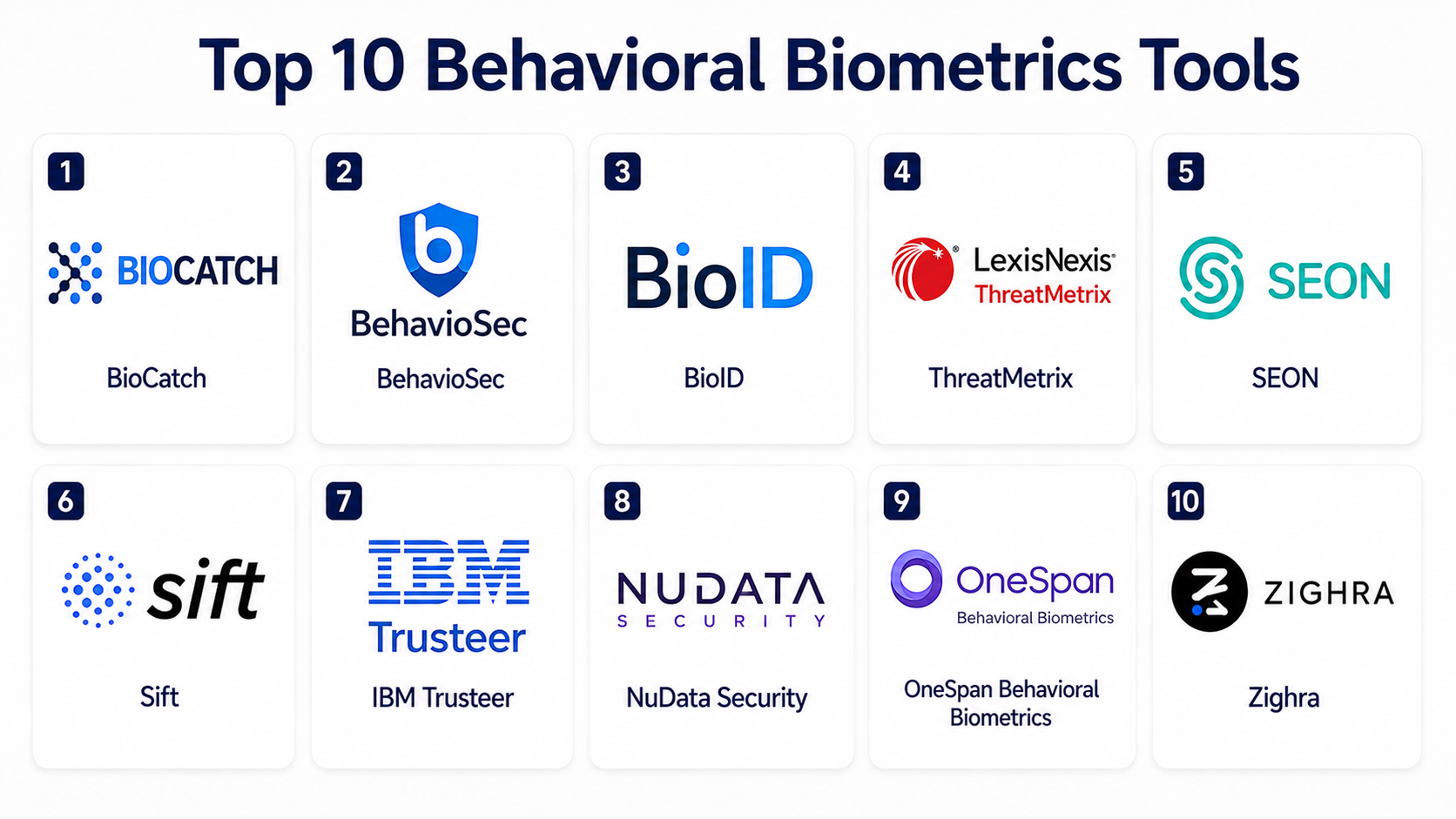
Introduction
Behavioral Biometrics Tools are security and identity verification platforms that analyze how users interact with devices to verify identity continuously. Instead of relying only on passwords, OTPs, or fingerprints, these systems study behavioral patterns such as typing rhythm, mouse movement, touchscreen pressure, scrolling habits, and navigation behavior to determine whether the user is legitimate.
In behavioral biometrics has become a critical layer in identity security and fraud prevention. As cybercriminals increasingly use stolen credentials, AI-generated phishing, and automated bots, traditional authentication methods alone are no longer sufficient. Behavioral biometrics enables continuous authentication, meaning user identity is verified not just at login but throughout the entire session.
Modern behavioral biometric systems are widely used in:
- Account takeover (ATO) prevention
- Banking and fintech fraud detection
- Risk-based authentication systems
- Online payment security
- Call center fraud detection
- SaaS user identity verification
- Session hijacking detection
- Insider threat monitoring
When evaluating Behavioral Biometrics Tools, organizations should consider:
- Accuracy of behavioral pattern recognition
- Real-time analysis capability
- Passive vs active authentication support
- Device and cross-platform compatibility
- False positive/negative rates
- Integration with IAM and fraud systems
- AI and machine learning maturity
- Privacy and data protection compliance
- Scalability for enterprise usage
- Explainability of risk scoring
Best for: Banks, fintech companies, insurance providers, e-commerce platforms, SaaS applications, and enterprises with high-value digital identities.
Not ideal for: Simple applications with low-security requirements or systems without user interaction patterns.
Key Trends in Behavioral Biometrics Tools
- Shift from static authentication to continuous authentication
- AI-powered behavioral pattern recognition becoming standard
- Passive authentication reducing user friction significantly
- Integration with risk-based authentication and fraud scoring systems
- Growth in mobile-first behavioral biometrics adoption
- Increased focus on privacy-preserving behavioral analysis
- Use of behavioral signals in zero trust security frameworks
- Real-time session monitoring replacing login-only security checks
- Combination of device intelligence + behavioral analytics
- Expansion into call center and voice-based behavioral biometrics
How We Selected These Tools (Methodology)
The tools included in this list were selected based on enterprise adoption, behavioral analytics depth, fraud detection accuracy, scalability, integration capabilities, and identity security maturity.
Selection criteria included:
- Strength of behavioral modeling algorithms
- Real-time authentication capability
- Continuous monitoring support
- Enterprise integration flexibility
- Machine learning and AI sophistication
- Accuracy and low false-positive rates
- API and SDK maturity
- Privacy and compliance readiness
- Market adoption in banking and fintech sectors
- Ability to detect account takeover and fraud
Behavioral Biometrics Tools
#1 — BioCatch
Short description :
BioCatch is a leading behavioral biometrics platform that analyzes thousands of user interaction signals in real time to detect fraud, account takeover attempts, and anomalous behavior patterns across digital channels.
Key Features
- Continuous behavioral authentication
- Typing and mouse movement analysis
- Mobile gesture and touch behavior tracking
- Account takeover detection
- Session risk scoring
- Behavioral anomaly detection
- Fraud pattern intelligence
Pros
- Extremely advanced behavioral intelligence
- Passive authentication (no user friction)
- Widely adopted in banking sector
Cons
- Complex enterprise integration
- Requires large behavioral datasets
- Premium pricing model
Platforms / Deployment
- Cloud / API-based
Security & Compliance
- Encryption
- Privacy-preserving analytics
- Audit logs
- Identity protection controls
- Compliance support (varies by region)
Integrations & Ecosystem
- Banking platforms
- Fintech applications
- Fraud detection systems
- IAM solutions
- APIs
Support & Community
Strong enterprise banking-grade support and onboarding.
#2 — BehavioSec
Short description :
BehavioSec provides behavioral biometrics-based authentication by analyzing user interaction patterns such as keystroke dynamics, mouse movement, and touch behavior to detect identity anomalies.
Key Features
- Keystroke dynamics analysis
- Mouse movement tracking
- Touch gesture recognition
- Continuous authentication engine
- Fraud detection scoring
- Session risk monitoring
- Behavioral profiling
Pros
- Strong continuous authentication system
- Low user friction
- Proven in financial services
Cons
- Requires tuning for accuracy
- Enterprise-focused implementation
- Limited consumer-facing tools
Platforms / Deployment
- Cloud / Hybrid
Security & Compliance
- Encryption
- Behavioral data protection
- Audit logging
- Identity security controls
- Compliance support
Integrations & Ecosystem
- Banking systems
- Fraud platforms
- IAM solutions
- Mobile applications
- APIs
Support & Community
Enterprise-grade support and security consulting.
#3 — BioID
Short description :
BioID provides multimodal biometric authentication combining behavioral biometrics, facial recognition, and liveness detection for secure identity verification.
Key Features
- Behavioral biometrics engine
- Facial recognition authentication
- Liveness detection
- Risk-based identity scoring
- Multi-factor biometric verification
- Continuous authentication support
- API-based identity verification
Pros
- Strong multimodal biometric approach
- Good API flexibility
- Suitable for identity verification workflows
Cons
- Less specialized in pure behavioral analytics
- Requires camera-based verification in some flows
- May introduce user friction in some cases
Platforms / Deployment
- Cloud / API-based
Security & Compliance
- Encryption
- Biometric data protection
- Audit logs
- Identity verification compliance support
- Secure storage mechanisms
Integrations & Ecosystem
- Identity verification systems
- Banking platforms
- Mobile applications
- KYC systems
- APIs
Support & Community
Good enterprise and developer support resources.
#4 — ThreatMetrix (LexisNexis Risk)
Short description :
ThreatMetrix combines behavioral signals with device intelligence and global identity networks to detect fraud and account takeover attempts in real time.
Key Features
- Device fingerprinting
- Behavioral anomaly detection
- Global identity network intelligence
- Risk-based authentication support
- Session monitoring
- Fraud scoring engine
- Real-time decisioning
Pros
- Strong global fraud intelligence network
- Excellent device + behavior combination
- Widely used in enterprise fraud systems
Cons
- Complex enterprise setup
- Requires tuning for accuracy
- Less transparent scoring logic
Platforms / Deployment
- Cloud
Security & Compliance
- Encryption
- Audit logs
- Identity monitoring
- Fraud compliance support
- Access controls
Integrations & Ecosystem
- Payment systems
- Banking platforms
- E-commerce systems
- IAM tools
- APIs
Support & Community
Strong enterprise-level fraud intelligence support.
#5 — SEON
Short description :
SEON uses behavioral signals, digital footprinting, and device intelligence to detect fraudulent behavior and support identity verification in real time.
Key Features
- Behavioral risk scoring
- Email and phone intelligence
- Device fingerprinting
- Fraud rule engine
- Digital footprint analysis
- Real-time API scoring
- Identity risk assessment
Pros
- Fast onboarding and integration
- Strong digital footprint analysis
- Flexible rule + AI hybrid model
Cons
- Less advanced behavioral depth than leaders
- Requires tuning for enterprise accuracy
- Smaller global fraud network
Platforms / Deployment
- Cloud / API-based
Security & Compliance
- Encryption
- Audit logs
- Identity monitoring
- Fraud detection controls
- Access security
Integrations & Ecosystem
- E-commerce platforms
- SaaS systems
- Payment providers
- APIs
- Fraud tools
Support & Community
Good developer support and documentation.
#6 — Sift
Short description :
Sift provides behavioral analytics and machine learning–driven fraud detection, focusing on account takeover prevention and trust scoring across digital interactions.
Key Features
- Behavioral fraud detection
- Account takeover prevention
- Machine learning risk scoring
- Fraud graph intelligence
- Identity trust scoring
- Real-time API decisioning
- Session analysis
Pros
- Strong behavioral + fraud combination
- Good identity intelligence
- Effective in e-commerce environments
Cons
- Requires tuning for best results
- Pricing scales with usage
- Complex setup for advanced workflows
Platforms / Deployment
- Cloud
Security & Compliance
- Encryption
- Audit logs
- Fraud monitoring
- Identity verification support
- Access controls
Integrations & Ecosystem
- E-commerce platforms
- SaaS systems
- Payment gateways
- APIs
- Identity systems
Support & Community
Strong enterprise fraud prevention support.
#7 — IBM Trusteer
Short description :
IBM Trusteer provides behavioral biometrics and advanced fraud prevention for banking and enterprise applications, focusing on account takeover and malware-based attacks.
Key Features
- Behavioral biometrics engine
- Malware detection signals
- Device risk scoring
- Account takeover prevention
- Session risk monitoring
- Fraud analytics dashboard
- Real-time authentication risk
Pros
- Strong enterprise banking security
- Deep fraud intelligence capabilities
- Integrated threat detection
Cons
- Complex implementation
- Enterprise-focused pricing
- Less flexible for small businesses
Platforms / Deployment
- Cloud / Hybrid
Security & Compliance
- Encryption
- Identity monitoring
- Audit logs
- Compliance reporting
- Fraud controls
Integrations & Ecosystem
- Banking systems
- Fraud platforms
- IAM solutions
- Security stacks
- APIs
Support & Community
Enterprise-grade IBM security support.
#8 — NuData Security (Mastercard)
Short description :
NuData Security uses behavioral biometrics and machine learning to identify legitimate users and detect fraud attempts based on interaction patterns and behavioral anomalies.
Key Features
- Behavioral authentication engine
- Continuous user verification
- Fraud risk scoring
- Account takeover detection
- Session monitoring
- Machine learning models
- Behavioral profiling
Pros
- Strong financial-grade security
- Excellent fraud detection accuracy
- Passive authentication model
Cons
- Enterprise-only focus
- Requires integration effort
- Limited transparency in scoring
Platforms / Deployment
- Cloud
Security & Compliance
- Encryption
- Audit logging
- Fraud monitoring
- Identity verification support
- Compliance controls
Integrations & Ecosystem
- Banking platforms
- Payment systems
- Fraud prevention tools
- IAM systems
- APIs
Support & Community
Strong enterprise Mastercard ecosystem support.
#9 — OneSpan Behavioral Biometrics
Short description :
OneSpan provides behavioral biometrics for continuous authentication, combining user interaction analytics with identity verification and fraud prevention systems.
Key Features
- Keystroke dynamics tracking
- Behavioral authentication engine
- Risk-based access control
- Continuous session monitoring
- Fraud detection scoring
- Mobile and web support
- Identity verification integration
Pros
- Strong enterprise authentication focus
- Good integration with IAM systems
- Low friction user experience
Cons
- Requires enterprise setup
- Limited consumer-oriented features
- Moderate customization complexity
Platforms / Deployment
- Cloud / Hybrid
Security & Compliance
- Encryption
- Audit logs
- Identity verification controls
- Compliance support
- Secure authentication flows
Integrations & Ecosystem
- Banking systems
- IAM platforms
- SaaS applications
- APIs
- Security tools
Support & Community
Enterprise support and onboarding services.
#10 — Zighra
Short description :
Zighra provides AI-driven behavioral biometrics focused on mobile-first identity authentication, fraud detection, and continuous user verification.
Key Features
- Mobile behavioral biometrics
- Touch gesture analysis
- Continuous authentication
- AI-driven anomaly detection
- Risk scoring engine
- Fraud prevention APIs
- Session monitoring
Pros
- Strong mobile-first approach
- Lightweight integration
- Good real-time detection
Cons
- Smaller ecosystem than competitors
- Less enterprise penetration
- Requires tuning for accuracy
Platforms / Deployment
- Cloud / API-based
Security & Compliance
- Encryption
- Identity protection controls
- Audit logs
- Fraud monitoring
- Compliance support
Integrations & Ecosystem
- Mobile applications
- Fintech apps
- SaaS platforms
- APIs
- Identity systems
Support & Community
Good developer-focused support and documentation.
Comparison Table (Top 10)
| Tool Name | Best For | Platform(s) Supported | Deployment | Standout Feature | Public Rating |
|---|---|---|---|---|---|
| BioCatch | Banking behavioral biometrics | Cloud | Cloud | Continuous authentication engine | N/A |
| BehavioSec | Keystroke dynamics security | Cloud/Hybrid | Hybrid | Continuous behavioral auth | N/A |
| BioID | Multimodal biometrics | Cloud | Cloud | Face + behavior fusion | N/A |
| ThreatMetrix | Fraud + device intelligence | Cloud | Cloud | Global fraud network | N/A |
| SEON | Digital footprint scoring | Cloud | Cloud | Email/phone intelligence | N/A |
| Sift | Fraud + behavioral analytics | Cloud | Cloud | Identity trust scoring | N/A |
| IBM Trusteer | Enterprise banking security | Cloud/Hybrid | Hybrid | Malware + behavior detection | N/A |
| NuData Security | Payment fraud prevention | Cloud | Cloud | Passive behavioral authentication | N/A |
| OneSpan | IAM behavioral security | Cloud/Hybrid | Hybrid | IAM-integrated biometrics | N/A |
| Zighra | Mobile behavioral biometrics | Cloud | Cloud | Mobile-first behavior analysis | N/A |
Evaluation & Behavioral Biometrics Tools
| Tool Name | Core (25%) | Ease (15%) | Integrations (15%) | Security (10%) | Performance (10%) | Support (10%) | Value (15%) | Weighted Total |
|---|---|---|---|---|---|---|---|---|
| BioCatch | 10 | 7 | 9 | 10 | 9 | 9 | 7 | 8.7 |
| BehavioSec | 9 | 7 | 9 | 10 | 9 | 8 | 7 | 8.4 |
| BioID | 8 | 8 | 8 | 9 | 8 | 8 | 8 | 8.1 |
| ThreatMetrix | 9 | 7 | 9 | 10 | 9 | 8 | 7 | 8.6 |
| SEON | 8 | 9 | 8 | 8 | 8 | 8 | 8 | 8.2 |
| Sift | 9 | 8 | 9 | 9 | 9 | 8 | 7 | 8.5 |
| IBM Trusteer | 9 | 6 | 8 | 10 | 9 | 8 | 6 | 7.9 |
| NuData Security | 9 | 7 | 9 | 10 | 9 | 8 | 7 | 8.5 |
| OneSpan | 8 | 7 | 8 | 9 | 8 | 8 | 7 | 8.0 |
| Zighra | 8 | 9 | 7 | 8 | 8 | 8 | 8 | 8.1 |
Which Behavioral Biometrics Tools
Solo / Freelancer
- SEON
- Zighra
- Sift
SMB
- SEON
- Sift
- OneSpan
Mid-Market
- BehavioSec
- IBM Trusteer
- Sift
Enterprise
- BioCatch
- ThreatMetrix
- NuData Security
Budget vs Premium
- Budget-friendly: SEON
- Balanced value: Sift, OneSpan
- Premium enterprise: BioCatch, IBM Trusteer, NuData Security
Feature Depth vs Ease of Use
- Easiest to integrate: SEON
- Deepest behavioral intelligence: BioCatch
- Best fraud + behavior hybrid: ThreatMetrix
Integrations & Scalability
- Best enterprise scalability: BioCatch
- Best fraud ecosystem coverage: ThreatMetrix
- Best mobile-first approach: Zighra
Security & Compliance Needs
Highly regulated industries should prioritize:
- BioCatch
- IBM Trusteer
- NuData Security
- ThreatMetrix
Frequently Asked Questions (FAQs)
1. What are Behavioral Biometrics Tools?
They are security systems that analyze user behavior patterns to verify identity and detect fraud.
2. How do behavioral biometrics work?
They track interactions like typing speed, mouse movement, and touch gestures to build a user profile.
3. Are behavioral biometrics secure?
Yes, they add a strong continuous authentication layer that is hard to spoof.
4. Do they replace passwords?
No, they complement authentication methods like passwords and MFA.
5. Can they detect account takeover?
Yes, they are widely used for detecting ATO attacks in real time.
6. Do users need to interact differently?
No, most systems are passive and do not affect user experience.
7. Are behavioral biometrics AI-based?
Yes, most platforms use machine learning for pattern recognition.
8. Are they privacy-safe?
Modern tools use anonymized behavioral data and follow strict compliance rules.
9. Where are they commonly used?
Banks, fintech apps, SaaS platforms, and e-commerce systems.
10. What is the future of behavioral biometrics?
It is moving toward continuous authentication and zero trust identity systems.
Conclusion
Behavioral Biometrics Tools are becoming a cornerstone of modern identity security by enabling continuous, invisible authentication based on how users behave rather than what they know or possess. This makes them highly effective against account takeover, credential theft, and automated fraud. BioCatch, BehavioSec, and NuData Security lead in advanced behavioral intelligence for enterprise and banking environments, while ThreatMetrix and IBM Trusteer provide strong hybrid security combining device, network, and behavioral signals.
