Introduction
Cloud Workload Protection Platforms (CWPP) are security solutions designed to protect workloads running in cloud environments. These workloads include virtual machines, containers, serverless functions, and Kubernetes clusters. In simple terms, CWPP ensures that everything running inside your cloud is continuously monitored, secured, and protected from threats.
As organizations increasingly adopt microservices, containers, and hybrid cloud architectures, traditional security approaches are no longer sufficient. CWPP provides runtime protection, vulnerability management, and behavior monitoring to secure workloads across different cloud providers.
Common use cases include:
- Protecting virtual machines and containerized applications
- Detecting runtime threats and anomalies
- Securing Kubernetes clusters and microservices
- Monitoring workload behavior and network activity
- Ensuring compliance across cloud environments
Key evaluation criteria for buyers:
- Multi-cloud and hybrid environment support
- Runtime threat detection and response
- Container and Kubernetes security capabilities
- Integration with CI/CD pipelines
- Automation and remediation features
- Performance impact on workloads
- Ease of deployment and management
- Compliance and reporting capabilities
Best for: DevOps teams, cloud security engineers, platform engineers, and enterprises managing containerized or cloud-native applications.
Not ideal for: Organizations with minimal cloud workloads or those operating only on traditional on-premise infrastructure.
Key Trends in Cloud Workload Protection Platforms (CWPP)
- Shift toward unified CNAPP platforms combining CSPM and CWPP
- Increased focus on container and Kubernetes security
- AI-driven runtime threat detection and anomaly analysis
- Agentless and lightweight agent deployment models
- Integration with DevSecOps pipelines and automation tools
- Real-time behavioral monitoring and zero-trust enforcement
- Expansion of serverless workload protection capabilities
- Policy-as-code and infrastructure-as-code security scanning
- Deeper visibility into east-west network traffic within clouds
- Flexible pricing based on workload usage
How We Selected These Tools (Methodology)
- Evaluated market adoption and enterprise usage
- Assessed feature depth in workload protection and runtime security
- Considered scalability across large cloud environments
- Reviewed security capabilities including threat detection and response
- Analyzed integration with DevOps and CI/CD tools
- Included tools suitable for different organization sizes
- Considered ease of deployment and operational overhead
- Evaluated vendor reputation and ecosystem strength
- Ensured a balanced mix of enterprise and developer-focused tools
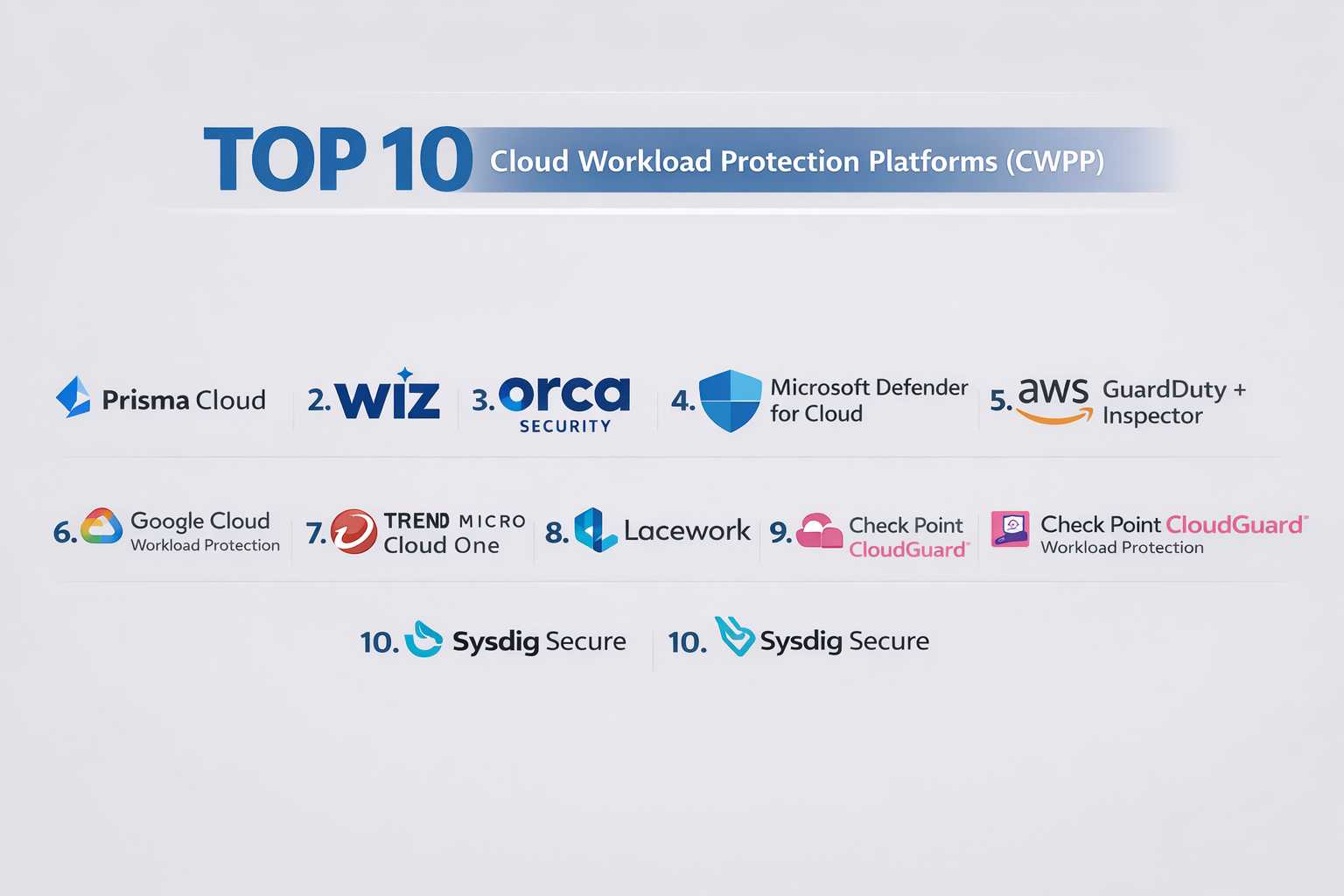
Top Cloud Workload Protection Platforms (CWPP)
#1 — Prisma Cloud
Short description: A comprehensive cloud security platform offering advanced workload protection for containers, VMs, and serverless environments.
Key Features
- Runtime protection for containers and VMs
- Vulnerability management
- Kubernetes security monitoring
- Compliance enforcement
- Threat intelligence integration
- Identity-based protection
Pros
- Strong enterprise capabilities
- Deep cloud-native security coverage
Cons
- Complex setup
- Higher pricing
Platforms / Deployment
Cloud
Security & Compliance
SSO, MFA, RBAC, encryption, audit logs. Compliance support varies.
Integrations & Ecosystem
Works with major cloud providers and DevOps tools.
- Kubernetes
- CI/CD pipelines
- SIEM tools
- APIs
Support & Community
Enterprise-level support and strong documentation.
#2 — Wiz
Short description: Agentless CWPP platform offering visibility and risk-based prioritization for cloud workloads.
Key Features
- Agentless scanning
- Runtime risk analysis
- Vulnerability detection
- Container security
- Identity risk insights
Pros
- Easy deployment
- Unified dashboard
Cons
- Premium pricing
- Limited customization
Platforms / Deployment
Cloud
Security & Compliance
SSO, MFA, RBAC.
Integrations & Ecosystem
- AWS, Azure, GCP
- DevOps tools
- APIs
Support & Community
Strong support and growing adoption.
#3 — Orca Security
Short description: Agentless workload protection platform with deep visibility across cloud environments.
Key Features
- Side-scanning technology
- Full stack visibility
- Malware detection
- Compliance monitoring
- Vulnerability scanning
Pros
- No agents required
- Quick deployment
Cons
- Pricing
- Learning curve
Platforms / Deployment
Cloud
Security & Compliance
SSO, MFA, encryption.
Integrations & Ecosystem
- Cloud platforms
- DevOps tools
- APIs
Support & Community
Good enterprise support.
#4 — Microsoft Defender for Cloud
Short description: Integrated cloud security solution providing workload protection across Azure and hybrid environments.
Key Features
- VM and container protection
- Threat detection
- Security recommendations
- Compliance dashboard
- Hybrid cloud support
Pros
- Native Azure integration
- Strong hybrid support
Cons
- Limited outside Microsoft ecosystem
- Complexity
Platforms / Deployment
Cloud / Hybrid
Security & Compliance
SSO, MFA, RBAC.
Integrations & Ecosystem
- Azure services
- Microsoft tools
- APIs
Support & Community
Extensive documentation and support.
#5 — AWS GuardDuty + Inspector
Short description: AWS-native combination providing workload threat detection and vulnerability scanning.
Key Features
- Threat detection
- Vulnerability scanning
- Behavior monitoring
- Integration with AWS services
- Continuous monitoring
Pros
- Deep AWS integration
- Easy setup
Cons
- Limited multi-cloud support
- AWS-centric
Platforms / Deployment
Cloud
Security & Compliance
SSO, MFA, encryption.
Integrations & Ecosystem
- AWS ecosystem
- APIs
- Security tools
Support & Community
Strong AWS support ecosystem.
#6 — Google Cloud Workload Protection
Short description: Native GCP solution offering runtime protection and workload monitoring.
Key Features
- Workload monitoring
- Threat detection
- Compliance checks
- Container security
- Risk analysis
Pros
- Strong GCP integration
- Good analytics
Cons
- Limited outside GCP
- Setup complexity
Platforms / Deployment
Cloud
Security & Compliance
SSO, MFA, RBAC.
Integrations & Ecosystem
- GCP services
- APIs
- Security tools
Support & Community
Well-documented and supported.
#7 — Trend Micro Cloud One Workload Security
Short description: Workload-focused security platform with threat detection and compliance features.
Key Features
- Anti-malware protection
- Intrusion detection
- Application control
- Integrity monitoring
- Vulnerability protection
Pros
- Mature solution
- Broad feature set
Cons
- Complex UI
- Resource overhead
Platforms / Deployment
Cloud
Security & Compliance
SSO, MFA, encryption.
Integrations & Ecosystem
- Cloud platforms
- APIs
- Security tools
Support & Community
Strong enterprise support.
#8 — Lacework
Short description: Behavioral analytics-driven CWPP platform for cloud workloads.
Key Features
- Anomaly detection
- Threat monitoring
- Compliance checks
- Multi-cloud visibility
- Automation
Pros
- Strong analytics
- Good automation
Cons
- Pricing
- Complexity
Platforms / Deployment
Cloud
Security & Compliance
SSO, MFA, encryption.
Integrations & Ecosystem
- Cloud providers
- DevOps tools
- APIs
Support & Community
Reliable support and documentation.
#9 — Check Point CloudGuard Workload Protection
Short description: CloudGuard module focused on workload protection and runtime security.
Key Features
- Runtime protection
- Threat prevention
- Policy enforcement
- Multi-cloud support
- Compliance automation
Pros
- Strong security features
- Multi-cloud coverage
Cons
- Complex setup
- Cost
Platforms / Deployment
Cloud
Security & Compliance
SSO, MFA, RBAC.
Integrations & Ecosystem
- Cloud providers
- Security tools
- APIs
Support & Community
Enterprise-grade support.
#10 — Sysdig Secure
Short description: Kubernetes-focused CWPP platform with runtime threat detection.
Key Features
- Kubernetes security
- Runtime detection
- Compliance checks
- Container scanning
- Threat analytics
Pros
- Strong Kubernetes focus
- Good runtime visibility
Cons
- Limited outside containers
- Learning curve
Platforms / Deployment
Cloud
Security & Compliance
SSO, MFA, encryption.
Integrations & Ecosystem
- Kubernetes
- DevOps tools
- APIs
Support & Community
Active community and support.
Comparison Table (Top 10)
| Tool Name | Best For | Platform(s) Supported | Deployment | Standout Feature | Public Rating |
|---|---|---|---|---|---|
| Prisma Cloud | Enterprise security | Web | Cloud | Full-stack protection | N/A |
| Wiz | Ease of use | Web | Cloud | Agentless model | N/A |
| Orca Security | Visibility | Web | Cloud | Side scanning | N/A |
| Microsoft Defender for Cloud | Azure users | Web | Cloud/Hybrid | Native integration | N/A |
| AWS GuardDuty + Inspector | AWS workloads | Web | Cloud | Deep AWS integration | N/A |
| Google Cloud Workload Protection | GCP workloads | Web | Cloud | Risk analytics | N/A |
| Trend Micro Cloud One Workload Security | Broad protection | Web | Cloud | Anti-malware + IDS | N/A |
| Lacework | Analytics | Web | Cloud | Behavioral detection | N/A |
| Check Point CloudGuard Workload Protection | Multi-cloud | Web | Cloud | Policy enforcement | N/A |
| Sysdig Secure | Kubernetes | Web | Cloud | Runtime detection | N/A |
Cloud Workload Protection Platforms (CWPP)
| Tool Name | Core | Ease | Integrations | Security | Performance | Support | Value | Weighted Total |
|---|---|---|---|---|---|---|---|---|
| Prisma Cloud | 9 | 7 | 9 | 9 | 9 | 8 | 7 | 8.5 |
| Wiz | 9 | 9 | 8 | 8 | 9 | 8 | 7 | 8.6 |
| Orca Security | 9 | 8 | 8 | 8 | 9 | 8 | 7 | 8.4 |
| Microsoft Defender for Cloud | 8 | 8 | 8 | 9 | 8 | 9 | 8 | 8.3 |
| AWS GuardDuty + Inspector | 8 | 8 | 7 | 8 | 8 | 8 | 9 | 8.1 |
| Google Cloud Workload Protection | 8 | 7 | 7 | 8 | 8 | 8 | 8 | 7.9 |
| Trend Micro Cloud One Workload Security | 8 | 7 | 8 | 8 | 8 | 8 | 8 | 8.0 |
| Lacework | 8 | 7 | 8 | 8 | 8 | 8 | 7 | 7.9 |
| Check Point CloudGuard Workload Protection | 9 | 7 | 8 | 9 | 8 | 8 | 7 | 8.2 |
| Sysdig Secure | 8 | 7 | 8 | 8 | 8 | 8 | 7 | 7.9 |
How to interpret scores:
These scores are comparative and based on relative strengths across features, usability, and value. Higher scores indicate balanced performance across categories, while lower scores may reflect trade-offs such as complexity or pricing.
Which Service Mesh Platforms Is Right for You?
Solo / Freelancer
Native tools from cloud providers are usually sufficient for basic workload protection.
SMB
Wiz or Sysdig Secure offer ease of use and strong protection without heavy complexity.
Mid-Market
Orca Security or Lacework provide a balance of visibility, automation, and cost.
Enterprise
Prisma Cloud, Check Point, and Trend Micro offer advanced capabilities for large-scale environments.
Budget vs Premium
Native tools are cost-effective, while enterprise platforms provide deeper security at higher cost.
Feature Depth vs Ease of Use
Wiz is easier to use, while Prisma Cloud offers deeper feature sets.
Integrations & Scalability
Enterprise tools scale better and offer broader integrations.
Security & Compliance Needs
Highly regulated industries should prioritize tools with strong compliance automation.
Cloud Workload Protection Platforms (CWPP)
What is CWPP?
CWPP is a security solution designed to protect cloud workloads like VMs and containers.
How does CWPP differ from CSPM?
CWPP focuses on runtime protection, while CSPM focuses on configuration security.
Is CWPP necessary for small businesses?
Not always, but it becomes important as cloud usage grows.
Can CWPP detect runtime threats?
Yes, it continuously monitors workloads for suspicious behavior.
Does CWPP support containers?
Yes, most modern CWPP tools support container and Kubernetes security.
How long does deployment take?
It depends on the environment but is generally faster with agentless solutions.
Is CWPP expensive?
Pricing varies depending on features and workload scale.
Can CWPP integrate with DevOps tools?
Yes, most platforms support CI/CD integrations.
What are common mistakes when using CWPP?
Ignoring alerts, misconfiguring policies, and lack of integration.
Are there alternatives to CWPP?
CNAPP platforms combine CSPM and CWPP capabilities.
Conclusion
Cloud Workload Protection Platforms play a critical role in securing modern cloud environments by protecting workloads at runtime and ensuring continuous monitoring. As cloud adoption grows, organizations must go beyond basic security and implement solutions that provide deep visibility, automation, and threat detection. While enterprise platforms like Prisma Cloud and Check Point offer extensive capabilities, tools like Wiz and Sysdig provide simplicity and faster deployment. The right choice ultimately depends on your cloud architecture, workload complexity, and security requirements. Start by evaluating your current risks, shortlist a few tools, and run pilot tests to ensure they align with your operational and compliance needs before making a final decision.
