Introduction
Warehouse Management Systems (WMS) are software platforms designed to manage and optimize warehouse operations such as inventory tracking, order fulfillment, picking, packing, shipping, and receiving. In simple terms, a WMS helps businesses know what they have, where it is, and how to move it efficiently.
In today’s fast-paced supply chain environment, especially with the rise of e-commerce, same-day delivery expectations, and global logistics complexity, WMS platforms have become critical. Businesses are now expected to handle higher volumes, reduce errors, and maintain real-time visibility across operations.
Real-world use cases:
- E-commerce fulfillment centers managing thousands of daily orders
- Retail chains optimizing inventory across multiple warehouses
- Manufacturing companies tracking raw materials and finished goods
- 3PL (third-party logistics) providers handling multi-client warehousing
- Cold storage and regulated industries ensuring compliance and traceability
What buyers should evaluate:
- Inventory accuracy and real-time tracking
- Automation capabilities (barcode, RFID, robotics)
- Integration with ERP, OMS, and shipping systems
- Scalability and multi-warehouse support
- Reporting and analytics features
- Ease of use and training requirements
- Security and compliance features
- Deployment flexibility (cloud vs on-premise)
- Total cost of ownership
Best for: Operations managers, supply chain leaders, warehouse supervisors, IT teams, and logistics-heavy businesses ranging from SMBs to large enterprises in retail, manufacturing, and distribution.
Not ideal for: Very small businesses with minimal inventory or those using simple spreadsheets or basic inventory tools; in such cases, lightweight inventory management systems may be more practical.
Key Trends in Warehouse Management Systems (WMS)
- AI-driven demand forecasting improving stock planning and reducing overstock/stockouts
- Warehouse automation integration (robots, AMRs, conveyors) becoming standard
- Cloud-native WMS adoption replacing legacy on-premise systems
- Real-time visibility dashboards with predictive analytics
- API-first architecture enabling seamless integrations with ERP, OMS, and TMS
- Mobile-first warehouse operations using handheld devices and apps
- IoT and RFID adoption for real-time asset tracking
- Micro-fulfillment centers driving need for compact, fast WMS solutions
- Sustainability tracking (waste reduction, energy efficiency metrics)
- Usage-based pricing models becoming more common
How We Selected These Tools (Methodology)
- Evaluated market adoption and industry presence across global logistics and retail sectors
- Assessed feature completeness, including inventory, fulfillment, and automation capabilities
- Considered performance and reliability signals based on enterprise usage
- Reviewed security posture indicators such as RBAC, encryption, and compliance readiness
- Analyzed integration ecosystems, including ERP, e-commerce, and shipping tools
- Ensured coverage across business sizes (SMB to enterprise)
- Prioritized tools with modern architecture and cloud capabilities
- Included platforms with strong support and onboarding ecosystems
- Focused on scalability and multi-location warehouse capabilities
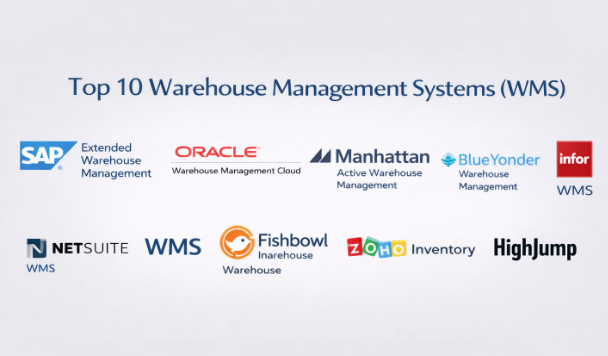
Top 10 Warehouse Management Systems (WMS)
#1 — SAP Extended Warehouse Management (EWM)
Short description (2–3 lines): A comprehensive enterprise-grade WMS designed for complex warehouse operations, tightly integrated with SAP ERP environments.
Key Features
- Advanced inventory and warehouse process management
- Yard and labor management
- Slotting and wave picking optimization
- Real-time warehouse visibility
- Automation integration (robots, conveyors)
- Multi-site warehouse management
Pros
- Deep integration with SAP ecosystem
- Highly customizable for complex workflows
Cons
- High implementation cost
- Requires skilled SAP expertise
Platforms / Deployment
- Web
- Cloud / On-premise / Hybrid
Security & Compliance
- RBAC, audit logs, encryption
- Compliance varies by SAP environment
Integrations & Ecosystem
Strong SAP ecosystem integration including ERP, supply chain modules, and third-party tools.
- SAP S/4HANA
- SAP TM
- External APIs
Support & Community
Strong enterprise support and partner ecosystem; requires professional services.
#2 — Oracle Warehouse Management Cloud
Short description (2–3 lines): A cloud-native WMS focused on scalability and automation for large enterprises and fast-growing businesses.
Key Features
- AI-driven inventory optimization
- Advanced picking and packing workflows
- Mobile warehouse operations
- Real-time dashboards
- Automation and robotics integration
Pros
- Fully cloud-native
- Strong analytics capabilities
Cons
- Complex configuration
- Premium pricing
Platforms / Deployment
- Web
- Cloud
Security & Compliance
- Encryption, RBAC, audit logs
- Compliance varies by deployment
Integrations & Ecosystem
Extensive integration with Oracle ecosystem and external systems.
- Oracle ERP
- REST APIs
- E-commerce platforms
Support & Community
Enterprise-grade support; documentation available but complex.
#3 — Manhattan Active Warehouse Management
Short description (2–3 lines): A modern, cloud-based WMS known for its unified supply chain platform and strong automation capabilities.
Key Features
- AI-based warehouse optimization
- Real-time visibility
- Labor management tools
- Unified commerce integration
- Automation-ready architecture
Pros
- Strong real-time capabilities
- Unified platform approach
Cons
- Expensive for SMBs
- Implementation complexity
Platforms / Deployment
- Web
- Cloud
Security & Compliance
- RBAC, encryption, audit trails
- Compliance varies
Integrations & Ecosystem
Broad integrations with supply chain systems.
- ERP systems
- OMS platforms
- APIs
Support & Community
Strong enterprise support with consulting ecosystem.
#4 — Blue Yonder Warehouse Management
Short description (2–3 lines): A WMS focused on AI-powered supply chain optimization and predictive warehouse operations.
Key Features
- AI-driven forecasting
- End-to-end supply chain visibility
- Labor and workforce management
- Automation integration
- Scenario planning
Pros
- Advanced AI capabilities
- Strong analytics
Cons
- High cost
- Complex deployment
Platforms / Deployment
- Web
- Cloud / Hybrid
Security & Compliance
- Encryption, RBAC
- Compliance varies
Integrations & Ecosystem
Strong supply chain integrations.
- ERP systems
- Logistics platforms
- APIs
Support & Community
Enterprise support with consulting partners.
#5 — Infor WMS
Short description (2–3 lines): A flexible WMS designed for mid-market to enterprise customers with strong industry-specific capabilities.
Key Features
- 3D warehouse visualization
- Advanced inventory management
- Labor tracking
- Slotting optimization
- Multi-warehouse support
Pros
- Industry-specific templates
- Good visualization tools
Cons
- UI may feel dated
- Customization required
Platforms / Deployment
- Web
- Cloud / On-premise
Security & Compliance
- RBAC, encryption
- Compliance varies
Integrations & Ecosystem
Integration with Infor and external systems.
- ERP systems
- APIs
Support & Community
Moderate support ecosystem.
#6 — NetSuite WMS
Short description (2–3 lines): A cloud-based WMS integrated within NetSuite ERP, ideal for SMBs and mid-market businesses.
Key Features
- Inventory tracking
- Barcode scanning
- Order fulfillment workflows
- Real-time dashboards
- Mobile capabilities
Pros
- Easy integration with NetSuite
- Cloud-native
Cons
- Limited advanced features
- Less flexible than enterprise tools
Platforms / Deployment
- Web
- Cloud
Security & Compliance
- RBAC, encryption
- Compliance varies
Integrations & Ecosystem
Tightly integrated with NetSuite ecosystem.
- ERP
- E-commerce platforms
Support & Community
Good documentation and support.
#7 — Fishbowl Warehouse
Short description (2–3 lines): A popular SMB-focused WMS with strong QuickBooks integration and ease of use.
Key Features
- Inventory management
- Order tracking
- Barcode scanning
- Manufacturing support
- Reporting tools
Pros
- Easy to use
- Affordable for SMBs
Cons
- Limited scalability
- Fewer automation features
Platforms / Deployment
- Windows
- On-premise / Cloud
Security & Compliance
- Basic access control
- Not publicly stated for advanced compliance
Integrations & Ecosystem
Focused on SMB integrations.
- QuickBooks
- APIs
Support & Community
Good SMB support; smaller community.
#8 — Zoho Inventory
Short description (2–3 lines): A lightweight cloud-based inventory and warehouse solution for small businesses and startups.
Key Features
- Inventory tracking
- Order management
- Multi-channel selling
- Reporting
- Mobile app support
Pros
- Easy setup
- Cost-effective
Cons
- Not a full-scale WMS
- Limited advanced features
Platforms / Deployment
- Web / Mobile
- Cloud
Security & Compliance
- Encryption, RBAC
- Compliance varies
Integrations & Ecosystem
Strong integration with Zoho ecosystem.
- Zoho apps
- E-commerce platforms
Support & Community
Strong documentation and community.
#9 — HighJump (Körber WMS)
Short description (2–3 lines): A configurable WMS platform suitable for mid-market and enterprise customers with flexible workflows.
Key Features
- Configurable workflows
- Inventory tracking
- Labor management
- Automation support
- Reporting tools
Pros
- Highly configurable
- Scalable
Cons
- Requires customization
- UI complexity
Platforms / Deployment
- Web
- Cloud / On-premise
Security & Compliance
- RBAC, encryption
- Compliance varies
Integrations & Ecosystem
Flexible integration capabilities.
- ERP systems
- APIs
Support & Community
Moderate support and partner network.
#10 — Tecsys Elite WMS
Short description (2–3 lines): A specialized WMS for healthcare, retail, and distribution industries with strong compliance features.
Key Features
- Industry-specific workflows
- Inventory tracking
- Compliance tools
- Order management
- Analytics
Pros
- Strong compliance features
- Industry focus
Cons
- Limited general-purpose flexibility
- Niche market focus
Platforms / Deployment
- Web
- Cloud
Security & Compliance
- RBAC, encryption
- Compliance varies by industry
Integrations & Ecosystem
Focused integrations for specific industries.
- ERP systems
- APIs
Support & Community
Strong support in niche industries.
Comparison Table (Top 10)
| Tool Name | Best For | Platform(s) Supported | Deployment | Standout Feature | Public Rating |
|---|---|---|---|---|---|
| SAP EWM | Large enterprises | Web | Hybrid | Deep SAP integration | N/A |
| Oracle WMS | Enterprise cloud users | Web | Cloud | AI-driven optimization | N/A |
| Manhattan Active | Unified supply chain | Web | Cloud | Real-time visibility | N/A |
| Blue Yonder | AI-driven operations | Web | Hybrid | Predictive analytics | N/A |
| Infor WMS | Mid-market enterprises | Web | Hybrid | 3D visualization | N/A |
| NetSuite WMS | SMB/mid-market | Web | Cloud | ERP integration | N/A |
| Fishbowl | SMBs | Windows | Hybrid | QuickBooks integration | N/A |
| Zoho Inventory | Small businesses | Web/Mobile | Cloud | Easy setup | N/A |
| HighJump | Configurable workflows | Web | Hybrid | Custom workflows | N/A |
| Tecsys Elite | Industry-specific use | Web | Cloud | Compliance focus | N/A |
Evaluation & Scoring of Warehouse Management Systems (WMS)
| Tool Name | Core | Ease | Integrations | Security | Performance | Support | Value | Weighted Total |
|---|---|---|---|---|---|---|---|---|
| SAP EWM | 9 | 6 | 9 | 8 | 9 | 8 | 6 | 8.0 |
| Oracle WMS | 9 | 7 | 9 | 8 | 9 | 8 | 6 | 8.2 |
| Manhattan Active | 9 | 7 | 8 | 8 | 9 | 8 | 6 | 8.1 |
| Blue Yonder | 9 | 6 | 8 | 8 | 9 | 8 | 6 | 7.9 |
| Infor WMS | 8 | 7 | 7 | 7 | 8 | 7 | 7 | 7.5 |
| NetSuite WMS | 7 | 8 | 8 | 7 | 7 | 7 | 8 | 7.6 |
| Fishbowl | 6 | 8 | 6 | 6 | 7 | 6 | 8 | 6.8 |
| Zoho Inventory | 6 | 9 | 7 | 7 | 7 | 7 | 9 | 7.3 |
| HighJump | 8 | 7 | 7 | 7 | 8 | 7 | 7 | 7.6 |
| Tecsys Elite | 7 | 7 | 6 | 8 | 7 | 7 | 7 | 7.2 |
How to interpret the scores:
- Scores are relative comparisons, not absolute measures
- Enterprise tools score higher in core features and scalability
- SMB tools often score higher in ease of use and value
- A higher score doesn’t mean better for every use case
- Choose based on your business size, complexity, and budget
Which Warehouse Management Systems (WMS)
Solo / Freelancer
Simple tools like Zoho Inventory are sufficient.
SMB
NetSuite WMS and Fishbowl provide a good balance of cost and features.
Mid-Market
Infor WMS and HighJump offer scalability without full enterprise complexity.
Enterprise
SAP EWM, Oracle WMS, Manhattan Active, and Blue Yonder are ideal.
Budget vs Premium
- Budget: Zoho Inventory, Fishbowl
- Premium: SAP, Oracle, Manhattan
Feature Depth vs Ease of Use
- Deep features: SAP, Oracle
- Ease of use: Zoho, Fishbowl
Integrations & Scalability
- Strong: SAP, Oracle, NetSuite
- Moderate: SMB tools
Security & Compliance Needs
- High: SAP, Oracle, Tecsys
- Moderate: Others
Frequently Asked Questions (FAQs)
1. What is a WMS and why is it important?
A WMS helps manage warehouse operations efficiently. It improves inventory accuracy, reduces errors, and enhances order fulfillment speed.
2. How much does a WMS cost?
Costs vary widely depending on features, deployment, and scale. Pricing is often subscription-based or license-based.
3. How long does implementation take?
Implementation can take weeks for SMB tools and several months for enterprise solutions.
4. Can WMS integrate with ERP systems?
Yes, most WMS platforms integrate with ERP, OMS, and other systems.
5. What are common mistakes when choosing a WMS?
Ignoring scalability, underestimating integration complexity, and not involving end-users early.
6. Is cloud WMS better than on-premise?
Cloud WMS offers flexibility and lower upfront cost, but on-premise may suit highly regulated environments.
7. Can WMS handle multiple warehouses?
Yes, most modern WMS platforms support multi-location operations.
8. What industries use WMS?
Retail, manufacturing, logistics, healthcare, and e-commerce commonly use WMS.
9. How secure are WMS platforms?
Security varies; enterprise platforms offer strong encryption, RBAC, and compliance features.
10. What are alternatives to WMS?
Basic inventory management systems or ERP modules may suffice for smaller operations.
Conclusion
Warehouse Management Systems have become a core part of modern supply chain operations. As businesses scale, the need for real-time visibility, automation, and integration grows significantly. While enterprise tools like SAP and Oracle offer deep functionality, SMB-focused solutions provide simplicity and affordability. There is no single “best” WMS for all scenarios. The right choice depends on your operational complexity, growth plans, and integration requirements.
