Introduction
Vector Search Tooling refers to platforms and technologies designed to store, index, retrieve, and analyze vector embeddings generated by AI and machine learning models. These tools power semantic search, Retrieval-Augmented Generation (RAG), recommendation systems, AI assistants, anomaly detection, image retrieval, and multimodal AI applications.
Unlike traditional keyword-based search systems, vector search platforms compare embeddings mathematically to identify semantic similarity between data points. As generative AI adoption accelerates in vector search tooling has become foundational infrastructure for enterprise AI systems.
Common real-world use cases include:
- AI-powered semantic search
- Retrieval-Augmented Generation (RAG)
- Recommendation engines
- Image and multimodal search
- Enterprise AI knowledge retrieval
When evaluating Vector Search Tooling, buyers should consider:
- Vector indexing performance
- Hybrid search capabilities
- Scalability and distributed architecture
- Real-time retrieval latency
- Embedding model compatibility
- Metadata filtering support
- Multi-cloud deployment flexibility
- Security and governance controls
- API ecosystem and SDK support
- AI workflow integrations
Best for: AI engineering teams, SaaS companies, enterprise search teams, generative AI developers, recommendation engine teams, and organizations building AI retrieval systems.
Not ideal for: Lightweight applications with traditional keyword-only search requirements or organizations without semantic AI workloads.
Key Trends in Vector Search Tooling
- Retrieval-Augmented Generation (RAG) architectures are driving major adoption of vector infrastructure.
- Hybrid retrieval combining vector and keyword search is becoming standard.
- Multimodal embeddings for text, image, video, and audio search are rapidly expanding.
- GPU acceleration and optimized ANN indexing are improving large-scale performance.
- Managed vector databases are simplifying AI infrastructure deployment.
- Open-source vector ecosystems are gaining enterprise adoption.
- AI observability and retrieval evaluation tooling are becoming increasingly important.
- Real-time embedding updates are improving dynamic AI applications.
- Knowledge graph integration is enhancing contextual retrieval accuracy.
- Vector databases are increasingly adding transactional and analytical capabilities.
How We Selected These Tools (Methodology)
The platforms in this list were selected using a balanced evaluation framework focused on scalability, AI relevance, developer adoption, and enterprise readiness.
Selection criteria included:
- Enterprise and developer adoption
- Vector indexing and retrieval performance
- AI ecosystem compatibility
- Scalability and distributed architecture
- Hybrid retrieval support
- Security and governance capabilities
- Deployment flexibility
- Documentation and developer experience
- Community activity and ecosystem maturity
- Innovation in AI retrieval infrastructure
The final list balances managed vector databases, open-source vector engines, enterprise search platforms, and AI-native retrieval technologies.
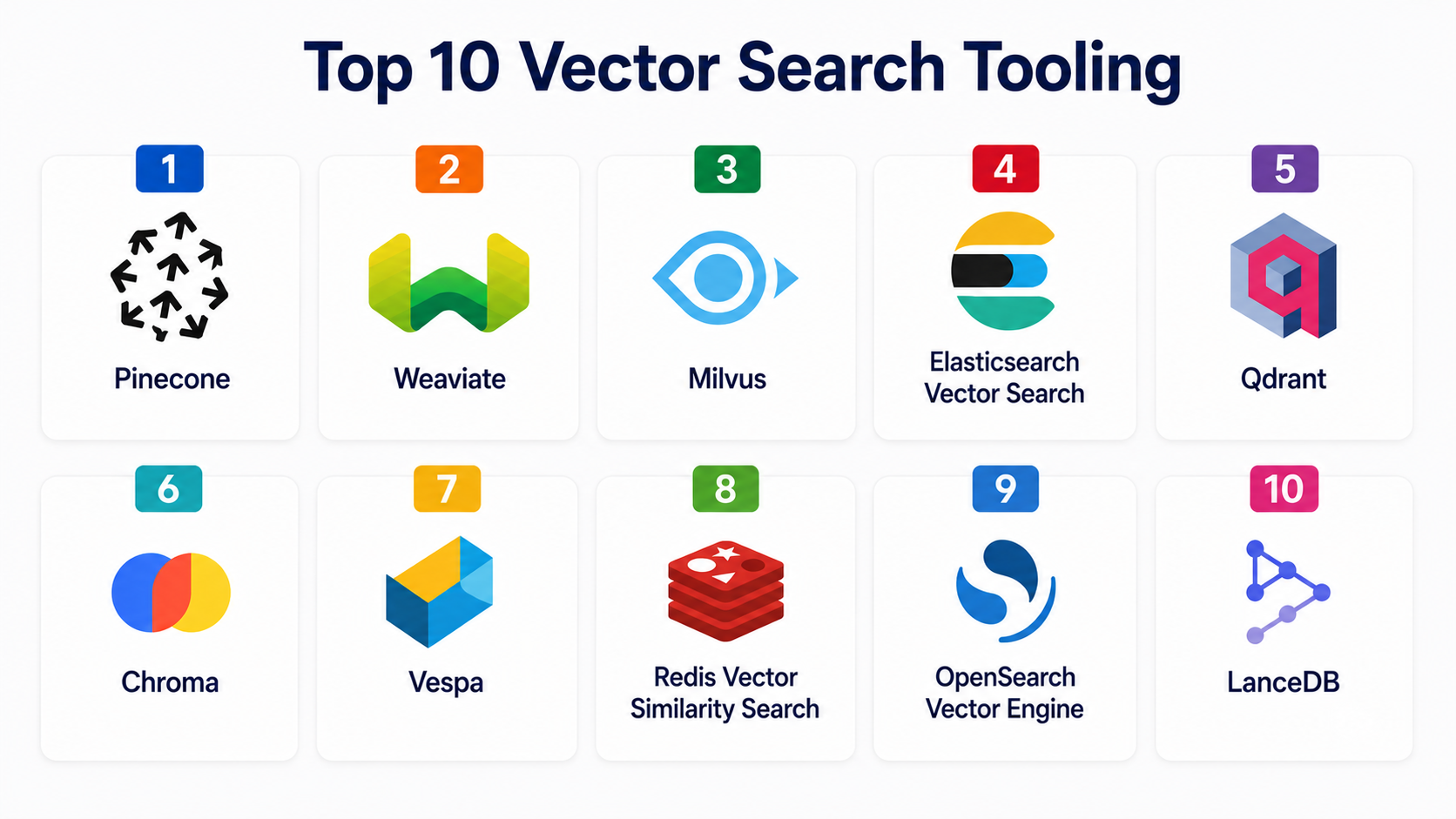
Vector Search Tooling
#1 — Pinecone
Short description :
Pinecone is one of the most widely adopted managed vector database platforms for semantic search and AI retrieval systems. It is designed specifically for low-latency vector similarity search at scale. Pinecone is heavily used in RAG architectures, AI assistants, recommendation systems, and enterprise AI retrieval applications. The platform emphasizes operational simplicity and scalable managed infrastructure.
Key Features
- Managed vector database
- Real-time similarity search
- Distributed vector indexing
- Metadata filtering
- Hybrid search capabilities
- Scalable cloud infrastructure
- AI embedding integrations
Pros
- Simplified managed infrastructure
- Excellent retrieval performance
- Strong AI ecosystem compatibility
Cons
- Cloud-centric deployment model
- Less flexible for non-vector workloads
- Premium pricing at scale
Platforms / Deployment
- Web
- Cloud
Security & Compliance
- Encryption
- RBAC
- Audit logging
- SOC 2
Integrations & Ecosystem
Pinecone integrates with modern AI frameworks, embedding providers, and orchestration platforms.
- LangChain
- OpenAI
- Hugging Face
- AWS
- Python SDKs
Support & Community
Pinecone has strong developer documentation and rapidly growing AI engineering communities.
#2 — Weaviate
Short description :
Weaviate is an open-source vector search platform designed for AI-native semantic retrieval and hybrid search applications. It supports modular embedding integrations, GraphQL APIs, and multi-tenant vector architectures. Weaviate is popular among AI developers building semantic search and RAG systems.
Key Features
- Open-source vector search
- Hybrid keyword + semantic retrieval
- GraphQL APIs
- Modular embedding integrations
- Real-time indexing
- Multi-tenant architecture
- Cloud-native deployment
Pros
- Flexible open-source architecture
- Strong AI integrations
- Good developer experience
Cons
- Enterprise governance still maturing
- Large-scale optimization may require expertise
- Smaller ecosystem than Elasticsearch
Platforms / Deployment
- Linux
- Cloud / Self-hosted / Hybrid
Security & Compliance
- Encryption
- RBAC
- SSO/SAML
Integrations & Ecosystem
Weaviate integrates with vector pipelines, AI orchestration frameworks, and embedding providers.
- OpenAI
- Cohere
- Hugging Face
- LangChain
- Kubernetes
Support & Community
Weaviate has active open-source communities and strong developer-focused documentation.
#3 — Milvus
Short description :
Milvus is a high-performance open-source vector database optimized for scalable AI similarity search workloads. It is designed for handling billions of embeddings across enterprise AI systems, recommendation engines, and multimodal search applications.
Key Features
- Distributed vector database
- GPU acceleration support
- ANN indexing algorithms
- Real-time vector search
- Hybrid cloud deployment
- Multi-modal retrieval support
- Scalable clustering
Pros
- Excellent large-scale performance
- Strong open-source ecosystem
- Good GPU optimization support
Cons
- Operational complexity
- Requires infrastructure expertise
- Advanced tuning may be necessary
Platforms / Deployment
- Linux
- Cloud / Self-hosted / Hybrid
Security & Compliance
- RBAC
- Encryption
- Audit logs
Integrations & Ecosystem
Milvus integrates with AI pipelines, orchestration frameworks, and cloud-native infrastructure.
- Kubernetes
- PyTorch
- TensorFlow
- LangChain
- Kafka
Support & Community
Milvus benefits from active open-source development and growing enterprise adoption.
#4 — Elasticsearch Vector Search
Short description :
Elasticsearch has evolved into a major hybrid retrieval platform supporting both traditional keyword search and vector-based semantic retrieval. It is commonly used in enterprise AI search systems requiring hybrid relevance ranking and large-scale distributed indexing.
Key Features
- Hybrid keyword + vector search
- Distributed indexing architecture
- AI relevance ranking
- Real-time search analytics
- REST APIs
- Scalable clustering
- Semantic retrieval support
Pros
- Mature enterprise ecosystem
- Excellent scalability
- Strong hybrid search capabilities
Cons
- Operational complexity
- Advanced optimization requires expertise
- Enterprise licensing costs for premium features
Platforms / Deployment
- Windows / Linux / macOS
- Cloud / Self-hosted / Hybrid
Security & Compliance
- SSO/SAML
- MFA
- Encryption
- RBAC
- Audit logs
- GDPR support
Integrations & Ecosystem
Elasticsearch integrates with analytics systems, observability stacks, and AI frameworks.
- Kibana
- OpenAI APIs
- AWS
- Azure
- Google Cloud
Support & Community
Elasticsearch has one of the largest search and analytics communities globally.
#5 — Qdrant
Short description :
Qdrant is an open-source vector database optimized for semantic search, recommendation systems, and AI retrieval applications. It focuses on high-performance vector indexing with filtering and payload management capabilities.
Key Features
- Vector similarity search
- Payload filtering
- Distributed indexing
- REST and gRPC APIs
- Real-time updates
- Hybrid search support
- Open-source deployment
Pros
- Good filtering capabilities
- Developer-friendly APIs
- Efficient semantic retrieval
Cons
- Smaller ecosystem than larger platforms
- Enterprise tooling still evolving
- Requires infrastructure management for self-hosting
Platforms / Deployment
- Linux
- Cloud / Self-hosted / Hybrid
Security & Compliance
- Encryption
- RBAC
- API access controls
Integrations & Ecosystem
Qdrant integrates with AI frameworks, orchestration tools, and embedding providers.
- LangChain
- LlamaIndex
- OpenAI
- Hugging Face
- Kubernetes
Support & Community
Qdrant has active open-source communities and growing enterprise usage.
#6 — Chroma
Short description :
Chroma is a lightweight open-source embedding database focused on AI-native developer workflows. It is commonly used for prototyping semantic search, local RAG applications, and lightweight AI retrieval systems.
Key Features
- Lightweight vector database
- Embedding storage
- Semantic retrieval APIs
- AI-native workflows
- Simple deployment model
- Developer-focused architecture
- Local deployment support
Pros
- Easy to use
- Fast prototyping workflows
- Good developer experience
Cons
- Limited enterprise scalability
- Fewer governance capabilities
- Smaller ecosystem
Platforms / Deployment
- Windows / Linux / macOS
- Self-hosted
Security & Compliance
- Varies / N/A
Integrations & Ecosystem
Chroma integrates with modern AI orchestration frameworks and local AI workflows.
- LangChain
- LlamaIndex
- Python
- OpenAI APIs
Support & Community
Chroma has rapidly growing AI developer communities and active open-source development.
#7 — Vespa
Short description :
Vespa is a large-scale search and recommendation platform supporting semantic retrieval, vector search, and real-time AI ranking. It is optimized for large-scale enterprise AI systems and high-performance search applications.
Key Features
- Real-time vector retrieval
- AI ranking models
- Distributed search architecture
- Large-scale indexing
- Recommendation engine support
- Custom ranking pipelines
- Semantic retrieval
Pros
- Excellent performance at scale
- Strong AI inference capabilities
- Real-time serving architecture
Cons
- Steeper learning curve
- Infrastructure-heavy deployments
- Smaller mainstream ecosystem
Platforms / Deployment
- Linux
- Cloud / Self-hosted / Hybrid
Security & Compliance
- Encryption
- RBAC
- Audit logs
Integrations & Ecosystem
Vespa integrates with ML pipelines and enterprise search architectures.
- TensorFlow
- ONNX
- Kubernetes
- Java
- Python
Support & Community
Vespa maintains strong technical documentation and engineering-focused communities.
#8 — Redis Vector Similarity Search
Short description :
Redis has expanded beyond caching into vector similarity search and AI retrieval workloads. Redis Vector Similarity Search supports semantic retrieval alongside real-time application performance and operational simplicity.
Key Features
- Vector similarity indexing
- Real-time retrieval
- In-memory performance
- Hybrid search support
- Scalable clustering
- Low-latency operations
- Developer APIs
Pros
- Excellent low-latency performance
- Familiar Redis ecosystem
- Good operational simplicity
Cons
- Memory-intensive workloads
- Less specialized than dedicated vector databases
- Large-scale tuning may be required
Platforms / Deployment
- Linux / macOS
- Cloud / Self-hosted / Hybrid
Security & Compliance
- Encryption
- RBAC
- Audit logging
- SSO/SAML
Integrations & Ecosystem
Redis integrates with AI pipelines, application stacks, and cloud-native infrastructure.
- LangChain
- OpenAI
- Kubernetes
- Node.js
- Python
Support & Community
Redis has one of the largest developer ecosystems in infrastructure software.
#9 — OpenSearch Vector Engine
Short description :
OpenSearch Vector Engine extends OpenSearch with vector similarity search and AI retrieval capabilities. It combines open-source search flexibility with semantic search and vector indexing support.
Key Features
- Open-source vector search
- Hybrid retrieval support
- Distributed indexing
- Semantic ranking
- AI integrations
- Real-time analytics
- Scalable clustering
Pros
- Open-source flexibility
- Good enterprise scalability
- Lower licensing costs
Cons
- Operational complexity
- Smaller ecosystem than Elasticsearch
- AI tooling still evolving
Platforms / Deployment
- Windows / Linux
- Cloud / Self-hosted / Hybrid
Security & Compliance
- Encryption
- RBAC
- Audit logging
- SSO/SAML
Integrations & Ecosystem
OpenSearch Vector Engine integrates with AI orchestration and analytics systems.
- AWS
- LangChain
- Python SDKs
- Kafka
- OpenAI APIs
Support & Community
OpenSearch benefits from strong open-source communities and cloud ecosystem support.
#10 — LanceDB
Short description :
LanceDB is a modern vector database optimized for AI-native analytics, multimodal search, and local-first developer workflows. It focuses on efficient vector storage, analytics integration, and simplified AI application development.
Key Features
- Vector indexing
- Local-first architecture
- Multimodal retrieval
- AI-native analytics
- Lightweight deployment
- Open-source tooling
- Data versioning support
Pros
- Good developer usability
- Lightweight AI workflows
- Efficient local development
Cons
- Smaller enterprise ecosystem
- Limited enterprise governance tooling
- Less mature than larger vector platforms
Platforms / Deployment
- Windows / Linux / macOS
- Self-hosted / Hybrid
Security & Compliance
- Varies / N/A
Integrations & Ecosystem
LanceDB integrates with AI development frameworks and analytics environments.
- Python
- Pandas
- LangChain
- OpenAI
- PyTorch
Support & Community
LanceDB has growing open-source communities focused on AI-native development.
Comparison Table (Top 10)
| Tool Name | Best For | Platform(s) Supported | Deployment | Standout Feature | Public Rating |
|---|---|---|---|---|---|
| Pinecone | Managed AI retrieval | Web | Cloud | Managed vector infrastructure | N/A |
| Weaviate | Open-source semantic AI | Linux | Hybrid | AI-native vector architecture | N/A |
| Milvus | Large-scale vector workloads | Linux | Hybrid | Distributed vector scalability | N/A |
| Elasticsearch Vector Search | Enterprise hybrid retrieval | Windows, Linux, macOS | Hybrid | Hybrid keyword + vector search | N/A |
| Qdrant | Developer-friendly vector search | Linux | Hybrid | Payload-aware vector retrieval | N/A |
| Chroma | Lightweight AI prototyping | Windows, Linux, macOS | Self-hosted | Simple embedding workflows | N/A |
| Vespa | Real-time AI retrieval | Linux | Hybrid | AI ranking infrastructure | N/A |
| Redis Vector Similarity Search | Low-latency AI applications | Linux, macOS | Hybrid | In-memory vector performance | N/A |
| OpenSearch Vector Engine | Open-source enterprise search | Windows, Linux | Hybrid | Open-source vector retrieval | N/A |
| LanceDB | AI-native analytics workflows | Windows, Linux, macOS | Hybrid | Local-first vector development | N/A |
Evaluation & Vector Search Tooling
| Tool Name | Core (25%) | Ease (15%) | Integrations (15%) | Security (10%) | Performance (10%) | Support (10%) | Value (15%) | Weighted Total |
|---|---|---|---|---|---|---|---|---|
| Pinecone | 9 | 9 | 8 | 8 | 9 | 8 | 7 | 8.4 |
| Weaviate | 8 | 8 | 8 | 7 | 8 | 7 | 8 | 7.9 |
| Milvus | 9 | 6 | 8 | 7 | 10 | 7 | 8 | 8.1 |
| Elasticsearch Vector Search | 9 | 7 | 10 | 9 | 9 | 9 | 7 | 8.6 |
| Qdrant | 8 | 8 | 8 | 7 | 8 | 7 | 8 | 7.9 |
| Chroma | 6 | 9 | 7 | 5 | 6 | 6 | 9 | 7.0 |
| Vespa | 9 | 5 | 7 | 7 | 10 | 7 | 7 | 7.8 |
| Redis Vector Similarity Search | 8 | 8 | 9 | 8 | 9 | 9 | 7 | 8.2 |
| OpenSearch Vector Engine | 8 | 7 | 8 | 8 | 8 | 7 | 9 | 7.9 |
| LanceDB | 7 | 8 | 7 | 5 | 7 | 6 | 8 | 7.0 |
These scores are comparative rather than absolute. Some platforms specialize in managed AI infrastructure, while others prioritize open-source flexibility or high-performance large-scale retrieval. Buyers should evaluate tooling based on operational expertise, AI architecture, scalability needs, and governance requirements.
Which Vector Search Tooling
Solo / Freelancer
Individual developers and AI researchers may prefer:
- Chroma
- LanceDB
- Qdrant
These tools provide lightweight deployment and rapid AI prototyping workflows.
SMB
Small and medium-sized businesses should focus on usability, deployment simplicity, and manageable operational overhead.
Recommended options:
- Pinecone
- Qdrant
- Weaviate
Mid-Market
Mid-sized organizations often require scalable AI retrieval with balanced operational complexity.
Recommended options:
- Weaviate
- Elasticsearch Vector Search
- Redis Vector Similarity Search
- Milvus
Enterprise
Large enterprises with advanced AI retrieval workloads should prioritize scalability, governance, and ecosystem maturity.
Recommended options:
- Elasticsearch Vector Search
- Pinecone
- Milvus
- Vespa
Budget vs Premium
- Budget-friendly: Chroma, LanceDB, OpenSearch
- Premium enterprise: Pinecone, Vespa
- Balanced value: Weaviate, Qdrant
Feature Depth vs Ease of Use
- Deepest enterprise capabilities: Elasticsearch, Vespa
- Best usability: Pinecone, Chroma
- Best open-source flexibility: Milvus, Weaviate
Integrations & Scalability
- Best AWS ecosystem fit: OpenSearch
- Best AI-native ecosystem: Pinecone
- Best developer extensibility: Weaviate
Security & Compliance Needs
Organizations with governance and compliance requirements should prioritize:
- Elasticsearch Vector Search
- Pinecone
- Redis Vector Similarity Search
- OpenSearch Vector Engine
Frequently Asked Questions (FAQs)
1. What is vector search tooling?
Vector search tooling enables AI systems to store, index, and retrieve embeddings using similarity-based search instead of traditional keyword matching.
2. Why are vector databases important for AI?
Vector databases are foundational for semantic search, recommendation systems, Retrieval-Augmented Generation (RAG), and AI assistants because they enable contextual similarity retrieval.
3. What are embeddings?
Embeddings are numerical vector representations of text, images, audio, or other data created by machine learning models to capture semantic meaning.
4. How does vector search differ from keyword search?
Keyword search matches exact words, while vector search retrieves semantically similar content based on embedding similarity calculations.
5. What is hybrid search?
Hybrid search combines vector similarity retrieval with traditional keyword search to improve relevance and accuracy.
6. Which industries use vector search tooling most?
Industries include e-commerce, SaaS, healthcare, cybersecurity, finance, media, customer support, and enterprise AI development.
7. Are managed vector databases better than self-hosted options?
Managed services reduce operational complexity, while self-hosted platforms provide greater flexibility and infrastructure control. The best option depends on technical expertise and governance requirements.
8. What are ANN indexing algorithms?
Approximate Nearest Neighbor (ANN) algorithms optimize similarity search performance for large-scale vector datasets while reducing latency.
9. Can vector search tooling support multimodal AI?
Yes. Many modern vector platforms support text, image, audio, and video embeddings for multimodal AI retrieval systems.
10. What should buyers evaluate before selecting a vector search platform?
Buyers should evaluate indexing performance, scalability, security, deployment flexibility, metadata filtering, AI integrations, operational complexity, and total infrastructure cost.
Conclusion
Vector Search Tooling has rapidly become foundational infrastructure for AI-native applications, semantic retrieval systems, and Retrieval-Augmented Generation (RAG) architectures. As organizations increasingly deploy generative AI systems and semantic search experiences, vector databases and retrieval platforms are evolving into critical enterprise technologies.Pinecone remains one of the strongest managed vector database platforms for AI-native workloads, while Milvus excels in large-scale distributed vector processing.
