Introduction
Risk-Based Authentication (RBA) Tools are security platforms that dynamically evaluate login or transaction risk in real time and decide whether to allow access, block it, or trigger additional verification steps. Instead of applying the same authentication rules to every user, these systems use contextual signals—such as device behavior, location, IP reputation, and user history—to assign a risk score for each session.
In risk-based authentication has become a core pillar of modern identity security. As cyberattacks evolve toward credential stuffing, session hijacking, AI-generated phishing, and MFA bypass techniques, traditional authentication methods are no longer sufficient on their own. Risk-based systems now work as part of adaptive MFA and zero trust architectures, continuously evaluating trust during every login and session.
Modern RBA tools now combine:
- Behavioral analytics and user profiling
- Device fingerprinting and integrity checks
- AI-driven anomaly detection
- Real-time fraud intelligence networks
- Step-up authentication orchestration
- Identity threat scoring engines
Common real-world use cases include:
- Securing SaaS and enterprise logins
- Preventing account takeover (ATO) attacks
- Protecting banking and fintech authentication flows
- Securing VPN, RDP, and remote workforce access
- E-commerce login and checkout protection
- API and service-to-service authentication security
When evaluating Risk-Based Authentication Tools, buyers should consider:
- Accuracy of risk scoring models
- Speed of real-time decisioning (latency)
- Contextual signal coverage (device, IP, behavior)
- Integration with IAM/SSO systems
- Adaptive MFA capabilities
- Explainability of risk decisions
- Scalability for enterprise environments
- Compliance and audit readiness
- API flexibility and developer experience
- Fraud intelligence network strength
Best for: Enterprises, fintech companies, SaaS platforms, banks, healthcare systems, and any organization with sensitive login or transactional workflows.
Not ideal for: Simple static applications without user authentication or low-risk internal tools.
Key Trends in Risk-Based Authentication Tools
- Shift from static MFA to continuous adaptive authentication
- AI-driven behavioral biometrics becoming standard
- Real-time identity risk scoring replacing rule-only systems
- Integration with zero trust security architectures
- Increased focus on phishing-resistant authentication methods
- Growth of session-level risk monitoring (not just login-level)
- Device trust scoring and hardware-bound identity verification
- Federated learning models improving fraud detection accuracy
- Increased regulatory pressure for auditability and explainability
- Rise of passwordless + risk-adaptive authentication systems
How We Selected These Tools (Methodology)
The tools in this list were selected based on enterprise adoption, authentication intelligence depth, risk engine sophistication, integration flexibility, scalability, and security maturity.
Selection criteria included:
- Real-time risk scoring capability
- Adaptive authentication (MFA step-up/step-down) support
- Behavioral and contextual signal richness
- IAM and SSO ecosystem integration
- Machine learning and anomaly detection capability
- Enterprise scalability and uptime reliability
- Developer experience and API flexibility
- Compliance readiness and audit logging
- Identity threat intelligence coverage
- Market adoption and credibility in enterprise environments
Risk-Based Authentication Tools
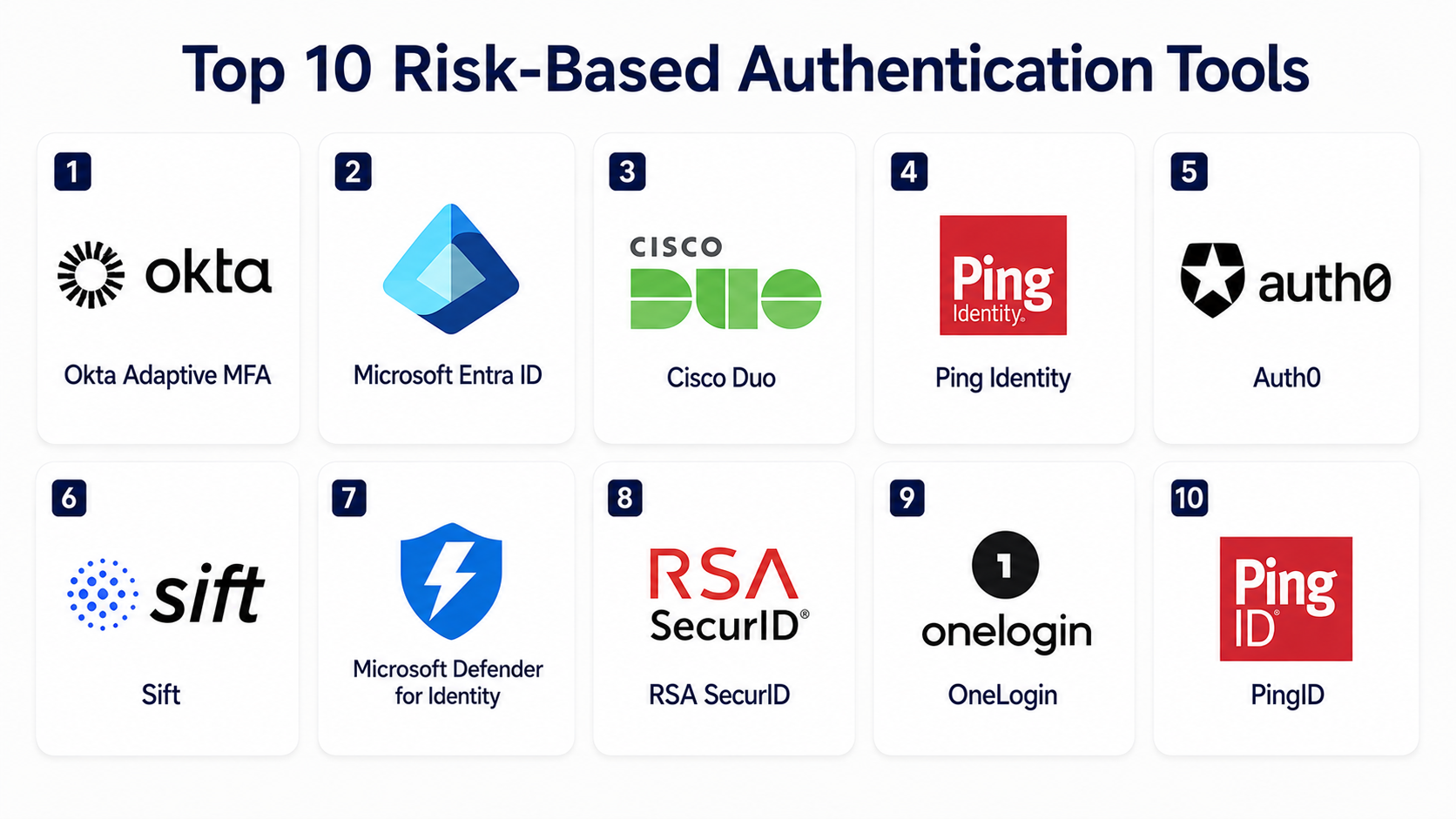
#1 — Okta Adaptive MFA
Short description :
Okta Adaptive MFA is a leading identity security solution that uses contextual signals such as device trust, IP reputation, and user behavior to dynamically adjust authentication requirements. It is widely used in enterprise environments for securing workforce and customer identities across cloud applications.
Key Features
- Context-aware risk scoring engine
- Adaptive MFA step-up authentication
- Device trust and network detection
- Behavioral login analysis
- Policy-based access controls
- SSO and lifecycle management integration
- Real-time anomaly detection
Pros
- Strong enterprise IAM ecosystem
- Excellent SaaS integration coverage
- Highly scalable identity platform
Cons
- Complex setup for advanced configurations
- Higher cost for enterprise deployments
- Requires tuning for optimal risk policies
Platforms / Deployment
- Cloud
Security & Compliance
- MFA enforcement
- SSO and identity governance
- Audit logs and reporting
- Encryption and secure authentication flows
- Enterprise compliance support (varies by configuration)
Integrations & Ecosystem
Okta integrates deeply across enterprise environments.
- SaaS applications
- SAML/OIDC-based systems
- Cloud infrastructure providers
- API-based authentication systems
- IT service management tools
Support & Community
Strong global enterprise support and extensive documentation ecosystem.
#2 — Microsoft Entra ID (Conditional Access)
Short description :
Microsoft Entra ID provides adaptive authentication through Conditional Access policies that evaluate user risk, device compliance, and session context before granting access to enterprise resources.
Key Features
- Risk-based sign-in detection
- Conditional Access policies
- MFA and passwordless authentication
- Identity Protection dashboard
- Device compliance integration
- Real-time session evaluation
- Azure security ecosystem integration
Pros
- Deep integration with Microsoft ecosystem
- Strong enterprise-grade security controls
- Excellent scalability for large organizations
Cons
- Best value inside Microsoft environments
- Policy complexity can be high
- Requires Azure ecosystem alignment
Platforms / Deployment
- Cloud
Security & Compliance
- MFA enforcement
- Identity risk scoring
- Access control policies
- Audit logs and reporting
- Enterprise compliance support
Integrations & Ecosystem
- Microsoft 365
- Azure services
- Enterprise SaaS apps
- Security tools (Defender ecosystem)
- API-based identity systems
Support & Community
Strong enterprise support and global partner ecosystem.
#3 — Cisco Duo (Adaptive Security)
Short description :
Cisco Duo provides risk-based authentication using device trust and contextual access controls, ensuring only verified and healthy devices can access applications and systems.
Key Features
- Device trust verification
- Adaptive MFA policies
- Endpoint health checks
- Risk-based access control
- Single sign-on integration
- VPN and RDP protection
- Context-aware authentication prompts
Pros
- Extremely strong device security model
- Easy deployment for enterprises
- Great user experience balance
Cons
- Less advanced identity graphing than competitors
- Limited deep customization in some workflows
- Best suited for device-centric security
Platforms / Deployment
- Cloud / Hybrid
Security & Compliance
- MFA enforcement
- Device posture checks
- Encryption and secure authentication
- Audit logging
- Policy-based access control
Integrations & Ecosystem
- VPN systems
- Cloud applications
- Enterprise IAM tools
- SSO platforms
- Network security infrastructure
Support & Community
Strong enterprise documentation and support resources.
#4 — Ping Identity (PingOne Risk)
Short description :
Ping Identity provides advanced risk-based authentication for complex enterprise environments, combining identity federation, adaptive MFA, and contextual risk evaluation.
Key Features
- Advanced risk engine
- Adaptive authentication policies
- Identity federation support
- Behavioral analytics
- Multi-factor orchestration
- Real-time access decisions
- Hybrid identity support
Pros
- Highly customizable enterprise identity platform
- Strong hybrid IT support
- Powerful policy engine
Cons
- Complex implementation
- Requires experienced IAM teams
- Higher operational overhead
Platforms / Deployment
- Cloud / Hybrid
Security & Compliance
- MFA and adaptive authentication
- Identity federation controls
- Audit logging
- Access governance features
- Enterprise-grade compliance support
Integrations & Ecosystem
- Enterprise SaaS systems
- Legacy identity systems
- APIs and microservices
- Cloud providers
- IAM ecosystems
Support & Community
Enterprise-level support and consulting services.
#5 — Auth0 (by Okta)
Short description :
Auth0 provides developer-friendly risk-based authentication capabilities with flexible identity APIs, adaptive login flows, and customizable security rules.
Key Features
- Adaptive authentication rules engine
- Risk-based login flows
- Social login integration
- MFA orchestration
- Identity APIs
- Anomaly detection signals
- Custom authentication pipelines
Pros
- Excellent developer experience
- Highly flexible authentication workflows
- Strong API-first architecture
Cons
- Enterprise features require configuration
- Costs scale with usage
- Requires identity expertise for complex setups
Platforms / Deployment
- Cloud
Security & Compliance
- MFA support
- Secure token handling
- Encryption
- Access control policies
- Audit logs
Integrations & Ecosystem
- Web and mobile apps
- APIs and microservices
- SaaS platforms
- Social identity providers
- Enterprise IAM systems
Support & Community
Strong developer community and documentation support.
#6 — Sift
Short description :
Sift provides digital trust and risk scoring for authentication and transactions, using behavioral analytics and machine learning to detect account takeover and fraud patterns.
Key Features
- Behavioral risk scoring
- Account takeover detection
- Fraud graph intelligence
- Real-time decision APIs
- Identity trust scoring
- Device and session analysis
- Adaptive risk models
Pros
- Strong behavioral intelligence
- Excellent fraud detection depth
- Good explainability tools
Cons
- Requires tuning for best accuracy
- Pricing may scale with usage
- Not purely IAM-focused
Platforms / Deployment
- Cloud
Security & Compliance
- Fraud monitoring systems
- Encryption
- Audit logs
- Identity verification support
- Access controls
Integrations & Ecosystem
- E-commerce platforms
- Payment systems
- SaaS applications
- Identity systems
- APIs
Support & Community
Strong enterprise support and documentation.
#7 — Microsoft Defender for Identity (Risk Layer)
Short description :
Microsoft Defender for Identity enhances risk-based authentication by detecting identity-based threats such as lateral movement, credential theft, and abnormal login behavior.
Key Features
- Identity threat detection
- Risk-based alerts
- Behavioral anomaly detection
- Integration with Entra ID
- Attack path analysis
- Real-time identity monitoring
- Security insights dashboards
Pros
- Strong enterprise threat intelligence
- Deep Microsoft ecosystem integration
- Excellent security visibility
Cons
- Best used within Microsoft stack
- Requires security expertise
- Not standalone authentication system
Platforms / Deployment
- Cloud
Security & Compliance
- Identity threat detection
- Audit logging
- Security monitoring
- Compliance reporting
- Encryption
Integrations & Ecosystem
- Microsoft Entra ID
- Microsoft Defender ecosystem
- Enterprise security tools
- Cloud infrastructure
- IAM systems
Support & Community
Enterprise support via Microsoft security ecosystem.
#8 — RSA SecurID (Risk-Based Access)
Short description :
RSA SecurID provides adaptive authentication and risk-based access control for enterprises requiring high-security identity verification and compliance-driven authentication systems.
Key Features
- Adaptive MFA policies
- Risk-based authentication engine
- Strong authentication methods
- Identity governance integration
- Policy-based access control
- Secure token authentication
- Enterprise identity workflows
Pros
- Strong security-first architecture
- Widely used in regulated industries
- Mature identity platform
Cons
- Complex deployment
- Less modern UX compared to newer tools
- Higher implementation cost
Platforms / Deployment
- Cloud / Hybrid / On-prem
Security & Compliance
- MFA and adaptive authentication
- Audit logging
- Encryption
- Identity governance
- Compliance-ready controls
Integrations & Ecosystem
- Enterprise IAM systems
- VPNs and network tools
- Legacy applications
- Cloud systems
- APIs
Support & Community
Enterprise-grade support and consulting services.
#9 — OneLogin (Risk-Based Authentication)
Short description :
OneLogin provides adaptive authentication and risk-based access controls designed for secure workforce identity management across cloud applications.
Key Features
- Adaptive MFA policies
- Context-aware login controls
- SSO integration
- Risk-based access rules
- Directory integration
- Session management
- User provisioning
Pros
- Simple deployment for SMB and mid-market
- Good IAM + RBA combination
- Cost-effective compared to enterprise tools
Cons
- Less advanced risk intelligence than top-tier platforms
- Limited deep behavioral analytics
- Smaller enterprise ecosystem
Platforms / Deployment
- Cloud
Security & Compliance
- MFA support
- Encryption
- Audit logs
- Access control policies
- Identity governance tools
Integrations & Ecosystem
- SaaS applications
- Cloud platforms
- HR systems
- APIs
- Enterprise tools
Support & Community
Good documentation and enterprise support options.
#10 — PingID (Ping Identity Lightweight Risk Layer)
Short description :
PingID provides adaptive authentication and risk-based verification focused on mobile-first authentication and enterprise identity security workflows.
Key Features
- Mobile authentication app
- Risk-based login verification
- Push-based MFA
- Device trust evaluation
- Adaptive access policies
- Identity federation support
- Secure authentication workflows
Pros
- Strong mobile authentication experience
- Good enterprise integration
- Reliable MFA workflows
Cons
- Less advanced analytics than full Ping Identity suite
- Requires ecosystem setup
- Enterprise focus limits SMB flexibility
Platforms / Deployment
- Cloud / Hybrid
Security & Compliance
- MFA enforcement
- Device trust scoring
- Encryption
- Audit logs
- Access governance
Integrations & Ecosystem
- Enterprise IAM systems
- Cloud applications
- VPN and remote access tools
- APIs
- Identity platforms
Support & Community
Enterprise-level support and documentation.
Comparison Table (Top 10)
| Tool Name | Best For | Platform(s) Supported | Deployment | Standout Feature | Public Rating |
|---|---|---|---|---|---|
| Okta Adaptive MFA | Enterprise IAM | Cloud | Cloud | Context-aware authentication | N/A |
| Microsoft Entra ID | Microsoft ecosystems | Cloud | Cloud | Conditional Access engine | N/A |
| Cisco Duo | Device trust security | Cloud | Cloud | Device health verification | N/A |
| Ping Identity | Complex enterprise IAM | Cloud | Hybrid | Advanced risk engine | N/A |
| Auth0 | Developer authentication | Cloud | Cloud | API-first auth flows | N/A |
| Sift | Fraud + identity risk | Cloud | Cloud | Behavioral fraud intelligence | N/A |
| Microsoft Defender for Identity | Threat detection | Cloud | Cloud | Identity attack detection | N/A |
| RSA SecurID | High-security environments | Cloud/Hybrid | Hybrid | Strong authentication stack | N/A |
| OneLogin | SMB IAM security | Cloud | Cloud | Simple adaptive MFA | N/A |
| PingID | Mobile MFA security | Cloud | Hybrid | Push-based authentication | N/A |
Evaluation & Risk-Based Authentication Tools
| Tool Name | Core (25%) | Ease (15%) | Integrations (15%) | Security (10%) | Performance (10%) | Support (10%) | Value (15%) | Weighted Total |
|---|---|---|---|---|---|---|---|---|
| Okta | 10 | 9 | 10 | 9 | 9 | 9 | 7 | 9.1 |
| Entra ID | 9 | 8 | 10 | 9 | 10 | 9 | 9 | 9.1 |
| Cisco Duo | 8 | 10 | 9 | 9 | 9 | 9 | 8 | 8.7 |
| Ping Identity | 10 | 7 | 9 | 9 | 9 | 8 | 7 | 8.4 |
| Auth0 | 9 | 9 | 9 | 8 | 9 | 8 | 7 | 8.4 |
| Sift | 9 | 8 | 9 | 9 | 9 | 8 | 7 | 8.5 |
| Defender for Identity | 9 | 7 | 9 | 10 | 9 | 9 | 8 | 8.6 |
| RSA SecurID | 9 | 6 | 8 | 10 | 9 | 8 | 6 | 7.9 |
| OneLogin | 8 | 9 | 8 | 8 | 8 | 8 | 8 | 8.1 |
| PingID | 8 | 9 | 8 | 9 | 8 | 8 | 7 | 8.2 |
These scores are comparative and reflect differences in identity intelligence depth, risk scoring sophistication, integration ecosystems, and enterprise readiness. No single tool is universally best—selection depends on identity architecture, compliance requirements, and security maturity.
Which Risk-Based Authentication Tools
Solo / Freelancer
Best for simple apps needing secure login flows:
- Auth0
- OneLogin
- Cisco Duo
SMB
Best balance of cost and security:
- Cisco Duo
- OneLogin
- Auth0
Mid-Market
Best scalable identity security:
- Okta
- Sift
- Microsoft Entra ID
Enterprise
Best advanced identity and risk intelligence:
- Okta
- Microsoft Entra ID
- Ping Identity
Budget vs Premium
- Budget-friendly: OneLogin
- Premium enterprise: Okta, Ping Identity, RSA
- Balanced value: Cisco Duo, Auth0
Feature Depth vs Ease of Use
- Best ease of use: Cisco Duo
- Best identity depth: Ping Identity
- Best ecosystem integration: Microsoft Entra ID
Integrations & Scalability
- Best enterprise ecosystem: Microsoft Entra ID
- Best SaaS integration coverage: Okta
- Best developer flexibility: Auth0
Security & Compliance Needs
Highly regulated environments should prioritize:
- RSA SecurID
- Microsoft Entra ID
- Okta
- Ping Identity
Frequently Asked Questions (FAQs)
1. What are Risk-Based Authentication Tools?
They are systems that evaluate login risk in real time and adjust authentication requirements dynamically.
2. How does risk-based authentication work?
It analyzes contextual signals like device, location, and behavior to assign a risk score.
3. Is RBA better than traditional MFA?
Yes, because it adapts authentication requirements instead of applying fixed rules.
4. What is adaptive MFA?
Adaptive MFA is a form of RBA that increases or reduces authentication steps based on risk level.
5. What data do RBA tools use?
They use device fingerprinting, IP reputation, behavior patterns, and identity signals.
6. Can RBA stop account takeover attacks?
Yes, it is widely used to detect and block account takeover attempts.
7. Are RBA tools AI-powered?
Most modern systems use machine learning for anomaly detection and risk scoring.
8. Do RBA tools affect user experience?
They improve UX by reducing unnecessary authentication prompts for low-risk users.
9. Are RBA tools used in fintech?
Yes, they are widely used in banking, payments, and BNPL platforms.
10. What is the future of RBA?
The future includes continuous authentication, passwordless security, and AI-driven identity risk scoring.
Conclusion
Risk-Based Authentication Tools are now a foundational layer of modern identity security. As cyber threats become more sophisticated, organizations must move beyond static authentication and adopt adaptive, intelligence-driven systems that continuously evaluate user trust. Okta, Microsoft Entra ID, and Ping Identity lead in enterprise-grade identity security, while Cisco Duo and Auth0 offer strong usability and developer-friendly authentication.
