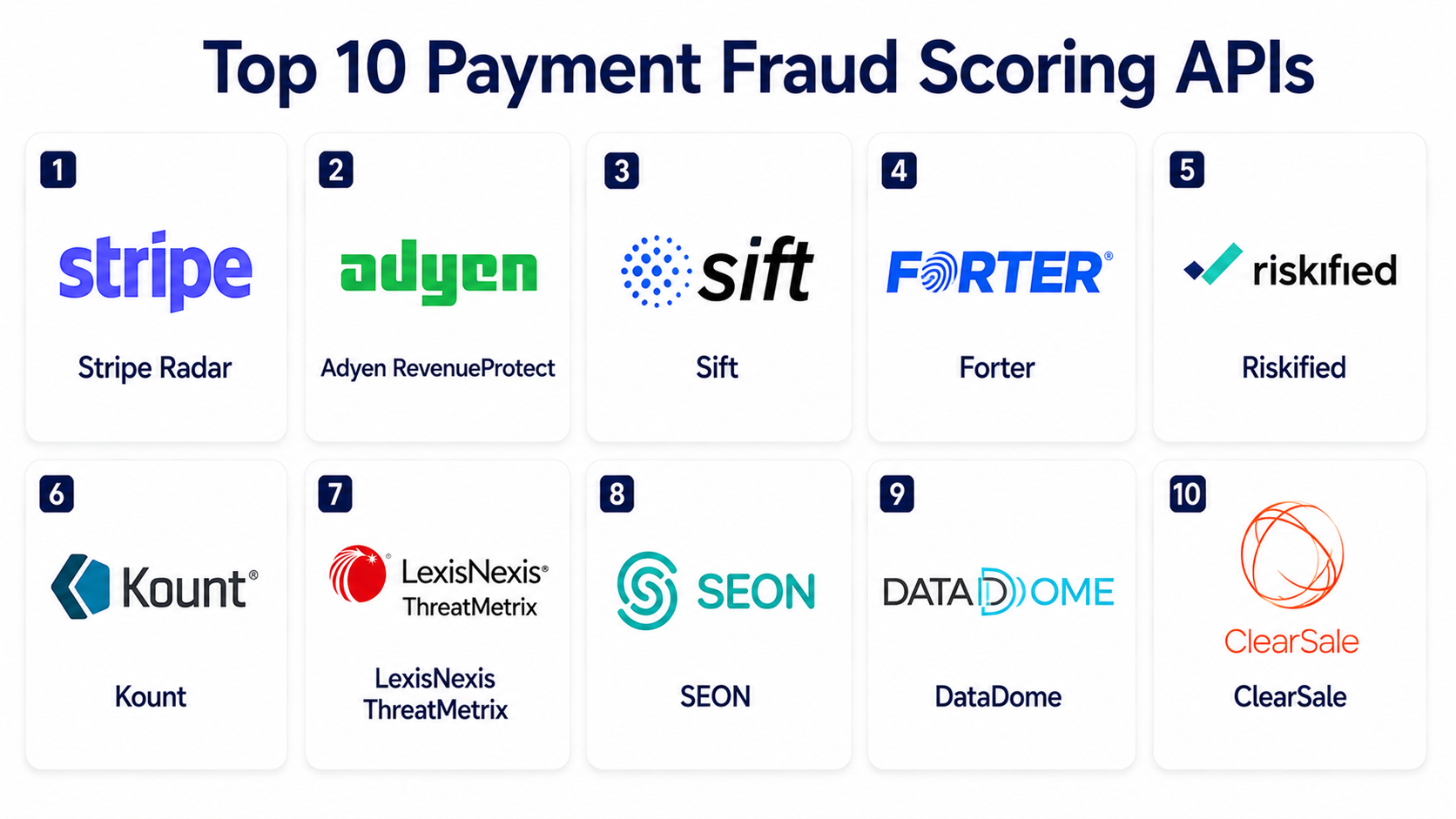
Introduction
Payment Fraud Scoring APIs are machine learning–driven services that analyze transactions in real time and assign a risk score indicating the likelihood of fraud. These APIs are used by payment gateways, fintech apps, e-commerce platforms, BNPL providers, and digital banks to block suspicious transactions, reduce chargebacks, and improve approval accuracy without harming legitimate users.
In fraud detection has shifted from rule-based systems to AI-native risk intelligence platforms. Modern fraud scoring APIs now combine behavioral biometrics, device fingerprinting, velocity checks, identity verification, network intelligence, and graph-based fraud detection. Many systems also integrate generative AI to detect synthetic identities and advanced fraud patterns.
Common real-world use cases include:
- Real-time payment fraud detection
- Card-not-present transaction scoring
- Account takeover prevention
- BNPL risk assessment
- Marketplace seller/buyer trust scoring
- Wallet and digital banking fraud detection
- Subscription abuse prevention
- Refund and chargeback reduction
When evaluating Payment Fraud Scoring APIs, buyers should consider:
- Real-time scoring latency
- Model accuracy and false positive rates
- Data signals (device, behavior, identity, network)
- API reliability and scalability
- Explainability of fraud decisions
- Integration ease with payment systems
- Compliance and audit readiness
- Custom rule + AI hybrid support
- Global fraud intelligence coverage
- Cost per transaction or API call
Best for: Payment processors, fintech companies, e-commerce platforms, digital banks, BNPL providers, marketplaces, and SaaS platforms with transactional risk exposure.
Not ideal for: Non-transactional applications or systems without financial or identity-based workflows.
Key Trends in Payment Fraud Scoring APIs
- AI-native fraud models replacing rule-based engines
- Behavioral biometrics becoming standard in risk scoring
- Graph-based fraud detection identifying fraud rings
- Real-time streaming fraud decisioning at millisecond latency
- Increased focus on explainable AI for compliance audits
- Identity verification merging with fraud scoring systems
- Device fingerprinting becoming more advanced and persistent
- Cross-platform fraud intelligence sharing networks growing
- Synthetic identity detection powered by generative AI models
- Embedded fraud scoring in BNPL and wallet ecosystems
How We Selected These Tools (Methodology)
The platforms in this list were selected based on fraud detection accuracy, market adoption, API performance, enterprise scalability, data intelligence depth, integration flexibility, and security maturity.
Selection criteria included:
- Real-time scoring capability
- Machine learning model sophistication
- Fraud signal diversity (device, identity, behavior, network)
- API performance and uptime reliability
- Enterprise adoption and trust signals
- Integration ecosystem breadth
- Explainability and audit features
- Compliance readiness
- Scalability under high transaction volumes
- Developer experience and documentation quality
The final list includes dedicated fraud intelligence platforms, payment network–based scoring systems, identity verification providers, and enterprise risk engines.
Payment Fraud Scoring APIs
#1 — Stripe Radar
Short description :
Stripe Radar is an AI-powered fraud detection and scoring system that evaluates payment transactions in real time using machine learning models trained on global payment data across millions of businesses.
Key Features
- Real-time fraud scoring
- Machine learning risk models
- Behavioral pattern detection
- Rule-based customization
- Network-wide fraud intelligence
- Chargeback protection tools
- Adaptive risk thresholds
Pros
- Extremely large training dataset
- Strong real-time decisioning
- Seamless Stripe ecosystem integration
Cons
- Best performance within Stripe ecosystem
- Limited deep customization for advanced enterprise logic
- Black-box ML explainability for some decisions
Platforms / Deployment
- Cloud / API-based
Security & Compliance
- Encryption
- PCI-aligned infrastructure
- Audit logs
- Access controls
- Fraud reporting tools
Integrations & Ecosystem
- Stripe payments ecosystem
- E-commerce platforms
- Subscription systems
- Marketplace infrastructure
- APIs
Support & Community
Strong documentation, developer tools, and enterprise support options.
#2 — Adyen RevenueProtect
Short description :
Adyen RevenueProtect is a fraud detection and scoring engine integrated into Adyen’s global payment infrastructure, designed to assess transaction risk using behavioral and network-level intelligence.
Key Features
- Real-time fraud scoring
- Risk-based payment authentication
- Behavioral analytics
- Global fraud network signals
- Custom risk rules engine
- Chargeback prevention tools
- Multi-channel fraud detection
Pros
- Strong global payment network intelligence
- High scalability for enterprise merchants
- Deep integration with payment flows
Cons
- Enterprise-focused complexity
- Requires configuration expertise
- Limited standalone usage outside Adyen ecosystem
Platforms / Deployment
- Cloud / API-based
Security & Compliance
- PCI DSS-aligned infrastructure
- Encryption
- Access controls
- Audit logs
- Compliance monitoring
Integrations & Ecosystem
- Adyen payment gateway
- Retail and marketplace platforms
- Subscription billing systems
- POS infrastructure
- APIs
Support & Community
Enterprise-grade onboarding and technical support.
#3 — Sift
Short description :
Sift is a digital trust and fraud prevention platform that uses machine learning and network intelligence to score transactions, detect fraud rings, and prevent account abuse.
Key Features
- AI-based fraud scoring
- Account takeover detection
- Fraud ring detection graphs
- Behavioral analytics
- Identity trust scoring
- Chargeback prevention
- Real-time decision APIs
Pros
- Strong identity + behavioral intelligence
- Excellent fraud ring detection
- Good explainability tools
Cons
- Complex setup for advanced configurations
- Pricing can scale with volume
- Requires tuning for best accuracy
Platforms / Deployment
- Cloud / API-based
Security & Compliance
- Encryption
- Access controls
- Audit logs
- Compliance reporting tools
- Identity verification support
Integrations & Ecosystem
- E-commerce platforms
- Payment gateways
- Subscription systems
- Identity providers
- APIs
Support & Community
Strong enterprise support and developer documentation.
#4 — Forter
Short description :
Forter is a real-time fraud prevention and trust platform that uses identity-based intelligence and machine learning to approve or decline transactions instantly.
Key Features
- Real-time fraud decisions
- Identity trust scoring
- Behavioral analysis
- Chargeback guarantee models
- Fraud network intelligence
- Account protection tools
- API-based scoring
Pros
- Very fast real-time decisioning
- Strong identity-based fraud detection
- High approval rate optimization
Cons
- Enterprise pricing model
- Less transparent internal scoring logic
- Limited customization for some workflows
Platforms / Deployment
- Cloud / API-based
Security & Compliance
- Encryption
- Audit logs
- Identity verification systems
- Access governance
- Compliance reporting
Integrations & Ecosystem
- E-commerce platforms
- Payment processors
- Marketplaces
- Subscription platforms
- APIs
Support & Community
Enterprise onboarding and dedicated support teams.
#5 — Riskified
Short description :
Riskified is an e-commerce fraud prevention platform that provides AI-powered fraud scoring, chargeback protection, and transaction approval optimization for global merchants.
Key Features
- Fraud risk scoring
- Chargeback guarantee programs
- Behavioral analytics
- Identity validation
- Real-time API decisions
- Merchant risk dashboards
- Fraud pattern detection
Pros
- Strong e-commerce specialization
- High approval rate optimization
- Chargeback protection offerings
Cons
- Primarily retail-focused
- Enterprise onboarding required
- Limited non-commerce use cases
Platforms / Deployment
- Cloud / API-based
Security & Compliance
- Encryption
- Access controls
- Audit logs
- Fraud reporting tools
Integrations & Ecosystem
- E-commerce platforms
- Payment gateways
- Marketplaces
- Subscription services
- APIs
Support & Community
Strong enterprise support and onboarding assistance.
#6 — Kount
Short description :
Kount is a digital fraud prevention platform that provides AI-driven fraud scoring, identity verification, and risk analysis for payments and account security.
Key Features
- AI fraud scoring engine
- Identity verification
- Device fingerprinting
- Behavioral analytics
- Chargeback reduction tools
- Risk rule customization
- Real-time decision APIs
Pros
- Strong identity intelligence
- Good customization capabilities
- Broad fraud prevention coverage
Cons
- UI complexity for new users
- Requires tuning for optimal accuracy
- Enterprise pricing structure
Platforms / Deployment
- Cloud / API-based
Security & Compliance
- Encryption
- Access controls
- Audit logs
- Compliance reporting
- Identity verification support
Integrations & Ecosystem
- Payment processors
- E-commerce platforms
- Identity providers
- APIs
- Fraud monitoring tools
Support & Community
Enterprise onboarding and technical documentation.
#7 — LexisNexis ThreatMetrix
Short description :
ThreatMetrix is a digital identity and fraud prevention platform that analyzes device, behavior, and network signals to generate real-time fraud risk scores.
Key Features
- Device fingerprinting
- Identity trust scoring
- Behavioral analytics
- Global fraud network intelligence
- Real-time risk scoring
- Account takeover prevention
- Fraud analytics dashboards
Pros
- Very strong device intelligence
- Large global fraud network
- Excellent identity verification depth
Cons
- Complex enterprise setup
- Requires tuning for accuracy
- Pricing may be high for small businesses
Platforms / Deployment
- Cloud / API-based
Security & Compliance
- Encryption
- Identity verification systems
- Audit logs
- Compliance tools
- Access governance
Integrations & Ecosystem
- Payment gateways
- Banking systems
- E-commerce platforms
- Identity verification services
- APIs
Support & Community
Strong enterprise-level support and documentation.
#8 — SEON
Short description :
SEON is a fraud prevention platform that uses digital footprinting, email/phone intelligence, and behavioral signals to generate fraud risk scores in real time.
Key Features
- Digital footprint analysis
- Email and phone intelligence scoring
- Behavioral risk signals
- Device fingerprinting
- Fraud rule engine
- Real-time scoring API
- Risk dashboards
Pros
- Fast integration and onboarding
- Strong digital footprint signals
- Flexible rule-based + AI hybrid system
Cons
- Smaller ecosystem compared to legacy players
- Requires tuning for enterprise accuracy
- Limited advanced identity graph depth
Platforms / Deployment
- Cloud / API-based
Security & Compliance
- Encryption
- Access controls
- Audit logs
- Fraud reporting tools
Integrations & Ecosystem
- E-commerce platforms
- Payment systems
- CRM tools
- APIs
- Fraud monitoring systems
Support & Community
Good developer documentation and responsive support.
#9 — DataDome
Short description :
DataDome is a cybersecurity and fraud prevention platform specializing in bot protection, payment fraud detection, and real-time risk scoring.
Key Features
- Bot detection and mitigation
- Fraud scoring APIs
- Behavioral analysis
- Real-time blocking engine
- Traffic intelligence
- Account takeover prevention
- Machine learning models
Pros
- Strong bot + fraud combined protection
- Fast real-time response
- Good enterprise scalability
Cons
- More cybersecurity-focused than payment-specific
- Requires configuration for payment workflows
- Pricing may scale with traffic
Platforms / Deployment
- Cloud / API-based
Security & Compliance
- Encryption
- Access controls
- Audit logs
- Compliance tools
- Threat monitoring
Integrations & Ecosystem
- E-commerce platforms
- APIs
- Cybersecurity tools
- Payment systems
- Web applications
Support & Community
Enterprise support and documentation available.
#10 — ClearSale
Short description :
ClearSale is a fraud prevention and scoring platform that combines AI and human review systems to evaluate transaction risk and reduce chargebacks.
Key Features
- Fraud scoring engine
- Human-in-the-loop review
- Chargeback prevention
- Real-time risk analysis
- Order validation workflows
- Behavioral analytics
- Merchant dashboards
Pros
- Strong hybrid AI + human review model
- Good chargeback reduction results
- Useful for high-risk industries
Cons
- Human review may slow approvals
- Less real-time automation than competitors
- Enterprise onboarding required
Platforms / Deployment
- Cloud / API-based
Security & Compliance
- Encryption
- Audit logs
- Access controls
- Compliance reporting tools
Integrations & Ecosystem
- E-commerce platforms
- Payment processors
- Marketplaces
- APIs
- Fraud monitoring systems
Support & Community
Strong enterprise onboarding and operational support.
Comparison Table (Top 10)
| Tool Name | Best For | Platform(s) Supported | Deployment | Standout Feature | Public Rating |
|---|---|---|---|---|---|
| Stripe Radar | Payment-native fraud scoring | Cloud | Cloud | Large-scale ML network | N/A |
| Adyen RevenueProtect | Enterprise payments | Cloud | Cloud | Global payment intelligence | N/A |
| Sift | Identity + fraud rings | Cloud | Cloud | Fraud graph intelligence | N/A |
| Forter | Real-time approvals | Cloud | Cloud | Identity trust scoring | N/A |
| Riskified | E-commerce fraud prevention | Cloud | Cloud | Chargeback guarantee model | N/A |
| Kount | Identity fraud detection | Cloud | Cloud | Device + identity scoring | N/A |
| ThreatMetrix | Device intelligence | Cloud | Cloud | Global device fingerprinting | N/A |
| SEON | Digital footprint scoring | Cloud | Cloud | Email/phone intelligence | N/A |
| DataDome | Bot + fraud protection | Cloud | Cloud | Bot + fraud hybrid system | N/A |
| ClearSale | Hybrid fraud review | Cloud | Cloud | Human-in-the-loop scoring | N/A |
Evaluation & Payment Fraud Scoring APIs
| Tool Name | Core (25%) | Ease (15%) | Integrations (15%) | Security (10%) | Performance (10%) | Support (10%) | Value (15%) | Weighted Total |
|---|---|---|---|---|---|---|---|---|
| Stripe Radar | 10 | 9 | 10 | 9 | 9 | 9 | 8 | 9.2 |
| Adyen RevenueProtect | 9 | 8 | 9 | 9 | 9 | 8 | 7 | 8.6 |
| Sift | 9 | 8 | 9 | 9 | 9 | 8 | 7 | 8.5 |
| Forter | 9 | 8 | 8 | 9 | 10 | 9 | 7 | 8.6 |
| Riskified | 8 | 8 | 8 | 9 | 9 | 8 | 8 | 8.3 |
| Kount | 8 | 7 | 8 | 9 | 8 | 8 | 7 | 7.9 |
| ThreatMetrix | 9 | 7 | 8 | 10 | 9 | 8 | 6 | 8.2 |
| SEON | 8 | 9 | 8 | 8 | 8 | 8 | 8 | 8.2 |
| DataDome | 8 | 8 | 8 | 9 | 9 | 8 | 7 | 8.3 |
| ClearSale | 8 | 7 | 7 | 8 | 8 | 8 | 7 | 7.7 |
These scores are comparative and reflect different strengths across identity intelligence, fraud detection depth, payment integration, and real-time decisioning capability. No single fraud scoring API is universally best—selection depends on transaction volume, risk tolerance, industry type, and integration ecosystem.
Which Payment Fraud Scoring APIs
Solo / Freelancer
Smaller platforms should prioritize ease of integration and lightweight APIs.
Recommended options:
- SEON
- Stripe Radar
- DataDome
SMB
Small and medium businesses should prioritize balance between automation and accuracy.
Recommended options:
- Kount
- Riskified
- Stripe Radar
Mid-Market
Mid-sized companies need scalable fraud intelligence with global signals.
Recommended options:
- Sift
- Adyen RevenueProtect
- ThreatMetrix
Enterprise
Large enterprises need advanced identity graphs and global fraud intelligence.
Recommended options:
- Forter
- Adyen RevenueProtect
- Stripe Radar
Budget vs Premium
- Budget-friendly: SEON
- Premium enterprise: Forter, Adyen, Stripe Radar
- Balanced value: Sift, Riskified
Feature Depth vs Ease of Use
- Best identity intelligence: ThreatMetrix
- Best fraud graph analysis: Sift
- Best real-time automation: Forter
Integrations & Scalability
- Best payment-native integration: Stripe Radar
- Best enterprise payments ecosystem: Adyen
- Best digital footprint analysis: SEON
Security & Compliance Needs
Organizations with strict compliance requirements should prioritize:
- Stripe Radar
- Adyen RevenueProtect
- ThreatMetrix
- Forter
Frequently Asked Questions (FAQs)
1. What are Payment Fraud Scoring APIs?
They are APIs that analyze transactions in real time and assign a fraud risk score based on behavioral, identity, and device signals.
2. How do fraud scoring APIs work?
They use machine learning models and rule engines to analyze transaction data and detect suspicious patterns.
3. What data signals do they use?
They use device fingerprinting, IP data, behavioral patterns, identity verification, and transaction history.
4. Are fraud scoring APIs accurate?
Most enterprise platforms are highly accurate but still require tuning to reduce false positives.
5. Do they work in real time?
Yes, most modern fraud scoring APIs operate in milliseconds to support checkout flows.
6. Can they prevent chargebacks?
Yes, they help reduce fraudulent transactions that lead to chargebacks.
7. Are they used in BNPL and wallets?
Yes, BNPL providers and digital wallets heavily rely on fraud scoring APIs.
8. What is identity-based fraud scoring?
It evaluates trustworthiness based on user identity signals rather than only transaction behavior.
9. Do they support AI and machine learning?
Yes, most modern platforms are AI-driven with continuous learning models.
10. What should businesses prioritize when choosing one?
Accuracy, latency, integration ease, global coverage, and explainability of decisions.
Conclusion
Payment Fraud Scoring APIs are a critical layer in modern digital commerce infrastructure, enabling businesses to detect fraud in real time while maintaining smooth user experiences. As online transactions grow across fintech, e-commerce, BNPL, and embedded finance ecosystems, fraud prevention has evolved into a sophisticated AI-driven discipline combining identity intelligence, behavioral analytics, and global fraud networks. Stripe Radar and Adyen RevenueProtect lead in payment-native fraud intelligence, while Forter and Sift excel in identity trust and fraud graph analysis.
