Introduction
Industrial IoT Analytics Platforms enable companies to collect, analyze, and act on data generated by industrial equipment, sensors, and connected devices. These platforms provide insights to optimize operations, improve safety, reduce downtime, and increase efficiency in manufacturing, energy, logistics, and other industrial sectors.
In Industrial IoT (IIoT) analytics is critical as companies increasingly rely on data-driven decision-making. Real-time monitoring, predictive maintenance, and process optimization are becoming standard practices for industrial operators looking to stay competitive.
Real-world use cases:
- Predictive maintenance for manufacturing machinery to avoid downtime.
- Energy optimization in smart factories and plants.
- Supply chain and logistics tracking for efficiency gains.
- Quality control monitoring for production lines.
- Remote monitoring of oil and gas pipelines or energy grids.
Evaluation criteria for buyers:
- Real-time data ingestion and analytics
- Predictive maintenance capabilities
- Integration with OT and IT systems
- AI and machine learning features
- Visualization dashboards and reporting
- Security and compliance
- Scalability for industrial deployments
- Edge computing support
- Vendor ecosystem and API availability
- Cost and deployment flexibility
Best for: Manufacturing companies, energy providers, logistics firms, and enterprises needing industrial-grade analytics.
Not ideal for: Small operations with minimal machinery or data collection needs; simpler monitoring tools may suffice.
Key Trends in Industrial IoT Analytics Platforms
- AI/ML-based predictive maintenance and anomaly detection
- Cloud and edge hybrid deployments for real-time analytics
- Integration with enterprise IT systems and ERP platforms
- Industrial-grade cybersecurity and compliance controls
- Visualization dashboards with KPI tracking for operations
- IoT device interoperability across vendors and legacy systems
- Data-driven process optimization and automation
- Subscription and usage-based pricing models
- Sensor and device data standardization for better analytics
- Sustainability and energy optimization insights
How We Selected These Tools (Methodology)
- Market adoption and industrial sector presence
- Completeness of analytics, predictive, and monitoring features
- Reliability and performance in operational environments
- Security posture and compliance certifications
- Integration with OT, IT, ERP, and cloud systems
- AI and machine learning capabilities
- Scalability for multi-site industrial operations
- Vendor support, documentation, and ecosystem
- Ease of deployment and management
- Practical value versus cost
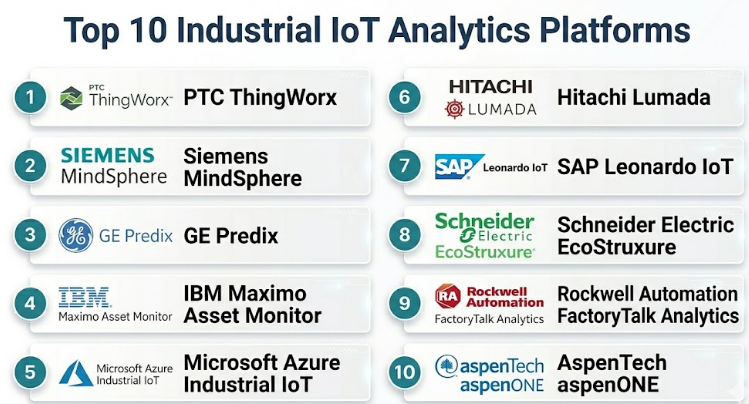
#1 — PTC ThingWorx
Short description:
ThingWorx provides analytics, visualization, and application development for industrial IoT. Designed for manufacturing and industrial operators seeking real-time insights.
Key Features
- Predictive analytics for equipment health
- Real-time dashboards and visualization
- Rapid IoT application development
- Device and sensor connectivity
- Edge computing support
- Data modeling and workflow automation
- Integration with ERP and MES systems
Pros
- Rapid deployment and application creation
- Strong predictive analytics capabilities
Cons
- Enterprise-focused pricing
- Technical expertise may be required for customization
Platforms / Deployment
- Web, Cloud / Hybrid
Security & Compliance
- ISO 27001, SOC 2
- MFA, RBAC, encryption
Integrations & Ecosystem
- APIs for ERP, MES, and OT systems
- Analytics and reporting connectors
- Third-party device integration
Support & Community
- Enterprise support tiers
- Developer community and documentation
#2 — Siemens MindSphere
Short description:
MindSphere connects industrial devices to the cloud for advanced analytics and insights. Ideal for factories, plants, and industrial operations seeking efficiency improvements.
Key Features
- Predictive maintenance and monitoring
- Asset performance management
- Real-time data visualization
- Open APIs for custom applications
- AI and machine learning analytics
- Multi-site deployment support
- Cloud-native architecture
Pros
- Comprehensive industrial analytics
- Scalable for large operations
Cons
- Higher cost for small-to-medium operations
- May require specialized knowledge for implementation
Platforms / Deployment
- Web, Cloud
Security & Compliance
- ISO 27001, SOC 2
- MFA, RBAC, encryption
Integrations & Ecosystem
- ERP, MES, and manufacturing system connectors
- Analytics integration tools
- Open API support
Support & Community
- Professional enterprise support
- Extensive documentation
#3 — GE Predix
Short description:
Predix provides industrial analytics and asset performance management for industrial equipment, pipelines, and energy systems.
Key Features
- Predictive maintenance and health monitoring
- Real-time operational dashboards
- Machine learning analytics
- Multi-device connectivity
- Edge computing integration
- Data visualization and reporting
- Cloud-native platform
Pros
- Strong focus on industrial assets
- Scalable for large deployments
Cons
- Complex for smaller operations
- Licensing can be costly
Platforms / Deployment
- Web, Cloud
Security & Compliance
- ISO 27001, SOC 2
- MFA, RBAC, encryption
Integrations & Ecosystem
- Integration with ERP and SCADA systems
- APIs for analytics
- Third-party sensor support
Support & Community
- Enterprise support
- Documentation and knowledge base
#4 — IBM Maximo Asset Monitor
Short description:
Maximo provides analytics for asset management, predictive maintenance, and operational efficiency for industrial enterprises.
Key Features
- Real-time asset monitoring
- Predictive maintenance alerts
- IoT device connectivity
- AI-based analytics
- Visualization dashboards
- Reporting and KPIs
- Integration with IT and OT systems
Pros
- Strong asset management and predictive insights
- Integrates well with IBM ecosystem
Cons
- Enterprise-oriented; may be overkill for SMBs
- Implementation complexity
Platforms / Deployment
- Web, Cloud / Hybrid
Security & Compliance
- ISO 27001, SOC 2
- MFA, RBAC, encryption
Integrations & Ecosystem
- APIs for IT/OT integration
- ERP and MES connectors
- Reporting tools
Support & Community
- IBM enterprise support
- Documentation and training resources
#5 — Microsoft Azure Industrial IoT
Short description:
Azure Industrial IoT provides cloud-based analytics, predictive maintenance, and device monitoring for manufacturing and industrial operations.
Key Features
- Device connectivity and telemetry
- Real-time dashboards and visualization
- AI and ML predictive analytics
- Edge computing support
- Workflow automation
- Policy-driven alerts
- Integration with Azure services
Pros
- Cloud-native and scalable
- Pre-built analytics and templates
Cons
- Primarily Azure-centric
- Additional setup required for OT integration
Platforms / Deployment
- Web, Cloud
Security & Compliance
- ISO 27001, SOC 2
- MFA, RBAC, encryption
Integrations & Ecosystem
- Azure services and Power BI integration
- APIs for device and OT connectivity
- Analytics and reporting connectors
Support & Community
- Microsoft enterprise support
- Developer forums
#6 — Hitachi Lumada
Short description:
Lumada provides industrial IoT analytics for manufacturing, energy, and supply chain operations with predictive and real-time monitoring.
Key Features
- Predictive maintenance analytics
- Real-time data visualization
- Device and sensor management
- AI-powered insights
- Workflow automation
- Integration with OT/IT systems
- Cloud and edge deployment
Pros
- Strong predictive analytics
- Scalable for multi-site operations
Cons
- Enterprise-focused pricing
- Smaller organizations may find setup complex
Platforms / Deployment
- Web, Cloud / Hybrid
Security & Compliance
- ISO 27001, SOC 2
- MFA, encryption, RBAC
Integrations & Ecosystem
- ERP, MES, and SCADA system integration
- APIs for analytics
- Reporting tools
Support & Community
- Enterprise support
- Documentation and professional services
#7 — SAP Leonardo IoT
Short description:
SAP Leonardo IoT combines industrial IoT analytics with ERP and business applications for smart manufacturing and operations.
Key Features
- Real-time monitoring and analytics
- Predictive maintenance
- ERP integration
- AI and ML analytics
- Device and sensor connectivity
- Dashboards and reporting
Pros
- Strong integration with SAP ecosystem
- Combines operational and business insights
Cons
- Best for SAP-heavy environments
- Complexity may challenge smaller operations
Platforms / Deployment
- Web, Cloud
Security & Compliance
- ISO 27001, SOC 2
- MFA, RBAC, encryption
Integrations & Ecosystem
- SAP ERP and analytics integration
- APIs for OT connectivity
- Reporting tools
Support & Community
- SAP enterprise support
- Community forums and documentation
#8 — Schneider Electric EcoStruxure
Short description:
EcoStruxure provides analytics, energy monitoring, and predictive maintenance for industrial operations and critical facilities.
Key Features
- Device connectivity and monitoring
- Energy and resource optimization
- Predictive analytics for equipment health
- Real-time dashboards
- Cloud and edge support
- Alerts and workflow automation
Pros
- Strong energy and sustainability analytics
- Scalable across multiple facilities
Cons
- Focused on energy-intensive industries
- May need additional modules for full analytics coverage
Platforms / Deployment
- Web, Cloud / Hybrid
Security & Compliance
- ISO 27001, SOC 2
- MFA, RBAC
Integrations & Ecosystem
- OT and energy management system integration
- APIs for analytics
- Reporting and visualization tools
Support & Community
- Professional support
- Documentation and services
#9 — Rockwell Automation FactoryTalk Analytics
Short description:
FactoryTalk Analytics offers industrial IoT data collection, visualization, and predictive insights for manufacturing operations.
Key Features
- Real-time monitoring and dashboards
- Predictive maintenance alerts
- Device and sensor management
- Integration with Rockwell Automation systems
- AI-based insights
- Reporting and KPIs
Pros
- Well-suited for manufacturing plants
- Strong Rockwell Automation integration
Cons
- Enterprise-focused
- Limited for non-Rockwell environments
Platforms / Deployment
- Web, Cloud / Hybrid
Security & Compliance
- ISO 27001
- MFA, encryption
Integrations & Ecosystem
- APIs for ERP and MES integration
- Device and sensor connectors
- Analytics reporting
Support & Community
- Enterprise support
- Documentation
#10 — AspenTech aspenONE
Short description:
AspenTech aspenONE provides industrial IoT analytics for process industries, combining predictive analytics and operational optimization.
Key Features
- Real-time data monitoring
- Predictive maintenance and anomaly detection
- Workflow optimization
- Device and sensor connectivity
- Dashboards and reporting
- AI and ML insights
Pros
- Strong for process industries
- Predictive insights enhance operational efficiency
Cons
- Specialized focus on process industries
- Enterprise pricing
Platforms / Deployment
- Web, Cloud / Hybrid
Security & Compliance
- ISO 27001, SOC 2
- MFA, encryption, RBAC
Integrations & Ecosystem
- ERP and SCADA system connectors
- APIs for analytics
- Reporting and visualization
Support & Community
- Enterprise support tiers
- Documentation and knowledge base
Comparison Table (Top 10)
| Tool Name | Best For | Platform(s) Supported | Deployment | Standout Feature | Public Rating |
|---|---|---|---|---|---|
| PTC ThingWorx | Manufacturing analytics | Web | Cloud / Hybrid | Rapid application development | N/A |
| Siemens MindSphere | Industrial operations | Web | Cloud | Predictive maintenance | N/A |
| GE Predix | Asset performance | Web | Cloud | Industrial asset analytics | N/A |
| IBM Maximo Asset Monitor | Asset management | Web | Cloud / Hybrid | Predictive maintenance alerts | N/A |
| Microsoft Azure Industrial IoT | Industrial telemetry | Web | Cloud | Pre-built analytics templates | N/A |
| Hitachi Lumada | Manufacturing & energy | Web | Cloud / Hybrid | AI-powered insights | N/A |
| SAP Leonardo IoT | ERP-integrated analytics | Web | Cloud | ERP and operational integration | N/A |
| Schneider EcoStruxure | Energy optimization | Web | Cloud / Hybrid | Energy monitoring and optimization | N/A |
| Rockwell FactoryTalk | Manufacturing monitoring | Web | Cloud / Hybrid | Rockwell Automation integration | N/A |
| AspenTech aspenONE | Process industries | Web | Cloud / Hybrid | Predictive process optimization | N/A |
Evaluation & Scoring
| Tool Name | Core (25%) | Ease (15%) | Integrations (15%) | Security (10%) | Performance (10%) | Support (10%) | Value (15%) | Weighted Total |
|---|---|---|---|---|---|---|---|---|
| PTC ThingWorx | 9 | 8 | 8 | 8 | 8 | 8 | 7 | 8.1 |
| Siemens MindSphere | 9 | 7 | 8 | 9 | 8 | 8 | 7 | 8.2 |
| GE Predix | 9 | 7 | 8 | 8 | 8 | 8 | 7 | 8.1 |
| IBM Maximo | 9 | 8 | 8 | 8 | 8 | 8 | 7 | 8.1 |
| Azure Industrial IoT | 8 | 8 | 8 | 8 | 8 | 8 | 8 | 8.0 |
| Hitachi Lumada | 9 | 7 | 8 | 8 | 8 | 8 | 7 | 8.1 |
| SAP Leonardo | 8 | 7 | 7 | 8 | 8 | 7 | 7 | 7.6 |
| Schneider EcoStruxure | 8 | 8 | 7 | 8 | 8 | 8 | 7 | 7.9 |
| FactoryTalk | 8 | 7 | 7 | 8 | 8 | 7 | 7 | 7.6 |
| AspenTech aspenONE | 8 | 7 | 7 | 8 | 8 | 7 | 7 | 7.6 |
Interpretation: Weighted totals provide a comparative snapshot of platform performance, usability, integrations, security, and value for industrial deployments.
Which Industrial IoT Analytics Platform
Solo / Freelancer
- PTC ThingWorx or Azure Industrial IoT for quick pilots and smaller industrial setups.
SMB
- IBM Maximo or Hitachi Lumada provide strong analytics without full enterprise complexity.
Mid-Market
- Siemens MindSphere or GE Predix for multi-site industrial operations with predictive maintenance needs.
Enterprise
- AspenTech, SAP Leonardo, Schneider EcoStruxure, or FactoryTalk for large-scale manufacturing, energy, or process industry analytics.
Budget vs Premium
- Cloud-native platforms like Azure IoT offer cost-efficient deployments; enterprise platforms provide deeper analytics at higher investment.
Feature Depth vs Ease of Use
- ThingWorx offers rapid application creation; Lumada and MindSphere deliver comprehensive industrial analytics.
Integrations & Scalability
- Siemens, GE, and IBM excel in integrating OT, ERP, and MES systems at scale.
Security & Compliance Needs
- ISO 27001 and SOC 2 compliant platforms include Siemens MindSphere, IBM Maximo, and Azure Industrial IoT.
Frequently Asked Questions (FAQs)
1. What pricing models are typical for industrial IoT analytics platforms?
Most platforms offer subscription-based or per-device pricing. Enterprise licenses may be negotiated based on deployment scale.
2. How long does implementation usually take?
Small pilots may deploy in weeks; full-scale factory or multi-site deployments can take several months.
3. Can legacy industrial equipment be integrated?
Yes, platforms often support legacy sensors and devices via gateways, adapters, or APIs.
4. How reliable is predictive maintenance?
Predictive models provide early warnings, but human validation and maintenance planning remain essential.
5. Are cloud and edge deployments supported?
Yes, most platforms provide hybrid deployment options for low-latency and real-time processing.
6. How is industrial data secured?
Platforms use encryption, MFA, RBAC, and compliance with ISO 27001 or SOC 2 standards.
7. Can these platforms integrate with ERP and MES?
Yes, they provide APIs and connectors for enterprise systems integration.
8. Are AI and ML features included?
Most platforms include machine learning for anomaly detection, predictive analytics, and optimization.
9. How scalable are these platforms?
Cloud-native and hybrid platforms can scale from single factories to multi-site operations.
10. What alternatives exist for small operations?
For minimal equipment, simpler monitoring tools, spreadsheets, or lightweight IIoT analytics apps may suffice.
Conclusion
Industrial IoT Analytics Platforms empower manufacturers and industrial enterprises to harness data for operational efficiency, predictive maintenance, and smarter decision-making. Platform selection depends on scale, complexity, and integration requirements. Cloud-native solutions like Azure Industrial IoT and PTC ThingWorx suit small-to-medium setups, while enterprise platforms like Siemens MindSphere, GE Predix, or AspenTech aspenONE provide comprehensive analytics for large operations. Buyers should evaluate connectivity, predictive capabilities, AI, integration, security, and scalability.
