Introduction
Data virtualization platforms are tools that allow organizations to access, query, and combine data from multiple sources without physically moving or copying it into a single database. Instead of building traditional ETL pipelines, these platforms create a unified “virtual layer” that connects to different data systems in real time.
In data virtualization is becoming critical because organizations are dealing with fragmented data ecosystems spread across cloud platforms, SaaS applications, on-prem databases, and data lakes. Moving all this data into one place is expensive and slow, so virtualization provides a faster, more flexible alternative.
Common use cases include:
- Real-time business intelligence dashboards
- Unified reporting across multiple databases
- Hybrid cloud data access
- Data federation across departments
- API-layer data access for applications
- Reducing duplication of large datasets
- Fast analytics without heavy ETL pipelines
When evaluating data virtualization platforms, buyers should focus on:
- Query performance across distributed sources
- Number and quality of connectors
- Real-time data access capabilities
- Caching and optimization features
- Security and access control (RBAC, masking, encryption)
- Support for SQL and API-based querying
- Scalability across enterprise environments
- Metadata management and data lineage
- Integration with BI tools and data warehouses
- Deployment flexibility (cloud, on-prem, hybrid)
Best for:
Enterprises, analytics teams, and organizations with highly distributed data systems needing unified access without heavy data movement.
Not ideal for:
Small startups with single databases or teams that already centralize all data in a single warehouse with no latency constraints.
Key Trends in Data Virtualization Platforms
- Shift toward hybrid data architectures combining virtualization + data lakes
- Increased adoption of real-time federated query engines
- Strong integration with cloud data warehouses and lakehouse systems
- AI-assisted query optimization and caching strategies
- Expansion of API-first data virtualization layers
- Improved governance and data masking features for compliance
- Growing use in self-service analytics environments
- Containerized and Kubernetes-native deployments
- Strong focus on reducing data duplication costs
- Convergence with data mesh architectures
How We Selected These Tools (Methodology)
- Adoption in enterprise and analytics ecosystems
- Ability to query multiple heterogeneous data sources
- Performance and optimization capabilities
- Security, governance, and compliance readiness
- Integration with BI tools and cloud platforms
- Support for real-time and batch query federation
- Scalability in large distributed environments
- Ease of deployment and maintenance
- Metadata management and observability features
- Vendor maturity and ecosystem strength
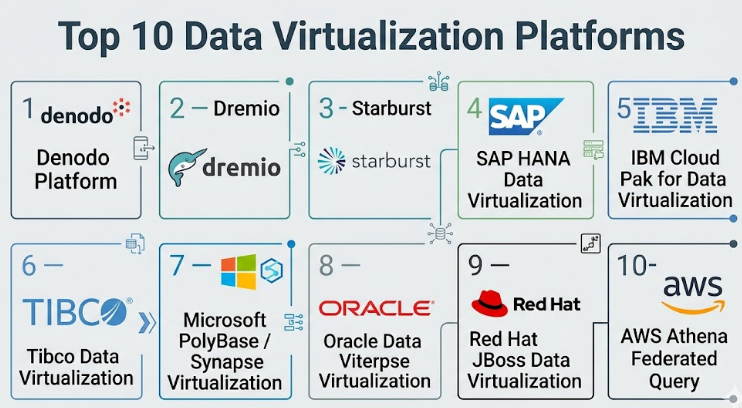
Top 10 Data Virtualization Platforms
#1 — Denodo Platform
Short description:
Denodo Platform is one of the most widely used enterprise data virtualization solutions. It enables real-time data integration across multiple sources without physical data movement. It is commonly used for enterprise analytics, reporting, and API-based data access.
Key Features
- Real-time data federation across sources
- Advanced query optimization engine
- Semantic data layer creation
- Strong caching and acceleration features
- Role-based access control (RBAC)
- Data masking and security policies
- API generation for virtual datasets
Pros
- Very strong enterprise-grade performance
- Mature and widely adopted platform
- Excellent governance features
Cons
- High complexity in setup
- Expensive for smaller organizations
Platforms / Deployment
- Cloud / Self-hosted / Hybrid
Security & Compliance
- RBAC and fine-grained access control
- Data masking and encryption
- Enterprise compliance features (varies by deployment)
Integrations & Ecosystem
- SQL databases
- Cloud data warehouses
- BI tools (Power BI-style ecosystems)
- APIs and enterprise applications
Support & Community
Strong enterprise vendor support and documentation.
#2 — Dremio
Short description:
Dremio is a data lakehouse and virtualization platform that enables fast SQL-based querying across distributed data sources. It is widely used for self-service analytics and lakehouse architectures.
Key Features
- SQL-based data virtualization engine
- Data lakehouse acceleration
- Query caching and reflection system
- Distributed query processing
- Integration with cloud storage systems
- Semantic layer support
- Self-service analytics interface
Pros
- High-performance query execution
- Strong support for data lake environments
- Good self-service analytics capabilities
Cons
- Requires tuning for best performance
- Can be complex in large deployments
Platforms / Deployment
- Cloud / Self-hosted / Hybrid
Security & Compliance
- RBAC support
- Encryption in transit and at rest
- Authentication integration (varies)
Integrations & Ecosystem
- Data lakes (S3-style storage systems)
- Cloud warehouses
- BI tools
- SQL engines
Support & Community
Active enterprise and open-source ecosystem.
#3 — Starburst (Trino-based)
Short description:
Starburst is a high-performance data virtualization platform built on Trino, designed for federated querying across multiple data sources at scale. It is widely used in modern data lake and analytics architectures.
Key Features
- Distributed SQL query engine
- Federated querying across sources
- High-performance parallel execution
- Data lake and warehouse integration
- Low-latency query optimization
- Kubernetes-native deployment support
- Advanced caching mechanisms
Pros
- Extremely fast query performance
- Strong scalability for large datasets
- Excellent for federated architectures
Cons
- Requires engineering expertise
- Not a simple plug-and-play solution
Platforms / Deployment
- Linux
- Cloud / Self-hosted / Hybrid
Security & Compliance
- RBAC support
- Encryption support
- Enterprise security controls (varies by setup)
Integrations & Ecosystem
- Data lakes
- Cloud warehouses
- Streaming systems
- BI tools
Support & Community
Strong enterprise and open-source community support.
#4 — SAP HANA Data Virtualization
Short description:
SAP HANA provides data virtualization capabilities as part of its in-memory database ecosystem, enabling real-time access to distributed enterprise data.
Key Features
- In-memory data virtualization
- Real-time analytics support
- Enterprise data federation
- Advanced modeling capabilities
- Strong SAP ecosystem integration
- High-performance query execution
- Data abstraction layer
Pros
- Excellent enterprise performance
- Strong integration with SAP systems
- Real-time processing capabilities
Cons
- SAP ecosystem dependency
- High licensing and infrastructure cost
Platforms / Deployment
- Cloud / On-prem / Hybrid
Security & Compliance
- Enterprise-grade security
- Role-based access control
- Compliance features vary by deployment
Integrations & Ecosystem
- SAP ERP systems
- Enterprise databases
- BI and analytics tools
- Cloud data systems
Support & Community
Strong enterprise vendor support.
#5 — IBM Cloud Pak for Data Virtualization
Short description:
IBM’s data virtualization solution enables unified data access across hybrid and multi-cloud environments, often used in large enterprise data ecosystems.
Key Features
- Unified data access layer
- Hybrid cloud data federation
- Metadata and governance tools
- AI-assisted query optimization
- Data catalog integration
- Virtual views and modeling
- Enterprise workflow integration
Pros
- Strong governance capabilities
- Excellent hybrid cloud support
- Enterprise scalability
Cons
- Complex architecture
- High operational overhead
Platforms / Deployment
- Cloud / Hybrid / On-prem
Security & Compliance
- RBAC and IAM controls
- Encryption and audit logging
- Enterprise compliance support
Integrations & Ecosystem
- IBM data ecosystem
- Databases and warehouses
- BI platforms
- Cloud services
Support & Community
Strong enterprise-level support.
#6 — Tibco Data Virtualization
Short description:
Tibco Data Virtualization provides real-time data integration and federation capabilities for enterprise analytics and operational reporting.
Key Features
- Real-time data federation
- Semantic data modeling layer
- Data caching and optimization
- API generation for virtual data
- Strong query optimization engine
- Metadata management tools
- Security and governance controls
Pros
- Mature enterprise platform
- Strong performance optimization
- Flexible integration options
Cons
- Complex configuration
- Licensing cost can be high
Platforms / Deployment
- Cloud / On-prem / Hybrid
Security & Compliance
- RBAC support
- Data masking and encryption
- Enterprise compliance features (varies)
Integrations & Ecosystem
- Databases and warehouses
- BI tools
- APIs and enterprise apps
- Cloud systems
Support & Community
Strong enterprise vendor support.
#7 — Microsoft PolyBase / Synapse Virtualization
Short description:
Microsoft provides data virtualization capabilities through Synapse and PolyBase, allowing querying across relational and non-relational sources.
Key Features
- Cross-source SQL querying
- Integration with Synapse Analytics
- Data virtualization over external sources
- Hybrid data access
- Distributed query execution
- Integration with Microsoft ecosystem
- Security via Azure services
Pros
- Strong Azure integration
- Easy for Microsoft-based environments
- Good enterprise scalability
Cons
- Azure dependency
- Limited flexibility outside Microsoft stack
Platforms / Deployment
- Cloud (Azure) / Hybrid
Security & Compliance
- Azure Active Directory integration
- RBAC support
- Encryption via Azure services
Integrations & Ecosystem
- Azure Data Lake
- SQL Server systems
- Power BI
- Cloud data platforms
Support & Community
Strong Microsoft enterprise support.
#8 — Oracle Data Virtualization
Short description:
Oracle Data Virtualization provides a unified data access layer across Oracle and non-Oracle systems, supporting enterprise analytics and reporting.
Key Features
- Federated data querying
- Enterprise semantic layer
- Data caching and optimization
- Integration with Oracle ecosystem
- SQL-based query engine
- Metadata management
- Security policy enforcement
Pros
- Strong enterprise reliability
- Deep Oracle integration
- Scalable architecture
Cons
- Oracle ecosystem dependency
- High cost structure
Platforms / Deployment
- Cloud / On-prem / Hybrid
Security & Compliance
- Enterprise RBAC
- Encryption and audit logging
- Compliance support varies
Integrations & Ecosystem
- Oracle databases
- Enterprise applications
- BI tools
- Cloud systems
Support & Community
Strong enterprise support.
#9 — Red Hat JBoss Data Virtualization
Short description:
Red Hat Data Virtualization enables unified access to distributed data sources using virtual views and federation techniques.
Key Features
- Virtual data layer creation
- Federated SQL queries
- Data caching mechanisms
- Metadata-driven architecture
- Integration with Red Hat ecosystem
- API access to virtual data
- Security policy enforcement
Pros
- Strong open enterprise ecosystem
- Flexible deployment options
- Good integration with open-source stack
Cons
- Requires technical expertise
- Smaller ecosystem than leading competitors
Platforms / Deployment
- Cloud / On-prem / Hybrid
Security & Compliance
- RBAC support
- Enterprise security features
- Encryption capabilities (varies)
Integrations & Ecosystem
- Databases
- Cloud platforms
- Middleware systems
- BI tools
Support & Community
Enterprise support via Red Hat ecosystem.
#10 — AWS Athena Federated Query (Virtualization Layer Use Case)
Short description:
AWS Athena enables federated querying across multiple data sources using serverless SQL, acting as a lightweight data virtualization layer within the AWS ecosystem.
Key Features
- Serverless SQL querying
- Federated data source access
- Integration with AWS Glue catalog
- Pay-per-query model
- Scalable distributed execution
- Support for multiple data connectors
- Real-time query processing
Pros
- No infrastructure management
- Strong AWS ecosystem integration
- Cost-efficient for ad-hoc queries
Cons
- AWS lock-in
- Limited compared to full virtualization platforms
Platforms / Deployment
- Cloud (AWS)
Security & Compliance
- IAM-based access control
- Encryption via AWS services
- Enterprise compliance depends on AWS setup
Integrations & Ecosystem
- S3 data lakes
- RDS databases
- AWS analytics stack
- External connectors
Support & Community
Strong AWS enterprise support.
Comparison Table (Top 10)
| Tool Name | Best For | Platform(s) Supported | Deployment | Standout Feature | Public Rating |
|---|---|---|---|---|---|
| Denodo | Enterprise virtualization | Cloud/On-prem | Hybrid | Advanced data federation | N/A |
| Dremio | Lakehouse analytics | Cloud/Self | Hybrid | Query acceleration | N/A |
| Starburst | High-performance SQL federation | Linux | Hybrid | Trino-based engine | N/A |
| SAP HANA | SAP enterprise systems | Cloud/On-prem | Hybrid | In-memory virtualization | N/A |
| IBM Cloud Pak | Hybrid enterprise data | Cloud/Hybrid | Hybrid | Governance layer | N/A |
| Tibco DV | Enterprise integration | Cloud/On-prem | Hybrid | Real-time federation | N/A |
| Microsoft Synapse | Azure ecosystems | Cloud | Azure | PolyBase querying | N/A |
| Oracle DV | Oracle enterprise stack | Cloud/On-prem | Hybrid | Oracle integration | N/A |
| Red Hat DV | Open enterprise systems | Cloud/On-prem | Hybrid | Open-source federation | N/A |
| AWS Athena | Serverless querying | Cloud | AWS | Federated SQL engine | N/A |
Evaluation & Scoring (Data Virtualization Platforms)
| Tool Name | Core (25%) | Ease (15%) | Integrations (15%) | Security (10%) | Performance (10%) | Support (10%) | Value (15%) | Total |
|---|---|---|---|---|---|---|---|---|
| Denodo | 10 | 7 | 10 | 9 | 9 | 9 | 7 | 8.8 |
| Dremio | 9 | 8 | 9 | 8 | 9 | 8 | 9 | 8.6 |
| Starburst | 10 | 7 | 10 | 9 | 10 | 9 | 8 | 9.0 |
| SAP HANA | 9 | 7 | 10 | 10 | 10 | 9 | 6 | 8.7 |
| IBM Cloud Pak | 9 | 6 | 10 | 9 | 9 | 9 | 7 | 8.4 |
| Tibco DV | 9 | 7 | 9 | 9 | 8 | 9 | 7 | 8.4 |
| Microsoft Synapse | 9 | 8 | 10 | 9 | 9 | 9 | 8 | 8.8 |
| Oracle DV | 9 | 7 | 10 | 10 | 9 | 9 | 6 | 8.6 |
| Red Hat DV | 8 | 7 | 8 | 8 | 8 | 8 | 8 | 8.0 |
| AWS Athena | 8 | 9 | 9 | 9 | 8 | 9 | 9 | 8.6 |
Which Data Virtualization Platforms
Solo / Freelancer
AWS Athena, Dremio (basic setups)
SMB
Dremio, AWS Athena, Microsoft Synapse
Mid-Market
Starburst, Dremio, Microsoft Synapse, IBM Cloud Pak
Enterprise
Denodo, SAP HANA, Oracle DV, IBM Cloud Pak, Starburst
Frequently Asked Questions (FAQs)
1. What is a data virtualization platform?
It allows users to access and query data from multiple sources without physically moving or copying it.
2. How is it different from ETL?
ETL moves data into a central system, while virtualization queries data in place.
3. Is it real-time?
Yes, most platforms provide near real-time access depending on source performance.
4. Is data stored in virtualization tools?
No, data remains in original systems and is accessed virtually.
5. What are the benefits?
Faster insights, reduced storage costs, and simplified data access.
6. What are the limitations?
Performance depends on source systems and network latency.
7. Is it secure?
Yes, enterprise tools provide RBAC, encryption, and masking features.
8. Do I still need a data warehouse?
Often yes, for heavy analytics and historical storage.
9. Who uses these tools?
Enterprises, data engineers, BI teams, and analytics teams.
10. What is the future of data virtualization?
It will merge with lakehouse architectures and AI-driven query optimization.
Conclusion
Data virtualization platforms play a key role in modern data architectures by enabling unified access to distributed data without physically moving it. This makes them especially valuable in hybrid and multi-cloud environments where data is spread across multiple systems.While tools like Denodo and Starburst lead in enterprise performance and scalability, platforms like Dremio and AWS Athena offer more accessible entry points for modern analytics teams. Microsoft, Oracle, and SAP solutions dominate within their ecosystems, while open and hybrid approaches continue to grow.
