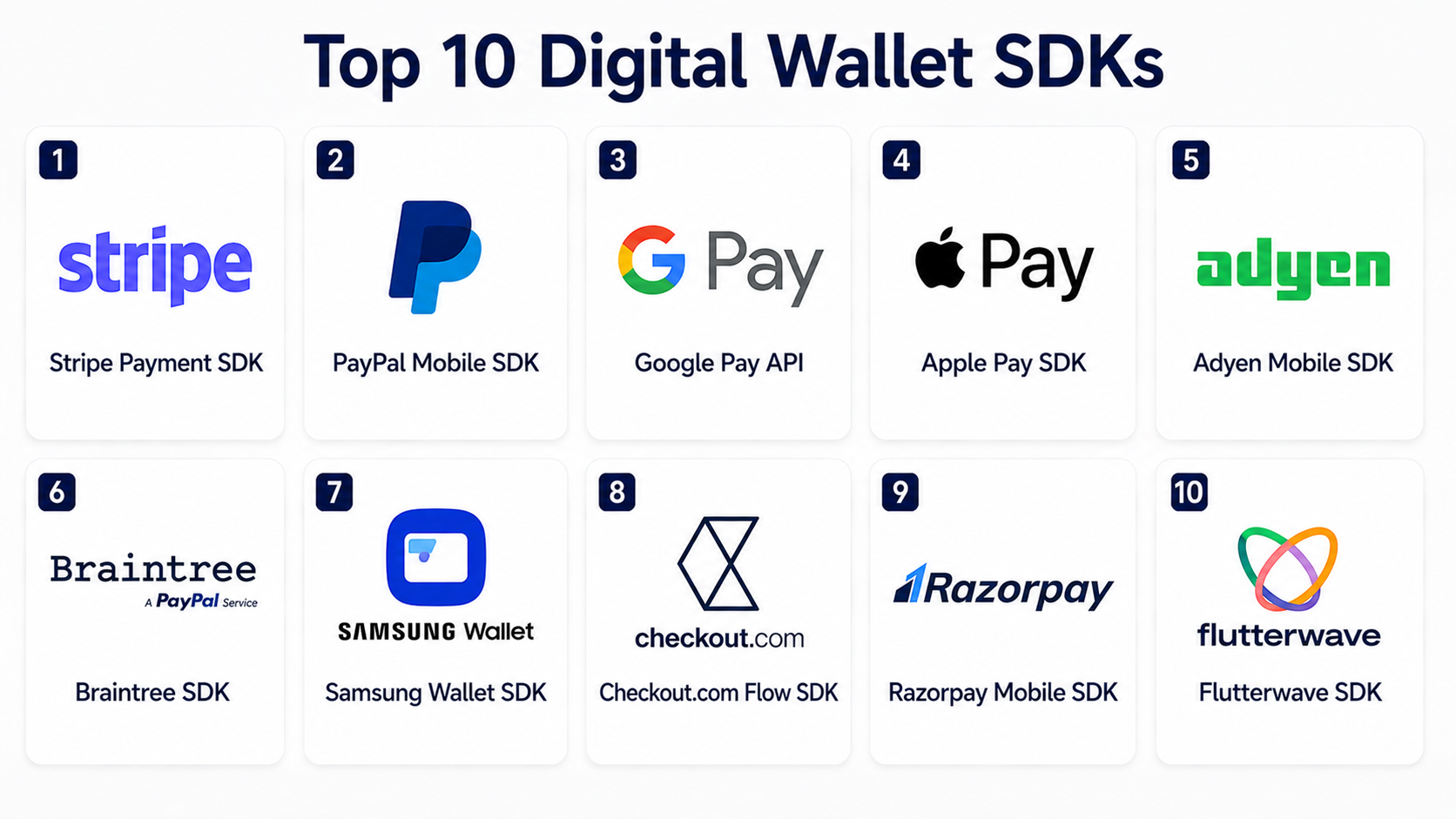
Introduction
Digital Wallet SDKs are software development kits that allow developers and businesses to integrate wallet-based payment functionality directly into mobile apps, web applications, marketplaces, and digital commerce platforms. These SDKs help organizations enable secure payments, peer-to-peer transfers, stored balances, tokenized cards, QR payments, NFC transactions, loyalty programs, and embedded financial experiences.
In digital wallets have become central to modern commerce infrastructure. Consumers increasingly rely on mobile wallets for online shopping, contactless payments, subscriptions, crypto transactions, transit systems, super apps, and embedded finance experiences. Modern wallet SDKs now support biometric authentication, AI-powered fraud prevention, real-time payments, tokenization, cross-border payments, multi-currency wallets, embedded loyalty programs, and open finance integrations.
Common real-world use cases include:
- Mobile wallet payments
- Peer-to-peer transfers
- Contactless NFC payments
- Marketplace wallets
- In-app checkout
- Embedded finance applications
- Loyalty and rewards systems
- Cross-border digital payments
When evaluating Digital Wallet SDKs, buyers should consider:
- Mobile platform compatibility
- Payment method support
- Security and tokenization capabilities
- SDK performance and reliability
- Developer experience and documentation
- Multi-currency support
- Compliance and fraud prevention tooling
- Wallet customization options
- Scalability and uptime
- API and ecosystem integrations
Best for: Fintech companies, mobile app developers, e-commerce platforms, marketplaces, super apps, SaaS companies, retailers, and embedded finance providers.
Not ideal for: Businesses without digital payment workflows or organizations needing only basic payment gateway functionality.
Key Trends in Digital Wallet SDKs
- Contactless and NFC-based payments continue expanding globally.
- AI-driven fraud detection is becoming standard in wallet ecosystems.
- Embedded finance and wallet infrastructure are converging rapidly.
- Biometric authentication adoption is increasing.
- Super apps are driving multi-service wallet ecosystems.
- Real-time account-to-account payments are improving.
- Multi-currency wallet support is becoming more common.
- QR-code payment infrastructure is expanding globally.
- Tokenization and secure payment vaulting are evolving rapidly.
- Wallet SDKs increasingly support crypto and digital asset integrations.
How We Selected These Tools (Methodology)
The SDKs in this list were selected based on market adoption, mobile payment ecosystem maturity, developer tooling quality, security architecture, scalability, and relevance within modern payment ecosystems.
Selection criteria included:
- SDK performance and stability
- Mobile and web platform compatibility
- Payment infrastructure maturity
- Security and tokenization support
- API quality and documentation
- Developer ecosystem strength
- Embedded finance capabilities
- Global payment coverage
- Enterprise scalability
- Merchant and consumer adoption
The final list includes mobile wallet providers, payment infrastructure platforms, embedded finance SDKs, and enterprise-grade wallet ecosystems.
Digital Wallet SDKs
#1 — Stripe Payment SDK
Short description :
Stripe Payment SDK provides developers with a powerful toolkit for integrating digital wallet payments, mobile checkout, tokenized transactions, Apple Pay, Google Pay, and embedded financial workflows into applications and digital commerce platforms.
Key Features
- Apple Pay support
- Google Pay integration
- Tokenized payment workflows
- Mobile checkout SDKs
- Fraud prevention tooling
- Multi-platform support
- Embedded payment infrastructure
Pros
- Excellent developer ecosystem
- Broad payment infrastructure support
- Strong mobile SDK performance
Cons
- Advanced customization may require engineering expertise
- Pricing scales with transaction volume
- Some features vary by region
Platforms / Deployment
- iOS / Android / Web
- Cloud
Security & Compliance
- PCI-focused infrastructure
- Encryption
- Tokenization
- MFA support
- Fraud monitoring
Integrations & Ecosystem
Stripe integrates with global commerce and fintech ecosystems.
- Apple Pay
- Google Pay
- E-commerce platforms
- APIs
- Marketplace infrastructure
Support & Community
Stripe provides extensive documentation, developer resources, and enterprise support services.
#2 — PayPal Mobile SDK
Short description :
PayPal Mobile SDK enables developers to integrate PayPal wallet payments, checkout experiences, subscription billing, and mobile payment workflows into apps and digital commerce platforms.
Key Features
- PayPal wallet integration
- One-click checkout
- Subscription billing
- Mobile payment APIs
- Tokenized payments
- Fraud prevention
- Multi-region payment support
Pros
- Massive global payment ecosystem
- Trusted consumer brand
- Broad merchant support
Cons
- Checkout customization limitations
- Some advanced workflows require additional configuration
- Transaction fees may vary
Platforms / Deployment
- iOS / Android / Web
- Cloud
Security & Compliance
- Encryption
- MFA
- Fraud monitoring
- Access governance
Integrations & Ecosystem
PayPal integrates with major digital commerce ecosystems.
- E-commerce platforms
- APIs
- Marketplace infrastructure
- Mobile apps
- Retail systems
Support & Community
PayPal provides enterprise onboarding and developer documentation resources.
#3 — Google Pay API
Short description :
Google Pay API enables developers to integrate Android wallet payments, tokenized transactions, NFC payments, and fast checkout experiences into mobile and web applications.
Key Features
- Android wallet integration
- NFC payment support
- Tokenized transactions
- Fast checkout workflows
- Stored payment methods
- Mobile authentication
- Merchant APIs
Pros
- Strong Android ecosystem integration
- Fast mobile checkout experience
- Broad payment compatibility
Cons
- Primarily optimized for Android ecosystems
- Regional availability varies
- Some advanced merchant workflows require configuration
Platforms / Deployment
- Android / Web
- Cloud
Security & Compliance
- Tokenization
- Encryption
- MFA support
- Fraud prevention tooling
Integrations & Ecosystem
Google Pay integrates with commerce and Android ecosystems.
- Android apps
- APIs
- Retail systems
- E-commerce platforms
- Payment gateways
Support & Community
Google provides strong developer documentation and SDK support resources.
#4 — Apple Pay SDK
Short description :
Apple Pay SDK allows developers to embed secure wallet payments, NFC transactions, and tokenized checkout experiences within iOS applications and Apple device ecosystems.
Key Features
- NFC wallet payments
- Tokenized transactions
- Face ID and Touch ID authentication
- Fast checkout workflows
- Device-level security
- Merchant APIs
- In-app payment support
Pros
- Excellent user experience
- Strong device-level security
- Seamless Apple ecosystem integration
Cons
- Limited to Apple ecosystems
- Merchant onboarding varies by region
- Advanced workflows may require Apple ecosystem expertise
Platforms / Deployment
- iOS / macOS / Web
- Cloud
Security & Compliance
- Biometric authentication
- Tokenization
- Encryption
- Device security protections
Integrations & Ecosystem
Apple Pay integrates with mobile commerce and retail ecosystems.
- iOS apps
- E-commerce platforms
- Retail POS systems
- APIs
- Payment gateways
Support & Community
Apple provides strong developer resources and integration documentation.
#5 — Adyen Mobile SDK
Short description :
Adyen Mobile SDK enables enterprises and marketplaces to integrate digital wallet payments, global payment methods, NFC workflows, and omnichannel commerce experiences.
Key Features
- Omnichannel payment support
- Wallet integrations
- NFC payments
- Multi-region payment infrastructure
- Fraud detection tooling
- POS integrations
- Mobile checkout APIs
Pros
- Strong global payment infrastructure
- Enterprise-grade scalability
- Broad payment method support
Cons
- Enterprise-focused implementation complexity
- Advanced configuration may require expertise
- Pricing may vary by transaction volume
Platforms / Deployment
- iOS / Android / Web
- Cloud
Security & Compliance
- PCI-focused infrastructure
- Encryption
- Fraud monitoring
- Access controls
Integrations & Ecosystem
Adyen integrates with enterprise commerce ecosystems.
- Retail platforms
- APIs
- Marketplace systems
- POS infrastructure
- Mobile commerce
Support & Community
Adyen provides enterprise onboarding and technical support services.
#6 — Braintree SDK
Short description :
Braintree SDK, owned by PayPal, helps developers integrate mobile wallet payments, card processing, PayPal services, and embedded checkout experiences into digital applications.
Key Features
- Mobile wallet support
- PayPal integration
- Tokenized payments
- Card processing
- Fraud prevention tooling
- Subscription billing
- Checkout SDKs
Pros
- Strong PayPal ecosystem integration
- Flexible payment support
- Good developer documentation
Cons
- Enterprise workflows may require customization
- Advanced analytics limited compared to some competitors
- Feature availability varies regionally
Platforms / Deployment
- iOS / Android / Web
- Cloud
Security & Compliance
- PCI compliance tooling
- Encryption
- Fraud controls
- Access governance
Integrations & Ecosystem
Braintree integrates with commerce and payment ecosystems.
- PayPal
- E-commerce platforms
- APIs
- Mobile applications
- Subscription systems
Support & Community
Braintree provides developer onboarding and technical documentation resources.
#7 — Samsung Wallet SDK
Short description :
Samsung Wallet SDK enables developers to integrate wallet functionality, NFC payments, loyalty programs, and digital passes into Samsung mobile ecosystems.
Key Features
- Samsung wallet integration
- NFC payment support
- Loyalty pass support
- Digital identity workflows
- Mobile authentication
- Wallet pass management
- Contactless payment APIs
Pros
- Strong Samsung device integration
- Good loyalty ecosystem support
- Secure mobile payment workflows
Cons
- Primarily Samsung-focused ecosystem
- Smaller developer ecosystem than Apple or Google
- Regional wallet support varies
Platforms / Deployment
- Android
- Cloud
Security & Compliance
- Encryption
- Biometric authentication
- Tokenization
- Secure device workflows
Integrations & Ecosystem
Samsung Wallet integrates with mobile and retail ecosystems.
- Samsung devices
- APIs
- Retail systems
- Loyalty programs
- Payment gateways
Support & Community
Samsung provides developer documentation and SDK support resources.
#8 — Checkout.com Flow SDK
Short description :
Checkout.com Flow SDK provides embedded wallet payments, tokenized checkout experiences, fraud monitoring, and enterprise payment orchestration capabilities.
Key Features
- Wallet payment support
- Tokenized checkout
- Fraud detection
- Multi-currency support
- Payment orchestration
- Mobile SDKs
- Real-time transaction monitoring
Pros
- Strong enterprise payment infrastructure
- Good global payment support
- Advanced fraud tooling
Cons
- Enterprise-focused implementation
- Advanced workflows require expertise
- Pricing may vary by scale
Platforms / Deployment
- iOS / Android / Web
- Cloud
Security & Compliance
- PCI-focused workflows
- Encryption
- Fraud monitoring
- Access controls
Integrations & Ecosystem
Checkout.com integrates with global commerce ecosystems.
- APIs
- Retail platforms
- E-commerce systems
- Mobile commerce
- Marketplace infrastructure
Support & Community
Checkout.com provides enterprise onboarding and technical support services.
#9 — Razorpay Mobile SDK
Short description :
Razorpay Mobile SDK enables developers to integrate digital wallets, UPI payments, tokenized checkout workflows, and embedded financial services into mobile applications.
Key Features
- Wallet integrations
- UPI support
- Tokenized payments
- Mobile checkout APIs
- Subscription billing
- Fraud prevention tooling
- Embedded payment workflows
Pros
- Strong India-focused payment ecosystem
- Good developer experience
- Broad payment method support
Cons
- Primarily India-focused
- Some global payment features limited
- Advanced enterprise tooling varies
Platforms / Deployment
- iOS / Android / Web
- Cloud
Security & Compliance
- Encryption
- Fraud controls
- Access governance
- Payment security tooling
Integrations & Ecosystem
Razorpay integrates with commerce and fintech ecosystems.
- UPI infrastructure
- APIs
- Mobile apps
- Retail systems
- Subscription platforms
Support & Community
Razorpay provides onboarding documentation and technical support resources.
#10 — Flutterwave SDK
Short description :
Flutterwave SDK enables businesses to integrate digital wallets, mobile money, cross-border payments, and embedded financial workflows across African commerce ecosystems.
Key Features
- Wallet payments
- Mobile money support
- Cross-border payment APIs
- Multi-currency transactions
- Embedded payment workflows
- Fraud prevention tooling
- Checkout SDKs
Pros
- Strong African payment ecosystem
- Broad mobile money support
- Multi-currency payment capabilities
Cons
- Primarily Africa-focused ecosystem
- Regional feature availability varies
- Advanced enterprise workflows may require customization
Platforms / Deployment
- iOS / Android / Web
- Cloud
Security & Compliance
- Encryption
- Fraud monitoring
- Access management
- Payment security tooling
Integrations & Ecosystem
Flutterwave integrates with African fintech and commerce ecosystems.
- Mobile money systems
- APIs
- E-commerce platforms
- Retail systems
- Payment gateways
Support & Community
Flutterwave provides onboarding resources and developer documentation.
Comparison Table (Top 10)
| Tool Name | Best For | Platform(s) Supported | Deployment | Standout Feature | Public Rating |
|---|---|---|---|---|---|
| Stripe Payment SDK | Embedded wallet infrastructure | iOS, Android, Web | Cloud | Broad payment ecosystem | N/A |
| PayPal Mobile SDK | PayPal wallet payments | iOS, Android, Web | Cloud | Global payment adoption | N/A |
| Google Pay API | Android wallet payments | Android, Web | Cloud | Fast Android checkout | N/A |
| Apple Pay SDK | Apple ecosystem payments | iOS, macOS, Web | Cloud | Secure biometric payments | N/A |
| Adyen Mobile SDK | Enterprise omnichannel commerce | iOS, Android, Web | Cloud | Global payment orchestration | N/A |
| Braintree SDK | PayPal-integrated payments | iOS, Android, Web | Cloud | Flexible wallet support | N/A |
| Samsung Wallet SDK | Samsung device wallets | Android | Cloud | Loyalty and NFC workflows | N/A |
| Checkout.com Flow SDK | Enterprise wallet orchestration | iOS, Android, Web | Cloud | Fraud-focused payment infrastructure | N/A |
| Razorpay Mobile SDK | India-focused digital payments | iOS, Android, Web | Cloud | UPI and wallet support | N/A |
| Flutterwave SDK | African mobile payments | iOS, Android, Web | Cloud | Mobile money integrations | N/A |
Evaluation & Digital Wallet SDKs
| Tool Name | Core (25%) | Ease (15%) | Integrations (15%) | Security (10%) | Performance (10%) | Support (10%) | Value (15%) | Weighted Total |
|---|---|---|---|---|---|---|---|---|
| Stripe Payment SDK | 10 | 9 | 10 | 9 | 9 | 9 | 7 | 9.1 |
| PayPal Mobile SDK | 9 | 9 | 9 | 9 | 9 | 8 | 8 | 8.8 |
| Google Pay API | 8 | 9 | 8 | 9 | 9 | 8 | 8 | 8.4 |
| Apple Pay SDK | 9 | 9 | 8 | 10 | 9 | 8 | 7 | 8.5 |
| Adyen Mobile SDK | 9 | 7 | 9 | 9 | 9 | 8 | 7 | 8.3 |
| Braintree SDK | 8 | 8 | 8 | 8 | 8 | 8 | 8 | 8.0 |
| Samsung Wallet SDK | 7 | 8 | 7 | 8 | 8 | 7 | 8 | 7.5 |
| Checkout.com Flow SDK | 8 | 7 | 8 | 9 | 9 | 8 | 7 | 7.9 |
| Razorpay Mobile SDK | 8 | 8 | 8 | 8 | 8 | 8 | 9 | 8.1 |
| Flutterwave SDK | 8 | 8 | 8 | 8 | 8 | 7 | 8 | 7.9 |
These scores are comparative rather than absolute. Some digital wallet SDKs focus on enterprise payment orchestration, while others specialize in mobile ecosystems, regional payment infrastructure, or embedded wallet experiences. Buyers should evaluate SDKs based on payment ecosystem fit, platform compatibility, geographic coverage, compliance requirements, and scalability needs.
Which Digital Wallet SDKs
Solo / Freelancer
Independent developers and small apps should prioritize simplicity and fast onboarding.
Recommended options:
- Stripe Payment SDK
- Razorpay Mobile SDK
- Braintree SDK
SMB
Small and medium-sized businesses should prioritize flexible integrations and broad wallet compatibility.
Recommended options:
- PayPal Mobile SDK
- Google Pay API
- Flutterwave SDK
Mid-Market
Mid-sized commerce platforms often require omnichannel payments and embedded financial workflows.
Recommended options:
- Adyen Mobile SDK
- Checkout.com Flow SDK
- Stripe Payment SDK
Enterprise
Large enterprises should prioritize scalability, security, and multi-region payment orchestration.
Recommended options:
- Stripe Payment SDK
- Adyen Mobile SDK
- Checkout.com Flow SDK
Budget vs Premium
- Budget-friendly ecosystem: Razorpay
- Premium enterprise infrastructure: Stripe, Adyen
- Balanced value: Braintree, Flutterwave
Feature Depth vs Ease of Use
- Best developer ecosystem: Stripe
- Best Apple ecosystem support: Apple Pay SDK
- Best Android wallet integration: Google Pay API
Integrations & Scalability
- Best omnichannel payments: Adyen
- Best global payment ecosystem: PayPal
- Best regional mobile payments: Flutterwave
Security & Compliance Needs
Organizations with strict compliance requirements should prioritize:
- Stripe
- Apple Pay SDK
- Adyen
- Checkout.com
Frequently Asked Questions (FAQs)
1. What are Digital Wallet SDKs?
Digital Wallet SDKs are developer toolkits that allow applications to integrate wallet-based payment functionality and digital financial workflows.
2. Why are digital wallets important?
Digital wallets improve checkout speed, support contactless payments, enhance customer convenience, and enable embedded financial experiences.
3. Which platforms commonly support wallet SDKs?
Most major wallet SDKs support iOS, Android, and web applications.
4. What payment methods can wallet SDKs support?
Wallet SDKs can support cards, bank transfers, NFC payments, QR payments, mobile money, UPI, and tokenized transactions.
5. Are digital wallet SDKs secure?
Most enterprise wallet SDKs support encryption, tokenization, fraud monitoring, biometric authentication, and PCI-focused infrastructure.
6. What industries commonly use wallet SDKs?
E-commerce, fintech, retail, transportation, marketplaces, gaming, healthcare, and super apps commonly use wallet SDKs.
7. What should buyers prioritize when choosing wallet SDKs?
Buyers should evaluate security, platform compatibility, payment ecosystem coverage, scalability, and developer experience.
8. Are AI features becoming common in wallet ecosystems?
Yes. AI-driven fraud detection, payment analytics, personalization, and risk assessment are increasingly common.
9. What is tokenization in digital wallets?
Tokenization replaces sensitive payment data with secure digital tokens to reduce fraud risk and improve payment security.
10. Can wallet SDKs support global payments?
Many enterprise wallet SDKs support multi-currency transactions and international payment infrastructure.
Conclusion
Digital Wallet SDKs have become essential infrastructure for modern mobile commerce, embedded finance, and digital payment ecosystems. As consumers increasingly rely on contactless payments, mobile wallets, and integrated financial experiences, businesses need scalable wallet infrastructure that balances security, flexibility, and developer experience. Stripe Payment SDK and Adyen Mobile SDK remain strong leaders for enterprise-grade payment orchestration and embedded wallet infrastructure, while Apple Pay SDK and Google Pay API dominate mobile ecosystem integrations.
