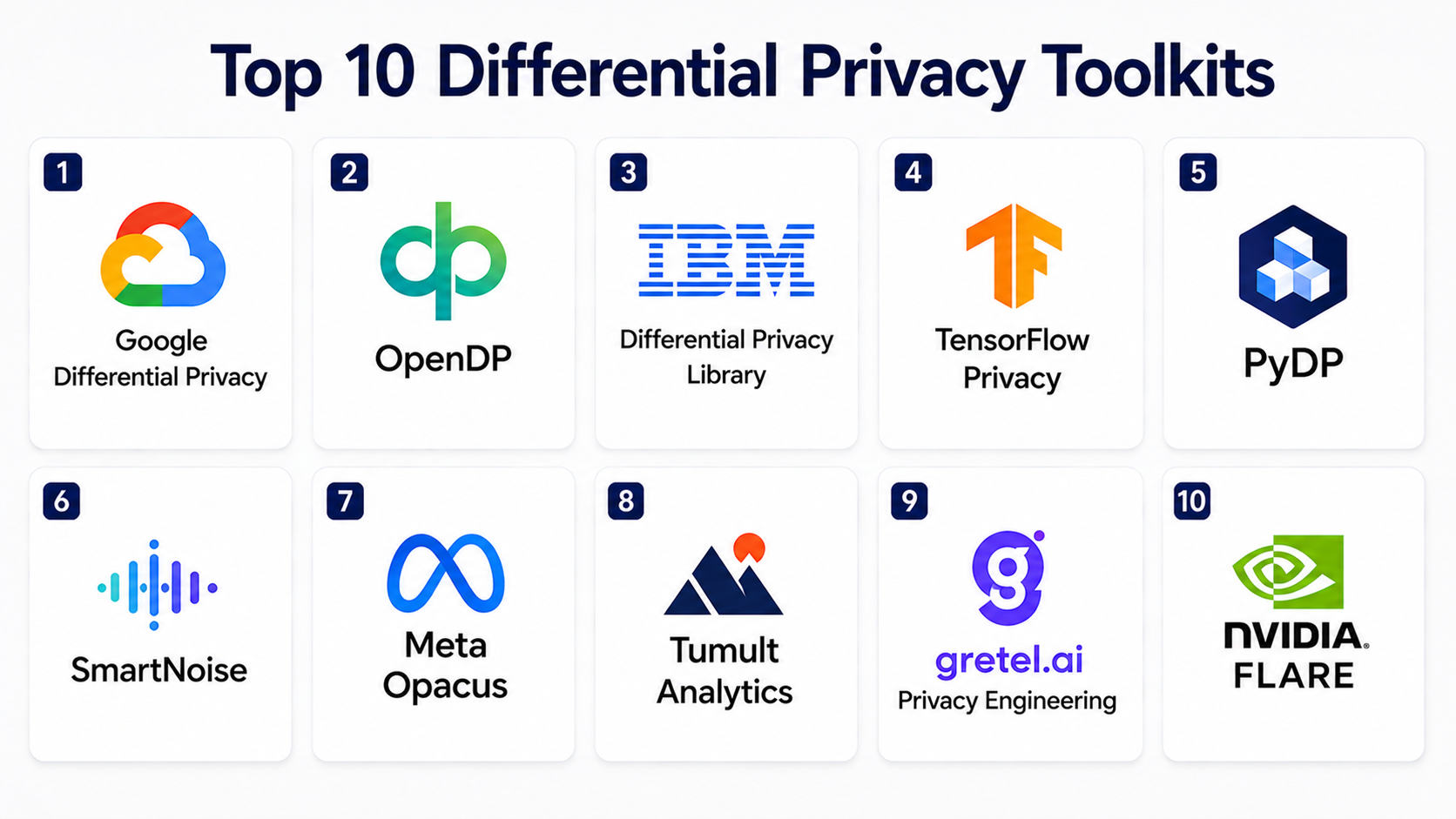
Introduction
Differential Privacy Toolkits are software frameworks and privacy-preserving technologies designed to protect sensitive information while still enabling useful data analysis, AI training, and statistical computation. These toolkits add carefully controlled noise or privacy mechanisms to datasets and analytics workflows, helping organizations minimize the risk of identifying individuals within data.
In differential privacy has become increasingly important due to stricter privacy regulations, the expansion of AI systems, large-scale data analytics, and growing concerns about data misuse. Enterprises, governments, healthcare organizations, and AI companies are using differential privacy to enable secure analytics, collaborative research, machine learning, and user data protection while reducing privacy exposure risks.
Common real-world use cases include:
- Privacy-preserving AI model training
- Secure analytics and reporting
- Healthcare and medical research
- Consumer behavior analysis
- Federated learning and collaborative AI
When evaluating Differential Privacy Toolkits, buyers should consider:
- Supported privacy mechanisms
- AI and machine learning compatibility
- Scalability for large datasets
- Ease of integration
- Open-source ecosystem maturity
- Governance and compliance support
- Statistical accuracy controls
- Performance optimization
- Developer tooling quality
- Deployment flexibility
Best for: AI teams, data science organizations, healthcare providers, financial institutions, research labs, governments, and enterprises handling sensitive user data.
Not ideal for: Lightweight applications with minimal privacy concerns or organizations without advanced analytics or AI workflows.
Key Trends in Differential Privacy Toolkits
- Differential privacy is increasingly integrated into AI pipelines.
- Privacy-preserving analytics adoption is accelerating globally.
- Federated learning and differential privacy are often combined.
- Open-source privacy frameworks are maturing rapidly.
- Privacy regulations are driving enterprise adoption.
- Cloud-native privacy-preserving analytics workflows are expanding.
- AI governance initiatives are prioritizing privacy tooling.
- Synthetic data and differential privacy are increasingly connected.
- Secure collaborative analytics is becoming more common.
- Enterprises are demanding easier developer-friendly privacy APIs.
How We Selected These Tools (Methodology)
The toolkits in this list were selected based on enterprise relevance, privacy-preserving capabilities, AI compatibility, ecosystem maturity, and adoption within analytics and machine learning workflows.
Selection criteria included:
- Differential privacy capabilities
- AI and analytics compatibility
- Developer ecosystem maturity
- Enterprise deployment readiness
- Scalability and performance
- Governance and privacy controls
- Open-source adoption
- Documentation quality
- Integration flexibility
- Community and research relevance
The final list includes open-source differential privacy frameworks, enterprise privacy platforms, AI-focused privacy toolkits, and cloud-native analytics privacy solutions.
Differential Privacy Toolkits
#1 — Google Differential Privacy
Short description :
Google Differential Privacy is an open-source framework designed to help organizations build privacy-preserving analytics and data processing systems using differential privacy techniques.
Key Features
- Differential privacy algorithms
- Noise injection mechanisms
- Privacy budget controls
- Statistical aggregation support
- Open-source SDK
- Secure analytics workflows
- Scalable privacy operations
Pros
- Strong research foundation
- Broad analytics relevance
- Mature open-source ecosystem
Cons
- Advanced privacy expertise required
- Limited enterprise UI tooling
- Statistical tuning complexity
Platforms / Deployment
- Linux / macOS
- Self-hosted / Hybrid
Security & Compliance
- Encryption support
- Privacy-preserving controls
Integrations & Ecosystem
Google Differential Privacy integrates with analytics and machine learning ecosystems.
- Python
- C++
- AI frameworks
- Cloud environments
- Analytics pipelines
Support & Community
Google Differential Privacy has strong academic and developer community adoption.
#2 — OpenDP
Short description :
OpenDP is an open-source privacy platform designed for trustworthy statistical analysis and privacy-preserving data science workflows using differential privacy.
Key Features
- Differential privacy workflows
- Statistical privacy guarantees
- Secure analytics tooling
- Open-source privacy framework
- AI and data science compatibility
- Policy-aware privacy controls
- Scalable analytics support
Pros
- Strong academic credibility
- Good statistical privacy controls
- Growing ecosystem maturity
Cons
- Advanced technical onboarding
- Enterprise tooling still evolving
- Requires privacy expertise
Platforms / Deployment
- Linux / macOS / Windows
- Self-hosted
Security & Compliance
- Privacy-preserving controls
- Statistical governance support
Integrations & Ecosystem
OpenDP integrates with modern analytics and research workflows.
- Python
- Rust
- Data science tools
- AI workflows
- Research systems
Support & Community
OpenDP has a strong research and academic community.
#3 — IBM Differential Privacy Library
Short description :
IBM Differential Privacy Library provides privacy-preserving machine learning and analytics capabilities designed for enterprise AI and secure data processing workflows.
Key Features
- Differential privacy algorithms
- Privacy-preserving AI support
- Secure machine learning workflows
- Noise calibration controls
- AI model compatibility
- Enterprise analytics support
- Open-source framework
Pros
- Strong AI workflow compatibility
- Good enterprise relevance
- Broad machine learning support
Cons
- Requires advanced AI expertise
- Enterprise integration complexity
- Smaller ecosystem than some competitors
Platforms / Deployment
- Linux
- Cloud / Hybrid
Security & Compliance
- Privacy-preserving controls
- Encryption support
Integrations & Ecosystem
IBM Differential Privacy Library integrates with enterprise AI environments.
- TensorFlow
- PyTorch
- AI pipelines
- Cloud infrastructure
- APIs
Support & Community
IBM provides documentation and enterprise support resources.
#4 — TensorFlow Privacy
Short description :
TensorFlow Privacy is a machine learning toolkit that enables developers to train AI models using differential privacy techniques within TensorFlow environments.
Key Features
- Differentially private model training
- AI privacy controls
- TensorFlow integration
- Privacy accounting
- Noise injection mechanisms
- Federated learning support
- Machine learning optimization
Pros
- Strong TensorFlow ecosystem integration
- Good AI training support
- Broad developer adoption
Cons
- TensorFlow-focused specialization
- Requires machine learning expertise
- Statistical tuning complexity
Platforms / Deployment
- Linux / Windows / macOS
- Cloud / Self-hosted / Hybrid
Security & Compliance
- Privacy-preserving controls
- Encryption support varies
Integrations & Ecosystem
TensorFlow Privacy integrates with AI and machine learning infrastructure.
- TensorFlow
- Kubernetes
- Cloud AI systems
- APIs
- Federated learning workflows
Support & Community
TensorFlow Privacy benefits from a large global AI developer community.
#5 — PyDP
Short description :
PyDP is a Python wrapper for Google Differential Privacy designed to simplify privacy-preserving analytics and data science workflows for Python developers.
Key Features
- Python privacy APIs
- Differential privacy analytics
- Statistical aggregation support
- Noise injection workflows
- Open-source tooling
- Data science compatibility
- Secure analytics support
Pros
- Developer-friendly Python workflows
- Good analytics flexibility
- Strong Google privacy ecosystem relevance
Cons
- Python-focused specialization
- Enterprise governance tooling limited
- Advanced privacy configuration required
Platforms / Deployment
- Linux / macOS / Windows
- Self-hosted
Security & Compliance
- Privacy-preserving controls
- Statistical privacy support
Integrations & Ecosystem
PyDP integrates with Python analytics and AI environments.
- Python data science libraries
- AI workflows
- Analytics pipelines
- Research systems
- Cloud environments
Support & Community
PyDP has growing developer and research community support.
#6 — SmartNoise
Short description :
SmartNoise is an open-source privacy platform focused on differential privacy and secure analytics workflows for enterprise and research environments.
Key Features
- Differential privacy workflows
- Secure statistical analytics
- Privacy budget management
- Data governance controls
- Open-source APIs
- AI workflow compatibility
- Enterprise analytics support
Pros
- Strong analytics focus
- Good governance flexibility
- Broad privacy-preserving workflows
Cons
- Advanced statistical expertise required
- Ecosystem maturity evolving
- Enterprise tooling varies
Platforms / Deployment
- Linux / Windows
- Self-hosted / Hybrid
Security & Compliance
- Privacy-preserving controls
- Governance support
Integrations & Ecosystem
SmartNoise integrates with analytics and AI environments.
- Python
- SQL workflows
- AI systems
- APIs
- Analytics infrastructure
Support & Community
SmartNoise has growing open-source and research community adoption.
#7 — Meta Opacus
Short description :
Meta Opacus is a differential privacy framework for PyTorch designed to enable privacy-preserving machine learning model training.
Key Features
- Differentially private AI training
- PyTorch integration
- Privacy accounting
- Secure gradient optimization
- AI workflow support
- Open-source SDK
- Scalable model training
Pros
- Strong PyTorch compatibility
- Good AI training support
- Broad machine learning relevance
Cons
- PyTorch-focused specialization
- Advanced AI expertise required
- Enterprise governance tooling limited
Platforms / Deployment
- Linux / Windows / macOS
- Cloud / Self-hosted
Security & Compliance
- Privacy-preserving controls
- AI privacy mechanisms
Integrations & Ecosystem
Meta Opacus integrates with PyTorch and AI ecosystems.
- PyTorch
- AI workflows
- Cloud infrastructure
- APIs
- Research environments
Support & Community
Meta Opacus has strong machine learning community adoption.
#8 — Tumult Analytics
Short description :
Tumult Analytics is an enterprise privacy analytics platform designed for secure statistical analysis and differential privacy-based data sharing workflows.
Key Features
- Enterprise differential privacy
- Privacy-preserving analytics
- Secure statistical reporting
- Data governance controls
- Compliance-focused workflows
- Cloud deployment support
- Scalable analytics infrastructure
Pros
- Strong enterprise analytics capabilities
- Good governance support
- Broad privacy workflow relevance
Cons
- Enterprise-focused deployment model
- Advanced privacy expertise required
- Premium analytics positioning
Platforms / Deployment
- Linux
- Cloud / Hybrid
Security & Compliance
- Privacy-preserving controls
- Governance support
- Audit capabilities
Integrations & Ecosystem
Tumult Analytics integrates with enterprise analytics ecosystems.
- Cloud infrastructure
- SQL workflows
- APIs
- Analytics platforms
- Data governance systems
Support & Community
Tumult provides enterprise onboarding and technical support.
#9 — Gretel.ai Privacy Engineering
Short description :
Gretel.ai provides privacy-preserving AI and synthetic data tooling that incorporates differential privacy mechanisms into secure data workflows.
Key Features
- Differential privacy workflows
- Synthetic data generation
- Privacy-preserving AI
- Secure data transformation
- Cloud-native analytics support
- Governance controls
- Developer APIs
Pros
- Strong synthetic data capabilities
- Good developer usability
- Broad AI workflow support
Cons
- Synthetic data focus may not fit all use cases
- Enterprise pricing considerations
- Advanced governance varies by deployment
Platforms / Deployment
- Web / Linux
- Cloud / Hybrid
Security & Compliance
- Privacy-preserving controls
- Encryption support
- Audit capabilities
Integrations & Ecosystem
Gretel.ai integrates with AI and analytics ecosystems.
- Python
- AI workflows
- APIs
- Cloud infrastructure
- Data engineering systems
Support & Community
Gretel.ai provides enterprise onboarding and developer documentation.
#10 — NVIDIA FLARE
Short description :
NVIDIA FLARE is a federated learning platform that supports privacy-preserving AI workflows and differential privacy techniques for collaborative model training.
Key Features
- Federated learning workflows
- Differential privacy support
- Secure AI collaboration
- GPU acceleration
- Distributed AI training
- Privacy-preserving analytics
- Enterprise AI orchestration
Pros
- Strong AI scalability
- Good federated learning support
- Broad GPU ecosystem compatibility
Cons
- AI-focused specialization
- Requires advanced infrastructure expertise
- NVIDIA ecosystem dependency
Platforms / Deployment
- Linux
- Cloud / Hybrid
Security & Compliance
- Privacy-preserving controls
- RBAC
- Audit logs
Integrations & Ecosystem
NVIDIA FLARE integrates with enterprise AI and federated learning systems.
- NVIDIA AI ecosystem
- Kubernetes
- AI pipelines
- APIs
- GPU infrastructure
Support & Community
NVIDIA provides AI-focused documentation and enterprise support.
Comparison Table (Top 10)
| Tool Name | Best For | Platform(s) Supported | Deployment | Standout Feature | Public Rating |
|---|---|---|---|---|---|
| Google Differential Privacy | Secure analytics workflows | Linux, macOS | Hybrid | Privacy budget controls | N/A |
| OpenDP | Privacy-preserving statistics | Linux, Windows, macOS | Self-hosted | Statistical privacy guarantees | N/A |
| IBM Differential Privacy Library | Enterprise AI privacy | Linux | Hybrid | Privacy-preserving ML workflows | N/A |
| TensorFlow Privacy | Differentially private AI training | Linux, Windows, macOS | Hybrid | TensorFlow integration | N/A |
| PyDP | Python privacy analytics | Linux, Windows, macOS | Self-hosted | Python-friendly APIs | N/A |
| SmartNoise | Secure analytics governance | Linux, Windows | Hybrid | Privacy budget management | N/A |
| Meta Opacus | Private PyTorch training | Linux, Windows, macOS | Hybrid | Secure gradient optimization | N/A |
| Tumult Analytics | Enterprise privacy analytics | Linux | Hybrid | Compliance-focused analytics | N/A |
| Gretel.ai Privacy Engineering | Synthetic data privacy workflows | Web, Linux | Hybrid | Synthetic data integration | N/A |
| NVIDIA FLARE | Federated AI privacy | Linux | Hybrid | Distributed AI privacy workflows | N/A |
Evaluation & Differential Privacy Toolkits
| Tool Name | Core (25%) | Ease (15%) | Integrations (15%) | Security (10%) | Performance (10%) | Support (10%) | Value (15%) | Weighted Total |
|---|---|---|---|---|---|---|---|---|
| Google Differential Privacy | 9 | 7 | 8 | 9 | 8 | 8 | 9 | 8.3 |
| OpenDP | 9 | 6 | 7 | 9 | 8 | 7 | 9 | 7.9 |
| IBM Differential Privacy Library | 8 | 7 | 8 | 9 | 8 | 8 | 7 | 7.9 |
| TensorFlow Privacy | 9 | 7 | 9 | 9 | 8 | 8 | 8 | 8.4 |
| PyDP | 8 | 8 | 7 | 8 | 7 | 7 | 9 | 7.8 |
| SmartNoise | 8 | 7 | 8 | 9 | 8 | 7 | 8 | 7.9 |
| Meta Opacus | 9 | 7 | 8 | 9 | 8 | 8 | 8 | 8.2 |
| Tumult Analytics | 8 | 7 | 8 | 9 | 8 | 8 | 7 | 7.9 |
| Gretel.ai Privacy Engineering | 8 | 8 | 8 | 8 | 8 | 8 | 7 | 7.9 |
| NVIDIA FLARE | 8 | 7 | 9 | 9 | 9 | 8 | 7 | 8.1 |
These scores are comparative rather than absolute. Some platforms focus heavily on machine learning privacy, while others prioritize statistical analytics, federated learning, or enterprise governance. Buyers should evaluate differential privacy toolkits based on analytics complexity, AI workflow requirements, infrastructure compatibility, and regulatory obligations.
Which Differential Privacy Toolkits
Solo / Freelancer
Independent developers and researchers may prefer:
- PyDP
- Google Differential Privacy
These frameworks provide accessible open-source privacy tooling for experimentation and analytics.
SMB
Small and medium-sized businesses should prioritize usability and analytics flexibility.
Recommended options:
- TensorFlow Privacy
- SmartNoise
- Gretel.ai Privacy Engineering
Mid-Market
Mid-sized organizations often require scalable analytics governance and AI privacy controls.
Recommended options:
- IBM Differential Privacy Library
- Tumult Analytics
- Meta Opacus
Enterprise
Large enterprises with advanced governance and regulatory requirements should prioritize scalability and operational maturity.
Recommended options:
- TensorFlow Privacy
- Google Differential Privacy
- NVIDIA FLARE
- Tumult Analytics
Budget vs Premium
- Budget-friendly: PyDP, OpenDP
- Premium enterprise: Tumult Analytics, IBM Differential Privacy Library
- Balanced value: TensorFlow Privacy, Meta Opacus
Feature Depth vs Ease of Use
- Deepest statistical privacy tooling: OpenDP
- Best usability: PyDP
- Best AI integration: TensorFlow Privacy
Integrations & Scalability
- Best federated AI support: NVIDIA FLARE
- Best PyTorch integration: Meta Opacus
- Best TensorFlow ecosystem support: TensorFlow Privacy
Security & Compliance Needs
Organizations with strict privacy and governance requirements should prioritize:
- Google Differential Privacy
- Tumult Analytics
- IBM Differential Privacy Library
- OpenDP
Frequently Asked Questions (FAQs)
1. What is differential privacy?
Differential privacy is a mathematical approach that protects individual privacy by adding controlled noise to datasets or computations.
2. Why is differential privacy important?
It helps organizations analyze and share data while reducing the risk of exposing sensitive individual information.
3. Which industries use differential privacy most?
Healthcare, finance, government, AI, advertising, and research organizations are major adopters.
4. Can differential privacy support AI training?
Yes. Many frameworks support privacy-preserving machine learning and federated AI workflows.
5. What is a privacy budget?
A privacy budget controls how much information can be revealed through repeated queries on sensitive data.
6. Does differential privacy reduce data accuracy?
Yes. Controlled noise may slightly reduce accuracy, but the goal is to balance privacy protection with analytical usefulness.
7. Are differential privacy toolkits production-ready?
Several frameworks are increasingly enterprise-ready, although deployment complexity varies significantly.
8. What should buyers prioritize when selecting a toolkit?
Buyers should evaluate privacy guarantees, scalability, AI compatibility, integration flexibility, and developer tooling.
9. Can differential privacy help with regulatory compliance?
Yes. Differential privacy can support privacy protection initiatives aligned with modern data governance and regulatory frameworks.
10. Is differential privacy replacing encryption?
No. Differential privacy complements encryption by protecting information exposure during analytics and data sharing workflows.
Conclusion
Differential Privacy Toolkits are becoming essential infrastructure for secure analytics, privacy-preserving AI, federated learning, and modern data governance workflows. As organizations increasingly rely on AI systems, collaborative analytics, and cloud-native data processing, protecting sensitive information while preserving analytical utility has become a major operational and regulatory priority. Google Differential Privacy, TensorFlow Privacy, and Meta Opacus are among the strongest frameworks for AI-focused privacy workflows, while OpenDP and SmartNoise emphasize statistical privacy and research-grade analytics.
