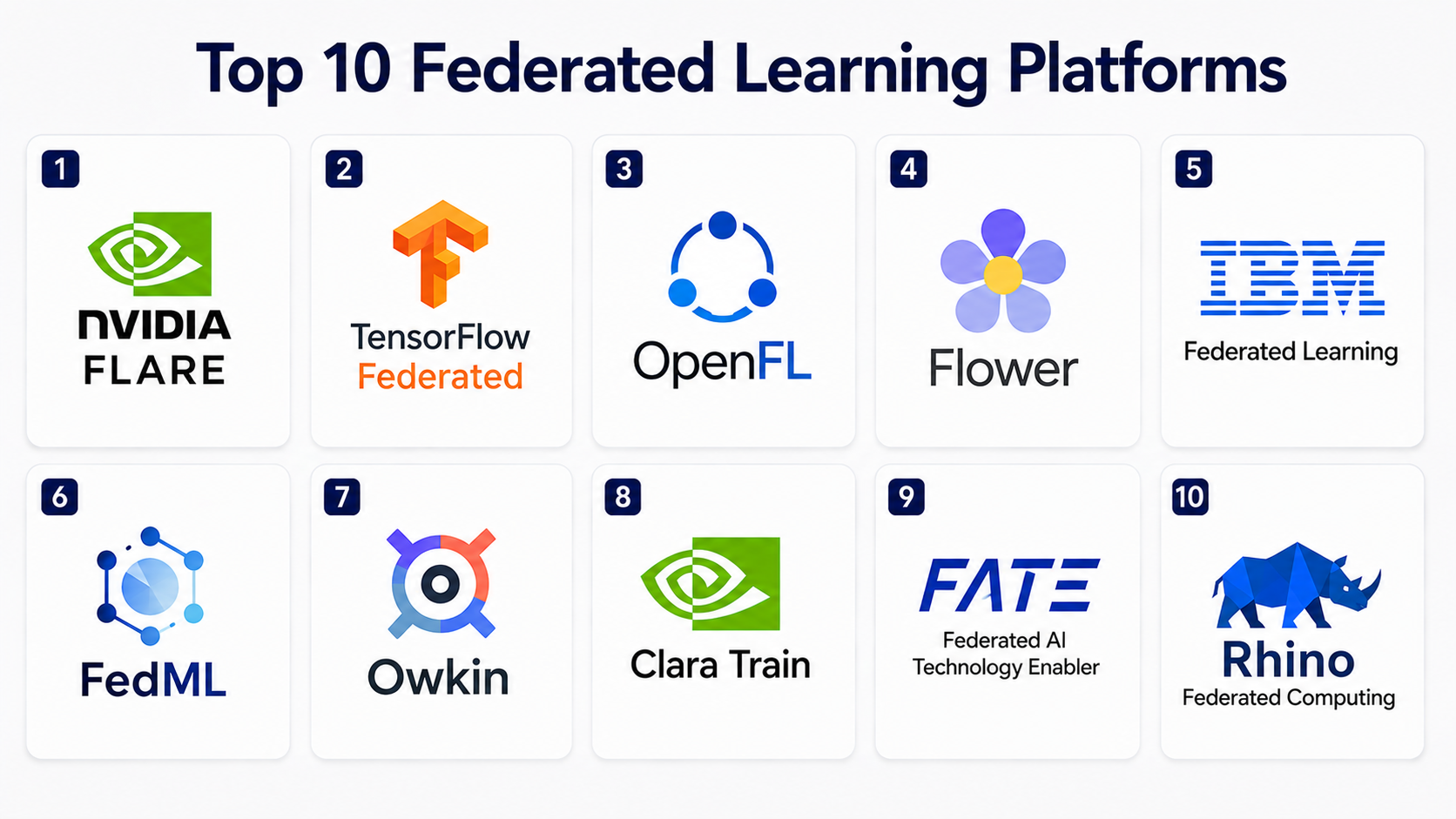
Introduction
Federated Learning Platforms are AI and machine learning systems that enable multiple organizations, devices, or environments to collaboratively train models without sharing raw data. Instead of centralizing sensitive information, federated learning keeps data local while securely exchanging model updates, helping organizations improve privacy, reduce regulatory risks, and support distributed AI workflows.
In federated learning is becoming increasingly important as enterprises face stricter privacy regulations, growing AI governance requirements, and the need for secure cross-organization collaboration. Industries such as healthcare, finance, telecommunications, automotive, and cybersecurity are using federated learning to enable privacy-preserving AI development while maintaining control over sensitive datasets.
Common real-world use cases include:
- Privacy-preserving healthcare AI
- Financial fraud detection
- Cross-company collaborative AI training
- Edge AI and IoT learning
- Secure mobile AI optimization
When evaluating Federated Learning Platforms, buyers should consider:
- Privacy-preserving AI capabilities
- Differential privacy support
- Secure aggregation mechanisms
- Scalability for distributed training
- Edge and mobile device support
- AI framework compatibility
- Governance and compliance controls
- Deployment flexibility
- Integration ecosystem
- Operational complexity
Best for: Enterprises, AI research organizations, healthcare providers, financial institutions, telecom companies, IoT platforms, and organizations requiring privacy-preserving AI collaboration.
Not ideal for: Small-scale AI projects without privacy concerns or organizations that primarily rely on centralized datasets.
Key Trends in Federated Learning Platforms
- Federated AI adoption is accelerating across regulated industries.
- Differential privacy integration is becoming standard.
- Edge AI and federated learning are increasingly connected.
- Confidential computing is enhancing federated AI security.
- Cross-organization collaborative AI initiatives are expanding.
- Secure aggregation techniques are improving rapidly.
- AI governance regulations are driving privacy-preserving AI adoption.
- Federated analytics is becoming more enterprise-ready.
- Mobile and IoT federated learning deployments are growing.
- Cloud-native federated learning orchestration is maturing.
How We Selected These Tools (Methodology)
The platforms in this list were selected based on privacy-preserving AI capabilities, ecosystem maturity, scalability, AI framework compatibility, and enterprise relevance.
Selection criteria included:
- Federated learning architecture
- Secure aggregation capabilities
- Differential privacy support
- AI framework compatibility
- Scalability for distributed workloads
- Enterprise deployment readiness
- Integration ecosystem
- Open-source adoption
- Governance and compliance support
- Community and documentation quality
The final list includes enterprise AI orchestration platforms, open-source federated learning frameworks, cloud-native AI collaboration systems, and privacy-preserving machine learning platforms.
Federated Learning Platforms
#1 — NVIDIA FLARE
Short description :
NVIDIA FLARE is a federated learning platform designed for distributed AI collaboration, privacy-preserving machine learning, and secure healthcare and enterprise AI workflows.
Key Features
- Federated AI orchestration
- Secure model aggregation
- Differential privacy support
- GPU acceleration
- Distributed AI training
- Enterprise AI workflows
- Cross-site collaboration
Pros
- Strong enterprise AI scalability
- Good healthcare AI adoption
- Broad GPU ecosystem support
Cons
- Requires advanced infrastructure expertise
- NVIDIA ecosystem dependency
- Enterprise deployment complexity
Platforms / Deployment
- Linux
- Cloud / Hybrid
Security & Compliance
- RBAC
- Audit logs
- Privacy-preserving controls
Integrations & Ecosystem
NVIDIA FLARE integrates with AI and enterprise analytics ecosystems.
- PyTorch
- TensorFlow
- Kubernetes
- NVIDIA AI infrastructure
- APIs
Support & Community
NVIDIA provides enterprise documentation and AI-focused support services.
#2 — TensorFlow Federated
Short description :
TensorFlow Federated is an open-source framework for machine learning and analytics on decentralized data using federated learning techniques.
Key Features
- Federated model training
- TensorFlow integration
- Privacy-preserving AI
- Federated analytics support
- Differential privacy compatibility
- Research-grade flexibility
- Open-source framework
Pros
- Strong TensorFlow ecosystem integration
- Good research and experimentation support
- Broad AI community adoption
Cons
- TensorFlow-focused specialization
- Production deployment complexity
- Requires machine learning expertise
Platforms / Deployment
- Linux / Windows / macOS
- Self-hosted / Hybrid
Security & Compliance
- Privacy-preserving controls
- Encryption support varies
Integrations & Ecosystem
TensorFlow Federated integrates with TensorFlow and AI research ecosystems.
- TensorFlow
- Kubernetes
- Cloud AI systems
- APIs
- Federated analytics workflows
Support & Community
TensorFlow Federated has a large global AI developer community.
#3 — OpenFL
Short description :
OpenFL is an open-source federated learning framework developed for secure decentralized AI training across enterprises, healthcare systems, and research organizations.
Key Features
- Federated model orchestration
- Secure aggregation
- Privacy-preserving AI workflows
- Cross-site AI collaboration
- Open-source deployment
- AI framework compatibility
- Enterprise scalability
Pros
- Strong healthcare and enterprise relevance
- Good open-source flexibility
- Broad distributed training support
Cons
- Operational complexity for large deployments
- Requires AI infrastructure expertise
- Governance tooling maturity varies
Platforms / Deployment
- Linux
- Cloud / Self-hosted / Hybrid
Security & Compliance
- Encryption
- RBAC
- Privacy-preserving controls
Integrations & Ecosystem
OpenFL integrates with enterprise AI and analytics environments.
- PyTorch
- TensorFlow
- Kubernetes
- APIs
- Enterprise AI workflows
Support & Community
OpenFL has growing enterprise and research community adoption.
#4 — Flower
Short description :
Flower is a flexible federated learning framework designed for scalable distributed AI training across cloud, edge, and mobile environments.
Key Features
- Scalable federated learning
- Cross-platform AI orchestration
- AI framework interoperability
- Edge AI compatibility
- Distributed model training
- Open-source tooling
- Cloud-native deployment support
Pros
- Broad framework compatibility
- Good edge AI flexibility
- Modern developer experience
Cons
- Enterprise governance still evolving
- Advanced distributed optimization required
- Production scaling complexity
Platforms / Deployment
- Linux / Windows / macOS
- Cloud / Self-hosted / Hybrid
Security & Compliance
- Encryption support
- Privacy-preserving controls
Integrations & Ecosystem
Flower integrates with AI development ecosystems and cloud infrastructure.
- PyTorch
- TensorFlow
- JAX
- Kubernetes
- APIs
Support & Community
Flower has rapidly growing open-source and AI developer community support.
#5 — IBM Federated Learning
Short description :
IBM Federated Learning enables privacy-preserving collaborative AI training for regulated enterprise environments and distributed analytics systems.
Key Features
- Federated AI workflows
- Privacy-preserving model training
- Enterprise governance controls
- Secure aggregation
- AI orchestration
- Regulated industry support
- Hybrid cloud deployment
Pros
- Strong enterprise governance
- Good regulated industry relevance
- Broad AI workflow support
Cons
- Enterprise-focused deployment complexity
- Premium enterprise positioning
- Smaller open-source ecosystem
Platforms / Deployment
- Linux
- Cloud / Hybrid
Security & Compliance
- RBAC
- Audit logs
- Encryption
- Privacy-preserving controls
Integrations & Ecosystem
IBM Federated Learning integrates with enterprise AI and analytics systems.
- IBM Cloud
- Kubernetes
- AI workflows
- APIs
- Enterprise analytics infrastructure
Support & Community
IBM provides enterprise onboarding and technical support services.
#6 — FedML
Short description :
FedML is a federated learning platform focused on scalable distributed AI training for edge computing, IoT, and enterprise machine learning workflows.
Key Features
- Edge AI federated learning
- Distributed model training
- AI workflow orchestration
- Federated analytics support
- Cross-device AI collaboration
- Open-source framework
- Cloud-edge deployment support
Pros
- Strong edge AI capabilities
- Good distributed training scalability
- Broad research adoption
Cons
- Advanced infrastructure management required
- Enterprise governance tooling evolving
- Operational complexity for large deployments
Platforms / Deployment
- Linux / macOS
- Cloud / Hybrid
Security & Compliance
- Encryption support
- Privacy-preserving controls
Integrations & Ecosystem
FedML integrates with distributed AI and edge computing systems.
- PyTorch
- TensorFlow
- Kubernetes
- IoT infrastructure
- APIs
Support & Community
FedML has growing research and AI developer community support.
#7 — Owkin
Short description :
Owkin provides federated learning solutions focused on healthcare AI, collaborative medical research, and privacy-preserving clinical analytics.
Key Features
- Healthcare federated AI
- Secure clinical collaboration
- Privacy-preserving analytics
- Distributed AI training
- Medical research workflows
- Governance controls
- Secure data collaboration
Pros
- Strong healthcare specialization
- Good medical AI relevance
- Broad collaborative research support
Cons
- Healthcare-focused specialization
- Enterprise deployment requirements
- Limited general-purpose AI flexibility
Platforms / Deployment
- Linux
- Cloud / Hybrid
Security & Compliance
- Encryption
- Audit logs
- RBAC
- Privacy-preserving controls
Integrations & Ecosystem
Owkin integrates with healthcare and AI ecosystems.
- Healthcare analytics systems
- AI workflows
- APIs
- Cloud infrastructure
- Research platforms
Support & Community
Owkin provides enterprise onboarding and healthcare-focused support services.
#8 — Clara Train
Short description :
Clara Train is NVIDIA’s healthcare AI training platform designed for secure collaborative model training using federated learning techniques.
Key Features
- Federated healthcare AI
- Secure collaborative model training
- GPU acceleration
- Medical imaging AI workflows
- Distributed training support
- Privacy-preserving analytics
- AI orchestration
Pros
- Strong medical imaging relevance
- Good GPU acceleration support
- Broad healthcare AI integration
Cons
- Healthcare-focused specialization
- NVIDIA ecosystem dependency
- Advanced deployment requirements
Platforms / Deployment
- Linux
- Cloud / Hybrid
Security & Compliance
- Encryption
- RBAC
- Audit logs
Integrations & Ecosystem
Clara Train integrates with healthcare AI infrastructure and NVIDIA ecosystems.
- NVIDIA AI infrastructure
- Healthcare imaging systems
- APIs
- Kubernetes
- AI workflows
Support & Community
NVIDIA provides enterprise healthcare AI documentation and support.
#9 — FATE (Federated AI Technology Enabler)
Short description :
FATE is an open-source federated learning framework designed for secure multi-party computation and collaborative machine learning workflows.
Key Features
- Federated machine learning
- Secure multi-party computation
- Privacy-preserving AI
- Distributed analytics
- Open-source architecture
- Cross-party collaboration
- Enterprise AI workflows
Pros
- Strong federated AI capabilities
- Broad privacy-preserving workflow support
- Good enterprise scalability potential
Cons
- Operational complexity
- Advanced configuration requirements
- Documentation maturity varies
Platforms / Deployment
- Linux
- Cloud / Self-hosted / Hybrid
Security & Compliance
- Encryption
- Privacy-preserving controls
- Secure aggregation support
Integrations & Ecosystem
FATE integrates with enterprise AI and distributed analytics ecosystems.
- TensorFlow
- PyTorch
- Kubernetes
- APIs
- Distributed computing systems
Support & Community
FATE has growing open-source and enterprise adoption.
#10 — Rhino Federated Computing
Short description :
Rhino Federated Computing is a federated analytics and AI collaboration platform focused on privacy-preserving distributed data science workflows.
Key Features
- Federated analytics
- Privacy-preserving AI workflows
- Secure collaboration
- Distributed model orchestration
- Enterprise governance support
- AI workflow integration
- Hybrid deployment flexibility
Pros
- Strong analytics collaboration support
- Good governance flexibility
- Broad enterprise AI relevance
Cons
- Smaller ecosystem maturity
- Enterprise onboarding complexity
- Premium enterprise positioning
Platforms / Deployment
- Linux
- Cloud / Hybrid
Security & Compliance
- Encryption
- RBAC
- Audit logs
- Privacy-preserving controls
Integrations & Ecosystem
Rhino integrates with enterprise AI and analytics systems.
- AI workflows
- APIs
- Cloud infrastructure
- Analytics platforms
- Governance systems
Support & Community
Rhino provides enterprise onboarding and technical support services.
Comparison Table (Top 10)
| Tool Name | Best For | Platform(s) Supported | Deployment | Standout Feature | Public Rating |
|---|---|---|---|---|---|
| NVIDIA FLARE | Enterprise distributed AI | Linux | Hybrid | GPU-accelerated federated learning | N/A |
| TensorFlow Federated | AI research and experimentation | Linux, Windows, macOS | Hybrid | TensorFlow-native federated AI | N/A |
| OpenFL | Secure enterprise AI collaboration | Linux | Hybrid | Cross-site federated orchestration | N/A |
| Flower | Flexible federated AI workflows | Linux, Windows, macOS | Hybrid | Multi-framework interoperability | N/A |
| IBM Federated Learning | Regulated enterprise AI | Linux | Hybrid | Enterprise governance controls | N/A |
| FedML | Edge AI federated learning | Linux, macOS | Hybrid | Cloud-edge AI orchestration | N/A |
| Owkin | Healthcare collaborative AI | Linux | Hybrid | Medical AI collaboration | N/A |
| Clara Train | Federated healthcare imaging AI | Linux | Hybrid | GPU-powered healthcare AI | N/A |
| FATE | Secure multi-party AI training | Linux | Hybrid | Multi-party computation support | N/A |
| Rhino Federated Computing | Federated enterprise analytics | Linux | Hybrid | Distributed analytics workflows | N/A |
Evaluation & Federated Learning Platforms
| Tool Name | Core (25%) | Ease (15%) | Integrations (15%) | Security (10%) | Performance (10%) | Support (10%) | Value (15%) | Weighted Total |
|---|---|---|---|---|---|---|---|---|
| NVIDIA FLARE | 9 | 7 | 9 | 9 | 9 | 8 | 7 | 8.4 |
| TensorFlow Federated | 9 | 7 | 9 | 8 | 8 | 8 | 8 | 8.2 |
| OpenFL | 8 | 7 | 8 | 9 | 8 | 7 | 8 | 7.9 |
| Flower | 8 | 8 | 9 | 8 | 8 | 8 | 9 | 8.3 |
| IBM Federated Learning | 8 | 7 | 8 | 9 | 8 | 8 | 7 | 7.9 |
| FedML | 8 | 7 | 8 | 8 | 8 | 7 | 8 | 7.8 |
| Owkin | 8 | 7 | 7 | 9 | 8 | 8 | 7 | 7.7 |
| Clara Train | 8 | 7 | 8 | 8 | 9 | 8 | 7 | 7.9 |
| FATE | 9 | 6 | 8 | 9 | 8 | 7 | 8 | 8.0 |
| Rhino Federated Computing | 8 | 7 | 7 | 8 | 8 | 7 | 7 | 7.5 |
These scores are comparative rather than absolute. Some platforms focus heavily on healthcare AI and regulated analytics, while others emphasize cloud-native scalability, edge AI, or research flexibility. Buyers should evaluate federated learning platforms based on AI workflow complexity, infrastructure maturity, governance requirements, and privacy obligations.
Which Federated Learning Platforms
Solo / Freelancer
Independent researchers and AI developers may prefer:
- Flower
- TensorFlow Federated
These platforms provide strong open-source flexibility and broad AI experimentation support.
SMB
Small and medium-sized businesses should prioritize usability and scalable deployment.
Recommended options:
- Flower
- FedML
- TensorFlow Federated
Mid-Market
Mid-sized organizations often require stronger governance and collaborative AI workflows.
Recommended options:
- OpenFL
- FATE
- IBM Federated Learning
Enterprise
Large enterprises with advanced privacy and governance requirements should prioritize scalability and operational maturity.
Recommended options:
- NVIDIA FLARE
- IBM Federated Learning
- FATE
- Rhino Federated Computing
Budget vs Premium
- Budget-friendly: Flower, TensorFlow Federated
- Premium enterprise: IBM Federated Learning, Rhino Federated Computing
- Balanced value: OpenFL, FedML
Feature Depth vs Ease of Use
- Deepest federated AI workflows: NVIDIA FLARE, FATE
- Best usability: Flower
- Best healthcare AI specialization: Owkin
Integrations & Scalability
- Best GPU ecosystem integration: NVIDIA FLARE
- Best TensorFlow compatibility: TensorFlow Federated
- Best edge AI scalability: FedML
Security & Compliance Needs
Organizations with strict privacy and governance requirements should prioritize:
- IBM Federated Learning
- NVIDIA FLARE
- FATE
- Owkin
Frequently Asked Questions (FAQs)
1. What is federated learning?
Federated learning is a machine learning approach where AI models are trained across decentralized datasets without transferring raw data to a central location.
2. Why is federated learning important?
It enables privacy-preserving AI collaboration while reducing compliance and data exposure risks.
3. Which industries use federated learning most?
Healthcare, finance, telecommunications, automotive, cybersecurity, and IoT industries are major adopters.
4. Can federated learning support AI model training?
Yes. Federated learning is specifically designed for distributed AI model training across multiple systems or organizations.
5. What is secure aggregation?
Secure aggregation is a privacy-preserving mechanism that combines model updates without exposing individual participant contributions.
6. Does federated learning eliminate privacy risks completely?
No. Additional controls such as differential privacy, encryption, and governance are often required for stronger privacy guarantees.
7. Are federated learning platforms production-ready?
Several enterprise and open-source platforms now support production-scale deployments, although operational complexity remains significant.
8. What should buyers prioritize when selecting a platform?
Buyers should evaluate scalability, AI framework compatibility, governance controls, privacy-preserving mechanisms, and deployment flexibility.
9. Can federated learning improve regulatory compliance?
Yes. Federated learning helps organizations minimize direct data sharing, which can support privacy and compliance initiatives.
10. Is federated learning only for healthcare AI?
No. Federated learning is increasingly used across finance, cybersecurity, telecom, manufacturing, and consumer AI applications.
Conclusion
Federated Learning Platforms are becoming foundational technologies for privacy-preserving AI, secure analytics collaboration, distributed machine learning, and modern AI governance strategies. As organizations increasingly require AI systems that protect sensitive data while enabling collaborative intelligence, federated learning is rapidly moving from research environments into large-scale enterprise operations. NVIDIA FLARE, TensorFlow Federated, and Flower are among the most influential platforms for scalable distributed AI workflows, while IBM Federated Learning and FATE provide stronger enterprise governance and secure collaboration capabilities.
