Introduction
Search Indexing Pipelines are systems and tools used to ingest, process, enrich, transform, and index data for search engines, semantic retrieval systems, enterprise search platforms, and AI-powered knowledge discovery applications. These pipelines ensure that structured and unstructured data is properly prepared for fast, accurate, and scalable search experiences.
In search indexing pipelines are becoming increasingly important due to the rise of semantic search, Retrieval-Augmented Generation (RAG), vector databases, AI copilots, enterprise knowledge systems, and real-time analytics. Modern indexing pipelines often include AI enrichment, metadata extraction, entity recognition, vector embedding generation, document chunking, and hybrid indexing workflows.
Common real-world use cases include:
- Enterprise document indexing
- AI-powered knowledge retrieval
- Semantic search pipelines
- Real-time log and observability indexing
- E-commerce catalog indexing
When evaluating Search Indexing Pipelines, buyers should consider:
- Data ingestion flexibility
- Real-time indexing performance
- AI enrichment capabilities
- Scalability and distributed processing
- Connector ecosystem
- Hybrid keyword + vector indexing
- Security and governance features
- Workflow orchestration support
- Deployment flexibility
- Monitoring and observability
Best for: Enterprises, AI engineering teams, search infrastructure teams, SaaS platforms, observability teams, and organizations building large-scale search or retrieval systems.
Not ideal for: Small projects with simple databases and lightweight keyword search requirements.
Key Trends in Search Indexing Pipelines
- AI-powered document enrichment is becoming standard in indexing workflows.
- Hybrid keyword and vector indexing pipelines are rapidly expanding.
- RAG architectures are increasing demand for embedding generation pipelines.
- Real-time indexing and streaming ingestion are becoming enterprise requirements.
- Data lineage and governance are gaining importance for AI compliance.
- Cloud-native indexing infrastructure is simplifying scaling and operations.
- Multimodal indexing for image, video, and audio search is growing.
- Open-source indexing ecosystems continue gaining enterprise adoption.
- Incremental indexing and low-latency updates are improving search freshness.
- GPU acceleration is increasingly used for embedding and semantic enrichment tasks.
How We Selected These Tools (Methodology)
The platforms in this list were selected based on enterprise adoption, scalability, ecosystem maturity, and relevance for modern AI-powered search architectures.
Selection criteria included:
- Enterprise and developer adoption
- Data ingestion flexibility
- Search indexing performance
- AI enrichment capabilities
- Hybrid indexing support
- Integration ecosystem
- Security and governance controls
- Deployment and scalability flexibility
- Documentation and support quality
- Innovation in semantic and AI retrieval pipelines
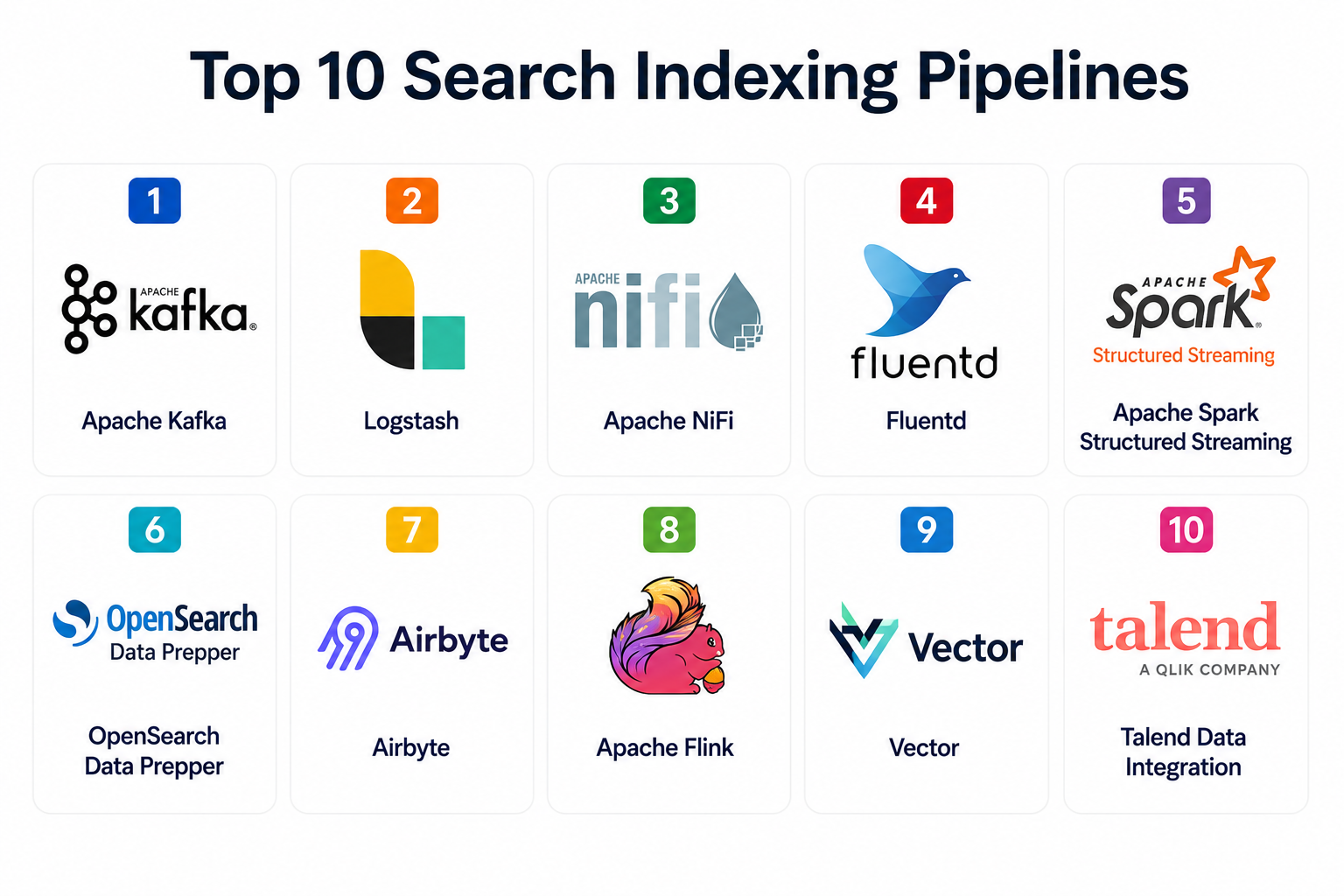
The final list includes search-focused ingestion platforms, distributed indexing systems, streaming architectures, AI-native retrieval pipelines, and open-source indexing frameworks.
Search Indexing Pipelines
#1 — Apache Kafka
Short description :
Apache Kafka is one of the most widely used distributed event streaming platforms for real-time data ingestion and indexing pipelines. It powers large-scale search indexing, observability pipelines, recommendation systems, and AI retrieval architectures. Kafka enables organizations to process and distribute massive volumes of streaming data efficiently across distributed systems. It is heavily used alongside Elasticsearch, OpenSearch, vector databases, and enterprise analytics platforms.
Key Features
- Distributed event streaming
- Real-time ingestion pipelines
- Fault-tolerant architecture
- Stream processing ecosystem
- High-throughput scalability
- Connector framework
- Event replay capabilities
Pros
- Extremely scalable architecture
- Strong ecosystem integrations
- Excellent real-time ingestion performance
Cons
- Operational complexity
- Requires infrastructure expertise
- Monitoring large clusters can be challenging
Platforms / Deployment
- Linux / Windows / macOS
- Cloud / Self-hosted / Hybrid
Security & Compliance
- Encryption
- RBAC
- Audit logs
- SSO/SAML
Integrations & Ecosystem
Kafka integrates with search platforms, analytics systems, cloud services, and AI pipelines.
- Elasticsearch
- OpenSearch
- Spark
- Flink
- Kubernetes
- AWS
Support & Community
Kafka has one of the largest open-source infrastructure communities and extensive enterprise adoption.
#2 — Logstash
Short description :
Logstash is a popular data processing and ingestion pipeline tool commonly used with Elasticsearch and OpenSearch environments. It supports real-time ingestion, transformation, enrichment, and routing of structured and unstructured data into search indexes and analytics systems.
Key Features
- Data ingestion pipelines
- ETL processing
- Real-time transformations
- Plugin ecosystem
- Data enrichment support
- Log and event indexing
- Pipeline configuration management
Pros
- Mature Elastic ecosystem integration
- Flexible plugin architecture
- Good log ingestion capabilities
Cons
- Resource-intensive at scale
- Configuration complexity
- Less optimized for modern vector workflows
Platforms / Deployment
- Linux / Windows / macOS
- Cloud / Self-hosted / Hybrid
Security & Compliance
- Encryption
- RBAC
- Audit logging
Integrations & Ecosystem
Logstash integrates with databases, cloud platforms, and observability stacks.
- Elasticsearch
- Kafka
- AWS
- Azure
- Beats
- SQL databases
Support & Community
Logstash benefits from strong community support and extensive Elastic ecosystem documentation.
#3 — Apache NiFi
Short description :
Apache NiFi is a visual data flow orchestration platform designed for data ingestion, routing, transformation, and indexing workflows. It is widely used for enterprise search ingestion pipelines, data governance workflows, and real-time data movement architectures.
Key Features
- Visual pipeline orchestration
- Real-time data ingestion
- Flow-based programming
- Data provenance tracking
- Security and governance controls
- Streaming data processing
- Extensive processor library
Pros
- Strong visual workflow management
- Excellent data provenance capabilities
- Flexible enterprise integrations
Cons
- Large deployments can become complex
- UI-heavy workflows may require tuning
- Performance optimization requires expertise
Platforms / Deployment
- Linux / Windows
- Cloud / Self-hosted / Hybrid
Security & Compliance
- RBAC
- Encryption
- Audit logging
- SSO/SAML
Integrations & Ecosystem
NiFi integrates with enterprise systems, cloud services, and search platforms.
- Kafka
- Elasticsearch
- Hadoop
- AWS
- Azure
- Databases
Support & Community
Apache NiFi has strong open-source communities and broad enterprise adoption.
#4 — Fluentd
Short description :
Fluentd is an open-source data collector and indexing pipeline platform focused on unified logging and event routing. It is widely used for cloud-native search indexing pipelines, observability systems, and containerized application environments.
Key Features
- Unified logging architecture
- Real-time event collection
- Lightweight pipeline processing
- Plugin ecosystem
- Kubernetes integrations
- Buffering and retry support
- Distributed logging support
Pros
- Cloud-native friendly
- Lightweight deployment model
- Strong Kubernetes ecosystem support
Cons
- Advanced workflows may require customization
- Limited AI enrichment capabilities
- Scaling large pipelines requires tuning
Platforms / Deployment
- Linux
- Cloud / Self-hosted / Hybrid
Security & Compliance
- Encryption
- RBAC
- Access controls
Integrations & Ecosystem
Fluentd integrates with observability stacks, cloud-native platforms, and search systems.
- Kubernetes
- Elasticsearch
- OpenSearch
- AWS
- Google Cloud
Support & Community
Fluentd has strong CNCF ecosystem adoption and active open-source communities.
#5 — Apache Spark Structured Streaming
Short description :
Apache Spark Structured Streaming enables scalable real-time indexing and data transformation pipelines for search systems, AI retrieval architectures, and analytics platforms. It is commonly used in enterprise-scale indexing environments handling massive data volumes.
Key Features
- Distributed stream processing
- Real-time indexing support
- AI and ML integration
- Batch and streaming unification
- Scalable clustering
- SQL-based streaming
- Data transformation pipelines
Pros
- Excellent scalability
- Strong analytics ecosystem
- Good AI and ML integration support
Cons
- Infrastructure-heavy deployments
- Operational complexity
- Resource-intensive workloads
Platforms / Deployment
- Linux
- Cloud / Self-hosted / Hybrid
Security & Compliance
- Encryption
- RBAC
- Audit logging
- SSO/SAML
Integrations & Ecosystem
Spark integrates with analytics systems, AI pipelines, and cloud-native platforms.
- Databricks
- Kafka
- Hadoop
- Delta Lake
- AWS
Support & Community
Spark has one of the largest big data and analytics communities globally.
#6 — OpenSearch Data Prepper
Short description :
OpenSearch Data Prepper is a pipeline ingestion and processing framework designed for OpenSearch environments. It supports observability ingestion, AI enrichment, and scalable indexing workflows for modern search architectures.
Key Features
- OpenSearch ingestion pipelines
- Real-time event processing
- Observability indexing
- AI enrichment support
- Distributed architecture
- Plugin extensibility
- Trace analytics support
Pros
- Strong OpenSearch integration
- Good observability support
- Open-source flexibility
Cons
- Smaller ecosystem than Logstash
- Limited enterprise maturity
- Advanced workflows still evolving
Platforms / Deployment
- Linux
- Cloud / Self-hosted / Hybrid
Security & Compliance
- Encryption
- RBAC
- Audit logging
Integrations & Ecosystem
Data Prepper integrates with OpenSearch ecosystems and observability tooling.
- OpenSearch
- Kafka
- AWS
- OpenTelemetry
Support & Community
OpenSearch Data Prepper benefits from growing community adoption and cloud ecosystem support.
#7 — Airbyte
Short description :
Airbyte is an open-source data integration and ingestion platform increasingly used for search indexing and AI data pipeline workflows. It simplifies connector management and data movement across cloud and enterprise systems.
Key Features
- Data ingestion connectors
- ETL and ELT workflows
- Open-source architecture
- Connector marketplace
- Incremental sync support
- API integrations
- Workflow automation
Pros
- Large connector ecosystem
- Developer-friendly workflows
- Good modern data stack compatibility
Cons
- Less search-specific optimization
- Enterprise governance still evolving
- Complex scaling scenarios
Platforms / Deployment
- Linux
- Cloud / Self-hosted / Hybrid
Security & Compliance
- Encryption
- RBAC
- SSO/SAML
Integrations & Ecosystem
Airbyte integrates with databases, cloud warehouses, and analytics systems.
- Snowflake
- BigQuery
- PostgreSQL
- Kafka
- APIs
Support & Community
Airbyte has strong open-source momentum and rapidly growing community support.
#8 — Apache Flink
Short description :
Apache Flink is a distributed stream processing framework optimized for low-latency data processing and indexing pipelines. It is commonly used in real-time analytics, AI enrichment pipelines, and search indexing architectures requiring continuous processing.
Key Features
- Low-latency stream processing
- Distributed data pipelines
- Stateful processing
- Event-time semantics
- AI and ML pipeline support
- Fault-tolerant architecture
- Large-scale stream analytics
Pros
- Excellent real-time processing
- Strong scalability
- Advanced stream processing capabilities
Cons
- Operational complexity
- Requires specialized expertise
- Infrastructure-heavy deployments
Platforms / Deployment
- Linux
- Cloud / Self-hosted / Hybrid
Security & Compliance
- Encryption
- RBAC
- Audit logging
Integrations & Ecosystem
Flink integrates with streaming systems, cloud platforms, and analytics architectures.
- Kafka
- Kubernetes
- Hadoop
- AWS
- Databases
Support & Community
Apache Flink has strong enterprise adoption in large-scale real-time systems.
#9 — Vector
Short description :
Vector is a lightweight high-performance observability and indexing pipeline platform optimized for logs, metrics, and event processing. It is increasingly used in cloud-native search indexing and observability architectures.
Key Features
- High-performance ingestion
- Lightweight architecture
- Real-time event routing
- Data transformation
- Observability pipelines
- Kubernetes integration
- Low resource overhead
Pros
- Excellent performance efficiency
- Lightweight deployments
- Strong cloud-native compatibility
Cons
- Smaller ecosystem
- Less enterprise workflow tooling
- Limited AI enrichment capabilities
Platforms / Deployment
- Linux
- Cloud / Self-hosted
Security & Compliance
- Encryption
- Access controls
Integrations & Ecosystem
Vector integrates with cloud-native observability and search systems.
- Elasticsearch
- OpenSearch
- Kafka
- Kubernetes
- Prometheus
Support & Community
Vector has active cloud-native communities and growing adoption.
#10 — Talend Data Integration
Short description :
Talend Data Integration is an enterprise-grade data integration platform supporting ingestion, transformation, governance, and indexing workflows for enterprise search and analytics systems. It is widely used in regulated enterprise environments.
Key Features
- Enterprise ETL workflows
- Data governance tooling
- Search indexing support
- Metadata management
- Workflow orchestration
- Cloud integration
- Data quality monitoring
Pros
- Strong enterprise governance
- Mature integration ecosystem
- Good compliance capabilities
Cons
- Enterprise-oriented pricing
- Complex deployments
- Less AI-native than newer platforms
Platforms / Deployment
- Windows / Linux
- Cloud / Self-hosted / Hybrid
Security & Compliance
- RBAC
- Encryption
- Audit logs
- SSO/SAML
Integrations & Ecosystem
Talend integrates with enterprise databases, analytics platforms, and cloud systems.
- Snowflake
- AWS
- Azure
- Salesforce
- SAP
Support & Community
Talend provides enterprise onboarding, documentation, and professional support services.
Comparison Table (Top 10)
| Tool Name | Best For | Platform(s) Supported | Deployment | Standout Feature | Public Rating |
|---|---|---|---|---|---|
| Apache Kafka | Real-time indexing streams | Windows, Linux, macOS | Hybrid | Distributed event streaming | N/A |
| Logstash | Elastic indexing pipelines | Windows, Linux, macOS | Hybrid | Search-focused ingestion | N/A |
| Apache NiFi | Visual indexing orchestration | Windows, Linux | Hybrid | Flow-based pipeline management | N/A |
| Fluentd | Cloud-native indexing pipelines | Linux | Hybrid | Unified logging pipelines | N/A |
| Spark Structured Streaming | Large-scale indexing analytics | Linux | Hybrid | Distributed streaming analytics | N/A |
| OpenSearch Data Prepper | OpenSearch ingestion workflows | Linux | Hybrid | OpenSearch-native ingestion | N/A |
| Airbyte | Modern ingestion pipelines | Linux | Hybrid | Large connector ecosystem | N/A |
| Apache Flink | Low-latency stream processing | Linux | Hybrid | Real-time processing engine | N/A |
| Vector | Lightweight indexing pipelines | Linux | Hybrid | High-performance observability ingestion | N/A |
| Talend Data Integration | Enterprise governance pipelines | Windows, Linux | Hybrid | Enterprise ETL governance | N/A |
Evaluation & Search Indexing Pipelines
| Tool Name | Core (25%) | Ease (15%) | Integrations (15%) | Security (10%) | Performance (10%) | Support (10%) | Value (15%) | Weighted Total |
|---|---|---|---|---|---|---|---|---|
| Apache Kafka | 10 | 6 | 10 | 8 | 10 | 9 | 8 | 8.8 |
| Logstash | 8 | 7 | 9 | 7 | 8 | 8 | 8 | 8.0 |
| Apache NiFi | 9 | 8 | 8 | 8 | 8 | 8 | 8 | 8.2 |
| Fluentd | 8 | 8 | 8 | 7 | 8 | 7 | 9 | 8.0 |
| Spark Structured Streaming | 9 | 6 | 9 | 8 | 10 | 9 | 7 | 8.5 |
| OpenSearch Data Prepper | 7 | 7 | 7 | 7 | 8 | 7 | 8 | 7.4 |
| Airbyte | 8 | 8 | 9 | 7 | 7 | 8 | 9 | 8.1 |
| Apache Flink | 9 | 5 | 8 | 8 | 10 | 8 | 7 | 8.0 |
| Vector | 7 | 8 | 7 | 6 | 9 | 7 | 9 | 7.7 |
| Talend Data Integration | 8 | 7 | 9 | 9 | 8 | 8 | 6 | 7.9 |
These scores are comparative rather than absolute. Some platforms prioritize real-time distributed streaming, while others focus on governance, ingestion simplicity, or cloud-native observability. Buyers should evaluate indexing pipelines based on workload scale, operational expertise, AI enrichment needs, and infrastructure preferences.
Which Search Indexing Pipelines
Solo / Freelancer
Independent developers and small AI projects may prefer:
- Airbyte
- Vector
- Fluentd
These tools provide lightweight deployment and manageable operational complexity.
SMB
Small and medium-sized businesses should focus on usability, integrations, and scalability.
Recommended options:
- Apache NiFi
- Airbyte
- Logstash
Mid-Market
Mid-sized organizations often require scalable ingestion and hybrid indexing workflows.
Recommended options:
- Kafka
- Spark Structured Streaming
- Apache NiFi
- Fluentd
Enterprise
Large enterprises with massive indexing workloads and governance requirements should prioritize scalability and ecosystem maturity.
Recommended options:
- Apache Kafka
- Apache Flink
- Spark Structured Streaming
- Talend Data Integration
Budget vs Premium
- Budget-friendly: Fluentd, Vector, Airbyte
- Premium enterprise: Talend
- Balanced value: Kafka, NiFi
Feature Depth vs Ease of Use
- Deepest capabilities: Kafka, Flink, Spark
- Best usability: NiFi, Airbyte
- Best lightweight operations: Vector
Integrations & Scalability
- Best real-time ecosystem: Kafka
- Best enterprise data integrations: Talend
- Best observability integrations: Fluentd
Security & Compliance Needs
Organizations with strict governance requirements should prioritize:
- Talend Data Integration
- Apache NiFi
- Apache Kafka
- Spark Structured Streaming
Frequently Asked Questions (FAQs)
1. What is a search indexing pipeline?
A search indexing pipeline ingests, processes, transforms, enriches, and indexes data into search platforms or retrieval systems.
2. Why are indexing pipelines important for AI systems?
AI systems rely on fresh, structured, and enriched data for semantic search, RAG, recommendation systems, and intelligent retrieval workflows.
3. What is hybrid indexing?
Hybrid indexing combines traditional keyword indexing with vector embeddings and semantic enrichment for improved search relevance.
4. Which industries use indexing pipelines most?
Industries include SaaS, e-commerce, finance, healthcare, cybersecurity, observability, media, and enterprise knowledge management.
5. What role does Kafka play in indexing pipelines?
Kafka enables real-time distributed event streaming and ingestion for large-scale indexing architectures and AI retrieval systems.
6. Are indexing pipelines difficult to manage?
Operational complexity varies. Lightweight tools are easier to deploy, while large distributed systems require dedicated infrastructure expertise.
7. Can indexing pipelines support AI enrichment?
Yes. Many modern indexing pipelines include embedding generation, NLP enrichment, entity extraction, and semantic processing workflows.
8. What is incremental indexing?
Incremental indexing updates only changed or newly added data instead of rebuilding the entire search index.
9. What should buyers evaluate before selecting a pipeline platform?
Buyers should evaluate ingestion flexibility, scalability, real-time performance, AI integration support, governance features, and operational complexity.
10. Are open-source indexing pipelines enterprise-ready?
Many open-source platforms such as Kafka, NiFi, Flink, and Fluentd are widely deployed in enterprise production environments.
Conclusion
Search Indexing Pipelines have become essential infrastructure for modern search platforms, AI retrieval systems, observability architectures, and enterprise knowledge discovery. As organizations increasingly adopt semantic search, vector retrieval, and Retrieval-Augmented Generation (RAG), indexing pipelines are evolving from simple ETL systems into intelligent AI-aware ingestion architectures.Apache Kafka remains one of the strongest platforms for distributed real-time ingestion, while Apache NiFi provides excellent visual orchestration capabilities.
