Introduction
Workflow orchestration tools are platforms that help design, schedule, automate, and monitor complex sequences of tasks across data pipelines, applications, and infrastructure. In simple terms, they ensure that multi-step processes—like data ingestion, transformation, model training, and deployment—run in the correct order, at the right time, and with proper error handling.
In these tools are becoming essential because modern systems are no longer single applications—they are distributed pipelines involving cloud services, APIs, AI models, and real-time data streams. Without orchestration, these systems become difficult to manage, unreliable, and hard to scale.
Common use cases include:
- Data engineering pipelines (ETL/ELT workflows)
- Machine learning training and deployment pipelines
- CI/CD automation for software delivery
- Event-driven microservices workflows
- Batch processing and scheduled analytics jobs
When evaluating workflow orchestration tools, buyers should focus on:
- Workflow design flexibility (code vs visual)
- Scheduling and event triggers
- Scalability across distributed systems
- Retry, failure handling, and recovery mechanisms
- Integration with data and cloud ecosystems
- Observability (logs, metrics, tracing)
- Security and access control
- Support for long-running workflows
- Developer experience and learning curve
- Multi-cloud and hybrid deployment support
Best for:
Data engineers, DevOps teams, ML engineers, platform engineers, and enterprises running complex data or automation pipelines across distributed systems.
Not ideal for:
Very small applications, single-script automation tasks, or teams that only need simple cron-based scheduling.
Key Trends in Workflow Orchestration Tools
- Shift from cron-based automation to event-driven orchestration
- Strong adoption of Kubernetes-native workflow engines
- Increased use of DAG-based workflow definitions
- Growth of AI-driven workflow optimization and auto-retries
- Expansion of hybrid cloud orchestration models
- Better observability with real-time pipeline monitoring
- Integration with MLOps and data engineering stacks
- Rise of low-code/no-code orchestration platforms
- Strong focus on fault tolerance and self-healing workflows
- Standardization around reusable workflow templates
How We Selected These Tools (Methodology)
- Market adoption across data engineering and DevOps ecosystems
- Real-world production usage at scale
- Workflow flexibility and complexity handling
- Integration support with cloud, data, and ML tools
- Reliability, fault tolerance, and retry mechanisms
- Security and governance capabilities
- Kubernetes and cloud-native compatibility
- Developer experience and usability
- Ecosystem maturity and extensibility
- Support for both batch and real-time workflows
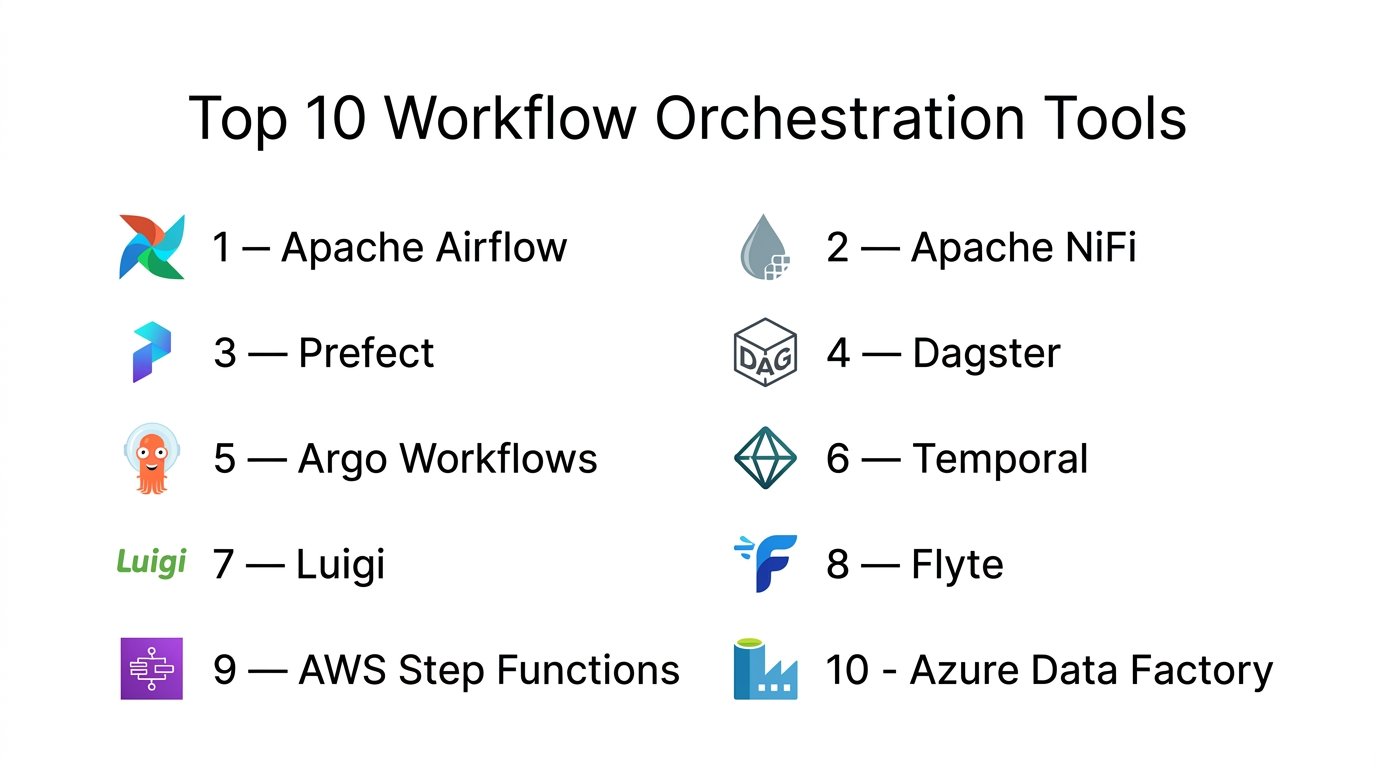
Top 10 Workflow Orchestration Tools
#1 — Apache Airflow
Short description:
Apache Airflow is one of the most widely used open-source workflow orchestration platforms. It allows users to define workflows as code using directed acyclic graphs (DAGs), making it highly flexible for data engineering, ETL pipelines, and machine learning workflows. It is widely adopted in enterprises for scheduling and managing complex data pipelines at scale.
Key Features
- DAG-based workflow design
- Python-based pipeline definitions
- Extensive scheduling and triggering system
- Retry and failure handling mechanisms
- Rich UI for monitoring workflows
- Plugin architecture for extensibility
- Strong logging and observability
Pros
- Extremely flexible and widely adopted
- Strong ecosystem and community support
- Highly suitable for complex data pipelines
Cons
- Requires significant setup and maintenance
- Can become complex at scale
Platforms / Deployment
- Linux
- Cloud / Self-hosted / Hybrid
Security & Compliance
- RBAC support
- Authentication via external systems
- Audit logging (depends on setup)
Integrations & Ecosystem
Airflow integrates with cloud platforms, data warehouses, and ML tools.
- AWS, GCP, Azure services
- Spark, Hadoop ecosystems
- Databases and data lakes
- ML pipelines and schedulers
Support & Community
Very large open-source community and strong enterprise adoption.
#2 — Apache NiFi
Short description:
Apache NiFi is a dataflow automation and workflow orchestration tool designed for real-time data movement and transformation. It provides a visual interface for designing data pipelines and is widely used in data ingestion and streaming workflows.
Key Features
- Visual drag-and-drop workflow builder
- Real-time data flow processing
- Backpressure management
- Data routing and transformation
- Flow versioning and control
- Extensible processor architecture
- Secure data flow management
Pros
- Easy visual workflow design
- Strong real-time data handling
- Excellent for streaming pipelines
Cons
- Less flexible for complex code-based workflows
- UI-heavy compared to code-first tools
Platforms / Deployment
- Linux, Windows
- Cloud / Self-hosted
Security & Compliance
- TLS encryption
- RBAC support
- User authentication controls
Integrations & Ecosystem
- Kafka, Hadoop, Spark
- Databases and APIs
- Cloud storage systems
- Streaming platforms
Support & Community
Active open-source community with enterprise support options.
#3 — Prefect
Short description:
Prefect is a modern workflow orchestration platform designed to simplify data and ML pipeline automation. It focuses on developer experience, dynamic workflows, and cloud-native execution, making it popular among modern data teams.
Key Features
- Python-based workflow definitions
- Dynamic task execution
- Cloud and hybrid orchestration
- Retry and failure recovery system
- Scheduling and event triggers
- Real-time monitoring dashboard
- Task dependency management
Pros
- Easier to use than traditional orchestration tools
- Strong developer experience
- Flexible workflow execution
Cons
- Smaller ecosystem than Airflow
- Some advanced features require paid tiers
Platforms / Deployment
- Linux
- Cloud / Self-hosted / Hybrid
Security & Compliance
- Role-based access control
- Authentication mechanisms
- Not fully standardized compliance disclosures
Integrations & Ecosystem
- Cloud data platforms
- Python data stack
- Kubernetes environments
- APIs and databases
Support & Community
Growing developer community with commercial support options.
#4 — Dagster
Short description:
Dagster is a modern data orchestration platform designed for building reliable and testable data pipelines. It emphasizes data quality, observability, and modular pipeline design.
Key Features
- Asset-based pipeline orchestration
- Strong data lineage tracking
- Type-safe pipeline definitions
- Built-in testing framework
- Scheduling and automation support
- UI for pipeline observability
- Modular pipeline architecture
Pros
- Excellent data observability features
- Strong focus on data quality
- Developer-friendly design
Cons
- Smaller ecosystem compared to Airflow
- Requires learning new concepts
Platforms / Deployment
- Linux
- Cloud / Self-hosted / Hybrid
Security & Compliance
- RBAC support
- Authentication options (varies)
Integrations & Ecosystem
- Data warehouses (Snowflake, BigQuery-style systems)
- Python data stack
- Cloud storage systems
- Kubernetes deployments
Support & Community
Active open-source community with growing enterprise adoption.
#5 — Argo Workflows
Short description:
Argo Workflows is a Kubernetes-native workflow orchestration engine designed for containerized workloads. It is widely used for machine learning pipelines and cloud-native batch processing.
Key Features
- Kubernetes-native workflow execution
- Container-based task orchestration
- DAG and step-based workflows
- Parallel execution support
- Artifact management system
- Event-driven workflow triggers
- Scalable cluster execution
Pros
- Strong Kubernetes integration
- Excellent for containerized workflows
- Highly scalable
Cons
- Requires Kubernetes expertise
- Not beginner-friendly
Platforms / Deployment
- Linux
- Cloud / Self-hosted (Kubernetes-based)
Security & Compliance
- Kubernetes RBAC
- Namespace isolation
- Policy-based access control
Integrations & Ecosystem
- Kubernetes ecosystem
- CI/CD pipelines
- ML frameworks
- Cloud storage systems
Support & Community
Strong open-source CNCF ecosystem support.
#6 — Temporal
Short description:
Temporal is a durable workflow orchestration platform designed for building resilient, long-running distributed applications. It is widely used in microservices and backend systems requiring strong reliability guarantees.
Key Features
- Durable execution of workflows
- Automatic retry and recovery
- Long-running workflow support
- Event-driven architecture
- Strong state management
- Microservices orchestration
- Language SDK support
Pros
- Extremely reliable workflow execution
- Great for microservices orchestration
- Strong fault tolerance
Cons
- Steep learning curve
- Not ideal for simple pipelines
Platforms / Deployment
- Linux
- Cloud / Self-hosted / Hybrid
Security & Compliance
- Authentication and authorization controls
- Not fully standardized compliance disclosures
Integrations & Ecosystem
- Microservices architectures
- APIs and backend systems
- Cloud services
- Event-driven systems
Support & Community
Strong developer adoption and enterprise support options.
#7 — Luigi
Short description:
Luigi is a Python-based workflow orchestration tool developed for building batch data pipelines. It is widely used in data engineering environments for structured pipeline management.
Key Features
- Python-based pipeline definitions
- Task dependency management
- Batch workflow scheduling
- Simple pipeline visualization
- Retry and failure handling
- Lightweight orchestration engine
- Extensible task system
Pros
- Simple and easy to understand
- Good for batch workflows
- Lightweight compared to Airflow
Cons
- Limited scalability features
- Less active ecosystem
Platforms / Deployment
- Linux
- Self-hosted
Security & Compliance
- Not publicly stated
Integrations & Ecosystem
- Python data ecosystem
- Databases
- File systems
- Basic ETL pipelines
Support & Community
Smaller but stable open-source community.
#8 — Flyte
Short description:
Flyte is a Kubernetes-native workflow orchestration platform designed for scalable and reproducible data and machine learning workflows. It is widely used in data science and AI infrastructure teams.
Key Features
- Kubernetes-native execution engine
- Strong workflow versioning
- Reproducible ML pipelines
- Dynamic task scaling
- Data type safety
- Container-based execution
- Workflow observability tools
Pros
- Excellent for ML workflows
- Strong reproducibility guarantees
- Scalable architecture
Cons
- Requires Kubernetes knowledge
- Steeper setup process
Platforms / Deployment
- Linux
- Cloud / Self-hosted (Kubernetes-based)
Security & Compliance
- Kubernetes RBAC
- Not publicly stated
Integrations & Ecosystem
- ML frameworks
- Kubernetes ecosystem
- Data pipelines
- CI/CD systems
Support & Community
Growing open-source and enterprise adoption.
#9 — AWS Step Functions
Short description:
AWS Step Functions is a fully managed workflow orchestration service designed to coordinate distributed applications and serverless workflows on AWS infrastructure.
Key Features
- Visual workflow design
- Serverless orchestration engine
- Built-in retry and error handling
- State machine-based execution
- Event-driven workflows
- Deep AWS service integration
- Parallel execution support
Pros
- Fully managed service
- Strong AWS ecosystem integration
- Minimal infrastructure overhead
Cons
- AWS lock-in
- Limited flexibility outside AWS
Platforms / Deployment
- Cloud (AWS)
Security & Compliance
- IAM-based access control
- Encryption at rest and in transit (AWS-managed)
Integrations & Ecosystem
- AWS Lambda
- S3, DynamoDB
- EventBridge
- CloudWatch
Support & Community
Strong enterprise AWS support.
#10 — Azure Data Factory
Short description:
Azure Data Factory is a cloud-based data integration and workflow orchestration service used to build ETL and data movement pipelines across cloud and on-prem systems.
Key Features
- Visual pipeline builder
- Data ingestion and transformation workflows
- Scheduled and event-based execution
- Integration with data services
- Mapping data flows
- Hybrid data movement support
- Monitoring and logging tools
Pros
- Strong enterprise integration
- Easy visual workflow design
- Good hybrid data support
Cons
- Azure ecosystem dependency
- Can become expensive at scale
Platforms / Deployment
- Cloud (Azure)
Security & Compliance
- Azure Active Directory integration
- Role-based access control
- Encryption via Azure services
Integrations & Ecosystem
- Azure Data Lake
- Azure Synapse
- SQL databases
- Cloud storage systems
Support & Community
Strong Microsoft enterprise support.
Comparison Table (Top 10)
| Tool Name | Best For | Platform(s) Supported | Deployment | Standout Feature | Public Rating |
|---|---|---|---|---|---|
| Apache Airflow | Data pipelines | Linux | Cloud/Self/Hybrid | DAG-based workflows | N/A |
| Apache NiFi | Data streaming | Linux/Windows | Self/Cloud | Visual dataflows | N/A |
| Prefect | Modern data workflows | Linux | Cloud/Hybrid | Dynamic Python workflows | N/A |
| Dagster | Data quality pipelines | Linux | Cloud/Hybrid | Asset-based orchestration | N/A |
| Argo Workflows | Kubernetes workflows | Linux | Cloud/Self | K8s-native execution | N/A |
| Temporal | Microservices workflows | Linux | Cloud/Hybrid | Durable workflows | N/A |
| Luigi | Batch pipelines | Linux | Self-hosted | Simple Python workflows | N/A |
| Flyte | ML workflows | Linux | Cloud/K8s | Reproducible pipelines | N/A |
| AWS Step Functions | Serverless workflows | Cloud | AWS Cloud | Managed orchestration | N/A |
| Azure Data Factory | Data integration | Cloud | Azure Cloud | Visual ETL builder | N/A |
Evaluation & Scoring (Workflow Orchestration Tools)
| Tool Name | Core (25%) | Ease (15%) | Integrations (15%) | Security (10%) | Performance (10%) | Support (10%) | Value (15%) | Total |
|---|---|---|---|---|---|---|---|---|
| Airflow | 10 | 7 | 10 | 8 | 9 | 9 | 9 | 9.0 |
| NiFi | 8 | 8 | 9 | 8 | 8 | 8 | 9 | 8.3 |
| Prefect | 9 | 9 | 9 | 8 | 8 | 8 | 9 | 8.6 |
| Dagster | 9 | 8 | 9 | 8 | 8 | 8 | 9 | 8.5 |
| Argo | 9 | 7 | 10 | 9 | 9 | 9 | 8 | 8.7 |
| Temporal | 9 | 7 | 9 | 9 | 9 | 9 | 8 | 8.6 |
| Luigi | 7 | 9 | 7 | 7 | 7 | 7 | 10 | 7.8 |
| Flyte | 9 | 7 | 9 | 8 | 8 | 8 | 9 | 8.4 |
| AWS Step Functions | 9 | 9 | 10 | 9 | 9 | 9 | 8 | 9.0 |
| Azure Data Factory | 9 | 8 | 10 | 9 | 8 | 9 | 8 | 8.7 |
Scores are comparative and reflect real-world suitability across data, ML, and distributed systems workflows. No tool is universally best—each serves different architectural needs, from simple batch pipelines to complex distributed microservices orchestration.
Which Workflow Orchestration Tools
Solo / Freelancer
Simple and lightweight options:
Luigi, Prefect (basic setups)
SMB
Balanced orchestration needs:
Prefect, Dagster, Airflow
Mid-Market
Scalable pipelines and hybrid workflows:
Airflow, Argo, Flyte, Temporal
Enterprise
Large-scale distributed orchestration:
Airflow, AWS Step Functions, Azure Data Factory, Temporal
Budget vs Premium
- Budget-friendly: Airflow, Luigi, Argo (open-source)
- Premium: AWS Step Functions, Azure Data Factory, enterprise Prefect/Dagster
Feature Depth vs Ease of Use
- Deep control: Airflow, Argo, Temporal
- Easier adoption: Prefect, NiFi, AWS Step Functions
Integrations & Scalability
- High scalability: Airflow, Argo, Temporal
- Strong integrations: AWS Step Functions, Azure Data Factory, Prefect
Security & Compliance Needs
- Enterprise governance: AWS, Azure, Airflow (enterprise setups)
- Open-source flexible setups: Argo, Dagster, Flyte
Frequently Asked Questions (FAQs)
1. What is a workflow orchestration tool?
It is a system that automates and manages multi-step workflows, ensuring tasks run in the correct order with proper scheduling and monitoring.
2. Why are workflow orchestration tools important?
They help manage complex pipelines, reduce manual work, and ensure reliability in data and application workflows.
3. What is the difference between orchestration and automation?
Automation handles single tasks, while orchestration manages multiple interconnected tasks across systems.
4. Are these tools only for data engineering?
No, they are also used in DevOps, microservices, AI pipelines, and cloud automation.
5. Do workflow tools support cloud and on-prem systems?
Yes, most modern tools support hybrid deployments across cloud and on-prem infrastructure.
6. Which tool is easiest for beginners?
Prefect, AWS Step Functions, and NiFi are generally easier for beginners.
7. Which tool is best for large-scale pipelines?
Apache Airflow, Argo Workflows, and Temporal are widely used for large-scale systems.
8. Do these tools support real-time workflows?
Yes, tools like NiFi and Temporal support event-driven and real-time workflows.
9. Are workflow orchestration tools expensive?
Open-source tools are free, but managed cloud services and enterprise platforms can be costly.
10. What is the future of workflow orchestration?
The future includes AI-driven automation, self-healing pipelines, and deeper integration with cloud-native systems.
Conclusion
Workflow orchestration tools are a critical foundation for modern data, AI, and distributed application systems. They ensure that complex multi-step processes run reliably, efficiently, and at scale across cloud and on-prem environments.While no single tool is perfect for every use case, each platform serves a distinct purpose—from lightweight batch automation to enterprise-grade distributed orchestration. Tools like Airflow and Argo dominate open-source ecosystems, while AWS Step Functions and Azure Data Factory lead in managed cloud environments.
