Introduction
Spend management platforms help organizations track, control, and optimize all business spending—including procurement, expenses, invoices, and payments—from a single system. Instead of managing budgets across disconnected tools, companies use these platforms to gain real-time visibility and enforce financial discipline.
In modern organizations, especially with distributed teams and digital operations, uncontrolled spending can quickly reduce profitability. Spend management platforms bring automation, compliance, analytics, and policy enforcement into everyday financial workflows. With AI capabilities and tighter integrations, these platforms now play a strategic role in financial planning and cost optimization.
Real-world use cases
- Tracking employee expenses and reimbursements
- Managing procurement and vendor payments
- Monitoring budgets across departments
- Detecting overspending or fraud
- Generating insights for cost optimization
What buyers should evaluate
- Ease of use and employee adoption
- Expense tracking and reporting capabilities
- Integration with accounting and ERP systems
- Automation of approvals and workflows
- Real-time analytics and dashboards
- Security and compliance controls
- Scalability for growing teams
- Pricing and value for money
Best for: Finance teams, CFOs, IT managers, mid-market to enterprise companies, and fast-growing startups needing spending visibility and control.
Not ideal for: Freelancers or very small teams with minimal spending complexity—basic accounting tools may be enough.
Key Trends in Spend Management Platforms
- AI-powered expense categorization and anomaly detection
- Real-time spend analytics and dashboards
- Integration with corporate cards and banking systems
- Automation of approvals and reimbursements
- Increased focus on fraud detection and compliance
- Mobile-first expense submission and approvals
- API-driven ecosystems for integration flexibility
- Subscription-based SaaS pricing models
- Embedded finance and payment capabilities
- ESG and compliance tracking in vendor spending
How We Selected These Tools (Methodology)
- Strong market presence and customer adoption
- Feature coverage across expense, procurement, and payments
- Reliability and performance signals from enterprise usage
- Security capabilities and compliance readiness
- Integration ecosystem with finance and ERP systems
- Usability across different company sizes
- Vendor maturity and product innovation
- Flexibility in deployment and customization
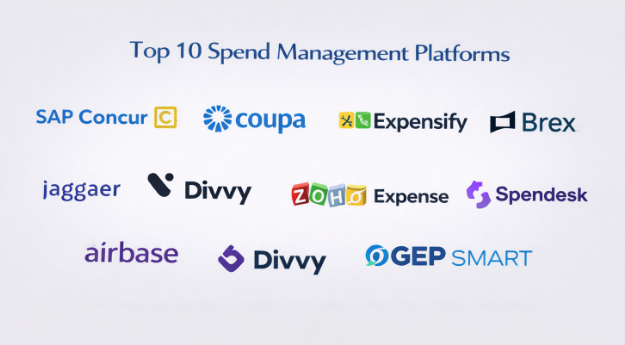
Top 10 Spend Management Platforms
#1 — SAP Concur
Short description (2–3 lines): Enterprise-level expense and travel management platform designed for large organizations needing strict compliance and global scalability.
Key Features
- Travel and expense management
- Automated expense reporting
- Policy enforcement
- Receipt capture and OCR
- Integration with SAP systems
- Global tax compliance support
Pros
- Strong compliance features
- Scalable for global enterprises
Cons
- Complex setup
- User interface can be outdated
Platforms / Deployment
Web / iOS / Android
Cloud
Security & Compliance
SSO, MFA, encryption, audit logs
Compliance: Not publicly stated
Integrations & Ecosystem
SAP Concur integrates deeply with enterprise systems and financial tools.
- SAP ERP
- Financial systems
- Travel booking tools
- APIs
Support & Community
Enterprise-grade support with structured onboarding and global presence.
#2 — Coupa
Short description (2–3 lines): Cloud-based spend management platform offering procurement, expense, and invoicing capabilities with strong analytics.
Key Features
- Spend visibility dashboards
- Expense and invoice management
- AI-driven insights
- Supplier collaboration
- Contract management
Pros
- Strong analytics
- Easy-to-use interface
Cons
- Premium pricing
- Limited deep customization
Platforms / Deployment
Web
Cloud
Security & Compliance
SSO, MFA, encryption
Compliance: Not publicly stated
Integrations & Ecosystem
Coupa integrates with enterprise finance tools and ERPs.
- ERP systems
- Payment gateways
- APIs
Support & Community
Good documentation and enterprise support tiers.
#3 — Expensify
Short description (2–3 lines): Popular expense management tool focused on automation and simplicity, ideal for SMBs and startups.
Key Features
- Receipt scanning
- Expense tracking
- Automated reporting
- Corporate card integration
- Reimbursement workflows
Pros
- Easy to use
- Quick setup
Cons
- Limited enterprise features
- Basic analytics
Platforms / Deployment
Web / iOS / Android
Cloud
Security & Compliance
Not publicly stated
Integrations & Ecosystem
Integrates with accounting tools and financial platforms.
- QuickBooks
- Xero
- APIs
Support & Community
Active user base with standard support.
#4 — Brex
Short description (2–3 lines): Spend management platform combined with corporate cards, designed for startups and fast-growing companies.
Key Features
- Corporate cards
- Real-time spend tracking
- Expense management
- Budget controls
- Automated reporting
Pros
- Strong financial integration
- Real-time tracking
Cons
- Focused on specific markets
- Limited enterprise features
Platforms / Deployment
Web / iOS / Android
Cloud
Security & Compliance
Encryption, access controls
Compliance: Not publicly stated
Integrations & Ecosystem
Connects with finance and HR tools.
- Accounting systems
- Payroll tools
- APIs
Support & Community
Responsive support with onboarding assistance.
#5 — Ramp
Short description (2–3 lines): Modern spend management platform offering corporate cards and cost-saving insights.
Key Features
- Corporate cards
- Expense automation
- Cost optimization insights
- Budget controls
- Vendor tracking
Pros
- Cost-saving recommendations
- Clean user interface
Cons
- Limited global availability
- Less customization
Platforms / Deployment
Web
Cloud
Security & Compliance
Not publicly stated
Integrations & Ecosystem
Integrates with accounting and finance tools.
- ERP systems
- Accounting platforms
- APIs
Support & Community
Growing ecosystem with strong support.
#6 — Airbase
Short description (2–3 lines): Unified spend management platform covering expenses, bill payments, and corporate cards.
Key Features
- Expense management
- Bill payments
- Corporate cards
- Approval workflows
- Reporting
Pros
- All-in-one platform
- Strong automation
Cons
- Pricing may vary
- Limited customization
Platforms / Deployment
Web
Cloud
Security & Compliance
Not publicly stated
Integrations & Ecosystem
Integrates with financial systems and tools.
- ERP systems
- APIs
- Payment platforms
Support & Community
Reliable support with onboarding resources.
#7 — Divvy
Short description (2–3 lines): Spend management solution combining budgeting and expense tracking with corporate cards.
Key Features
- Budget tracking
- Expense management
- Corporate cards
- Real-time reporting
- Mobile access
Pros
- Easy budgeting
- Real-time insights
Cons
- Limited enterprise features
- Basic analytics
Platforms / Deployment
Web / iOS / Android
Cloud
Security & Compliance
Not publicly stated
Integrations & Ecosystem
Integrates with accounting systems.
- Accounting tools
- APIs
Support & Community
Standard support with documentation.
#8 — Zoho Expense
Short description (2–3 lines): Expense management tool designed for SMBs with strong automation and affordability.
Key Features
- Expense tracking
- Receipt scanning
- Automated approvals
- Reporting dashboards
- Integration with Zoho ecosystem
Pros
- Affordable
- Easy integration with Zoho apps
Cons
- Limited enterprise scalability
- Basic advanced analytics
Platforms / Deployment
Web / iOS / Android
Cloud
Security & Compliance
Not publicly stated
Integrations & Ecosystem
Part of Zoho ecosystem with integrations.
- Zoho apps
- Accounting tools
- APIs
Support & Community
Strong documentation and support.
#9 — Spendesk
Short description (2–3 lines): Spend management platform focused on European SMBs with expense tracking and payment capabilities.
Key Features
- Expense tracking
- Corporate cards
- Invoice management
- Budget controls
- Reporting
Pros
- Strong European presence
- Easy to use
Cons
- Limited global reach
- Moderate feature depth
Platforms / Deployment
Web
Cloud
Security & Compliance
Not publicly stated
Integrations & Ecosystem
Integrates with accounting tools and ERPs.
- Financial systems
- APIs
Support & Community
Reliable support with growing user base.
#10 — GEP SMART
Short description (2–3 lines): Enterprise spend management platform with advanced analytics and procurement capabilities.
Key Features
- Spend analytics
- Procurement integration
- Supplier management
- AI-driven insights
- Contract lifecycle management
Pros
- Strong analytics
- Enterprise capabilities
Cons
- Complex implementation
- Higher cost
Platforms / Deployment
Web
Cloud
Security & Compliance
SSO, encryption
Compliance: Not publicly stated
Integrations & Ecosystem
Supports enterprise integrations.
- ERP systems
- APIs
- Data platforms
Support & Community
Enterprise-level support and implementation services.
Comparison Table (Top 10)
| Tool Name | Best For | Platform(s) Supported | Deployment | Standout Feature | Public Rating |
|---|---|---|---|---|---|
| SAP Concur | Enterprise | Web/Mobile | Cloud | Travel + expense management | N/A |
| Coupa | Spend analytics | Web | Cloud | AI insights | N/A |
| Expensify | SMB | Web/Mobile | Cloud | Receipt automation | N/A |
| Brex | Startups | Web/Mobile | Cloud | Corporate cards | N/A |
| Ramp | Cost control | Web | Cloud | Cost-saving insights | N/A |
| Airbase | Unified spend | Web | Cloud | All-in-one platform | N/A |
| Divvy | Budgeting | Web/Mobile | Cloud | Real-time budgets | N/A |
| Zoho Expense | SMB | Web/Mobile | Cloud | Zoho integration | N/A |
| Spendesk | EU SMB | Web | Cloud | Expense + payments | N/A |
| GEP SMART | Enterprise | Web | Cloud | AI analytics | N/A |
Evaluation & Scoring of Spend Management Platforms
| Tool Name | Core (25%) | Ease (15%) | Integrations (15%) | Security (10%) | Performance (10%) | Support (10%) | Value (15%) | Weighted Total |
|---|---|---|---|---|---|---|---|---|
| SAP Concur | 9 | 6 | 9 | 8 | 9 | 8 | 6 | 8.0 |
| Coupa | 8 | 8 | 8 | 7 | 8 | 8 | 7 | 7.8 |
| Expensify | 6 | 9 | 6 | 6 | 7 | 7 | 8 | 7.1 |
| Brex | 7 | 8 | 7 | 6 | 8 | 7 | 8 | 7.4 |
| Ramp | 7 | 9 | 7 | 6 | 8 | 7 | 8 | 7.5 |
| Airbase | 8 | 8 | 7 | 7 | 8 | 7 | 7 | 7.6 |
| Divvy | 6 | 8 | 6 | 6 | 7 | 7 | 8 | 7.0 |
| Zoho Expense | 6 | 9 | 7 | 6 | 7 | 7 | 9 | 7.3 |
| Spendesk | 7 | 8 | 7 | 6 | 7 | 7 | 7 | 7.2 |
| GEP SMART | 9 | 6 | 8 | 8 | 9 | 8 | 6 | 7.9 |
How to interpret scores:
- Higher scores in “Core” indicate strong feature depth and enterprise capabilities.
- Ease of use matters more for SMB adoption.
- Integration scores reflect ecosystem maturity.
- Weighted totals help compare tools, but priorities vary by organization.
Which Spend Management Platforms
Solo / Freelancer
Use simple expense tracking tools; full platforms are unnecessary.
SMB
Zoho Expense, Expensify, Divvy are easy to adopt and cost-effective.
Mid-Market
Airbase, Ramp, and Coupa offer balanced features and scalability.
Enterprise
SAP Concur and GEP SMART provide full-scale control and compliance.
Budget vs Premium
- Budget: Zoho Expense, Expensify
- Premium: SAP Concur, Coupa
Feature Depth vs Ease of Use
- Feature depth: SAP Concur, GEP SMART
- Ease of use: Expensify, Ramp
Integrations & Scalability
- Best integrations: SAP Concur, Coupa
- Moderate: Airbase, Ramp
Security & Compliance Needs
- High compliance: SAP Concur, GEP SMART
- Moderate: SMB tools
Frequently Asked Questions (FAQs)
1. What is a spend management platform?
It is software that helps businesses track, control, and optimize expenses, procurement, and payments in one system.
2. How is it different from accounting software?
Accounting software records transactions, while spend management platforms control and optimize spending before it happens.
3. Are these tools suitable for small businesses?
Yes, but only lightweight tools like Expensify or Zoho Expense are ideal for SMBs.
4. How long does implementation take?
SMB tools can be deployed in days, while enterprise platforms may take months.
5. Do these platforms support integrations?
Yes, most platforms integrate with ERP, accounting, and financial systems.
6. Are they secure?
Most offer encryption, access controls, and audit logs, but compliance varies by vendor.
7. What are common mistakes when selecting a tool?
Ignoring integration requirements and choosing overly complex platforms.
8. Can these platforms help reduce costs?
Yes, through analytics, budgeting, and spend visibility.
9. Do they support mobile usage?
Most modern platforms offer mobile apps for expense tracking and approvals.
10. Can I switch platforms later?
Yes, but migration and training require planning.
Conclusion
Spend management platforms have evolved from simple expense trackers into powerful financial control systems that help organizations make smarter decisions. Whether you are a startup trying to control burn rate or an enterprise managing global operations, these tools bring visibility, automation, and compliance into your financial workflows. The right choice depends on your needs—ease of use, integration depth, scalability, or advanced analytics. Instead of searching for a single “best” platform, shortlist two or three options that align with your requirements. Run a pilot, evaluate real-world usability, and ensure the platform integrates smoothly with your existing systems. This approach will help you make a confident and practical decision.
