Introduction
Smart Contract Development Tools are software platforms, frameworks, SDKs, and testing environments used to build, deploy, audit, and manage blockchain-based smart contracts. These tools help developers create decentralized applications (dApps), automate blockchain workflows, and securely manage digital assets across public and enterprise blockchain networks.
In smart contract development is becoming more sophisticated due to the rapid expansion of decentralized finance (DeFi), tokenization, AI-integrated blockchain applications, decentralized identity systems, and enterprise blockchain adoption. Modern development tools now include automated testing, AI-assisted coding, formal verification, security scanning, multi-chain deployment, and developer collaboration workflows.
Common real-world use cases include:
- Decentralized finance (DeFi) applications
- NFT marketplaces and gaming ecosystems
- Enterprise blockchain automation
- DAO governance systems
- Token issuance and management
- Cross-chain decentralized applications
- Blockchain-based identity systems
When evaluating Smart Contract Development Tools, buyers should consider:
- Blockchain compatibility
- Developer experience
- Testing and debugging capabilities
- Security analysis tooling
- Multi-chain deployment support
- Automation and CI/CD integration
- Ecosystem maturity
- Documentation quality
- Smart contract auditing support
- Scalability and workflow flexibility
Best for: Blockchain developers, Web3 startups, enterprise blockchain teams, DeFi platforms, NFT projects, and organizations building decentralized applications or blockchain automation systems.
Not ideal for: Traditional applications without blockchain requirements or teams lacking smart contract development expertise.
Key Trends in Smart Contract Development Tools
- AI-assisted smart contract coding is growing rapidly.
- Multi-chain deployment workflows are becoming standard.
- Automated smart contract auditing tools are improving.
- Formal verification adoption is increasing for enterprise applications.
- Layer-2 blockchain development support is expanding.
- Developer-focused security scanning is becoming more integrated.
- Blockchain CI/CD automation is maturing.
- Cross-chain interoperability tooling is improving.
- Low-code smart contract builders are gaining adoption.
- Enterprise blockchain governance tooling is expanding.
How We Selected These Tools (Methodology)
The tools in this list were selected based on developer adoption, ecosystem maturity, blockchain compatibility, security tooling, and relevance within modern Web3 and enterprise blockchain development workflows.
Selection criteria included:
- Smart contract development capabilities
- Testing and debugging features
- Security and audit tooling
- Multi-chain compatibility
- Developer ecosystem adoption
- Documentation quality
- Enterprise readiness
- Automation and CI/CD support
- Community activity
- Long-term blockchain relevance
The final list includes developer frameworks, blockchain IDEs, smart contract security platforms, deployment orchestration tools, and enterprise-focused blockchain development environments.
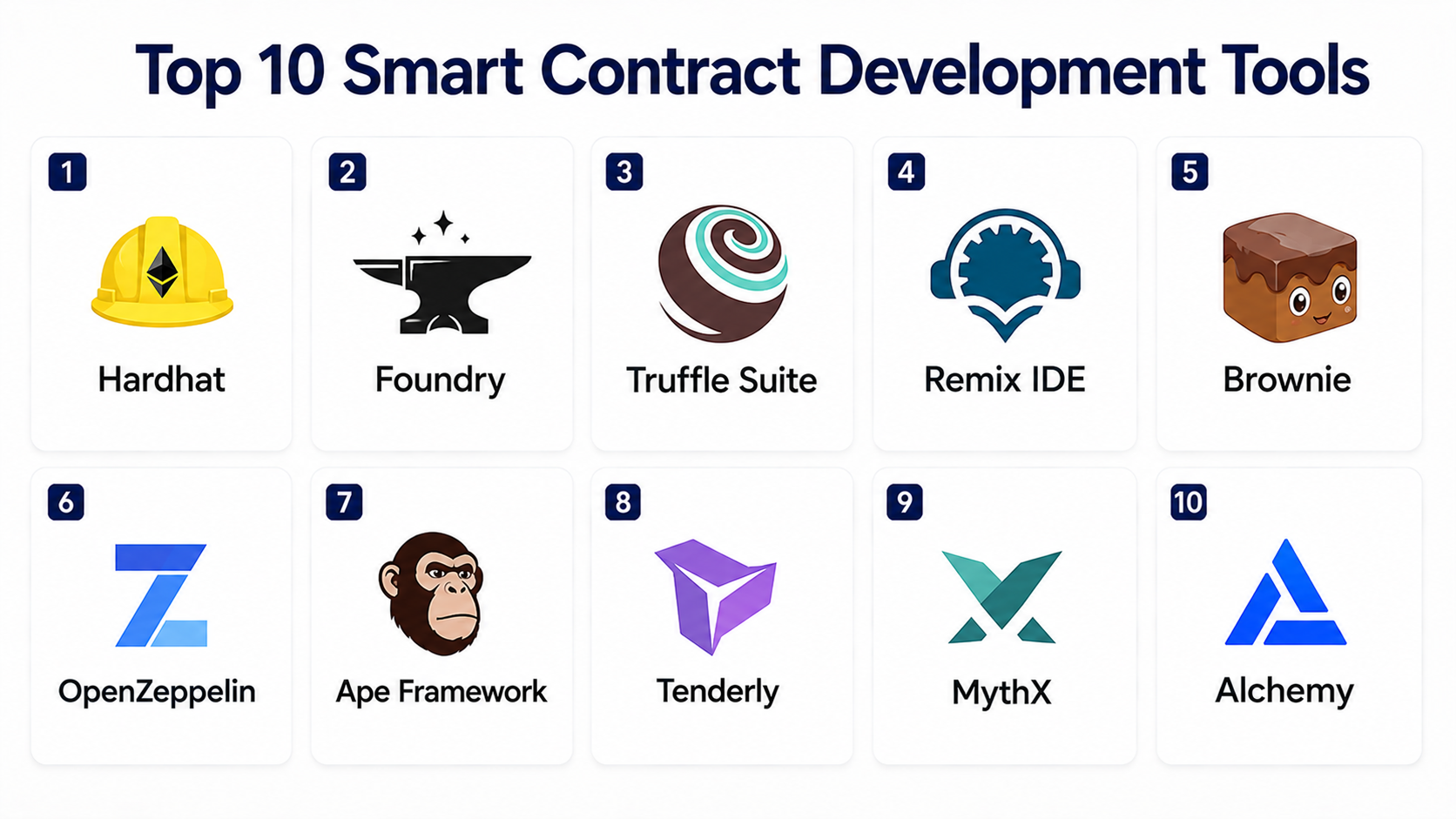
Smart Contract Development Tools
#1 — Hardhat
Short description :
Hardhat is one of the most widely used Ethereum development environments for building, testing, debugging, and deploying smart contracts and decentralized applications.
Key Features
- Ethereum smart contract development
- Local blockchain testing
- Debugging tools
- Plugin ecosystem
- Automated deployment workflows
- Solidity support
- Developer scripting environment
Pros
- Excellent developer experience
- Strong plugin ecosystem
- Broad Web3 adoption
Cons
- Primarily Ethereum-focused
- Advanced workflows can become complex
- Requires Solidity expertise
Platforms / Deployment
- Windows / macOS / Linux
- Self-hosted / Cloud
Security & Compliance
- Local testing environments
- Security plugin support
- Audit tooling integrations
Integrations & Ecosystem
Hardhat integrates with modern Ethereum and Web3 development ecosystems.
- Solidity
- Ethers.js
- OpenZeppelin
- MetaMask
- CI/CD pipelines
Support & Community
Hardhat has one of the largest Web3 developer communities and extensive documentation.
#2 — Foundry
Short description :
Foundry is a fast and developer-focused smart contract development toolkit optimized for Ethereum application testing and deployment.
Key Features
- High-speed smart contract testing
- Solidity-native tooling
- Smart contract fuzz testing
- Deployment scripting
- Local blockchain simulation
- CLI-based workflows
- Gas optimization support
Pros
- Extremely fast testing performance
- Developer-friendly CLI workflows
- Strong advanced testing capabilities
Cons
- CLI-heavy learning curve
- Smaller plugin ecosystem than Hardhat
- Mainly Ethereum-focused
Platforms / Deployment
- Windows / macOS / Linux
- Self-hosted
Security & Compliance
- Fuzz testing support
- Security-focused testing workflows
Integrations & Ecosystem
Foundry integrates with Ethereum and developer automation ecosystems.
- Solidity
- CI/CD systems
- EVM networks
- APIs
- Developer scripting tools
Support & Community
Foundry has rapidly growing adoption among advanced smart contract developers.
#3 — Truffle Suite
Short description :
Truffle Suite is a blockchain development framework that simplifies smart contract development, deployment, and testing for Ethereum-compatible networks.
Key Features
- Smart contract deployment
- Automated testing
- Blockchain debugging
- Migration management
- Developer workflow automation
- EVM compatibility
- Ganache local blockchain support
Pros
- Beginner-friendly onboarding
- Broad Ethereum ecosystem compatibility
- Integrated local testing tools
Cons
- Slower performance compared to newer frameworks
- Ecosystem momentum shifting toward newer tools
- Advanced customization can be complex
Platforms / Deployment
- Windows / macOS / Linux
- Self-hosted / Cloud
Security & Compliance
- Local testing support
- Smart contract debugging tools
Integrations & Ecosystem
Truffle integrates with Ethereum and blockchain development workflows.
- Solidity
- Ganache
- MetaMask
- APIs
- CI/CD pipelines
Support & Community
Truffle has a mature Web3 developer ecosystem and strong educational adoption.
#4 — Remix IDE
Short description :
Remix IDE is a browser-based development environment for building, testing, and deploying Ethereum smart contracts directly from the web.
Key Features
- Browser-based Solidity IDE
- Smart contract debugging
- Deployment management
- Plugin architecture
- Local and remote blockchain support
- Static analysis support
- Educational tooling
Pros
- No local installation required
- Beginner-friendly interface
- Fast smart contract prototyping
Cons
- Limited large-scale project management
- Browser dependency
- Advanced workflows may require external tooling
Platforms / Deployment
- Web
- Cloud
Security & Compliance
- Static analysis plugins
- Local testing support
Integrations & Ecosystem
Remix integrates with Ethereum developer tooling and wallets.
- MetaMask
- Solidity
- EVM networks
- APIs
- Plugin ecosystem
Support & Community
Remix has strong educational and beginner-focused community adoption.
#5 — Brownie
Short description :
Brownie is a Python-based smart contract development and testing framework designed for Ethereum and EVM-compatible blockchain applications.
Key Features
- Python-based development workflows
- Smart contract testing
- Deployment automation
- Local blockchain simulation
- Contract interaction scripting
- EVM compatibility
- Security testing support
Pros
- Strong Python developer accessibility
- Flexible scripting workflows
- Good testing support
Cons
- Smaller ecosystem than Hardhat
- Python dependency may not suit all teams
- Advanced scaling workflows can be complex
Platforms / Deployment
- Windows / macOS / Linux
- Self-hosted
Security & Compliance
- Testing and debugging support
- Security workflow integrations
Integrations & Ecosystem
Brownie integrates with Python and Ethereum ecosystems.
- Python
- Solidity
- Ganache
- APIs
- CI/CD systems
Support & Community
Brownie has an active Ethereum and Python developer community.
#6 — OpenZeppelin
Short description :
OpenZeppelin provides secure smart contract libraries, blockchain security tooling, and developer frameworks for decentralized application development.
Key Features
- Secure smart contract libraries
- Smart contract security tooling
- Upgradeable contract frameworks
- Access control modules
- Token standard implementations
- Defender automation platform
- Security auditing support
Pros
- Industry-standard security libraries
- Strong smart contract reliability
- Broad enterprise and Web3 adoption
Cons
- Primarily Ethereum ecosystem focused
- Advanced security workflows require expertise
- Premium tooling costs for some services
Platforms / Deployment
- Windows / macOS / Linux / Web
- Cloud / Self-hosted / Hybrid
Security & Compliance
- Access controls
- Security libraries
- Audit tooling integrations
Integrations & Ecosystem
OpenZeppelin integrates deeply with Ethereum and smart contract ecosystems.
- Hardhat
- Foundry
- Solidity
- Defender
- CI/CD pipelines
Support & Community
OpenZeppelin has one of the strongest smart contract security communities.
#7 — Ape Framework
Short description :
Ape Framework is a Python-based smart contract development environment focused on modular blockchain development workflows and extensibility.
Key Features
- Modular smart contract tooling
- Python scripting support
- Plugin-based architecture
- Testing automation
- Deployment workflows
- Multi-network support
- Developer extensibility
Pros
- Flexible plugin architecture
- Strong Python developer experience
- Modern workflow design
Cons
- Smaller ecosystem maturity
- Advanced plugin management complexity
- Lower mainstream adoption
Platforms / Deployment
- Windows / macOS / Linux
- Self-hosted
Security & Compliance
- Testing support
- Plugin-based security integrations
Integrations & Ecosystem
Ape Framework integrates with blockchain development workflows and Python ecosystems.
- Python
- Solidity
- APIs
- EVM networks
- CI/CD systems
Support & Community
Ape has a growing developer and blockchain tooling community.
#8 — Tenderly
Short description :
Tenderly is a smart contract monitoring, debugging, simulation, and observability platform designed for production blockchain applications.
Key Features
- Smart contract simulation
- Blockchain transaction monitoring
- Real-time debugging
- Contract observability
- Automated alerting
- Developer analytics
- Multi-chain support
Pros
- Excellent production monitoring
- Strong debugging workflows
- Good enterprise developer visibility
Cons
- Primarily observability-focused
- Premium pricing for advanced usage
- Requires blockchain infrastructure familiarity
Platforms / Deployment
- Web / Linux
- Cloud
Security & Compliance
- Monitoring controls
- Audit visibility support
- Transaction analysis workflows
Integrations & Ecosystem
Tenderly integrates with blockchain deployment and monitoring ecosystems.
- Ethereum
- Polygon
- APIs
- CI/CD pipelines
- Smart contract tooling
Support & Community
Tenderly provides enterprise onboarding and developer-focused support resources.
#9 — MythX
Short description :
MythX is a smart contract security analysis platform designed to identify vulnerabilities and security risks in blockchain applications.
Key Features
- Smart contract vulnerability scanning
- Static and dynamic analysis
- Security automation workflows
- Smart contract risk detection
- CI/CD security integration
- Solidity security analysis
- Developer security APIs
Pros
- Strong smart contract security focus
- Good automated vulnerability detection
- Broad Ethereum ecosystem relevance
Cons
- Security-focused specialization
- False positives may occur
- Advanced remediation requires expertise
Platforms / Deployment
- Web / Linux
- Cloud
Security & Compliance
- Vulnerability analysis
- Security automation
- Audit support workflows
Integrations & Ecosystem
MythX integrates with blockchain security and developer ecosystems.
- Hardhat
- Truffle
- Solidity
- APIs
- CI/CD systems
Support & Community
MythX has strong smart contract security ecosystem relevance.
#10 — Alchemy
Short description :
Alchemy is a blockchain developer platform providing APIs, infrastructure, monitoring, and smart contract deployment services for decentralized applications.
Key Features
- Blockchain infrastructure APIs
- Smart contract deployment support
- Web3 application monitoring
- Multi-chain support
- Developer dashboards
- Transaction analytics
- Scalable blockchain infrastructure
Pros
- Strong developer infrastructure support
- Excellent scalability for Web3 applications
- Broad blockchain ecosystem compatibility
Cons
- Infrastructure-focused rather than coding-focused
- Cloud dependency for many workflows
- Premium pricing for large-scale usage
Platforms / Deployment
- Web / Linux
- Cloud
Security & Compliance
- API authentication
- Infrastructure security controls
- Monitoring capabilities
Integrations & Ecosystem
Alchemy integrates with major blockchain development ecosystems.
- Ethereum
- Polygon
- APIs
- Wallet systems
- Web3 frameworks
Support & Community
Alchemy has strong Web3 startup and enterprise developer adoption.
Comparison Table (Top 10)
| Tool Name | Best For | Platform(s) Supported | Deployment | Standout Feature | Public Rating |
|---|---|---|---|---|---|
| Hardhat | Ethereum development workflows | Windows, macOS, Linux | Hybrid | Extensive plugin ecosystem | N/A |
| Foundry | High-performance testing | Windows, macOS, Linux | Self-hosted | Fast Solidity-native testing | N/A |
| Truffle Suite | Beginner blockchain development | Windows, macOS, Linux | Hybrid | Integrated deployment workflows | N/A |
| Remix IDE | Browser-based smart contract coding | Web | Cloud | Web-based Solidity IDE | N/A |
| Brownie | Python blockchain development | Windows, macOS, Linux | Self-hosted | Python smart contract scripting | N/A |
| OpenZeppelin | Smart contract security | Windows, macOS, Linux, Web | Hybrid | Secure contract libraries | N/A |
| Ape Framework | Modular blockchain development | Windows, macOS, Linux | Self-hosted | Plugin-driven architecture | N/A |
| Tenderly | Smart contract monitoring | Web, Linux | Cloud | Blockchain observability workflows | N/A |
| MythX | Smart contract security analysis | Web, Linux | Cloud | Automated vulnerability scanning | N/A |
| Alchemy | Blockchain infrastructure and APIs | Web, Linux | Cloud | Scalable Web3 infrastructure | N/A |
Evaluation & Smart Contract Development Tools
| Tool Name | Core (25%) | Ease (15%) | Integrations (15%) | Security (10%) | Performance (10%) | Support (10%) | Value (15%) | Weighted Total |
|---|---|---|---|---|---|---|---|---|
| Hardhat | 10 | 9 | 10 | 8 | 8 | 10 | 9 | 9.2 |
| Foundry | 9 | 8 | 8 | 9 | 10 | 8 | 9 | 8.8 |
| Truffle Suite | 8 | 8 | 8 | 7 | 7 | 8 | 8 | 7.8 |
| Remix IDE | 7 | 10 | 7 | 7 | 7 | 8 | 9 | 7.9 |
| Brownie | 8 | 8 | 7 | 8 | 8 | 7 | 8 | 7.8 |
| OpenZeppelin | 10 | 8 | 9 | 10 | 8 | 9 | 8 | 9.0 |
| Ape Framework | 7 | 7 | 7 | 7 | 8 | 7 | 8 | 7.3 |
| Tenderly | 8 | 8 | 9 | 8 | 9 | 8 | 7 | 8.1 |
| MythX | 8 | 7 | 8 | 10 | 8 | 8 | 7 | 8.0 |
| Alchemy | 9 | 9 | 10 | 8 | 9 | 9 | 7 | 8.8 |
These scores are comparative rather than absolute. Some tools focus heavily on smart contract coding and testing, while others prioritize security analysis, infrastructure management, or production monitoring. Buyers should evaluate smart contract development tools based on blockchain compatibility, security requirements, development workflows, and long-term scalability goals.
Which Smart Contract Development Tools
Solo / Freelancer
Independent blockchain developers and learners may prefer:
- Remix IDE
- Hardhat
- Brownie
These tools provide strong onboarding experiences and flexible development workflows.
SMB
Small and medium-sized Web3 teams should prioritize scalability and workflow automation.
Recommended options:
- Hardhat
- Foundry
- OpenZeppelin
Mid-Market
Mid-sized organizations often require stronger security analysis and monitoring workflows.
Recommended options:
- Tenderly
- MythX
- Alchemy
Enterprise
Large enterprises with advanced blockchain governance and production requirements should prioritize operational maturity and security tooling.
Recommended options:
- OpenZeppelin
- Hardhat
- Alchemy
- Tenderly
Budget vs Premium
- Budget-friendly: Remix IDE, Brownie
- Premium enterprise: Tenderly, Alchemy
- Balanced value: Hardhat, Foundry
Feature Depth vs Ease of Use
- Deepest development workflows: Hardhat
- Best testing performance: Foundry
- Best beginner experience: Remix IDE
Integrations & Scalability
- Best blockchain infrastructure integration: Alchemy
- Best Ethereum development ecosystem: Hardhat
- Best security ecosystem integration: OpenZeppelin
Security & Compliance Needs
Organizations with strong blockchain security requirements should prioritize:
- OpenZeppelin
- MythX
- Tenderly
- Foundry
Frequently Asked Questions (FAQs)
1. What are smart contract development tools?
These are frameworks, IDEs, SDKs, and platforms used to build, test, deploy, and manage blockchain-based smart contracts.
2. Why are smart contract tools important?
They simplify blockchain development workflows while improving testing, automation, debugging, and security.
3. Which blockchains are most commonly supported?
Ethereum and EVM-compatible blockchains dominate most smart contract development ecosystems.
4. What is Solidity?
Solidity is the most widely used programming language for Ethereum smart contract development.
5. Are smart contract development tools secure?
Many include testing and vulnerability scanning features, but secure coding and auditing practices are still essential.
6. What is smart contract auditing?
Auditing is the process of reviewing smart contracts for vulnerabilities, logic flaws, and security risks before deployment.
7. Can smart contracts support AI applications?
Yes. Smart contracts are increasingly used for AI governance, decentralized AI marketplaces, and automated AI workflows.
8. What should buyers prioritize when selecting development tools?
Buyers should evaluate ecosystem maturity, testing capabilities, security tooling, scalability, and blockchain compatibility.
9. Are browser-based blockchain IDEs production-ready?
They are useful for prototyping and education, but large-scale production workflows often require more advanced frameworks.
10. Is blockchain development difficult for traditional developers?
Blockchain development introduces new concepts such as decentralized execution, gas optimization, and cryptographic security, which require additional learning.
Conclusion
Smart Contract Development Tools have become essential infrastructure for building secure decentralized applications, digital asset ecosystems, enterprise blockchain automation, and Web3 services. As blockchain adoption expands across finance, AI governance, gaming, healthcare, and enterprise collaboration, modern development workflows are increasingly focused on scalability, automation, security analysis, and multi-chain interoperability. Hardhat and Foundry currently lead Ethereum-focused development workflows, while OpenZeppelin remains foundational for smart contract security and reusable contract libraries.
