Introduction
Maritime Vessel Management Software is a digital system used by shipping companies, fleet operators, and maritime authorities to manage vessels, crews, maintenance, compliance, and operations from a centralized platform. In simple terms, it helps organizations run ships more efficiently, safely, and in compliance with global maritime regulations.
In today’s global shipping ecosystem, vessels are no longer managed manually or through disconnected tools. With increasing regulatory pressure, rising fuel costs, and the need for real-time visibility, modern vessel management software has become essential. These platforms now include automation, predictive analytics, and AI-driven insights to improve fleet performance and reduce operational risks.
Common use cases include:
- Fleet and vessel tracking in real time
- Maintenance and dry-docking planning
- Crew management and certification tracking
- Compliance with maritime regulations
- Fuel optimization and voyage planning
What buyers should evaluate:
- Fleet scalability and multi-vessel support
- Maintenance and asset lifecycle management
- Compliance tracking (IMO, ISM, ISPS, etc.)
- Integration with navigation and ERP systems
- Real-time monitoring and analytics
- Ease of use for onboard and shore teams
- Offline functionality for vessels at sea
- Security and data protection capabilities
Best for: Shipping companies, fleet operators, offshore logistics providers, and maritime enterprises managing multiple vessels and complex operations.
Not ideal for: Small boat owners, fishing vessels, or organizations with minimal fleet complexity where basic tracking tools are sufficient.
Key Trends in Maritime Vessel Management Software
- AI-driven predictive maintenance to reduce breakdowns and downtime
- Integration with IoT sensors for engine and equipment monitoring
- Cloud-based fleet management systems with offline sync capabilities
- Digital compliance management for international maritime standards
- Fuel efficiency optimization tools using analytics and AI
- Cybersecurity enhancements due to increasing maritime cyber threats
- Mobile and onboard dashboards for crew accessibility
- Voyage optimization systems to reduce emissions and fuel costs
- API-first platforms for integration with ERP, AIS, and navigation systems
- Sustainability tracking for emissions reporting and compliance
How We Selected These Tools (Methodology)
- Evaluated industry adoption across global shipping companies
- Assessed core feature coverage (fleet, crew, maintenance, compliance)
- Reviewed performance reliability in offshore environments
- Considered security readiness and data protection capabilities
- Analyzed integration flexibility with maritime and enterprise systems
- Checked ease of use for onboard crew and shore teams
- Compared deployment flexibility (cloud, hybrid, offline support)
- Evaluated vendor support and maritime domain expertise
- Ensured coverage across enterprise and mid-market segments
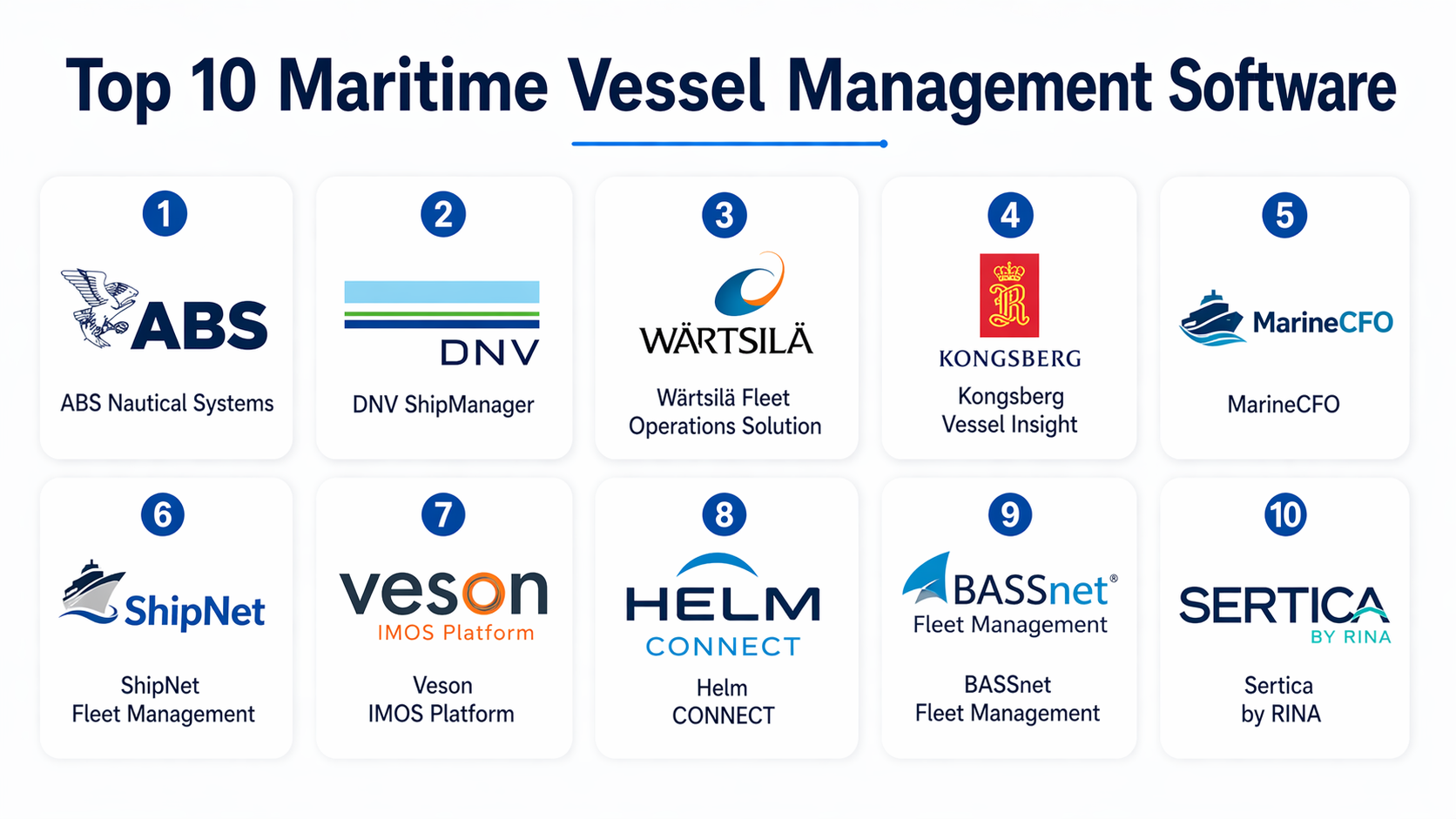
Top 10 Maritime Vessel Management Software
#1 — ABS Nautical Systems
Short description:
A widely used vessel management solution offering comprehensive modules for maintenance, compliance, procurement, and fleet operations. It is trusted by large shipping companies for its depth and reliability.
Key Features
- Planned maintenance system (PMS)
- Compliance and safety management
- Procurement and inventory tracking
- Fleet performance monitoring
- Document management system
Pros
- Strong compliance capabilities
- Mature and reliable platform
Cons
- Interface can feel outdated
- Requires training for full usage
Platforms / Deployment
- Web / Windows
- Cloud / Self-hosted
Security & Compliance
- RBAC, audit logs
- Certifications: Not publicly stated
Integrations & Ecosystem
Integrates with ERP systems and maritime databases
- API support
- Financial system integrations
- Vessel data interfaces
Support & Community
Enterprise support with onboarding programs; documentation is extensive.
#2 — DNV ShipManager
Short description:
A leading maritime management system offering modules for technical, safety, and crew management with strong compliance features.
Key Features
- Technical and maintenance management
- Crew and payroll management
- Safety and quality compliance
- Procurement and logistics
- Performance analytics
Pros
- Strong regulatory compliance
- Comprehensive modules
Cons
- High implementation cost
- Complex configuration
Platforms / Deployment
- Web
- Cloud / Hybrid
Security & Compliance
- Encryption, RBAC
- Certifications: Not publicly stated
Integrations & Ecosystem
- Integrates with finance and HR systems
- API-based extensions
- Maritime compliance systems
Support & Community
Strong enterprise support and global presence.
#3 — Wärtsilä Fleet Operations Solution
Short description:
An advanced platform focused on fleet optimization, performance analytics, and predictive maintenance.
Key Features
- Real-time vessel monitoring
- Predictive maintenance
- Fuel optimization tools
- Voyage analytics
- Data visualization dashboards
Pros
- Strong analytics capabilities
- Focus on efficiency and sustainability
Cons
- Premium pricing
- Requires data integration setup
Platforms / Deployment
- Web
- Cloud
Security & Compliance
- Not publicly stated
Integrations & Ecosystem
- IoT sensor integration
- API-based system connectivity
- Engine monitoring systems
Support & Community
Enterprise-grade support with technical expertise.
#4 — Kongsberg Vessel Insight
Short description:
A cloud-based maritime data infrastructure platform that collects and analyzes vessel data for operational improvements.
Key Features
- Data collection and aggregation
- Real-time monitoring
- Predictive analytics
- Fleet performance insights
- Remote diagnostics
Pros
- Strong IoT integration
- Modern cloud architecture
Cons
- Limited standalone management features
- Depends on hardware integration
Platforms / Deployment
- Web
- Cloud
Security & Compliance
- Not publicly stated
Integrations & Ecosystem
- Integrates with onboard sensors
- API-based ecosystem
- Analytics tools
Support & Community
Good support; documentation focused on technical users.
#5 — MarineCFO
Short description:
A vessel management platform focusing on maintenance, procurement, and financial tracking for fleet operations.
Key Features
- Planned maintenance
- Procurement management
- Budget tracking
- Compliance tools
- Reporting dashboards
Pros
- Easy to use
- Good financial tracking
Cons
- Limited advanced analytics
- Smaller ecosystem
Platforms / Deployment
- Web
- Cloud
Security & Compliance
- Not publicly stated
Integrations & Ecosystem
- Integrates with accounting systems
- Basic API support
Support & Community
Moderate support; suitable for mid-sized fleets.
#6 — ShipNet Fleet Management
Short description:
An integrated maritime ERP solution designed to handle technical, commercial, and financial operations.
Key Features
- Fleet and asset management
- Financial and accounting modules
- Maintenance tracking
- Crew management
- Compliance tools
Pros
- All-in-one ERP system
- Strong financial integration
Cons
- Complex system
- Longer onboarding time
Platforms / Deployment
- Web
- Cloud / Hybrid
Security & Compliance
- Not publicly stated
Integrations & Ecosystem
- ERP integrations
- API support
- Financial systems connectivity
Support & Community
Enterprise-level support; structured onboarding.
#7 — Veson IMOS Platform
Short description:
A commercial shipping management platform focused on voyage management, chartering, and operations.
Key Features
- Voyage planning and execution
- Chartering management
- Financial tracking
- Data analytics
- Contract management
Pros
- Strong commercial operations focus
- Scalable platform
Cons
- Less focus on technical maintenance
- Requires integration with other tools
Platforms / Deployment
- Web
- Cloud
Security & Compliance
- Not publicly stated
Integrations & Ecosystem
- Integrates with financial systems
- API-based integrations
- Data analytics tools
Support & Community
Strong support with industry adoption.
#8 — Helm CONNECT
Short description:
A modern vessel operations platform focused on maintenance, compliance, and crew workflows.
Key Features
- Maintenance tracking
- Safety and compliance
- Mobile-friendly interface
- Workflow automation
- Reporting tools
Pros
- User-friendly design
- Mobile accessibility
Cons
- Limited enterprise depth
- Smaller ecosystem
Platforms / Deployment
- Web / Mobile
- Cloud
Security & Compliance
- Not publicly stated
Integrations & Ecosystem
- API integrations
- Supports reporting tools
Support & Community
Good onboarding; responsive support.
#9 — BASSnet Fleet Management
Short description:
A comprehensive vessel management system covering technical, safety, and operational needs.
Key Features
- Maintenance management
- Safety and compliance
- Document control
- Procurement
- Reporting tools
Pros
- Strong maritime focus
- Comprehensive modules
Cons
- Complex UI
- Training required
Platforms / Deployment
- Web
- Cloud / Hybrid
Security & Compliance
- Not publicly stated
Integrations & Ecosystem
- Integrates with ERP systems
- API support
Support & Community
Enterprise-level support and training.
#10 — Sertica by RINA
Short description:
A maritime software solution for asset management, maintenance, and compliance tracking.
Key Features
- Maintenance planning
- Asset tracking
- Compliance tools
- Reporting dashboards
- Data analytics
Pros
- Strong maintenance focus
- Reliable performance
Cons
- Limited advanced AI features
- UI could improve
Platforms / Deployment
- Web
- Cloud
Security & Compliance
- Not publicly stated
Integrations & Ecosystem
- Integrates with asset systems
- API support
Support & Community
Good enterprise support.
Comparison Table (Top 10)
| Tool Name | Best For | Platform(s) Supported | Deployment | Standout Feature | Public Rating |
|---|---|---|---|---|---|
| ABS Nautical | Enterprise fleets | Web/Windows | Hybrid | Compliance depth | N/A |
| DNV ShipManager | Large fleets | Web | Hybrid | Regulatory compliance | N/A |
| Wärtsilä Fleet | Optimization | Web | Cloud | Predictive analytics | N/A |
| Kongsberg Insight | Data monitoring | Web | Cloud | IoT integration | N/A |
| MarineCFO | Mid-market | Web | Cloud | Financial tracking | N/A |
| ShipNet | ERP operations | Web | Hybrid | All-in-one ERP | N/A |
| Veson IMOS | Commercial ops | Web | Cloud | Chartering tools | N/A |
| Helm CONNECT | SMB fleets | Web/Mobile | Cloud | Ease of use | N/A |
| BASSnet | Enterprise | Web | Hybrid | Comprehensive modules | N/A |
| Sertica | Maintenance | Web | Cloud | Asset management | N/A |
Evaluation & Scoring of Maritime Vessel Management Softwar
| Tool Name | Core | Ease | Integrations | Security | Performance | Support | Value | Weighted Total |
|---|---|---|---|---|---|---|---|---|
| ABS Nautical | 9 | 7 | 8 | 8 | 9 | 8 | 7 | 8.3 |
| DNV ShipManager | 9 | 7 | 8 | 8 | 9 | 8 | 7 | 8.3 |
| Wärtsilä | 9 | 7 | 8 | 7 | 9 | 8 | 7 | 8.1 |
| Kongsberg | 8 | 8 | 8 | 7 | 8 | 7 | 7 | 7.8 |
| MarineCFO | 7 | 9 | 7 | 6 | 7 | 7 | 8 | 7.6 |
| ShipNet | 8 | 6 | 8 | 7 | 8 | 8 | 7 | 7.7 |
| Veson IMOS | 8 | 7 | 8 | 7 | 8 | 8 | 7 | 7.8 |
| Helm CONNECT | 7 | 9 | 7 | 6 | 7 | 7 | 8 | 7.6 |
| BASSnet | 8 | 6 | 8 | 7 | 8 | 8 | 7 | 7.7 |
| Sertica | 8 | 7 | 7 | 6 | 8 | 7 | 7 | 7.4 |
How to interpret scores:
These scores are comparative across tools in this category. Enterprise tools score higher in core features and integrations, while mid-market tools often perform better in ease of use and value. The best choice depends on your operational priorities.
Which Maritime Vessel Management Software
Solo / Freelancer
Not applicable; these systems are designed for organizations managing fleets.
SMB
Helm CONNECT and MarineCFO are suitable due to ease of use and lower complexity.
Mid-Market
ShipNet and Veson IMOS provide balanced functionality.
Enterprise
ABS Nautical, DNV ShipManager, and BASSnet are strong choices.
Budget vs Premium
- Budget: MarineCFO, Helm CONNECT
- Premium: DNV, Wärtsilä, ABS Nautical
Feature Depth vs Ease of Use
- Deep features: DNV, ABS
- Ease of use: Helm CONNECT
Integrations & Scalability
Enterprise platforms provide better long-term scalability.
Security & Compliance Needs
Choose platforms with strong compliance tracking for international regulations.
Frequently Asked Questions (FAQs)
1. What is Maritime Vessel Management Software?
It is a system used to manage fleet operations, maintenance, and compliance for ships.
2. How much does it cost?
Pricing varies depending on fleet size and features.
3. Can it work offline?
Many tools support offline functionality with sync capabilities.
4. Is it suitable for small fleets?
Yes, but simpler tools may be more cost-effective.
5. How long does implementation take?
Typically weeks to months depending on complexity.
6. Does it support compliance?
Yes, most tools include regulatory compliance features.
7. Can it integrate with ERP systems?
Yes, most enterprise tools support integrations.
8. What are common mistakes?
Choosing overly complex systems without training.
9. Is data secure?
Depends on vendor; enterprise tools provide strong security.
10. What are alternatives?
Basic fleet tracking or manual systems.
Conclusion
Maritime Vessel Management Software plays a critical role in modern shipping operations where efficiency, compliance, and safety are non-negotiable. While enterprise-grade platforms like DNV ShipManager and ABS Nautical offer deep functionality and scalability, newer solutions provide better usability and faster deployment. The right choice depends on your fleet size, operational complexity, and integration needs. Instead of chasing the most feature-rich option, focus on aligning the software with your real operational challenges. A practical next step is to shortlist two or three solutions, conduct pilot testing, and evaluate how well they integrate with your existing workflows before making a long-term investment.