Introduction
IoT Security Platforms are specialized solutions designed to protect connected devices, networks, and data in the rapidly expanding Internet of Things (IoT) ecosystem. These platforms provide visibility, threat detection, device management, and compliance capabilities to secure devices ranging from industrial machinery to smart home systems.
In IoT security has become a strategic priority as cyber threats targeting connected devices are more sophisticated and widespread. Businesses face regulatory scrutiny, financial risk, and operational disruptions if devices are compromised. From manufacturing plants to healthcare devices and smart cities, securing IoT networks ensures operational continuity and protects sensitive data.
Real-world use cases:
- Smart manufacturing: Preventing industrial sabotage and ransomware attacks on factory equipment.
- Healthcare: Securing connected medical devices to protect patient data and safety.
- Smart buildings: Managing security for connected HVAC, lighting, and access control systems.
- Retail: Safeguarding point-of-sale systems and inventory sensors against breaches.
- Transportation: Protecting connected vehicle systems and logistics networks.
Evaluation criteria for buyers:
- Device visibility and monitoring
- Threat detection and response
- Integration with existing IT/OT infrastructure
- Compliance and reporting capabilities
- Scalability and deployment flexibility
- AI and automation features
- Network segmentation and access control
- Vendor support and community strength
- Performance and reliability
- Cost-effectiveness
Best for: Enterprises, mid-market companies, IT and security teams, and industries like healthcare, manufacturing, and smart city management.
Not ideal for: Very small businesses with minimal connected devices, or environments where IoT exposure is negligible, as simpler endpoint security may suffice.
Key Trends in IoT Security Platforms
- Increased adoption of AI/ML for anomaly detection and predictive threat response.
- Integration of IoT security with overall cloud and IT security platforms.
- Real-time device monitoring and automated remediation.
- Enhanced focus on regulatory compliance (GDPR, HIPAA, ISO 27001).
- Growth of zero-trust approaches applied to IoT networks.
- Edge security and lightweight device agents for constrained devices.
- Hybrid deployment models combining cloud and on-premises control.
- Interoperability and API-driven integrations with IT/OT systems.
- Subscription-based and usage-based pricing models.
- Security automation for patching, updates, and policy enforcement.
How We Selected These Tools (Methodology)
- Market adoption and vendor mindshare
- Feature completeness across device discovery, monitoring, threat detection, and compliance
- Performance and reliability in real-world deployments
- Security posture validation and certifications
- Integration capabilities with IT, OT, and cloud ecosystems
- Support for multiple device types and platforms
- Scalability for enterprise and SMB deployments
- Customer reviews, testimonials, and adoption cases
- Vendor commitment to innovation and AI-enabled security
- Flexibility in deployment (cloud, on-prem, hybrid)
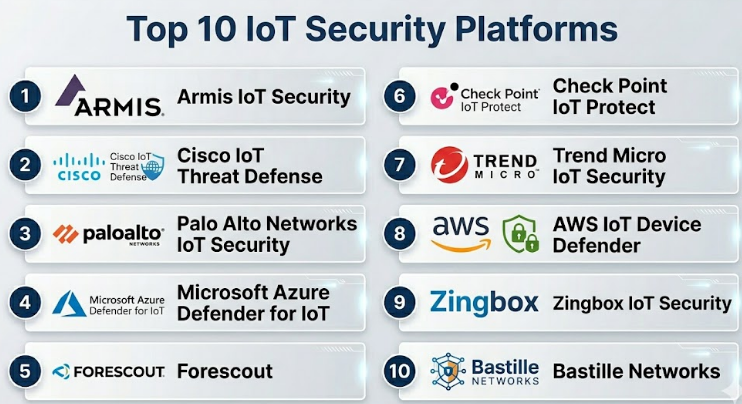
#1 — Armis IoT Security
Short description:
Armis provides agentless visibility and security for enterprise IoT, OT, and unmanaged devices. Ideal for healthcare, manufacturing, and retail environments needing continuous monitoring without installing agents on devices.
Key Features
- Agentless device discovery and classification
- Continuous risk assessment for all connected devices
- Threat detection with AI-driven analytics
- Integration with SIEM and SOAR platforms
- Automated policy enforcement
- Vulnerability management and reporting
- Third-party device risk assessment
Pros
- Agentless approach avoids device performance issues
- Strong AI analytics for proactive threat detection
Cons
- Primarily enterprise-focused; may be complex for SMBs
- Limited native remediation options on certain devices
Platforms / Deployment
- Web, Cloud
Security & Compliance
- SOC 2, ISO 27001, HIPAA
- SSO/SAML, MFA, RBAC
Integrations & Ecosystem
Supports integration with SIEM, SOAR, and endpoint security tools.
- APIs for custom automation
- Cloud connectors (AWS, Azure, GCP)
- OT system integration
- Ticketing system integration
Support & Community
- Comprehensive documentation and onboarding
- Tiered support plans
- Active user community
#2 — Cisco IoT Threat Defense
Short description:
Cisco IoT Threat Defense secures network-connected devices with unified visibility and advanced threat analytics. Designed for enterprises requiring robust OT and IT convergence.
Key Features
- Device profiling and behavior analytics
- Network segmentation for IoT traffic
- Threat intelligence and anomaly detection
- Integration with Cisco SecureX platform
- Policy-based access control
- Automated incident response
Pros
- Tight integration with Cisco infrastructure
- Comprehensive device visibility and threat management
Cons
- Best suited for Cisco-centric environments
- Higher cost for smaller deployments
Platforms / Deployment
- Web, Cloud, On-premises
Security & Compliance
- ISO 27001, SOC 2
- SSO/SAML, MFA, RBAC
Integrations & Ecosystem
- Native Cisco network and security tools
- API support for custom automation
- Third-party SIEM integration
Support & Community
- Extensive Cisco support and documentation
- Large partner ecosystem
#3 — Palo Alto Networks IoT Security
Short description:
Palo Alto Networks offers holistic IoT security, combining device discovery, AI-based threat detection, and cloud analytics for enterprise networks.
Key Features
- Continuous device monitoring
- Threat detection and anomaly analytics
- Automated policy enforcement
- Integration with Prisma Cloud and Cortex XSOAR
- Detailed asset inventory and risk scoring
Pros
- Strong AI-driven detection capabilities
- Cloud-native management simplifies operations
Cons
- Cost can be high for SMBs
- Learning curve for configuration and integration
Platforms / Deployment
- Web, Cloud
Security & Compliance
- SOC 2, ISO 27001, HIPAA
- SSO/SAML, MFA, RBAC
Integrations & Ecosystem
- Integration with Palo Alto firewall and security platforms
- APIs for automation
- SIEM and SOAR connectors
Support & Community
- Tiered enterprise support
- Extensive knowledge base
#4 — Microsoft Azure Defender for IoT
Short description:
Microsoft Azure Defender for IoT delivers network and device security for industrial and enterprise IoT deployments, with cloud-native monitoring and AI-based threat analytics.
Key Features
- Agentless device discovery
- Behavior analytics for anomalies
- Threat detection and alerting
- Integration with Azure Sentinel
- Policy-driven access control
- Risk scoring and vulnerability assessments
Pros
- Seamless integration with Azure ecosystem
- Cloud-native and scalable
Cons
- Primarily for Azure-heavy environments
- May require additional training for industrial OT devices
Platforms / Deployment
- Web, Cloud
Security & Compliance
- ISO 27001, SOC 2
- SSO/SAML, MFA, RBAC
Integrations & Ecosystem
- Azure cloud services
- Sentinel SIEM integration
- APIs for automation
Support & Community
- Microsoft enterprise support
- Large community and documentation
#5 — Forescout
Short description:
Forescout provides real-time visibility and control for IoT and OT devices across enterprise networks, enabling automated threat detection and remediation.
Key Features
- Continuous device visibility
- Automated compliance checks
- Threat detection and behavioral analytics
- Integration with major SIEM and ITSM platforms
- Policy-based access control
- Vulnerability assessment
Pros
- Strong OT/IoT device coverage
- Real-time monitoring and remediation
Cons
- Enterprise pricing may be steep
- Implementation complexity for large-scale deployments
Platforms / Deployment
- Web, Cloud, On-premises
Security & Compliance
- SOC 2, ISO 27001
- SSO/SAML, MFA, RBAC
Integrations & Ecosystem
- APIs for automation
- SIEM integration
- ITSM connectors
- Cloud monitoring tools
Support & Community
- Dedicated enterprise support
- Knowledge base and professional services
#6 — Check Point IoT Protect
Short description:
Check Point IoT Protect secures enterprise IoT devices with network segmentation, threat prevention, and centralized management across IT and OT environments.
Key Features
- Device discovery and classification
- Threat prevention and intrusion detection
- Automated segmentation policies
- Centralized management console
- Compliance reporting
Pros
- Tight network-level security
- Unified console simplifies management
Cons
- More effective in Check Point environments
- Limited advanced AI analytics compared to competitors
Platforms / Deployment
- Web, Cloud, On-premises
Security & Compliance
- ISO 27001, SOC 2
- SSO/SAML, MFA
Integrations & Ecosystem
- Check Point firewalls and cloud services
- APIs for custom workflows
- SIEM integration
Support & Community
- Professional support plans
- Extensive documentation
#7 — Trend Micro IoT Security
Short description:
Trend Micro IoT Security protects enterprise IoT devices and applications with behavioral analysis, AI detection, and centralized management.
Key Features
- Device and application monitoring
- Behavioral analysis for threats
- Cloud-native management
- Automated remediation
- Policy-based access and control
Pros
- Cloud-native deployment
- Strong AI-powered detection
Cons
- May require additional training for OT environments
- Some advanced features require premium licenses
Platforms / Deployment
- Web, Cloud
Security & Compliance
- SOC 2, ISO 27001
- MFA, RBAC
Integrations & Ecosystem
- APIs for integration
- SIEM and security platform connectors
- Cloud-native tools integration
Support & Community
- Tiered support options
- Community forums and knowledge base
#8 — AWS IoT Device Defender
Short description:
AWS IoT Device Defender helps enterprises secure IoT devices with audit, monitoring, and anomaly detection in AWS cloud environments.
Key Features
- Device behavior profiling
- Continuous audit of security policies
- Anomaly detection and alerts
- Integration with AWS security tools
- Automated alerts and notifications
Pros
- Deep AWS ecosystem integration
- Scalable cloud-native solution
Cons
- AWS-focused, limited for multi-cloud
- Learning curve for configuration
Platforms / Deployment
- Web, Cloud
Security & Compliance
- SOC 2, ISO 27001
- MFA, RBAC
Integrations & Ecosystem
- AWS cloud services
- CloudWatch and Security Hub integration
- API support
Support & Community
- AWS enterprise support
- Documentation and online forums
#9 — Zingbox IoT Security
Short description:
Zingbox delivers AI-powered IoT security for enterprise networks, focusing on device discovery, risk scoring, and anomaly detection for IT and OT devices.
Key Features
- Device inventory and classification
- AI-driven threat detection
- Continuous monitoring
- Risk scoring and policy enforcement
- Integrations with SIEMs
Pros
- Strong AI-based detection
- Broad device coverage
Cons
- Niche market adoption
- Limited deployment options
Platforms / Deployment
- Web, Cloud
Security & Compliance
- Not publicly stated
Integrations & Ecosystem
- SIEM and ITSM integrations
- API support
Support & Community
- Varies / Not publicly stated
#10 — Bastille Networks
Short description:
Bastille Networks specializes in wireless IoT security, providing real-time visibility, threat detection, and risk management for enterprise networks.
Key Features
- Wi-Fi and RF monitoring
- Device discovery and classification
- Threat detection and alerts
- Policy-based access control
- Integration with IT security tools
Pros
- Unique wireless-focused monitoring
- Strong threat detection for RF networks
Cons
- Limited broader IoT device coverage
- Enterprise-focused, may not suit SMBs
Platforms / Deployment
- Web, Cloud
Security & Compliance
- Not publicly stated
Integrations & Ecosystem
- APIs for SIEM and ITSM integration
Support & Community
- Varies / Not publicly stated
Comparison Table (Top 10)
| Tool Name | Best For | Platform(s) Supported | Deployment | Standout Feature | Public Rating |
|---|---|---|---|---|---|
| Armis | Enterprise IoT/OT security | Web | Cloud | Agentless device visibility | N/A |
| Cisco IoT Threat Defense | Cisco networks | Web | Cloud / On-prem | Advanced threat analytics | N/A |
| Palo Alto Networks IoT Security | Enterprise networks | Web | Cloud | AI-driven detection | N/A |
| Microsoft Azure Defender for IoT | Azure-centric OT security | Web | Cloud | Cloud-native monitoring | N/A |
| Forescout | OT/IoT visibility | Web | Cloud / On-prem | Real-time remediation | N/A |
| Check Point IoT Protect | Network-level IoT security | Web | Cloud / On-prem | Segmentation policies | N/A |
| Trend Micro IoT Security | Cloud-native IoT | Web | Cloud | Behavioral analytics | N/A |
| AWS IoT Device Defender | AWS IoT | Web | Cloud | Device behavior profiling | N/A |
| Zingbox | AI IoT security | Web | Cloud | AI-driven anomaly detection | N/A |
| Bastille Networks | Wireless IoT | Web | Cloud | RF threat detection | N/A |
Evaluation & Scoring
| Tool Name | Core (25%) | Ease (15%) | Integrations (15%) | Security (10%) | Performance (10%) | Support (10%) | Value (15%) | Weighted Total |
|---|---|---|---|---|---|---|---|---|
| Armis | 9 | 8 | 8 | 9 | 8 | 8 | 8 | 8.5 |
| Cisco IoT Threat Defense | 9 | 7 | 7 | 9 | 8 | 8 | 7 | 8.1 |
| Palo Alto Networks IoT Security | 9 | 7 | 8 | 9 | 8 | 8 | 7 | 8.2 |
| Microsoft Azure Defender for IoT | 8 | 8 | 8 | 8 | 8 | 8 | 8 | 8.0 |
| Forescout | 9 | 7 | 8 | 8 | 8 | 8 | 7 | 8.1 |
| Check Point IoT Protect | 8 | 8 | 7 | 8 | 8 | 8 | 7 | 7.9 |
| Trend Micro IoT Security | 8 | 8 | 7 | 8 | 8 | 7 | 7 | 7.8 |
| AWS IoT Device Defender | 8 | 7 | 7 | 8 | 8 | 7 | 7 | 7.7 |
| Zingbox | 7 | 7 | 7 | 7 | 7 | 7 | 7 | 7.0 |
| Bastille Networks | 7 | 7 | 6 | 7 | 7 | 7 | 6 | 6.8 |
Interpretation: Higher weighted scores indicate better overall performance across evaluated criteria. Scores are comparative within this list and reflect practical usability, integration, security, and value.
Which IoT Security Platform
Solo / Freelancer
- Focus on cloud-native tools like Trend Micro or AWS IoT Device Defender for simple deployments.
SMB
- Armis and Microsoft Azure Defender provide scalable, easy-to-manage options with strong AI analytics.
Mid-Market
- Cisco IoT Threat Defense or Forescout balance enterprise-grade features with manageable complexity.
Enterprise
- Palo Alto Networks, Check Point IoT Protect, and Forescout provide comprehensive visibility, AI-driven detection, and robust integrations.
Budget vs Premium
- Cloud-native solutions (Trend Micro, AWS IoT) may be cost-effective. Enterprise platforms (Cisco, Palo Alto) offer advanced features at higher costs.
Feature Depth vs Ease of Use
- Forescout and Armis deliver deep visibility and automation. Azure Defender prioritizes ease of use with cloud integration.
Integrations & Scalability
- Platforms with strong APIs and SIEM/OT/IT integrations (Cisco, Palo Alto, Armis) scale better for complex environments.
Security & Compliance Needs
- Choose based on required certifications. Armis, Cisco, Palo Alto, and Microsoft provide ISO/SOC/HIPAA compliance; others may vary.
Frequently Asked Questions (FAQs)
1. What pricing models are typical for IoT security platforms?
Pricing often includes subscription-based cloud plans, per-device licensing, or enterprise contracts. Costs vary with deployment scale and features.
2. How long does onboarding usually take?
Depending on complexity, onboarding ranges from a few days for SMBs to several weeks for large enterprises integrating OT and IT devices.
3. Can these platforms handle legacy devices?
Many platforms support legacy devices via agentless monitoring or network traffic analysis, but capabilities vary per vendor.
4. Are AI-based detections reliable?
AI improves anomaly detection, but human validation is recommended to reduce false positives.
5. How do IoT security platforms integrate with SIEM?
Most platforms provide APIs, connectors, or built-in integrations with SIEM systems for centralized monitoring and alerting.
6. What is the difference between agentless and agent-based monitoring?
Agentless uses network traffic to monitor devices without installing software; agent-based requires software on each device.
7. How scalable are these platforms?
Cloud-native and hybrid platforms typically scale easily; on-premises may require infrastructure expansion for growth.
8. Can these tools enforce automated remediation?
Some platforms offer automated responses like quarantine or policy enforcement; others provide alerts only.
9. How is compliance supported?
Platforms provide auditing, reporting, and policy enforcement aligned with standards like ISO 27001, HIPAA, and SOC 2.
10. What alternatives exist if IoT exposure is low?
For limited IoT devices, endpoint security, firewalls, and network segmentation may suffice instead of a full IoT security platform.
Conclusion
IoT security platforms are essential in a world of connected devices. Selecting the right platform depends on your organization’s size, deployment complexity, compliance requirements, and budget. Enterprise environments benefit from robust, AI-driven platforms like Palo Alto, Cisco, or Forescout, while cloud-native solutions like Azure Defender or Trend Micro suit smaller deployments. By evaluating device visibility, integrations, AI threat detection, and compliance support, organizations can proactively secure IoT networks.
