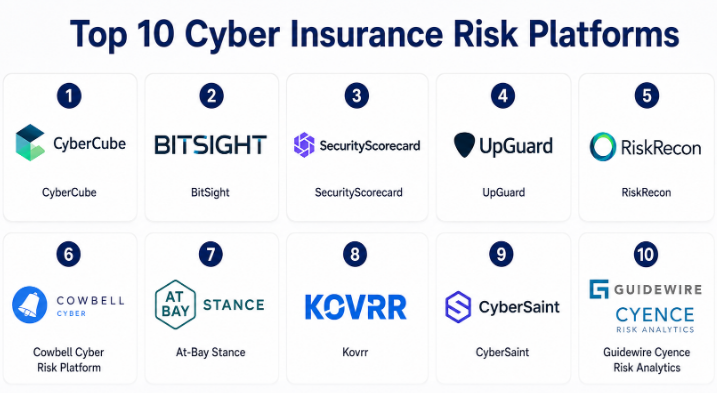
Introduction
Cyber insurance risk platforms help insurers, brokers, enterprises, and risk teams understand cyber exposure before, during, and after a cyber insurance policy is issued. In simple terms, these tools collect security signals, external attack-surface data, business context, vulnerability information, control maturity, and threat intelligence to estimate how risky an organization may be from a cyber insurance point of view.
These platforms matter because cyber insurance is no longer only about filling out long questionnaires. Buyers, underwriters, brokers, and security leaders now need faster, more evidence-based ways to assess ransomware exposure, data breach risk, vendor weakness, security posture, and financial impact. A strong platform can help reduce blind spots, improve underwriting decisions, support risk improvement, and make cyber insurance conversations more practical.
Common use cases include cyber risk scoring for policy applicants, portfolio risk monitoring for insurers, ransomware exposure analysis, third-party cyber risk review, security control validation, and executive-level cyber risk reporting.
Buyers should evaluate accuracy of risk scoring, data sources, integrations, reporting quality, explainability, security controls, compliance support, underwriting workflow fit, pricing flexibility, and scalability.
Best for: Cyber insurers, brokers, MGAs, reinsurers, enterprise risk teams, CISOs, security teams, and organizations that need measurable cyber risk visibility across companies, vendors, or policy portfolios.
Not ideal for: Very small businesses with basic insurance needs, teams that only need simple security checklists, or organizations that already have strong internal risk quantification processes and do not need external cyber scoring or insurance-specific analytics.
Key Trends in Cyber Insurance Risk Platforms
- AI-based cyber risk scoring is becoming more common, helping insurers and brokers review applicants faster and with more consistency.
- Continuous monitoring is replacing one-time assessments, especially for policyholders with changing attack surfaces, cloud assets, and vendor ecosystems.
- Ransomware risk modeling is now a major focus because ransomware remains one of the most financially damaging cyber events for insured organizations.
- External attack surface intelligence is widely used to identify exposed services, weak configurations, leaked credentials, vulnerable systems, and risky domains.
- Cyber risk quantification is gaining attention because boards and insurers want cyber risk expressed in business and financial terms, not only technical severity levels.
- Portfolio-level aggregation is important for insurers and reinsurers that need to understand concentration risk across industries, geographies, company sizes, and technology dependencies.
- Security control validation is becoming more practical, with platforms mapping controls to common security frameworks, questionnaires, and underwriting requirements.
- API-first integrations are important because cyber insurance risk platforms must connect with policy systems, underwriting platforms, SIEM tools, vulnerability scanners, GRC systems, and data warehouses.
- Explainable scoring is becoming more important because underwriters, brokers, and insured businesses need to understand why a risk score changed.
- Embedded risk improvement workflows are growing, where platforms do not just score risk but also recommend actions to reduce exposure before renewal or policy binding.
How We Selected These Tools Methodology
- We considered platforms that are widely recognized in cyber risk, cyber insurance analytics, security ratings, cyber underwriting, or cyber risk quantification.
- We included a balanced mix of tools used by insurers, brokers, enterprises, third-party risk teams, and security leaders.
- We looked for platforms with strong capabilities around risk scoring, cyber exposure monitoring, analytics, reporting, and portfolio visibility.
- We considered whether each platform fits real cyber insurance workflows such as underwriting, renewal review, portfolio risk tracking, and risk improvement.
- We reviewed general market mindshare, product positioning, ecosystem strength, and practical relevance for cyber insurance use cases.
- We considered integration potential with security tools, insurance systems, GRC platforms, vendor risk tools, and data platforms.
- We avoided guessing public ratings, certifications, or pricing details where they are not clearly known.
- We included tools with different strengths, such as security ratings, financial risk modeling, third-party risk, control assessment, and underwriting intelligence.
#1 — CyberCube
Short description: CyberCube is a cyber risk analytics platform built strongly around the needs of cyber insurers, reinsurers, brokers, and risk professionals. It helps organizations analyze cyber exposure, understand portfolio accumulation risk, evaluate company-level cyber posture, and model cyber events that may create financial losses. The platform is especially useful for underwriting teams that need structured cyber risk signals and for insurance leaders who need portfolio-level visibility. It is best suited for organizations that want cyber insurance analytics beyond basic questionnaires. CyberCube is more aligned with insurance analytics than general-purpose cybersecurity operations.
Key Features
- Cyber risk analytics for insurers, reinsurers, and brokers.
- Portfolio-level cyber exposure modeling.
- Company-level cyber risk insights.
- Scenario analysis for large cyber events.
- Risk selection and underwriting support.
- Reporting and dashboards for insurance teams.
- Cyber catastrophe and accumulation risk analysis.
Pros
- Strong focus on cyber insurance and reinsurance workflows.
- Useful for portfolio-level risk visibility.
- Helps translate cyber events into insurance impact.
Cons
- May be too specialized for small businesses.
- Advanced modeling may require trained insurance and risk users.
- Not ideal as a general cybersecurity operations platform.
Platforms / Deployment
- Web
- Cloud
Security & Compliance
Not publicly stated.
Integrations & Ecosystem
CyberCube is designed to support cyber insurance analytics and can fit into underwriting, broker, portfolio management, and reinsurance workflows. Its ecosystem is more insurance-focused than general IT security-focused.
- Underwriting workflow support.
- Portfolio analytics usage.
- Broker and insurer reporting.
- Data-driven risk review.
- Risk modeling workflows.
- Insurance analytics processes.
Support & Community
Support is generally enterprise-oriented, with onboarding and customer success expected for insurance clients. Public community details are limited, so support depth may vary by contract and customer segment.
#2 — BitSight
Short description: BitSight is a security ratings and cyber risk intelligence platform used by enterprises, insurers, and risk teams to assess external cybersecurity posture. It helps organizations understand the cyber health of companies by analyzing externally observable security signals. For cyber insurance teams, BitSight can support underwriting reviews, vendor risk analysis, portfolio monitoring, and risk improvement discussions with insureds. It is especially useful when teams need a quick outside-in view of cyber exposure. However, it should be used alongside internal data and business context for stronger decisions.
Key Features
- Security ratings for organizations and third parties.
- External attack surface monitoring.
- Cyber risk benchmarking.
- Portfolio and vendor risk views.
- Risk trend reporting.
- Alerts for changes in security posture.
- Executive-level dashboards.
Pros
- Strong outside-in cyber risk visibility.
- Helpful for third-party and portfolio risk monitoring.
- Easy to understand rating-based output.
Cons
- External signals may not show full internal security maturity.
- Ratings need context before being used for underwriting decisions.
- May require integration with other tools for deeper analysis.
Platforms / Deployment
- Web
- Cloud
Security & Compliance
Not publicly stated.
Integrations & Ecosystem
BitSight fits well into cyber risk, third-party risk, and insurance review workflows. It can support teams that need security ratings, benchmarks, and external cyber posture data.
- Third-party risk platforms.
- Cyber risk dashboards.
- Insurance underwriting workflows.
- Executive risk reporting.
- Vendor monitoring processes.
- Data export and reporting use cases.
Support & Community
BitSight offers enterprise-focused customer support and documentation. Community strength is mostly product and customer-led rather than open-source style community support.
#3 — SecurityScorecard
Short description: SecurityScorecard is a cyber risk rating platform that helps organizations assess the security posture of companies, vendors, partners, and insured businesses. It provides externally observable cyber risk signals and converts them into scorecards that are easy for business and security teams to interpret. For cyber insurance, it can help with pre-bind assessments, renewal reviews, portfolio monitoring, and risk improvement tracking. The platform is useful for insurers and brokers that need scalable cyber posture visibility across many organizations. It is strongest when combined with internal control data and underwriting judgment.
Key Features
- Security ratings and scorecards.
- External attack surface monitoring.
- Vendor and third-party risk assessment.
- Risk factor breakdowns.
- Portfolio monitoring.
- Alerts and reporting dashboards.
- Executive and operational reporting.
Pros
- Easy-to-read scorecards for non-technical stakeholders.
- Useful for vendor and insured risk monitoring.
- Strong fit for scalable external posture review.
Cons
- External scoring may not capture all internal controls.
- Scores should not be treated as the only underwriting input.
- Some findings may need validation before action.
Platforms / Deployment
- Web
- Cloud
Security & Compliance
Not publicly stated.
Integrations & Ecosystem
SecurityScorecard supports cyber risk workflows where teams need repeatable security ratings and third-party visibility. It is useful for insurers, brokers, enterprises, and vendor risk teams.
- Vendor risk management workflows.
- Security reporting processes.
- Underwriting review workflows.
- API-based data usage.
- Portfolio monitoring.
- Risk dashboards.
Support & Community
Support and onboarding are available for business and enterprise customers. Documentation and product resources are available, while community depth may vary based on customer plan and use case.
#4 — UpGuard
Short description: UpGuard is a cyber risk and third-party risk platform that helps organizations monitor external attack surfaces, vendor security posture, and data exposure risks. It is useful for enterprises and insurers that need practical cyber risk visibility across their own organization and third parties. In cyber insurance workflows, UpGuard can help assess policyholder cyber posture, monitor vendor-related risks, and support risk improvement conversations. Its strength is in continuous monitoring and easy-to-understand risk reporting. It is especially useful for teams that care about both vendor risk and external cyber exposure.
Key Features
- External attack surface monitoring.
- Vendor cyber risk assessment.
- Security ratings and risk scoring.
- Data leak and exposure monitoring.
- Risk dashboards and reports.
- Continuous monitoring alerts.
- Third-party risk workflows.
Pros
- Good fit for vendor-heavy organizations.
- Practical reporting for business and security users.
- Useful for continuous cyber posture monitoring.
Cons
- May not replace deep internal security testing.
- Insurance-specific modeling may be less advanced than dedicated cyber insurance analytics platforms.
- Some use cases may require additional tools for financial risk quantification.
Platforms / Deployment
- Web
- Cloud
Security & Compliance
Not publicly stated.
Integrations & Ecosystem
UpGuard works well with third-party risk, security monitoring, and cyber governance workflows. It can support insurers and enterprises that need cyber exposure visibility at scale.
- Vendor risk management.
- Security reporting.
- External monitoring workflows.
- Risk dashboards.
- API-based data workflows.
- Compliance and questionnaire support.
Support & Community
UpGuard provides documentation and support for customers. Community strength is mostly customer and product-resource driven rather than open-source community based.
#5 — RiskRecon
Short description: RiskRecon is a cyber risk rating and monitoring platform used to assess the cybersecurity posture of organizations from an external perspective. It helps risk teams, insurers, and enterprises evaluate security hygiene, identify exposure patterns, and monitor cyber posture over time. For cyber insurance, it can support underwriting review, vendor risk assessment, portfolio monitoring, and policyholder risk improvement. Its value comes from structured cyber risk signals that are easier to compare across companies. Like other external rating platforms, it works best when paired with internal security and business context.
Key Features
- External cyber risk ratings.
- Continuous security posture monitoring.
- Third-party and vendor risk review.
- Risk factor analysis.
- Portfolio-level visibility.
- Alerts for posture changes.
- Reporting for risk and security teams.
Pros
- Helpful for scalable outside-in cyber review.
- Supports vendor and insured monitoring.
- Useful for risk trend visibility.
Cons
- External data does not show full internal control maturity.
- Insurance-specific financial modeling may require other tools.
- Best results require careful interpretation.
Platforms / Deployment
- Web
- Cloud
Security & Compliance
Not publicly stated.
Integrations & Ecosystem
RiskRecon can fit into third-party risk, underwriting, and enterprise cyber risk workflows. It is useful where teams need consistent security posture data across many organizations.
- Vendor risk platforms.
- Cyber underwriting workflows.
- Risk reporting.
- Portfolio monitoring.
- Security governance processes.
- Data export and dashboard use cases.
Support & Community
Support is generally business-oriented. Documentation and onboarding may vary by plan and customer type.
#6 — Cowbell Cyber Risk Platform
Short description: Cowbell provides a cyber insurance-focused platform that combines cyber risk assessment, underwriting intelligence, and risk improvement capabilities. It is designed around cyber insurance workflows and helps businesses, brokers, and insurance teams evaluate cyber exposure more efficiently. The platform can support risk scoring, policyholder insights, and continuous monitoring to help insured organizations improve their security posture. Cowbell is especially relevant for small and mid-sized businesses and brokers working with cyber insurance. It is more insurance-specific than general enterprise GRC platforms.
Key Features
- Cyber risk scoring for insurance.
- Policyholder risk insights.
- Underwriting support.
- Continuous cyber monitoring.
- Risk improvement recommendations.
- Broker and business-facing workflows.
- Cyber insurance lifecycle support.
Pros
- Strong cyber insurance orientation.
- Useful for brokers and businesses seeking cyber coverage.
- Supports practical risk improvement conversations.
Cons
- May not fit organizations looking only for general cybersecurity operations.
- Advanced enterprise portfolio modeling may require specialized platforms.
- Some details may vary by product and market.
Platforms / Deployment
- Web
- Cloud
Security & Compliance
Not publicly stated.
Integrations & Ecosystem
Cowbell fits cyber insurance buying, underwriting, and policyholder monitoring workflows. It can help connect business risk, cyber posture, and insurance decision-making.
- Broker workflows.
- Cyber insurance applications.
- Policyholder risk monitoring.
- Risk improvement reports.
- Underwriting support.
- Business cyber risk review.
Support & Community
Support is available through customer and broker channels. Public community details are limited, and support depth may vary by product, market, and customer relationship.
#7 — At-Bay Stance
Short description: At-Bay Stance is a cyber risk platform connected to cyber insurance and security risk management needs. It focuses on helping organizations understand and reduce cyber exposure, especially in areas that may affect insurability and cyber risk posture. For businesses and brokers, it can support cyber hygiene improvement, risk visibility, and insurance-readiness conversations. The platform is useful when companies want cyber insurance and security risk guidance connected in one workflow. It is not meant to replace a complete security operations program but can support cyber risk reduction.
Key Features
- Cyber risk assessment.
- Security posture visibility.
- Insurance-focused risk insights.
- Risk improvement guidance.
- Monitoring of key exposure areas.
- Broker and customer support workflows.
- Cyber hygiene reporting.
Pros
- Strong connection between cyber risk and insurance needs.
- Useful for improving insurability.
- Practical for businesses seeking clearer cyber risk guidance.
Cons
- May be less suitable for companies needing deep technical security operations.
- Product fit may depend on insurance relationship.
- Some capabilities may vary by customer segment.
Platforms / Deployment
- Web
- Cloud
Security & Compliance
Not publicly stated.
Integrations & Ecosystem
At-Bay Stance supports cyber insurance-related risk workflows and helps connect cybersecurity improvement with underwriting and coverage needs.
- Broker risk workflows.
- Cyber insurance readiness.
- Security posture review.
- Risk recommendation processes.
- Policyholder support.
- Business risk reporting.
Support & Community
Support is generally tied to customer, broker, or insurance relationships. Public community details are limited.
#8 — Kovrr
Short description: Kovrr is a cyber risk quantification platform that helps organizations and insurers translate cyber exposure into financial impact. It supports executive reporting, scenario analysis, cyber risk modeling, and decision-making around risk transfer. For cyber insurance teams, Kovrr can help evaluate potential loss exposure, compare risk scenarios, and communicate cyber risk in business language. It is particularly useful for organizations that want to move beyond technical severity scores. The platform is best suited for teams that need financial risk analysis and board-level reporting.
Key Features
- Cyber risk quantification.
- Financial impact modeling.
- Scenario-based cyber risk analysis.
- Executive and board-level reporting.
- Risk transfer decision support.
- Portfolio and exposure insights.
- Cyber event loss estimation.
Pros
- Strong financial risk language.
- Useful for executive communication.
- Helps connect cybersecurity investment and insurance strategy.
Cons
- May require cyber risk maturity to use effectively.
- Less focused on operational security monitoring.
- Best value comes when quality input data is available.
Platforms / Deployment
- Web
- Cloud
Security & Compliance
Not publicly stated.
Integrations & Ecosystem
Kovrr fits enterprise risk, cyber insurance, and executive reporting workflows. It can support organizations that need risk quantification rather than only vulnerability lists.
- Risk quantification workflows.
- Executive reporting.
- Insurance decision support.
- Scenario modeling.
- Cyber risk governance.
- Financial exposure analysis.
Support & Community
Support is generally business and enterprise-focused. Public community details are limited.
#9 — CyberSaint
Short description: CyberSaint is a cyber risk and compliance platform that helps organizations assess controls, manage frameworks, measure cyber risk, and report maturity. It is useful for enterprises and risk teams that need to connect cyber controls with risk posture and compliance requirements. For cyber insurance, CyberSaint can support evidence-based discussions around security maturity, control gaps, and risk reduction. It is especially useful when underwriting or renewal conversations require structured control documentation. Its strength is control-based risk management rather than pure external security ratings.
Key Features
- Cyber risk and compliance assessment.
- Control framework mapping.
- Risk scoring and reporting.
- Security maturity tracking.
- Executive dashboards.
- Compliance workflow support.
- Evidence and control management.
Pros
- Strong control and compliance focus.
- Useful for organizations preparing for cyber insurance review.
- Helps connect security maturity with business risk.
Cons
- May require setup effort for frameworks and controls.
- Less focused on external attack-surface scoring.
- Not a dedicated underwriting platform by itself.
Platforms / Deployment
- Web
- Cloud / Hybrid
Security & Compliance
Not publicly stated.
Integrations & Ecosystem
CyberSaint can integrate into governance, risk, compliance, and cyber risk management workflows. It supports teams that need structured evidence and control-based reporting.
- GRC workflows.
- Control assessment processes.
- Cyber risk reporting.
- Compliance management.
- Executive dashboards.
- Security maturity programs.
Support & Community
Support and onboarding are available for business customers. Documentation is expected, while broader community details are not publicly stated.
#10 — Guidewire Cyence Risk Analytics
Short description: Guidewire Cyence Risk Analytics is designed for cyber insurance analytics, helping insurers understand cyber risk, model potential losses, and support underwriting decisions. It uses data-driven analytics to assess cyber exposure and help carriers price and manage cyber insurance risk more effectively. The platform is particularly relevant for insurers already using or considering the Guidewire ecosystem. It is best suited for insurance companies that need cyber modeling and underwriting intelligence. Smaller teams may find it too specialized if they do not need insurance-focused analytics.
Key Features
- Cyber risk analytics for insurers.
- Underwriting decision support.
- Loss modeling and risk insights.
- Portfolio exposure analysis.
- Data-driven cyber risk assessment.
- Insurance-focused reporting.
- Integration potential within insurance workflows.
Pros
- Strong fit for insurance carriers.
- Useful for underwriting and portfolio analysis.
- Aligns well with broader insurance technology workflows.
Cons
- Best suited to insurance organizations, not general businesses.
- May require specialized configuration and expertise.
- Less useful outside cyber insurance analytics use cases.
Platforms / Deployment
- Web
- Cloud / Hybrid
Security & Compliance
Not publicly stated.
Integrations & Ecosystem
Guidewire Cyence Risk Analytics is aligned with insurance workflows and can support cyber underwriting, portfolio risk analysis, and carrier decision-making.
- Insurance underwriting systems.
- Portfolio analytics.
- Risk modeling workflows.
- Policy and claims ecosystem.
- Carrier reporting.
- Data-driven insurance analytics.
Support & Community
Support is generally enterprise and insurance-customer focused. Documentation and onboarding may depend on the broader Guidewire relationship.
Comparison Table Top 10
| Tool Name | Best For | Platform(s) Supported | Deployment Cloud/Self-hosted/Hybrid | Standout Feature | Public Rating |
|---|---|---|---|---|---|
| CyberCube | Cyber insurers, reinsurers, brokers | Web | Cloud | Cyber insurance portfolio analytics | N/A |
| BitSight | Enterprises, insurers, third-party risk teams | Web | Cloud | Security ratings and external risk scoring | N/A |
| SecurityScorecard | Vendor risk, cyber insurance review, posture monitoring | Web | Cloud | Easy-to-read cyber scorecards | N/A |
| UpGuard | Vendor risk and external cyber exposure monitoring | Web | Cloud | Third-party risk and attack surface visibility | N/A |
| RiskRecon | External cyber posture and portfolio monitoring | Web | Cloud | Continuous security rating analysis | N/A |
| Cowbell Cyber Risk Platform | Brokers, SMB cyber insurance, policyholder monitoring | Web | Cloud | Insurance-focused cyber risk scoring | N/A |
| At-Bay Stance | Cyber insurance readiness and risk improvement | Web | Cloud | Security posture guidance linked to insurance | N/A |
| Kovrr | Cyber risk quantification and financial modeling | Web | Cloud | Financial impact modeling for cyber risk | N/A |
| CyberSaint | Control-based cyber risk and compliance reporting | Web | Cloud / Hybrid | Control framework and risk maturity mapping | N/A |
| Guidewire Cyence Risk Analytics | Insurance carriers and cyber underwriting teams | Web | Cloud / Hybrid | Cyber insurance loss and exposure analytics | N/A |
Evaluation & Cyber Insurance Risk Platforms
| Tool Name | Core 25% | Ease 15% | Integrations 15% | Security 10% | Performance 10% | Support 10% | Value 15% | Weighted Total 0–10 |
|---|---|---|---|---|---|---|---|---|
| CyberCube | 9 | 7 | 8 | 7 | 8 | 8 | 7 | 7.95 |
| BitSight | 8 | 8 | 8 | 7 | 8 | 8 | 7 | 7.75 |
| SecurityScorecard | 8 | 8 | 8 | 7 | 8 | 7 | 8 | 7.75 |
| UpGuard | 8 | 8 | 7 | 7 | 8 | 7 | 8 | 7.65 |
| RiskRecon | 8 | 7 | 7 | 7 | 8 | 7 | 7 | 7.35 |
| Cowbell Cyber Risk Platform | 8 | 8 | 7 | 7 | 7 | 7 | 8 | 7.55 |
| At-Bay Stance | 7 | 8 | 6 | 7 | 7 | 7 | 8 | 7.20 |
| Kovrr | 8 | 7 | 7 | 7 | 8 | 7 | 7 | 7.45 |
| CyberSaint | 8 | 7 | 7 | 7 | 7 | 7 | 7 | 7.35 |
| Guidewire Cyence Risk Analytics | 8 | 6 | 8 | 7 | 8 | 8 | 7 | 7.50 |
These scores are comparative, not absolute. A higher score does not mean the platform is best for every buyer. For example, CyberCube may score strongly for insurers, while CyberSaint may be better for a company focused on control maturity and compliance evidence. Security rating tools are easier to deploy for external monitoring, while risk quantification tools are better for financial impact analysis. Buyers should use this table as a shortlist guide, then validate fit with their own data, workflows, security needs, and underwriting process.
Which Cyber Insurance Risk Platforms
Solo / Freelancer
Solo consultants, independent brokers, and small advisory teams usually do not need complex portfolio modeling platforms. They should look for tools that provide clear cyber posture reports, simple risk ratings, and easy client communication. SecurityScorecard, UpGuard, and BitSight-style platforms can be useful when the main need is to explain cyber risk in a simple way.
For solo users, the best choice is usually the one that saves time during client review. A platform should make it easy to generate reports, explain findings, and identify practical security improvements without requiring a large technical team.
SMB
Small and medium businesses often need cyber insurance readiness, ransomware exposure review, basic vendor risk visibility, and practical risk improvement steps. Cowbell Cyber Risk Platform and At-Bay Stance can be useful when cyber insurance and risk guidance are closely connected. UpGuard and SecurityScorecard can also help SMBs understand external cyber exposure.
SMBs should avoid buying overly complex platforms unless they have internal security or risk teams to manage them. The better choice is often a cloud-based tool with simple dashboards, clear remediation guidance, and easy broker or insurer collaboration.
Mid-Market
Mid-market organizations need more structure. They may have multiple business units, vendors, cloud systems, and compliance expectations. They should consider platforms that combine cyber posture monitoring, control evidence, and risk reporting. UpGuard, BitSight, SecurityScorecard, CyberSaint, and Kovrr can fit different mid-market needs.
If the organization is preparing for cyber insurance renewal, the platform should help prove security maturity, track improvements, and answer risk questions with evidence. Mid-market buyers should also evaluate integrations with GRC tools, ticketing systems, vulnerability scanners, and reporting systems.
Enterprise
Large enterprises, insurers, reinsurers, and global risk teams need deeper analytics, scalability, portfolio views, executive reporting, and strong data governance. CyberCube, Guidewire Cyence Risk Analytics, BitSight, Kovrr, and CyberSaint may be stronger fits depending on the use case.
Enterprises should not choose based only on dashboards. They should evaluate data quality, modeling assumptions, access controls, integration depth, reporting flexibility, and support maturity. For insurers, portfolio accumulation risk and underwriting workflow fit are especially important.
Budget vs Premium
Budget-conscious buyers should first decide whether they need security ratings, cyber insurance readiness, compliance evidence, or financial risk quantification. Tools focused on external posture monitoring may be easier to start with, while advanced insurance analytics and quantification platforms may require larger budgets.
Premium platforms are usually better when the organization needs portfolio modeling, cyber catastrophe scenarios, executive risk quantification, or underwriting analytics. Budget tools may be enough when the goal is basic cyber hygiene visibility and simple risk reporting.
Feature Depth vs Ease of Use
Security rating platforms are often easier to understand because they convert risk signals into scores and dashboards. These tools are practical for quick reviews, vendor monitoring, and simple cyber insurance discussions.
Platforms with deeper modeling, such as cyber risk quantification or insurance portfolio analytics, may provide richer insight but require more expertise. Buyers should choose depth when decisions involve large financial exposure, complex underwriting, or board-level cyber risk reporting.
Integrations & Scalability
Integration matters because cyber insurance risk platforms should not become isolated dashboards. Strong platforms should connect with underwriting systems, policy platforms, GRC tools, vulnerability scanners, SIEM systems, ticketing tools, and data warehouses.
For scalability, buyers should ask whether the platform can handle many insureds, vendors, business units, or portfolio segments. Insurers should also evaluate whether the platform supports bulk analysis, portfolio views, and consistent scoring across large numbers of companies.
Security & Compliance Needs
Cyber insurance risk platforms often process sensitive business and security information, so buyers should review access controls, encryption, audit logs, SSO, MFA, RBAC, and data retention practices. If certifications are not clearly stated, ask the vendor directly during procurement.
Regulated industries should also check whether the platform can support privacy requirements, audit evidence, and governance workflows. Security and compliance should be validated before deployment, not after the platform becomes part of underwriting or risk operations.
Frequently Asked Questions FAQs
1. What is a cyber insurance risk platform?
A cyber insurance risk platform helps insurers, brokers, and businesses assess cyber exposure before or during an insurance policy process. It may use security ratings, threat intelligence, risk scoring, control assessment, or financial modeling to explain cyber risk more clearly.
2. How is it different from a normal cybersecurity tool?
A normal cybersecurity tool usually focuses on detecting, blocking, or fixing threats. A cyber insurance risk platform focuses more on measuring risk, supporting underwriting, improving insurability, and helping teams understand cyber exposure in business or insurance terms.
3. Who should use cyber insurance risk platforms?
These platforms are useful for insurers, brokers, reinsurers, MGAs, CISOs, risk managers, compliance teams, and enterprises buying cyber insurance. They are also useful for organizations that need to monitor vendors or show security maturity during insurance review.
4. Are cyber insurance risk platforms expensive?
Pricing varies widely. Some platforms are priced for enterprise insurance teams, while others may be more accessible for brokers or mid-sized businesses. Pricing often depends on company size, number of monitored entities, data modules, and support level.
5. How long does implementation take?
Implementation depends on the platform type. Security rating tools may be quicker to start because they use external data. Risk quantification, control assessment, and insurance portfolio platforms may take longer because they need business context, internal data, and workflow setup.
6. Can these tools reduce cyber insurance premiums?
They may help organizations show stronger risk posture and improve insurance discussions, but they do not guarantee lower premiums. Premium decisions depend on insurer rules, claims history, controls, industry risk, company size, coverage needs, and market conditions.
7. What are common mistakes when choosing a platform?
A common mistake is choosing a platform based only on a score or dashboard. Buyers should also evaluate data quality, explainability, integrations, reporting needs, security controls, support, and whether the platform fits their actual insurance workflow.
8. Do these platforms replace cyber insurance questionnaires?
Not fully. They can reduce manual work and provide better evidence, but many insurers still use questionnaires. The best platforms help validate answers, support risk discussions, and provide continuous monitoring beyond a one-time form.
9. Are external security ratings enough for underwriting?
External ratings are useful, but they should not be the only underwriting input. They may miss internal controls, employee training, backup maturity, incident response readiness, and business-specific risk factors. A balanced approach is better.
10. Can these platforms integrate with existing systems?
Many platforms support integrations or data export, but integration depth varies. Buyers should check support for underwriting systems, GRC platforms, SIEM tools, vulnerability scanners, ticketing tools, CRM systems, and business intelligence platforms.
Conclusion
Cyber insurance risk platforms are becoming important because cyber risk is now both a technical problem and a financial decision. Insurers need better underwriting insight, brokers need clearer client conversations, and businesses need practical ways to prove cyber maturity. No single platform is best for everyone. CyberCube and Guidewire Cyence Risk Analytics are stronger for insurance-focused analytics, while BitSight, SecurityScorecard, RiskRecon, and UpGuard are useful for external cyber posture monitoring. Cowbell and At-Bay Stance connect cyber risk with insurance readiness, while Kovrr supports financial risk quantification and CyberSaint helps with control-based risk and compliance reporting.
