Introduction
Hospital Asset Tracking Tools help hospitals, clinics, laboratories, and healthcare networks track the location, status, usage, and availability of medical equipment and operational assets. In simple words, these tools help teams know where important assets are, whether they are available, who is using them, when they need maintenance, and whether they are being used efficiently.
These tools matter because hospitals depend on high-value and mission-critical assets such as infusion pumps, wheelchairs, beds, ventilators, monitors, surgical tools, mobile carts, scanners, and temperature-sensitive equipment. When assets are missing, underused, poorly maintained, or hard to find, staff lose time and patient care can be delayed.
Common use cases include real-time location tracking, equipment utilization monitoring, preventive maintenance, asset inventory control, biomedical engineering workflows, nurse workflow support, theft reduction, compliance documentation, and asset lifecycle planning.
Buyers should evaluate tracking accuracy, RTLS technology, mobile access, EHR or CMMS integration, battery life, asset tagging options, reporting, alerts, maintenance workflows, scalability, security, and ease of deployment.
Best for: Hospitals, health systems, biomedical engineering teams, nursing teams, facilities teams, clinical operations leaders, equipment managers, supply chain teams, and healthcare administrators.
Not ideal for: Very small clinics with limited equipment, organizations that only need basic inventory spreadsheets, or teams that do not require real-time visibility into asset movement and utilization.
Key Trends in Hospital Asset Tracking Tools
- Real-time location systems are becoming more common because hospitals need faster visibility into equipment, staff, patients, and room-level workflows.
- Bluetooth Low Energy, RFID, Wi-Fi, ultrasound, infrared, and hybrid tracking models are being used depending on accuracy and infrastructure needs.
- Asset utilization analytics are becoming more important, helping hospitals understand whether equipment is overused, underused, missing, or duplicated.
- Preventive maintenance integration is growing, especially for biomedical engineering teams that need service schedules, inspection records, and equipment readiness.
- Mobile-first access is becoming important, allowing staff to search for nearby equipment from phones, tablets, or nursing workstations.
- Workflow automation is expanding, such as alerts when equipment leaves a zone, enters cleaning status, or requires service.
- Integration with CMMS, EHR, nurse call, and facilities systems is becoming a key buying factor.
- Temperature and condition monitoring are being added, especially for assets used in labs, pharmacies, blood banks, and cold storage areas.
- Hospital command centers are using asset visibility data, connecting asset location with patient flow, room turnover, and operational planning.
- Security and privacy controls are becoming more important, especially when asset tracking is connected with staff, patient, or clinical workflow data.
How We Selected These Tools
- We selected tools widely recognized for hospital asset tracking, healthcare RTLS, RFID tracking, equipment visibility, and clinical operations support.
- We considered practical fit for hospitals, health systems, clinics, laboratories, biomedical engineering teams, and facilities teams.
- We prioritized tools that support real-time asset location, asset utilization, maintenance workflows, reporting, alerts, and healthcare workflow visibility.
- We included a balanced mix of enterprise RTLS platforms, healthcare-focused asset tracking systems, and flexible IoT asset monitoring solutions.
- We considered integration potential with CMMS, EHR, nurse call, inventory management, facilities management, and analytics platforms.
- We evaluated usability for frontline staff, biomedical teams, IT teams, operations leaders, and equipment managers.
- We avoided guessing public ratings, pricing, certifications, or unsupported security claims.
- We used N/A, Varies / N/A, and Not publicly stated wherever information is uncertain.
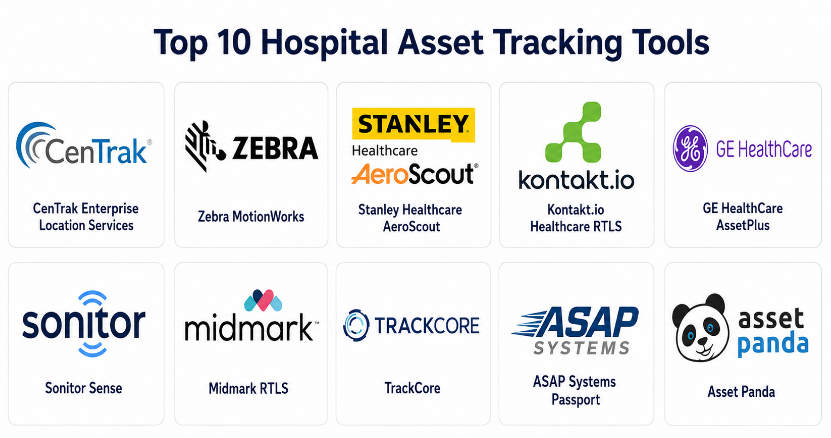
#1 — CenTrak Enterprise Location Services
Short description: CenTrak Enterprise Location Services is a healthcare real-time location system used by hospitals to track assets, staff, patients, rooms, and workflow activity. It is especially useful for hospitals that need room-level visibility and accurate asset location across clinical departments. The platform can help teams locate equipment faster, improve asset utilization, support workflow automation, and reduce time wasted searching for devices. It is a strong fit for hospitals and health systems that want an enterprise-grade RTLS platform for operational visibility.
Key Features
- Real-time asset location tracking.
- Room-level location visibility.
- Staff and patient workflow tracking options.
- Equipment utilization reporting.
- Asset search and status visibility.
- Alerts for movement and location events.
- Workflow automation support.
Pros
- Strong healthcare RTLS focus.
- Useful for locating high-value and critical clinical equipment.
- Can support broader hospital workflow visibility beyond assets.
Cons
- Requires infrastructure planning and tagging strategy.
- May be more than small facilities need.
- Implementation depends on hospital layout and integration scope.
Platforms / Deployment
Web / Mobile / Varies / N/A
Cloud / Self-hosted / Hybrid / Varies / N/A
Security & Compliance
Security details vary by deployment and customer environment. Capabilities may include access controls, user permissions, and audit-related workflows. Specific certifications: Not publicly stated.
Integrations & Ecosystem
CenTrak can support hospital asset visibility and workflow automation through integrations with operational and clinical systems.
- CMMS integration options.
- Nurse call system connections.
- EHR workflow integration options.
- Asset management systems.
- Operational dashboards.
- Analytics and reporting tools.
Support & Community
CenTrak provides vendor-led implementation, infrastructure planning, support, training, and customer assistance. Public community strength is limited, but healthcare RTLS ecosystem experience is strong.
#2 — Zebra MotionWorks
Short description: Zebra MotionWorks is an asset visibility and location tracking platform used across healthcare, manufacturing, logistics, and enterprise operations. In hospitals, it can help track mobile medical equipment, supplies, carts, devices, and other assets using RFID, RTLS, and location technologies. The platform is suitable for organizations that need scalable visibility across multiple asset types and operational areas. It is a strong fit for hospitals that want asset tracking connected with a broader enterprise visibility ecosystem.
Key Features
- Asset location tracking.
- RFID and RTLS support.
- Equipment and inventory visibility.
- Movement and status monitoring.
- Utilization insights.
- Alerts and workflow triggers.
- Enterprise reporting dashboards.
Pros
- Strong enterprise asset visibility ecosystem.
- Useful for hospitals with diverse tracking needs.
- Supports multiple location and identification technologies.
Cons
- Healthcare workflow fit should be validated.
- Implementation may require hardware and infrastructure planning.
- May need configuration for hospital-specific use cases.
Platforms / Deployment
Web / Mobile / Varies / N/A
Cloud / Self-hosted / Hybrid / Varies / N/A
Security & Compliance
Security details vary by deployment and customer setup. Specific certifications: Not publicly stated.
Integrations & Ecosystem
Zebra MotionWorks can connect asset visibility data with enterprise operations and inventory systems.
- RFID infrastructure.
- Barcode and scanning systems.
- Inventory management systems.
- CMMS integration options.
- Operational dashboards.
- API or configured integrations.
Support & Community
Zebra provides enterprise support, partner services, implementation assistance, documentation, and hardware ecosystem support. Public community strength is stronger around enterprise mobility and tracking technologies.
#3 — Stanley Healthcare AeroScout
Short description: Stanley Healthcare AeroScout is a healthcare asset tracking and RTLS solution used by hospitals to monitor equipment location, staff workflow, patient flow, and environmental conditions. It helps hospitals locate assets such as infusion pumps, wheelchairs, beds, monitors, and mobile devices. The platform is useful for organizations that want to reduce equipment search time, improve utilization, and support hospital operational visibility. It is a strong fit for hospitals with mature clinical engineering and facilities operations.
Key Features
- Real-time asset tracking.
- Wi-Fi and RTLS-based visibility.
- Equipment utilization monitoring.
- Environmental monitoring options.
- Staff and patient tracking options.
- Alerts and zone-based tracking.
- Reporting and analytics.
Pros
- Strong healthcare asset tracking history.
- Useful for clinical equipment visibility.
- Can support broader hospital workflow and environmental monitoring.
Cons
- Deployment details may vary by hospital infrastructure.
- May require careful tag and network planning.
- Product availability and package details should be confirmed.
Platforms / Deployment
Web / Mobile / Varies / N/A
Cloud / Self-hosted / Hybrid / Varies / N/A
Security & Compliance
Security details vary by deployment and customer environment. Specific certifications: Not publicly stated.
Integrations & Ecosystem
AeroScout can connect hospital location data with clinical engineering, facilities, and operational workflows.
- CMMS connections.
- Wi-Fi network infrastructure.
- Asset databases.
- Environmental monitoring workflows.
- Operational dashboards.
- Reporting and analytics systems.
Support & Community
Support is vendor-led through implementation guidance, documentation, technical support, and partner services. Public community strength is limited but healthcare RTLS recognition is strong.
#4 — Kontakt.io Healthcare RTLS
Short description: Kontakt.io provides Bluetooth-based indoor location and IoT solutions that can support hospital asset tracking, staff safety, patient flow, and operational visibility. In healthcare environments, it can help hospitals track mobile equipment, monitor movement, and improve visibility across wards and departments. The platform is useful for organizations seeking a modern Bluetooth Low Energy-based asset tracking approach. It can be a strong option for hospitals looking for flexible and scalable location infrastructure.
Key Features
- Bluetooth Low Energy asset tracking.
- Indoor location visibility.
- Asset movement monitoring.
- IoT device ecosystem.
- Location analytics.
- Alerts and automation.
- API-based integration options.
Pros
- Flexible BLE-based tracking approach.
- Useful for modern indoor location projects.
- Can support multiple healthcare workflow use cases.
Cons
- Accuracy depends on infrastructure design.
- Hospital-specific workflows may need configuration.
- Integration needs should be validated before purchase.
Platforms / Deployment
Web / Mobile / Varies / N/A
Cloud / Hybrid / Varies / N/A
Security & Compliance
Security details vary by deployment and implementation. Specific certifications: Not publicly stated.
Integrations & Ecosystem
Kontakt.io can support IoT location workflows and connect with healthcare operations systems.
- API integrations.
- IoT device ecosystem.
- Asset management systems.
- Operational dashboards.
- Facilities workflows.
- Analytics platforms.
Support & Community
Kontakt.io provides vendor-led support, documentation, implementation guidance, and partner services. Community is stronger among IoT and indoor location users than healthcare-only communities.
#5 — GE HealthCare AssetPlus
Short description: GE HealthCare AssetPlus is an asset management and tracking-related solution designed to help healthcare organizations manage medical equipment visibility, utilization, and service workflows. It is useful for biomedical engineering teams and hospital operations leaders who need better control over equipment inventory and performance. The platform can support asset lifecycle visibility and maintenance-related decisions. It is a practical choice for hospitals looking for asset intelligence connected to clinical equipment management.
Key Features
- Medical equipment asset management.
- Asset inventory visibility.
- Utilization insights.
- Service and maintenance support.
- Equipment lifecycle tracking.
- Reporting dashboards.
- Clinical engineering workflow support.
Pros
- Strong fit for medical equipment management.
- Useful for biomedical engineering teams.
- Can support asset lifecycle and utilization decisions.
Cons
- Specific capabilities may vary by package.
- Real-time location depth should be validated.
- Best fit depends on equipment management goals.
Platforms / Deployment
Web / Varies / N/A
Cloud / Hybrid / Varies / N/A
Security & Compliance
Security details vary by deployment and customer agreement. Specific certifications: Not publicly stated.
Integrations & Ecosystem
GE HealthCare AssetPlus can support clinical equipment management and related operational workflows.
- Biomedical engineering workflows.
- Equipment inventory systems.
- Maintenance management processes.
- Reporting dashboards.
- Service workflow connections.
- Integration options may vary.
Support & Community
GE HealthCare provides vendor-led support, service resources, documentation, and healthcare equipment expertise. Public community strength is limited, but enterprise healthcare support presence is strong.
#6 — Sonitor Sense
Short description: Sonitor Sense is an ultrasound-based real-time location system used in healthcare environments for asset tracking, patient flow, staff locating, and workflow visibility. It is known for location accuracy in room-level and clinical settings where precise positioning matters. Hospitals can use it to locate equipment, monitor movement, and support operational workflows across departments. It is a strong fit for healthcare organizations that need high-confidence location data for clinical operations.
Key Features
- Ultrasound-based RTLS.
- Room-level asset tracking.
- Staff and patient workflow options.
- Equipment location visibility.
- Zone and room-based alerts.
- Workflow automation support.
- Operational reporting.
Pros
- Strong room-level location focus.
- Useful for clinical environments needing accurate location.
- Can support asset, staff, and patient workflow use cases.
Cons
- Requires infrastructure planning.
- May be more expensive or complex than simple tag tracking.
- Best fit depends on accuracy needs and facility design.
Platforms / Deployment
Web / Mobile / Varies / N/A
Cloud / Self-hosted / Hybrid / Varies / N/A
Security & Compliance
Security details vary by deployment and customer environment. Specific certifications: Not publicly stated.
Integrations & Ecosystem
Sonitor Sense can support hospital workflow integrations using location intelligence.
- Asset management systems.
- Nurse call integration options.
- EHR workflow options.
- Operational dashboards.
- Workflow automation tools.
- Reporting and analytics.
Support & Community
Sonitor provides vendor-led implementation, infrastructure guidance, customer support, and technical assistance. Community strength is focused around healthcare RTLS and clinical workflow users.
#7 — Midmark RTLS
Short description: Midmark RTLS is a healthcare real-time location system designed to support asset tracking, staff workflow, patient flow, and location-based operational visibility. It helps hospitals locate equipment, understand movement patterns, and improve efficiency across clinical spaces. The platform is useful for hospitals that want to connect asset tracking with broader workflow improvement. It is a practical option for healthcare organizations needing location intelligence across departments.
Key Features
- Real-time asset tracking.
- Staff and patient locating options.
- Room and zone visibility.
- Workflow analytics.
- Equipment utilization tracking.
- Alerts and status updates.
- Operational reporting.
Pros
- Healthcare-focused RTLS platform.
- Useful for asset and workflow visibility.
- Supports hospital operations beyond simple inventory tracking.
Cons
- Requires tagging and infrastructure planning.
- Integration needs should be reviewed early.
- May be more advanced than small facilities need.
Platforms / Deployment
Web / Mobile / Varies / N/A
Cloud / Hybrid / Self-hosted / Varies / N/A
Security & Compliance
Security details vary by deployment. Specific certifications: Not publicly stated.
Integrations & Ecosystem
Midmark RTLS can connect location intelligence with hospital workflow and asset systems.
- CMMS integration options.
- Nurse call workflow support.
- EHR integration options.
- Asset inventory systems.
- Reporting dashboards.
- Analytics workflows.
Support & Community
Midmark provides implementation support, documentation, training, and customer assistance. Community strength is mainly healthcare RTLS and hospital operations focused.
#8 — TrackCore
Short description: TrackCore is a tissue and implant tracking platform used by hospitals to manage high-value and regulated clinical assets such as implants, biologics, and tissue products. While it is not a general-purpose RTLS platform, it is highly relevant for hospitals that need strong tracking, documentation, and inventory control for surgical and clinical assets. It helps teams manage product availability, traceability, expiration, and usage documentation. It is a strong fit for operating rooms, surgical supply teams, and compliance-sensitive inventory workflows.
Key Features
- Implant and tissue tracking.
- Inventory visibility.
- Expiration date tracking.
- Usage documentation.
- Regulatory documentation support.
- Surgical supply workflow support.
- Reporting and audit readiness.
Pros
- Strong fit for implants, tissue, and surgical inventory.
- Useful for traceability and expiration control.
- Helps reduce compliance and inventory risk.
Cons
- Not a full hospital-wide RTLS platform.
- Focused on specific asset categories.
- May need integration with OR and supply chain systems.
Platforms / Deployment
Web / Varies / N/A
Cloud / Varies / N/A
Security & Compliance
Security and compliance details vary by agreement. Specific certifications: Not publicly stated.
Integrations & Ecosystem
TrackCore supports surgical inventory and regulated clinical asset workflows.
- OR inventory workflows.
- Supply chain system integration options.
- Implant usage documentation.
- Expiration tracking.
- Reporting tools.
- Audit support workflows.
Support & Community
TrackCore provides vendor-led support, onboarding, documentation, and customer assistance. Community strength is strongest among surgical supply, implant tracking, and hospital inventory users.
#9 — ASAP Systems Passport
Short description: ASAP Systems Passport is an inventory and asset tracking platform that can be used by healthcare organizations to manage equipment, supplies, locations, and asset records. It supports barcode, RFID, inventory control, check-in/check-out, maintenance tracking, and reporting. For hospitals and clinics, it can be useful when teams need structured asset inventory management but do not require advanced room-level RTLS. It is a practical option for facilities teams, clinics, and smaller healthcare operations.
Key Features
- Asset inventory tracking.
- Barcode and RFID support.
- Check-in/check-out workflows.
- Maintenance tracking.
- Location and quantity visibility.
- Reporting dashboards.
- User and permission controls.
Pros
- Practical for structured asset inventory management.
- Useful for clinics and smaller healthcare teams.
- Supports barcode and RFID workflows.
Cons
- Not a full healthcare RTLS platform.
- May not provide real-time room-level tracking.
- Healthcare-specific workflow depth should be validated.
Platforms / Deployment
Web / Mobile / Varies / N/A
Cloud / Self-hosted / Varies / N/A
Security & Compliance
Security details vary by deployment and customer environment. Specific certifications: Not publicly stated.
Integrations & Ecosystem
ASAP Systems Passport can support inventory and asset workflows across departments.
- Barcode scanning.
- RFID workflows.
- Maintenance tracking.
- Inventory management.
- Reporting exports.
- API or configured integrations may vary.
Support & Community
ASAP Systems provides documentation, customer support, onboarding assistance, and implementation guidance. Public community strength is broader inventory management rather than healthcare-specific.
#10 — Asset Panda
Short description: Asset Panda is a flexible cloud-based asset tracking platform used across industries, including healthcare organizations that need asset records, check-in/check-out workflows, maintenance tracking, and reporting. It can help clinics, hospitals, labs, and facilities teams track equipment and improve accountability. While it is not a healthcare-specific RTLS system, it can be useful for organizations that need configurable asset management without complex location infrastructure. It is best for teams needing simple, flexible, and mobile-friendly asset tracking.
Key Features
- Asset inventory management.
- Mobile asset tracking.
- Barcode scanning.
- Maintenance tracking.
- Check-in/check-out workflows.
- Custom fields and workflows.
- Reporting and dashboards.
Pros
- Flexible and easy to configure.
- Useful for smaller healthcare asset tracking needs.
- Good mobile access and barcode-based workflows.
Cons
- Not a healthcare-specific RTLS platform.
- May not support real-time room-level tracking.
- Advanced hospital integrations should be validated.
Platforms / Deployment
Web / iOS / Android
Cloud
Security & Compliance
Security capabilities may include user permissions and access controls. Specific certifications: Not publicly stated.
Integrations & Ecosystem
Asset Panda supports general asset tracking workflows and may fit clinics, labs, and facilities teams.
- Barcode scanning.
- Mobile asset updates.
- Maintenance workflows.
- Inventory records.
- Reporting dashboards.
- Integration options may vary.
Support & Community
Asset Panda provides customer support, documentation, onboarding resources, and training assistance. Community strength is broader asset management rather than healthcare-specific.
Comparison Table
| Tool Name | Best For | Platform(s) Supported | Deployment | Standout Feature | Public Rating |
|---|---|---|---|---|---|
| CenTrak Enterprise Location Services | Enterprise hospital RTLS | Web / Mobile / Varies | Cloud / Self-hosted / Hybrid / Varies | Room-level healthcare location tracking | N/A |
| Zebra MotionWorks | Enterprise asset visibility | Web / Mobile / Varies | Cloud / Self-hosted / Hybrid / Varies | RFID and RTLS asset visibility ecosystem | N/A |
| Stanley Healthcare AeroScout | Hospital equipment tracking | Web / Mobile / Varies | Cloud / Self-hosted / Hybrid / Varies | Healthcare RTLS and equipment visibility | N/A |
| Kontakt.io Healthcare RTLS | BLE-based hospital tracking | Web / Mobile / Varies | Cloud / Hybrid / Varies | Bluetooth-based indoor asset tracking | N/A |
| GE HealthCare AssetPlus | Medical equipment asset management | Web / Varies | Cloud / Hybrid / Varies | Equipment lifecycle and utilization visibility | N/A |
| Sonitor Sense | Accurate room-level location | Web / Mobile / Varies | Cloud / Self-hosted / Hybrid / Varies | Ultrasound-based location accuracy | N/A |
| Midmark RTLS | Healthcare workflow and asset tracking | Web / Mobile / Varies | Cloud / Hybrid / Self-hosted / Varies | RTLS for assets, staff, and workflow visibility | N/A |
| TrackCore | Implant and tissue tracking | Web / Varies | Cloud / Varies | Surgical implant and tissue traceability | N/A |
| ASAP Systems Passport | Barcode and RFID asset inventory | Web / Mobile / Varies | Cloud / Self-hosted / Varies | Structured asset inventory tracking | N/A |
| Asset Panda | Flexible asset tracking for smaller teams | Web / iOS / Android | Cloud | Configurable mobile asset management | N/A |
Evaluation & Hospital Asset Tracking Tools
| Tool Name | Core (25%) | Ease (15%) | Integrations (15%) | Security (10%) | Performance (10%) | Support (10%) | Value (15%) | Weighted Total |
|---|---|---|---|---|---|---|---|---|
| CenTrak Enterprise Location Services | 9 | 7 | 8 | 7 | 9 | 8 | 7 | 7.95 |
| Zebra MotionWorks | 8 | 7 | 8 | 7 | 8 | 8 | 7 | 7.65 |
| Stanley Healthcare AeroScout | 8 | 7 | 8 | 7 | 8 | 8 | 7 | 7.65 |
| Kontakt.io Healthcare RTLS | 8 | 8 | 8 | 7 | 8 | 7 | 8 | 7.75 |
| GE HealthCare AssetPlus | 8 | 7 | 7 | 7 | 8 | 8 | 7 | 7.50 |
| Sonitor Sense | 8 | 7 | 8 | 7 | 9 | 8 | 7 | 7.75 |
| Midmark RTLS | 8 | 7 | 8 | 7 | 8 | 8 | 7 | 7.65 |
| TrackCore | 8 | 8 | 7 | 7 | 8 | 8 | 8 | 7.75 |
| ASAP Systems Passport | 7 | 8 | 7 | 7 | 7 | 7 | 8 | 7.25 |
| Asset Panda | 7 | 9 | 7 | 7 | 7 | 8 | 9 | 7.65 |
These scores are comparative and should be used as a starting point, not a final ranking. Enterprise RTLS systems usually score higher for real-time tracking and workflow visibility, while simpler asset management tools may score better for ease of use and value. A smaller clinic may not need a room-level RTLS platform, while a large hospital may outgrow barcode-only tracking quickly. Buyers should validate asset types, tracking accuracy, integration needs, reporting, security, and implementation complexity before choosing.
Which Hospital Asset Tracking Tool Should You Choose?
Solo / Freelancer
Solo consultants or independent healthcare operations advisors usually do not need a full RTLS system for their own use. They may use asset audits, spreadsheets, or lightweight tools when advising smaller healthcare clients. If they are recommending systems, they should focus on the client’s asset volume, location accuracy needs, infrastructure readiness, and maintenance workflow requirements.
SMB
Small clinics, diagnostic centers, labs, and specialty hospitals may not need enterprise RTLS. Asset Panda or ASAP Systems Passport can be practical if the goal is basic inventory control, barcode tracking, check-in/check-out, and maintenance records. TrackCore can be useful when the main concern is implant, tissue, or high-value surgical inventory tracking.
Mid-Market
Mid-sized hospitals should consider whether they need real-time tracking or structured asset inventory management. Kontakt.io, Midmark RTLS, GE HealthCare AssetPlus, TrackCore, and Zebra MotionWorks can be strong options depending on whether the priority is location visibility, equipment lifecycle management, or regulated clinical inventory.
Enterprise
Large hospitals and health systems need scalable tracking, multi-site visibility, integration with CMMS and clinical workflows, room-level accuracy, analytics, and strong support. CenTrak, Zebra MotionWorks, Stanley Healthcare AeroScout, Sonitor Sense, and Midmark RTLS are stronger enterprise options. These systems should be evaluated with IT, biomedical engineering, nursing, facilities, supply chain, and operations leaders.
Budget vs Premium
Budget-focused teams should start by deciding whether they need real-time location tracking or simple inventory control. Barcode-based tools are usually easier and more affordable, while RTLS systems require tags, sensors, infrastructure, and integration work. Premium buyers should prioritize accuracy, workflow automation, utilization analytics, integration depth, and long-term scalability.
Feature Depth vs Ease of Use
Simple asset tracking tools are easier to implement but may not provide real-time location, automated alerts, or workflow intelligence. RTLS platforms offer deeper visibility but require more planning, infrastructure, and change management. The right balance depends on hospital size, asset value, search time, operational risk, and maintenance needs.
Integrations & Scalability
Hospital asset tracking tools should ideally connect with CMMS, EHR, nurse call, inventory systems, facilities systems, ERP, and analytics platforms. Scalability matters because asset tracking often starts with pumps and wheelchairs but expands to beds, monitors, carts, surgical tools, implants, staff workflows, and environmental monitoring.
Security & Compliance Needs
Hospitals should review role-based access, authentication, encryption, audit logs, user permissions, data retention, and integration security. If the system tracks staff, patients, or clinical workflows in addition to assets, privacy and governance review becomes even more important.
Frequently Asked Questions
1. What are Hospital Asset Tracking Tools?
Hospital Asset Tracking Tools help healthcare organizations track the location, status, usage, and maintenance of equipment and other assets. They can use barcode, RFID, Bluetooth, Wi-Fi, ultrasound, infrared, or hybrid tracking technologies.
2. Why do hospitals need asset tracking software?
Hospitals need asset tracking software because staff often waste time searching for equipment. Better asset visibility can reduce delays, improve utilization, support maintenance, reduce unnecessary purchases, and improve operational efficiency.
3. What is RTLS in healthcare?
RTLS means Real-Time Location System. In healthcare, RTLS helps hospitals locate equipment, staff, patients, and rooms in real time or near real time using tags, sensors, and location infrastructure.
4. What is the difference between RFID and RTLS?
RFID is often used to identify or scan assets at specific points. RTLS provides more continuous location visibility across a facility. Some systems use RFID as part of a broader tracking setup, while others use Bluetooth, Wi-Fi, infrared, ultrasound, or hybrid methods.
5. How much do hospital asset tracking tools cost?
Pricing varies based on number of assets, tags, sensors, locations, users, integrations, deployment model, support level, and tracking accuracy requirements. RTLS projects usually require more planning and infrastructure than basic barcode tracking tools.
6. How long does implementation take?
Implementation depends on hospital size, number of assets, building layout, tracking technology, infrastructure requirements, integrations, and staff training. Barcode-based tools may be faster, while RTLS deployments usually take more planning.
7. Can asset tracking tools integrate with maintenance systems?
Yes, many systems can integrate with CMMS or maintenance workflows. This helps biomedical engineering teams track service schedules, preventive maintenance, inspection history, and equipment readiness.
8. Can these tools help reduce equipment loss?
Yes, asset tracking tools can reduce equipment loss by improving visibility, creating location history, sending movement alerts, and increasing accountability. Results depend on tagging coverage, workflow adoption, and staff usage.
9. What assets should hospitals track first?
Hospitals often start with high-value, high-demand, or frequently misplaced assets such as infusion pumps, wheelchairs, beds, ventilators, monitors, mobile carts, scanners, and specialty equipment. Surgical implants and tissue products may also need specialized tracking.
10. What common mistakes should buyers avoid?
Common mistakes include choosing technology before defining the use case, underestimating infrastructure needs, tagging too many assets too quickly, ignoring staff workflow, skipping integration planning, and failing to define ownership of asset data.
Conclusion
Hospital Asset Tracking Tools help healthcare organizations reduce equipment search time, improve asset utilization, support maintenance workflows, reduce loss, and improve operational visibility. The best tool depends on hospital size, asset volume, required tracking accuracy, budget, integration needs, and workflow maturity. CenTrak, Sonitor, Midmark, Stanley Healthcare AeroScout, and Zebra MotionWorks are stronger options for real-time hospital RTLS and enterprise visibility. Kontakt.io may fit teams looking for flexible Bluetooth-based tracking. GE HealthCare AssetPlus is useful for medical equipment lifecycle visibility, while TrackCore is strong for implant and tissue tracking.
