Introduction
Cold chain monitoring platforms help businesses track temperature-sensitive products while they move through storage, transport, warehouses, clinics, pharmacies, retail stores, laboratories, and distribution networks. In plain English, these platforms show whether goods such as vaccines, medicines, biologics, frozen food, dairy, seafood, chemicals, and high-value life science products stayed within the required temperature range.
Cold chain monitoring matters because product quality, patient safety, food safety, compliance, and financial loss are directly connected to temperature control. A small temperature excursion can lead to rejected shipments, damaged inventory, audit issues, delayed deliveries, or customer complaints.
Common use cases include pharmaceutical shipment monitoring, vaccine distribution, refrigerated food logistics, laboratory sample transport, clinical trial supply chains, warehouse freezer monitoring, and real-time alerts for refrigerated trucks.
Buyers should evaluate temperature accuracy, sensor options, real-time visibility, alerting, reporting, audit trails, integrations, battery life, global connectivity, compliance readiness, usability, and total cost.
Best for: logistics teams, pharma companies, food distributors, hospitals, laboratories, retailers, 3PL providers, and enterprises managing temperature-sensitive goods across multiple locations.
Not ideal for: very small teams with only occasional manual temperature checks, businesses without regulated or sensitive inventory, or companies that only need basic standalone data loggers without cloud visibility.
Key Trends in Cold Chain Monitoring Platforms
- Real-time visibility is becoming standard, especially for pharma, biologics, and premium food shipments where delays and excursions must be detected quickly.
- AI-driven exception management is helping teams identify risky routes, recurring temperature failures, device anomalies, and shipment patterns before losses occur.
- Multi-sensor monitoring is expanding, with platforms tracking temperature, humidity, shock, light exposure, location, door opening, pressure, and tilt in one workflow.
- Compliance-ready reporting is now a core requirement, especially for pharmaceutical distribution, clinical trials, food safety, and regulated warehouse operations.
- IoT device ecosystems are becoming more flexible, allowing buyers to choose disposable trackers, reusable trackers, gateway-based monitoring, Bluetooth devices, cellular devices, and satellite-enabled options.
- Integration with logistics and ERP systems is increasing, as companies want cold chain data connected with shipment records, inventory systems, quality workflows, and customer portals.
- Cloud-first deployment is dominant, but larger enterprises may require hybrid models for local data control, regional compliance, or integration with existing operational systems.
- Predictive analytics is gaining importance, helping logistics teams estimate arrival risk, lane performance, temperature breach probability, and packaging effectiveness.
- Audit trails and role-based controls are more important, especially where quality teams need defensible records for internal audits, customer claims, and regulatory reviews.
- Pricing models vary widely, with costs based on devices, shipments, data plans, platform seats, storage locations, support level, and analytics depth.
How We Selected These Tools
The tools in this list were selected using a practical evaluation approach focused on real-world cold chain needs rather than only brand visibility.
- Market adoption and mindshare were considered, especially among logistics, pharmaceutical, food, healthcare, and industrial users.
- Feature completeness was evaluated across temperature monitoring, location tracking, alerts, analytics, reporting, and device flexibility.
- Reliability signals were considered based on known use in shipment monitoring, warehousing, healthcare logistics, and regulated cold chain operations.
- Deployment flexibility was reviewed, including cloud dashboards, mobile apps, gateways, reusable devices, and disposable trackers.
- Security posture signals were considered where publicly visible, but unknown details are marked as “Not publicly stated.”
- Integration readiness was assessed based on API availability, logistics integrations, ERP fit, data export options, and workflow compatibility.
- Customer fit across segments was considered so the list includes enterprise-grade platforms, logistics-focused tools, warehouse monitoring tools, and more accessible options.
- Operational usability was considered, including alert clarity, onboarding effort, dashboard design, reporting, and support needs.
- Compliance support was considered where platforms are commonly used for pharma, healthcare, food safety, and quality management workflows.
- Value balance was considered, not only feature depth, because smaller teams may prefer simpler tools with faster deployment.
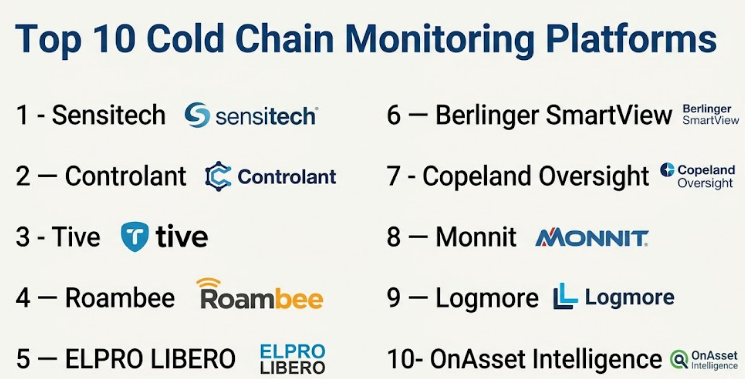
Top 10 Cold Chain Monitoring Platforms
#1 — Sensitech
Short description :
Sensitech is a well-known cold chain monitoring platform focused on temperature-sensitive supply chains, especially in pharmaceuticals, life sciences, food, and logistics. It supports monitoring of goods in transit and storage using data loggers, real-time trackers, and analytics. The platform is useful for organizations that need strong shipment visibility and quality reporting. It is commonly considered by enterprises handling regulated or high-value goods. Sensitech is best suited for teams that need structured cold chain intelligence, route analysis, and quality-focused reporting.
Key Features
- Temperature and condition monitoring for shipments and storage environments.
- Real-time tracking options for high-risk or high-value shipments.
- Reporting tools for quality, compliance, and operational review.
- Analytics for lane performance, temperature excursions, and shipment trends.
- Device options for different cold chain use cases.
- Suitable for pharma, life sciences, food, and logistics operations.
- Supports shipment-level visibility and exception management.
Pros
- Strong fit for enterprise cold chain and regulated logistics.
- Useful analytics for identifying shipment risks and recurring issues.
- Good choice for companies needing quality-focused cold chain records.
Cons
- May be more advanced than needed for small teams.
- Pricing and deployment details may require direct vendor discussion.
- Setup can involve operational planning, device selection, and process alignment.
Platforms / Deployment
Web / iOS / Android where applicable
Cloud / Hybrid depending on implementation
Security & Compliance
Not publicly stated. Buyers should directly validate SSO/SAML, MFA, encryption, audit logs, RBAC, SOC 2, ISO 27001, GDPR, HIPAA, and pharma-specific documentation before purchase.
Integrations & Ecosystem
Sensitech fits into enterprise logistics, quality, and supply chain workflows. It is suitable for organizations that need cold chain data connected with shipment, quality, and operations processes.
- Logistics and shipment management workflows.
- Data exports for quality review.
- Cold chain analytics and reporting.
- Device-based monitoring ecosystem.
- Possible integration with enterprise supply chain tools.
- API availability should be confirmed directly.
Support & Community
Support appears enterprise-oriented, with onboarding and service support likely available depending on contract scope. Documentation, training, and implementation support should be validated during vendor evaluation.
#2 — Controlant
Short description :
Controlant is a cold chain visibility platform known for real-time monitoring of temperature-sensitive shipments, especially in pharmaceutical and life science logistics. It focuses on end-to-end visibility, connected devices, data intelligence, and quality control. The platform is suitable for companies that need proactive monitoring rather than only post-shipment data review. Controlant is often considered by organizations with strict temperature requirements and complex global logistics. It is best for teams that need real-time alerts, shipment intervention, and detailed visibility.
Key Features
- Real-time temperature and location monitoring.
- Connected IoT devices for cold chain shipments.
- Dashboard visibility for logistics and quality teams.
- Exception alerts for temperature and route-related issues.
- Analytics for shipment performance and risk management.
- Suitable for pharma, biologics, and life science supply chains.
- Supports proactive decision-making during shipment movement.
Pros
- Strong real-time visibility for critical cold chain shipments.
- Good fit for pharmaceutical and life science logistics.
- Helps reduce reliance on manual post-shipment review.
Cons
- May be too specialized for basic food logistics use cases.
- Cost structure may not suit very small shipment volumes.
- Integration and onboarding may require careful planning.
Platforms / Deployment
Web / iOS / Android where applicable
Cloud-based deployment
Security & Compliance
Not publicly stated. Buyers should confirm encryption, access controls, audit logs, MFA, SSO/SAML, GDPR readiness, and regulated industry documentation directly.
Integrations & Ecosystem
Controlant works well in logistics ecosystems where real-time visibility and shipment intervention are important. It can support operational teams that need live data rather than delayed logger downloads.
- Logistics control tower workflows.
- Quality and compliance reporting.
- Real-time shipment monitoring.
- Device and data ecosystem.
- API and enterprise integration options should be confirmed.
- Suitable for global logistics visibility programs.
Support & Community
Support is likely enterprise-focused, especially for regulated logistics customers. Buyers should confirm implementation services, onboarding timelines, support tiers, and device replacement processes.
#3 — Tive
Short description :
Tive is a real-time shipment visibility platform used for tracking location and condition data across supply chains. It is useful for cold chain teams that want live visibility into temperature-sensitive goods while they are moving. Tive supports temperature monitoring, location tracking, alerting, and shipment analytics. It is a strong option for logistics teams, shippers, freight forwarders, food distributors, and healthcare supply chains. The platform is practical for teams that want fast deployment and strong shipment-level visibility.
Key Features
- Real-time temperature and location tracking.
- Multi-sensor shipment monitoring options.
- Live alerts for excursions and shipment risks.
- Shipment dashboard for logistics and operations teams.
- Analytics for carrier, lane, and shipment performance.
- Reusable and shipment-focused tracking device options.
- Useful for food, pharma, retail, and logistics use cases.
Pros
- Strong shipment visibility and practical dashboard experience.
- Useful for teams managing many moving shipments.
- Good fit for operational teams that need live alerts.
Cons
- May require device and data plan management.
- Advanced compliance requirements should be validated directly.
- Not always ideal for teams needing only fixed warehouse monitoring.
Platforms / Deployment
Web / iOS / Android where applicable
Cloud-based deployment
Security & Compliance
Not publicly stated. Buyers should validate SSO/SAML, MFA, encryption, audit logs, RBAC, SOC 2, ISO 27001, GDPR, and industry-specific compliance support.
Integrations & Ecosystem
Tive fits well with logistics visibility, carrier management, shipment tracking, and exception management workflows. It is useful when cold chain data must be shared between shippers, logistics providers, and customers.
- Shipment management systems.
- Logistics visibility workflows.
- API-based data sharing.
- Alerts and notification tools.
- Carrier and lane performance reporting.
- Data exports for quality and operations review.
Support & Community
Tive generally targets business users with onboarding and customer support options. Buyers should confirm support tiers, device support, global connectivity coverage, and service-level expectations.
#4 — Roambee
Short description :
Roambee provides supply chain visibility and asset monitoring solutions, including cold chain monitoring for goods, containers, returnable assets, and shipments. The platform combines IoT sensors, cloud analytics, and operational visibility. It is useful for companies that need more than temperature tracking, including location, asset movement, security, and condition monitoring. Roambee is a strong fit for enterprises managing complex supply chains across multiple regions. It works well where cold chain visibility is part of a broader supply chain intelligence strategy.
Key Features
- Temperature and location monitoring for cold chain assets.
- IoT-based shipment and asset visibility.
- Analytics for supply chain performance and risk.
- Monitoring for goods in transit and reusable assets.
- Alerts for temperature, route, delay, and handling risks.
- Supports logistics, pharma, food, and industrial use cases.
- Useful for control tower and supply chain intelligence programs.
Pros
- Broad supply chain visibility beyond only temperature.
- Strong fit for enterprise asset and shipment monitoring.
- Useful for teams managing complex logistics networks.
Cons
- May be more complex than simple logger-based tools.
- Buyers need to validate exact sensor and connectivity options.
- Advanced deployment may require process and integration planning.
Platforms / Deployment
Web / iOS / Android where applicable
Cloud / Hybrid depending on implementation
Security & Compliance
Not publicly stated. Buyers should confirm MFA, SSO/SAML, RBAC, encryption, audit logs, SOC 2, ISO 27001, GDPR, and industry compliance needs.
Integrations & Ecosystem
Roambee can support broader supply chain integration scenarios where cold chain data is combined with logistics, asset, and operational information.
- Supply chain control tower workflows.
- ERP and logistics system integration.
- API-based data sharing.
- Asset tracking workflows.
- Exception management dashboards.
- Analytics and reporting workflows.
Support & Community
Support is likely business and enterprise oriented. Buyers should ask about onboarding, implementation consulting, documentation, managed services, support levels, and regional coverage.
#5 — ELPRO LIBERO
Short description :
ELPRO LIBERO is a cold chain monitoring and data logger ecosystem used heavily in life sciences, pharma, laboratories, and regulated temperature monitoring. It is suitable for organizations that need reliable temperature records, documentation, and quality workflows. The platform includes data loggers and software for monitoring, reporting, and reviewing temperature data. ELPRO is especially relevant for teams that care about compliance documentation and controlled environments. It is a strong option for regulated storage, shipment, and quality assurance use cases.
Key Features
- Temperature data loggers for shipment and storage monitoring.
- Software for data review, reporting, and quality documentation.
- Suitable for pharma, life sciences, labs, and clinical supply chains.
- Supports controlled temperature monitoring workflows.
- Helps manage excursion review and historical records.
- Device ecosystem for different monitoring scenarios.
- Useful for audit-ready cold chain documentation.
Pros
- Strong fit for regulated and quality-sensitive environments.
- Good for teams that prioritize documented temperature history.
- Useful for both shipment and storage monitoring workflows.
Cons
- May feel more quality-focused than logistics-control focused.
- Real-time capabilities depend on selected device and setup.
- Buyers should validate cloud, device, and integration details.
Platforms / Deployment
Web / Windows where applicable
Cloud / Local software / Hybrid depending on product setup
Security & Compliance
Not publicly stated. Buyers should validate audit trails, access controls, electronic records support, encryption, RBAC, MFA, SSO/SAML, and regulated industry requirements directly.
Integrations & Ecosystem
ELPRO fits well into quality management and regulated monitoring ecosystems. It is especially useful where data needs to be reviewed, approved, stored, and presented during audits.
- Quality management workflows.
- Data logger ecosystems.
- Temperature reporting.
- Exportable audit records.
- Laboratory and pharma operations.
- Integration options should be confirmed directly.
Support & Community
Support is likely structured around product onboarding, device selection, and regulated use cases. Buyers should confirm documentation depth, validation support, training, and local service availability.
#6 — Berlinger SmartView
Short description :
Berlinger SmartView is a cold chain monitoring platform connected with Berlinger’s temperature monitoring devices. It is commonly associated with pharmaceutical logistics, healthcare, vaccines, clinical trials, and regulated temperature-sensitive products. The platform helps users manage temperature data, review excursions, and support quality decisions. Berlinger is a practical choice for organizations that need reliable monitoring devices and software together. It is especially suitable for teams that want cold chain visibility with a strong focus on pharma-grade monitoring.
Key Features
- Temperature monitoring for pharma and healthcare logistics.
- Device-connected platform for cold chain visibility.
- Data review and reporting workflows.
- Useful for shipment monitoring and storage checks.
- Supports quality teams handling excursion decisions.
- Suitable for regulated product distribution.
- Monitoring tools for sensitive healthcare products.
Pros
- Good fit for pharma, vaccines, and clinical logistics.
- Strong device-and-platform cold chain approach.
- Useful for quality documentation and temperature review.
Cons
- May be less suited for broad fleet or asset tracking beyond cold chain.
- Exact integrations and enterprise security features should be confirmed.
- Advanced analytics depth may vary by product configuration.
Platforms / Deployment
Web / Mobile where applicable
Cloud-based deployment
Security & Compliance
Not publicly stated. Buyers should confirm encryption, RBAC, audit trails, MFA, SSO/SAML, GDPR, electronic records support, and regulated pharma documentation.
Integrations & Ecosystem
Berlinger SmartView works best where monitoring hardware and cold chain software are used together. It supports teams that need reliable device data and structured temperature reporting.
- Temperature monitoring devices.
- Shipment and storage workflows.
- Quality review processes.
- Data export and reporting.
- Pharma logistics use cases.
- Integration options should be validated directly.
Support & Community
Support is generally expected through product and device onboarding channels. Buyers should confirm local support, training, documentation, warranty process, and technical assistance levels.
#7 — Copeland Oversight
Short description :
Copeland Oversight is a cold chain monitoring and cargo visibility platform used for monitoring temperature-sensitive shipments, especially in food, retail, logistics, and perishable goods supply chains. It helps teams track shipment conditions, identify exceptions, and improve transportation quality. The platform is useful for companies managing refrigerated cargo across carriers and lanes. It is especially relevant for businesses that need stronger control over perishable goods movement. Copeland Oversight works well for operational teams focused on reducing spoilage, claims, and delivery quality issues.
Key Features
- Shipment monitoring for perishable and temperature-sensitive goods.
- Temperature and condition visibility during transit.
- Exception alerts for cold chain failures.
- Reporting for shipment quality and carrier performance.
- Useful for food, retail, and logistics operations.
- Helps identify lane and handling issues.
- Supports operational improvement in refrigerated transport.
Pros
- Strong fit for perishable goods logistics.
- Useful for reducing shipment loss and quality disputes.
- Practical for teams managing refrigerated transportation networks.
Cons
- May be less specialized for pharma-grade compliance than some alternatives.
- Security and certification details should be confirmed directly.
- Device options and pricing may vary by use case.
Platforms / Deployment
Web / Mobile where applicable
Cloud-based deployment
Security & Compliance
Not publicly stated. Buyers should confirm MFA, SSO/SAML, encryption, RBAC, audit logs, GDPR, SOC 2, ISO 27001, and industry-specific requirements.
Integrations & Ecosystem
Copeland Oversight can support supply chain, transportation, and perishable logistics workflows. It is helpful where cold chain data needs to support carrier performance and quality decisions.
- Transportation workflows.
- Carrier performance reporting.
- Shipment exception management.
- Data exports for quality teams.
- Retail and food logistics use cases.
- Integration options should be confirmed directly.
Support & Community
Support appears business-focused, especially for logistics and cold chain operations. Buyers should confirm onboarding, device support, documentation, training, and customer service tiers.
#8 — Monnit
Short description :
Monnit provides wireless sensors and remote monitoring solutions that can be used for cold chain, refrigeration, freezer, warehouse, and facility monitoring. It is a practical option for teams that need temperature visibility across fixed locations rather than only moving shipments. Monnit is useful for restaurants, labs, healthcare facilities, warehouses, small businesses, and distributed facilities. The platform supports sensors, gateways, alerts, and cloud dashboards. It is a strong fit for buyers who want accessible monitoring without highly complex enterprise deployment.
Key Features
- Wireless temperature and humidity sensors.
- Gateway-based monitoring for facilities and storage locations.
- Cloud dashboard for remote visibility.
- Alerts for temperature threshold breaches.
- Suitable for refrigerators, freezers, labs, warehouses, and facilities.
- Broad sensor ecosystem beyond only temperature.
- Useful for SMB and mid-sized monitoring programs.
Pros
- Practical and accessible for fixed-location monitoring.
- Broad sensor options for facility use cases.
- Good fit for teams needing quick deployment.
Cons
- Less focused on global shipment tracking than logistics platforms.
- Compliance documentation may require buyer validation.
- Enterprise integrations may be more limited than larger platforms.
Platforms / Deployment
Web / iOS / Android where applicable
Cloud-based deployment with gateway/sensor hardware
Security & Compliance
Not publicly stated. Buyers should confirm encryption, access controls, MFA, RBAC, audit logs, SSO/SAML, SOC 2, ISO 27001, and industry-specific compliance needs.
Integrations & Ecosystem
Monnit works well in sensor-based monitoring environments. It is useful when businesses need alerts and visibility across many rooms, refrigerators, freezers, or facility assets.
- Wireless sensor ecosystem.
- Gateway-based monitoring.
- Alerts and notification workflows.
- Cloud dashboards.
- API or data export options should be confirmed.
- Facility and equipment monitoring use cases.
Support & Community
Support is generally product and device oriented. Buyers should confirm documentation, onboarding help, sensor setup guidance, warranty support, and technical support availability.
#9 — Logmore
Short description :
Logmore provides cold chain monitoring using data loggers and cloud-based visibility, with a focus on simple data capture and accessible reporting. It is especially useful for teams that want shipment temperature records without overly complex setup. Logmore is often considered for pharma, food, healthcare, and logistics use cases. The platform helps users collect temperature data, review conditions, and support quality decisions. It is a good option for organizations that want easy-to-use monitoring and practical reporting.
Key Features
- Temperature monitoring through data loggers.
- Cloud-based access to shipment data.
- Simple scanning and data capture workflows.
- Reporting for temperature conditions and excursions.
- Suitable for food, healthcare, pharma, and logistics.
- Useful for shipment-level documentation.
- Supports practical cold chain visibility without heavy complexity.
Pros
- Easy to understand and operationally practical.
- Good for teams needing shipment documentation.
- Useful for businesses wanting a simpler cold chain workflow.
Cons
- May not provide the deepest real-time control tower functionality.
- Advanced enterprise security details should be verified.
- Integration depth may depend on plan and setup.
Platforms / Deployment
Web / Mobile where applicable
Cloud-based deployment
Security & Compliance
Not publicly stated. Buyers should confirm encryption, access controls, audit logs, MFA, SSO/SAML, RBAC, GDPR, and regulated workflow needs.
Integrations & Ecosystem
Logmore works well where cold chain data needs to be collected, reviewed, and shared with internal or external stakeholders. It is suitable for simple-to-moderate cold chain operations.
- Data logger workflows.
- Shipment documentation.
- Cloud reporting.
- Mobile scanning workflows.
- Data exports.
- API availability should be confirmed directly.
Support & Community
Support appears product-focused, with onboarding and documentation likely available. Buyers should confirm response times, support tiers, device handling, and training resources.
#10 — OnAsset Intelligence
Short description :
OnAsset Intelligence provides asset tracking and monitoring solutions for high-value shipments, cargo, aviation logistics, life sciences, and supply chain visibility. Its platform can support cold chain use cases where location, condition, and security are important together. It is useful for enterprises that need tracking across complex transportation networks. OnAsset is a strong fit for teams managing sensitive shipments that require visibility beyond temperature alone. The platform is best suited for advanced logistics, air cargo, and high-value supply chain scenarios.
Key Features
- Asset and shipment tracking for high-value goods.
- Temperature and condition monitoring depending on device selection.
- Location visibility across transportation networks.
- Useful for aviation, life sciences, cargo, and logistics.
- Alerts for shipment condition and movement.
- Supports complex asset monitoring workflows.
- Suitable for enterprise logistics visibility use cases.
Pros
- Strong fit for high-value and complex logistics scenarios.
- Useful where location and condition monitoring must work together.
- Good option for advanced asset tracking use cases.
Cons
- May be too advanced for simple refrigerator monitoring.
- Buyers must validate exact cold chain device capabilities.
- Pricing and deployment may require enterprise consultation.
Platforms / Deployment
Web / Mobile where applicable
Cloud / Hybrid depending on implementation
Security & Compliance
Not publicly stated. Buyers should confirm encryption, MFA, RBAC, audit logs, SSO/SAML, SOC 2, ISO 27001, GDPR, and industry-specific requirements.
Integrations & Ecosystem
OnAsset Intelligence fits logistics environments where asset data, location data, and condition data need to support operational decisions. It is especially relevant for high-value and complex shipments.
- Asset tracking workflows.
- Cargo and logistics visibility.
- Shipment exception management.
- Data exports and reporting.
- Enterprise system integrations.
- API options should be confirmed directly.
Support & Community
Support is likely enterprise-oriented. Buyers should ask about implementation planning, device support, training, documentation, and global service coverage.
Comparison Table
| Tool Name | Best For | Platform(s) Supported | Deployment | Standout Feature | Public Rating |
|---|---|---|---|---|---|
| Sensitech | Enterprise cold chain and regulated logistics | Web / Mobile where applicable | Cloud / Hybrid | Cold chain analytics and quality reporting | N/A |
| Controlant | Pharma and life science real-time monitoring | Web / Mobile where applicable | Cloud | Real-time intervention-focused shipment visibility | N/A |
| Tive | Real-time shipment visibility for logistics teams | Web / iOS / Android where applicable | Cloud | Live temperature and location tracking | N/A |
| Roambee | Enterprise supply chain and asset visibility | Web / iOS / Android where applicable | Cloud / Hybrid | Broader IoT supply chain intelligence | N/A |
| ELPRO LIBERO | Pharma, labs, and regulated quality workflows | Web / Windows where applicable | Cloud / Local / Hybrid | Quality-focused temperature documentation | N/A |
| Berlinger SmartView | Pharma-grade device-connected monitoring | Web / Mobile where applicable | Cloud | Cold chain monitoring for healthcare logistics | N/A |
| Copeland Oversight | Perishable food and refrigerated logistics | Web / Mobile where applicable | Cloud | Perishable cargo monitoring and exception alerts | N/A |
| Monnit | Facility, freezer, and warehouse monitoring | Web / iOS / Android where applicable | Cloud with sensors/gateways | Accessible wireless sensor ecosystem | N/A |
| Logmore | Simple shipment temperature documentation | Web / Mobile where applicable | Cloud | Easy data logger and cloud reporting workflow | N/A |
| OnAsset Intelligence | High-value cargo and advanced logistics | Web / Mobile where applicable | Cloud / Hybrid | Asset tracking with condition visibility | N/A |
Evaluation & Cold Chain Monitoring Platforms
| Tool Name | Core (25%) | Ease (15%) | Integrations (15%) | Security (10%) | Performance (10%) | Support (10%) | Value (15%) | Weighted Total (0–10) |
|---|---|---|---|---|---|---|---|---|
| Sensitech | 9 | 7 | 8 | 7 | 9 | 8 | 7 | 7.95 |
| Controlant | 9 | 7 | 8 | 7 | 9 | 8 | 7 | 7.95 |
| Tive | 8 | 8 | 8 | 7 | 8 | 8 | 8 | 7.85 |
| Roambee | 8 | 7 | 8 | 7 | 8 | 8 | 7 | 7.55 |
| ELPRO LIBERO | 8 | 7 | 7 | 7 | 8 | 8 | 7 | 7.45 |
| Berlinger SmartView | 8 | 7 | 7 | 7 | 8 | 7 | 7 | 7.35 |
| Copeland Oversight | 8 | 7 | 7 | 7 | 8 | 7 | 8 | 7.50 |
| Monnit | 7 | 8 | 7 | 6 | 7 | 7 | 9 | 7.30 |
| Logmore | 7 | 8 | 7 | 6 | 7 | 7 | 8 | 7.15 |
| OnAsset Intelligence | 8 | 7 | 8 | 7 | 8 | 7 | 7 | 7.50 |
These scores are comparative, not absolute. A higher score does not automatically mean the tool is best for every company. For example, Sensitech or Controlant may suit regulated global logistics, while Monnit may be better for a small facility that only needs freezer alerts. Security scores are conservative where public details are not clearly stated. Buyers should use this table as a shortlist guide, then validate pricing, integrations, compliance, device availability, and support directly with vendors.
Which Cold Chain Monitoring Platforms
Solo / Freelancer
Solo operators usually do not need a large enterprise cold chain platform unless they handle regulated shipments or high-value temperature-sensitive goods. A simpler tool such as Monnit or Logmore may be more practical because setup is easier and the workflow is less complex.
For consultants, small lab operators, specialty food sellers, or local healthcare suppliers, the best option is often a platform that gives clear alerts, simple reporting, and affordable device options. Avoid overbuying advanced control tower features unless the business truly needs real-time shipment intervention.
SMB
Small and mid-sized businesses should focus on ease of use, device cost, alert reliability, reporting, and support. Monnit, Logmore, Tive, and Copeland Oversight may be practical depending on whether the business monitors fixed locations or moving shipments.
An SMB food distributor may prefer Copeland Oversight or Tive for shipment visibility, while a clinic or small warehouse may prefer Monnit for refrigerator and freezer monitoring. The key is to choose a platform that staff can actually use daily without heavy technical support.
Mid-Market
Mid-market companies often need more structured workflows, better analytics, and stronger integrations. Tive, Roambee, Copeland Oversight, ELPRO LIBERO, and Sensitech can be strong candidates depending on industry needs.
A mid-market pharma distributor may prioritize ELPRO LIBERO, Berlinger SmartView, Sensitech, or Controlant. A growing food logistics company may prefer Tive or Copeland Oversight. At this stage, buyers should evaluate APIs, reporting, user permissions, device lifecycle, and support quality.
Enterprise
Enterprises should focus on scalability, global coverage, compliance readiness, analytics, security controls, integration depth, and long-term vendor stability. Sensitech, Controlant, Roambee, OnAsset Intelligence, and Tive are strong candidates for large-scale cold chain visibility.
Enterprise buyers should run a pilot across multiple lanes, carriers, regions, and product types. They should also validate data retention, audit trails, user access controls, service levels, integration architecture, and device availability before committing.
Budget vs Premium
Budget-focused buyers should start with clear needs: temperature alerts, reporting, device cost, and basic dashboards. Monnit and Logmore may offer a simpler path for many smaller teams.
Premium buyers usually need real-time visibility, global logistics support, advanced analytics, compliance workflows, and integration with enterprise systems. Sensitech, Controlant, Roambee, and OnAsset Intelligence may be better suited for these advanced needs.
Feature Depth vs Ease of Use
If ease of use is the top priority, look for tools with simple dashboards, fast setup, clear alerts, and low training requirements. Logmore, Monnit, and Tive are practical choices for many operational teams.
If feature depth is more important, evaluate Sensitech, Controlant, Roambee, ELPRO LIBERO, and OnAsset Intelligence. These platforms may offer stronger analytics, enterprise workflows, and broader cold chain intelligence, but they may also require more onboarding effort.
Integrations & Scalability-
Companies planning to scale should avoid choosing a tool only based on device price. Integrations, APIs, data exports, user roles, and reporting structure become more important as shipment volume grows.
Tive, Roambee, Sensitech, Controlant, and OnAsset Intelligence are better suited for broader supply chain integration scenarios. For fixed facility monitoring, Monnit may scale well across many rooms, refrigerators, freezers, and sites, but buyers should validate integration requirements first.
Security & Compliance Needs
Highly regulated buyers should not rely only on marketing claims. They should request documentation for encryption, access controls, audit logs, validation support, electronic records, data retention, user permissions, and regional data handling.
Pharma and life science teams may prefer Sensitech, Controlant, ELPRO LIBERO, or Berlinger SmartView because these tools are commonly aligned with regulated cold chain workflows. Food, retail, and logistics teams may focus more on alerting, loss prevention, carrier performance, and reporting.
Frequently Asked Questions
1. What is a cold chain monitoring platform?
A cold chain monitoring platform tracks temperature-sensitive goods during storage and transport. It helps teams detect temperature excursions, review shipment quality, receive alerts, and create reports for operations or compliance needs.
2. How much do cold chain monitoring platforms cost?
Pricing varies based on devices, shipment volume, sensors, connectivity, platform users, storage sites, data plans, and support level. Some vendors price per device or shipment, while others use subscription or enterprise contract models.
3. Are cold chain monitoring platforms only for pharma companies?
No. Pharma is a major use case, but these platforms are also used in food logistics, healthcare, laboratories, retail, chemicals, floral supply chains, and high-value cargo movement.
4. What is the biggest mistake buyers make?
The biggest mistake is choosing based only on device cost. Buyers should also evaluate alert reliability, data accuracy, reporting quality, battery life, integrations, support, and how easily teams can act on the data.
5. Do these platforms support real-time monitoring?
Many platforms support real-time monitoring, but not all products or device types do. Some tools use live cellular trackers, while others use data loggers that are reviewed after delivery, so buyers must confirm the exact workflow.
6. How long does implementation usually take?
Implementation can be quick for simple sensor or logger setups, but enterprise rollouts may take longer due to device testing, lane pilots, integrations, user training, compliance review, and operating procedure updates.
7. What security features should buyers check?
Buyers should check for encryption, role-based access control, MFA, SSO/SAML, audit logs, data retention, user permissions, and secure APIs. If details are not clearly available, ask the vendor directly before signing.
8. Can cold chain monitoring platforms integrate with ERP or logistics systems?
Many platforms offer integrations, APIs, data exports, or workflow connections, but depth varies. Buyers should validate integration with ERP, TMS, WMS, quality systems, customer portals, and business intelligence tools.
9. Are data loggers enough for cold chain monitoring?
Data loggers may be enough for lower-risk shipments or post-delivery documentation. Real-time platforms are better when teams need live alerts, route intervention, exception handling, and immediate corrective action.
10. How should a company switch from manual monitoring to a platform?
Start with one product line, lane, warehouse, or shipment type. Run a pilot, compare manual records with platform data, train users, define alert ownership, and then expand once the workflow is stable.
Conclusion
Cold chain monitoring platforms are no longer just optional tracking tools. For many businesses, they are part of product quality, customer trust, operational control, and compliance readiness. The right platform can help teams detect temperature excursions faster, reduce product loss, improve shipment visibility, document quality records, and make better logistics decisions. However, there is no single best platform for every buyer. A pharma company moving biologics globally may need a very different solution than a small food distributor monitoring local refrigerated deliveries or a clinic tracking vaccine refrigerators.
