Introduction
API Aggregators are platforms that unify access to multiple third-party APIs through a single integration layer. Instead of connecting separately to dozens of providers, developers and enterprises can use API aggregators to simplify integrations, normalize data formats, manage authentication, orchestrate workflows, and reduce operational complexity.
In API aggregation has become increasingly important as businesses rely on multi-vendor SaaS ecosystems, embedded services, AI infrastructure, financial APIs, logistics platforms, communication services, and cloud-native applications. Modern API aggregators now include AI-assisted workflow automation, unified authentication, low-code orchestration, observability, analytics, governance controls, and scalable developer infrastructure.
Common real-world use cases include:
- Unified payment integrations
- Multi-channel communication APIs
- Travel and booking aggregation
- Financial data aggregation
- E-commerce integrations
- AI and LLM API orchestration
- Logistics and shipping integrations
- Unified SaaS connectivity
When evaluating API Aggregators, buyers should consider:
- API coverage and ecosystem breadth
- Developer experience and SDK quality
- Authentication and security controls
- Reliability and uptime
- API normalization capabilities
- Workflow automation features
- Scalability and performance
- Monitoring and analytics
- Pricing flexibility
- Enterprise governance features
Best for: Developers, SaaS companies, fintech startups, enterprises, embedded finance providers, e-commerce platforms, logistics companies, and organizations managing complex API ecosystems.
Not ideal for: Small projects requiring only one or two simple API integrations or organizations with fully custom internal integration stacks.
Key Trends in API Aggregators
- AI-powered API orchestration is becoming mainstream.
- Unified API layers for fintech and HR systems are growing rapidly.
- Low-code and no-code API automation is expanding.
- Multi-cloud API governance is becoming more important.
- API observability and analytics tooling are improving.
- Real-time event-driven integrations are increasing.
- Security-focused API gateways are evolving.
- Embedded finance and embedded commerce APIs are driving adoption.
- API marketplaces and unified developer portals are growing.
- GraphQL-based aggregation layers are becoming more common.
How We Selected These Tools (Methodology)
The platforms in this list were selected based on ecosystem maturity, API coverage, developer adoption, scalability, integration flexibility, enterprise readiness, and overall relevance within modern API infrastructure ecosystems.
Selection criteria included:
- Breadth of supported integrations
- API reliability and uptime
- Developer tooling quality
- Authentication and security architecture
- Workflow automation features
- Enterprise scalability
- Integration ecosystem maturity
- Monitoring and analytics capabilities
- Documentation quality
- Adoption across industries
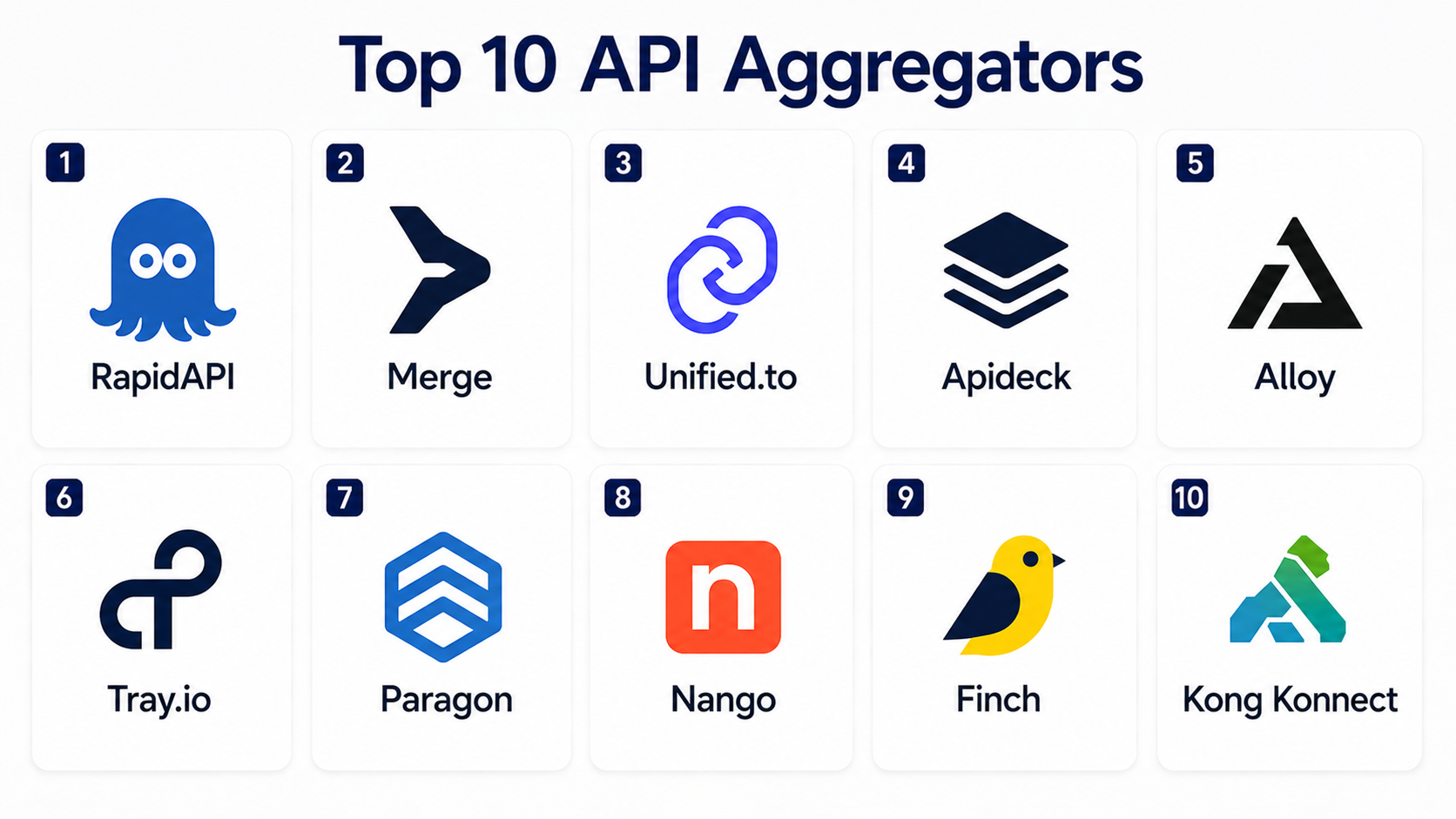
The final list includes unified API providers, embedded integration platforms, workflow orchestration ecosystems, and enterprise-grade API aggregation solutions.
API Aggregators
#1 — RapidAPI
Short description :
RapidAPI is one of the largest API aggregation and marketplace platforms, helping developers discover, connect, manage, and monetize APIs through a centralized infrastructure layer.
Key Features
- Unified API marketplace
- API subscription management
- Developer analytics
- API monetization tooling
- Authentication management
- Multi-language SDK generation
- API testing environment
Pros
- Massive API ecosystem
- Strong developer tooling
- Simplified API discovery workflows
Cons
- API quality varies by provider
- Usage pricing can scale quickly
- Some APIs may have inconsistent documentation
Platforms / Deployment
- Web / Linux
- Cloud
Security & Compliance
- API authentication
- Access controls
- Usage monitoring
- Encryption
Integrations & Ecosystem
RapidAPI integrates with broad developer and cloud ecosystems.
- REST APIs
- SDKs
- Cloud platforms
- Developer workflows
- API marketplaces
Support & Community
RapidAPI provides strong documentation, community resources, and developer onboarding.
#2 — Merge
Short description :
Merge is a unified API platform that helps SaaS companies integrate HR, accounting, CRM, ticketing, and productivity applications through normalized APIs.
Key Features
- Unified API infrastructure
- HRIS integrations
- CRM integrations
- Accounting APIs
- Ticketing system connectivity
- Data normalization
- Webhook orchestration
Pros
- Simplifies SaaS integration complexity
- Strong normalization workflows
- Good enterprise developer experience
Cons
- Focused mainly on SaaS business systems
- Premium enterprise pricing
- Advanced workflows may require customization
Platforms / Deployment
- Web
- Cloud
Security & Compliance
- RBAC
- Encryption
- OAuth workflows
- Audit logging
Integrations & Ecosystem
Merge integrates with modern SaaS ecosystems.
- Salesforce
- HubSpot
- QuickBooks
- BambooHR
- Zendesk
Support & Community
Merge provides developer-focused onboarding and enterprise support services.
#3 — Unified.to
Short description :
Unified.to is an API aggregation platform focused on providing universal APIs for SaaS integrations, embedded workflows, and enterprise connectivity.
Key Features
- Unified SaaS APIs
- Multi-category integrations
- Authentication orchestration
- Embedded integration tooling
- Workflow automation
- Data normalization
- Real-time synchronization
Pros
- Broad SaaS integration support
- Good embedded workflow tooling
- Developer-friendly APIs
Cons
- Smaller ecosystem than larger competitors
- Enterprise deployment complexity
- Some connectors may require configuration
Platforms / Deployment
- Web
- Cloud
Security & Compliance
- OAuth support
- Encryption
- Access management
- Audit workflows
Integrations & Ecosystem
Unified.to integrates with modern SaaS platforms and APIs.
- CRM systems
- HR tools
- Productivity platforms
- Accounting systems
- Collaboration software
Support & Community
Unified.to provides onboarding documentation and technical support resources.
#4 — Apideck
Short description :
Apideck is a unified API platform helping developers aggregate and standardize integrations across HR, CRM, accounting, and commerce ecosystems.
Key Features
- Unified API layer
- Data normalization
- Real-time synchronization
- Connector management
- Unified authentication
- Workflow orchestration
- Embedded integrations
Pros
- Strong API normalization capabilities
- Good developer experience
- Simplified multi-provider integrations
Cons
- Enterprise-focused pricing
- Connector coverage varies by category
- Advanced orchestration may require expertise
Platforms / Deployment
- Web
- Cloud
Security & Compliance
- OAuth authentication
- Encryption
- RBAC
- Audit controls
Integrations & Ecosystem
Apideck integrates with business software ecosystems.
- Salesforce
- NetSuite
- HubSpot
- QuickBooks
- Shopify
Support & Community
Apideck provides technical onboarding and developer documentation.
#5 — Alloy
Short description :
Alloy is an embedded integration and API orchestration platform designed for fintech and enterprise applications requiring unified connectivity workflows.
Key Features
- Embedded integration workflows
- API orchestration
- Financial system connectivity
- Authentication management
- Workflow automation
- Real-time event processing
- Developer SDKs
Pros
- Strong embedded finance focus
- Flexible orchestration capabilities
- Good developer tooling
Cons
- Fintech-oriented ecosystem
- Enterprise onboarding complexity
- Advanced customization may require engineering resources
Platforms / Deployment
- Web
- Cloud
Security & Compliance
- Encryption
- Access governance
- Audit logging
- API security workflows
Integrations & Ecosystem
Alloy integrates with fintech and enterprise systems.
- Banking APIs
- KYC platforms
- Payment systems
- Fraud tools
- Financial infrastructure
Support & Community
Alloy provides enterprise onboarding and technical support services.
#6 — Tray.io
Short description :
Tray.io is a low-code API integration and workflow automation platform focused on enterprise orchestration and SaaS connectivity.
Key Features
- Low-code workflow automation
- API aggregation
- SaaS integration workflows
- Event-driven automation
- Data transformation
- AI workflow support
- Enterprise orchestration
Pros
- Strong workflow automation features
- Large integration ecosystem
- Good enterprise scalability
Cons
- Advanced workflows can become complex
- Pricing may scale significantly
- Learning curve for enterprise orchestration
Platforms / Deployment
- Web
- Cloud
Security & Compliance
- RBAC
- Encryption
- Audit logging
- Governance workflows
Integrations & Ecosystem
Tray.io integrates with enterprise SaaS ecosystems.
- Salesforce
- Slack
- NetSuite
- HubSpot
- AI platforms
Support & Community
Tray.io provides enterprise onboarding and automation support resources.
#7 — Paragon
Short description :
Paragon is an embedded integration platform that enables SaaS companies to offer native integrations and API workflows directly inside their applications.
Key Features
- Embedded integrations
- Workflow orchestration
- OAuth management
- Integration marketplace tooling
- Event-based automation
- Unified APIs
- Connector management
Pros
- Strong embedded UX capabilities
- Simplified customer integrations
- Good developer experience
Cons
- Enterprise pricing complexity
- Advanced workflows may require engineering support
- Smaller ecosystem than larger competitors
Platforms / Deployment
- Web
- Cloud
Security & Compliance
- OAuth workflows
- Encryption
- Access controls
- Audit logging
Integrations & Ecosystem
Paragon integrates with SaaS and productivity ecosystems.
- CRM platforms
- Ticketing systems
- Collaboration tools
- Productivity apps
- APIs
Support & Community
Paragon provides onboarding support and developer resources.
#8 — Nango
Short description :
Nango is an open-source unified API and integration platform focused on OAuth management, API connectivity, and developer-centric integration infrastructure.
Key Features
- Unified API infrastructure
- OAuth management
- Open-source architecture
- Connector synchronization
- Webhook orchestration
- Integration automation
- Developer SDKs
Pros
- Open-source flexibility
- Strong OAuth handling
- Developer-focused architecture
Cons
- Smaller enterprise ecosystem
- Advanced governance features limited
- Requires more engineering involvement
Platforms / Deployment
- Web / Linux
- Cloud / Self-hosted
Security & Compliance
- OAuth security
- Encryption
- Access controls
- Audit capabilities
Integrations & Ecosystem
Nango integrates with developer and SaaS ecosystems.
- APIs
- CRM systems
- Productivity tools
- Authentication providers
- Webhooks
Support & Community
Nango has an active developer-focused community and open-source documentation ecosystem.
#9 — Finch
Short description :
Finch is a unified employment and payroll API platform helping developers integrate HRIS and payroll systems through a single API layer.
Key Features
- Payroll API aggregation
- HRIS integrations
- Employment data APIs
- Authentication workflows
- Unified data models
- Webhook support
- Real-time synchronization
Pros
- Strong payroll integration ecosystem
- Simplified HR connectivity
- Good developer documentation
Cons
- Specialized primarily for HR and payroll
- Limited outside employment systems
- Enterprise pricing may vary
Platforms / Deployment
- Web
- Cloud
Security & Compliance
- OAuth authentication
- Encryption
- Access management
- Audit workflows
Integrations & Ecosystem
Finch integrates with payroll and HR ecosystems.
- Gusto
- BambooHR
- ADP
- Workday
- Payroll infrastructure
Support & Community
Finch provides developer onboarding and technical support resources.
#10 — Kong Konnect
Short description :
Kong Konnect is an API management and aggregation platform focused on enterprise API gateways, connectivity, governance, and multi-cloud API orchestration.
Key Features
- API gateway management
- Multi-cloud orchestration
- API aggregation
- Service mesh support
- Traffic monitoring
- Security policies
- Developer portals
Pros
- Strong enterprise governance
- Scalable API infrastructure
- Good observability tooling
Cons
- More infrastructure-oriented than lightweight aggregators
- Complex enterprise deployments
- Requires API management expertise
Platforms / Deployment
- Web / Linux
- Cloud / Hybrid / Self-hosted
Security & Compliance
- RBAC
- Encryption
- Audit logging
- API governance controls
Integrations & Ecosystem
Kong Konnect integrates with enterprise cloud and API ecosystems.
- Kubernetes
- Cloud platforms
- Microservices
- Developer portals
- API gateways
Support & Community
Kong has a strong enterprise and open-source community ecosystem with extensive documentation.
Comparison Table (Top 10)
| Tool Name | Best For | Platform(s) Supported | Deployment | Standout Feature | Public Rating |
|---|---|---|---|---|---|
| RapidAPI | API discovery and marketplaces | Web, Linux | Cloud | Massive API ecosystem | N/A |
| Merge | Unified SaaS integrations | Web | Cloud | Normalized business APIs | N/A |
| Unified.to | Embedded SaaS connectivity | Web | Cloud | Universal API infrastructure | N/A |
| Apideck | SaaS API normalization | Web | Cloud | Unified integration layer | N/A |
| Alloy | Fintech API orchestration | Web | Cloud | Embedded finance workflows | N/A |
| Tray.io | Workflow automation | Web | Cloud | Low-code orchestration | N/A |
| Paragon | Embedded integrations | Web | Cloud | Customer-facing integrations | N/A |
| Nango | Open-source integrations | Web, Linux | Hybrid | OAuth management | N/A |
| Finch | Payroll API aggregation | Web | Cloud | Unified HRIS APIs | N/A |
| Kong Konnect | Enterprise API governance | Web, Linux | Hybrid | API gateway infrastructure | N/A |
Evaluation & API Aggregators
| Tool Name | Core (25%) | Ease (15%) | Integrations (15%) | Security (10%) | Performance (10%) | Support (10%) | Value (15%) | Weighted Total |
|---|---|---|---|---|---|---|---|---|
| RapidAPI | 9 | 9 | 10 | 8 | 8 | 8 | 8 | 8.7 |
| Merge | 9 | 8 | 9 | 9 | 8 | 8 | 7 | 8.3 |
| Unified.to | 8 | 8 | 8 | 8 | 8 | 7 | 8 | 7.9 |
| Apideck | 8 | 8 | 8 | 8 | 8 | 8 | 8 | 8.0 |
| Alloy | 8 | 7 | 8 | 9 | 8 | 8 | 7 | 7.9 |
| Tray.io | 9 | 7 | 9 | 8 | 8 | 8 | 7 | 8.1 |
| Paragon | 8 | 8 | 8 | 8 | 8 | 7 | 8 | 7.9 |
| Nango | 7 | 7 | 7 | 8 | 7 | 7 | 9 | 7.5 |
| Finch | 8 | 8 | 8 | 8 | 8 | 7 | 8 | 7.9 |
| Kong Konnect | 9 | 6 | 9 | 9 | 9 | 8 | 7 | 8.2 |
These scores are comparative rather than absolute. Some API aggregators focus on unified SaaS connectivity, while others specialize in workflow automation, embedded integrations, fintech APIs, or enterprise API governance. Buyers should evaluate platforms based on integration complexity, scalability requirements, developer workflows, governance needs, and long-term infrastructure strategy.
Which API Aggregators
Solo / Freelancer
Individual developers and small projects should prioritize simplicity and developer-friendly tooling.
Recommended options:
- RapidAPI
- Nango
- Paragon
SMB
Small and medium-sized SaaS companies often need scalable integration infrastructure with minimal engineering overhead.
Recommended options:
- Merge
- Apideck
- Unified.to
Mid-Market
Mid-sized companies usually require orchestration, workflow automation, and governance capabilities.
Recommended options:
- Tray.io
- Alloy
- Finch
Enterprise
Large enterprises should prioritize governance, observability, security, and API scalability.
Recommended options:
- Kong Konnect
- Tray.io
- Merge
Budget vs Premium
- Budget-friendly: Nango
- Premium enterprise platforms: Kong Konnect, Tray.io
- Balanced value: Apideck, Unified.to
Feature Depth vs Ease of Use
- Best developer marketplace: RapidAPI
- Best workflow automation: Tray.io
- Best enterprise governance: Kong Konnect
Integrations & Scalability
- Best SaaS integrations: Merge
- Best fintech orchestration: Alloy
- Best payroll integrations: Finch
Security & Compliance Needs
Organizations with strict governance and compliance requirements should prioritize:
- Kong Konnect
- Merge
- Alloy
- Tray.io
Frequently Asked Questions (FAQs)
1. What are API Aggregators?
API aggregators unify access to multiple third-party APIs through a single integration layer or platform.
2. Why do companies use API aggregators?
They reduce engineering complexity, accelerate integrations, normalize data formats, and simplify authentication workflows.
3. What industries commonly use API aggregators?
Fintech, SaaS, e-commerce, logistics, healthcare, HR technology, and enterprise software companies commonly use them.
4. What is API normalization?
API normalization standardizes different provider data structures into a consistent format for easier development.
5. Are API aggregators secure?
Most enterprise platforms support encryption, OAuth, RBAC, audit logging, and governance controls.
6. Can API aggregators support real-time workflows?
Yes. Many modern aggregators support webhooks, event-driven automation, and real-time synchronization.
7. What is embedded integration infrastructure?
Embedded integration infrastructure allows SaaS companies to offer native integrations directly within their products.
8. Are low-code API aggregators becoming more common?
Yes. Low-code orchestration and workflow automation are major trends in API infrastructure.
9. What should buyers prioritize when selecting API aggregators?
Buyers should evaluate integration coverage, developer experience, governance features, scalability, and workflow automation.
10. Are open-source API aggregators available?
Yes. Platforms such as Nango provide open-source integration and OAuth management capabilities.
Conclusion
API Aggregators have become critical infrastructure for modern software ecosystems, enabling organizations to simplify integrations, accelerate product development, and scale API-driven business models efficiently. As enterprises increasingly rely on multi-vendor SaaS environments, embedded finance, AI services, and real-time workflows, unified integration platforms are becoming foundational components of digital infrastructure strategies. RapidAPI remains one of the largest API marketplaces and developer ecosystems, while Merge, Apideck, and Unified.to continue improving normalized SaaS integration workflows.
