Introduction
Directory Services platforms provide centralized identity and access management for users, devices, applications, groups, and network resources across an organization. Technologies such as LDAP (Lightweight Directory Access Protocol) and Active Directory (AD) help businesses manage authentication, authorization, user policies, and identity governance from a unified system.
In Directory Services remain foundational infrastructure for enterprises operating hybrid environments, cloud-first workloads, Zero Trust architectures, remote workforces, and SaaS-heavy ecosystems. Modern directory platforms now extend beyond traditional on-premises identity management by supporting cloud federation, passwordless authentication, endpoint trust validation, identity governance, and cross-platform device management.
Common real-world use cases include:
- Centralized employee authentication
- Managing access to enterprise applications
- Device and endpoint policy enforcement
- Hybrid identity management across cloud and on-prem systems
- Secure remote workforce access management
When evaluating Directory Services platforms, buyers should consider:
- LDAP and Active Directory compatibility
- Hybrid cloud identity support
- Authentication and MFA capabilities
- User lifecycle automation
- Device management integration
- Scalability across distributed environments
- API and SaaS integrations
- Security and compliance controls
- Cross-platform operating system support
- Administration and deployment complexity
Best for: Enterprises, SMBs, educational institutions, healthcare organizations, financial services, government agencies, and IT teams managing centralized authentication and identity infrastructure.
Not ideal for: Very small organizations with limited infrastructure requirements, businesses operating entirely on unmanaged SaaS services, or teams without centralized IT administration.
Key Trends in Directory Services (LDAP/AD)
- Hybrid identity management is becoming the standard architecture.
- Passwordless authentication adoption is accelerating rapidly.
- Cloud-native directory services are replacing legacy-only deployments.
- Identity governance and device management are converging.
- AI-driven identity risk analysis is expanding.
- Zero Trust identity validation is becoming mandatory.
- LDAP compatibility remains critical for enterprise interoperability.
- Browser-based authentication workflows are increasingly integrated.
- SaaS identity federation support is growing rapidly.
- Endpoint trust and device posture validation are becoming core features.
How We Selected These Tools (Methodology)
The platforms in this list were selected using a balanced evaluation framework focused on identity management capabilities, scalability, security maturity, and operational adoption.
Selection criteria included:
- Market adoption and ecosystem maturity
- LDAP and Active Directory compatibility
- Cloud and hybrid identity support
- Authentication and MFA capabilities
- Device and endpoint management integration
- Identity governance functionality
- Integration ecosystem breadth
- Enterprise scalability and reliability
- Security and compliance visibility
- Documentation, onboarding, and support quality
Directory Services (LDAP/AD)
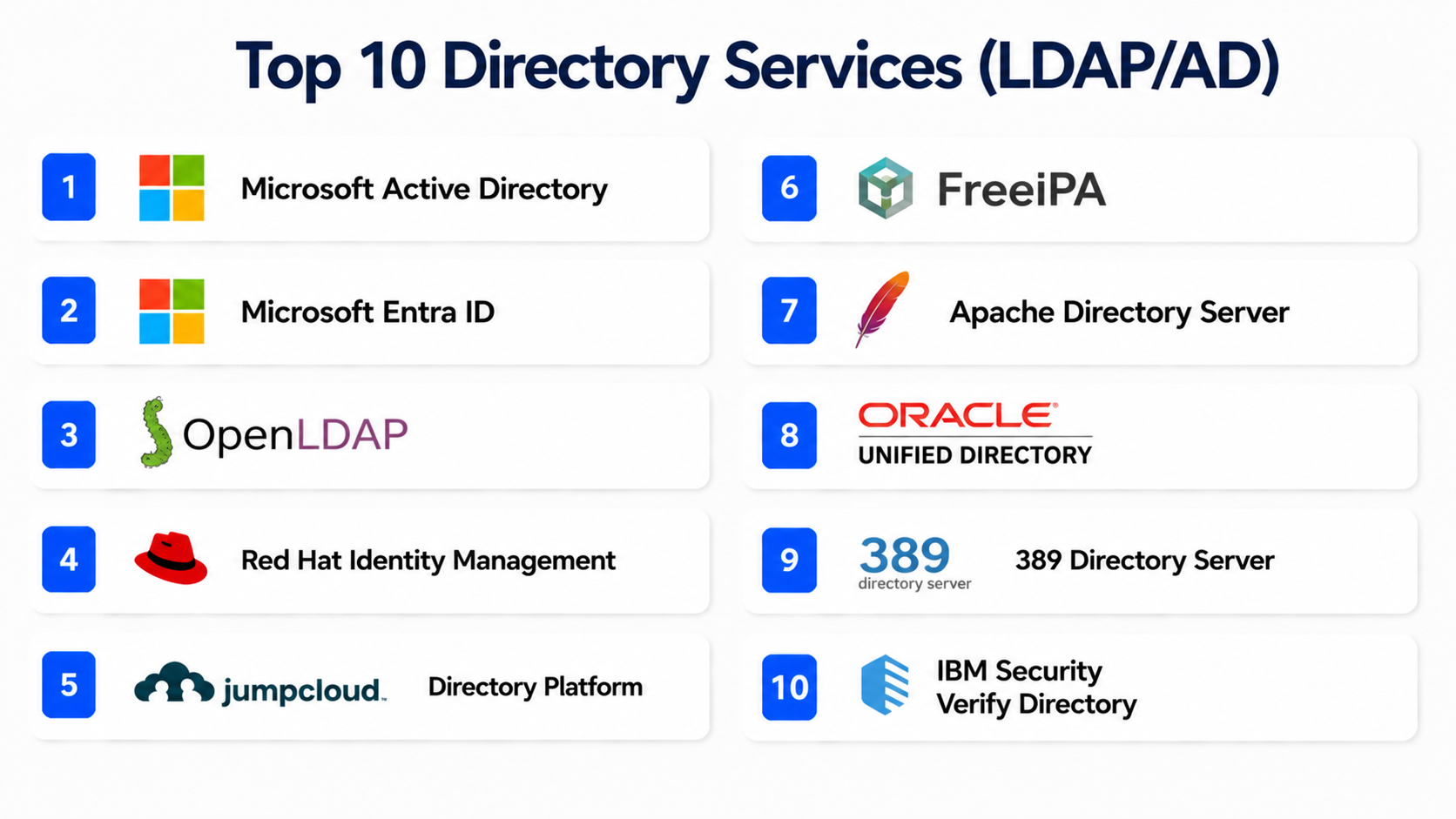
#1 — Microsoft Active Directory
Short description :
Microsoft Active Directory is one of the most widely used enterprise directory services platforms for centralized authentication, identity management, and policy administration. AD enables organizations to manage users, devices, groups, permissions, and enterprise resources across Windows-centric and hybrid environments. It remains a foundational identity platform for many enterprise infrastructures.
Key Features
- LDAP and Kerberos authentication
- Group Policy management
- Domain-based identity administration
- Hybrid identity support
- Organizational unit management
- Centralized access control
- Windows ecosystem integration
Pros
- Mature enterprise identity ecosystem
- Broad compatibility with enterprise infrastructure
- Strong policy management capabilities
Cons
- Windows-centric architecture
- Legacy management complexity
- Hybrid modernization may require additional services
Platforms / Deployment
- Windows
- Self-hosted / Hybrid
Security & Compliance
- RBAC
- Audit logs
- Group policy enforcement
- MFA support through integrations
- Compliance visibility
Integrations & Ecosystem
Active Directory integrates into extensive enterprise ecosystems.
- Microsoft 365
- Entra ID
- Endpoint management platforms
- Enterprise applications
- VPN systems
- Security tools
Support & Community
Microsoft provides extensive documentation, enterprise support programs, certifications, and global community resources.
#2 — Microsoft Entra ID
Short description :
Microsoft Entra ID, formerly Azure Active Directory, is a cloud-based directory and identity management platform designed for hybrid and cloud-first environments. The platform provides authentication, identity governance, conditional access, and SaaS federation capabilities for modern enterprise infrastructures.
Key Features
- Cloud directory services
- Hybrid identity synchronization
- Conditional access policies
- Passwordless authentication
- SaaS federation support
- Identity governance
- Risk-based authentication
Pros
- Strong Microsoft ecosystem integration
- Mature cloud identity capabilities
- Scalable enterprise deployment
Cons
- Licensing complexity for advanced features
- Best experience in Microsoft-centric environments
- Advanced policy configuration may require expertise
Platforms / Deployment
- Web / Windows / macOS / Linux / iOS / Android
- Cloud / Hybrid
Security & Compliance
- MFA
- SSO/SAML
- Audit logs
- RBAC
- Conditional access controls
- Compliance support
Integrations & Ecosystem
Microsoft Entra integrates into cloud and enterprise ecosystems.
- Microsoft 365
- SaaS applications
- Endpoint Manager
- SIEM platforms
- HR systems
- Cloud providers
Support & Community
Microsoft offers enterprise onboarding, technical documentation, training resources, and support services.
#3 — OpenLDAP
Short description :
OpenLDAP is a widely adopted open-source LDAP directory service platform used for centralized authentication and directory management. It is commonly deployed in Linux-based infrastructures and highly customized enterprise identity environments requiring flexible LDAP functionality.
Key Features
- LDAP protocol support
- Open-source architecture
- Flexible schema customization
- Replication support
- Authentication services
- Access control policies
- Cross-platform compatibility
Pros
- Highly customizable
- Open-source flexibility
- Strong Linux ecosystem compatibility
Cons
- Steeper administration learning curve
- Limited built-in enterprise UI tools
- Advanced deployments require expertise
Platforms / Deployment
- Linux / Unix
- Self-hosted
Security & Compliance
- LDAP authentication
- Access control policies
- Encryption support
- Audit logging varies by deployment
Integrations & Ecosystem
OpenLDAP integrates into open-source and enterprise infrastructures.
- Linux authentication systems
- PAM
- SSO platforms
- VPN services
- Enterprise applications
- Identity providers
Support & Community
OpenLDAP benefits from a strong open-source community, documentation resources, and third-party support providers.
#4 — Red Hat Identity Management (IdM)
Short description :
Red Hat Identity Management is an integrated identity and authentication platform designed for Linux-centric enterprise environments. It combines LDAP, Kerberos, DNS, certificate management, and policy administration into a centralized identity solution.
Key Features
- LDAP directory services
- Kerberos authentication
- Centralized policy management
- Certificate management
- Linux identity federation
- DNS integration
- Role-based access controls
Pros
- Strong Linux ecosystem integration
- Centralized authentication management
- Enterprise-grade Linux identity controls
Cons
- Linux-focused deployment
- Smaller Windows ecosystem compatibility
- Advanced deployments require expertise
Platforms / Deployment
- Linux
- Self-hosted / Hybrid
Security & Compliance
- RBAC
- Kerberos authentication
- Audit logs
- Encryption support
- Certificate-based security
Integrations & Ecosystem
Red Hat IdM integrates into enterprise Linux ecosystems.
- Red Hat Enterprise Linux
- Ansible
- OpenShift
- SSO platforms
- Enterprise Linux applications
- Certificate services
Support & Community
Red Hat provides enterprise support subscriptions, documentation, training, and consulting services.
#5 — JumpCloud Directory Platform
Short description :
JumpCloud is a cloud-native directory service platform that combines LDAP functionality, SSO, device management, and identity governance into a unified cloud platform. It is particularly popular among SMBs and cloud-first organizations.
Key Features
- Cloud directory services
- LDAP-as-a-Service
- Device management
- Passwordless authentication
- Cross-platform identity support
- Conditional access
- Centralized user management
Pros
- Cloud-native simplicity
- Strong cross-platform support
- Good SMB and mid-market fit
Cons
- Enterprise governance depth varies
- Some advanced legacy integrations differ
- Large-scale deployments may require tuning
Platforms / Deployment
- Web / Windows / macOS / Linux / iOS / Android
- Cloud
Security & Compliance
- MFA
- SSO/SAML
- RBAC
- Audit logs
- Device trust policies
Integrations & Ecosystem
JumpCloud integrates into cloud and SaaS ecosystems.
- Google Workspace
- Microsoft 365
- AWS
- HR systems
- Endpoint tools
- SaaS applications
Support & Community
JumpCloud provides onboarding resources, documentation, community support, and technical assistance.
#6 — FreeIPA
Short description :
FreeIPA is an open-source identity management platform for Linux and Unix environments that combines LDAP, Kerberos, DNS, certificate services, and policy management. It is commonly used for centralized Linux authentication.
Key Features
- LDAP authentication
- Kerberos integration
- DNS management
- Certificate services
- Policy enforcement
- Linux identity federation
- Open-source administration
Pros
- Strong Linux identity capabilities
- Open-source flexibility
- Integrated authentication services
Cons
- Linux-centric deployment
- Smaller enterprise ecosystem
- Advanced management complexity
Platforms / Deployment
- Linux
- Self-hosted
Security & Compliance
- Kerberos authentication
- Encryption support
- Access controls
- Audit logging
Integrations & Ecosystem
FreeIPA integrates into Linux administration ecosystems.
- Linux systems
- Enterprise applications
- SSO platforms
- Certificate services
- Open-source infrastructure
- Authentication frameworks
Support & Community
FreeIPA has strong open-source community documentation and Linux ecosystem support.
#7 — Apache Directory Server
Short description :
Apache Directory Server is an open-source LDAP and directory service platform designed for centralized identity and authentication management. The platform supports LDAP and Kerberos-based authentication workflows.
Key Features
- LDAP directory services
- Kerberos support
- Open-source architecture
- Directory replication
- Access controls
- Java-based deployment
- Schema extensibility
Pros
- Open-source flexibility
- LDAP standards support
- Good developer customization
Cons
- Smaller ecosystem adoption
- Enterprise tooling maturity varies
- Advanced administration may require expertise
Platforms / Deployment
- Windows / Linux / macOS
- Self-hosted
Security & Compliance
- LDAP authentication
- Access controls
- Encryption support
- Audit logging varies
Integrations & Ecosystem
Apache Directory Server integrates into Java and LDAP ecosystems.
- Enterprise Java applications
- SSO platforms
- Authentication services
- Open-source infrastructure
- LDAP clients
- Identity systems
Support & Community
Apache provides open-source documentation and community-driven support resources.
#8 — Oracle Unified Directory
Short description :
Oracle Unified Directory is an enterprise-grade LDAP directory service platform designed for high-scale authentication and identity management environments. It supports enterprise federation, large-scale replication, and hybrid identity architectures.
Key Features
- Enterprise LDAP services
- High-availability replication
- Hybrid identity support
- Large-scale user management
- Access control policies
- Identity synchronization
- Directory virtualization
Pros
- Enterprise scalability
- Strong Oracle ecosystem integration
- High-performance directory services
Cons
- Enterprise-focused complexity
- Premium licensing structure
- Smaller SMB focus
Platforms / Deployment
- Windows / Linux / Unix
- Self-hosted / Hybrid
Security & Compliance
- RBAC
- Audit logs
- LDAP security controls
- Encryption support
- Compliance visibility
Integrations & Ecosystem
Oracle Unified Directory integrates into enterprise identity ecosystems.
- Oracle enterprise software
- IAM platforms
- Enterprise applications
- Cloud services
- Identity federation systems
- Security tools
Support & Community
Oracle provides enterprise support programs, documentation, and professional services.
#9 — 389 Directory Server
Short description :
389 Directory Server is an open-source LDAP server designed for enterprise identity management and authentication services. The platform focuses on scalability, replication, and Linux-based identity infrastructures.
Key Features
- LDAP directory services
- Replication support
- Access control policies
- High-performance authentication
- Schema management
- Open-source architecture
- Linux ecosystem support
Pros
- Strong Linux compatibility
- Open-source flexibility
- Good scalability capabilities
Cons
- Limited enterprise UI tooling
- Linux-focused deployment
- Smaller commercial ecosystem
Platforms / Deployment
- Linux
- Self-hosted
Security & Compliance
- LDAP authentication
- Access controls
- Encryption support
- Audit logging
Integrations & Ecosystem
389 Directory Server integrates into Linux and authentication ecosystems.
- Linux authentication services
- Enterprise applications
- SSO platforms
- Open-source identity tools
- PAM
- Authentication frameworks
Support & Community
389 Directory Server benefits from open-source documentation and Linux community support.
#10 — IBM Security Verify Directory
Short description :
IBM Security Verify Directory is an enterprise LDAP directory platform focused on centralized identity management, authentication, and high-scale directory services. The platform supports enterprise federation and hybrid identity architectures.
Key Features
- LDAP directory services
- Enterprise identity federation
- High-scale authentication
- Replication and synchronization
- Hybrid identity management
- Policy enforcement
- Access governance
Pros
- Enterprise-grade scalability
- Strong hybrid identity support
- Mature authentication capabilities
Cons
- Enterprise deployment complexity
- Premium enterprise pricing
- Smaller SMB focus
Platforms /Deployment
- Windows / Linux / Unix
- Self-hosted / Hybrid
Security & Compliance
- RBAC
- Audit logs
- LDAP security controls
- Encryption support
- Compliance-oriented features
Integrations & Ecosystem
IBM Security Verify Directory integrates into enterprise identity ecosystems.
- IBM security platforms
- Enterprise applications
- IAM systems
- Hybrid cloud environments
- SIEM tools
- Authentication frameworks
Support & Community
IBM provides enterprise onboarding, consulting services, documentation, and technical support programs.
Comparison Table (Top 10)
| Tool Name | Best For | Platform(s) Supported | Deployment | Standout Feature | Public Rating |
|---|---|---|---|---|---|
| Microsoft Active Directory | Enterprise Windows environments | Windows | Hybrid | Group Policy management | N/A |
| Microsoft Entra ID | Cloud and hybrid identity | Multi-platform | Hybrid | Conditional access controls | N/A |
| OpenLDAP | Custom Linux identity systems | Linux/Unix | Self-hosted | Open-source LDAP flexibility | N/A |
| Red Hat Identity Management | Linux enterprise identity | Linux | Hybrid | Integrated Linux authentication | N/A |
| JumpCloud Directory Platform | Cloud-first SMB identity | Multi-platform | Cloud | LDAP plus device management | N/A |
| FreeIPA | Linux authentication management | Linux | Self-hosted | Open-source identity federation | N/A |
| Apache Directory Server | LDAP development environments | Multi-platform | Self-hosted | Java-based LDAP services | N/A |
| Oracle Unified Directory | Enterprise-scale LDAP environments | Windows/Linux/Unix | Hybrid | High-scale replication | N/A |
| 389 Directory Server | Linux LDAP deployments | Linux | Self-hosted | Scalable open-source LDAP | N/A |
| IBM Security Verify Directory | Enterprise hybrid identity | Windows/Linux/Unix | Hybrid | Enterprise federation | N/A |
Evaluation & Directory Services (LDAP/AD)
| Tool Name | Core (25%) | Ease (15%) | Integrations (15%) | Security (10%) | Performance (10%) | Support (10%) | Value (15%) | Weighted Total (0–10) |
|---|---|---|---|---|---|---|---|---|
| Microsoft Active Directory | 10 | 7 | 10 | 9 | 9 | 9 | 8 | 8.9 |
| Microsoft Entra ID | 9 | 8 | 9 | 9 | 8 | 8 | 8 | 8.5 |
| OpenLDAP | 8 | 5 | 7 | 7 | 8 | 7 | 9 | 7.4 |
| Red Hat Identity Management | 8 | 6 | 8 | 8 | 8 | 8 | 7 | 7.7 |
| JumpCloud Directory Platform | 8 | 9 | 8 | 8 | 8 | 8 | 8 | 8.2 |
| FreeIPA | 8 | 5 | 7 | 8 | 8 | 7 | 9 | 7.5 |
| Apache Directory Server | 7 | 5 | 6 | 7 | 7 | 6 | 8 | 6.7 |
| Oracle Unified Directory | 9 | 6 | 8 | 8 | 9 | 8 | 6 | 7.8 |
| 389 Directory Server | 7 | 5 | 6 | 7 | 8 | 6 | 8 | 6.9 |
| IBM Security Verify Directory | 9 | 6 | 8 | 9 | 9 | 8 | 6 | 8.0 |
These scores are comparative and intended to help organizations evaluate trade-offs between traditional enterprise identity management, cloud-native directory services, open-source flexibility, and operational simplicity. Enterprise platforms generally provide deeper governance and hybrid identity support, while open-source solutions often emphasize flexibility and cost efficiency. Buyers should prioritize tools aligned with their infrastructure strategy, compliance requirements, and internal administration expertise.
Which Directory Services (LDAP/AD)
Solo / Freelancer
Individual users and very small teams may not require enterprise-grade directory services unless managing centralized authentication across multiple systems.
SMB
SMBs commonly benefit from JumpCloud or Microsoft Entra ID because of cloud-native deployment and simplified administration.
Mid-Market
Mid-market organizations should evaluate Microsoft Active Directory, Red Hat Identity Management, and JumpCloud for balanced scalability and identity governance.
Enterprise
Large enterprises often require hybrid identity synchronization, advanced governance, and large-scale authentication management. Microsoft Active Directory, Microsoft Entra ID, Oracle Unified Directory, and IBM Security Verify Directory are strong enterprise choices.
Budget vs Premium
Open-source solutions like OpenLDAP, FreeIPA, and 389 Directory Server provide cost-efficient identity infrastructure, while enterprise platforms justify higher costs with governance, scalability, and operational tooling.
Feature Depth vs Ease of Use
Microsoft and Oracle platforms provide deeper enterprise functionality, while JumpCloud emphasizes usability and cloud-native simplicity.
Integrations & Scalability
Organizations with hybrid infrastructure should prioritize platforms with strong SaaS federation, API integrations, endpoint management compatibility, and synchronization capabilities.
Security & Compliance Needs
Regulated industries should prioritize MFA support, audit logging, RBAC, encryption, conditional access controls, and identity governance functionality.
Frequently Asked Questions (FAQs)
1. What are Directory Services?
Directory Services are centralized systems that manage users, devices, authentication, permissions, and network resources across an organization.
2. What is LDAP?
LDAP stands for Lightweight Directory Access Protocol, which is a protocol used for accessing and managing directory information services.
3. What is Active Directory?
Active Directory is Microsoft’s enterprise directory service platform used for centralized authentication and policy management.
4. Why are Directory Services important in 2026?
Modern organizations require centralized identity management across hybrid infrastructure, cloud applications, remote workforces, and Zero Trust environments.
5. What is hybrid identity management?
Hybrid identity management connects on-premises directory infrastructure with cloud-based identity services and SaaS applications.
6. Are open-source LDAP platforms still relevant?
Yes. Open-source LDAP platforms remain widely used in Linux environments, customized enterprise deployments, and cost-sensitive infrastructures.
7. What security features are common in modern directory platforms?
Common features include MFA, RBAC, audit logging, conditional access controls, passwordless authentication, and encryption.
8. Can Directory Services integrate with SaaS applications?
Yes. Modern platforms support federation protocols like SAML and OAuth for SaaS authentication integration.
9. How difficult is deployment?
Deployment complexity depends on infrastructure size, hybrid requirements, operating systems, and governance policies. Cloud-native platforms are typically easier to deploy.
10. What is the difference between LDAP and SSO?
LDAP is a directory protocol for managing identity information, while SSO allows users to authenticate once and access multiple applications without repeated logins.
Conclusion
Directory Services platforms remain foundational identity infrastructure for organizations managing authentication, authorization, device policies, and user governance across increasingly complex hybrid environments. While traditional LDAP and Active Directory technologies continue powering enterprise authentication systems worldwide, modern directory platforms have evolved significantly to support cloud-native architectures, SaaS federation, Zero Trust security models, passwordless authentication, and distributed workforce management. Identity has become the new security perimeter, making centralized directory management more critical than ever.
