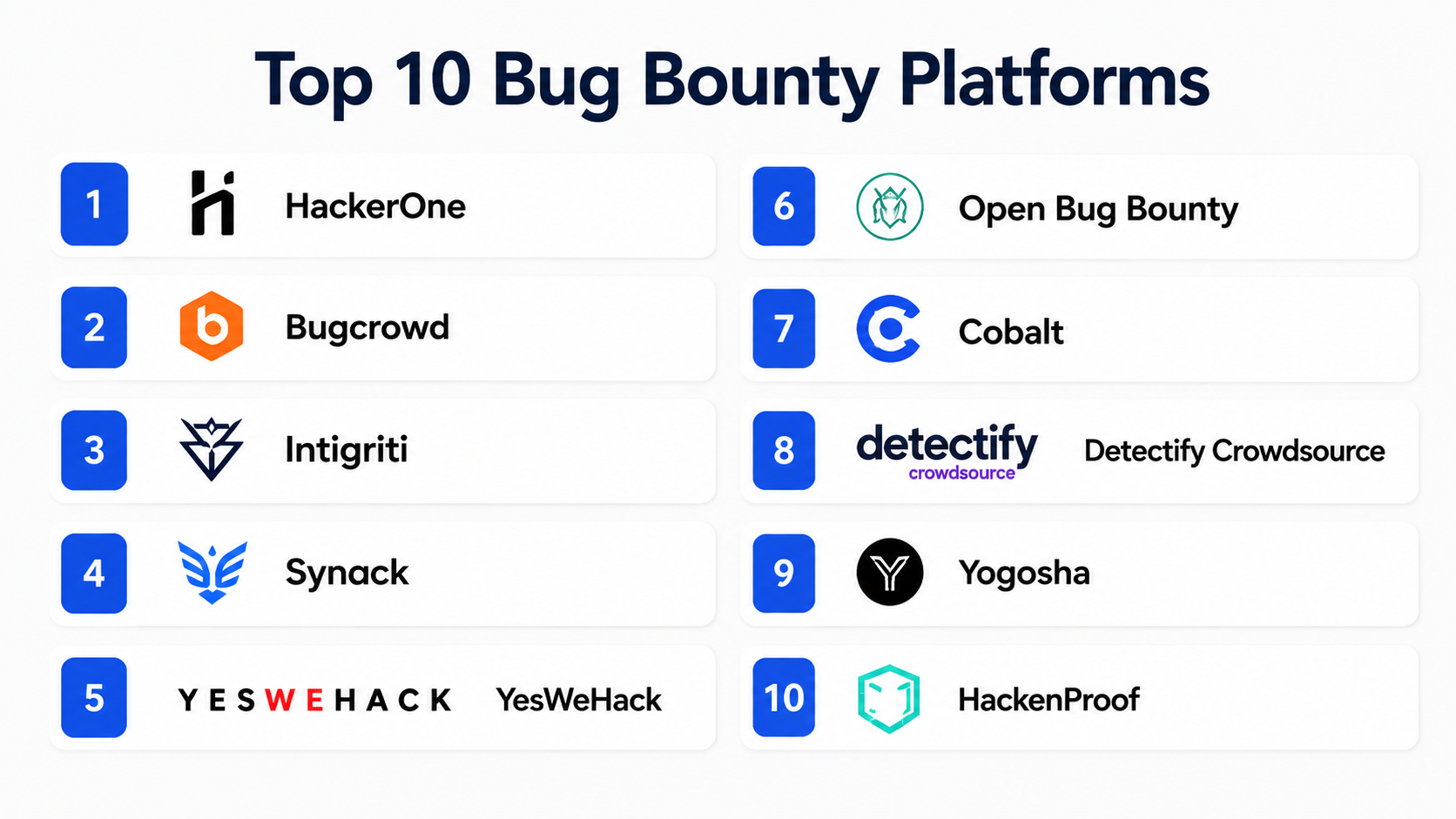
Introduction
Bug Bounty Platforms help organizations identify security vulnerabilities by allowing ethical hackers and security researchers to test applications, APIs, infrastructure, mobile apps, and cloud environments in exchange for rewards or recognition. These platforms provide structured vulnerability disclosure workflows, researcher management, triage services, reporting systems, and program governance capabilities that help organizations scale crowdsourced security testing safely and efficiently.
In bug bounty programs have become a core component of modern cybersecurity strategies. Organizations increasingly operate cloud-native applications, APIs, AI-powered services, mobile ecosystems, and distributed infrastructures that traditional security testing alone cannot fully cover. Bug bounty platforms enable continuous external security testing by leveraging global researcher communities with diverse skill sets and attack perspectives. Modern platforms now include AI-assisted triage, attack surface discovery, automated validation workflows, and compliance-oriented governance features.
Common real-world use cases include:
- Continuous external security testing for web applications and APIs
- Coordinated vulnerability disclosure programs
- Crowdsourced penetration testing initiatives
- Cloud and infrastructure security assessments
- Mobile application and IoT security testing
When evaluating bug bounty platforms, buyers should consider:
- Researcher community quality and scale
- Vulnerability triage accuracy
- Program management capabilities
- Compliance and legal governance support
- API and cloud-native testing support
- AI-assisted prioritization workflows
- Reporting and analytics capabilities
- Integration with DevSecOps workflows
- Managed versus self-managed program options
- Pricing and reward management flexibility
Best for: Enterprises, SaaS companies, fintech organizations, government agencies, cloud-native businesses, healthcare providers, and security-conscious organizations seeking continuous external security testing.
Not ideal for: Extremely small organizations without mature remediation workflows, businesses unwilling to engage external researchers, or environments with strict operational limitations that prohibit external testing.
Key Trends in Bug Bounty Platforms
- AI-assisted vulnerability triage is improving report validation speed.
- Attack surface discovery is becoming tightly integrated into bounty platforms.
- API security testing programs are growing rapidly.
- Private bug bounty programs are increasingly common among enterprises.
- Managed triage services are reducing operational overhead for security teams.
- Cloud-native and Kubernetes security testing support is expanding.
- Compliance-focused vulnerability disclosure programs are becoming standard.
- Researcher reputation scoring and fraud detection are improving.
- Continuous security validation models are replacing periodic testing cycles.
- Integration with DevSecOps and SIEM ecosystems is expanding significantly.
How We Selected These Tools (Methodology)
The platforms in this list were selected using a balanced evaluation framework focused on researcher quality, platform maturity, enterprise adoption, and operational capabilities.
Selection criteria included:
- Market adoption and industry reputation
- Researcher community size and quality
- Vulnerability triage capabilities
- Program governance and compliance features
- Cloud-native and API testing support
- Managed services availability
- Reporting and analytics quality
- DevSecOps integration maturity
- Scalability across enterprise environments
- Documentation, support quality, and ecosystem strength
Bug Bounty Platforms
#1 — HackerOne
Short description :
HackerOne is one of the largest and most widely recognized bug bounty and vulnerability disclosure platforms globally. It connects organizations with a large community of ethical hackers for continuous security testing across applications, APIs, cloud environments, and infrastructure. The platform offers managed triage, vulnerability coordination, analytics, and governance features designed for enterprise-scale security programs.
Key Features
- Public and private bug bounty programs
- Vulnerability disclosure management
- Managed triage services
- Researcher reputation scoring
- Attack surface visibility
- API and cloud security testing
- Advanced analytics and reporting
Pros
- Large global researcher community
- Mature enterprise governance capabilities
- Strong managed services support
Cons
- Premium enterprise pricing
- High report volumes may require operational maturity
- Advanced customization varies
Platforms / Deployment
- Web
- Cloud
Security & Compliance
- SSO/SAML
- MFA
- RBAC
- Audit logs
- Compliance-oriented reporting
Integrations & Ecosystem
HackerOne integrates into enterprise security and DevSecOps environments.
- Jira
- ServiceNow
- GitHub
- Slack
- SIEM platforms
- CI/CD systems
Support & Community
HackerOne provides enterprise onboarding, managed triage services, extensive documentation, and a very large researcher ecosystem.
#2 — Bugcrowd
Short description :
Bugcrowd is a leading crowdsourced cybersecurity platform offering bug bounty programs, penetration testing, attack surface management, and vulnerability disclosure workflows. The platform focuses heavily on enterprise governance, managed services, and scalable security testing operations. Bugcrowd is commonly used by enterprises and regulated industries requiring structured researcher engagement.
Key Features
- Public and private bug bounty programs
- Vulnerability disclosure programs
- Managed triage
- Attack surface intelligence
- Penetration testing services
- AI-assisted vulnerability prioritization
- Compliance reporting
Pros
- Strong managed security services
- Mature enterprise workflows
- Broad security testing coverage
Cons
- Enterprise-focused pricing
- Operational complexity for large programs
- Advanced governance may require training
Platforms / Deployment
- Web
- Cloud
Security & Compliance
- SSO/SAML
- MFA
- RBAC
- Audit logging
- Compliance support
Integrations & Ecosystem
Bugcrowd integrates into enterprise security ecosystems.
- Jira
- ServiceNow
- SIEM systems
- Slack
- GitHub
- DevSecOps workflows
Support & Community
Bugcrowd offers enterprise onboarding, managed services, technical support, and active researcher engagement programs.
#3 — Intigriti
Short description :
Intigriti is a European-based bug bounty and vulnerability disclosure platform focused on secure researcher collaboration and enterprise governance. The platform supports public and private programs while emphasizing compliance, researcher quality, and streamlined remediation workflows. Intigriti is particularly popular among organizations operating in Europe and regulated sectors.
Key Features
- Bug bounty management
- Vulnerability disclosure workflows
- Researcher vetting
- Managed triage services
- Compliance-focused governance
- Reporting and analytics
- API security testing support
Pros
- Strong compliance orientation
- High-quality researcher community
- Good enterprise governance controls
Cons
- Smaller global footprint compared to larger competitors
- Limited ecosystem breadth in some regions
- Enterprise pricing structure
Platforms / Deployment
- Web
- Cloud
Security & Compliance
- SSO/SAML
- MFA
- RBAC
- Audit logs
- GDPR-oriented controls
Integrations & Ecosystem
Intigriti integrates into enterprise vulnerability management workflows.
- Jira
- Slack
- SIEM systems
- GitHub
- Ticketing platforms
- DevSecOps tools
Support & Community
Intigriti provides onboarding support, technical guidance, and active researcher management resources.
#4 — Synack
Short description :
Synack combines crowdsourced security testing with a vetted researcher network and AI-assisted security analytics. Unlike fully open bug bounty platforms, Synack operates a highly curated researcher model focused on enterprise and government-grade security testing. The platform is commonly used in highly regulated industries requiring strict governance and trusted testing environments.
Key Features
- Curated researcher network
- Continuous security testing
- Penetration testing workflows
- AI-assisted analytics
- Vulnerability management
- Compliance-focused reporting
- Attack surface visibility
Pros
- Highly vetted researcher community
- Strong enterprise governance
- Good fit for regulated industries
Cons
- Premium pricing structure
- Smaller researcher pool than open platforms
- Less flexibility for fully public programs
Platforms / Deployment
- Web
- Cloud
Security & Compliance
- SSO/SAML
- MFA
- RBAC
- Audit logging
- Compliance-oriented governance
Integrations & Ecosystem
Synack integrates into enterprise security operations environments.
- Jira
- ServiceNow
- SIEM systems
- Slack
- Security orchestration tools
Support & Community
Synack provides enterprise onboarding, managed services, and technical support programs.
#5 — YesWeHack
Short description :
YesWeHack is a bug bounty and vulnerability disclosure platform offering crowdsourced security testing across web applications, APIs, mobile applications, and infrastructure environments. The platform focuses on flexible program management, compliance support, and strong European market presence. It supports both public and private testing programs.
Key Features
- Public and private bug bounty programs
- Vulnerability disclosure workflows
- Managed triage
- API and mobile application testing
- Compliance reporting
- Researcher management
- Analytics dashboards
Pros
- Strong European presence
- Flexible program configurations
- Good researcher engagement
Cons
- Smaller researcher ecosystem than leading competitors
- Enterprise pricing varies
- Regional ecosystem strength differs globally
Platforms / Deployment
- Web
- Cloud
Security & Compliance
- SSO/SAML
- MFA
- RBAC
- GDPR-oriented controls
- Audit logs
Integrations & Ecosystem
YesWeHack integrates into vulnerability management and DevSecOps environments.
- Jira
- GitHub
- Slack
- SIEM systems
- Ticketing platforms
Support & Community
YesWeHack provides onboarding support, managed services, and active researcher community engagement.
#6 — Open Bug Bounty
Short description :
Open Bug Bounty is an open vulnerability disclosure platform focused primarily on web application security issues. It enables ethical hackers to responsibly disclose vulnerabilities to organizations without requiring formal bounty programs. The platform is widely used for coordinated vulnerability disclosure and basic crowdsourced security collaboration.
Key Features
- Coordinated vulnerability disclosure
- Web vulnerability reporting
- Researcher communication workflows
- Public disclosure management
- Vulnerability tracking
- Open reporting model
- Community-driven ecosystem
Pros
- Free participation model
- Accessible for smaller organizations
- Large open disclosure ecosystem
Cons
- Limited enterprise governance features
- Managed services are minimal
- Advanced analytics capabilities are limited
Platforms / Deployment
- Web
- Cloud
Security & Compliance
- Basic account security controls
- Audit capabilities vary
- Compliance tooling is limited
Integrations & Ecosystem
Open Bug Bounty focuses primarily on vulnerability disclosure workflows.
- Email notification systems
- Vulnerability tracking integrations vary
- Basic reporting capabilities
Support & Community
Open Bug Bounty relies heavily on community-driven collaboration and public disclosure processes.
#7 — Cobalt
Short description :
Cobalt combines crowdsourced penetration testing with structured vulnerability management and remediation workflows. The platform focuses heavily on Penetration Testing as a Service (PTaaS) and enterprise collaboration capabilities. Cobalt is commonly used by organizations seeking more structured testing engagements alongside bug bounty-style workflows.
Key Features
- PTaaS workflows
- Crowdsourced penetration testing
- Vulnerability management
- Real-time collaboration
- Compliance reporting
- API security testing
- DevSecOps integrations
Pros
- Strong PTaaS capabilities
- Structured remediation workflows
- Good enterprise collaboration features
Cons
- Less focused on large public bounty ecosystems
- Enterprise pricing structure
- Researcher availability may vary
Platforms / Deployment
- Web
- Cloud
Security & Compliance
- SSO/SAML
- MFA
- RBAC
- Audit logs
- Compliance reporting
Integrations & Ecosystem
Cobalt integrates into enterprise remediation and DevSecOps workflows.
- Jira
- Slack
- GitHub
- CI/CD systems
- Ticketing platforms
Support & Community
Cobalt provides onboarding services, managed support, and penetration testing coordination assistance.
#8 — Detectify Crowdsource
Short description :
Detectify Crowdsource combines automated web application scanning with crowdsourced vulnerability research contributed by ethical hackers. The platform emphasizes continuous external attack surface monitoring and automated remediation workflows. Detectify is commonly adopted by organizations seeking a balance between automation and human-driven testing.
Key Features
- Crowdsourced vulnerability intelligence
- Automated web application scanning
- External attack surface monitoring
- Continuous security validation
- API testing support
- Risk prioritization
- Compliance reporting
Pros
- Strong automation workflows
- Good external attack surface visibility
- Continuous scanning capabilities
Cons
- Smaller bounty ecosystem
- Limited enterprise governance depth
- Managed services vary
Platforms / Deployment
- Web
- Cloud
Security & Compliance
- SSO/SAML
- MFA
- RBAC
- Audit support
- Compliance-oriented reporting
Integrations & Ecosystem
Detectify integrates into cloud-native and DevSecOps environments.
- GitHub
- Slack
- Jira
- SIEM systems
- CI/CD platforms
Support & Community
Detectify provides technical support, onboarding guidance, and active security research collaboration.
#9 — Yogosha
Short description :
Yogosha is a European crowdsourced cybersecurity platform focused on bug bounty programs, vulnerability disclosure, and managed penetration testing services. The platform emphasizes compliance-oriented workflows, researcher vetting, and enterprise-grade collaboration features.
Key Features
- Bug bounty management
- Vulnerability disclosure workflows
- Managed penetration testing
- Researcher vetting
- Compliance reporting
- Analytics dashboards
- API security testing support
Pros
- Strong compliance orientation
- Good managed testing workflows
- Enterprise collaboration features
Cons
- Smaller global market presence
- Limited ecosystem scale
- Researcher pool smaller than top competitors
Platforms / Deployment
- Web
- Cloud
Security & Compliance
- SSO/SAML
- MFA
- RBAC
- Audit logs
- GDPR-oriented governance
Integrations & Ecosystem
Yogosha integrates into enterprise vulnerability management environments.
- Jira
- Slack
- Ticketing systems
- SIEM platforms
- DevSecOps workflows
Support & Community
Yogosha provides onboarding services, managed support, and enterprise-focused customer engagement.
#10 — HackenProof
Short description :
HackenProof is a bug bounty and crowdsourced security testing platform focused on web applications, blockchain projects, APIs, and cloud infrastructure security. The platform supports both public and private testing programs while emphasizing flexible engagement workflows and vulnerability management visibility.
Key Features
- Bug bounty management
- Blockchain security testing
- API security testing
- Vulnerability disclosure workflows
- Researcher collaboration
- Compliance reporting
- Analytics dashboards
Pros
- Strong blockchain security specialization
- Flexible program structures
- Growing researcher ecosystem
Cons
- Smaller enterprise ecosystem
- Governance depth lighter than larger competitors
- Managed services vary by engagement
Platforms / Deployment
- Web
- Cloud
Security & Compliance
- RBAC
- MFA
- Audit logs
- Compliance support varies
Integrations & Ecosystem
HackenProof integrates into vulnerability management and collaboration workflows.
- Jira
- Slack
- GitHub
- Ticketing systems
- Security operations platforms
Support & Community
HackenProof provides onboarding support, documentation, and active researcher engagement initiatives.
Comparison Table (Top 10)
| Tool Name | Best For | Platform(s) Supported | Deployment | Standout Feature | Public Rating |
|---|---|---|---|---|---|
| HackerOne | Enterprise bug bounty programs | Web | Cloud | Large global researcher community | N/A |
| Bugcrowd | Managed crowdsourced security | Web | Cloud | Strong managed services | N/A |
| Intigriti | Compliance-focused European programs | Web | Cloud | GDPR-oriented governance | N/A |
| Synack | Highly regulated industries | Web | Cloud | Curated researcher network | N/A |
| YesWeHack | Flexible enterprise programs | Web | Cloud | European market strength | N/A |
| Open Bug Bounty | Open vulnerability disclosure | Web | Cloud | Free disclosure ecosystem | N/A |
| Cobalt | PTaaS and remediation workflows | Web | Cloud | Structured PTaaS platform | N/A |
| Detectify Crowdsource | Automated external monitoring | Web | Cloud | Combined automation and crowdsourcing | N/A |
| Yogosha | Enterprise compliance workflows | Web | Cloud | Managed security collaboration | N/A |
| HackenProof | Blockchain and API security | Web | Cloud | Blockchain-focused testing | N/A |
Evaluation & Bug Bounty Platforms
| Tool Name | Core (25%) | Ease (15%) | Integrations (15%) | Security (10%) | Performance (10%) | Support (10%) | Value (15%) | Weighted Total (0–10) |
|---|---|---|---|---|---|---|---|---|
| HackerOne | 9 | 8 | 9 | 9 | 8 | 9 | 7 | 8.5 |
| Bugcrowd | 9 | 8 | 8 | 9 | 8 | 9 | 7 | 8.3 |
| Intigriti | 8 | 8 | 7 | 9 | 8 | 8 | 7 | 7.9 |
| Synack | 9 | 7 | 8 | 9 | 8 | 8 | 6 | 7.9 |
| YesWeHack | 8 | 8 | 7 | 8 | 8 | 8 | 7 | 7.8 |
| Open Bug Bounty | 6 | 8 | 5 | 6 | 7 | 6 | 10 | 6.9 |
| Cobalt | 8 | 8 | 8 | 8 | 8 | 8 | 7 | 7.9 |
| Detectify Crowdsource | 7 | 8 | 7 | 8 | 8 | 7 | 8 | 7.6 |
| Yogosha | 7 | 7 | 7 | 8 | 7 | 7 | 7 | 7.1 |
| HackenProof | 7 | 7 | 6 | 7 | 7 | 7 | 7 | 6.9 |
These scores are comparative and designed to help organizations evaluate trade-offs between researcher ecosystem quality, governance capabilities, automation depth, and operational complexity. Enterprise-focused platforms typically provide stronger managed services and compliance support, while smaller or open platforms may emphasize affordability and flexibility. Buyers should align platform selection with their security maturity, remediation workflows, and regulatory requirements.
Which Bug Bounty Platforms
Solo / Freelancer
Independent developers and smaller organizations may benefit from Open Bug Bounty for coordinated disclosure workflows or lightweight testing engagement models.
SMB
SMBs often benefit from Detectify Crowdsource or YesWeHack because of simpler deployment models and manageable operational requirements.
Mid-Market
Mid-market organizations should evaluate Bugcrowd, Cobalt, and Intigriti for stronger governance, structured remediation workflows, and managed services.
Enterprise
Large enterprises often require advanced governance, compliance reporting, managed triage, and curated researcher programs. HackerOne, Bugcrowd, and Synack are strong enterprise-focused choices.
Budget vs Premium
Open disclosure ecosystems provide lower-cost collaboration opportunities, while premium enterprise platforms offer stronger governance, triage automation, and managed services.
Feature Depth vs Ease of Use
HackerOne and Bugcrowd provide extensive enterprise feature depth, while platforms like Detectify Crowdsource focus more heavily on usability and automation.
Integrations & Scalability
Organizations operating mature DevSecOps pipelines should prioritize SIEM, ticketing, CI/CD, and collaboration platform integrations.
Security & Compliance Needs
Highly regulated industries often require audit logs, researcher vetting, compliance reporting, and governance controls. Synack, Intigriti, and HackerOne are particularly strong in these areas.
Frequently Asked Questions (FAQs)
1. What is a bug bounty platform?
A bug bounty platform connects organizations with ethical hackers who identify and responsibly disclose security vulnerabilities in exchange for rewards or recognition.
2. Why are bug bounty programs important in 2026?
Modern applications, APIs, AI systems, and cloud-native infrastructures create large attack surfaces that benefit from continuous external security testing by diverse researchers.
3. What is the difference between public and private bug bounty programs?
Public programs are open to broader researcher communities, while private programs invite selected vetted researchers for controlled testing engagements.
4. Can bug bounty platforms replace penetration testing?
No. Bug bounty programs complement but do not fully replace traditional penetration testing, internal security reviews, or automated security scanning.
5. What industries benefit most from bug bounty platforms?
Financial services, SaaS providers, healthcare organizations, cloud-native businesses, government agencies, and e-commerce platforms benefit heavily from crowdsourced testing.
6. Are bug bounty programs safe for enterprises?
Yes, when managed properly. Modern platforms provide legal frameworks, researcher vetting, scope controls, and coordinated disclosure processes.
7. How are researchers paid?
Researchers are typically rewarded based on vulnerability severity, exploitability, and program-defined payout structures.
8. What integrations are commonly supported?
Most platforms integrate with Jira, ServiceNow, Slack, GitHub, SIEM systems, ticketing tools, and DevSecOps workflows.
9. What is managed triage?
Managed triage services help validate, prioritize, and coordinate vulnerability reports before they reach internal security teams.
10. How difficult is implementation?
Implementation complexity depends on program scope, governance requirements, remediation maturity, and internal security workflows. Managed platforms generally simplify deployment and operations.
Conclusion
Bug Bounty Platforms have evolved into critical components of modern cybersecurity programs. As organizations increasingly depend on APIs, cloud-native applications, AI systems, mobile platforms, and distributed infrastructures, continuous external security testing is essential for identifying vulnerabilities before attackers exploit them. Modern bug bounty platforms now provide far more than vulnerability reporting by offering managed triage, researcher vetting, attack surface visibility, compliance workflows, and DevSecOps integrations.
