Introduction
Cloud Cost Allocation Tools are platforms that help organizations distribute cloud spending accurately across teams, products, services, or business units. Instead of treating cloud bills as a single lump sum, these tools break down usage-based costs into meaningful financial views such as per application, per customer, per environment, or per engineering team.
In cloud environments have become highly complex due to multi-cloud adoption, Kubernetes scaling, AI/ML workloads, and SaaS integration sprawl. Without proper allocation systems, organizations lose visibility into true unit economics and often overspend without accountability.
These tools are a core part of modern FinOps practices and are used for:
- Allocating AWS, Azure, and Google Cloud costs to teams
- Distributing Kubernetes cluster and shared infrastructure costs
- Tracking SaaS and third-party service consumption
- Building product-level cost visibility (cost per feature/customer)
- Supporting chargeback and showback models
- Improving budgeting and forecasting accuracy
- Enabling FinOps-driven optimization decisions
When evaluating cloud cost allocation tools, organizations should consider:
- Accuracy of tagging and rule-based allocation
- Support for multi-cloud environments
- Kubernetes and container cost visibility
- Unit economics (cost per product/customer/workload)
- Real-time vs batch processing capability
- Integration with ERP, FinOps, and ITSM systems
- Handling of shared and untagged costs
- AI-driven anomaly detection and forecasting
- Ease of setup and governance maturity required
- Reporting flexibility for finance and engineering teams
Best for: FinOps teams, cloud engineering teams, SaaS companies, and enterprises with complex multi-cloud or Kubernetes-heavy environments.
Not ideal for: Small teams with single-cloud usage and minimal shared infrastructure complexity.
Key Trends in Cloud Cost Allocation Tools
- Shift toward unit economics (cost per product, API, customer)
- Expansion of AI-driven cost allocation recommendations
- Increasing adoption of virtual tagging and rule-based retroactive allocation
- Kubernetes-native cost allocation becoming standard
- Strong convergence of FinOps + ITFM + SaaS cost governance
- Real-time cost allocation instead of batch processing
- Unified cost visibility across cloud + SaaS + AI workloads
- Growing focus on shared cost splitting models (network, storage, platform layers)
- Integration with data warehouses for advanced financial analytics
- Emergence of automated FinOps agents for optimization and allocation
How We Selected These Tools (Methodology)
- Market adoption across FinOps and cloud financial ecosystems
- Depth and accuracy of cost allocation models
- Multi-cloud and Kubernetes support
- Ability to handle shared and untagged infrastructure costs
- Integration with ERP, ITSM, and FinOps platforms
- Reporting depth and financial governance features
- Scalability for enterprise workloads
- Automation and AI-driven optimization capabilities
- Developer and finance usability balance
- Vendor maturity and ecosystem strength
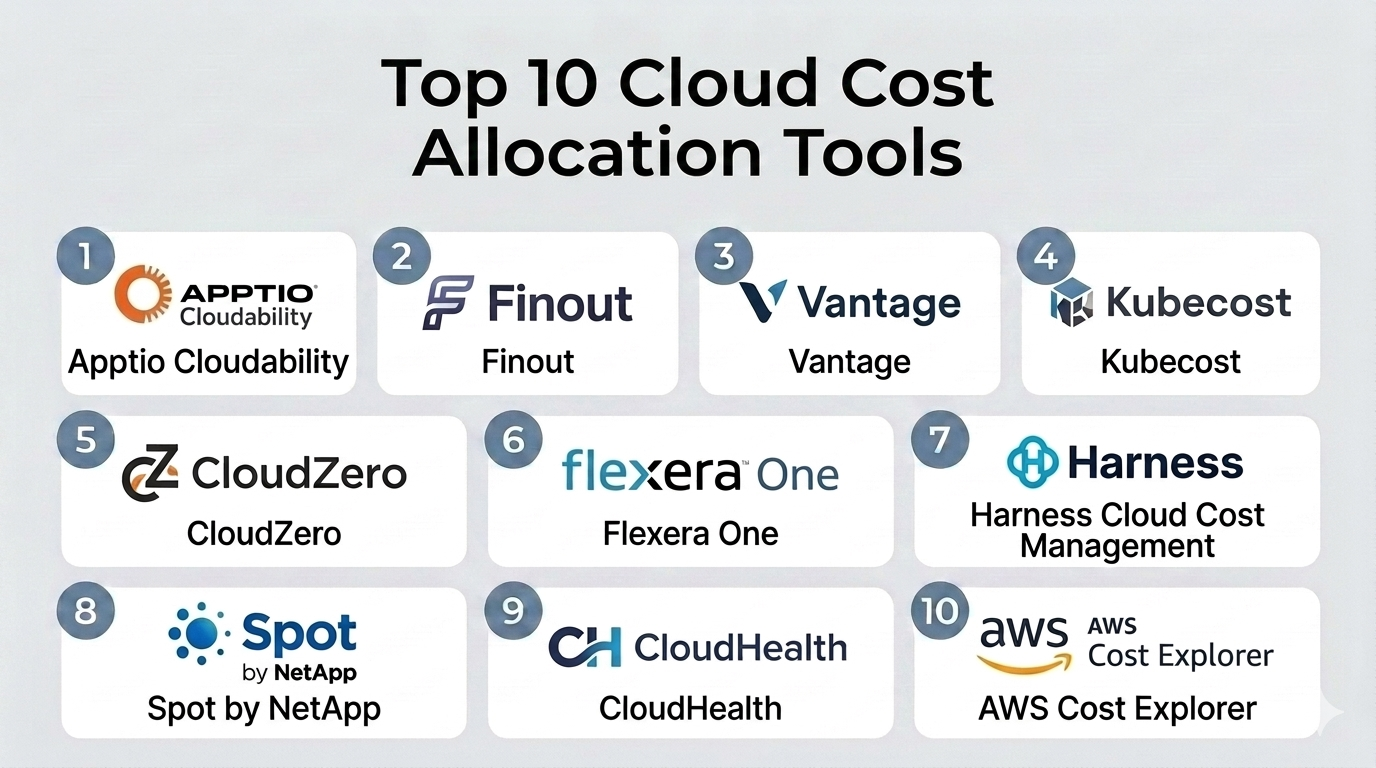
Top 10 Cloud Cost Allocation Tools
#1 — Apptio Cloudability (IBM)
Short description :
Apptio Cloudability is a leading enterprise-grade FinOps and cloud cost allocation platform. It enables organizations to map cloud spending across teams, applications, and services using advanced allocation rules and Technology Business Management (TBM) frameworks. It is widely used in large enterprises to enforce financial accountability and optimize cloud usage.
Key Features
- Advanced multi-cloud cost allocation engine
- TBM-based financial modeling
- Kubernetes cost allocation support
- Unit economics and business mapping
- Budgeting and forecasting tools
- Shared cost distribution models
- Cost anomaly detection and insights
Pros
- Extremely mature enterprise allocation capabilities
- Strong governance and financial transparency
- Deep integration with enterprise systems
Cons
- Complex setup and configuration
- High enterprise cost structure
- Requires strong FinOps maturity
Platforms / Deployment
- Web / Windows / Linux
- Cloud / Hybrid
Security & Compliance
- SSO/SAML
- MFA
- RBAC
- Audit logs
- Encryption
- Enterprise compliance support (varies by deployment)
Integrations & Ecosystem
- AWS, Azure, Google Cloud
- ERP systems (SAP, Oracle)
- ITSM platforms
- Data warehouses and analytics tools
- API-based integrations
Support & Community
Strong enterprise support and FinOps community adoption.
#2 — Finout
Short description :
Finout is a modern cloud cost allocation platform designed to unify multi-cloud and SaaS spending into a single financial layer called the “MegaBill.” It enables flexible allocation rules and is popular among fast-growing SaaS companies and FinOps teams.
Key Features
- Unified “MegaBill” cost aggregation layer
- Virtual tagging for retroactive allocation
- Multi-cloud cost allocation (AWS, Azure, GCP)
- SaaS cost visibility and mapping
- Kubernetes cost allocation support
- Unit economics tracking
- Shared cost splitting engine
Pros
- Excellent cross-platform cost unification
- Flexible allocation without perfect tagging
- Modern UX and fast onboarding
Cons
- Still maturing in enterprise depth
- Requires integration setup effort
- Advanced governance features evolving
Platforms / Deployment
- Web
- Cloud
Security & Compliance
- SSO/SAML
- MFA
- RBAC
- Encryption
- Audit logs
Integrations & Ecosystem
- Cloud providers (AWS, Azure, GCP)
- SaaS platforms
- Kubernetes environments
- Data warehouses
- API integrations
Support & Community
Fast-growing FinOps adoption with strong product support.
#3 — Vantage
Short description :
Vantage is a lightweight and developer-friendly cloud cost allocation tool focused on simplicity, transparency, and fast implementation. It is popular among engineering teams that need quick visibility into cloud spending without enterprise overhead.
Key Features
- Tag-based cost allocation engine
- Multi-cloud support
- Kubernetes cost visibility
- Budget tracking and alerts
- Cost breakdown by service/team
- Anomaly detection
- Simple chargeback dashboards
Pros
- Very easy to adopt and configure
- Clean interface with fast insights
- Strong for engineering-led teams
Cons
- Limited enterprise financial modeling
- Less advanced governance features
- Smaller ecosystem than legacy tools
Platforms / Deployment
- Web
- Cloud
Security & Compliance
- SSO/SAML
- MFA
- RBAC
- Audit logs
Integrations & Ecosystem
- AWS, Azure, GCP
- Kubernetes clusters
- Slack and alerting tools
- Data warehouses
- API integrations
Support & Community
Strong developer-focused support and documentation.
#4 — Kubecost
Short description :
Kubecost is a Kubernetes-native cost allocation tool that provides granular visibility into cluster-level spending. It is widely used in DevOps and platform engineering teams for container cost allocation and optimization.
Key Features
- Kubernetes namespace, pod, and service-level cost allocation
- Cluster cost visibility and breakdown
- Shared infrastructure cost allocation
- Real-time cost monitoring
- Budget alerts for workloads
- Cloud billing integration
- Resource efficiency recommendations
Pros
- Best-in-class Kubernetes cost allocation
- Open and transparent cost modeling
- Strong engineering adoption
Cons
- Limited outside Kubernetes environments
- Requires Kubernetes expertise
- Not a full enterprise financial platform
Platforms / Deployment
- Web / Linux
- Cloud / Self-hosted / Hybrid
Security & Compliance
- RBAC
- SSO (enterprise version)
- Audit logs
Integrations & Ecosystem
- Kubernetes clusters
- Cloud billing systems
- Prometheus and observability tools
- CI/CD pipelines
- API integrations
Support & Community
Strong open-source community with enterprise support options.
#5 — CloudZero
Short description :
CloudZero focuses on engineering-centric cost allocation and unit economics, helping organizations understand cost per product, feature, or customer instead of only infrastructure-level breakdowns.
Key Features
- Unit economics tracking (cost per customer/product)
- Cloud cost allocation engine
- Kubernetes cost visibility
- Real-time cost monitoring
- Anomaly detection
- Engineering-focused dashboards
- Shared cost allocation logic
Pros
- Excellent unit economics visibility
- Strong alignment between finance and engineering
- Actionable cost insights
Cons
- Requires mature tagging practices
- Enterprise pricing model
- Less finance-heavy than Apptio
Platforms / Deployment
- Web
- Cloud
Security & Compliance
- SSO/SAML
- MFA
- RBAC
- Audit logs
Integrations & Ecosystem
- AWS, Azure, GCP
- Kubernetes
- SaaS tools
- Data warehouses
- API integrations
Support & Community
Strong FinOps community adoption and enterprise support.
#6 — Flexera One
Short description :
Flexera One is a hybrid IT cost management platform combining cloud cost allocation, SaaS governance, and IT asset visibility into a single system.
Key Features
- Multi-cloud cost allocation
- SaaS spend visibility
- Hybrid IT cost modeling
- License optimization
- Budget forecasting
- Shared cost distribution
- Compliance reporting
Pros
- Strong hybrid IT visibility
- SaaS + cloud unified management
- Mature enterprise governance
Cons
- Complex configuration
- Requires structured data inputs
- Less developer-friendly
Platforms / Deployment
- Web
- Cloud
Security & Compliance
- SSO/SAML
- MFA
- RBAC
- Audit logs
Integrations & Ecosystem
- Cloud providers
- SaaS platforms
- ERP systems
- ITSM tools
- API integrations
Support & Community
Strong enterprise adoption and support ecosystem.
#7 — Harness Cloud Cost Management
Short description :
Harness CCM integrates cost allocation into DevOps workflows, enabling engineering teams to manage cloud spending alongside CI/CD pipelines and infrastructure automation.
Key Features
- Cloud cost allocation dashboards
- Kubernetes cost visibility
- CI/CD cost tracking
- Budget alerts and forecasting
- Automated optimization recommendations
- Infrastructure cost governance
- Shared cost allocation tools
Pros
- Strong DevOps integration
- Automation-friendly platform
- Actionable engineering insights
Cons
- Less finance-focused
- Best within Harness ecosystem
- Requires DevOps maturity
Platforms / Deployment
- Web
- Cloud
Security & Compliance
- SSO/SAML
- MFA
- RBAC
- Audit logs
Integrations & Ecosystem
- CI/CD tools
- Kubernetes
- Cloud providers
- ITSM systems
- API integrations
Support & Community
Strong DevOps ecosystem support.
#8 — Spot by NetApp
Short description :
Spot focuses on cloud optimization and infrastructure efficiency, indirectly supporting cost allocation through resource-level insights and usage analytics.
Key Features
- Cloud cost optimization recommendations
- Instance rightsizing
- Kubernetes efficiency insights
- Cost visibility dashboards
- Forecasting tools
- Resource utilization analytics
- Automated savings policies
Pros
- Strong cost optimization automation
- Excellent infrastructure efficiency tools
- Good Kubernetes support
Cons
- Not a dedicated allocation platform
- Limited financial modeling features
- Focused more on optimization than chargeback
Platforms / Deployment
- Web
- Cloud
Security & Compliance
- SSO/SAML
- RBAC
- Audit logs
Integrations & Ecosystem
- AWS, Azure, GCP
- Kubernetes
- DevOps tools
- API integrations
Support & Community
Strong enterprise infrastructure optimization support.
#9 — CloudHealth (VMware Tanzu)
Short description :
CloudHealth is a mature cloud management platform that provides cost allocation, governance, and reporting across multi-cloud environments.
Key Features
- Tag-based cost allocation
- Multi-cloud financial reporting
- Budget tracking
- Policy-driven governance
- Resource optimization insights
- Shared cost allocation models
- Cost dashboards
Pros
- Mature enterprise platform
- Strong governance controls
- Good multi-cloud support
Cons
- Less modern UI
- Complex setup
- Slower innovation cycle
Platforms / Deployment
- Web
- Cloud
Security & Compliance
- SSO/SAML
- MFA
- RBAC
- Audit logs
Integrations & Ecosystem
- Cloud providers
- ERP systems
- ITSM tools
- API integrations
Support & Community
Strong enterprise VMware ecosystem support.
#10 — AWS Cost Explorer
Short description :
AWS Cost Explorer is a native AWS tool used for basic cost allocation and reporting within AWS environments.
Key Features
- AWS service-level cost breakdown
- Tag-based allocation support
- Budget tracking
- Forecasting tools
- Cost trend analysis
- Account-level cost segmentation
- Basic reporting dashboards
Pros
- Free and easy to use
- Native AWS integration
- Good for simple allocation needs
Cons
- AWS-only limitation
- Limited advanced FinOps features
- Weak multi-cloud support
Platforms / Deployment
- Web
- Cloud
Security & Compliance
- AWS IAM security model
- Audit logs via AWS ecosystem
Integrations & Ecosystem
- AWS services
- CloudWatch
- AWS Budgets
- API integrations
Support & Community
AWS documentation and ecosystem support.
Comparison Table (Top 10)
| Tool Name | Best For | Platform(s) Supported | Deployment | Standout Feature | Public Rating |
|---|---|---|---|---|---|
| Apptio Cloudability | Enterprise FinOps | Multi-platform | Cloud/Hybrid | TBM allocation engine | N/A |
| Finout | SaaS + multi-cloud | Multi-platform | Cloud | MegaBill unification | N/A |
| Vantage | Fast adoption teams | Multi-platform | Cloud | Simple allocation setup | N/A |
| Kubecost | Kubernetes cost control | Kubernetes | Cloud/Self-hosted | Pod-level allocation | N/A |
| CloudZero | Unit economics | Multi-platform | Cloud | Cost per product/customer | N/A |
| Flexera One | Hybrid IT | Multi-platform | Cloud | SaaS + cloud allocation | N/A |
| Harness CCM | DevOps teams | Multi-platform | Cloud | CI/CD cost visibility | N/A |
| Spot by NetApp | Optimization-first orgs | Multi-platform | Cloud | Automated savings | N/A |
| CloudHealth | Enterprise governance | Multi-platform | Cloud | Policy-driven allocation | N/A |
| AWS Cost Explorer | AWS-only teams | AWS | Cloud | Native cost breakdown | N/A |
Evaluation & Cloud Cost Allocation Tools
| Tool Name | Core (25%) | Ease (15%) | Integrations (15%) | Security (10%) | Performance (10%) | Support (10%) | Value (15%) | Weighted Total |
|---|---|---|---|---|---|---|---|---|
| Apptio Cloudability | 9 | 7 | 9 | 9 | 9 | 9 | 6 | 8.4 |
| Finout | 8 | 8 | 9 | 8 | 8 | 8 | 7 | 8.1 |
| Vantage | 8 | 9 | 8 | 8 | 8 | 8 | 8 | 8.2 |
| Kubecost | 8 | 8 | 8 | 8 | 8 | 8 | 9 | 8.2 |
| CloudZero | 8 | 8 | 9 | 8 | 8 | 8 | 7 | 8.1 |
| Flexera One | 8 | 7 | 9 | 8 | 8 | 8 | 7 | 8.0 |
| Harness CCM | 8 | 8 | 8 | 8 | 8 | 8 | 8 | 8.0 |
| CloudHealth | 8 | 7 | 8 | 8 | 8 | 8 | 7 | 7.9 |
| Spot by NetApp | 7 | 8 | 8 | 8 | 9 | 8 | 8 | 7.9 |
| AWS Cost Explorer | 7 | 9 | 7 | 8 | 8 | 7 | 9 | 7.8 |
Which Cloud Cost Allocation Tools
Solo / Freelancer
Native tools like AWS Cost Explorer are sufficient for basic visibility.
SMB
SMBs benefit from lightweight tools like Vantage for simple allocation and reporting.
Mid-Market
Mid-market organizations often choose Finout, CloudZero, or Kubecost depending on workload type.
Enterprise
Large enterprises rely on Apptio, Flexera, or CloudHealth for full-scale financial governance.
Budget vs Premium
- Budget-friendly: AWS Cost Explorer, Vantage
- Mid-tier: Finout, Kubecost, CloudZero
- Premium enterprise: Apptio, Flexera, CloudHealth, Harness CCM
Feature Depth vs Ease of Use
- Deepest allocation engines: Apptio, CloudZero
- Easiest to adopt: Vantage, AWS Cost Explorer
- Balanced platforms: Finout, Kubecost
Integration & Scalability
- Enterprise ecosystems: Apptio, Flexera, CloudHealth
- DevOps/Kubernetes: Kubecost, Harness CCM
- Multi-cloud SaaS-heavy: Finout, CloudZero
Conclusion
Cloud Cost Allocation tools are now essential for any organization operating in modern multi-cloud or Kubernetes-heavy environments. As cloud spending becomes increasingly distributed across teams and services, accurate allocation is critical for accountability, optimization, and financial transparency. Enterprise platforms like Apptio Cloudability, Flexera, and CloudHealth lead in governance and financial modeling, while modern tools like Finout, Vantage, and CloudZero offer faster, more flexible approaches for engineering-driven organizations. Kubernetes-focused platforms like Kubecost further strengthen granular workload-level visibility.
