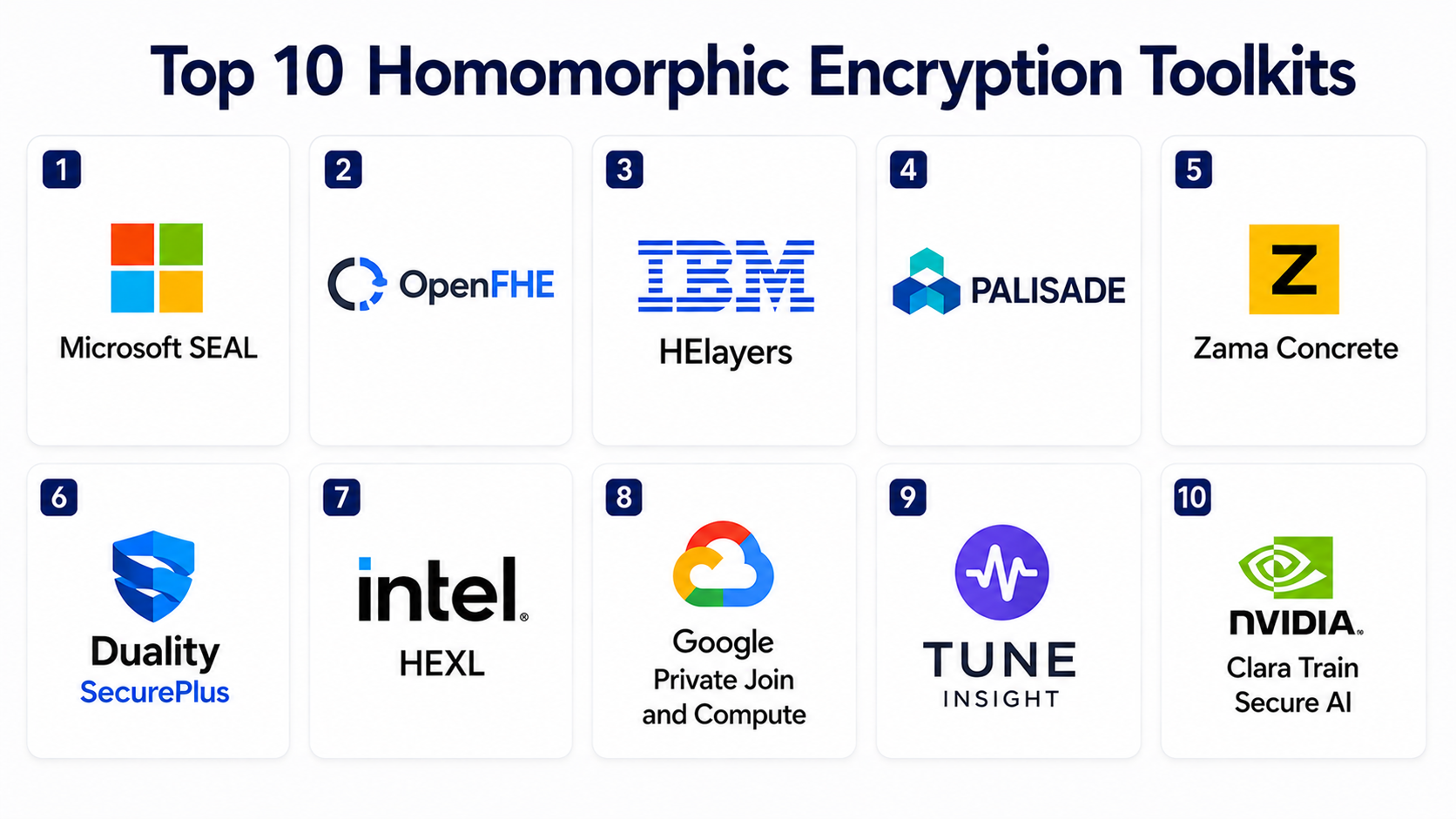
Introduction
Homomorphic Encryption Toolkits are cryptographic frameworks that allow computations to be performed directly on encrypted data without decrypting it first. This enables organizations to process sensitive information securely while preserving privacy, reducing exposure risks, and supporting secure analytics, AI inference, and collaborative computation workflows.
In homomorphic encryption is gaining momentum as enterprises, governments, healthcare providers, and AI organizations increasingly require privacy-preserving computation across cloud environments, distributed systems, and AI pipelines. The rise of AI governance, confidential analytics, privacy regulations, and cross-organization data collaboration has accelerated demand for practical homomorphic encryption solutions.
Common real-world use cases include:
- Privacy-preserving AI inference
- Secure cloud analytics
- Financial fraud detection
- Healthcare data collaboration
- Encrypted machine learning workflows
When evaluating Homomorphic Encryption Toolkits, buyers should consider:
- Supported encryption schemes
- Performance and computation efficiency
- AI and machine learning compatibility
- SDK and developer tooling quality
- Hardware acceleration support
- Cloud and hybrid deployment flexibility
- Security architecture
- Scalability for production workloads
- Integration ecosystem
- Community and documentation maturity
Best for: AI researchers, enterprises, cybersecurity teams, healthcare organizations, financial institutions, government agencies, and organizations handling highly sensitive data.
Not ideal for: Lightweight applications requiring minimal encryption overhead or organizations without advanced privacy and cryptographic requirements.
Key Trends in Homomorphic Encryption Toolkits
- Privacy-preserving AI inference is rapidly growing.
- Hardware acceleration for encrypted computation is improving.
- Cloud providers are investing in confidential AI ecosystems.
- Homomorphic encryption frameworks are becoming more developer-friendly.
- Secure collaborative analytics is gaining enterprise adoption.
- Federated learning and homomorphic encryption are increasingly combined.
- Hybrid privacy-enhancing technologies are becoming common.
- Open-source cryptographic ecosystems are expanding rapidly.
- AI governance regulations are increasing demand for encrypted computation.
- Production-grade encrypted analytics workloads are becoming more feasible.
How We Selected These Tools (Methodology)
The toolkits in this list were selected based on cryptographic capabilities, ecosystem maturity, enterprise relevance, performance optimization, and adoption within privacy-preserving AI and analytics workflows.
Selection criteria included:
- Supported homomorphic encryption schemes
- Developer ecosystem maturity
- AI and analytics compatibility
- Performance optimization capabilities
- Open-source adoption and research relevance
- Enterprise deployment potential
- Integration flexibility
- Documentation and SDK quality
- Community support
- Innovation in encrypted computation workflows
The final list includes open-source frameworks, enterprise-focused encryption platforms, AI privacy toolkits, and research-backed cryptographic libraries.
Homomorphic Encryption Toolkits
#1 — Microsoft SEAL
Short description :
Microsoft SEAL is one of the most widely adopted open-source homomorphic encryption libraries designed for secure computations on encrypted data in analytics, AI, and enterprise privacy workflows.
Key Features
- Homomorphic encryption support
- BFV and CKKS schemes
- Encrypted arithmetic operations
- AI and analytics compatibility
- Open-source SDK
- Cross-platform deployment
- Performance optimization support
Pros
- Strong developer adoption
- Broad research and enterprise relevance
- Good documentation quality
Cons
- Advanced cryptographic complexity
- Production optimization requires expertise
- Limited out-of-the-box enterprise tooling
Platforms / Deployment
- Windows / Linux / macOS
- Self-hosted / Hybrid
Security & Compliance
- Encryption
- Cryptographic security controls
Integrations & Ecosystem
Microsoft SEAL integrates with AI, analytics, and privacy-preserving research workflows.
- C++
- Python wrappers
- AI frameworks
- Cloud environments
- Research platforms
Support & Community
Microsoft SEAL has a strong open-source research and developer community.
#2 — OpenFHE
Short description :
OpenFHE is an open-source homomorphic encryption framework focused on scalable encrypted computation, secure AI workflows, and privacy-preserving analytics.
Key Features
- Fully homomorphic encryption
- Multiparty computation support
- Secure AI workflows
- CKKS and BFV support
- Scalable cryptographic computation
- Open-source ecosystem
- Research-grade flexibility
Pros
- Broad cryptographic capabilities
- Strong research ecosystem
- Good scalability potential
Cons
- Complex developer onboarding
- Enterprise tooling maturity varies
- Advanced optimization requirements
Platforms / Deployment
- Linux / macOS
- Self-hosted / Hybrid
Security & Compliance
- Encryption
- Cryptographic security controls
Integrations & Ecosystem
OpenFHE integrates with privacy-preserving analytics and AI research systems.
- Python
- C++
- AI frameworks
- Research infrastructure
- Cloud environments
Support & Community
OpenFHE has an active academic and developer community.
#3 — IBM HElayers
Short description :
IBM HElayers is a privacy-preserving AI toolkit designed to simplify homomorphic encryption workflows for secure machine learning and enterprise analytics applications.
Key Features
- Secure AI inference
- Homomorphic encryption abstraction
- AI model compatibility
- Encrypted analytics workflows
- Enterprise privacy controls
- Simplified developer workflows
- Cloud deployment support
Pros
- Strong AI workflow support
- Good enterprise usability
- Simplified encrypted AI operations
Cons
- Enterprise-oriented deployment model
- Advanced customization may require expertise
- Ecosystem smaller than open-source leaders
Platforms / Deployment
- Linux
- Cloud / Hybrid
Security & Compliance
- Encryption
- Enterprise security controls
Integrations & Ecosystem
IBM HElayers integrates with enterprise AI and analytics environments.
- AI frameworks
- Kubernetes
- Cloud infrastructure
- APIs
- Enterprise analytics systems
Support & Community
IBM provides enterprise onboarding and technical support services.
#4 — PALISADE
Short description :
PALISADE is an open-source lattice cryptography library focused on homomorphic encryption, secure multiparty computation, and advanced cryptographic experimentation.
Key Features
- Lattice cryptography support
- Homomorphic encryption
- Multiparty computation
- Cryptographic experimentation
- Open-source framework
- Research flexibility
- Scalable encrypted computation
Pros
- Strong research relevance
- Broad cryptographic experimentation support
- Good academic adoption
Cons
- Steeper learning curve
- Enterprise tooling maturity limited
- Production optimization complexity
Platforms / Deployment
- Linux / macOS
- Self-hosted
Security & Compliance
- Encryption
- Cryptographic controls
Integrations & Ecosystem
PALISADE integrates with academic and experimental cryptographic workflows.
- C++
- Python wrappers
- Research systems
- Cryptographic experiments
- AI privacy research
Support & Community
PALISADE has strong academic and research community adoption.
#5 — Zama Concrete
Short description :
Zama Concrete is a fully homomorphic encryption framework designed for encrypted machine learning inference and privacy-preserving AI applications.
Key Features
- Encrypted AI inference
- Fully homomorphic encryption
- Machine learning compatibility
- Hardware acceleration support
- Open-source SDK
- Secure neural network execution
- Privacy-preserving AI workflows
Pros
- Strong AI-focused optimization
- Good encrypted inference support
- Modern developer tooling
Cons
- AI-focused specialization
- Production scalability evolving
- Advanced optimization requirements
Platforms / Deployment
- Linux
- Cloud / Hybrid
Security & Compliance
- Encryption
- Cryptographic security controls
Integrations & Ecosystem
Zama integrates with AI and machine learning ecosystems.
- Python
- PyTorch
- AI inference systems
- Cloud infrastructure
- APIs
Support & Community
Zama provides developer documentation and growing community support.
#6 — Duality SecurePlus
Short description :
Duality SecurePlus combines homomorphic encryption and privacy-enhancing technologies to enable secure analytics and collaborative encrypted computation.
Key Features
- Homomorphic encryption
- Secure collaborative analytics
- Encrypted AI workflows
- Privacy-preserving computation
- Policy-driven governance
- Secure data sharing
- Enterprise privacy controls
Pros
- Strong enterprise privacy focus
- Good collaborative analytics support
- Broad encrypted workflow capabilities
Cons
- Enterprise deployment complexity
- Premium privacy-focused positioning
- Advanced cryptographic expertise required
Platforms / Deployment
- Linux
- Cloud / Hybrid
Security & Compliance
- Encryption
- RBAC
- Audit logs
Integrations & Ecosystem
Duality integrates with enterprise AI and analytics systems.
- Cloud infrastructure
- APIs
- AI workflows
- Data governance systems
- Analytics platforms
Support & Community
Duality provides enterprise onboarding and technical support services.
#7 — Intel HEXL
Short description :
Intel HEXL is a performance optimization library designed to accelerate homomorphic encryption workloads and improve encrypted computation efficiency.
Key Features
- Homomorphic encryption acceleration
- Hardware optimization
- High-performance computation
- Vectorized operations
- Intel architecture optimization
- Secure computation support
- Open-source tooling
Pros
- Strong performance optimization
- Good encrypted computation acceleration
- Broad compatibility with HE frameworks
Cons
- Requires compatible hardware
- Not a full standalone HE framework
- Specialized optimization focus
Platforms / Deployment
- Linux / Windows
- Self-hosted
Security & Compliance
- Encryption support
- Hardware optimization controls
Integrations & Ecosystem
Intel HEXL integrates with leading homomorphic encryption frameworks.
- Microsoft SEAL
- OpenFHE
- AI workflows
- Cloud infrastructure
- Cryptographic libraries
Support & Community
Intel provides developer documentation and optimization guidance.
#8 — Google Private Join and Compute
Short description :
Google Private Join and Compute is a privacy-preserving computation framework designed to enable secure collaborative analytics and encrypted data matching workflows.
Key Features
- Privacy-preserving computation
- Secure data matching
- Encrypted analytics workflows
- Federated collaboration support
- Secure multi-party operations
- Cloud scalability
- Privacy-focused computation
Pros
- Strong collaborative analytics support
- Good privacy-preserving workflows
- Scalable cloud architecture
Cons
- Specialized analytics focus
- Enterprise deployment complexity
- Broader HE capabilities limited
Platforms / Deployment
- Linux
- Cloud / Hybrid
Security & Compliance
- Encryption
- Privacy-preserving controls
Integrations & Ecosystem
The framework integrates with privacy-preserving analytics environments.
- Cloud infrastructure
- APIs
- Analytics workflows
- AI systems
- Secure collaboration platforms
Support & Community
Google provides technical documentation and developer resources.
#9 — Tune Insight
Short description :
Tune Insight is a privacy-enhancing technology platform focused on secure analytics, encrypted AI workflows, and collaborative computation using advanced cryptographic methods.
Key Features
- Homomorphic encryption workflows
- Secure AI analytics
- Federated analytics support
- Privacy-preserving collaboration
- Encrypted machine learning
- Secure data sharing
- Governance automation
Pros
- Strong secure analytics capabilities
- Good collaborative AI support
- Modern privacy-enhancing workflows
Cons
- Smaller ecosystem maturity
- Enterprise deployment complexity
- Advanced cryptographic requirements
Platforms / Deployment
- Linux
- Cloud / Hybrid
Security & Compliance
- Encryption
- RBAC
- Audit logs
Integrations & Ecosystem
Tune Insight integrates with enterprise analytics and AI systems.
- AI platforms
- APIs
- Cloud infrastructure
- Analytics workflows
- Secure collaboration systems
Support & Community
Tune Insight provides enterprise onboarding and technical support.
#10 — NVIDIA Clara Train Secure AI
Short description :
NVIDIA Clara Train Secure AI supports privacy-preserving healthcare AI workflows using federated learning, encrypted computation, and secure collaborative model training.
Key Features
- Secure healthcare AI
- Federated learning
- Encrypted AI workflows
- GPU acceleration
- Collaborative model training
- Privacy-preserving analytics
- Secure medical AI infrastructure
Pros
- Strong healthcare AI relevance
- Good GPU acceleration support
- Broad AI workflow integration
Cons
- Healthcare-focused specialization
- Requires NVIDIA infrastructure for optimal performance
- Advanced deployment complexity
Platforms / Deployment
- Linux
- Cloud / Hybrid
Security & Compliance
- Encryption
- RBAC
- Audit logs
Integrations & Ecosystem
NVIDIA Clara integrates with AI and healthcare analytics systems.
- NVIDIA AI ecosystem
- Healthcare AI workflows
- APIs
- GPU infrastructure
- Federated learning systems
Support & Community
NVIDIA provides enterprise documentation and AI-focused support services.
Comparison Table (Top 10)
| Tool Name | Best For | Platform(s) Supported | Deployment | Standout Feature | Public Rating |
|---|---|---|---|---|---|
| Microsoft SEAL | General-purpose homomorphic encryption | Windows, Linux, macOS | Hybrid | CKKS and BFV support | N/A |
| OpenFHE | Scalable encrypted computation | Linux, macOS | Hybrid | Multiparty computation | N/A |
| IBM HElayers | Secure enterprise AI inference | Linux | Hybrid | Simplified encrypted AI workflows | N/A |
| PALISADE | Cryptographic research workflows | Linux, macOS | Self-hosted | Lattice cryptography support | N/A |
| Zama Concrete | Encrypted machine learning | Linux | Hybrid | Secure AI inference | N/A |
| Duality SecurePlus | Collaborative encrypted analytics | Linux | Hybrid | Privacy-preserving computation | N/A |
| Intel HEXL | HE workload acceleration | Linux, Windows | Self-hosted | Hardware optimization | N/A |
| Google Private Join and Compute | Secure collaborative analytics | Linux | Hybrid | Privacy-preserving matching | N/A |
| Tune Insight | Secure federated analytics | Linux | Hybrid | Encrypted AI collaboration | N/A |
| NVIDIA Clara Train Secure AI | Secure healthcare AI | Linux | Hybrid | GPU-accelerated secure AI | N/A |
Evaluation & Homomorphic Encryption Toolkits
| Tool Name | Core (25%) | Ease (15%) | Integrations (15%) | Security (10%) | Performance (10%) | Support (10%) | Value (15%) | Weighted Total |
|---|---|---|---|---|---|---|---|---|
| Microsoft SEAL | 9 | 7 | 8 | 9 | 8 | 8 | 9 | 8.3 |
| OpenFHE | 9 | 6 | 8 | 9 | 8 | 7 | 9 | 8.0 |
| IBM HElayers | 8 | 8 | 8 | 9 | 8 | 8 | 7 | 8.0 |
| PALISADE | 8 | 6 | 7 | 9 | 7 | 7 | 9 | 7.6 |
| Zama Concrete | 8 | 7 | 8 | 9 | 8 | 7 | 8 | 7.9 |
| Duality SecurePlus | 8 | 6 | 8 | 9 | 8 | 7 | 7 | 7.6 |
| Intel HEXL | 7 | 7 | 8 | 8 | 9 | 7 | 8 | 7.7 |
| Google Private Join and Compute | 8 | 7 | 8 | 9 | 8 | 7 | 7 | 7.8 |
| Tune Insight | 8 | 7 | 7 | 9 | 8 | 7 | 7 | 7.6 |
| NVIDIA Clara Train Secure AI | 8 | 7 | 8 | 9 | 9 | 8 | 7 | 8.0 |
These scores are comparative rather than absolute. Some platforms focus heavily on research-grade cryptography and flexibility, while others prioritize enterprise AI workflows, hardware acceleration, or privacy-preserving analytics collaboration. Buyers should evaluate homomorphic encryption toolkits based on cryptographic requirements, performance expectations, AI integration needs, and operational maturity.
Which Homomorphic Encryption Toolkits
Solo / Freelancer
Independent developers and researchers may prefer:
- Microsoft SEAL
- OpenFHE
These frameworks provide strong open-source ecosystems and broad research relevance.
SMB
Small and medium-sized businesses should prioritize usability and AI workflow compatibility.
Recommended options:
- IBM HElayers
- Zama Concrete
- Google Private Join and Compute
Mid-Market
Mid-sized organizations often require scalable analytics and collaborative encrypted workflows.
Recommended options:
- Duality SecurePlus
- Tune Insight
- NVIDIA Clara Train Secure AI
Enterprise
Large enterprises with advanced privacy and governance requirements should prioritize scalability and operational maturity.
Recommended options:
- Microsoft SEAL
- IBM HElayers
- Duality SecurePlus
- OpenFHE
Budget vs Premium
- Budget-friendly: Microsoft SEAL, PALISADE
- Premium enterprise: IBM HElayers, Duality SecurePlus
- Balanced value: OpenFHE, Zama Concrete
Feature Depth vs Ease of Use
- Deepest cryptographic flexibility: OpenFHE, PALISADE
- Best usability: IBM HElayers
- Best AI-focused tooling: Zama Concrete
Integrations & Scalability
- Best AI integration: NVIDIA Clara Train Secure AI
- Best cloud analytics workflows: Google Private Join and Compute
- Best research ecosystem: Microsoft SEAL
Security & Compliance Needs
Organizations with strict privacy and secure analytics requirements should prioritize:
- Microsoft SEAL
- IBM HElayers
- Duality SecurePlus
- OpenFHE
Frequently Asked Questions (FAQs)
1. What is homomorphic encryption?
Homomorphic encryption allows computations to be performed directly on encrypted data without decrypting it first.
2. Why is homomorphic encryption important?
It enables privacy-preserving analytics and AI workflows while reducing exposure risks for sensitive information.
3. Which industries use homomorphic encryption most?
Healthcare, finance, government, cybersecurity, AI research, and regulated enterprise sectors are major adopters.
4. Can homomorphic encryption support AI workloads?
Yes. Many modern frameworks support encrypted machine learning inference and privacy-preserving AI analytics.
5. What is the difference between partial and fully homomorphic encryption?
Partial homomorphic encryption supports limited operations, while fully homomorphic encryption supports arbitrary computations on encrypted data.
6. Is homomorphic encryption computationally expensive?
Yes. Encrypted computation can introduce significant performance overhead, although optimization technologies are improving rapidly.
7. Are open-source HE frameworks production-ready?
Some frameworks are increasingly production-capable, but deployment complexity and optimization requirements remain significant.
8. What should buyers prioritize when selecting a toolkit?
Buyers should evaluate encryption scheme support, performance optimization, AI compatibility, scalability, and developer tooling.
9. Can homomorphic encryption improve regulatory compliance?
Yes. It helps organizations reduce exposure risks while processing regulated or sensitive information.
10. Is homomorphic encryption replacing traditional encryption?
No. It complements traditional encryption by protecting data during active computation rather than only at rest or in transit.
Conclusion
Homomorphic Encryption Toolkits are becoming increasingly important for privacy-preserving AI, secure analytics, confidential cloud processing, and regulated enterprise workflows. As organizations adopt AI systems and collaborative analytics environments involving highly sensitive information, the ability to compute directly on encrypted data is emerging as a major security and compliance advantage. Microsoft SEAL and OpenFHE remain among the most influential open-source frameworks for encrypted computation, while IBM HElayers and Duality SecurePlus focus more heavily on enterprise AI and secure analytics workflows.
