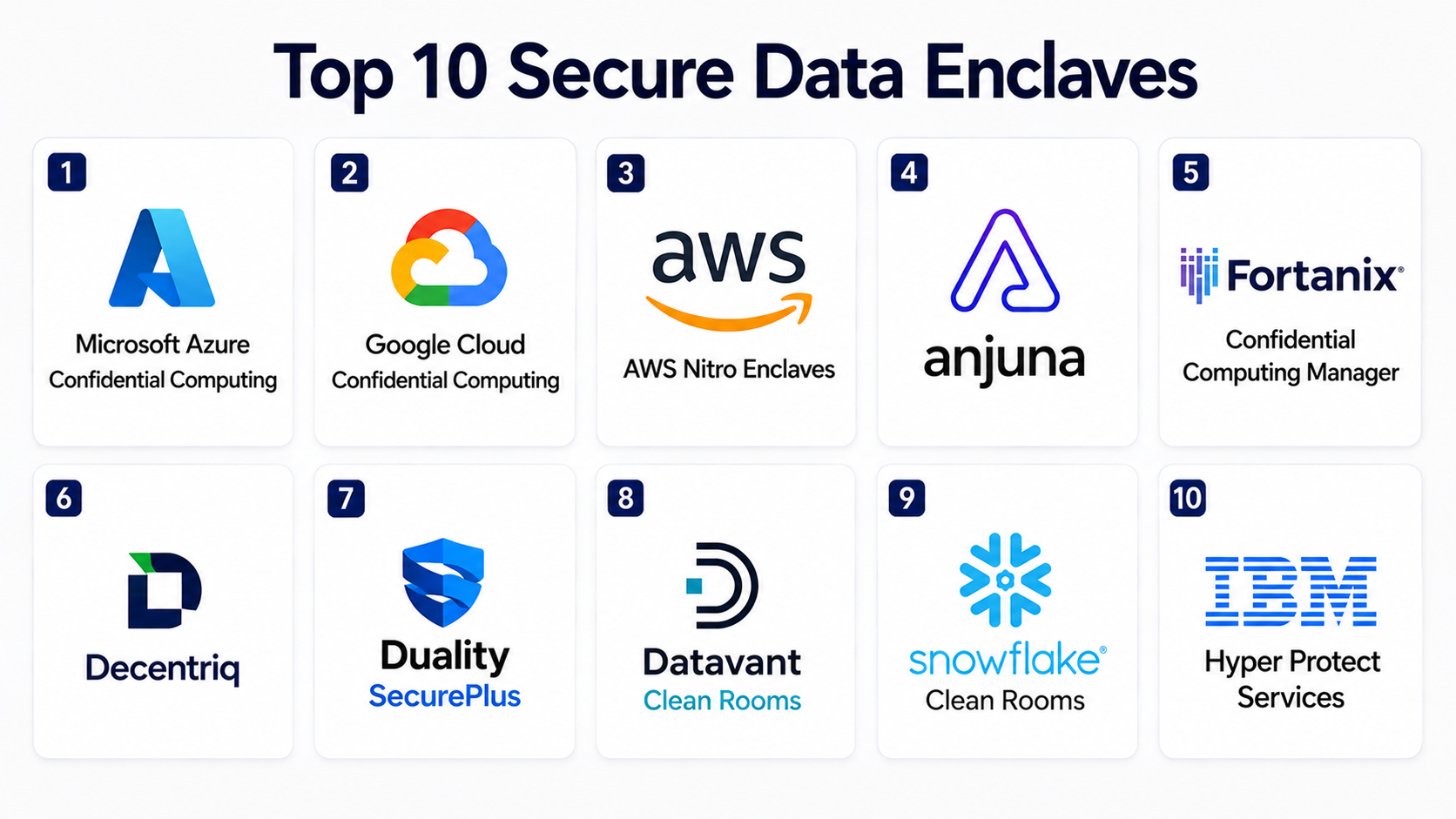
Introduction
Secure Data Enclaves are controlled computing environments designed to allow organizations to process, analyze, and collaborate on highly sensitive data without exposing the raw information to unauthorized users or systems. These platforms combine privacy-preserving technologies, strict access controls, encryption, isolated execution environments, and governance workflows to support secure analytics, AI workloads, research collaboration, and regulatory compliance.
In secure data enclaves have become increasingly important due to growing cybersecurity threats, stricter privacy regulations, cross-border data governance requirements, and the rapid expansion of AI and collaborative analytics workflows. Enterprises, governments, healthcare organizations, and research institutions now require secure environments that enable data sharing and computation while minimizing privacy and operational risks.
Common real-world use cases include:
- Healthcare and genomic research collaboration
- Financial fraud analytics
- Privacy-preserving AI model training
- Government and defense analytics
- Cross-company data sharing
When evaluating Secure Data Enclave platforms, buyers should consider:
- Confidential computing capabilities
- Data isolation and segmentation
- Encryption and key management
- Governance and audit controls
- Access management workflows
- Secure collaboration features
- Compliance and regulatory support
- Cloud and hybrid deployment options
- AI and analytics integration
- Scalability and operational complexity
Best for: Enterprises, healthcare providers, financial institutions, research organizations, government agencies, AI teams, and organizations handling regulated or highly sensitive information.
Not ideal for: Small teams with lightweight analytics workflows or organizations without strict privacy, governance, or collaboration requirements.
Key Trends in Secure Data Enclaves
- Confidential computing adoption is rapidly increasing.
- Privacy-preserving AI workflows are driving demand for secure enclaves.
- Multicloud secure analytics environments are becoming standard.
- Secure collaboration between organizations is growing.
- Hardware-based trusted execution environments are gaining adoption.
- Zero trust security models are influencing enclave architectures.
- AI governance and secure data sharing are converging.
- Regulatory compliance requirements are becoming more complex globally.
- Synthetic data and enclave-based analytics are increasingly combined.
- Secure enclaves are expanding beyond research into commercial AI operations.
How We Selected These Tools (Methodology)
The platforms in this list were selected based on enterprise adoption, confidential computing capabilities, governance features, scalability, deployment flexibility, and ecosystem maturity.
Selection criteria included:
- Secure enclave architecture
- Confidential computing support
- Data isolation and governance features
- Compliance relevance
- Integration ecosystem
- Enterprise scalability
- AI and analytics compatibility
- Cloud and hybrid deployment support
- Operational maturity
- Documentation and support quality
The final list includes confidential computing platforms, enterprise secure collaboration environments, cloud-native enclave services, and privacy-focused analytics platforms.
Secure Data Enclaves
#1 — Microsoft Azure Confidential Computing
Short description :
Microsoft Azure Confidential Computing provides hardware-backed secure enclave environments for protecting sensitive workloads, AI systems, and analytics workflows using trusted execution environments and confidential VMs.
Key Features
- Confidential virtual machines
- Trusted execution environments
- Hardware-backed isolation
- Secure AI processing
- Encrypted memory protection
- Confidential containers
- Enterprise governance controls
Pros
- Strong Azure ecosystem integration
- Broad confidential computing support
- Good enterprise scalability
Cons
- Best suited for Azure environments
- Advanced configuration complexity
- Enterprise pricing considerations
Platforms / Deployment
- Web
- Cloud
Security & Compliance
- Encryption
- RBAC
- Audit logs
- Confidential computing controls
Integrations & Ecosystem
Azure Confidential Computing integrates with enterprise cloud and AI ecosystems.
- Azure AI
- Kubernetes
- Microsoft Fabric
- APIs
- Enterprise analytics systems
Support & Community
Microsoft provides enterprise documentation, onboarding, and global support programs.
#2 — Google Cloud Confidential Computing
Short description :
Google Cloud Confidential Computing enables organizations to process sensitive workloads securely using hardware-backed trusted execution environments and encrypted in-use data protection.
Key Features
- Confidential VMs
- Trusted execution environments
- Encrypted memory protection
- Secure analytics workflows
- AI workload isolation
- Confidential Kubernetes support
- Cloud-native scalability
Pros
- Strong Google Cloud integration
- Good scalability for analytics workloads
- Broad confidential computing capabilities
Cons
- Best suited for Google Cloud environments
- Complex enterprise deployment workflows
- Advanced governance may require additional tooling
Platforms / Deployment
- Web
- Cloud
Security & Compliance
- Encryption
- Audit logs
- RBAC
- Google Cloud security controls
Integrations & Ecosystem
The platform integrates with Google Cloud analytics and AI infrastructure.
- BigQuery
- Vertex AI
- Kubernetes
- APIs
- Cloud storage systems
Support & Community
Google provides enterprise cloud support and technical documentation.
#3 — AWS Nitro Enclaves
Short description :
AWS Nitro Enclaves provides isolated compute environments for processing highly sensitive data using hardware-backed isolation and secure enclave architectures.
Key Features
- Hardware-isolated environments
- Secure key management
- Trusted execution architecture
- Secure cryptographic operations
- Isolated application processing
- Cloud-native deployment
- AWS ecosystem integration
Pros
- Strong AWS ecosystem compatibility
- Good hardware isolation security
- Scalable cloud infrastructure
Cons
- Best suited for AWS workloads
- Requires specialized configuration
- Limited multi-cloud flexibility
Platforms / Deployment
- Web
- Cloud
Security & Compliance
- Encryption
- RBAC
- Audit logs
- AWS security controls
Integrations & Ecosystem
AWS Nitro Enclaves integrates with AWS cloud and security services.
- EC2
- AWS KMS
- IAM
- APIs
- Cloud security workflows
Support & Community
AWS provides enterprise cloud documentation and support programs.
#4 — Anjuna
Short description :
Anjuna is a confidential computing platform that enables organizations to secure applications and sensitive workloads using hardware-based trusted execution environments across cloud and hybrid infrastructures.
Key Features
- Confidential computing
- Trusted execution environments
- Secure workload isolation
- Encrypted runtime protection
- Policy-driven governance
- Hybrid cloud deployment
- Application security automation
Pros
- Strong confidential computing specialization
- Broad cloud compatibility
- Good enterprise security controls
Cons
- Enterprise deployment complexity
- Premium security positioning
- Smaller ecosystem than hyperscalers
Platforms / Deployment
- Linux
- Cloud / Hybrid
Security & Compliance
- Encryption
- RBAC
- Audit logs
Integrations & Ecosystem
Anjuna integrates with enterprise cloud and Kubernetes environments.
- Kubernetes
- AWS
- Azure
- APIs
- Enterprise security systems
Support & Community
Anjuna provides enterprise onboarding and technical support services.
#5 — Fortanix Confidential Computing Manager
Short description :
Fortanix provides confidential computing and secure enclave management capabilities for protecting sensitive applications, cryptographic operations, and regulated data workloads.
Key Features
- Secure enclave orchestration
- Confidential computing workflows
- Runtime encryption
- Key management
- Policy automation
- Compliance reporting
- Secure application protection
Pros
- Strong security governance support
- Broad confidential computing workflows
- Good enterprise compliance relevance
Cons
- Advanced administration complexity
- Premium enterprise pricing
- Specialized deployment expertise required
Platforms / Deployment
- Windows / Linux
- Cloud / Self-hosted / Hybrid
Security & Compliance
- Encryption
- RBAC
- Audit logs
- SSO/SAML
Integrations & Ecosystem
Fortanix integrates with enterprise security and infrastructure systems.
- Kubernetes
- Cloud infrastructure
- APIs
- Security workflows
- Key management systems
Support & Community
Fortanix provides enterprise onboarding and security support services.
#6 — Decentriq
Short description :
Decentriq is a secure data collaboration platform focused on enabling privacy-preserving analytics and secure multi-party data sharing without exposing raw datasets.
Key Features
- Secure data clean rooms
- Privacy-preserving analytics
- Secure collaboration workflows
- Confidential computing support
- Fine-grained access controls
- Data governance automation
- Secure multi-party computation
Pros
- Strong collaborative analytics support
- Good privacy-preserving workflows
- Modern governance capabilities
Cons
- Smaller ecosystem maturity
- Enterprise deployment complexity
- Specialized analytics focus
Platforms / Deployment
- Web
- Cloud
Security & Compliance
- Encryption
- RBAC
- Audit logs
Integrations & Ecosystem
Decentriq integrates with cloud analytics and secure collaboration systems.
- Snowflake
- Cloud storage systems
- APIs
- Analytics platforms
- Enterprise workflows
Support & Community
Decentriq provides enterprise onboarding and technical support programs.
#7 — Duality SecurePlus
Short description :
Duality SecurePlus is a privacy-enhancing technology platform focused on secure data collaboration, encrypted analytics, and confidential AI processing.
Key Features
- Privacy-preserving analytics
- Encrypted AI workflows
- Secure collaboration
- Homomorphic encryption support
- Confidential data sharing
- Policy-driven governance
- AI security workflows
Pros
- Strong privacy-enhancing technology support
- Good AI security relevance
- Broad secure collaboration workflows
Cons
- Advanced cryptographic complexity
- Smaller ecosystem compared to hyperscalers
- Enterprise onboarding requirements
Platforms / Deployment
- Linux
- Cloud / Hybrid
Security & Compliance
- Encryption
- RBAC
- Audit logs
Integrations & Ecosystem
Duality integrates with analytics and AI infrastructure systems.
- Cloud infrastructure
- APIs
- AI workflows
- Analytics platforms
- Data governance systems
Support & Community
Duality provides enterprise onboarding and security consultation services.
#8 — Datavant Clean Rooms
Short description :
Datavant provides secure data collaboration environments that enable healthcare and enterprise organizations to share and analyze sensitive data while preserving privacy controls.
Key Features
- Secure data collaboration
- Privacy-preserving analytics
- Data de-identification
- Governance workflows
- Access controls
- Healthcare data workflows
- Secure clean room architecture
Pros
- Strong healthcare ecosystem relevance
- Good secure collaboration capabilities
- Broad privacy workflow support
Cons
- Specialized healthcare focus
- Enterprise deployment requirements
- Limited general-purpose analytics flexibility
Platforms / Deployment
- Web
- Cloud
Security & Compliance
- Encryption
- Audit logs
- RBAC
Integrations & Ecosystem
Datavant integrates with healthcare and enterprise analytics systems.
- Healthcare platforms
- APIs
- Cloud analytics systems
- Data governance workflows
- Enterprise collaboration systems
Support & Community
Datavant provides enterprise onboarding and healthcare-focused support services.
#9 — Snowflake Clean Rooms
Short description :
Snowflake Clean Rooms enables organizations to securely collaborate on sensitive data within Snowflake environments while preserving privacy and governance controls.
Key Features
- Secure data collaboration
- Privacy-preserving analytics
- Governance controls
- Fine-grained permissions
- Secure query execution
- Cloud-native scalability
- Data sharing automation
Pros
- Strong Snowflake ecosystem integration
- Good analytics scalability
- Modern clean room workflows
Cons
- Best suited for Snowflake environments
- Advanced governance may require expertise
- Enterprise pricing considerations
Platforms / Deployment
- Web
- Cloud
Security & Compliance
- Encryption
- RBAC
- Audit logs
- Snowflake security controls
Integrations & Ecosystem
Snowflake Clean Rooms integrates with Snowflake analytics infrastructure.
- Snowflake Data Cloud
- APIs
- Analytics systems
- Cloud infrastructure
- Governance workflows
Support & Community
Snowflake provides enterprise onboarding and cloud analytics support.
#10 — IBM Hyper Protect Services
Short description :
IBM Hyper Protect Services provides confidential computing and secure enclave infrastructure designed for regulated workloads, sensitive applications, and privacy-focused enterprise operations.
Key Features
- Confidential computing
- Hardware-backed security
- Secure enclave isolation
- Encrypted runtime environments
- Compliance workflows
- Secure cloud operations
- Enterprise governance controls
Pros
- Strong enterprise security capabilities
- Broad regulated industry relevance
- Good confidential computing support
Cons
- Enterprise deployment complexity
- Premium enterprise positioning
- Advanced operational requirements
Platforms / Deployment
- Linux
- Cloud / Hybrid
Security & Compliance
- Encryption
- RBAC
- Audit logs
- Enterprise security controls
Integrations & Ecosystem
IBM Hyper Protect integrates with enterprise cloud and governance infrastructure.
- IBM Cloud
- Kubernetes
- APIs
- Enterprise security systems
- Analytics workflows
Support & Community
IBM provides enterprise onboarding and global technical support services.
Comparison Table (Top 10)
| Tool Name | Best For | Platform(s) Supported | Deployment | Standout Feature | Public Rating |
|---|---|---|---|---|---|
| Microsoft Azure Confidential Computing | Enterprise confidential workloads | Web | Cloud | Confidential VMs | N/A |
| Google Cloud Confidential Computing | Secure cloud analytics | Web | Cloud | Encrypted in-use data protection | N/A |
| AWS Nitro Enclaves | Secure isolated compute | Web | Cloud | Hardware-backed isolation | N/A |
| Anjuna | Hybrid confidential computing | Linux | Hybrid | Secure workload isolation | N/A |
| Fortanix Confidential Computing Manager | Enclave orchestration | Windows, Linux | Hybrid | Runtime encryption management | N/A |
| Decentriq | Secure collaborative analytics | Web | Cloud | Secure data clean rooms | N/A |
| Duality SecurePlus | Privacy-enhancing analytics | Linux | Hybrid | Homomorphic encryption workflows | N/A |
| Datavant Clean Rooms | Healthcare data collaboration | Web | Cloud | Healthcare-focused clean rooms | N/A |
| Snowflake Clean Rooms | Secure analytics collaboration | Web | Cloud | Secure query execution | N/A |
| IBM Hyper Protect Services | Regulated enterprise workloads | Linux | Hybrid | Hardware-backed confidential computing | N/A |
Evaluation & Secure Data Enclaves
| Tool Name | Core (25%) | Ease (15%) | Integrations (15%) | Security (10%) | Performance (10%) | Support (10%) | Value (15%) | Weighted Total |
|---|---|---|---|---|---|---|---|---|
| Microsoft Azure Confidential Computing | 9 | 8 | 9 | 9 | 9 | 8 | 7 | 8.5 |
| Google Cloud Confidential Computing | 9 | 8 | 9 | 9 | 9 | 8 | 7 | 8.5 |
| AWS Nitro Enclaves | 9 | 7 | 9 | 9 | 9 | 8 | 7 | 8.3 |
| Anjuna | 8 | 7 | 8 | 9 | 8 | 7 | 7 | 7.8 |
| Fortanix Confidential Computing Manager | 9 | 7 | 8 | 9 | 8 | 8 | 7 | 8.0 |
| Decentriq | 8 | 8 | 7 | 8 | 8 | 7 | 8 | 7.8 |
| Duality SecurePlus | 8 | 6 | 7 | 9 | 8 | 7 | 7 | 7.5 |
| Datavant Clean Rooms | 8 | 8 | 7 | 8 | 8 | 8 | 7 | 7.8 |
| Snowflake Clean Rooms | 8 | 8 | 9 | 8 | 9 | 8 | 7 | 8.1 |
| IBM Hyper Protect Services | 9 | 7 | 8 | 9 | 8 | 8 | 7 | 8.0 |
These scores are comparative rather than absolute. Some platforms focus heavily on confidential computing and hardware-backed isolation, while others prioritize secure collaboration, clean room analytics, or privacy-enhancing technologies. Buyers should evaluate secure data enclave solutions based on governance maturity, cloud strategy, analytics requirements, regulatory obligations, and operational complexity.
Which Secure Data Enclaves
Solo / Freelancer
Independent developers and researchers may prefer:
- Snowflake Clean Rooms
- Google Cloud Confidential Computing
These platforms provide accessible cloud-native secure analytics workflows.
SMB
Small and medium-sized businesses should prioritize usability and cloud-native scalability.
Recommended options:
- Snowflake Clean Rooms
- Decentriq
- Azure Confidential Computing
Mid-Market
Mid-sized organizations often require stronger governance and hybrid deployment support.
Recommended options:
- Fortanix
- Anjuna
- Datavant Clean Rooms
- AWS Nitro Enclaves
Enterprise
Large enterprises with strict privacy and regulatory requirements should prioritize confidential computing and governance capabilities.
Recommended options:
- Microsoft Azure Confidential Computing
- Google Cloud Confidential Computing
- IBM Hyper Protect Services
- Fortanix
Budget vs Premium
- Budget-friendly: Snowflake Clean Rooms
- Premium enterprise: IBM Hyper Protect Services, Fortanix
- Balanced value: Azure Confidential Computing, AWS Nitro Enclaves
Feature Depth vs Ease of Use
- Deepest confidential computing workflows: Fortanix, IBM Hyper Protect
- Best usability: Snowflake Clean Rooms
- Best collaboration workflows: Decentriq
Integrations & Scalability
- Best Azure integration: Azure Confidential Computing
- Best Google Cloud integration: Google Cloud Confidential Computing
- Best AWS integration: AWS Nitro Enclaves
Security & Compliance Needs
Organizations with strict governance and compliance requirements should prioritize:
- IBM Hyper Protect Services
- Fortanix
- Azure Confidential Computing
- AWS Nitro Enclaves
Frequently Asked Questions (FAQs)
1. What are Secure Data Enclaves?
Secure Data Enclaves are isolated computing environments designed to process sensitive data securely without exposing raw information to unauthorized access.
2. Why are secure data enclaves important?
They improve privacy protection, reduce cybersecurity risks, support regulatory compliance, and enable secure data collaboration.
3. What is confidential computing?
Confidential computing protects data while it is actively being processed using hardware-backed trusted execution environments.
4. Which industries rely most on secure enclaves?
Healthcare, finance, government, defense, research, insurance, and enterprise AI organizations are major adopters.
5. Can secure enclaves support AI workflows?
Yes. Many platforms support privacy-preserving AI training, secure inference, and collaborative AI analytics.
6. What are data clean rooms?
Data clean rooms are secure collaboration environments that allow organizations to analyze shared data without exposing raw datasets.
7. Are secure data enclaves cloud-native?
Many modern enclave platforms are cloud-native, although hybrid and self-hosted deployments are also available.
8. What should buyers prioritize when selecting a platform?
Buyers should evaluate security architecture, governance controls, scalability, integrations, compliance support, and operational complexity.
9. Can secure enclaves improve regulatory compliance?
Yes. These platforms help organizations meet privacy, security, and governance requirements for regulated data processing.
10. Are confidential computing platforms difficult to deploy?
Some enterprise deployments can be complex, especially when integrating hardware-backed isolation and governance workflows across hybrid environments.
Conclusion
Secure Data Enclaves have become critical infrastructure for enterprise privacy protection, confidential computing, AI governance, and secure collaboration workflows. As organizations increasingly share sensitive data across cloud environments, analytics platforms, and AI systems, secure enclave architectures now play a major role in reducing operational and regulatory risk. Microsoft Azure Confidential Computing, Google Cloud Confidential Computing, and AWS Nitro Enclaves provide scalable cloud-native confidential computing capabilities, while Fortanix and IBM Hyper Protect Services focus heavily on enterprise-grade enclave management and regulated workload protection.
