Introduction
Smart Meter Data Management Systems, often called MDMS, help utilities collect, validate, store, analyze, and use data from smart meters. In simple English, these systems take large volumes of meter readings from electricity, gas, water, or multi-utility networks and turn that data into usable information for billing, outage management, demand response, customer portals, analytics, and operations.
Smart meter data is much more detailed than traditional monthly readings. A modern utility may receive interval data every few minutes or hours from thousands or millions of meters. Without a strong MDMS, this data can become difficult to validate, process, and use correctly.
Common use cases include:
- Smart meter data collection and storage
- Meter data validation, estimation, and editing
- Usage-based utility billing support
- Customer usage history and self-service portals
- Outage detection and restoration support
- Demand response and load analysis
- Revenue protection and loss detection
- Integration with billing, CIS, AMI, ERP, GIS, OMS, and analytics systems
Buyers should evaluate:
- Meter data validation and estimation strength
- AMI and head-end system compatibility
- Scalability for high-volume interval data
- Billing system integration
- Data analytics and reporting
- Outage and event data handling
- Support for electricity, water, gas, or multi-utility use cases
- Security and role-based access
- Cloud, on-premise, or hybrid deployment options
- Vendor implementation experience and utility domain knowledge
Best for: Electric utilities, water utilities, gas utilities, municipal utilities, smart city programs, energy retailers, distribution companies, metering teams, billing teams, customer service teams, operations teams, and analytics teams managing high-volume smart meter data.
Not ideal for: Very small utilities with only manual monthly meter readings, organizations that only need basic billing software, or teams without smart meter, AMI, or interval data requirements.
Key Smart Meter Data Management System Trends
- AMI integration is becoming central because utilities need reliable data flow from smart meters, communication networks, and head-end systems.
- Cloud-based MDMS adoption is increasing as utilities look for scalability, easier upgrades, and reduced infrastructure management.
- Real-time and near-real-time analytics are becoming more important for outage detection, grid visibility, and customer engagement.
- Data validation automation is critical because billing and operational decisions depend on clean meter data.
- Multi-utility support is gaining value for organizations that manage electricity, water, gas, wastewater, or district energy together.
- Customer usage insights are becoming important because customers expect access to consumption history, alerts, and energy-saving information.
- Demand response and load forecasting are becoming stronger use cases for electric utilities.
- Integration with outage management systems helps utilities detect service interruptions faster and improve restoration workflows.
- Cybersecurity and access controls are more important because smart meter data includes sensitive customer and infrastructure information.
- Advanced analytics and AI are being used to detect anomalies, possible theft, meter faults, unusual consumption, and system losses.
How We Selected These Tools
The platforms below were selected using a practical utility-focused evaluation approach:
- Recognized presence in smart meter data management, AMI, utility data platforms, or utility operations.
- Ability to support meter data validation, estimation, editing, storage, and analytics.
- Fit for electric, gas, water, and multi-utility environments.
- Support for integration with AMI head-end systems, billing, CIS, OMS, GIS, ERP, and analytics tools.
- Scalability for large volumes of interval meter data.
- Strength of billing-ready data workflows and operational visibility.
- Security, auditability, and role-based access where confidently known.
- Vendor maturity, implementation experience, documentation, and support ecosystem.
- Suitability for small utilities, mid-market utilities, and large enterprise utilities.
- Balanced inclusion of enterprise MDMS, utility platforms, cloud-based systems, and smart grid data solutions.
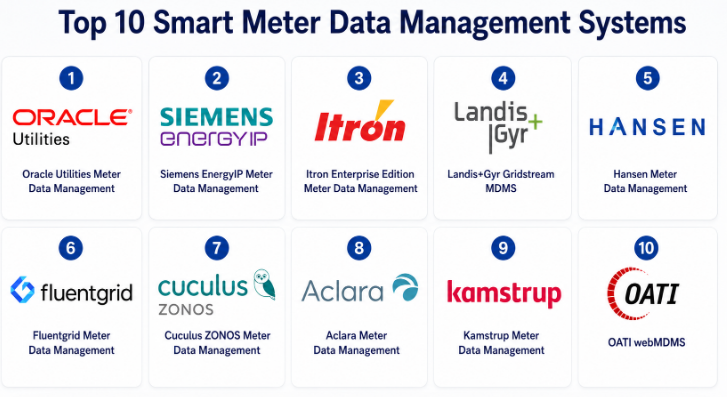
Top 10 Smart Meter Data Management Systems
#1 — Oracle Utilities Meter Data Management
Short description :
Oracle Utilities Meter Data Management is an enterprise-grade MDMS designed for utilities that need to manage large volumes of meter data from smart meters and AMI systems. It helps utilities validate, estimate, edit, store, and deliver meter data to billing, customer service, analytics, and operational systems. The platform is especially suitable for large electric, gas, and water utilities with complex meter-to-cash and smart grid requirements. It works well in environments where meter data must connect with customer information systems, billing, outage management, and enterprise reporting. Oracle Utilities Meter Data Management is best for utilities that need scale, reliability, and deep integration across the utility ecosystem.
Key Features
- Meter data validation, estimation, and editing
- Interval and register meter data management
- AMI and head-end system integration
- Billing-ready usage data processing
- Event and exception management
- Integration with Oracle Utilities ecosystem
- Analytics and reporting support
Pros
- Strong fit for large and complex utility environments.
- Deep integration potential with Oracle utility applications.
- Scalable for high-volume smart meter data operations.
Cons
- Implementation can be complex and resource-intensive.
- May be too advanced for smaller utilities.
- Requires strong internal process planning and technical support.
Platforms / Deployment
Web
Cloud / Enterprise deployment options may vary
Security & Compliance
Enterprise security capabilities such as role-based access, audit trails, identity controls, and encryption may be available depending on deployment. Specific certifications should be verified directly with the vendor.
Integrations & Ecosystem
Oracle Utilities Meter Data Management works best when meter data must connect with enterprise utility processes.
- AMI and head-end systems
- Oracle Utilities Customer Care and Billing
- Outage management systems
- Customer portals
- ERP and reporting systems
- Analytics and data warehouse platforms
Support & Community
Oracle provides enterprise support, documentation, implementation partners, training, and consulting services. Community strength is strong among large utilities and Oracle enterprise customers.
#2 — Siemens EnergyIP Meter Data Management
Short description :
Siemens EnergyIP Meter Data Management is a utility data platform designed to support smart metering, AMI data processing, and grid-related data workflows. It helps utilities collect, validate, manage, and use smart meter data for billing, analytics, demand response, customer engagement, and grid operations. The platform is suitable for electric, gas, water, and multi-utility environments depending on deployment. It is especially valuable where utilities need meter data connected with smart grid and operational intelligence. Siemens EnergyIP is best for utilities building broader digital grid and smart metering programs.
Key Features
- Smart meter data collection and management
- Validation, estimation, and editing workflows
- AMI and head-end system integration
- Billing and operational data delivery
- Demand response and analytics support
- Multi-utility data management capabilities
- Smart grid and operational intelligence use cases
Pros
- Strong fit for smart grid and AMI programs.
- Useful for utilities needing operational and billing data flows.
- Supports large-scale meter data environments.
Cons
- Implementation can require utility-specific planning.
- May be more complex than small utilities need.
- Exact module scope should be validated before purchase.
Platforms / Deployment
Web / Enterprise options may vary
Cloud / On-premise / Hybrid options may vary
Security & Compliance
Enterprise utility security controls may be available. Specific certifications are Not publicly stated here and should be verified directly.
Integrations & Ecosystem
Siemens EnergyIP is useful when meter data must connect with AMI, smart grid, billing, analytics, and operational systems.
- AMI head-end systems
- Billing and CIS platforms
- Demand response systems
- Grid operations tools
- Customer engagement platforms
- Data analytics systems
Support & Community
Vendor support, professional services, documentation, and implementation guidance are available. Community strength is strongest among smart grid, AMI, and utility operations teams.
#3 — Itron Enterprise Edition Meter Data Management
Short description :
Itron Enterprise Edition Meter Data Management is designed to help utilities manage smart meter and interval data across electricity, gas, water, and multi-utility environments. It supports data validation, estimation, editing, billing preparation, analytics, and operational use cases. Itron is especially relevant for utilities already using Itron metering, AMI, or related smart infrastructure solutions. The platform helps turn raw smart meter readings into reliable, usable data for billing and business processes. It is best for utilities that want strong metering domain expertise and smart infrastructure alignment.
Key Features
- Meter data validation, estimation, and editing
- Interval data processing
- Multi-utility meter data support
- Billing-ready data preparation
- AMI and smart metering integration
- Usage analytics and reporting
- Operational data support
Pros
- Strong metering and AMI ecosystem alignment.
- Useful for electric, gas, water, and multi-utility programs.
- Good fit for utilities already using Itron technologies.
Cons
- Best value may depend on ecosystem fit.
- Implementation and integrations require planning.
- Advanced analytics and workflows should be validated by use case.
Platforms / Deployment
Web / Enterprise options may vary
Cloud / Hosted / On-premise options may vary
Security & Compliance
Enterprise access controls and data protection features may be available depending on deployment. Specific certifications are Not publicly stated here.
Integrations & Ecosystem
Itron Enterprise Edition Meter Data Management is useful when meter data needs to connect with AMI networks, billing systems, and utility operations.
- Itron AMI and metering systems
- Billing and CIS platforms
- Customer portals
- Analytics tools
- Operational reporting systems
- Utility data workflows
Support & Community
Vendor support, implementation services, documentation, and metering expertise are available. Community strength is strong among utilities using Itron smart metering solutions.
#4 — Landis+Gyr Gridstream MDMS
Short description :
Landis+Gyr Gridstream MDMS is part of the broader Landis+Gyr smart metering and grid technology ecosystem. It helps utilities manage smart meter data, validate usage, support billing workflows, and improve operational visibility. The platform is useful for utilities using smart meter networks and needing reliable data flow from meters to business systems. It is especially relevant for electricity and multi-utility environments where smart meter infrastructure is already in place. Gridstream MDMS is best for utilities that want meter data management connected with smart grid and AMI operations.
Key Features
- Smart meter data management
- Validation, estimation, and editing workflows
- AMI and smart grid integration
- Billing-ready usage data support
- Event and exception management
- Operational reporting
- Utility data analytics support
Pros
- Strong fit for smart meter and AMI environments.
- Useful for billing and operational meter data workflows.
- Good ecosystem alignment for Landis+Gyr customers.
Cons
- Best value depends on metering ecosystem and integration fit.
- May require technical implementation support.
- Exact deployment and module details should be validated.
Platforms / Deployment
Web / Enterprise options may vary
Cloud / Hosted / On-premise options may vary
Security & Compliance
Enterprise security controls may be available depending on implementation. Specific certifications are Not publicly stated here.
Integrations & Ecosystem
Gridstream MDMS works well when utilities need meter data connected with AMI, billing, analytics, and operational systems.
- Landis+Gyr smart metering ecosystem
- AMI head-end systems
- Billing and CIS systems
- Customer engagement platforms
- Reporting and analytics tools
- Operational workflows
Support & Community
Vendor support, documentation, professional services, and deployment guidance are available. Community strength is strongest among Landis+Gyr utility customers and smart grid teams.
#5 — Hansen Meter Data Management
Short description :
Hansen Meter Data Management supports utilities and energy retailers in managing large volumes of consumption data, meter events, billing-ready data, and market processes. It is useful for organizations that need meter data connected with customer, billing, retail, and operational workflows. The platform can support electricity, gas, water, and multi-service environments depending on configuration. Hansen is especially relevant for utilities and energy retailers with complex market, customer, and billing requirements. It is best for organizations needing meter data management as part of a broader customer and utility software ecosystem.
Key Features
- Meter data collection and management
- Validation, estimation, and editing support
- Billing-ready consumption data workflows
- Multi-utility and retail market support
- Event and exception handling
- Customer and billing system integration
- Reporting and operational visibility
Pros
- Useful for utility and energy retail environments.
- Good fit where meter data must connect with customer and billing systems.
- Supports complex utility business workflows.
Cons
- Exact product scope may vary by market and deployment.
- Implementation may require process and integration planning.
- Public package details may be limited.
Platforms / Deployment
Web / Enterprise options may vary
Cloud / Hosted / On-premise options may vary
Security & Compliance
Enterprise access controls may be available. Specific certifications are Not publicly stated here.
Integrations & Ecosystem
Hansen Meter Data Management is useful when meter data must support customer billing, market processes, and utility operations.
- Customer information systems
- Billing platforms
- Market messaging systems
- AMI and meter systems
- Reporting and analytics tools
- Utility operations workflows
Support & Community
Vendor support, implementation services, documentation, and utility-domain guidance are available. Community strength is strongest among utilities and energy retailers using Hansen solutions.
#6 — Fluentgrid Meter Data Management
Short description :
Fluentgrid Meter Data Management is designed for utilities that need to manage smart meter data, AMI data, validation workflows, and billing-ready information. It supports digital utility transformation by helping teams process meter readings, manage exceptions, and provide data to billing and analytics systems. The platform is useful for electric, water, and multi-utility organizations depending on implementation. Fluentgrid is especially relevant for utilities looking for modern digital utility solutions with customer and operational workflows. It is best for utilities needing a practical MDMS connected with broader smart utility operations.
Key Features
- Smart meter data management
- Validation, estimation, and editing workflows
- AMI and meter system integration
- Billing-ready data delivery
- Exception and event management
- Analytics and reporting support
- Digital utility workflow alignment
Pros
- Practical for utilities modernizing meter data processes.
- Useful for smart metering and billing integration.
- Can support broader digital utility transformation.
Cons
- Exact feature depth should be validated by utility type.
- Integration requirements may vary by AMI and billing system.
- Public security certifications are not clearly stated here.
Platforms / Deployment
Web
Cloud / On-premise / Hybrid options may vary
Security & Compliance
Role-based access and utility-grade controls may be available depending on deployment. Specific certifications are Not publicly stated here.
Integrations & Ecosystem
Fluentgrid MDMS is useful when meter data needs to connect with customer, billing, AMI, and analytics workflows.
- AMI and head-end systems
- Utility billing systems
- Customer portals
- Analytics dashboards
- Mobile and operational systems
- Enterprise utility platforms
Support & Community
Vendor support, implementation assistance, documentation, and training resources are available. Community strength is strongest among digital utility transformation teams.
#7 — Cuculus ZONOS Meter Data Management
Short description :
Cuculus ZONOS is a utility platform that supports smart metering, meter data management, device management, billing-related workflows, and utility digital operations. It is suitable for energy, water, and multi-utility service providers that need a flexible platform for smart meter data and connected services. The platform helps utilities manage meter data, devices, processes, and integrations across the utility value chain. ZONOS is especially useful for organizations building modern utility platforms and smart metering services. It is best for utilities and service providers needing flexibility around devices and data workflows.
Key Features
- Smart meter data management
- Device and process management
- Meter reading data handling
- Validation and data workflow support
- Billing and customer system integration
- Multi-utility support
- Platform-based utility operations
Pros
- Flexible platform for smart metering and utility operations.
- Useful for multi-utility and service provider environments.
- Supports device and data workflow management.
Cons
- Exact module fit should be validated by use case.
- May require configuration for complex utility environments.
- Public security and pricing details may be limited.
Platforms / Deployment
Web
Cloud / Hosted / On-premise options may vary
Security & Compliance
Enterprise controls may be available. Specific certifications are Not publicly stated here.
Integrations & Ecosystem
Cuculus ZONOS works well when utilities need to connect smart meter data, devices, billing systems, and operational workflows.
- Smart meter systems
- Device management workflows
- Billing and customer systems
- APIs and integration layers
- Utility service platforms
- Analytics and reporting tools
Support & Community
Vendor support, implementation services, documentation, and technical guidance are available. Community strength is strongest among smart metering and utility platform users.
#8 — Aclara Meter Data Management
Short description :
Aclara Meter Data Management supports utilities in collecting, validating, and using smart meter data from AMI systems. It is especially relevant for utilities using Aclara metering and communication technologies. The platform helps utilities turn raw meter readings into billing-ready and operationally useful data. It can support electric, gas, water, and multi-utility environments depending on implementation. Aclara MDMS is best for utilities looking for meter data management aligned with AMI network operations and utility business processes.
Key Features
- Smart meter data management
- AMI and head-end system connectivity
- Validation and exception workflows
- Billing-ready data preparation
- Usage and event data support
- Reporting and analytics
- Multi-utility support depending on deployment
Pros
- Strong fit for Aclara AMI and metering environments.
- Useful for billing and operational meter data workflows.
- Supports smart utility modernization.
Cons
- Best value may depend on Aclara ecosystem fit.
- Exact functionality should be validated by utility type.
- Integration planning is important for billing and CIS systems.
Platforms / Deployment
Web / Enterprise options may vary
Cloud / Hosted / On-premise options may vary
Security & Compliance
Enterprise controls may be available depending on deployment. Specific certifications are Not publicly stated here.
Integrations & Ecosystem
Aclara MDMS is useful when smart meter data needs to connect with AMI networks, billing, customer systems, and analytics.
- Aclara AMI ecosystem
- Billing and CIS platforms
- Customer portals
- Analytics tools
- Meter event workflows
- Utility reporting systems
Support & Community
Vendor support, documentation, implementation services, and smart metering expertise are available. Community strength is strongest among utilities using Aclara metering technologies.
#9 — Kamstrup Meter Data Management
Short description :
Kamstrup Meter Data Management solutions support utilities in managing smart meter readings, consumption data, and related operational workflows. Kamstrup is especially known in smart metering for water, heat, cooling, and energy use cases. The platform is useful for utilities that need accurate consumption data, remote reading, billing-ready data, and insights into network performance. It is a good fit for utilities already using Kamstrup smart meters and related systems. Kamstrup MDMS is best for water, heat, and energy utilities that want meter data management connected with smart metering hardware.
Key Features
- Smart meter reading and data management
- Consumption data storage and processing
- Billing-ready meter data support
- Remote meter reading workflows
- Exception and alarm visibility
- Utility analytics and reporting
- Strong fit for water, heat, cooling, and energy use cases
Pros
- Strong ecosystem for smart water and energy metering.
- Useful for utilities focused on consumption visibility.
- Good fit where smart meter hardware and data systems need alignment.
Cons
- Best value depends on Kamstrup ecosystem fit.
- Exact utility coverage should be validated.
- Enterprise integration depth may vary by deployment.
Platforms / Deployment
Web / Enterprise options may vary
Cloud / Hosted options may vary
Security & Compliance
Not publicly stated.
Integrations & Ecosystem
Kamstrup solutions are useful when meter data must connect with remote reading, billing, utility analytics, and operational workflows.
- Kamstrup smart meters
- Remote reading systems
- Billing platforms
- Utility analytics dashboards
- Alarm and event workflows
- Reporting systems
Support & Community
Vendor support, technical guidance, documentation, and implementation assistance are available. Community strength is strongest among water, heat, cooling, and utility metering teams.
#10 — OATI webMDMS
Short description :
OATI webMDMS is a meter data management solution designed to help utilities manage smart meter data, billing-ready data, validation workflows, and operational reporting. It is part of OATI’s broader utility software ecosystem, which includes grid, energy, market, and operational solutions. The platform is useful for utilities that need meter data management connected with smart grid, energy management, and utility operations. It can support interval data handling, validation, and integration with business systems. OATI webMDMS is best for utilities looking for MDMS functionality inside a broader energy and utility operations ecosystem.
Key Features
- Meter data management and processing
- Validation, estimation, and editing workflows
- Billing-ready data support
- Interval data handling
- Reporting and analytics
- Utility system integration
- Smart grid and operational alignment
Pros
- Useful for utilities needing MDMS connected with broader energy operations.
- Supports billing and operational data workflows.
- Good fit for organizations using OATI utility solutions.
Cons
- Exact scope should be validated with vendor.
- May require configuration and integration planning.
- Public details on security certifications may be limited.
Platforms / Deployment
Web
Cloud / Hosted options may vary
Security & Compliance
Enterprise controls may be available depending on deployment. Specific certifications are Not publicly stated here.
Integrations & Ecosystem
OATI webMDMS is useful when meter data must connect with billing, grid operations, energy management, and reporting systems.
- Utility billing platforms
- Smart grid systems
- Energy management workflows
- Analytics and reporting tools
- Meter and AMI systems
- OATI utility ecosystem
Support & Community
Vendor support, implementation help, documentation, and utility-domain guidance are available. Community strength is strongest among utilities using OATI systems.
Comparison Table
| Tool Name | Best For | Platform(s) Supported | Deployment | Standout Feature | Public Rating |
|---|---|---|---|---|---|
| Oracle Utilities Meter Data Management | Large enterprise utilities | Web | Cloud / Enterprise options vary | Enterprise-scale meter data validation and billing integration | N/A |
| Siemens EnergyIP Meter Data Management | Smart grid and AMI programs | Web / Enterprise options vary | Cloud / On-premise / Hybrid options vary | Smart meter data connected with grid intelligence | N/A |
| Itron Enterprise Edition Meter Data Management | Utilities using smart metering ecosystems | Web / Enterprise options vary | Cloud / Hosted / On-premise options vary | Strong metering and AMI ecosystem alignment | N/A |
| Landis+Gyr Gridstream MDMS | Smart grid and AMI utilities | Web / Enterprise options vary | Cloud / Hosted / On-premise options vary | Meter data management connected with Gridstream ecosystem | N/A |
| Hansen Meter Data Management | Energy retailers and multi-utility providers | Web / Enterprise options vary | Cloud / Hosted / On-premise options vary | Meter data connected with customer and market workflows | N/A |
| Fluentgrid Meter Data Management | Digital utility transformation teams | Web | Cloud / On-premise / Hybrid options vary | Practical smart meter data workflows for modern utilities | N/A |
| Cuculus ZONOS Meter Data Management | Multi-utility smart metering platforms | Web | Cloud / Hosted / On-premise options vary | Flexible device and meter data platform | N/A |
| Aclara Meter Data Management | Aclara AMI and smart meter users | Web / Enterprise options vary | Cloud / Hosted / On-premise options vary | Meter data aligned with AMI network operations | N/A |
| Kamstrup Meter Data Management | Water, heat, cooling, and energy utilities | Web / Enterprise options vary | Cloud / Hosted options vary | Strong smart water and energy metering ecosystem | N/A |
| OATI webMDMS | Utilities using broader OATI systems | Web | Cloud / Hosted options vary | MDMS connected with utility and grid operations | N/A |
Evaluation & Smart Meter Data Management Systems
| Tool Name | Core (25%) | Ease (15%) | Integrations (15%) | Security (10%) | Performance (10%) | Support (10%) | Value (15%) | Weighted Total (0–10) |
|---|---|---|---|---|---|---|---|---|
| Oracle Utilities Meter Data Management | 10 | 6 | 9 | 9 | 9 | 8 | 7 | 8.45 |
| Siemens EnergyIP Meter Data Management | 9 | 7 | 9 | 8 | 9 | 8 | 7 | 8.30 |
| Itron Enterprise Edition Meter Data Management | 9 | 7 | 8 | 8 | 9 | 8 | 8 | 8.20 |
| Landis+Gyr Gridstream MDMS | 8 | 7 | 8 | 8 | 8 | 8 | 8 | 7.85 |
| Hansen Meter Data Management | 8 | 7 | 8 | 8 | 8 | 8 | 7 | 7.75 |
| Fluentgrid Meter Data Management | 8 | 8 | 7 | 7 | 8 | 8 | 8 | 7.75 |
| Cuculus ZONOS Meter Data Management | 8 | 8 | 8 | 7 | 8 | 7 | 8 | 7.80 |
| Aclara Meter Data Management | 8 | 7 | 8 | 7 | 8 | 8 | 8 | 7.70 |
| Kamstrup Meter Data Management | 7 | 8 | 7 | 6 | 8 | 8 | 8 | 7.35 |
| OATI webMDMS | 8 | 7 | 8 | 7 | 8 | 8 | 7 | 7.60 |
These scores are comparative and should be used for shortlisting, not as final buying advice. Large enterprise platforms score higher for scalability, integration depth, and complex utility workflows. Smaller or ecosystem-specific systems may be easier to adopt when the utility already uses compatible meters, AMI networks, or vendor solutions. Buyers should test real meter data, billing outputs, VEE rules, exception workflows, integrations, and performance before choosing.
Which Smart Meter Data Management System Should You Choose?
Solo / Freelancer
Solo consultants working with utilities usually do not need to purchase an MDMS themselves unless they provide managed services. However, they should understand platforms like Oracle Utilities Meter Data Management, Siemens EnergyIP, Itron Enterprise Edition Meter Data Management, and Landis+Gyr Gridstream MDMS because large utilities may already use them.
For consulting projects with small and mid-sized utilities, knowledge of Fluentgrid, Cuculus ZONOS, Kamstrup, and OATI webMDMS can also be useful depending on the region and metering ecosystem.
SMB
Small and mid-sized utilities should focus on ease of use, billing integration, meter compatibility, support quality, and implementation effort. Fluentgrid Meter Data Management, Cuculus ZONOS, Kamstrup Meter Data Management, and Aclara Meter Data Management may be practical depending on meter ecosystem and utility type.
SMBs should avoid overbuying. A very large enterprise MDMS may provide deep functionality, but it can also create unnecessary cost and complexity if the utility has a limited meter network.
Mid-Market
Mid-market utilities often need stronger VEE rules, scalable interval data processing, better analytics, billing integration, outage event handling, and customer usage visibility. Itron Enterprise Edition Meter Data Management, Landis+Gyr Gridstream MDMS, Hansen Meter Data Management, Fluentgrid, and OATI webMDMS can be strong options.
The best choice depends on AMI vendor, meter types, billing system, reporting needs, and internal IT capacity.
Enterprise
Large utilities should prioritize scale, resilience, enterprise integration, security, audit trails, advanced validation rules, and multi-system interoperability. Oracle Utilities Meter Data Management, Siemens EnergyIP, Itron Enterprise Edition Meter Data Management, Landis+Gyr Gridstream MDMS, and Hansen Meter Data Management are strong enterprise candidates.
Enterprise buyers should test performance with high-volume interval data, integration with CIS and billing, outage event handling, analytics, and regulatory reporting workflows.
Budget vs Premium
Budget-conscious utilities should first identify whether they need a full enterprise MDMS or a simpler meter data workflow connected to billing. Ecosystem-specific tools such as Kamstrup, Aclara, Cuculus ZONOS, or Fluentgrid may be more practical for certain utilities.
Premium buyers with large smart meter programs and complex operations may prefer Oracle, Siemens, Itron, or Landis+Gyr for enterprise scale and deeper integration capability.
Feature Depth vs Ease of Use
For feature depth, Oracle Utilities Meter Data Management, Siemens EnergyIP, Itron Enterprise Edition Meter Data Management, and Landis+Gyr Gridstream MDMS are stronger.
For ease of use and practical deployment, Fluentgrid, Cuculus ZONOS, Kamstrup, and Aclara may be easier depending on meter ecosystem and project scope.
Integrations & Scalability
MDMS integration is one of the most important evaluation areas. The system must often connect with AMI head-end systems, CIS, billing, customer portals, outage management, GIS, ERP, analytics, data lakes, and reporting tools.
Large integration-heavy utilities may prefer Oracle, Siemens, Itron, or Hansen. Utilities looking for flexible platform-based integration may evaluate Cuculus ZONOS, Fluentgrid, or OATI webMDMS.
Security & Compliance Needs
Smart meter data includes customer usage patterns, service information, location-related data, and operational signals. Buyers should ask vendors about SSO, MFA, RBAC, encryption, audit logs, data residency, backups, access reviews, and incident response practices.
For regulated utilities, security should be evaluated together with auditability, data retention, privacy controls, billing controls, and operational resilience.
Frequently Asked Questions
1. What is a Smart Meter Data Management System?
A Smart Meter Data Management System is software that collects, validates, stores, and distributes smart meter data. It helps utilities turn raw meter readings into billing-ready, analytics-ready, and operations-ready information.
2. What is VEE in meter data management?
VEE means validation, estimation, and editing. It is the process of checking meter data for errors, estimating missing values, and correcting data before it is used for billing, reporting, or analytics.
3. How is MDMS different from AMI?
AMI collects meter data from smart meters through communication networks and head-end systems. MDMS receives that data, validates it, stores it, manages exceptions, and delivers clean data to billing, customer, and operational systems.
4. Can MDMS support water, gas, and electricity?
Yes, many MDMS platforms support electricity, gas, water, heat, or multi-utility use cases. However, buyers should confirm exact meter types, reading intervals, validation rules, and billing workflows before choosing.
5. How much does MDMS software cost?
Pricing varies based on meter count, data volume, utility type, modules, deployment model, integrations, support, and implementation complexity. Enterprise MDMS pricing is usually custom and should be evaluated through vendor discussions.
6. What is the biggest mistake buyers make?
The biggest mistake is choosing an MDMS before mapping meter data flows. Utilities should document AMI sources, billing requirements, VEE rules, exception handling, integration points, and reporting needs before selecting software.
7. Can MDMS help with billing accuracy?
Yes. MDMS improves billing accuracy by validating meter readings, identifying missing or abnormal data, estimating gaps, managing exceptions, and sending cleaner usage data to billing systems.
8. Can MDMS help detect outages?
Some MDMS platforms can support outage-related workflows by processing meter events, last-gasp signals, restoration signals, or abnormal usage patterns. However, full outage management often requires integration with an OMS.
9. Which MDMS is best for large utilities?
Large utilities may evaluate Oracle Utilities Meter Data Management, Siemens EnergyIP, Itron Enterprise Edition Meter Data Management, Landis+Gyr Gridstream MDMS, or Hansen Meter Data Management. The best choice depends on AMI ecosystem, billing system, scale, and integration needs.
10. Which MDMS is best for smaller utilities?
Smaller utilities may evaluate Fluentgrid, Cuculus ZONOS, Aclara, Kamstrup, or OATI webMDMS depending on meter ecosystem, utility type, and deployment preference. The best choice should match the utility’s actual data volume and billing requirements.
Conclusion
Smart Meter Data Management Systems are essential for utilities that want reliable smart meter data, accurate billing, better customer insights, and stronger operational visibility. As utilities move from monthly manual readings to high-volume interval data, a strong MDMS becomes the foundation for billing accuracy, analytics, outage support, demand response, and digital utility transformation.
