Introduction
Merchant acquiring platforms are financial infrastructure systems that enable businesses to accept card payments (credit, debit, digital wallets) by connecting merchants with card networks and issuing banks. In simple terms, they act as the “middle layer” that processes and settles payments between customers and businesses.
In the current digital-first economy, acquiring platforms are more critical than ever. With global commerce expanding, businesses must handle multiple currencies, payment methods, fraud risks, and compliance requirements. Modern acquiring platforms go beyond simple payment processing—they offer analytics, fraud prevention, and optimization tools to improve transaction success rates and reduce costs.
Real-world use cases include:
- E-commerce businesses accepting global card payments
- SaaS companies handling subscription billing
- Retail chains managing in-store and online payments
- Marketplaces processing multi-vendor transactions
- Fintech apps enabling embedded payments
Key evaluation criteria:
- Global acquiring coverage and local payment support
- Authorization success rates and routing efficiency
- Fraud detection and risk management
- Settlement speed and reporting transparency
- Integration flexibility (APIs, SDKs)
- Compliance with PCI DSS and regional regulations
- Pricing structure (interchange, markup, fees)
- Scalability for high transaction volumes
- Multi-currency and cross-border support
Best for: Mid-market to enterprise businesses, e-commerce companies, fintech platforms, and global brands handling large payment volumes.
Not ideal for: Small local businesses using a single payment provider or low transaction volumes where a simple POS or gateway is sufficient.
Key Trends in Merchant Acquiring Platforms
- Local acquiring expansion: Businesses prefer local acquiring to improve approval rates
- AI-driven fraud prevention: Machine learning models detect anomalies in real time
- Embedded finance: Acquiring is integrated into SaaS and platforms
- Real-time settlement: Faster payouts becoming standard expectation
- Omnichannel payments: Unified in-store, mobile, and online payment processing
- Regulatory automation: Built-in compliance for regional laws like PSD2
- Tokenization and security upgrades: Stronger protection against data breaches
- Cross-border optimization: Smart currency conversion and routing
- API-first infrastructure: Developer-friendly platforms gaining traction
- Cost optimization tools: Dynamic routing to reduce interchange fees
How We Selected These Tools (Methodology)
- Analyzed global adoption and merchant base
- Evaluated acquiring network strength and geographic coverage
- Compared authorization success rates and reliability signals
- Assessed fraud prevention and compliance capabilities
- Reviewed API quality and integration flexibility
- Examined scalability for different business sizes
- Considered ecosystem partnerships and payment method support
- Focused on innovation in analytics and AI-driven optimization
- Evaluated usability for both technical and non-technical teams
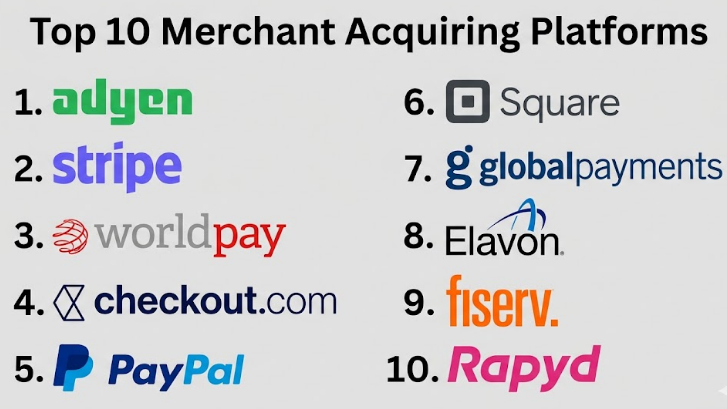
Top 10 Merchant Acquiring Platforms
#1 — Adyen
Short description:
Adyen is a global payment platform offering direct acquiring capabilities across multiple regions. It provides unified commerce solutions for online, mobile, and in-store payments, making it ideal for large enterprises.
Key Features
- Direct acquiring in multiple countries
- Unified commerce platform
- Advanced fraud detection tools
- Real-time payment analytics
- Multi-currency support
- Omnichannel payment processing
Pros
- Strong global coverage
- High authorization success rates
Cons
- Complex onboarding
- Higher cost for smaller businesses
Platforms / Deployment
Cloud
Security & Compliance
PCI DSS, GDPR, encryption, RBAC
Integrations & Ecosystem
Adyen integrates with major enterprise systems and commerce platforms.
- ERP systems
- POS systems
- E-commerce platforms
- Custom APIs
Support & Community
Enterprise-grade support with strong documentation.
#2 — Stripe
Short description:
Stripe provides acquiring capabilities alongside its payment processing infrastructure. It is widely used for its developer-friendly APIs and global payment support.
Key Features
- Global payment acceptance
- Built-in fraud detection (Radar)
- Subscription billing
- Multi-currency processing
- API-first design
- Real-time reporting
Pros
- Easy integration
- Strong developer ecosystem
Cons
- Limited direct acquiring in some regions
- Pricing can scale with volume
Platforms / Deployment
Cloud
Security & Compliance
PCI DSS, SOC 2, encryption, MFA
Integrations & Ecosystem
Extensive integrations across SaaS and commerce tools.
- Shopify
- Salesforce
- Accounting tools
Support & Community
Large developer community and excellent documentation.
#3 — Worldpay (FIS)
Short description:
Worldpay is a major global acquirer offering enterprise-grade payment processing and acquiring services across multiple industries.
Key Features
- Global acquiring network
- Multi-currency processing
- Fraud prevention tools
- Payment analytics
- Omnichannel support
Pros
- Strong enterprise presence
- Broad geographic coverage
Cons
- Complex pricing
- Legacy system limitations
Platforms / Deployment
Cloud / Hybrid
Security & Compliance
PCI DSS, GDPR
Integrations & Ecosystem
Supports integration with enterprise systems and POS solutions.
- Retail platforms
- ERP systems
Support & Community
Enterprise support; documentation varies.
#4 — Checkout.com
Short description:
Checkout.com is a modern acquiring platform focused on digital-first businesses, offering direct acquiring and high-performance payment processing.
Key Features
- Direct acquiring in key markets
- Smart routing capabilities
- Real-time data insights
- Fraud detection tools
- API-first architecture
Pros
- High performance
- Strong analytics
Cons
- Limited SMB focus
- Pricing not transparent
Platforms / Deployment
Cloud
Security & Compliance
PCI DSS, GDPR
Integrations & Ecosystem
API-driven integrations with fintech and SaaS platforms.
- Payment gateways
- Fraud tools
Support & Community
Strong enterprise support.
#5 — PayPal
Short description:
PayPal provides acquiring services through its global payment network, supporting businesses of all sizes.
Key Features
- Global payment acceptance
- Wallet and card processing
- Fraud detection
- Subscription management
- Multi-currency support
Pros
- Trusted brand
- Easy onboarding
Cons
- Higher transaction fees
- Limited customization
Platforms / Deployment
Cloud
Security & Compliance
PCI DSS, encryption, MFA
Integrations & Ecosystem
Wide integrations across e-commerce platforms.
- WooCommerce
- Magento
- Shopify
Support & Community
Strong global support and user base.
#6 — Square (Block)
Short description:
Square provides acquiring services primarily for SMBs, with strong POS integration and easy setup.
Key Features
- POS and online payments
- Real-time reporting
- Inventory integration
- Mobile payments
- Subscription billing
Pros
- Simple setup
- Great for SMBs
Cons
- Limited global coverage
- Less enterprise scalability
Platforms / Deployment
Cloud
Security & Compliance
PCI DSS, encryption
Integrations & Ecosystem
Integrates with retail and small business tools.
- POS hardware
- Accounting tools
Support & Community
Good support; strong SMB community.
#7 — Global Payments
Short description:
Global Payments is a large acquiring platform offering services across industries with strong global infrastructure.
Key Features
- Global acquiring network
- Omnichannel payments
- Fraud management
- Reporting tools
- Multi-currency support
Pros
- Strong infrastructure
- Wide industry coverage
Cons
- Complex pricing
- Integration effort required
Platforms / Deployment
Cloud / Hybrid
Security & Compliance
PCI DSS, GDPR
Integrations & Ecosystem
Supports enterprise integrations.
- POS systems
- Retail platforms
Support & Community
Enterprise support model.
#8 — Elavon
Short description:
Elavon is a global acquiring platform providing payment processing and merchant services across multiple regions.
Key Features
- Global acquiring services
- Multi-currency support
- Fraud prevention tools
- Omnichannel payments
- Reporting dashboards
Pros
- Reliable infrastructure
- Strong banking partnerships
Cons
- Limited innovation compared to newer platforms
- Complex onboarding
Platforms / Deployment
Cloud
Security & Compliance
PCI DSS
Integrations & Ecosystem
Integrates with banking and retail systems.
- POS systems
- Banking platforms
Support & Community
Enterprise-level support.
#9 — Fiserv (First Data)
Short description:
Fiserv provides acquiring services through its First Data platform, supporting large-scale payment processing globally.
Key Features
- Global acquiring
- Fraud detection
- Omnichannel support
- Payment analytics
- POS solutions
Pros
- Large-scale infrastructure
- Broad industry support
Cons
- Legacy systems
- Complex integration
Platforms / Deployment
Cloud / Hybrid
Security & Compliance
PCI DSS, encryption
Integrations & Ecosystem
Supports enterprise integrations.
- Retail systems
- Banking platforms
Support & Community
Enterprise support.
#10 — Rapyd
Short description:
Rapyd is a fintech platform offering acquiring capabilities along with global payment solutions and embedded finance features.
Key Features
- Global payment acceptance
- Multi-currency processing
- API-first design
- Embedded finance capabilities
- Fraud tools
Pros
- Strong global reach
- Developer-friendly
Cons
- Newer platform
- Limited enterprise adoption
Platforms / Deployment
Cloud
Security & Compliance
Not publicly stated
Integrations & Ecosystem
API-based integrations with fintech platforms.
- Payment gateways
- SaaS platforms
Support & Community
Growing ecosystem and documentation.
Comparison Table (Top 10)
| Tool Name | Best For | Platform(s) Supported | Deployment | Standout Feature | Public Rating |
|---|---|---|---|---|---|
| Adyen | Enterprise | Web | Cloud | Direct acquiring | N/A |
| Stripe | Developers | Web | Cloud | API ecosystem | N/A |
| Worldpay | Enterprises | Web | Cloud/Hybrid | Global reach | N/A |
| Checkout.com | Digital businesses | Web | Cloud | Smart routing | N/A |
| PayPal | SMBs | Web | Cloud | Global wallet | N/A |
| Square | SMB retail | Web | Cloud | POS integration | N/A |
| Global Payments | Enterprises | Web | Cloud/Hybrid | Industry coverage | N/A |
| Elavon | Banking & retail | Web | Cloud | Banking partnerships | N/A |
| Fiserv | Large enterprises | Web | Cloud/Hybrid | Infrastructure scale | N/A |
| Rapyd | Fintech | Web | Cloud | Embedded finance | N/A |
Evaluation & Payment Orchestration Platforms
| Tool Name | Core | Ease | Integrations | Security | Performance | Support | Value | Weighted Total |
|---|---|---|---|---|---|---|---|---|
| Adyen | 10 | 7 | 9 | 9 | 9 | 8 | 7 | 8.6 |
| Stripe | 9 | 9 | 10 | 9 | 9 | 9 | 8 | 9.0 |
| Worldpay | 9 | 6 | 8 | 9 | 8 | 7 | 7 | 7.9 |
| Checkout.com | 9 | 8 | 9 | 8 | 9 | 8 | 7 | 8.5 |
| PayPal | 8 | 9 | 8 | 9 | 8 | 9 | 7 | 8.3 |
| Square | 7 | 9 | 7 | 8 | 7 | 8 | 8 | 7.9 |
| Global Payments | 9 | 6 | 8 | 9 | 8 | 7 | 7 | 7.9 |
| Elavon | 8 | 6 | 7 | 8 | 7 | 7 | 7 | 7.4 |
| Fiserv | 9 | 6 | 8 | 9 | 8 | 7 | 7 | 7.9 |
| Rapyd | 8 | 8 | 8 | 7 | 8 | 7 | 8 | 7.9 |
How to interpret:
These scores are comparative across key dimensions. A higher score reflects balanced performance across features, usability, and scalability—not a universal best choice.
Which Payment Orchestration Platforms
Solo / Freelancer
Use PayPal or Square for simplicity and quick setup.
SMB
Stripe and Square offer ease of use and scalability.
Mid-Market
Checkout.com and Rapyd provide flexibility and global reach.
Enterprise
Adyen, Worldpay, and Fiserv are best for complex global operations.
Budget vs Premium
- Budget: Square, PayPal
- Premium: Adyen, Checkout.com
Feature Depth vs Ease of Use
- Deep features: Adyen, Worldpay
- Ease of use: Stripe, Square
Integrations & Scalability
Choose API-first platforms like Stripe or Rapyd.
Security & Compliance Needs
Enterprises should prioritize PCI DSS-compliant platforms with strong fraud tools.
Frequently Asked Questions (FAQs)
1. What is a merchant acquiring platform?
It is a service that enables businesses to accept card payments by connecting them to card networks and banks.
2. How does acquiring differ from payment gateways?
Gateways handle transaction communication, while acquirers process and settle funds.
3. Is acquiring necessary for online businesses?
Yes, it is essential for accepting card payments globally.
4. How long does onboarding take?
It can range from a few days to several weeks depending on compliance checks.
5. What fees are involved?
Fees include interchange, processing, and markup charges.
6. Can I use multiple acquirers?
Yes, many businesses use multiple acquirers for optimization.
7. Is it secure?
Most platforms follow PCI DSS and strong encryption standards.
8. What industries use acquiring platforms?
E-commerce, fintech, retail, travel, and SaaS industries.
9. Can I switch acquirers easily?
It depends on integration complexity but is possible.
10. Do acquiring platforms support global payments?
Yes, most support multi-currency and cross-border transactions.
Conclusion
Merchant acquiring platforms are a foundational part of modern payment infrastructure. They enable businesses to accept payments globally while ensuring security, compliance, and high transaction success rates. However, choosing the right platform depends on your scale, geography, and technical needs. Smaller businesses benefit from simplicity, while enterprises require advanced capabilities like multi-acquirer routing and deep analytics. The best approach is to shortlist two or three platforms, test them in real scenarios, and evaluate performance, cost, and integration before making a long-term decision.
