Introduction
Loan Servicing Platforms are software systems that manage loans after they are approved and disbursed. In simple terms, once a borrower receives a loan, these platforms handle everything that comes next—payment collection, interest calculations, customer communication, compliance tracking, and reporting.
In today’s lending environment, especially with digital-first financial services expanding rapidly, servicing platforms have become just as critical as origination systems. Lenders need automation to manage thousands or millions of accounts efficiently while ensuring accurate billing, compliance, and customer satisfaction.
Real-world use cases include:
- Banks managing EMI payments for personal loans
- NBFCs tracking repayments and delinquency
- Fintech platforms automating subscription-style lending models
- Credit unions handling member loan servicing
- Digital lenders offering flexible repayment plans
What buyers should evaluate:
- Payment processing and automation
- Interest calculation flexibility
- Delinquency and collections management
- Integration with payment gateways
- Reporting and analytics capabilities
- Customer communication tools
- Scalability and performance
- Compliance support
- API and customization options
- Deployment flexibility
Best for: Banks, NBFCs, fintech startups, credit unions, and digital lenders handling ongoing loan repayment operations at scale.
Not ideal for: Organizations with very low loan volumes or those that only need basic accounting tools instead of full servicing systems.
Key Trends in Loan Servicing Platforms
- AI-driven collections and risk prediction improving recovery rates
- Automation of payment schedules and reminders
- Embedded finance integrations with apps and platforms
- Cloud-native servicing systems replacing legacy setups
- API-first ecosystems enabling flexible integrations
- Real-time analytics dashboards for portfolio performance
- Digital borrower portals and mobile access
- Regulatory automation and compliance tracking
- Flexible repayment models (BNPL, subscriptions)
- Usage-based and subscription pricing models
How We Selected These Tools (Methodology)
- Strong adoption across banks, fintechs, and lenders
- Coverage of full loan servicing lifecycle
- Proven reliability in handling large loan portfolios
- Security and compliance capabilities
- Integration support with financial systems
- Flexibility for different lending models
- Customer feedback and industry reputation
- Suitability across SMB, mid-market, and enterprise
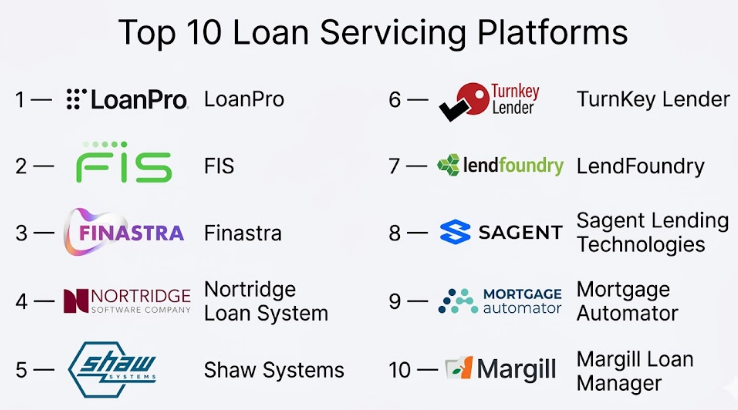
Top 10 Loan Servicing Platforms
#1 — LoanPro
Short description:
LoanPro is a modern loan servicing platform designed for flexibility and scalability. It is widely used by fintech companies and lenders that need customizable workflows and API-driven architecture. The platform supports a wide range of loan products and offers strong automation capabilities.
Key Features
- Loan servicing automation
- Payment processing and tracking
- API-first architecture
- Custom loan configurations
- Reporting and analytics
- Borrower account management
Pros
- Highly customizable
- Strong API ecosystem
Cons
- Requires technical expertise
- UI can be complex for beginners
Platforms / Deployment
- Web
- Cloud
Security & Compliance
- Not publicly stated
Integrations & Ecosystem
LoanPro integrates with multiple financial systems and APIs.
- Payment gateways
- CRM systems
- Accounting tools
- Custom API integrations
Support & Community
Strong developer documentation and support for enterprise clients.
#2 — FIS Loan Servicing
Short description:
FIS offers enterprise-grade loan servicing solutions designed for large financial institutions. It supports multiple loan types and provides comprehensive servicing capabilities.
Key Features
- Multi-loan product support
- Payment processing
- Risk and compliance tools
- Reporting dashboards
- Automation workflows
Pros
- Enterprise-grade scalability
- Strong compliance support
Cons
- Complex implementation
- Higher cost
Platforms / Deployment
- Web
- Hybrid
Security & Compliance
- Not publicly stated
Integrations & Ecosystem
- Core banking systems
- Payment processors
- APIs
- Financial tools
Support & Community
Strong enterprise support and partner ecosystem.
#3 — Finastra Loan Servicing
Short description:
Finastra provides a comprehensive servicing platform that integrates with its broader banking solutions, offering flexibility for global institutions.
Key Features
- End-to-end servicing
- Workflow automation
- Risk management
- Reporting and analytics
- Compliance tools
Pros
- Highly configurable
- Strong banking ecosystem
Cons
- Steep learning curve
- Heavy system requirements
Platforms / Deployment
- Web
- Hybrid
Security & Compliance
- Not publicly stated
Integrations & Ecosystem
- Banking systems
- APIs
- Third-party integrations
Support & Community
Enterprise-level support.
#4 — Nortridge Loan System
Short description:
Nortridge is a flexible loan servicing platform designed for small to mid-sized lenders. It offers customization and supports various loan types.
Key Features
- Loan servicing and tracking
- Payment automation
- Reporting tools
- Workflow management
- Customization options
Pros
- Flexible and customizable
- Suitable for SMBs
Cons
- Outdated interface
- Limited advanced features
Platforms / Deployment
- Web
- Cloud / On-premise
Security & Compliance
- Not publicly stated
Integrations & Ecosystem
- Payment systems
- APIs
- CRM tools
Support & Community
Good support for SMB users.
#5 — Shaw Systems
Short description:
Shaw Systems specializes in loan servicing for consumer and commercial lending institutions, focusing on reliability and scalability.
Key Features
- Loan servicing lifecycle management
- Payment tracking
- Risk management
- Reporting and analytics
- Compliance tools
Pros
- Reliable performance
- Strong servicing capabilities
Cons
- Limited modern UI
- Complex onboarding
Platforms / Deployment
- Web
- Hybrid
Security & Compliance
- Not publicly stated
Integrations & Ecosystem
- Core systems
- APIs
- Payment gateways
Support & Community
Enterprise-level support.
#6 — TurnKey Lender
Short description:
TurnKey Lender offers an AI-driven lending platform that includes strong loan servicing capabilities, especially for fintech and NBFCs.
Key Features
- Automated servicing workflows
- AI-driven risk scoring
- Payment management
- Fraud detection
- Reporting tools
Pros
- AI capabilities
- End-to-end platform
Cons
- Customization complexity
- Implementation effort
Platforms / Deployment
- Web
- Cloud
Security & Compliance
- Not publicly stated
Integrations & Ecosystem
- APIs
- Credit bureaus
- Payment systems
Support & Community
Growing support ecosystem.
#7 — LendFoundry
Short description:
LendFoundry is a digital lending platform that supports both loan origination and servicing with a modular architecture.
Key Features
- Loan servicing automation
- Analytics and reporting
- Workflow management
- Multi-product support
- Risk tools
Pros
- Flexible and modular
- Scalable
Cons
- Requires configuration
- Limited public documentation
Platforms / Deployment
- Web
- Cloud
Security & Compliance
- Not publicly stated
Integrations & Ecosystem
- APIs
- Core banking systems
- Third-party tools
Support & Community
Varies based on deployment.
#8 — Sagent Lending Technologies
Short description:
Sagent provides advanced loan servicing platforms focused on digital transformation for lenders.
Key Features
- Digital servicing tools
- Customer engagement features
- Payment processing
- Analytics dashboards
- Workflow automation
Pros
- Modern platform
- Strong borrower experience
Cons
- Enterprise-focused
- Higher pricing
Platforms / Deployment
- Web
- Cloud
Security & Compliance
- Not publicly stated
Integrations & Ecosystem
- APIs
- Banking systems
- Customer engagement tools
Support & Community
Enterprise-level support.
#9 — Mortgage Automator
Short description:
Mortgage Automator is a servicing platform designed for private lenders and mortgage professionals.
Key Features
- Loan servicing automation
- Payment tracking
- Document management
- Reporting tools
- Workflow automation
Pros
- Easy to use
- Fast setup
Cons
- Limited enterprise features
- Niche focus
Platforms / Deployment
- Web
- Cloud
Security & Compliance
- Not publicly stated
Integrations & Ecosystem
- Accounting tools
- Payment systems
- APIs
Support & Community
Responsive support.
#10 — Margill Loan Manager
Short description:
Margill Loan Manager is a specialized loan servicing platform focused on interest calculation and flexible loan structures.
Key Features
- Advanced interest calculations
- Loan tracking
- Payment scheduling
- Reporting tools
- Flexible configurations
Pros
- Strong calculation engine
- Easy to configure
Cons
- Limited integrations
- Basic UI
Platforms / Deployment
- Web / Desktop
- Cloud / On-premise
Security & Compliance
- Not publicly stated
Integrations & Ecosystem
- Accounting systems
- Limited APIs
Support & Community
Small but responsive support team.
Comparison Table (Top 10)
| Tool Name | Best For | Platform(s) Supported | Deployment | Standout Feature | Public Rating |
|---|---|---|---|---|---|
| LoanPro | Fintechs | Web | Cloud | API-first architecture | N/A |
| FIS Loan Servicing | Enterprises | Web | Hybrid | Scalability | N/A |
| Finastra Loan Servicing | Banks | Web | Hybrid | Integration ecosystem | N/A |
| Nortridge Loan System | SMBs | Web | Hybrid | Customization | N/A |
| Shaw Systems | Large lenders | Web | Hybrid | Reliability | N/A |
| TurnKey Lender | AI-driven lenders | Web | Cloud | AI automation | N/A |
| LendFoundry | Modular lending | Web | Cloud | Flexibility | N/A |
| Sagent | Digital transformation | Web | Cloud | Customer experience | N/A |
| Mortgage Automator | Private lenders | Web | Cloud | Ease of use | N/A |
| Margill Loan Manager | Niche lenders | Web/Desktop | Hybrid | Interest calculation | N/A |
Evaluation & Loan Servicing Platforms
| Tool Name | Core (25%) | Ease (15%) | Integrations (15%) | Security (10%) | Performance (10%) | Support (10%) | Value (15%) | Weighted Total |
|---|---|---|---|---|---|---|---|---|
| LoanPro | 9 | 7 | 9 | 7 | 8 | 8 | 7 | 8.0 |
| FIS | 9 | 6 | 8 | 8 | 9 | 9 | 6 | 8.1 |
| Finastra | 9 | 6 | 8 | 8 | 9 | 9 | 6 | 8.1 |
| Nortridge | 7 | 7 | 6 | 7 | 7 | 7 | 8 | 7.2 |
| Shaw Systems | 8 | 6 | 7 | 7 | 8 | 8 | 7 | 7.5 |
| TurnKey Lender | 8 | 7 | 8 | 7 | 8 | 7 | 7 | 7.6 |
| LendFoundry | 7 | 6 | 8 | 7 | 7 | 7 | 7 | 7.2 |
| Sagent | 8 | 7 | 8 | 7 | 8 | 8 | 6 | 7.6 |
| Mortgage Automator | 7 | 8 | 6 | 7 | 7 | 7 | 8 | 7.3 |
| Margill | 7 | 7 | 5 | 7 | 7 | 7 | 7 | 7.0 |
How to interpret scores:
These scores are relative comparisons based on feature strength, usability, and flexibility. A higher score indicates stronger overall capability, but the right tool depends on your specific business needs and technical environment.
Which Loan Servicing Platforms
Solo / Freelancer
Mortgage Automator or Margill are simple and effective options.
SMB
Nortridge and Mortgage Automator provide cost-effective solutions.
Mid-Market
LoanPro and TurnKey Lender offer scalability and automation.
Enterprise
FIS, Finastra, and Sagent are best suited for large operations.
Budget vs Premium
Budget tools are easier to adopt, while premium tools provide deeper capabilities.
Feature Depth vs Ease of Use
More features usually mean higher complexity—balance based on team capability.
Integrations & Scalability
API-first tools like LoanPro scale better for tech-driven businesses.
Security & Compliance Needs
Large institutions should prioritize enterprise-grade platforms.
Frequently Asked Questions (FAQs)
1. What is a loan servicing platform?
It is software that manages loan repayments, interest calculations, and borrower interactions after loan disbursement.
2. How much do these platforms cost?
Pricing varies based on features, scale, and deployment models.
3. How long does implementation take?
It can range from a few weeks to several months.
4. Can small lenders use these tools?
Yes, many platforms offer SMB-friendly versions.
5. Are these platforms secure?
Most provide standard security features, but specifics vary.
6. Do they integrate with other systems?
Yes, most platforms offer APIs and integrations.
7. What are common mistakes?
Choosing tools without considering scalability and integrations.
8. Can I switch platforms later?
Yes, but migration can be complex.
9. Do they support mobile access?
Many platforms offer mobile-friendly interfaces.
10. What is the biggest benefit?
Automation of loan management and improved efficiency.
Conclusion
Loan Servicing Platforms play a critical role in managing the post-disbursement lifecycle of loans. As lending becomes more digital and customer expectations rise, these platforms help organizations automate repayments, improve transparency, and reduce operational risk. However, the right platform depends heavily on your scale, technical capabilities, and business model. Enterprises may require robust, compliance-heavy systems, while smaller lenders may prioritize ease of use and affordability. The best approach is to shortlist a few platforms, test them through pilots, and ensure they meet your integration, security, and scalability requirements before making a final decision.
